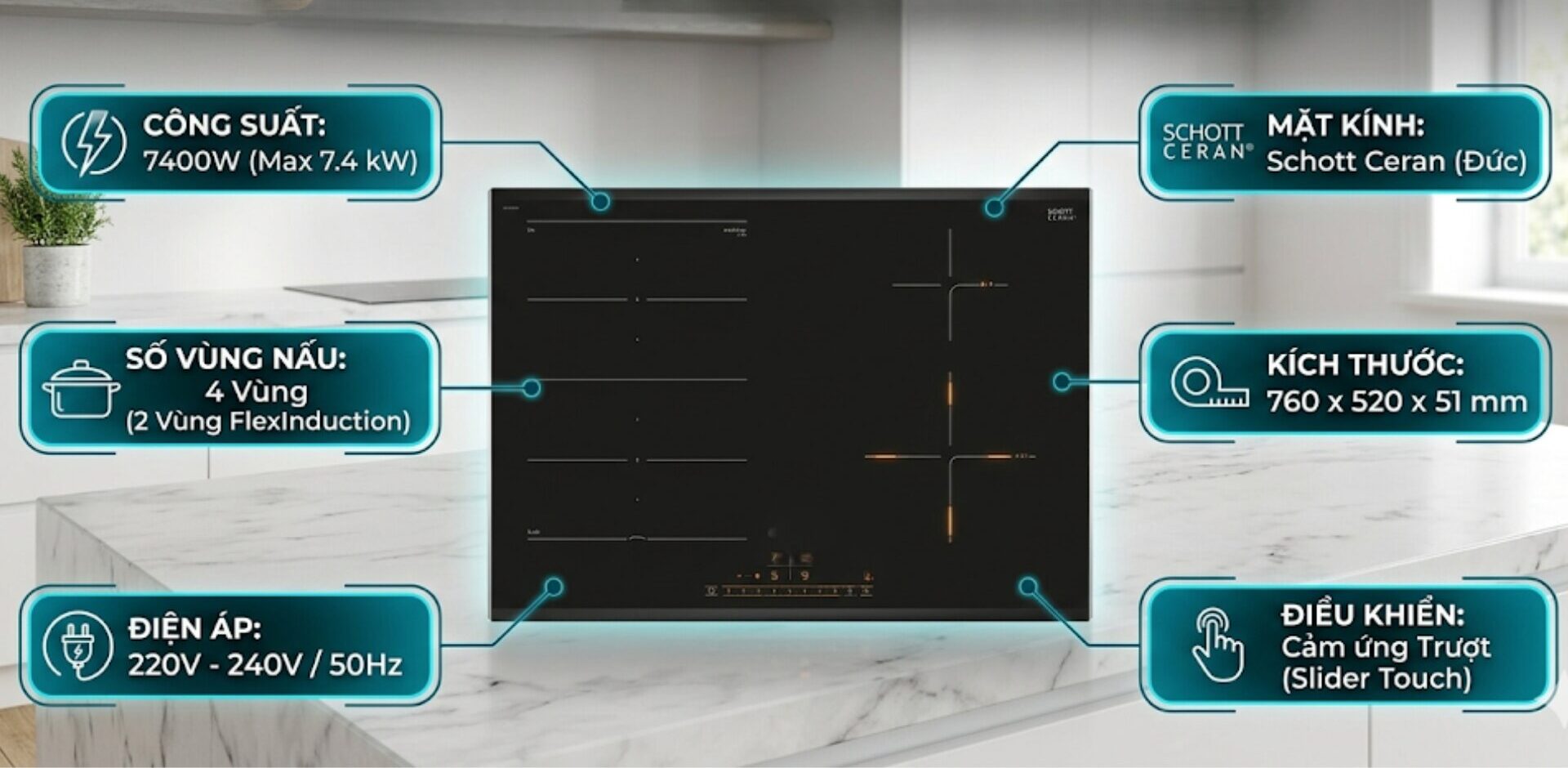
The issue of induction cooktops exploding or making loud popping noises while cooking is a very rare technical incident but still raises concerns about fire safety. The following article will analyze the core causes and guide you on the safest handling procedures if you encounter this issue.
Note:
|
5 causes of induction cooktops exploding
Induction cooktops explode mainly due to electrical issues, component quality, or user errors. Specifically as follows:
Overload or unstable voltage
This is a common cause related to the household electrical system not meeting the power consumption of the cooktop.
- Signs: The cooktop emits a popping sound from underneath the glass surface, possibly accompanied by sparks and a burnt plastic smell. After the popping sound, the cooktop usually loses power completely.
- Causes: When the household voltage fluctuates or suddenly spikes (due to lightning, a neighbor using high-power equipment, or weak regional electrical infrastructure), the current intensity surges, causing the copper wires on the circuit board to overheat. When the temperature exceeds the safe threshold, these wires will break to cut off the current, causing a popping sound.
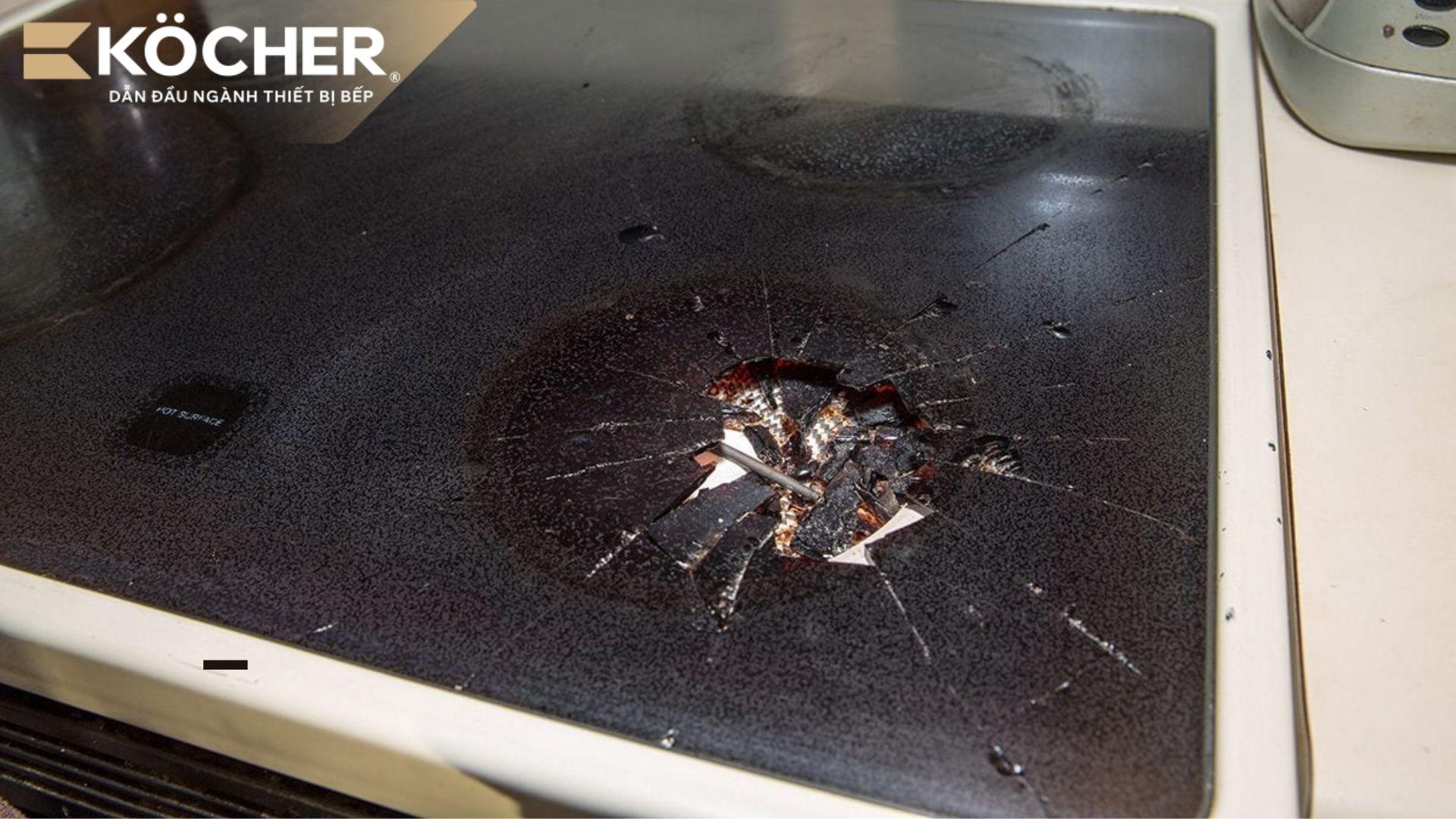
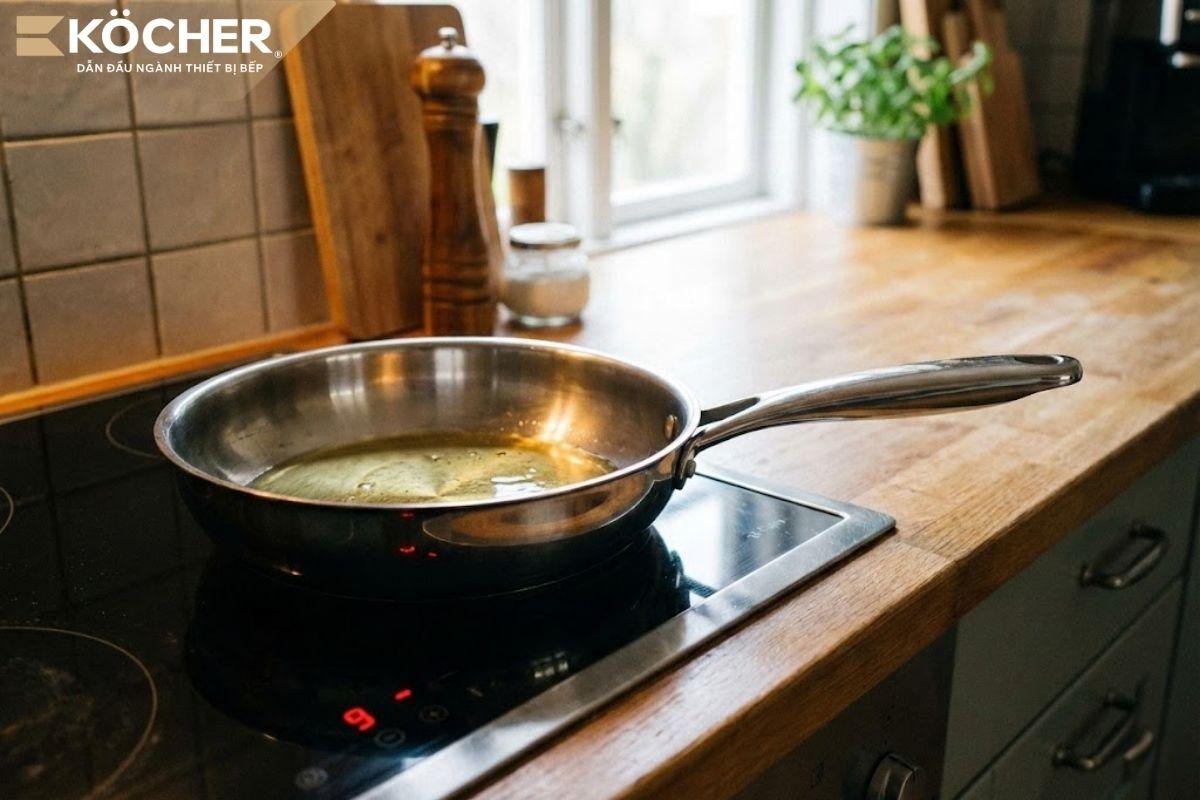 Cooking at high power for a long time can cause the electrical circuit system under the glass to catch fire
Blown fuse
A blown fuse is an active self-protection mechanism of the system to prevent excessive current from causing total damage.
- Signs: A loud “click” sound comes from inside the cooktop, followed by the display screen losing all power and being unable to restart even though the power supply is normal. Before a complete circuit failure occurs, users may sometimes notice warning signs from the power supply system displayed on the glass surface, causing the induction cooktop to flicker, intermittently turning on and off due to electrical contact issues in the wiring or input protection components malfunctioning.
- Causes: A serious short circuit occurs inside the circuit board or due to a sudden voltage spike in the power supply exceeding the tolerance of the VoltSafe protection system. At that time, the fuse will melt instantly to cut off the current, protecting expensive components like the processor from damage.
Cracked glass surface, water entering the circuit board causing explosion
Physical damage to the cooktop surface will compromise the barrier between liquids and the underlying components and circuit board.
- Signs: The glass surface shows deep, long cracks or broken pieces. When cooking, steam or water from the pot can seep through these cracks below.
- Causes: Due to strong impacts or low-quality glass unable to withstand thermal shock of 250°C leading to cracks, allowing conductive water to flow through large cracks onto the circuit board. The liquid directly contacting components under high voltage causes a short circuit throughout the system and leads to an immediate explosion.
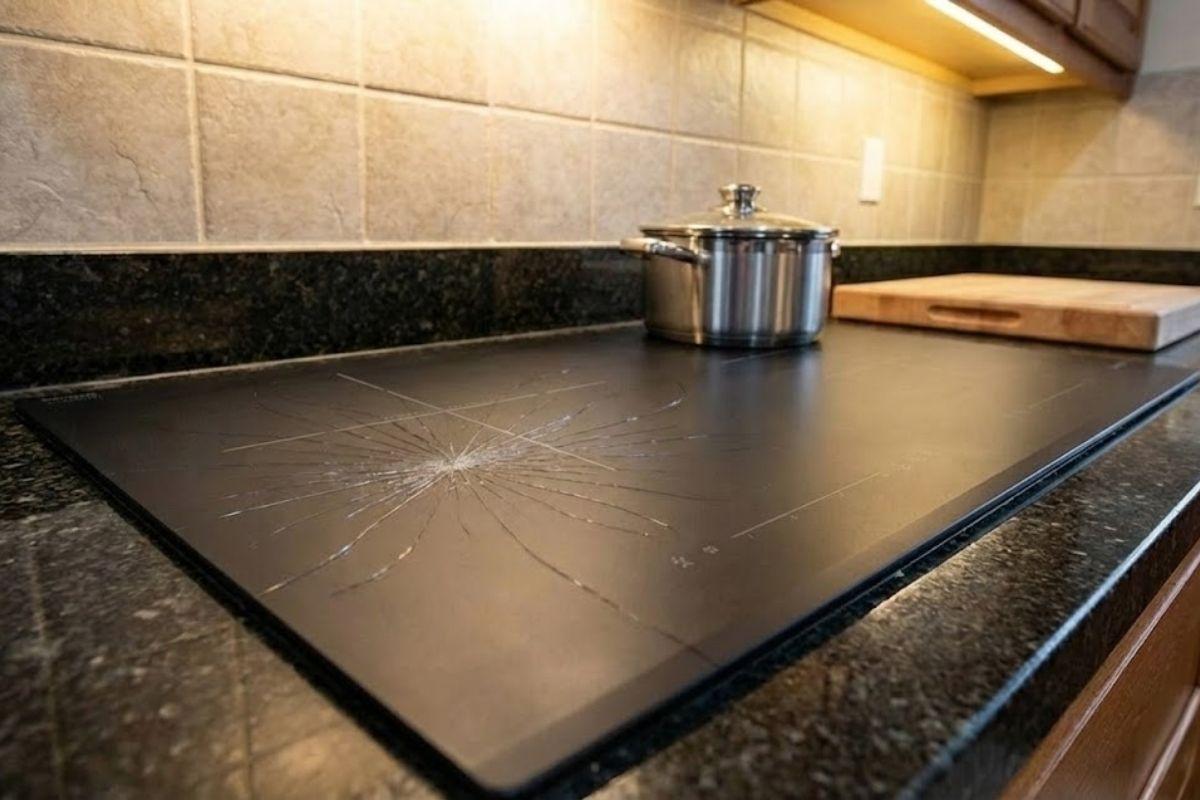 Water passing through cracks can cause short circuits, leading to explosions
Faulty IGBT component
Damaged IGBT power components often create strong discharge phenomena and cause explosions.
- Signs: The cooktop still has electrical signals but cannot detect the cooking pot or makes a loud explosion sound as soon as the user activates the Booster cooking mode.
- Causes: The cooling system is blocked by dust or the cooling fan is broken, causing the temperature at the IGBT component to exceed the safe threshold. This condition destroys the internal semiconductor layer and creates a large short-circuit current, running directly through the component, causing the protective plastic casing to explode.
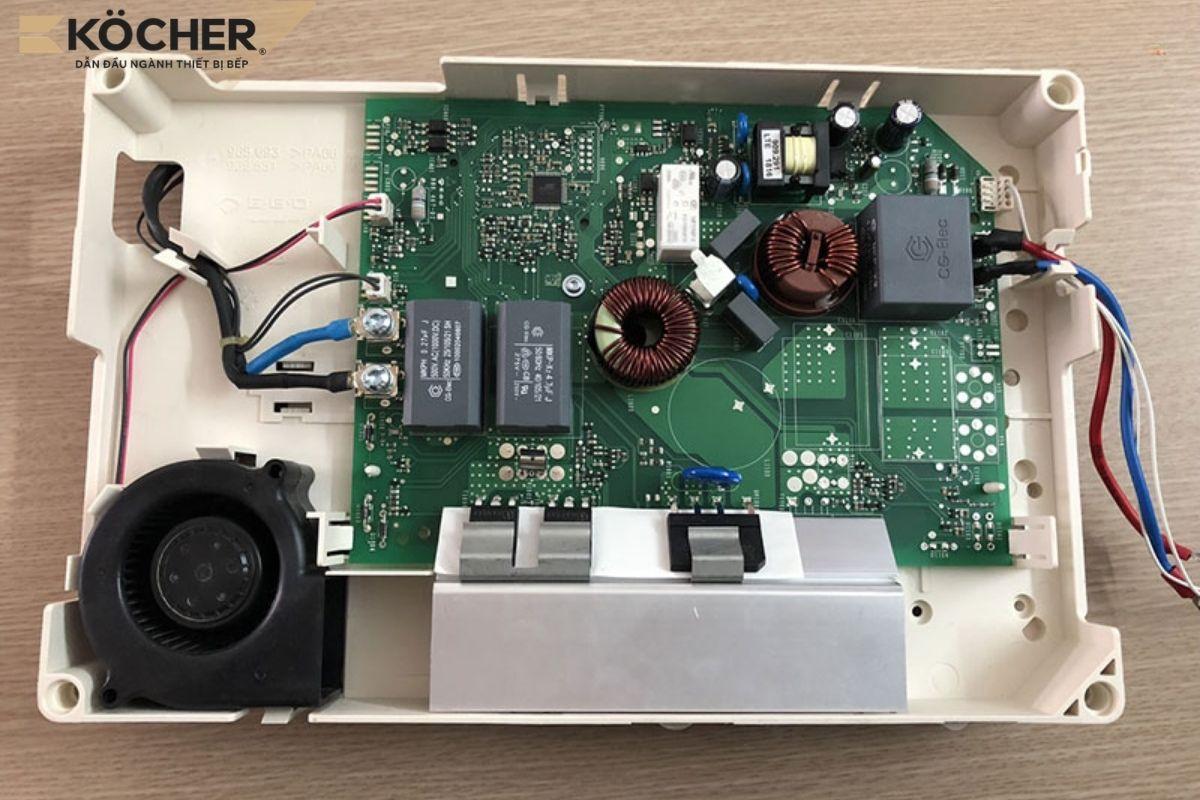 The internal circuit board being damaged can cause discharge phenomena
Cooktop or components repaired with poor quality
Installing non-standard replacement parts will eliminate the self-protection mechanisms of the system and lead to the control circuit board catching fire.
- Signs: The cooktop frequently displays error codes or emits unusual loud buzzing sounds while the cooking efficiency significantly decreases compared to its original condition.
- Causes: Unbranded components are incompatible with the high-frequency oscillation of the original control circuit board. These parts have very low pressure and current tolerance, so they will quickly accumulate heat when the cooktop operates at high power and explode due to component overload.
5 steps to take when an induction cooktop explodes
When an explosion occurs with the induction cooktop, you should remain calm and follow the correct procedures to ensure user safety while preventing further damage to the household electrical system.
- Step 1 – Immediately disconnect the power: Unplug the power cord or turn off the circuit breaker/Aptomat in the kitchen. Do not touch the glass surface or the body of the cooktop with wet hands or before cutting off the power to avoid electric shock. Equipping knowledge about How to handle an induction cooktop with electrical leakage from the beginning by connecting a grounding wire to the cooktop casing will help minimize the risk of electric discharge when an internal circuit short circuit occurs.
- Step 2 – Do not restart the cooktop: Do not attempt to turn the cooktop back on as it may cause further damage to the components.
- Step 3 – Open ventilation and let it cool: Open windows or turn on fans to let smoke and burnt smells escape, avoiding inhalation of toxic fumes. Wait about 20 – 30 minutes for the cooktop to cool down on its own.
- Step 4 – Check the cooktop
- Glass surface: Check for cracks or breaks. If broken, do not clean the glass surface as water may seep into the hot circuit causing a stronger explosion.
- Wiring: Check the power cord for melting, short circuits, or rodent bites.
- Step 5 – Contact an authorized warranty center: Explosion faults are often related to internal hardware; you should not disassemble it without expertise. Call the manufacturer’s hotline if still under warranty or choose a reputable repair center to replace genuine components.
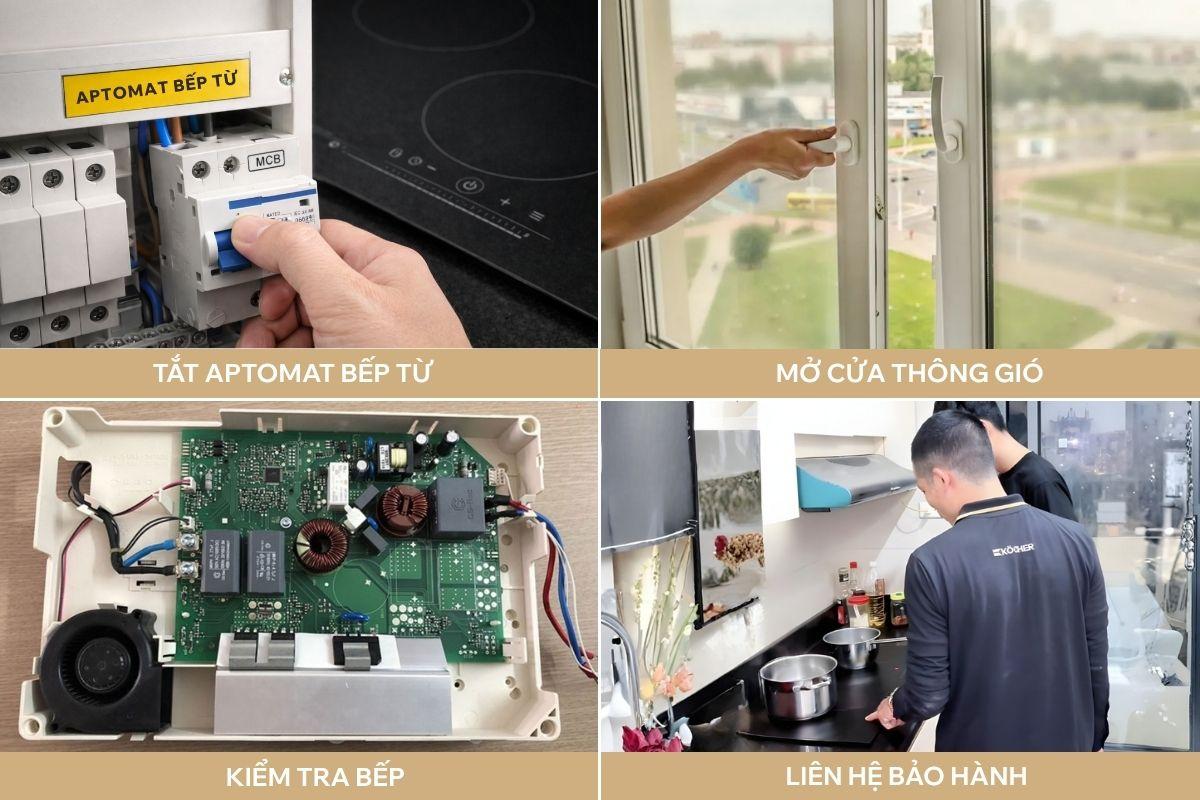 Steps to fix the induction cooktop explosion issue
6 usage tips to avoid induction cooktop explosion issues
To minimize incidents such as short circuits, overheating, or component damage, you need to pay attention to the following:
- Do not plug the cooktop together with high-power devices: You should install a separate Aptomat for the induction cooktop as it consumes a lot of electricity; using a shared outlet can easily cause overload and voltage drop. Additionally, choose the appropriate power cord for the cooktop’s power. For example, for power 3500W – 5500W, choose a wire with a minimum cross-section of 4mm²; for power 5500W – 7000W, choose a wire with a minimum cross-section of 6mm²; for power above 7000W, choose a wire with a minimum cross-section of 10mm².
- Avoid letting water or food spill into the cooktop’s crevices: When food spills, you need to immediately wipe it with a dry soft cloth. Absolutely do not pour water directly onto the glass surface to clean the cooktop.
- Clean the cooling fan periodically every 3 – 6 months: Because dust accumulation on the fan blades can cause blade jamming, reducing cooling efficiency.
- Address any signs of minor faults immediately: Because warning signals on the screen or strange noises from components are signs of technical issues.
- Avoid using the cooktop for too long at high temperatures: Only use Booster or high heat modes for short periods. For example, with Booster, it should only be used for about 10 – 15 minutes.
- Regularly inspect and maintain the wiring system: To avoid electrical connections or Aptomat contact points becoming loose or oxidized over time, leading to ignition phenomena.
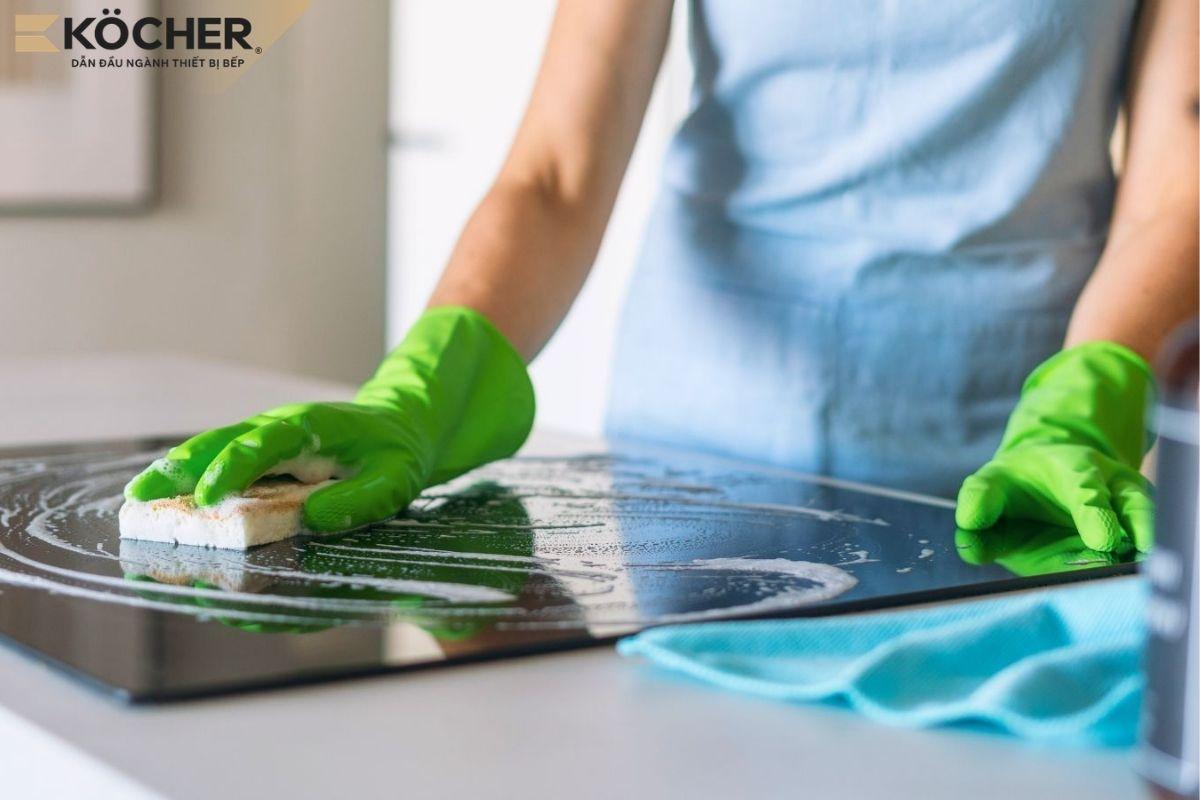 Wipe the cooktop surface after each cooking session to limit food, water, and grease from spilling into the cooktop’s crevices
Above are the summarized 5 causes, steps for remediation, and 6 tips for usage to avoid induction cooktop explosions. We hope this article can provide useful information, helping you calmly handle the situation, ensure safety, and use the induction cooktop more effectively during cooking.
To minimize the risk of induction cooktop explosions, it is extremely important for consumers to thoroughly research which brand of induction cooktop is the best currently to make informed purchasing decisions. Köcher induction cooktops are a reliable solution thanks to the application of components from E.G.O, Schott Ceran, or EuroKera depending on each product model. The integrated smart protection system helps the cooktop operate stably, minimizing the risk of short circuits and significantly increasing durability for the family kitchen.
Köcher induction cooktops pioneer German technology – For detailed product information, please contact:
|