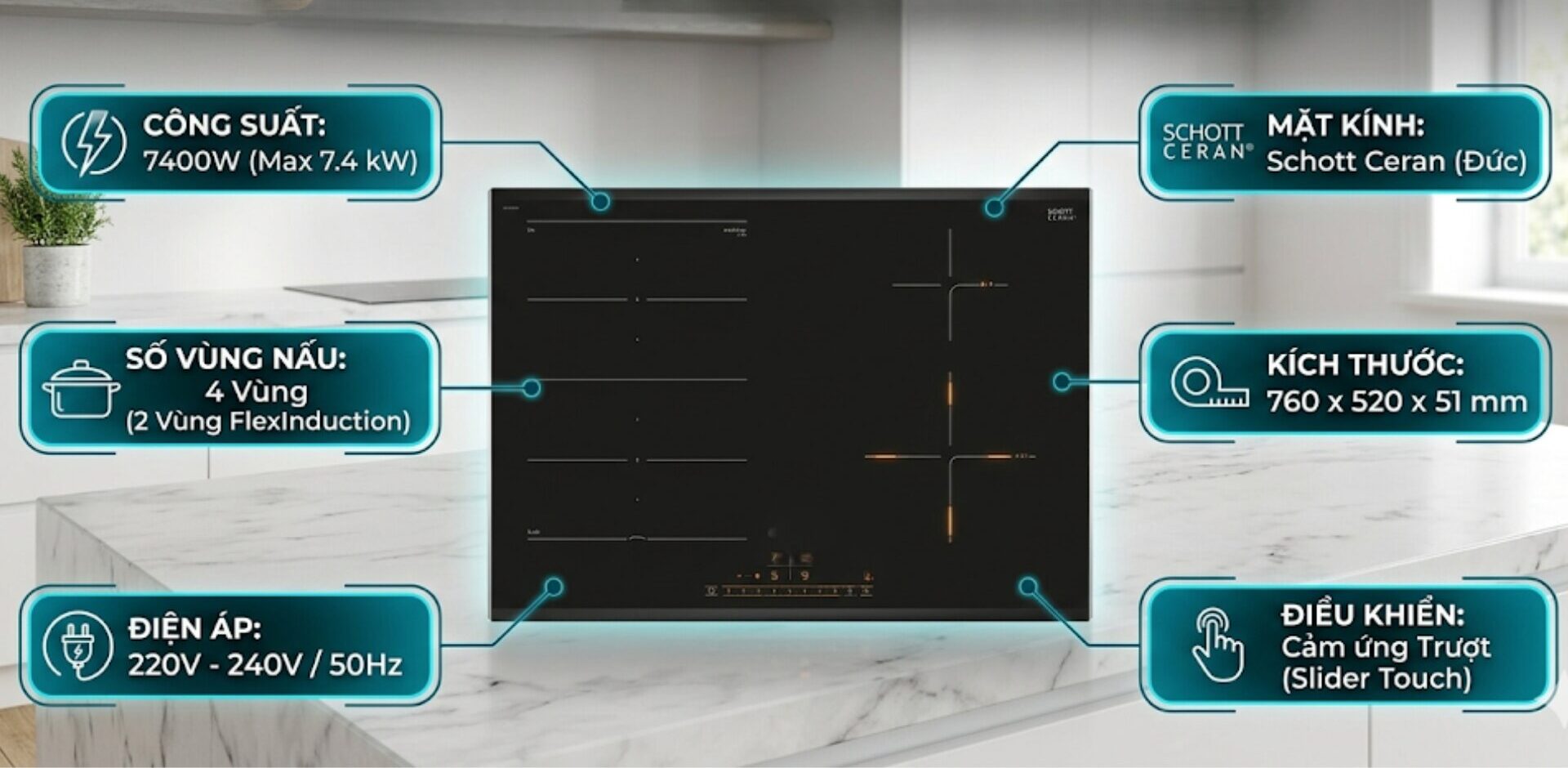
Built-in electric cookers (induction hobs, electric hobs) are a type of cooker designed to be completely installed below the countertop, exposing only the flat glass surface above for use. Compared to traditional electric cookers, built-in electric cookers have many advantages such as saving space and easy cleaning. The following article will help you understand more about the advantages and disadvantages of built-in electric cookers and the factors to consider when choosing the right product.
What is a built-in electric cooker? Classification of popular built-in electric cookers today
A built-in electric cooker is a type of cooker designed to be installed below the countertop surface, exposing only the glass surface above. The product has the following classifications, depending on the operating principle of the cooker:
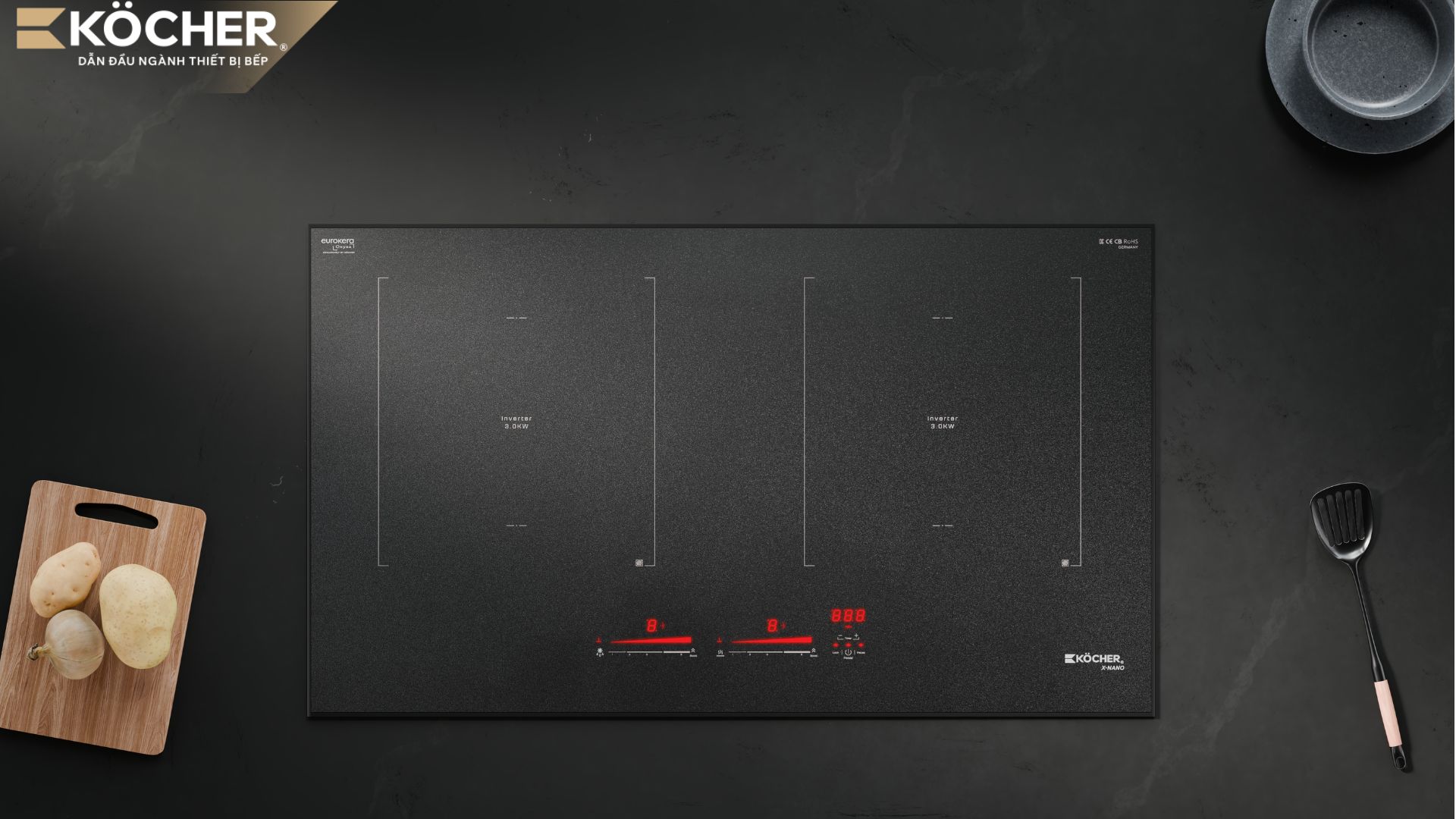
Induction hobs
Induction hobs are modern cooking devices that operate on the principle of electromagnetic induction, heating the bottom of the ferromagnetic pot directly without intermediaries. The most distinctive feature is the hidden installation of the cooker body below the countertop, exposing only the flat glass surface. The product provides extremely high thermal efficiency, safety, and luxurious aesthetics for the kitchen space.
Infrared hobs
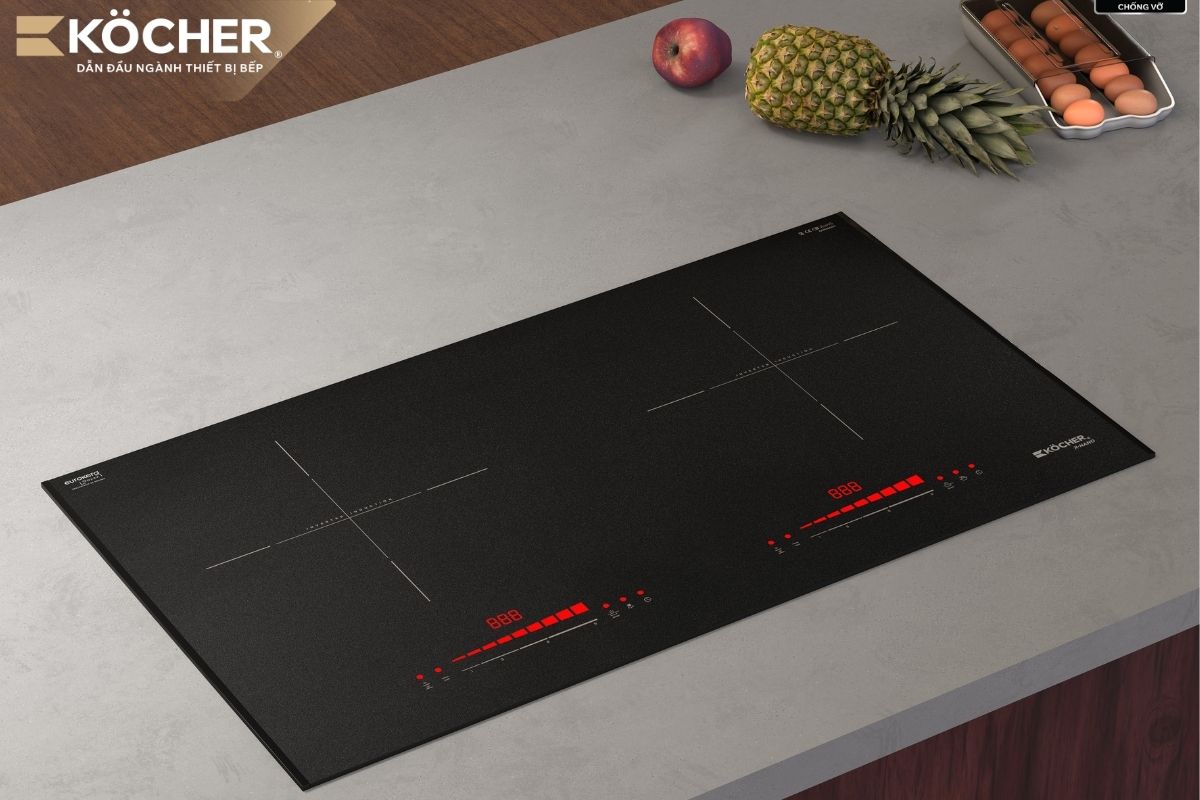
Infrared hobs are cooking devices that operate based on the principle of thermal radiation from infrared rays, with the body of the machine installed hidden under the countertop surface. When electric current passes through the heating coils (usually made of nichrome wire or halogen bulbs), the glass surface will emit heat directly to the bottom of the pot to cook the food. The distinctive feature of this type of cooker is its compatibility with all types of pots from ceramic, porcelain, aluminum to glass, allowing you to utilize old pots without incurring additional costs for pots with ferromagnetic bottoms.
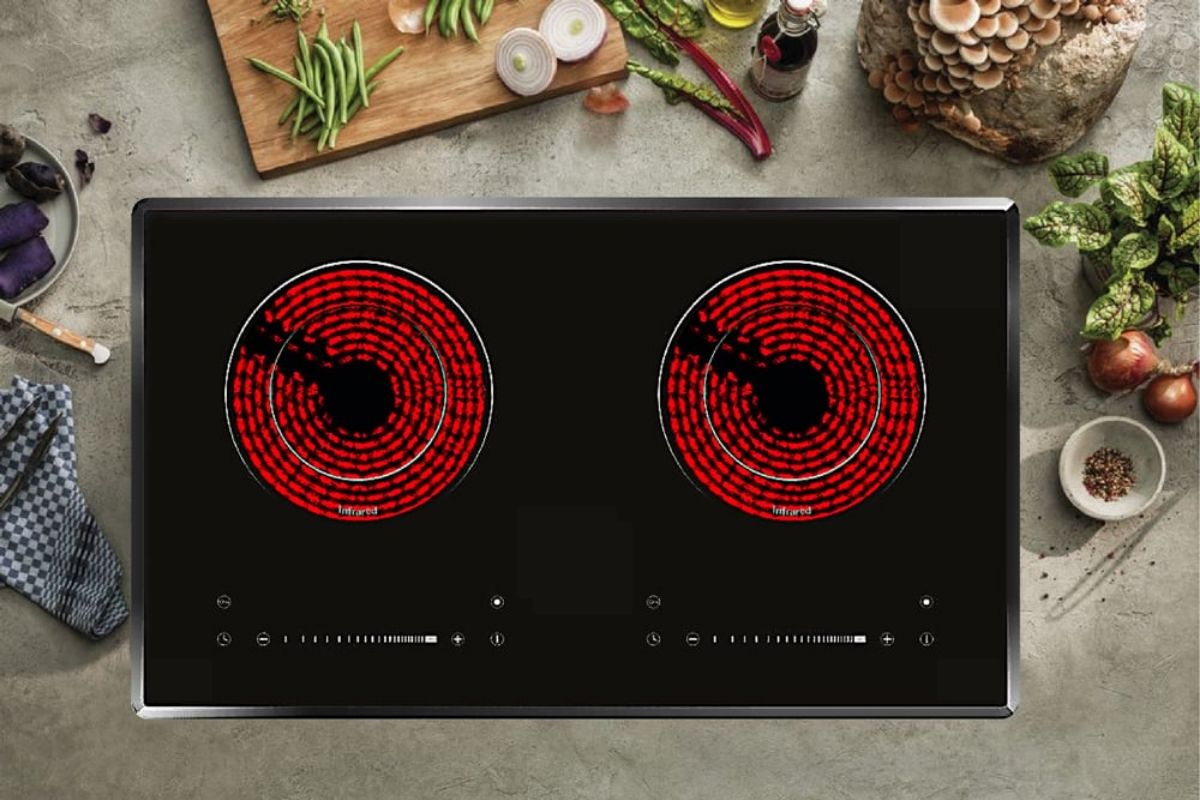
Electric infrared hobs
Electric infrared hobs are a versatile type of cooker that combines an induction cooking zone and an infrared cooking zone on the same glass surface. This device optimizes functionality thanks to the rapid cooking capability of the induction zone and compatibility with all types of pots and pans.
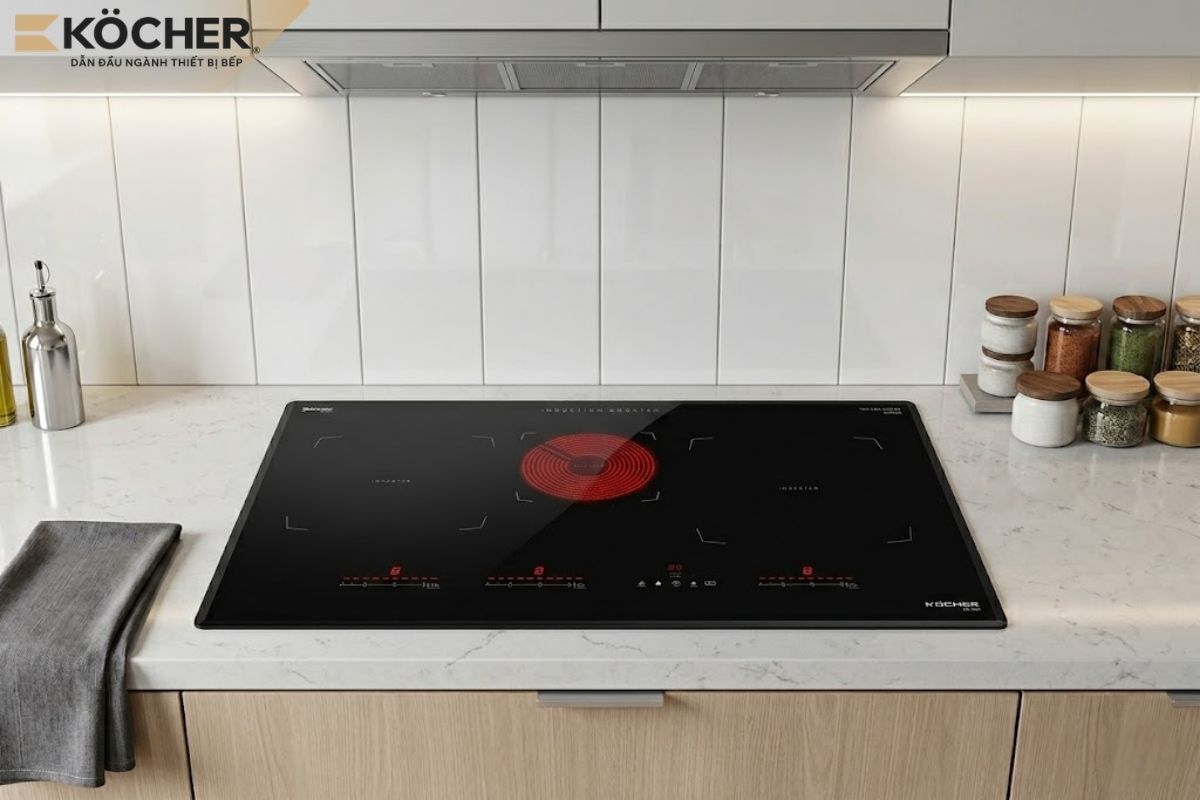 Electric infrared hob combines the features of induction hobs and infrared hobs, providing flexible cooking capabilities
Advantages and limitations of using built-in electric cookers
To make an appropriate purchasing decision, you need to clearly understand the advantages and limitations of using built-in electric cookers as follows:
Advantages of built-in electric cookers
Built-in electric cookers are widely used today thanks to the following outstanding advantages:
- High aesthetics: The cooker is installed flush with the countertop, creating a seamless, elegant, and luxurious look.
- Space-saving, optimizing space: The entire body of the cooker and wiring are hidden under the kitchen cabinet, keeping the kitchen space tidy and airy.
- Safe to use: The cooker does not use fire or gas, avoiding the risk of fire or gas poisoning.
- High cooking efficiency, energy-saving: Induction hobs achieve thermal transfer efficiency of 90 – 95%, allowing food to cook extremely quickly and minimizing heat loss. Compared to gas cookers with an efficiency of only about 40 – 60%), electric cookers can help you cut cooking time in half.
- Easy to clean: The flat, smooth glass surface without crevices like gas cookers allows for quicker cleaning. With just a damp cloth, you can keep the cooker looking new and clean.
- Many modern features: Depending on the segment and brand, induction cookers are integrated with smart features such as cooking timers, quick cooking mode Booster, automatic overflow sensors that shut off…, making cooking safer and more convenient.
- High durability: Induction cookers from reputable brands often use components from leading global manufacturers such as Schott Ceran (Germany) glass, Eurokera glass (France), E.G.O heating elements (Germany) with a lifespan of over 10,000 cooking hours, ensuring stable operation, an average lifespan of 10 – 15 years, and minimizing damage.
- Noise reduction: High-end induction cookers from Europe use quieter fans (less noisy than coaxial fans), the smart cooling system Active Flow, and Eco Silence motors to ensure quiet operation, even when cooking at high power.
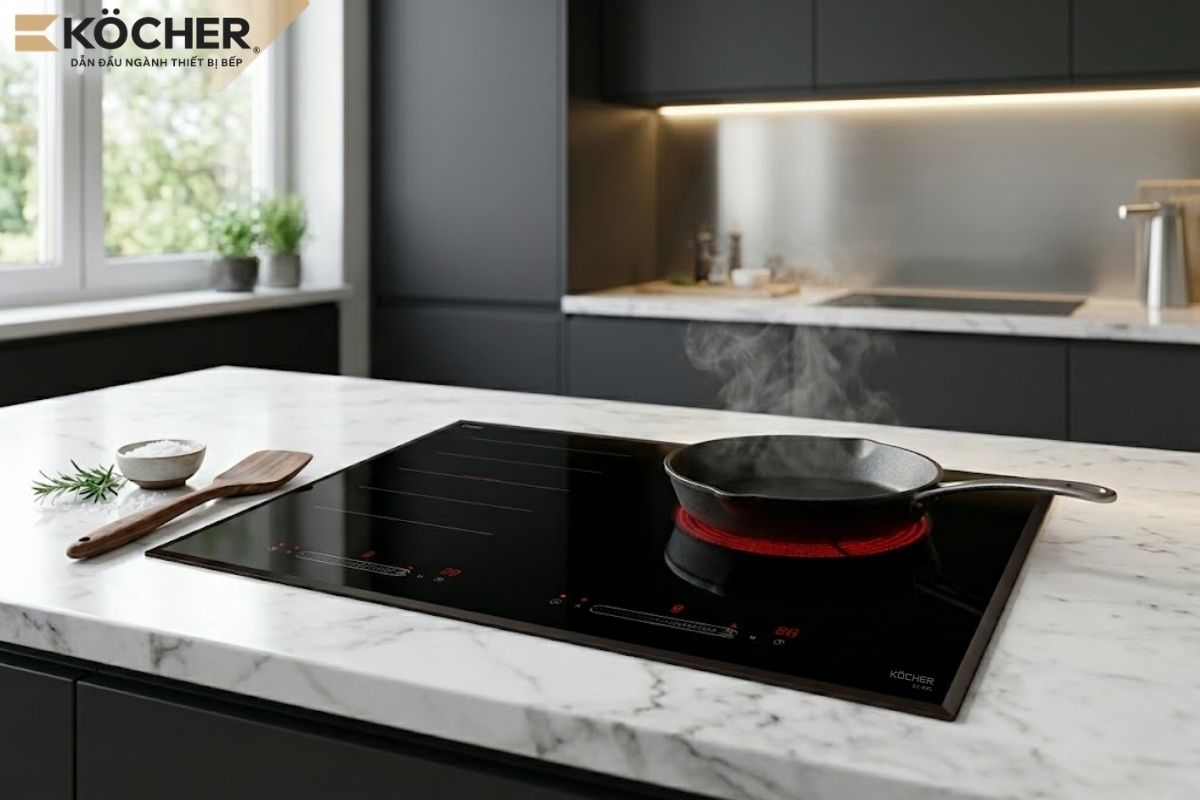 Built-in cookers help make the kitchen space tidier and more luxurious
Disadvantages of built-in electric cookers
In addition to the outstanding advantages, the choice to install built-in electric cookers also comes with certain limitations that users need to be aware of:
- High initial investment cost: Compared to gas cookers or traditional electric cookers, built-in electric cookers are priced 2 to 5 times higher. Additionally, there are extra costs for purchasing specialized pots and cutting the countertop.
- Complex installation: Installation requires skilled workers to measure and cut the stone accurately according to the dimensions of each cooker model. A difference of just 1cm can result in costly corrections and affect the aesthetics of the entire kitchen.
- Not flexible: Due to the fixed built-in design on the countertop and the electrical system connected through a circuit breaker, you cannot easily move the cooker to another location or take it for outdoor cooking.
- Dependent on electricity: Built-in electric cookers cannot operate without electricity. Moreover, due to the high power of the cookers (usually from 3000W – 7000W), the wiring system in the house must be sufficient to avoid short circuits or continuous voltage fluctuations.
- Maintenance and repair are more difficult: When the cooker encounters technical issues, disassembling it to check the internal components is much more complicated than with surface-mounted cookers. Repair technicians also need to have higher expertise.
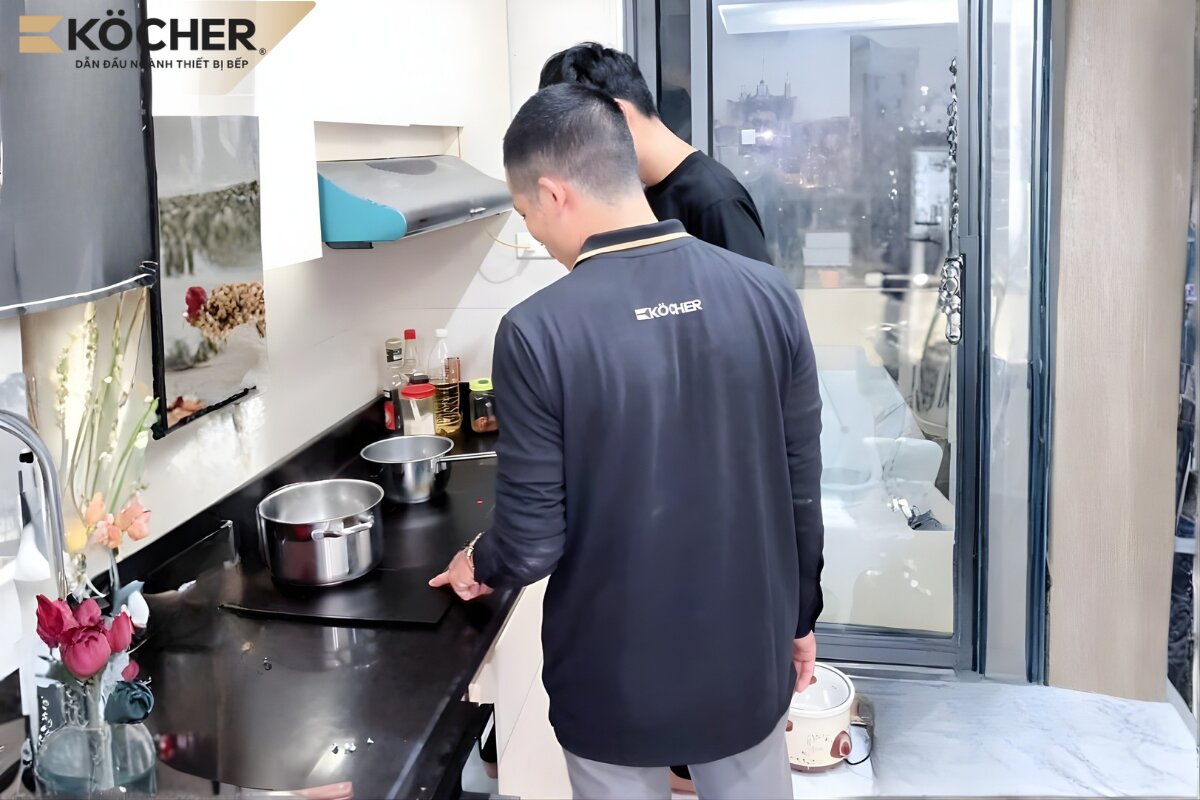 Built-in electric cookers are more complicated to repair than surface-mounted cookers, requiring the help of professional technicians
Distinguishing between built-in electric cookers and traditional electric cookers
The comparison table below will help you summarize the characteristics of traditional electric cookers and built-in electric cookers for the most accurate comparison:
| Criteria | Built-in electric cooker | Traditional electric cooker |
| Design | Installed below the countertop, neat, elegant | Placed on the countertop surface, easy to install and replace |
| Easy to clean | Easy to clean as there are no exposed corners | Harder to clean due to the outer surface and parts that easily get dirty |
| Cost | Usually has higher installation costs due to the need to drill and cut the countertop | Lower installation costs, easy to replace |
| Aesthetics | Provides a modern, elegant, and luxurious appearance | May not be as visually appealing as built-in electric cookers due to protruding parts |
| Installation and maintenance | Requires fixed installation, hard to move; maintenance requires technicians | Easier to move, replace, and maintain |
| Safety | Safer to use as the components are installed below | May cause collisions when used if not careful with the parts above the countertop |
| Application | Suitable for modern, luxurious spaces | Suitable for less elaborate spaces or those that require frequent moving |
| Durability | Usually has high durability if installed correctly | Durability is similar but more susceptible to impact, e.g., glass edge breaking due to pot collisions. |
Should you buy a built-in electric cooker or a traditional electric cooker?
The decision to choose which type of cooker often depends on the structure of the kitchen space, long-term usage purposes, and the financial capacity of each family.
- When to choose a built-in electric cooker: This is a suitable choice for townhouse spaces, apartments, or families who love minimalist, modern interior styles. This type of cooker is for users who prioritize cohesive aesthetics, desire a durable device with many safety features, and are ready to invest in a long-term fixed installation budget.
- When to choose a traditional electric cooker: This type of cooker meets the needs of users who frequently move, students, or families renting homes. It is also a reasonable option if you do not want to interfere with the current kitchen cabinet structure or need to save on initial investment costs. Köcher’s Asian models can all be installed on the countertop; you can refer to some outstanding products such as EI-330E, EI-221, EI-633, DI-333SE, DI-330 PLUS.
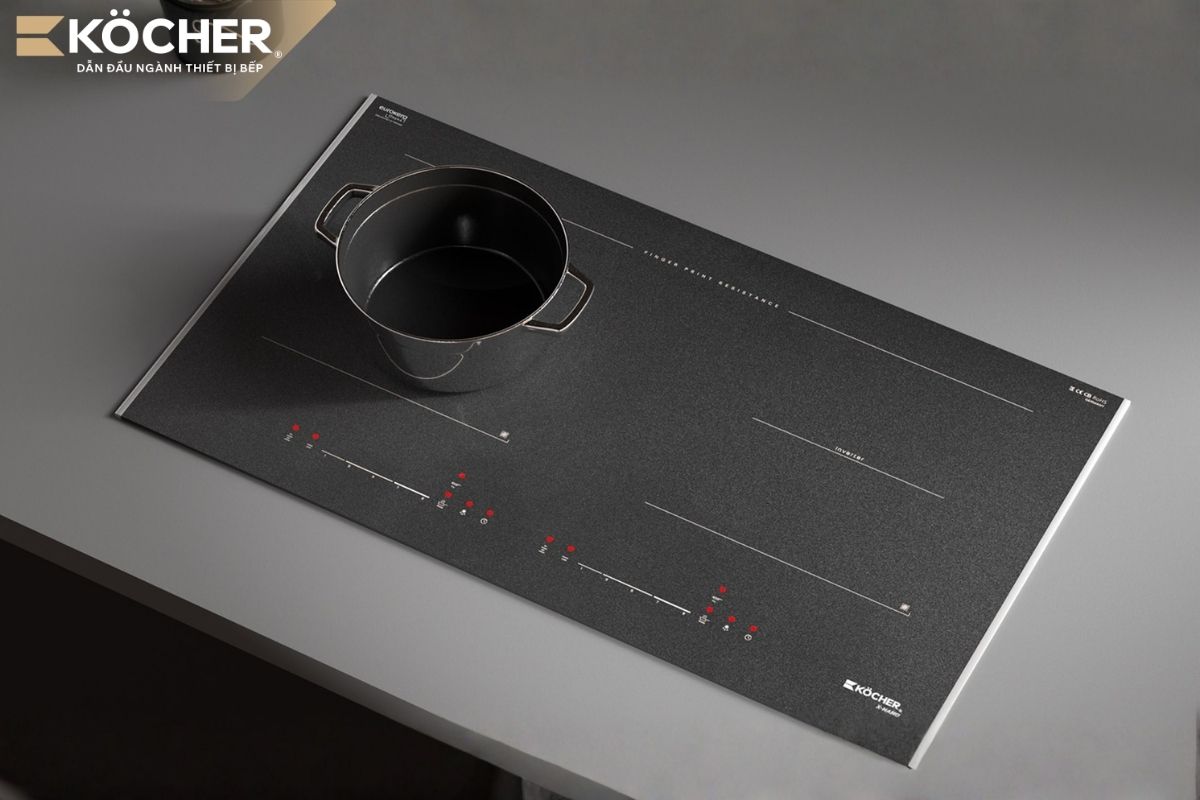 Built-in electric cookers are suitable for homeowners who prefer a minimalist, modern, and luxurious style
7 important notes when choosing to buy a built-in electric cooker at home
To choose a built-in electric cooker that meets usage needs and kitchen design, buyers should carefully consider the following factors:
- Choose the appropriate type of cooker (Induction, infrared, or combination): Induction cookers have a cooking efficiency of 90 – 95% but require specific pots, while infrared cookers achieve about 60% efficiency but can use all types of pots and can grill directly on the surface.
- Size of the cooker and compatible cutout size: Double cookers typically have a common glass surface size of 730 x 430mm and a corresponding cutout size of about 680 x 380mm. It is advisable to measure the actual size of your kitchen countertop before purchasing.
- Ensure heat dissipation principles: Built-in cookers emit a large amount of heat downwards into the kitchen cabinet while operating. Buyers need to check that there is at least 10 – 15cm of clearance under the cooker and ensure the kitchen cabinet has ventilation slots for the cooling fan system to operate stably, protecting the electronic components.
- Protect electrical safety by installing a circuit breaker: You should equip an additional circuit breaker to ensure the cooker operates without overloading the household electrical system.
- Choose induction cookers from reputable brands: Products from high-end brands using Schott Ceran glass, Eurokera, or pure copper heating elements, E.G.O heating elements usually have a longer lifespan.
- Prioritize safety features: Instead of too many complex cooking modes, it is better to choose cookers equipped with safety features such as child locks, residual heat warnings, automatic shut-off when overheating…
- Budget for installation costs: In addition to the listed price, you should calculate an additional 10 – 20% for expenses such as hiring installation workers, electrical wires, circuit breakers, and new pots and pans.
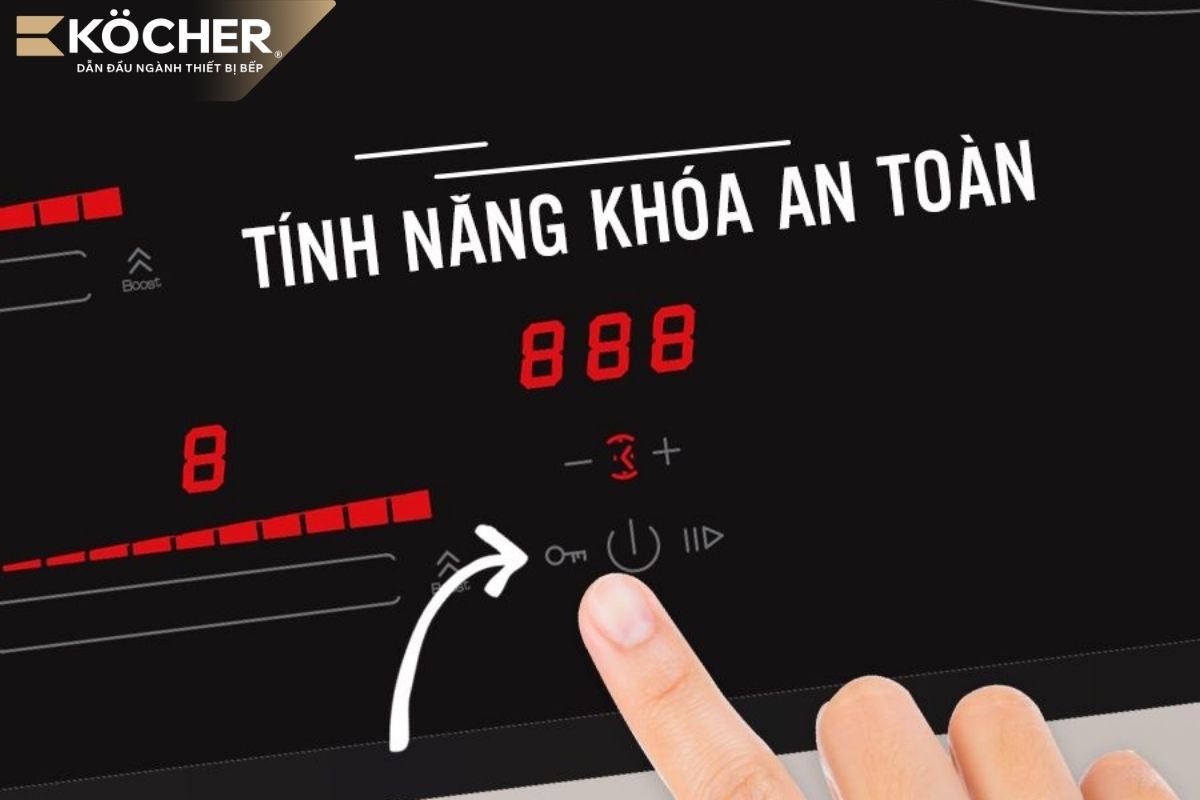 You should choose a cooker that integrates safety features for peace of mind during use
Above is a detailed explanation of the definition of what a built-in induction cooker is, its advantages and disadvantages, notes when purchasing, and a detailed comparison of types of built-in induction cookers. We hope this article can help you choose the right cooker for your family.
If you are looking for a high-end built-in electric cooker, please refer to models from Köcher such as X-NANO 9, X-NANO 8 PLUS, X-NANO 7, or DI-855GE. Equipped with Smart Inverter technology for energy savings, these cookers feature PotDetect+ sensors, simmering modes, and modern AI systems. This is the perfect solution to make cooking effective and the kitchen space luxurious according to European standards.
|
For detailed information about the product, please contact:
|