The kitchen appliance market today is incredibly diverse with the presence of many different technology lines, from traditional gas stoves to modern electric stoves. Choosing a stove is not only based on preference but also depends on the usage needs, safety, and financial capability of each family. Currently, the most popular types include: gas stoves, induction stoves, infrared stoves, and electric stoves. This article will analyze the characteristics of each type in detail to help you gain the most comprehensive overview.
| Comparison Criteria | Gas Stove | Induction Stove | Infrared Stove | Electric Induction Stove (Hybrid) |
|---|---|---|---|---|
| Operating Principle | Uses gas (LPG) to create a flame to heat the bottom of the pot | Electromagnetic induction – electric current flows through coils to create a magnetic field | Carbon filament or Halogen lamp emits infrared rays | Combines both induction and infrared zones |
| Suitable Pot Type | No pot restrictions – all types (ceramic, porcelain, clay, metal) | Pot restrictions – only use magnetic pots (stainless steel 430, cast iron) | No pot restrictions – all types of pots | Flexible – induction zone uses induction pots, infrared zone uses all |
| Safety | Potential risk of fire and explosion, gas leaks | Very safe – glass surface does not get too hot, self-shuts off | Stove surface gets very hot – easy to cause burns | Safe – easy to control each zone |
| Cooking Speed | Moderate – suitable for quick frying and stir-frying | Extremely fast | Moderate – retains heat long after turning off | Fast – depending on the cooking zone |
| Thermal Efficiency | 40-50% | 90-95% (highest) | 60-70% | 80-90% |
| Ease of Cleaning | Difficult – complex structure | Easy – wipe with a damp cloth | Fairly easy – wipe the glass surface | Easy – wipe the smooth glass surface |
| Aesthetics | Lonely – outdated design | Luxurious – modern | Beautiful – glass surface but dazzling | Very beautiful – combines two technologies |
| Price | About 1-3 million VND | About 8-30 million VND | About 4-8 million VND | About 10-20 million VND |
| Electricity Required | No – can be used during power outages | Yes – requires 220V | Yes – requires 220V | Yes – requires 220V |
| Most Suitable For | Traditional families, lacking electricity, needing quick frying and stir-frying | Modern families, wanting to save electricity, aesthetic-oriented | Those wanting to switch from gas to electric while keeping old pots | Families with diverse needs, wanting maximum flexibility |
Types of Stoves Today
Each type of stove has its own operating principle, directly affecting cooking efficiency and user experience.
Gas Stove
Gas stoves are a familiar “national” appliance, notable for their ability to control temperature instantly through direct flames, allowing cooks to be fully proactive in the cooking process.
Advantages:
- Compatible with all types of cooking materials from ceramic, porcelain to metal.
- Especially suitable for fried and stir-fried dishes that require high heat and flipping techniques.
- Maintains stable cooking even during power outages.
Disadvantages:
- Low thermal efficiency (only about 40-50%) due to significant heat loss to the environment.
- The structure of the flame divider and stove support is complex, making cleaning difficult.
- Potential risks of gas leaks or explosions if not regularly checked and maintained.
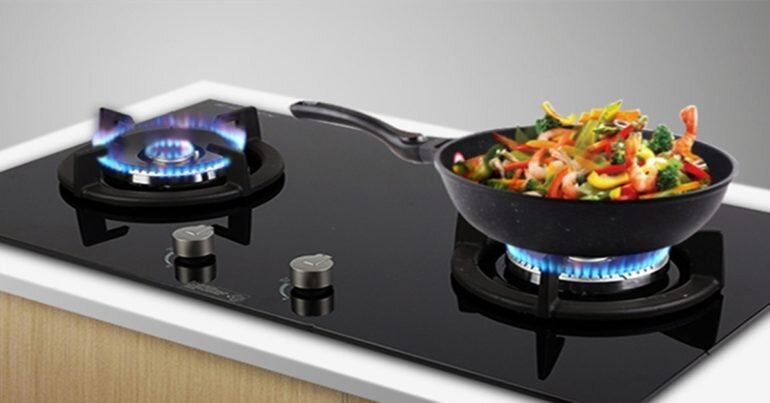 The national stove does not restrict pots
Induction Stove
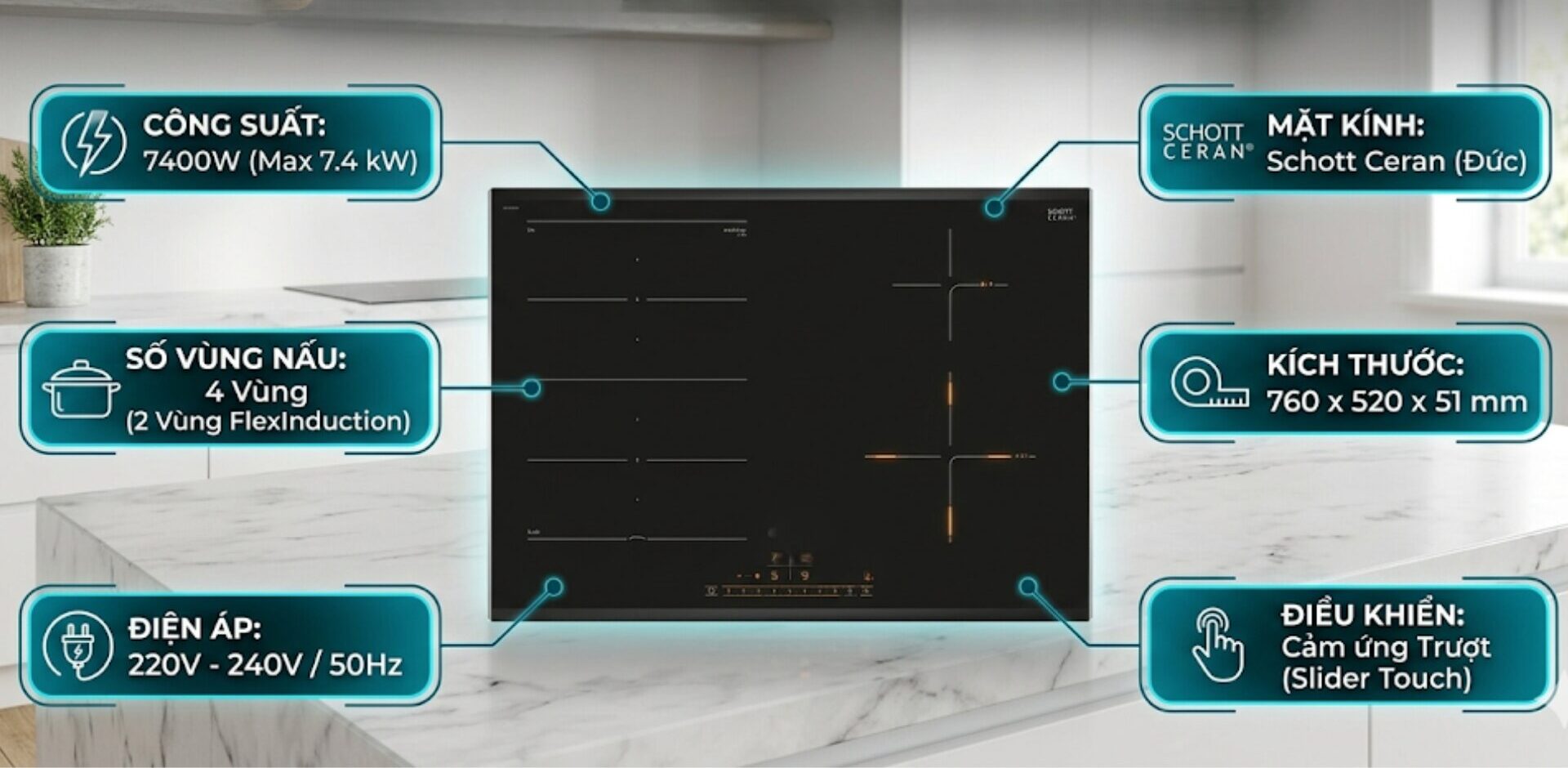
Induction stoves are currently the leading trend in modern kitchens thanks to the perfect combination of luxurious design and superior cooking performance based on the principle of electromagnetic induction.
Advantages:
- Extremely high energy efficiency (90-95%), helping to minimize cooking time and save electricity.
- High safety with a glass surface that does not heat up and smart features like automatic shut-off when overheating.
- Luxurious built-in design, flat surface makes cleaning extremely simple with just a damp cloth.
Disadvantages:
- Initial investment costs are often higher than traditional gas stoves.
- Quite picky about cooking utensils, only compatible with pots and pans with magnetic bottoms like cast iron or stainless steel 430.
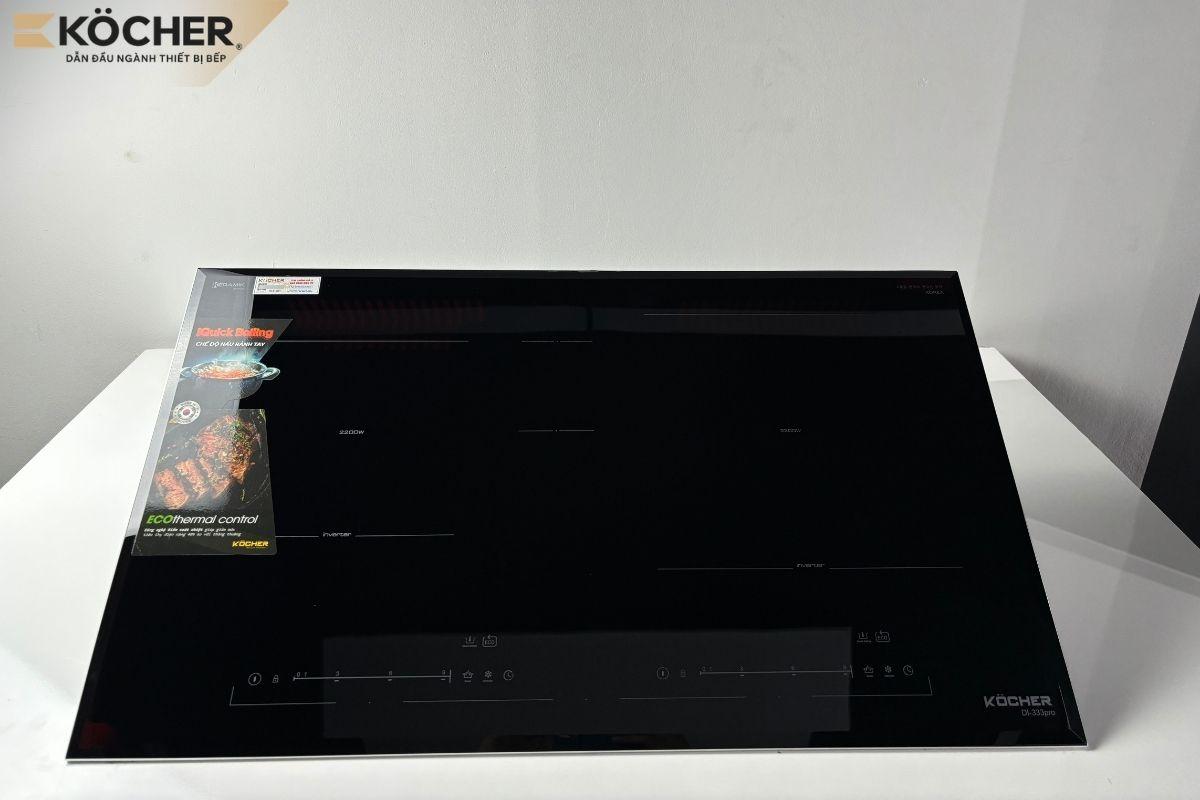 Induction stoves are increasingly favored for their safety and high aesthetics
Infrared Stove
Infrared stoves are an ideal alternative for those who want to switch to electric stoves but still want to fully utilize their existing cookware from gas stoves.
Advantages:
- Completely unrestricted pot use, can be flexibly used with all materials from ceramic, porcelain, clay to glass.
- Allows users to directly grill dry foods right on the stove surface.
- Ability to retain heat after turning off helps keep dishes hot for a long time.
Disadvantages:
- Thermal efficiency only reaches about 60-70%, significantly lower than induction stoves.
- The glass surface radiates a lot of heat during and after cooking, easily causing burns if accidentally touched.
- The light from the Halogen lamp system under the glass can be blinding when observed for long periods.
Electric Induction Stove (Hybrid)
This type of stove integrates both induction cooking zones and infrared cooking zones on the same glass surface, allowing users to maximize the advantages of both of the most modern technologies available today.
Advantages:
- Absolute flexibility: Use the induction zone for quick cooking, boiling soup, and the infrared zone for stewing or grilling.
- Completely solves the pot restriction issue by allowing the use of all types of materials from clay pots to glass on the infrared zone.
- Meets diverse cooking needs and styles in just one device.
Disadvantages:
- Investment costs are often higher than those of individual standard stoves.
- The stove size is quite large (usually double or triple stove), requiring more installation space.
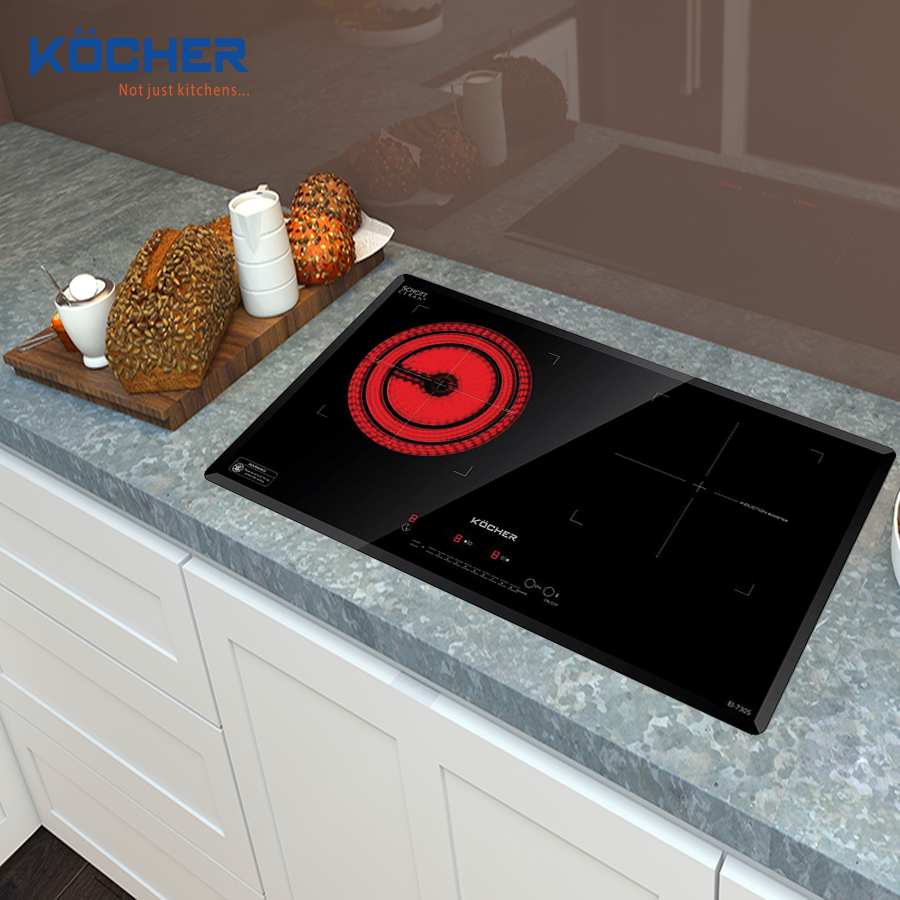 The electric induction stove combines both infrared and induction cooking
Experience in Choosing the Right Stove
Choosing a stove should not only be based on technical specifications but also consider lifestyle habits, aesthetics, and convenience during use.
Choose a stove suitable for the intended use:
- For students/renters: Should prioritize single induction stoves or single infrared stoves. The reason is their compact size, easy to move when changing residences, low cost, and significantly higher safety compared to mini gas stoves.
- For modern families: Should choose double induction stoves or built-in electric induction stoves. These stove lines offer a sophisticated beauty, integrate many smart features (timer, safety lock), and do not radiate heat, keeping the kitchen space always airy.
- For families with elderly members: Safety and ease of use must be the top criteria; therefore, an induction stove with a control panel that has clear buttons, an intuitive interface, and automatic shut-off features when overheating or forgetting to turn off the stove will help the elderly operate easily, while minimizing the risk of fire or respiratory issues due to emissions like traditional gas stoves.
Design and Installation:
- Built-in stove: Installed below the countertop, only the glass surface is exposed. This design is extremely luxurious, tidy, and is the trend of current apartments and condos.
- Surface stove: The entire stove body is placed on the countertop. This type is suitable for old kitchens that do not want to cut stone or need flexibility in moving.
- Number of cooking zones: Families of 2-4 people usually use double stoves. If the family is large or often hosts parties, you may consider stoves with 3 to 4 cooking zones to save time.
Control Panel and Glass Surface:
- Should choose stoves with separate touch control panels for each cooking zone for easy operation, especially for the elderly.
- Regarding the glass surface, high-end lines often use Schott Ceran (Germany) or EuroKera (France) glass that can withstand temperatures up to 1000°C and has excellent impact resistance, helping the stove to be durable and maintain its shine for a long time.
Easy to Clean: If you are a busy person, prioritize induction stoves. With a flat glass surface and no direct heat generated on the surface, food spills will not stick tightly, allowing you to clean easily in just a few seconds.
Included Utensils (Pots and Pans):
- Check your existing pot set: If you want to keep glass pots or clay pots, infrared stoves or hybrid (induction) stoves are the only options.
- If choosing induction stoves, you need to buy pots with magnetic bottoms (test with a magnet; if the magnet sticks tightly to the bottom of the pot, it can be used).
In summary, each type of stove has its own strengths and limitations, suitable for different needs and living spaces. If you prioritize tradition and do not mind the type of cooking pots, gas stoves are still a reliable companion; but if you aim for safety, aesthetics, and superior performance, induction and electric induction stoves are the trends that cannot be overlooked.
We hope that with the detailed sharing of characteristics and purchasing experiences above, you have enough information to decide which stove is most suitable for your family. Köcher is proud to be the pioneer in Vietnam bringing German technology into induction stove products. A good stove not only makes household chores easier but also plays an important role in keeping the flame of happiness and ensuring safety for all members of the home.