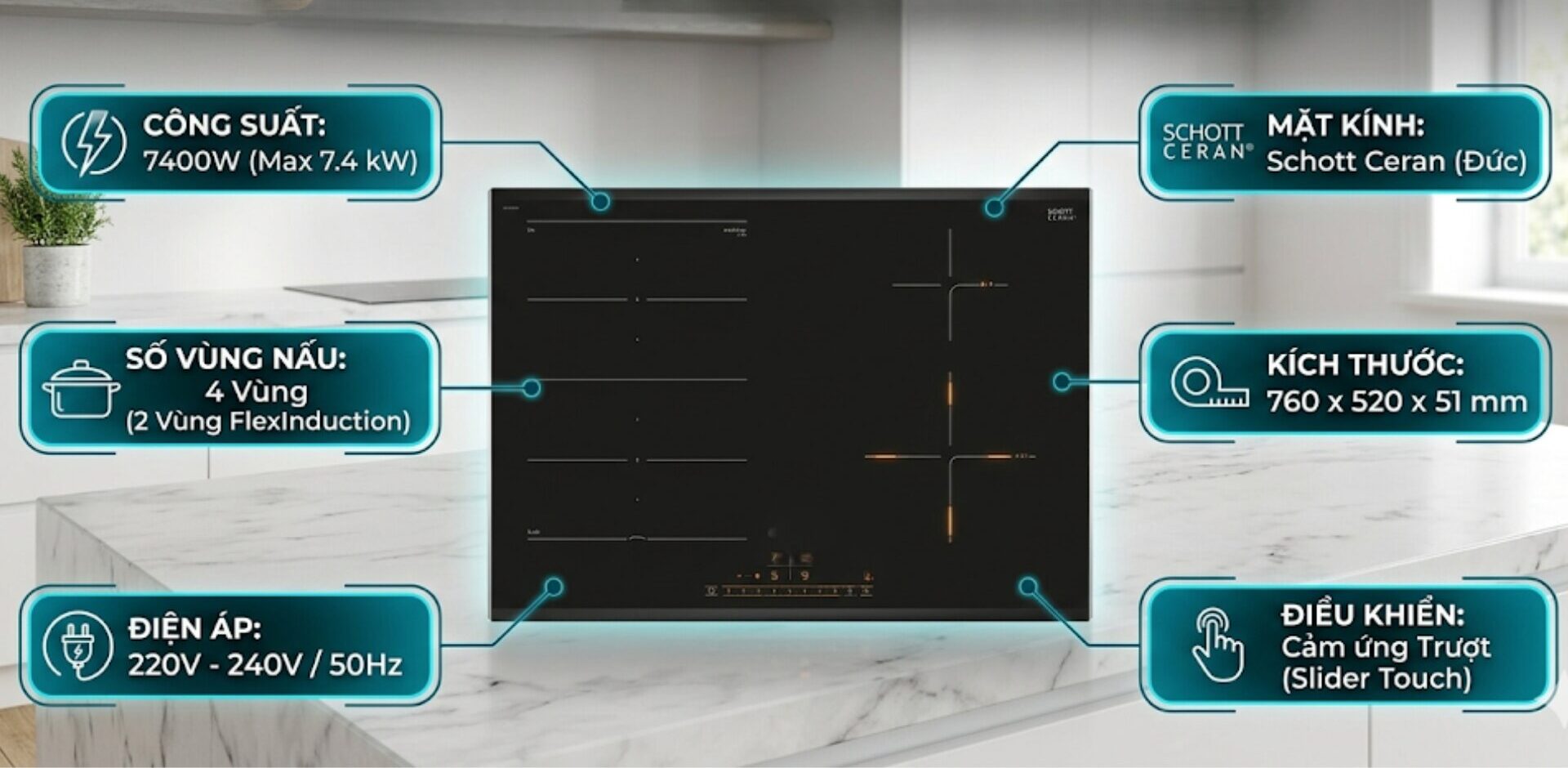
Induction cookers combined with infrared are increasingly being chosen by many families due to their flexibility and convenience for those transitioning from gas stoves, but they also come with certain limitations. The following article will provide you with 6 disadvantages of induction cookers combined with infrared, helping you make a better decision when choosing and using.
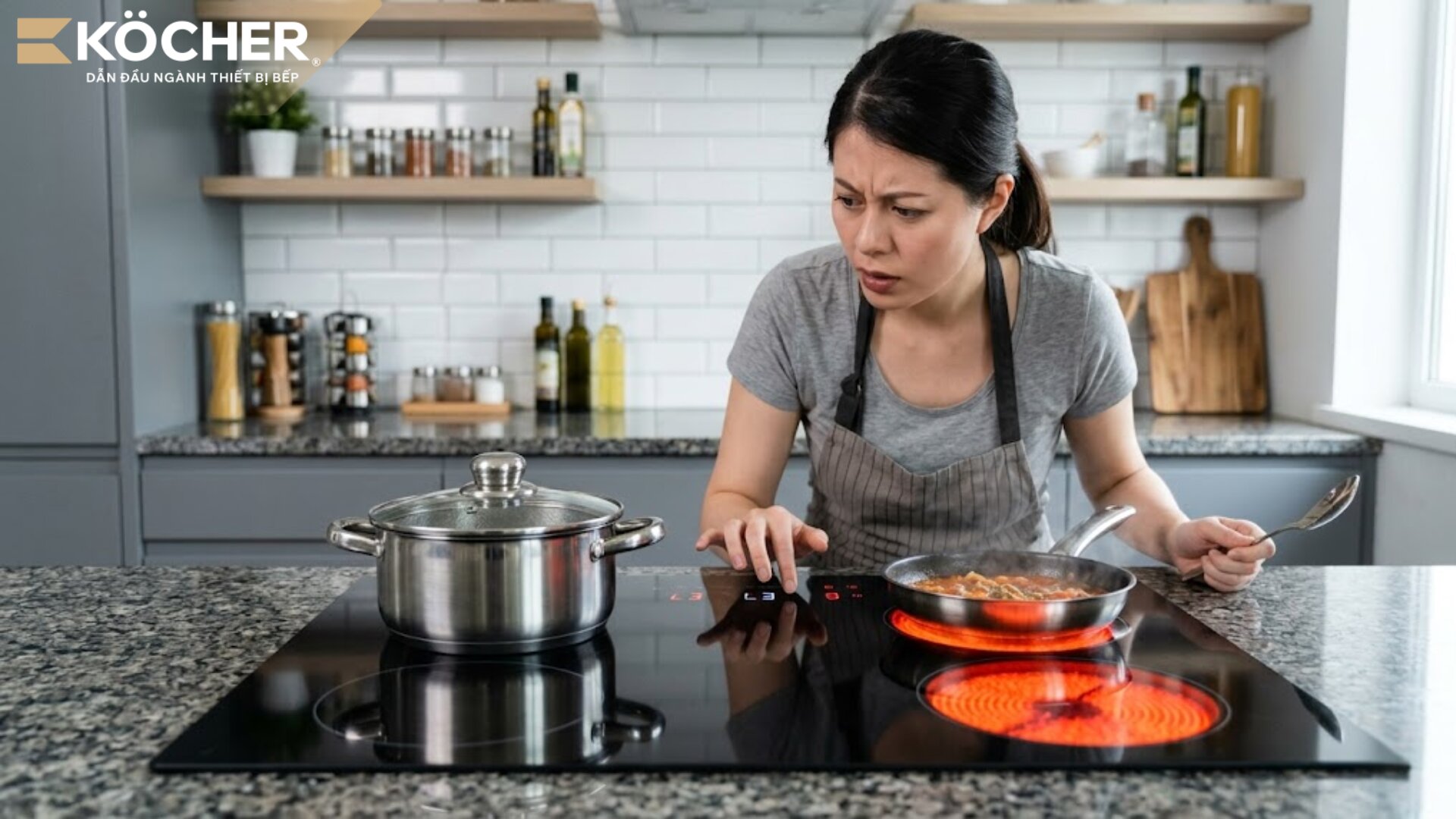
6 disadvantages of induction cookers combined with infrared
Induction cookers combined with infrared integrate two cooking technologies on the same glass surface, providing certain conveniences, but also creating many specific disadvantages. Specifically:
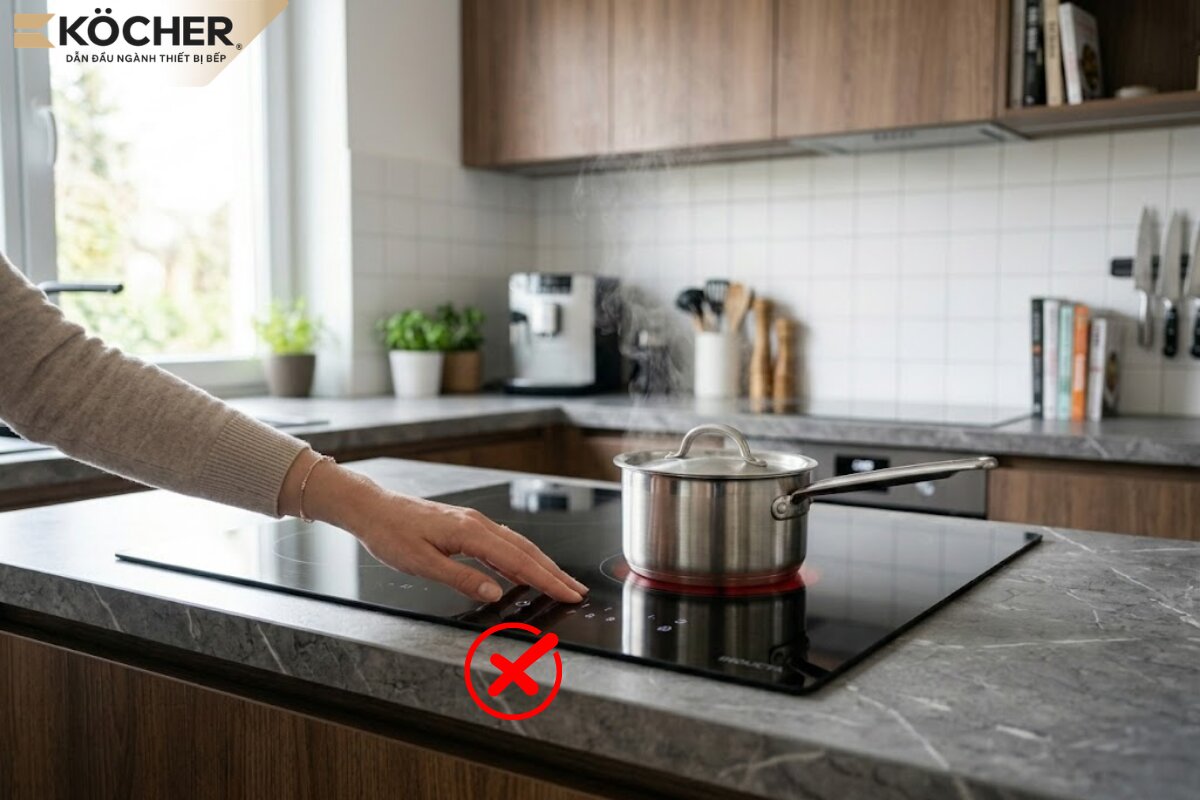
Infrared glass surface retains heat for a long time after being turned off
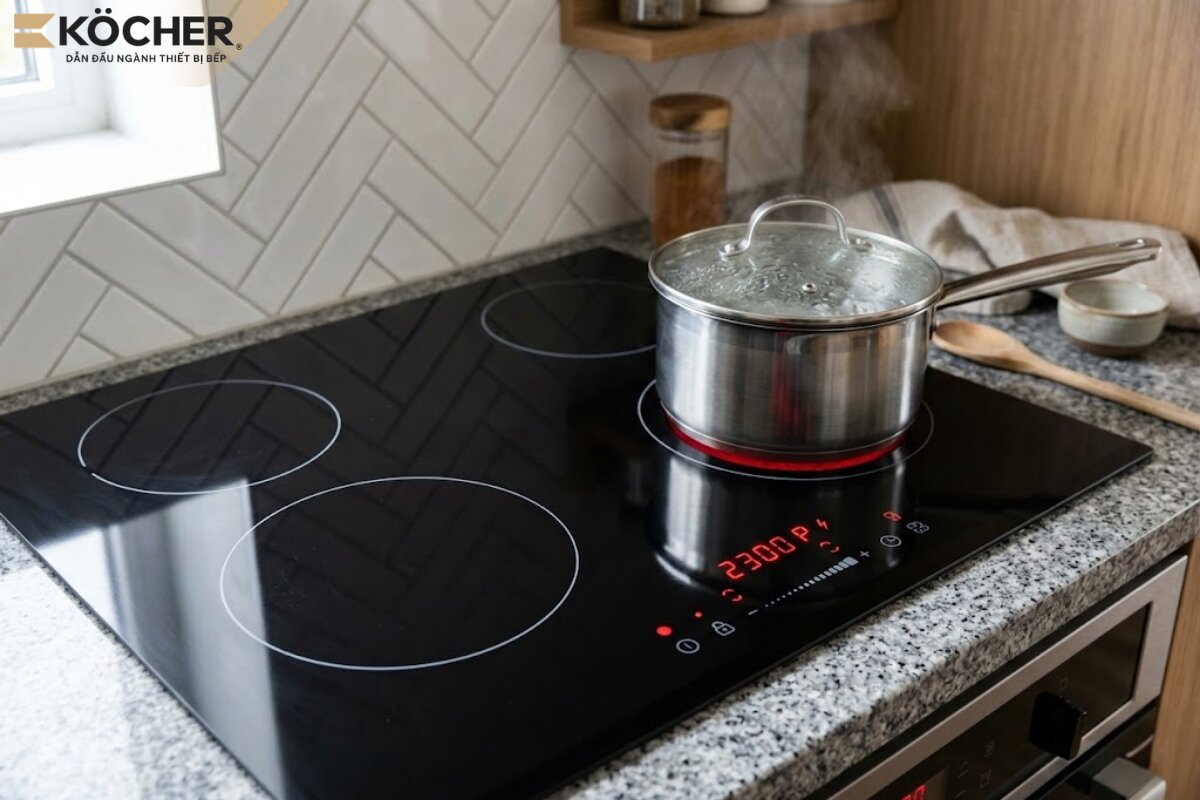
Unlike the induction zone (the glass surface is almost not hot because heat is only generated at the bottom of the pot), the infrared zone uses a heating wire underneath to directly heat the glass surface. After turning off the stove, the infrared zone surface still retains heat for about 10 – 15 minutes.
- Consequence: It can easily cause burns if touched after cooking, especially for children or elderly people in the family.
- How to limit: Always check the warning light before touching or cleaning. After cooking, it is advisable to remove the pot from the stove to prevent heat from the pot from transferring back to the glass surface.
Higher electricity consumption when using the infrared zone
The infrared zone has a heat conversion efficiency of only about 60 – 70% because some of the heat escapes into the surrounding air instead of being concentrated at the bottom of the pot, which is significantly lower than the induction zone that achieves 90 – 95%.
- Consequence: Monthly electricity costs increase, especially for families who frequently cook on the infrared zone.
- How to limit: Prioritize using the infrared zone for quick-cooking dishes like frying and sautéing, while for dishes that require long cooking like stewing or simmering, use the induction zone and compatible pots to save electricity.
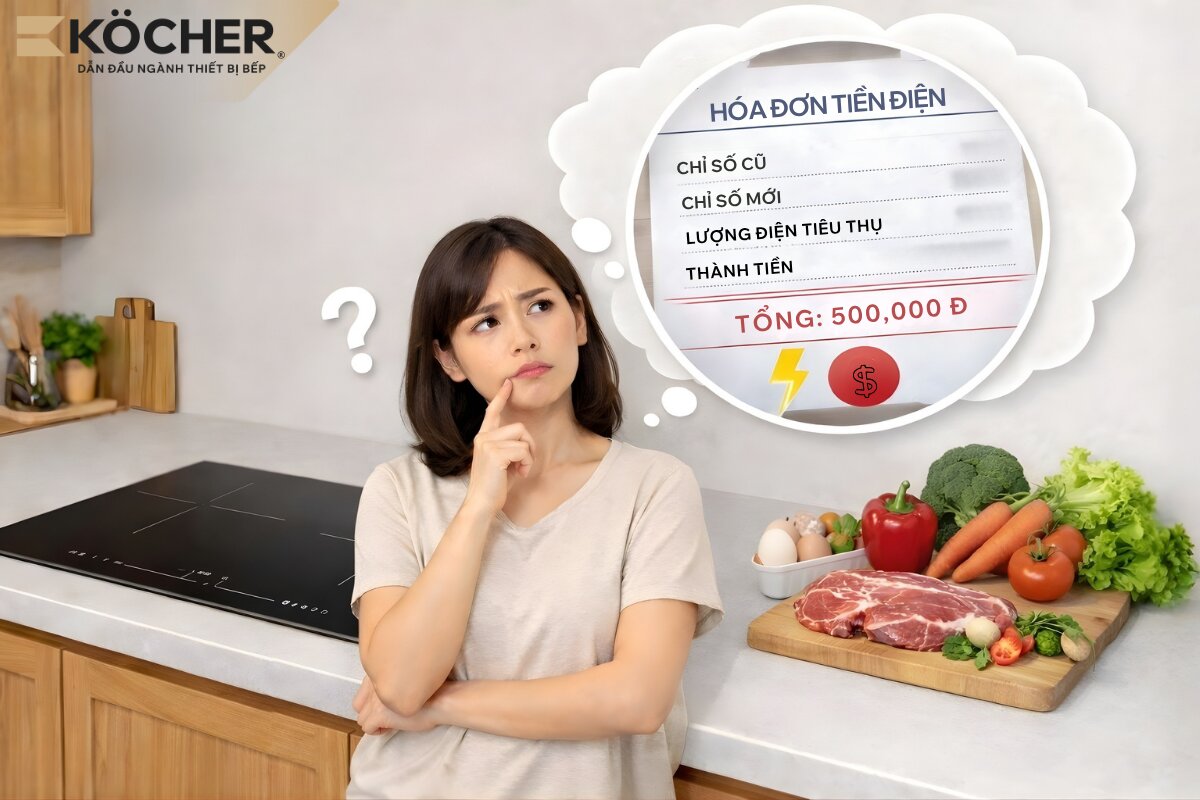
Power is shared when both zones are turned on simultaneously
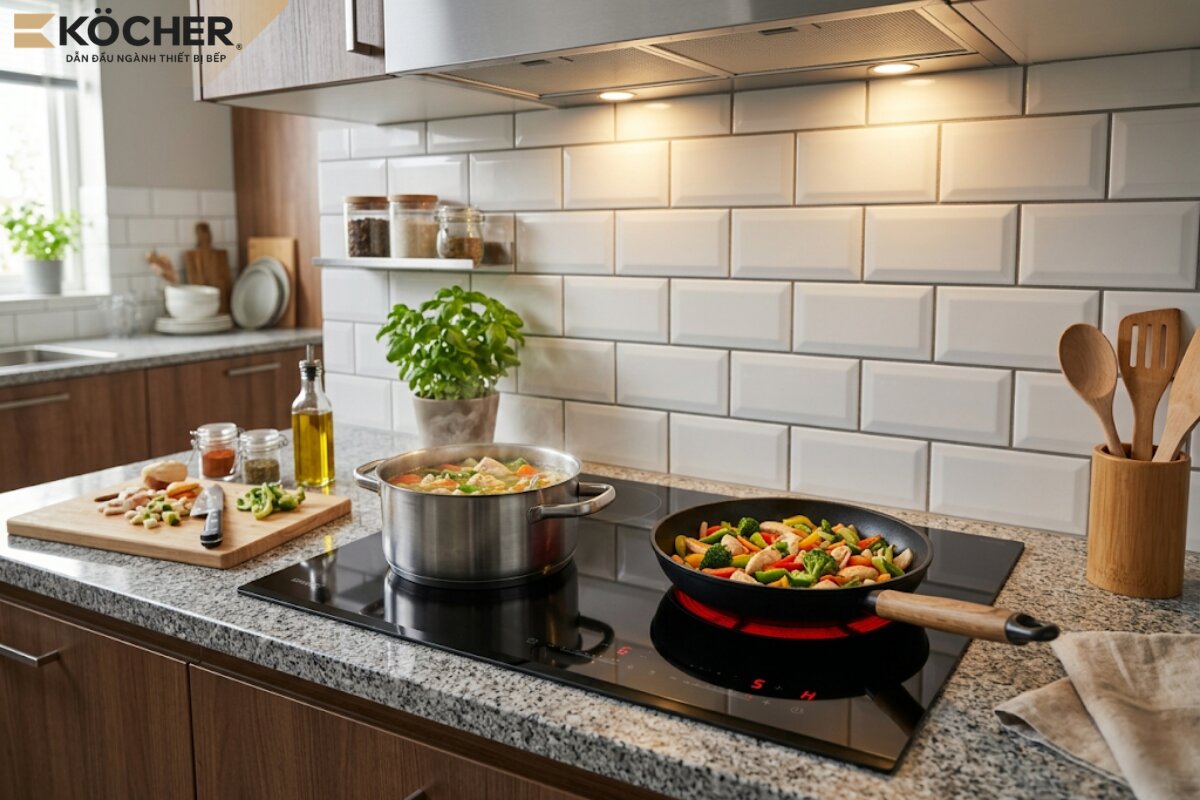
Most combination stoves have a power limit. When both zones are turned on simultaneously, the circuit board automatically redistributes power so that each zone operates below maximum capacity, resulting in longer boiling times compared to using each zone individually.
- Consequence: The actual power on one zone may be reduced, causing that zone to cook slower than usual, which is inconvenient when handling multiple dishes at the same time.
- How to limit: Do not use the Booster function simultaneously on both cooking zones for long periods.
Higher initial investment and repair costs
Induction cookers combined with infrared integrate two technologies, so their price is often higher than infrared cookers in the same segment. Additionally, due to the more complex design of induction cookers combined with infrared, it is often difficult to find experienced technicians for repairs.
- Consequence: Longer wait times for repairs, higher service costs, and the need for technicians with appropriate experience and expertise.
- How to limit: Prioritize brands with official warranty centers, a minimum warranty of 2 years, and a well-trained technical team.
Infrared zone radiates more heat into the kitchen space
The infrared zone radiates heat in all directions, making the air around the stove hotter compared to using induction cookers, especially in narrow, poorly ventilated kitchen spaces or on hot summer days.
- Consequence: The person cooking may feel hotter when using the device for a long time.
- How to limit: Place the stove in a well-ventilated position, with an effective range hood, and limit the use of the infrared zone for dishes that require long cooking.
Different cleaning and maintenance requirements for each cooking zone
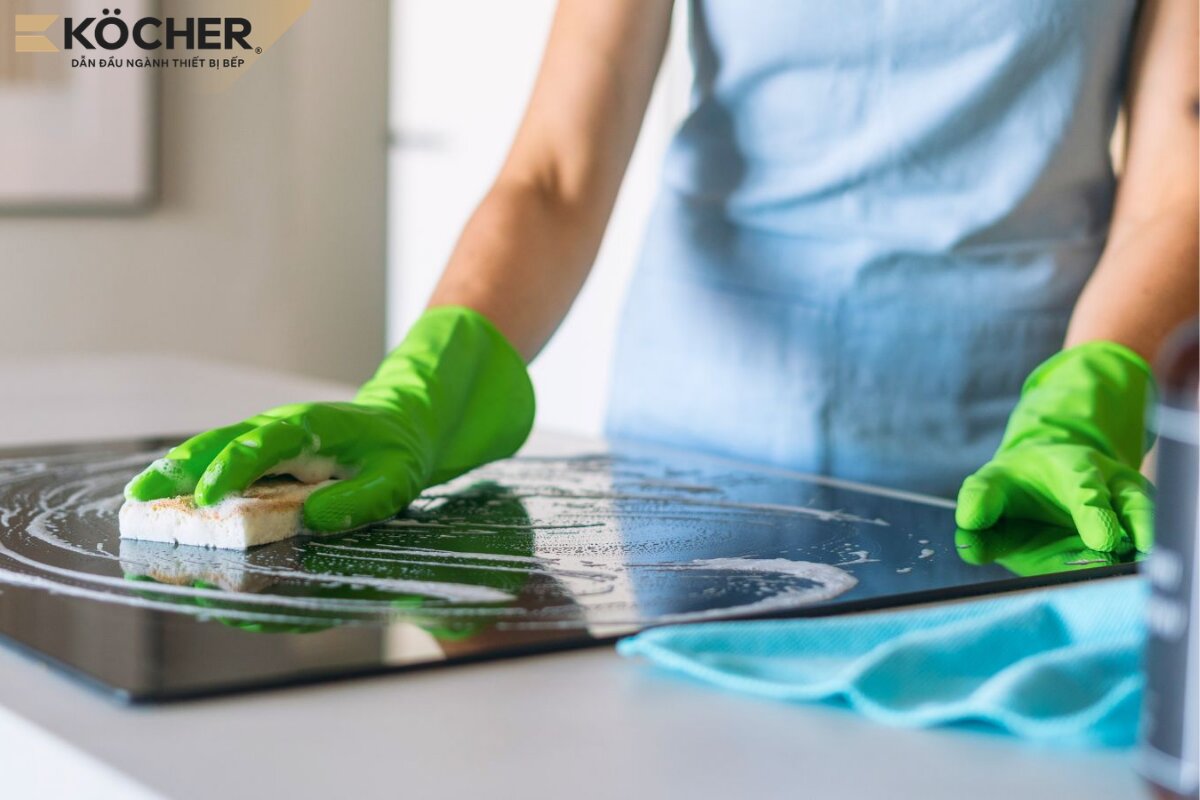
The infrared zone can withstand higher direct heat than the induction zone, causing the glass surface to easily show yellow stains, more food residues, and cannot be cleaned like the induction zone; it requires the use of specialized cleaning solutions suitable for each zone to avoid damaging the surface protective layer.
- Consequence: The stove surface loses aesthetics quickly, and the lifespan of the glass surface decreases if the wrong tools or cleaning solutions are used.
- How to limit: Wait for the infrared zone to cool down completely before cleaning with specialized glass surface cleaning solutions and a soft cloth; absolutely do not use hard scrubbing pads or strong detergents.
Who is the induction cooker combined with infrared suitable for?
Despite the aforementioned limitations, induction cookers combined with infrared are still a suitable choice for many families.
2.1. Families transitioning from gas stoves to electric stoves
Induction cookers combined with infrared are the ideal conversion solution that helps utilize existing cooking utensils such as clay pots, aluminum pots, or glass from old gas stoves, not only optimizing initial investment costs but also helping homemakers quickly adapt to new cooking technology without completely changing their specific cooking habits.
2.2. Those who love braised, stewed, and grilled dishes
- Diverse cooking: The infrared zone maintains stable and even heat, suitable for dishes that require low simmering, with heat radiating evenly from all sides of the pot’s bottom, such as braised fish, bone broth, and stewed meat.
- Flexible grilling: Thanks to its powerful heat emission capability, users can prepare delicious grilled dishes right on the infrared cooking zone. To ensure hygiene and maintain the long-term durability of the glass surface, users should use specialized grilling racks instead of placing food directly on the stove surface.
2.3. Those who prioritize high safety solutions and convenience in cleaning
Induction cookers combined with infrared completely eliminate the risk of gas leaks and uncontrolled open flames, providing superior safety thanks to integrated automatic shut-off sensors. Additionally, with a flat glass surface, cleaning after use becomes easy, without the need for disassembling the gas stove’s grates.
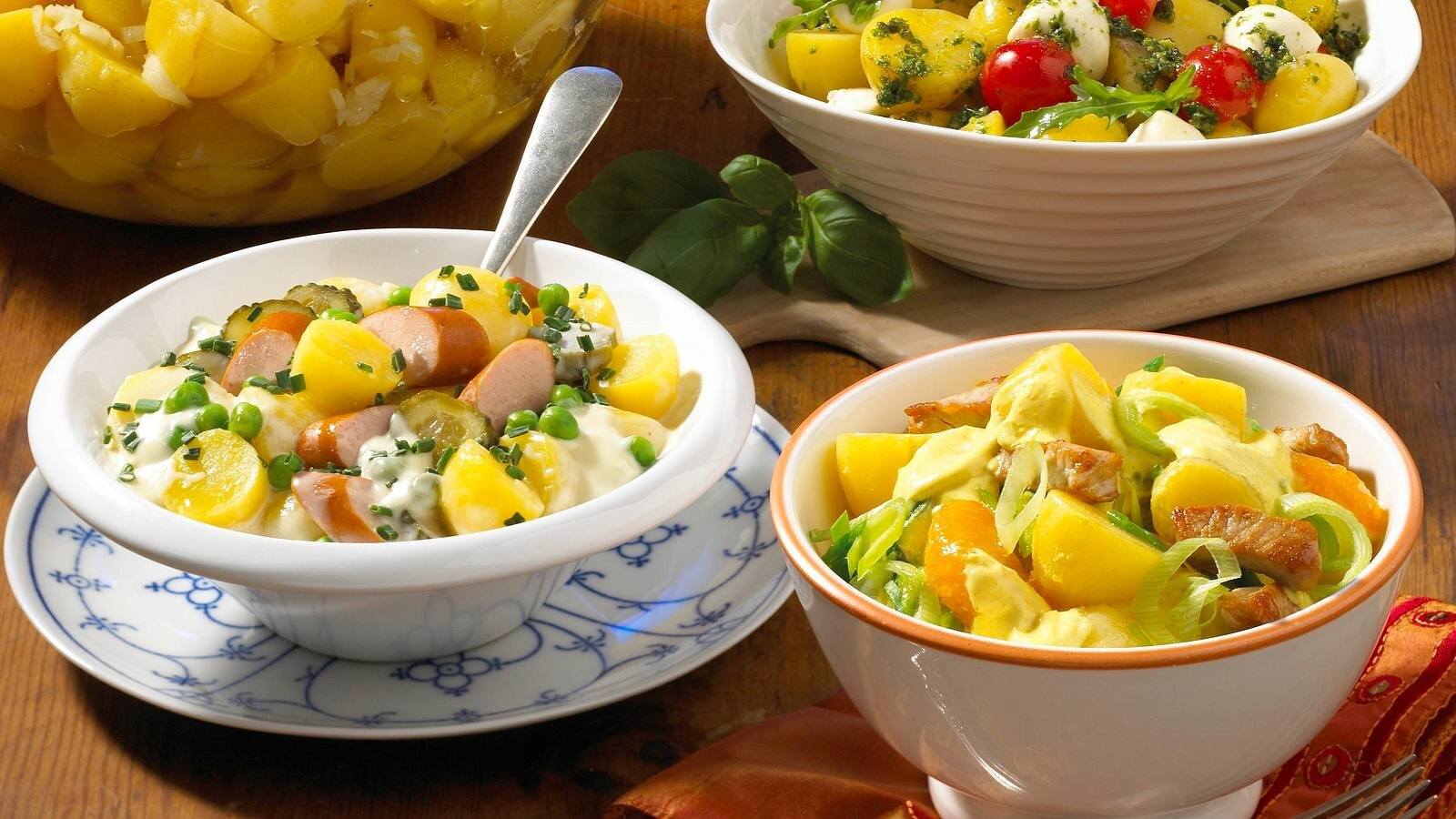
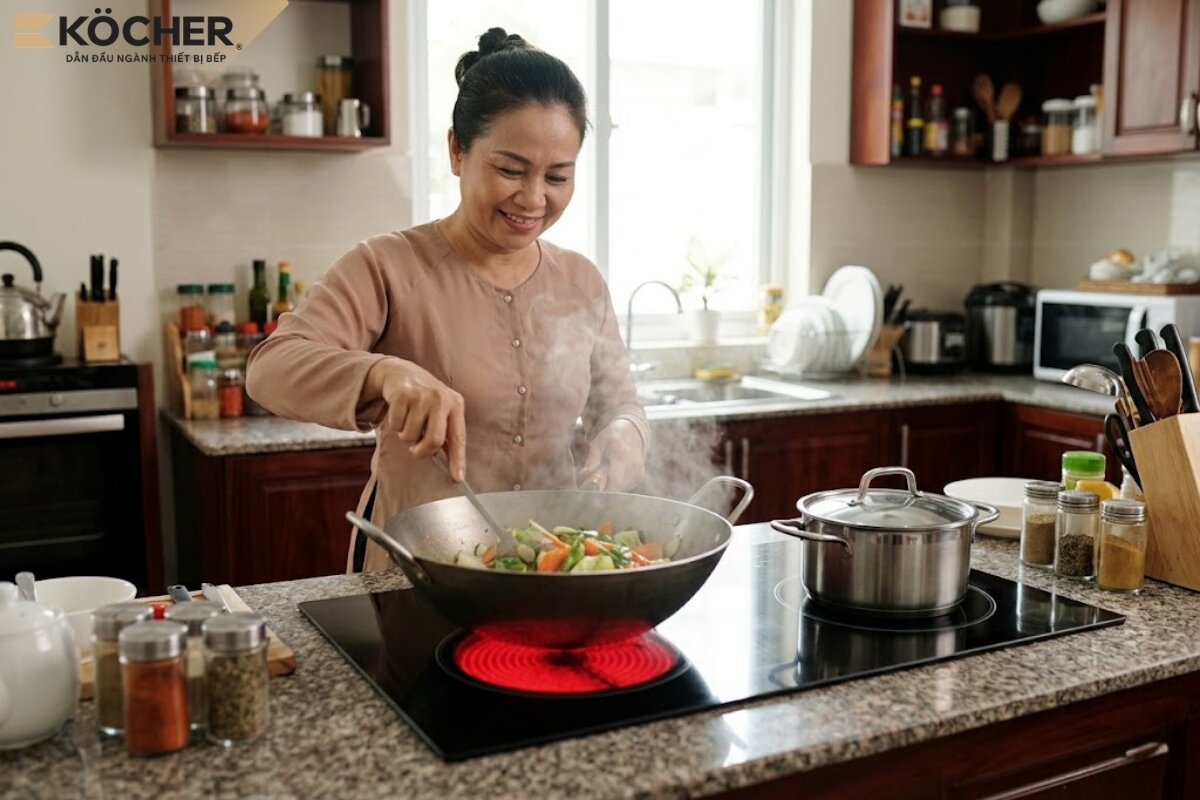 Induction cookers combined with infrared help you cook a variety of dishes.
I hope the above article has helped you understand the disadvantages of induction cookers combined with infrared and make an informed purchasing decision. Despite many limitations, induction cookers combined with infrared still provide optimal flexibility for modern kitchens when operated correctly.
If you are looking for high-quality induction cookers combined with infrared, please check out Köcher’s products here. As a leading brand in the kitchen appliance industry with a transparent warranty policy, Köcher is proud to offer durable and high-class cooking solutions for your family.
|
Köcher induction cookers pioneer German technology – For detailed product information, please contact:
|