When faced with the decision to upgrade kitchen equipment, the question which consumes more electricity: induction cookers or electric cookers is always the top concern for consumers. The article below will analyze in detail the heating principles and perform calculations on actual energy bills to help you clearly answer the question of which consumes more electricity: induction cookers or electric cookers.
Which consumes more electricity: induction cookers or electric cookers?
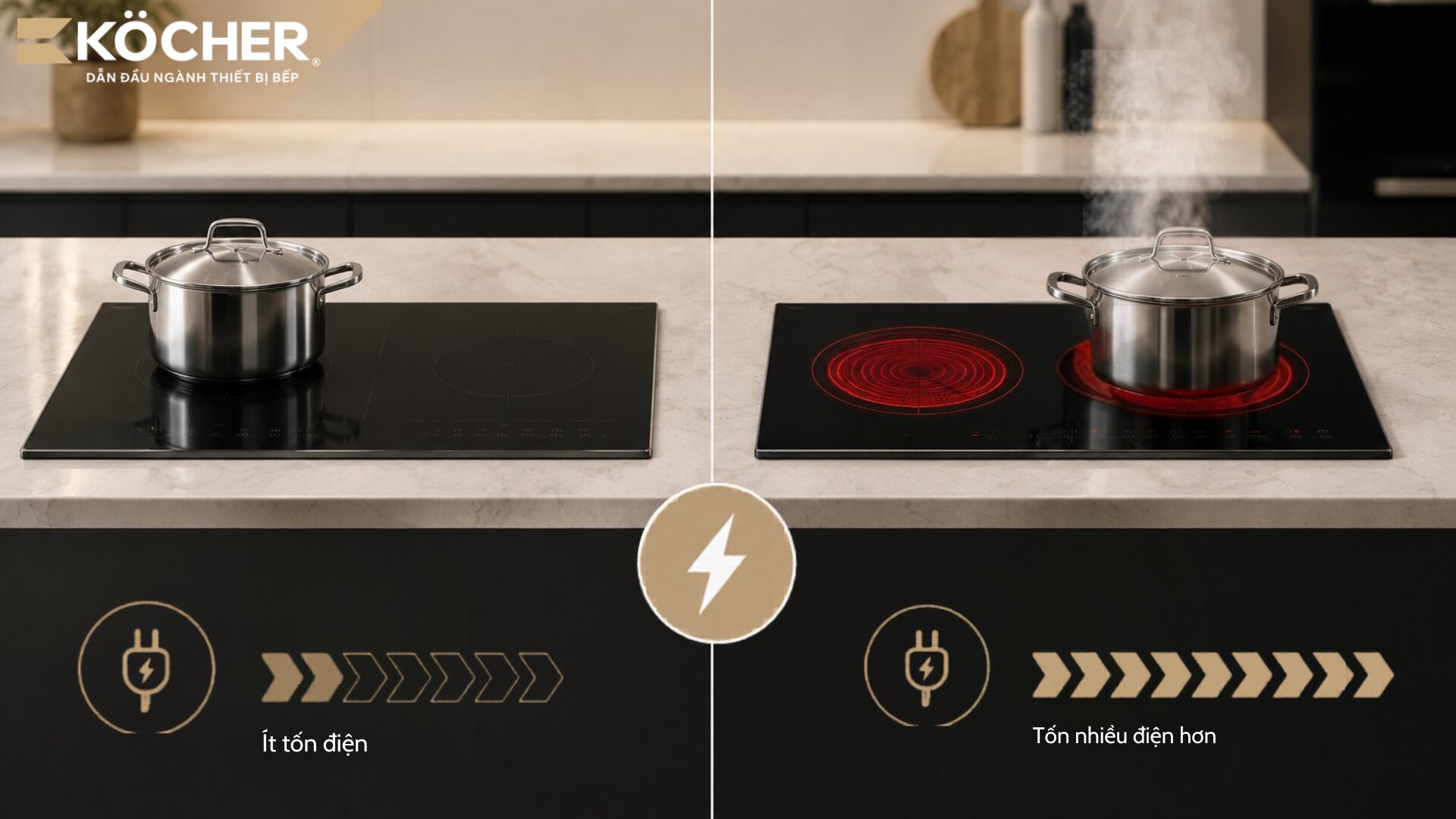
To answer directly: Electric cookers consume more electricity than induction cookers. Under the same cooking conditions and input power levels, electric cookers (infrared cookers) consume about 25% – 30% more electricity than induction cookers.
This difference is clearly explained through the operating mechanisms of each type of cooker below:
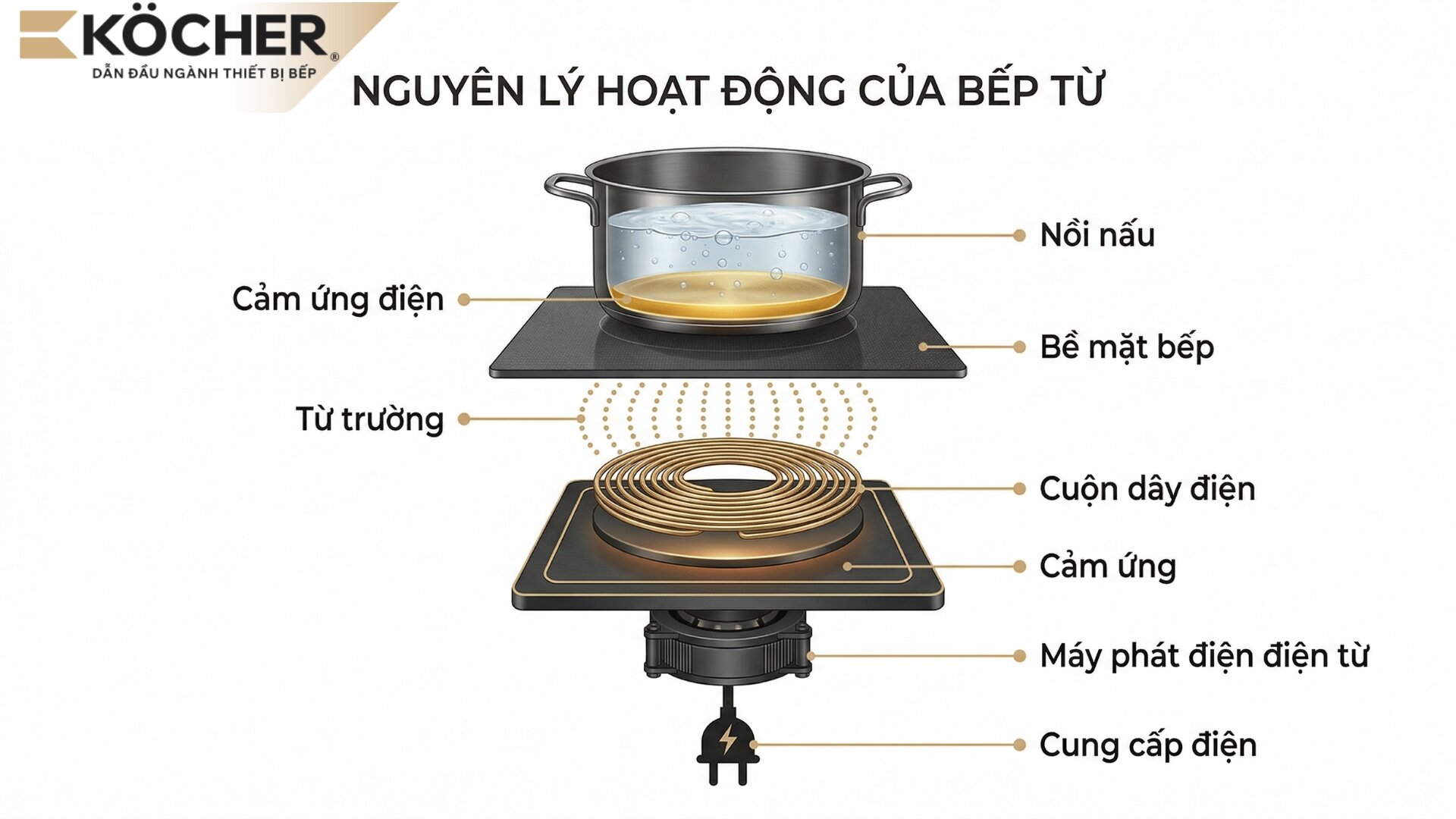
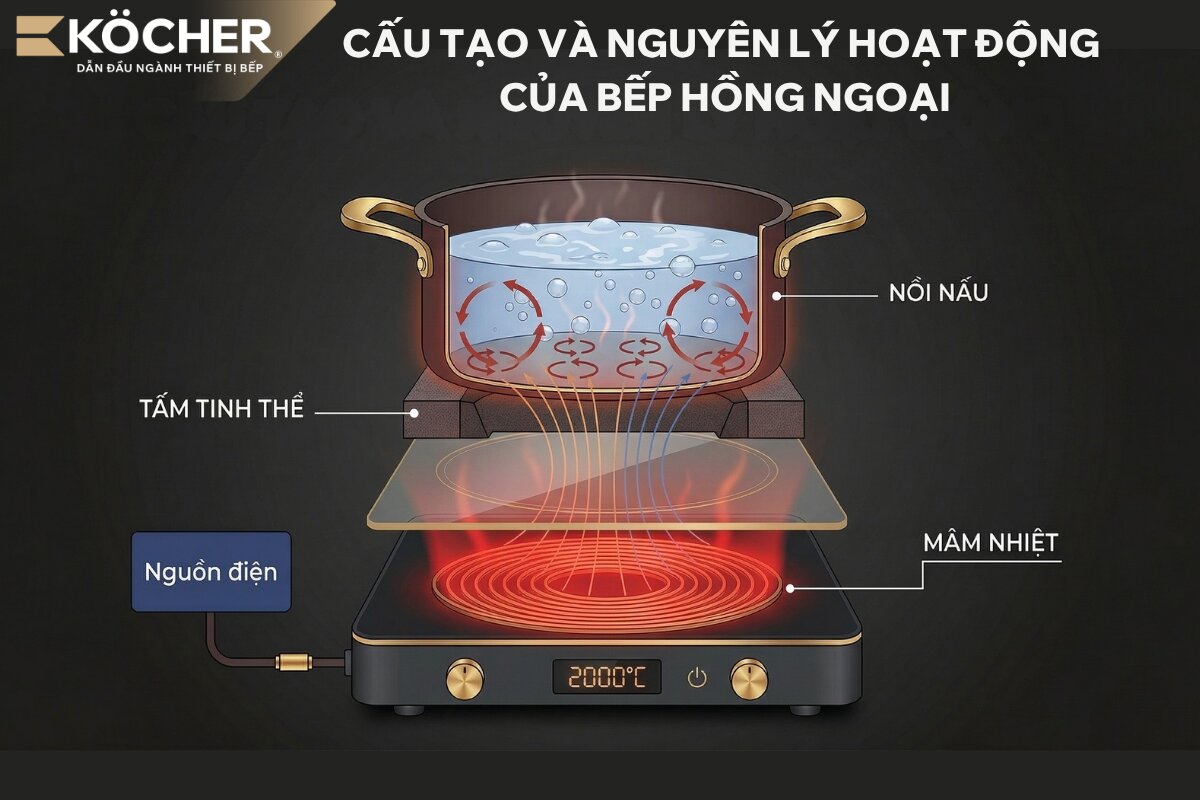
- Operating principle of induction cookers: The device operates based on the principle of electromagnetic induction. When electric current passes through a copper coil (induction plate) placed under the glass surface, a varying magnetic field is generated and directly affects the ferromagnetic molecules at the bottom of the pot. These molecules oscillate strongly under the influence of the eddy current and generate heat right at the bottom of the pot to cook the food. Thanks to this direct heating mechanism, the cooker does not lose heat to intermediate heating, thus having a high electricity-saving capability.
- Operating principle of electric cookers (infrared): The device operates based on the principle of thermal radiation and convergence. Electric current passes through electronic circuits to heat the resistance coil (carbon thermal ribbon or halogen bulb) inside the heating plate, emitting a large amount of heat. This heat must pass through the ceramic glass surface, converge, and then act on the bottom of the pot to cook the food. This process requires a large amount of electricity to heat the glass surface first, while also radiating heat into the surrounding environment, causing significant energy loss.
Therefore, when comparing which consumes more electricity: induction cookers or electric cookers, induction cookers always have the advantage due to their intelligent heat concentration mechanism, minimizing energy waste to the outside.
 |
 |
Comparison of actual electricity consumption of induction cookers and electric cookers
To help you gain a realistic perspective and accurately quantify whether induction cookers or electric cookers consume more electricity, let’s compare these two devices at the same standard cooking power level:
| Criteria | Induction Cooker (Electromagnetic Induction) | Electric Cooker (Infrared Radiation) |
| Thermal Efficiency | 90% – 95% | 60% – 70% |
| Time to Boil 1 Liter of Water | About 2 – 3 minutes | About 5 – 7 minutes |
| Heat Dissipation Characteristics | Very low heat loss, surrounding glass area is cool | High heat loss, glass area is glowing red |
| Heat Retention Ability After Turning Off | Cools quickly, cooling fan runs for 2 – 3 minutes | Cools slowly, glass surface retains heat for a long time |
| Compatibility with Pots and Pans | Selective pot use (only pots with magnetic bottoms) | No pot selection (glass, ceramic, clay…) |
Example of calculating electricity costs over 1 month (30 days):
Assuming your family uses the cooker for an average of 1 hour each day with a designated power level of 2000W (2kW). The average household electricity price is approximately 2,380 VND/kWh.
- For electric cookers: Due to the low thermal efficiency of about 60%, the heat transfer time is extended, so the cooker needs to run for a full hour each day to complete the meal.
- Electricity consumption per day: 2kW X 1 hour = 2 kWh.
- Electricity consumption over 30 days: 2 kWh X 30 = 60 kWh.
- Monthly electricity cost: 60 kWh X 2,380 VND = 142,800 VND.
- For induction cookers: Thanks to the high thermal efficiency of over 90% and instant heating capability, the cooking time and food quantity are reduced by about 30% (only taking about 40 minutes each day, equivalent to 0.67 hours).
- Electricity consumption per day: 2kW X 0.67 hours ~ 1.34 kWh.
- Electricity consumption over 30 days: 1.34 kWh X 30 = 40.2 kWh.
- Monthly electricity cost: 40.2 kWh X 2,380 VND ~ 95,676 VND.
| Analysis of actual data shows that induction cookers save about 33% more electricity costs each month compared to electric cookers. Therefore, homemakers no longer have to worry about which consumes more electricity: induction cookers or electric cookers. |
Which type of cooker should you choose to suit your needs?
Answering the question of which consumes more electricity: induction cookers or electric cookers only meets the criteria for operational costs. To choose the right product, you need to compare the functionality of the two types of cookers with your family’s actual needs:
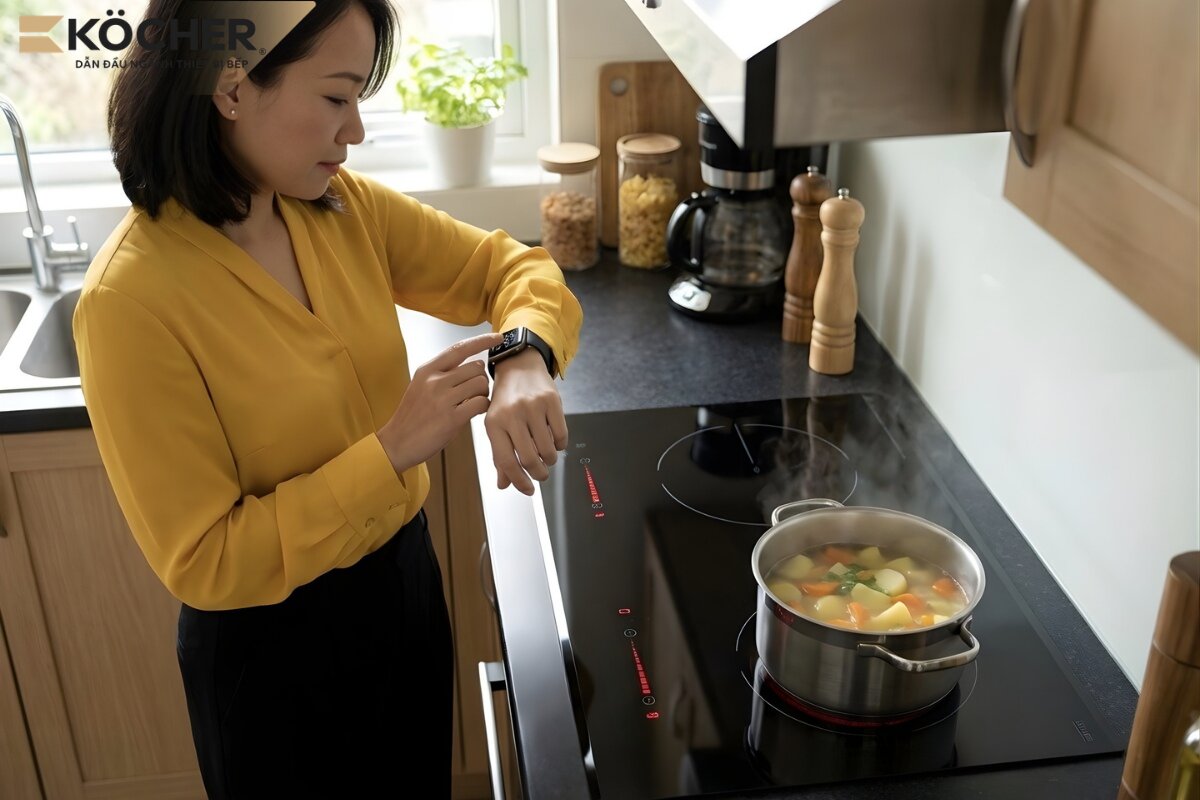
- When to choose induction cookers: You should prioritize choosing induction cookers if your family frequently cooks and wants to save on long-term electricity costs. This device is very suitable for busy lifestyles due to its fast heating speed and high safety (the surrounding glass surface remains cool, reducing the risk of burns). However, you need to invest in a set of pots and pans with magnetic bottoms that meet standards for use.
- When electric cookers are more suitable: Electric cookers will be the optimal solution if your initial budget for purchasing a cooker is moderate and you want to utilize all types of clay pots and glass pots available in your home.
To optimize functionality, many families today choose the induction electric cooker (a hybrid of induction and infrared) from Köcher. This combination allows you to have a super-fast induction cooking zone to save electricity for boiling water and cooking soup, as well as a versatile infrared electric cooking zone for stewing fish in clay pots or grilling food.
 You should prioritize choosing induction cookers if your family frequently cooks and wants to save on long-term electricity costs[/caption>
3 tips for choosing energy-saving cookers for your family
To control your electricity bill at the most optimal level, Köcher recommends that you apply the following selection tips:
- Choose cookers with Inverter technology: You should prioritize purchasing cookers equipped with smart Inverter technology. This technology can automatically adjust the frequency of the electric current to maintain a stable low temperature, helping the cooker save up to 35% electricity consumption compared to conventional cookers that use continuous on-off mechanisms.
- Choose power suitable for your needs: The power of the cooking zone needs to be compatible with your family’s cooking scale. You should choose double cookers with a total operating power of 4000W or more to shorten cooking time, reduce progressive electricity consumption, and protect the durability of the E.G.O (Germany) circuit board.
- Choose the number of cooking zones suitable for your needs: Single cookers will be suitable for students or single individuals, while double or triple cookers are ideal choices for larger families.
In summary, the question which consumes more electricity: induction cookers or electric cookers has been clarified based on the superior thermal transfer efficiency of induction technology. Building a scientific cooking habit and choosing high-quality equipment that meets German standards will help families optimize their monthly energy costs most effectively.
|
Köcher induction cookers pioneer German technology – For detailed product information, please contact:
|