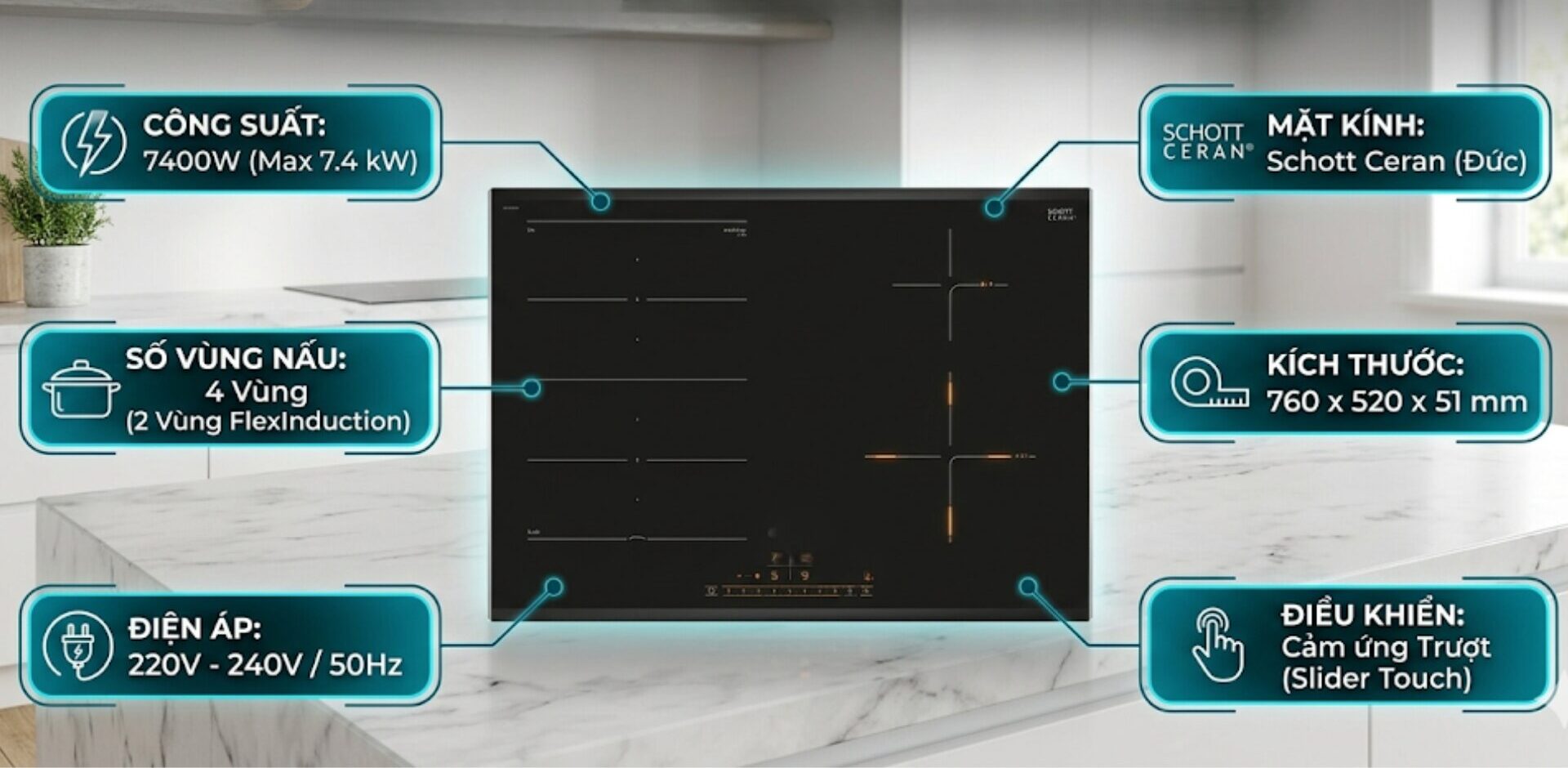
Understanding how to use induction cookers not only helps you prepare delicious meals but also ensures high safety and optimizes electricity costs for your family. The article below will guide you through each step of operating the device and explain the meanings of common errors when using induction cookers.
Principle of operation of induction cookers you need to know
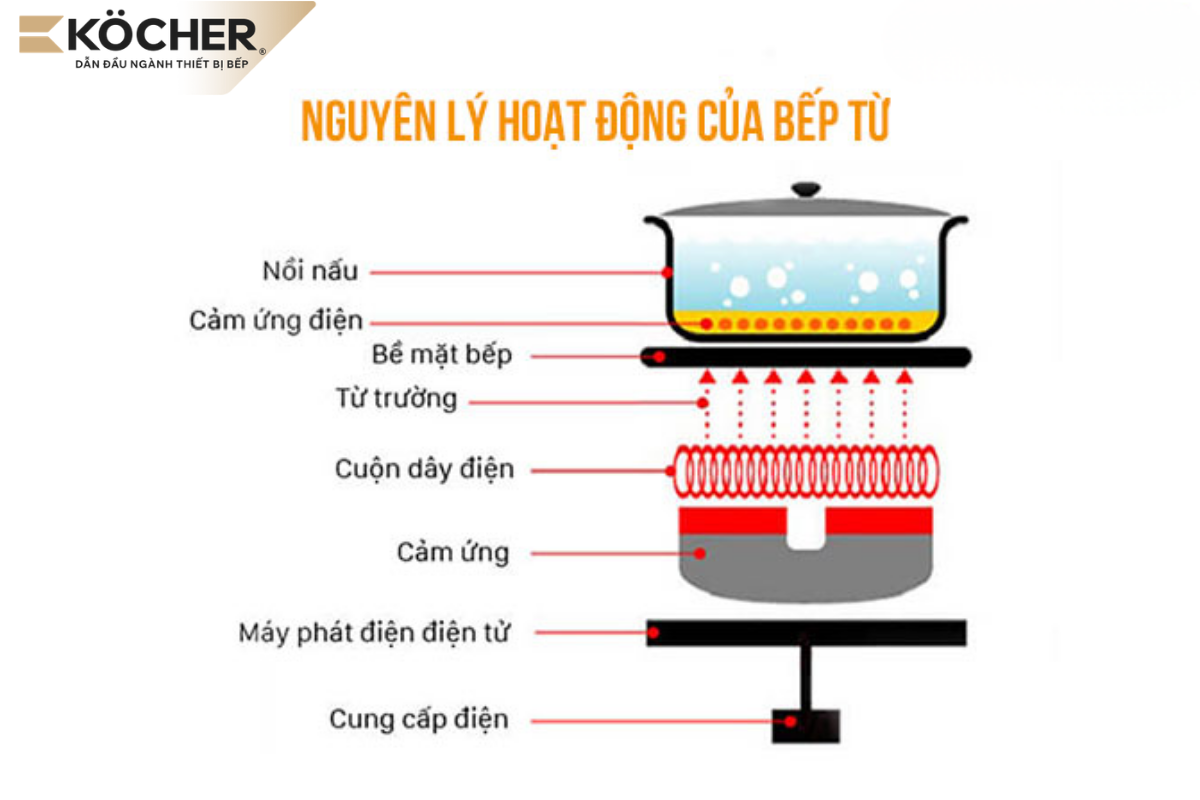
Induction cookers operate based on the principle of electromagnetic induction, specifically the application of Foucault currents. When alternating current flows through a copper coil, it creates a varying magnetic field, generating induced currents in the ferromagnetic base of the pot, producing thermal energy that cooks food quickly, safely, and efficiently.
The special feature of this principle is that the cooker only operates when you use the correct type of pot or pan with a ferromagnetic base (such as stainless steel 430, cast iron), and heat is generated only in the area of the pot’s base that contacts the glass surface, almost no heat is lost to the surrounding air, so the surface of the cooker outside the cooking area remains at a safe temperature. To understand more about the operating principle of induction cookers, you can refer to the article What is an induction cooker? Structure and operating principle of induction cookers.
4-step guide to using induction cookers in detail
To master this modern kitchen device and ensure a smooth cooking experience, you just need to follow the 4 standard steps below in order.
Step 1: Choose the cooking pot and place it correctly
Before using the device, you need to choose a pot or pan with a flat, clean ferromagnetic base and place it neatly in the center of the cooking zone marked (circle or square) on the glass surface.
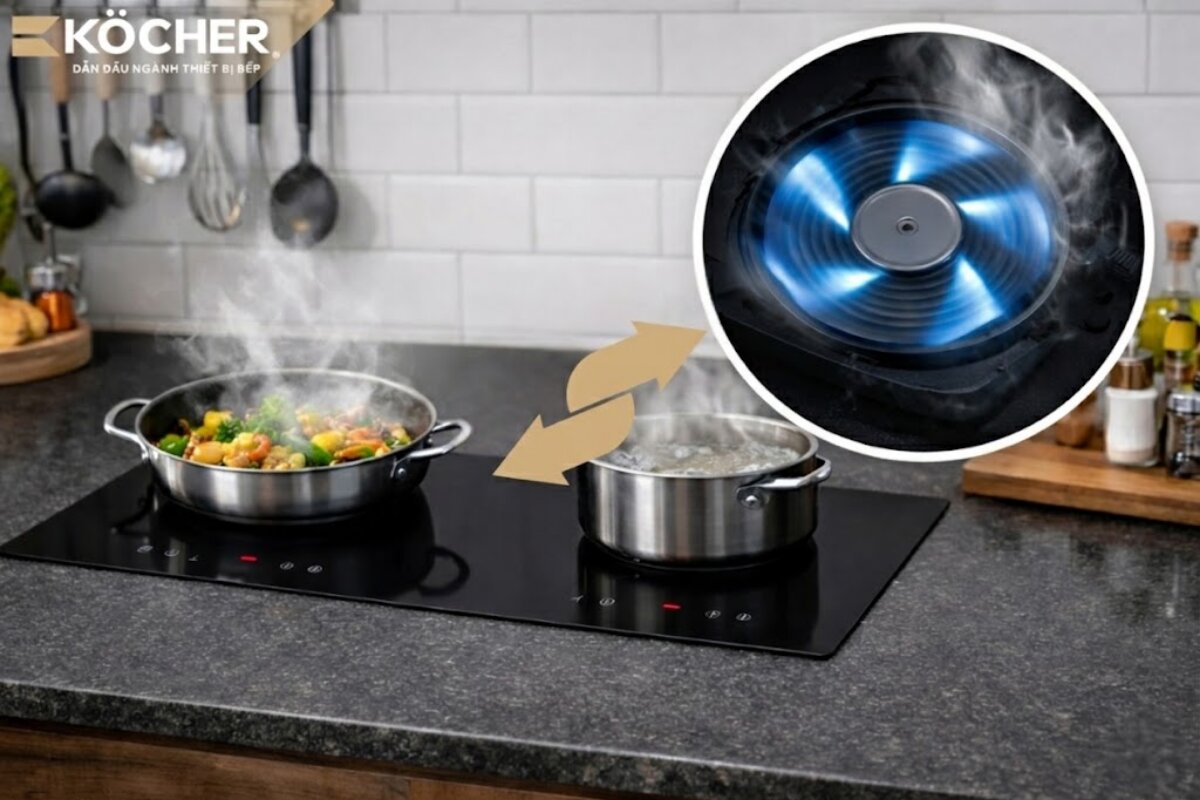
You should prioritize cookers with the feature of automatically detecting pots and pans made of pure copper, such as Köcher cookers, which help to quickly and accurately catch the magnetic field. This technology allows the circuit board to automatically measure the contact area to distribute heat precisely according to the size of the pot. As a result, the heating process occurs efficiently, completely preventing energy waste to the outside environment and protecting the lifespan of the components.

Step 2: Power on and start the cooker
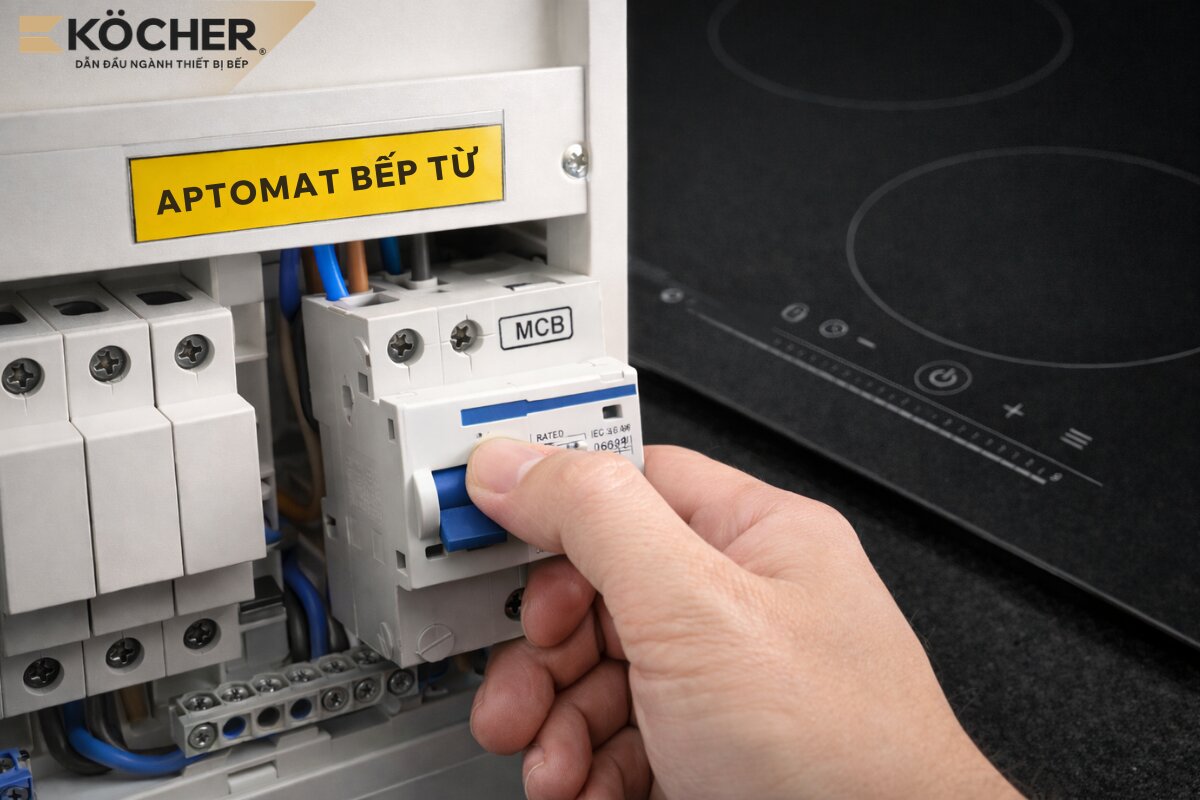
First, you need to ensure that the power supply for the cooker is safely connected (usually connected through a separate circuit breaker). To start the cooker, you need to dry your hands and keep the control panel clean and dry, then gently touch the Power button (Power icon) on the control panel for about 1 – 2 seconds. At this point, the cooker will emit a “beep” sound, and the LED lights on the control panel will light up, indicating that the cooker is ready to operate.
Step 3: Select the cooking mode and adjust the power
After turning on the cooker, you can swipe lightly on the slider or touch the “+” and “-” buttons to increase or decrease the desired power or temperature level. Additionally, to provide maximum convenience, many cooker models come with preset shortcut buttons for each specific cooking method. Below is a reference table of cooking modes and integrated functions; the images in the table are illustrations and may vary by manufacturer:
| Cooking Mode | Function | Image |
| Hot Pot | Consistent heat increases steadily, maintaining a continuous boil, suitable for dipping food. |  |
| Fry/Sauté | Automatically stabilizes the temperature at a high level, preventing oil from burning, helping the dish to be crispy and delicious. |  |
| Stew/Simmer/Slow Cook | Low heating level for a long time helps food to cook tenderly from the inside. |  |
| Boil Water | Increase power to a high level to boil water quickly in the shortest time. |  |
| Cook Soup | Moderate heat level, controlling the boil to prevent overflow when the soup rises. |  |
| Defrost | Use extremely low heat, evenly distributed to defrost food naturally without cooking it. |  |
| Booster | Increase power to the maximum level (exceeding the normal rated power) to minimize cooking time. |  |
Step 4: Turn off the cooker and wait for it to cool down
When the dish is finished, press the Power button again to turn off the cooker. However, you should not unplug or turn off the circuit breaker immediately. Although the cooker has stopped generating heat, the internal components (such as the aluminum heat sink, copper coil, electronic circuit board) are still very hot. At this time, the cooker’s cooling fan system still needs power to continue running, drawing cool air in and pushing hot air out; abruptly cutting off power will cause heat to be trapped inside the body, which over time will reduce the lifespan of the components and decrease the cooker’s performance.
Summary of common errors/symbols when using induction cookers
During use, the control panel of the cooker may occasionally display strange characters. These are mostly smart mechanisms that help protect the device. Understanding these symbols will help you handle situations calmly and accurately.
| Symbol | Cause | Quick Fix |
| E0 | The cooker cannot detect the pot or the pot base is not suitable | Check if the pot base is magnetic. If not, switch to a pot or pan specifically designed for induction cookers. |
| E1 | Overheating error (too hot) | Turn off the cooker, do not unplug or turn off the circuit breaker, wait about 10 – 15 minutes for the cooker to cool down, then cook again at a lower temperature. |
| E2 | Input voltage too high or pot has no food | Check if there is food in the pot. Use a multimeter to check the power supply; if the voltage is too high (above 220V), you need to install a voltage stabilizer for the device. |
| E3 | The power supply to the cooker is too weak (usually below 170V). | Use a multimeter to check the power supply; if the voltage is too weak (below 170V), you need to equip a voltage stabilizer for the device. |
| H | Residual heat warning. The glass surface in the cooking area is currently very hot (above 60°C). | Do not touch the glass surface directly. The symbol will automatically disappear when the glass has cooled to a safe level. |
| LO/LOc/L | Child Lock feature is activated, disabling other buttons. | Press and hold the key icon (or lock button) for about 3 – 5 seconds to unlock the control panel. |
5 tips for durable and energy-saving use of induction cookers
In addition to performing the correct basic operations, the following scientific usage habits will help your family’s kitchen device operate smoothly for many years.
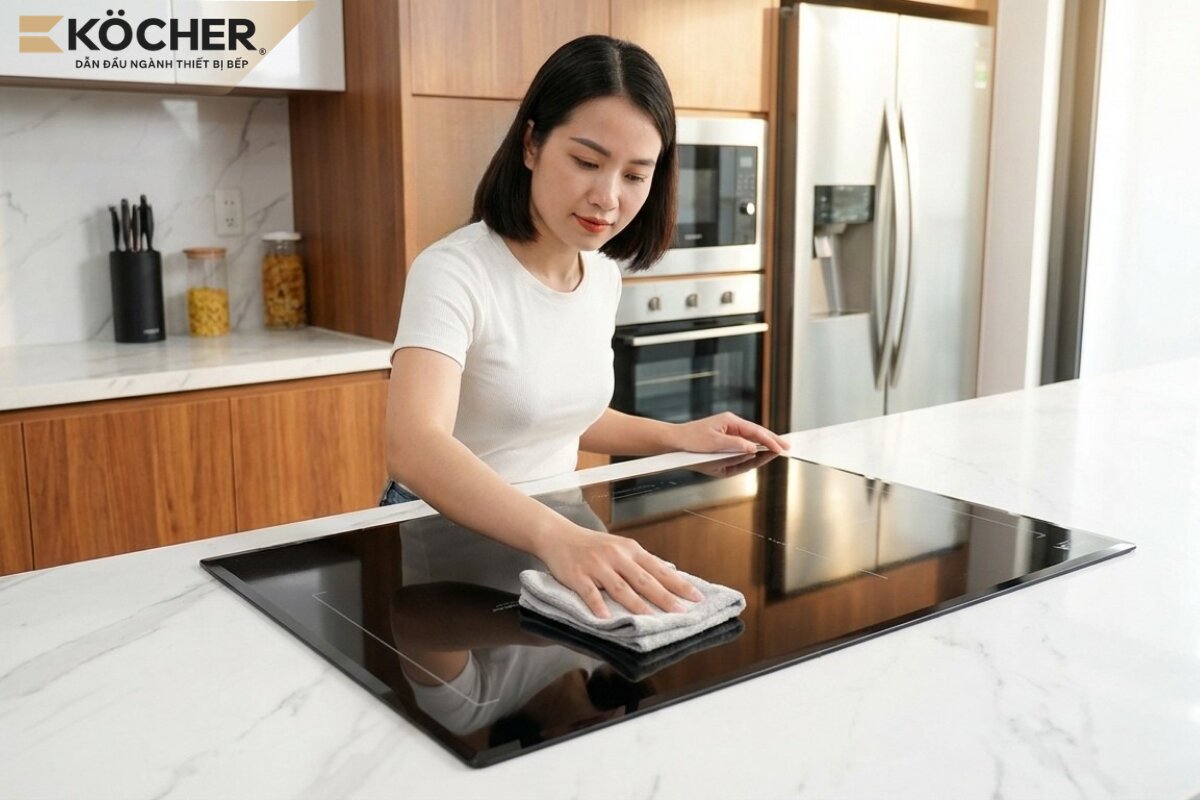
- Do not unplug and clean immediately after cooking: Let the cooling system cool the internal components of the cooker before unplugging, then use a soft cloth and specialized cleaning solution to clean the glass surface after about 15 – 20 minutes of turning off the cooker.
- Do not abuse the Booster mode: The Booster function is very useful for boiling quickly, but it makes the power circuit operate at maximum capacity. Therefore, you should only use the Booster for a maximum of 5 – 10 minutes at a time to avoid overloading the circuit board and reducing the lifespan of the device.
- Install in a well-ventilated position: Induction cookers need space to vent. The cabinet space under the cooker should be designed to be well-ventilated, and not stuffed with too many obstructions that block the ventilation slots for the cooling system to operate most effectively.
- Use a stable power supply: With high power levels (up to 4000W – 6000W), induction cookers need to be equipped with a dedicated power line of standard cross-section (from 2.5mm or more) and connected through a circuit breaker of about 20A – 30A, helping to reduce the risk of fire when using the device. Additionally, if the power supply is unstable, you should install a voltage stabilizer to protect the internal components of the induction cooker.
- Regularly clean the cooling fan: The cooling fan plays a key role in maintaining the temperature for the components when the cooker is operating. If dust and grease accumulate and block the air vents, the cooker will dissipate heat poorly, leading to overload errors. When cleaning the cooling fan, you should disconnect the power supply and use a soft brush or mini vacuum to clean the ventilation slots under the cooker every 3 – 6 months.
6 frequently asked questions when using induction cookers
During the process of using and getting accustomed to the device, users often have some questions about safety and performance. Below are detailed technical answers to the 6 most common questions.
Are induction cookers harmful to health?
Induction cookers are completely safe for health if used correctly and purchased from reputable, quality brands. Induction cookers are considered safer than gas stoves because they do not burn oxygen, do not emit harmful CO/CO₂ gases, and do not explode if using quality cookers correctly; the electromagnetic waves emitted have a very low frequency, only directly affecting the pot’s base, not the user.
Why does the induction cooker turn on and off continuously?
The induction cooker turning on and off continuously is usually due to several main reasons: overheating (cooking at high power for too long, cooling fan malfunction), not detecting the pot or the pot is not suitable, weak/unsteady power supply, or malfunctioning internal circuit board; at this time, the cooker will automatically turn off to protect the components and ensure safety. Additionally, in some older cooker models, when using low power levels (usually from level 1 to 3), the thermal relay of the cooker will continuously turn on/off to maintain the desired average temperature without burning the food.
Why does the induction cooker make a buzzing sound?
The induction cooker makes a buzzing sound (or a rattling sound) when operating mainly due to the principle of electromagnetic induction creating vibrations, thin-bottomed pots/pans that are incompatible, or a dirty cooling fan. This sound is usually the vibration of the pot’s base or internal components.
Why does the induction cooker make a humming sound?
The induction cooker makes a humming sound (or buzzing, clicking) usually due to the cooling fan operating strongly. This is mainly normal operating noise but can be louder when the cooker operates at high power or components need maintenance.
Do induction cookers consume a lot of electricity?
Induction cookers do not consume as much electricity as many people think; on the contrary, they save energy and costs compared to gas or infrared cookers due to their high thermal efficiency (90 – 95%). With the principle of directly heating the pot’s base, the quick cooking time helps reduce electricity consumption, with actual costs being only about 200,000 VND/month. To understand more about the electricity consumption of induction cookers, you can refer to the article: Do induction cookers consume a lot of electricity? Why do induction cookers consume less electricity.
Are induction cookers picky about pots?
Induction cookers are picky about pots. Due to the nature of the electromagnetic induction principle, induction cookers must be used with pots and pans made from ferromagnetic materials (e.g., stainless steel 430, steel, cast iron). Materials such as pure aluminum, glass, ceramics, or clay pots cannot be used on induction cookers. To know more about how to identify pots that can be used on induction cookers, you can refer to the article What pots can be used on induction cookers? 4 ways to identify suitable pots for induction cookers.
Mastering how to use induction cookers correctly will provide a safe, convenient cooking experience and save significant time for your family. Always pay attention to everything from choosing pots and pans, adjusting power levels to storage habits after cooking to keep the component system operating durably.
As a leading brand in the kitchen equipment industry, Köcher proudly offers durable and high-class cooking solutions for your family, with superior X-Nano scratch-resistant glass technology and E.G.O components made in Germany.
For detailed information about the product, please contact:
|