See more:
- Guide to using induction cookers safely – economically
- Revealing the irresistible fish braising recipe using induction cookers
How is cooking rice with an electric stove different from a rice cooker?
A rice cooker is specifically designed for cooking rice, so it has temperature sensors and a self-regulating temperature mechanism. When cooking begins, the cooker heats the water and rice to about 100°C. While there is still water, the temperature usually stays around this level because the water is boiling and continuously absorbing heat to cook the rice. When the water is nearly gone, the bottom of the pot will heat up quickly beyond 100°C, the temperature sensor detects this change and automatically switches to the “Warm” mode, helping the rice continue to steam without burning.
In contrast, cooking rice with an electric stove (induction, infrared) does not have sensors, so it does not know when the water is low to reduce the heat. Therefore, users must manage the heat and cooking time themselves. If the heat is kept too high when the water starts to run low, the bottom of the pot will heat up quickly, causing the rice to burn at the bottom while the top may still be undercooked. Thus, when cooking rice with an electric stove, you will need to monitor after the water boils vigorously, and when it starts to run low, you need to lower the heat to ensure the rice cooks evenly and minimize burning at the bottom.
However, conversely, to determine when the water is boiling and starting to run low, many people have the habit of lifting the lid continuously to check the rice, causing steam and heat to escape quickly.
This causes the temperature inside the pot to drop, interrupting the process of the rice absorbing water, so the rice can cook unevenly, with the top being undercooked or dry. Therefore, when cooking rice with an electric stove, it is advisable to limit lifting the lid during cooking and prioritize using a pot with a tight lid and thick bottom to maintain more stable heat.
In summary, cooking rice with an electric stove has 2 key differences: the cook will need to manage the appropriate heat especially when the water is boiling and starting to run low, but also needs to balance not to lift the lid too many times which leads to heat loss.
Specific guide with notes on steps to cook rice using an electric stove
While white rice cooked from non-sticky rice may not be a common dish in Europe, it is one of the essential dishes in the daily meals of Asians. Therefore, modern induction cookers today gradually have functions for cooking rice. However, not all stove models integrate this feature, the guide below will still apply for users without this function.
Step 1: Prepare before cooking rice with an electric stove
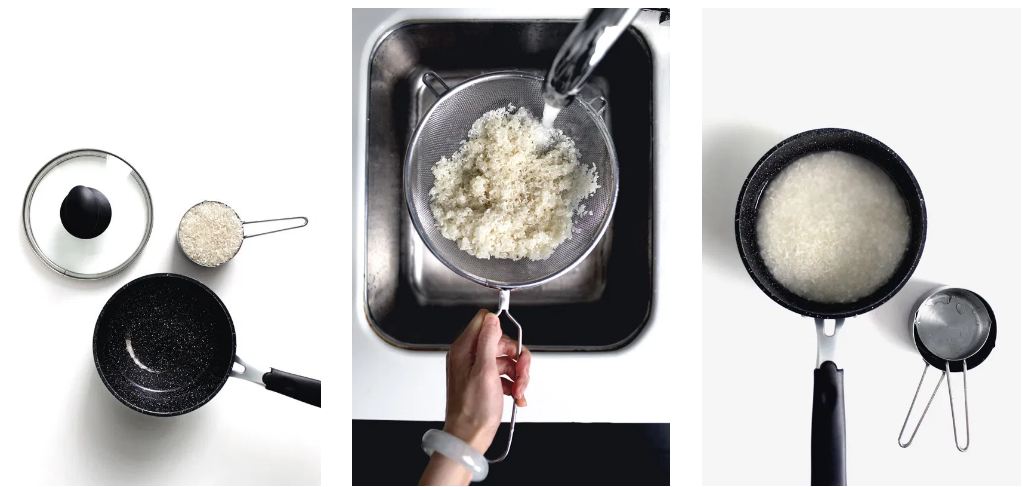
- Pot: You should prepare a non-stick pot, of course, with a magnetic bottom (meaning it can be used for induction cookers, usually stainless steel). Choose a pot with a transparent glass lid for easier observation while cooking. Especially, choose a pot lid with a small vent hole. Depending on the amount of rice, choose a pot size that is appropriate.
- The ratio of rice to water: Not only for cooking rice with an induction cooker but also when using a rice cooker, the issue of the rice:water ratio always confuses home cooks. If you plan to choose a ratio of 1:1, this is too little water. It is reasonable to cook with a ratio of 1 (rice):1.5 (water). Below is how to cook rice with an induction cooker for 4 people.
- 2 cups (400 grams) of short-grain Asian white rice, or Japanese sushi rice
- 2 cups (429 grams) of water
Step 2: Rinse the rice
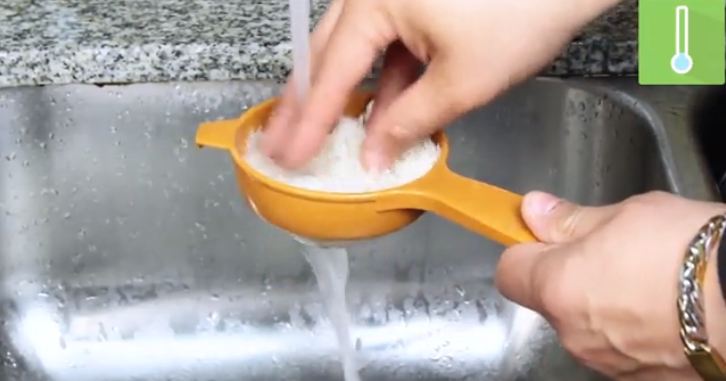
This is something everyone has probably done as it is quite similar to when you cook rice with a rice cooker. You can rinse the rice in the pot you are about to use for cooking with the induction cooker or use another tool. Rinse the rice under cold water to remove the starchy outer layer. Discard the first rinse water, avoiding rinsing the rice too much as it will lose nutrients.
Step 3: Add rice to the non-stick pot
Add rice:water in a ratio of 1:1.5. For sticky rice or Japanese sushi rice, add just enough water to cover the rice. Stir well so that the rice grains are submerged in water and evenly distributed at the bottom of the pot.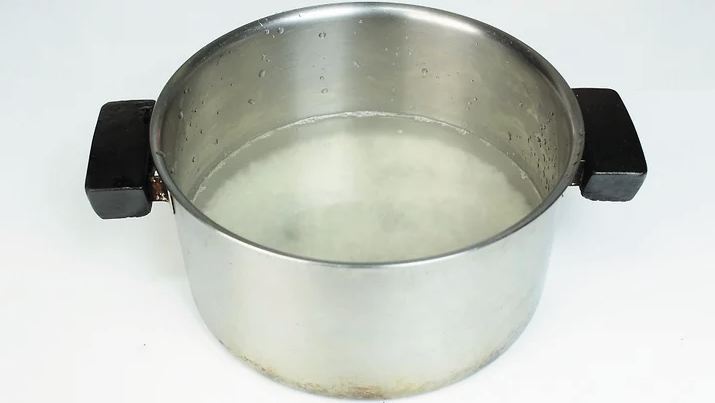
Step 4: Monitor and reduce the temperature when necessary
After 5-10 minutes, the water in the pot will run low and this is the most crucial step. The point to recognize is that the steam from inside the pot escapes quite strongly, bubbles may appear and gradually decrease in number. You can observe through the glass lid of the pot.
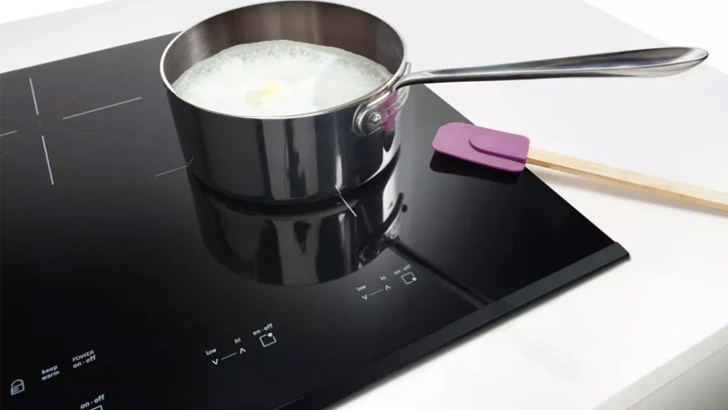
After 10 minutes, the steam will decrease, and the water on the surface of the rice will gradually run low, making the rice grains visible, indicating that the excess water has evaporated. You should lift the lid to stir the rice pot once more, mixing it evenly. Close the lid again. Set the induction stove to the warm or lowest temperature for about 5 minutes.
After warming, you absolutely must not lift the lid or stir the rice to avoid losing steam, which can cause the rice to be undercooked or unevenly cooked.
Step 5: Turn off the stove
After 5 minutes at low temperature or low heat, you can turn off the stove. Remove the lid from the rice pot on the induction stove but be careful not to let excess water on the lid fall into the rice pot. Use a wooden spoon or chopsticks to gently stir to avoid breaking the rice grains. Then cover the lid again to keep on low heat or warm for 5 – 10 minutes to allow the rice grains to expand and cook evenly.
Step 6: Keep warm to finish cooking the rice
The final step when cooking rice with an induction cooker is to wait for the rice to finish cooking and after 10 minutes of keeping warm, it will be ready to use.
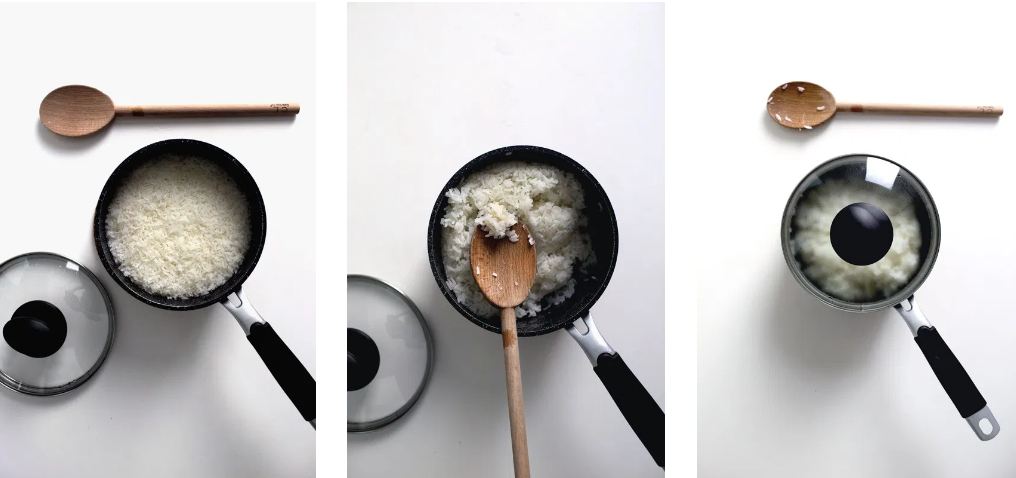
Just follow the detailed steps above to cook rice using an electric stove, and you can prepare white rice and all dishes on your induction stove. However, alongside cooking recipes, understanding the basic notes for using induction cookers will help the device operate stably, durably, and minimize electrical circuit issues during daily cooking.
Notes when cooking rice with an electric stove
- The guide above applies to the amount of rice for 4 people (2 cups (400 grams) of short-grain Asian white rice, or Japanese sushi rice in ratio with 2 cups (429 grams) of water. The rice:water ratio can change if cooking for more people.
- Long-grain rice may need to be soaked in water for 30 minutes to 1 hour to allow the grains to expand.
- It is advisable to choose a pot for cooking rice with an electric stove that is non-stick with a magnetic bottom, ensuring a flat bottom, not warped or concave.
- It is recommended to select the rice cooking mode or activate the warm function available through the induction stove buttons of the device to allow the stove to automatically balance the most suitable temperature range.
- For elderly people or those who prefer softer rice, more water can be added when cooking.
- Absolutely do not lift the lid too many times while cooking as it will cause heat loss, easily leading to undercooked or unevenly cooked rice.
- When the rice is boiling and the water is running low, keep the temperature low or warm to avoid burning the pot or having rice stick to the pot, making it difficult to clean.
In addition to cooking rice, many families with multifunctional stoves also often wonder whether induction cookers can grill to prepare additional grilled meat dishes? In fact, you can completely utilize the infrared cooking zone of the stove to grill food directly very conveniently.
Köcher is proud to be a pioneer in Vietnam bringing German technology into induction cooker products.