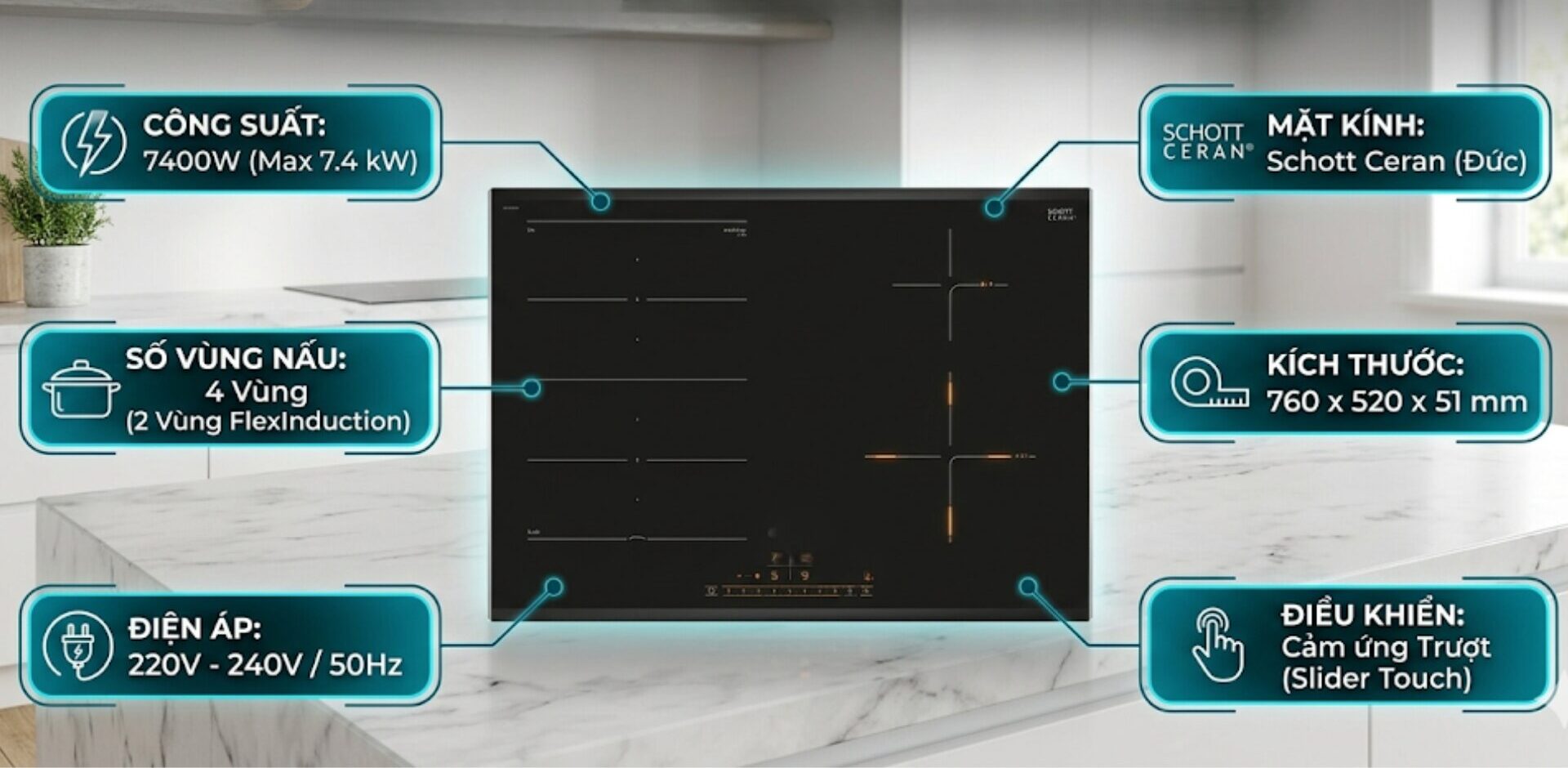
Electric stoves that produce flames are a curious concept but also come with many technical misunderstandings for consumers. Can an electric device create real flames, or is it just a visual effect that tricks the eye? This article will help you answer these questions and choose the safest, most effective cooking device for your family.
The Truth About Electric Stoves That Produce Flames
In terms of operation principles, current electric stoves like induction and infrared stoves do not produce real flames. Induction stoves heat using induction current (Foucault currents), while infrared stoves use thermal radiation from resistors or halogen lamps. Neither burns oxygen, so flames cannot appear during cooking.
However, in the actual market, the term “electric stoves that produce flames” is often used to refer to three hybrid product lines or applications of simulated technology as follows:
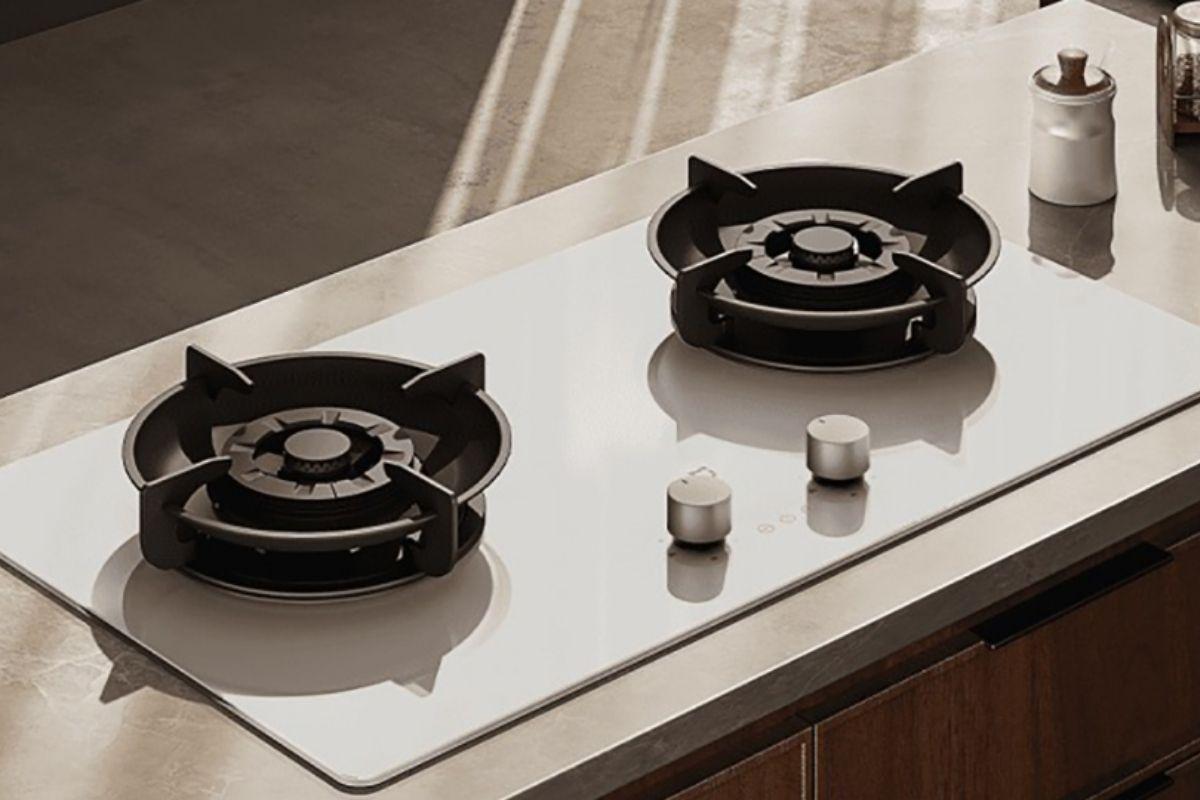
- IC Ignition Gas Stoves: This is essentially still a traditional gas stove that uses an IC electronic circuit (powered by batteries or mains electricity) to create an electric spark to ignite the gas. This system makes it easier and more precise to turn on the stove, but the cooking heat still comes from fossil fuel, not electricity.
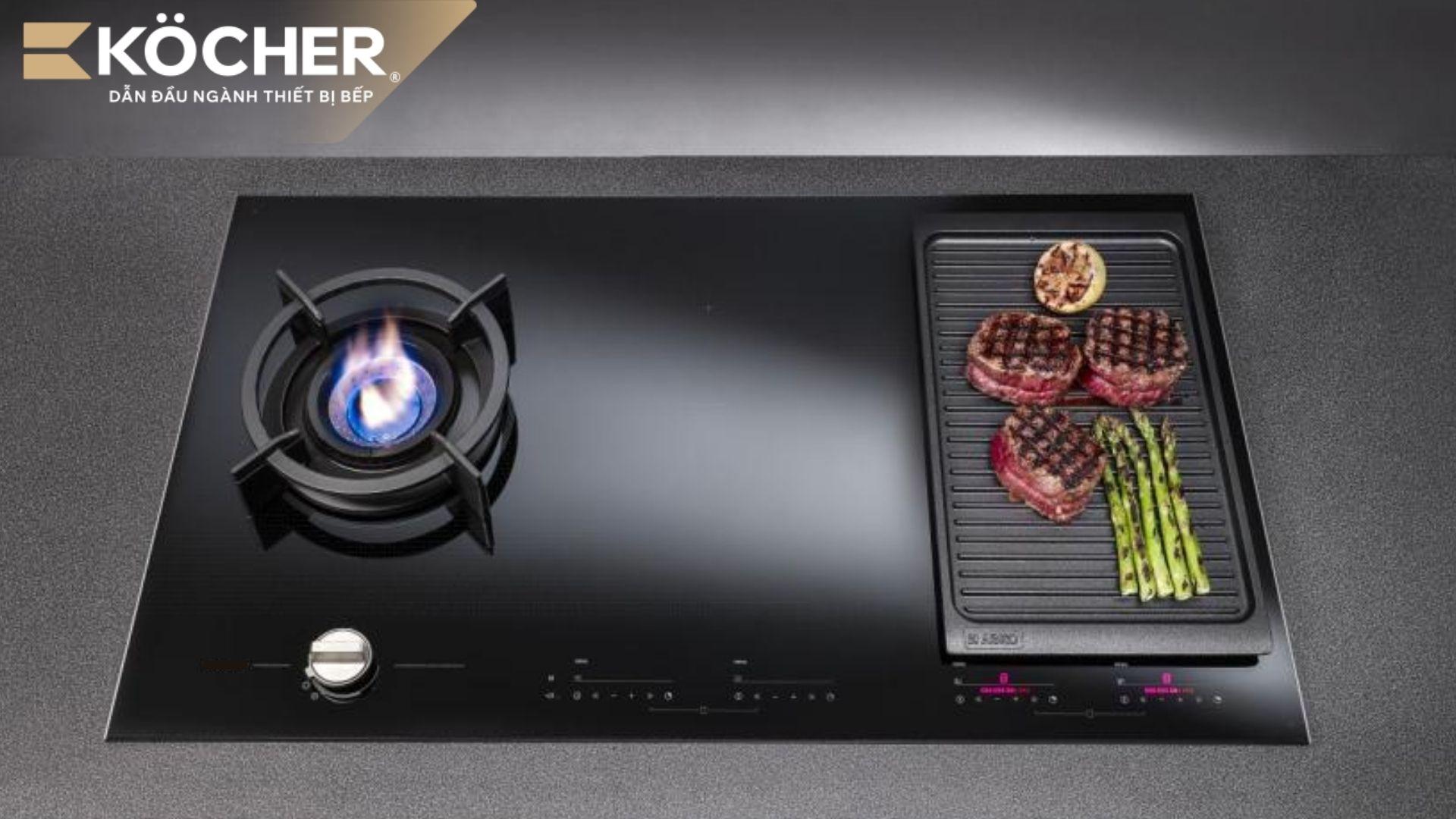
- Hybrid Gas and Electric Stoves: This type of stove uses gas to create flames while integrating an electronic system to control functions such as timers and safety sensors. Electricity only plays a supporting role in operation and does not participate in the main heat generation.
- Electric Stoves with Flame Effects (Virtual Flames): Some high-end induction stoves are equipped with LED lights combined with lenses to create a light effect resembling flames. This is merely a visual effect to help users observe easily, while the heating mechanism remains electromagnetic induction, without real flames.
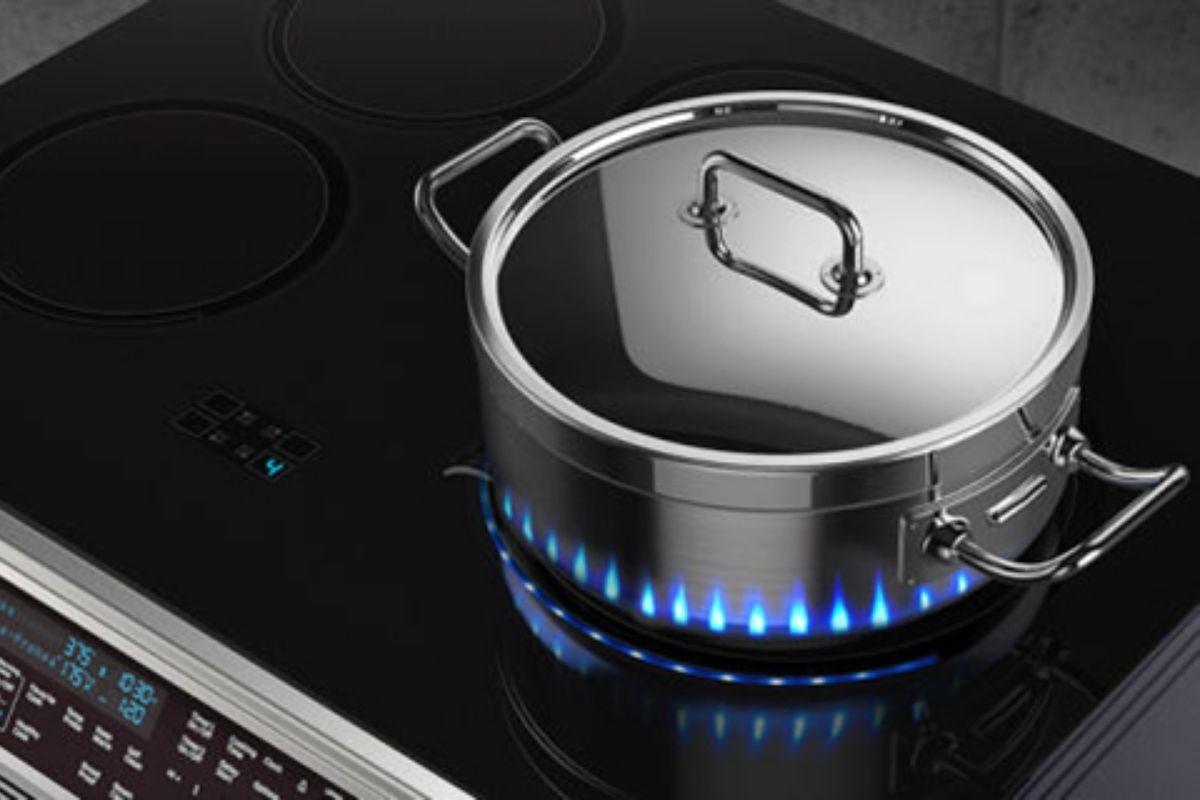
5 Disadvantages of Electric Stoves That Produce Flames You Need to Know
Although they impress with their unique appearance, electric stoves that create flame effects or combine fuel still have significant technical and economic limitations that users need to consider carefully:
- Risk of Fire and Electrical Safety: Maintaining direct flames in a closed space containing electronic circuit boards poses many risks. The heat emitted from the flames can deform or melt the insulation of wires and internal components, leading to short circuits or serious fires.
- Low Component Durability Due to Oxidation: Direct heat combined with moisture generated during combustion causes the metal components inside the stove to oxidize quickly, especially in cheaper stoves.
- Poor Energy Efficiency: A large portion of the electricity and fuel of this stove line is consumed to maintain the visual flame effect rather than maximizing heat to cook food. This not only wastes energy but also significantly prolongs cooking time compared to modern induction stoves.
- Difficulty in Cleaning and Maintenance: The complex structure with the gaps of the burners or the lens system creating visual effects easily attracts grease and dirt during use. When technical issues occur, finding specific replacement parts for these stove lines often faces many obstacles due to the low popularity of the products in the market.
- Price Not Proportional to Usability Value: Users often have to pay a very high price for the “eye-catching” factor (virtual flame effect) or the complex combination (hybrid gas and electric stove) instead of receiving a device capable of stable cooking, good heat dissipation, and actual safety.
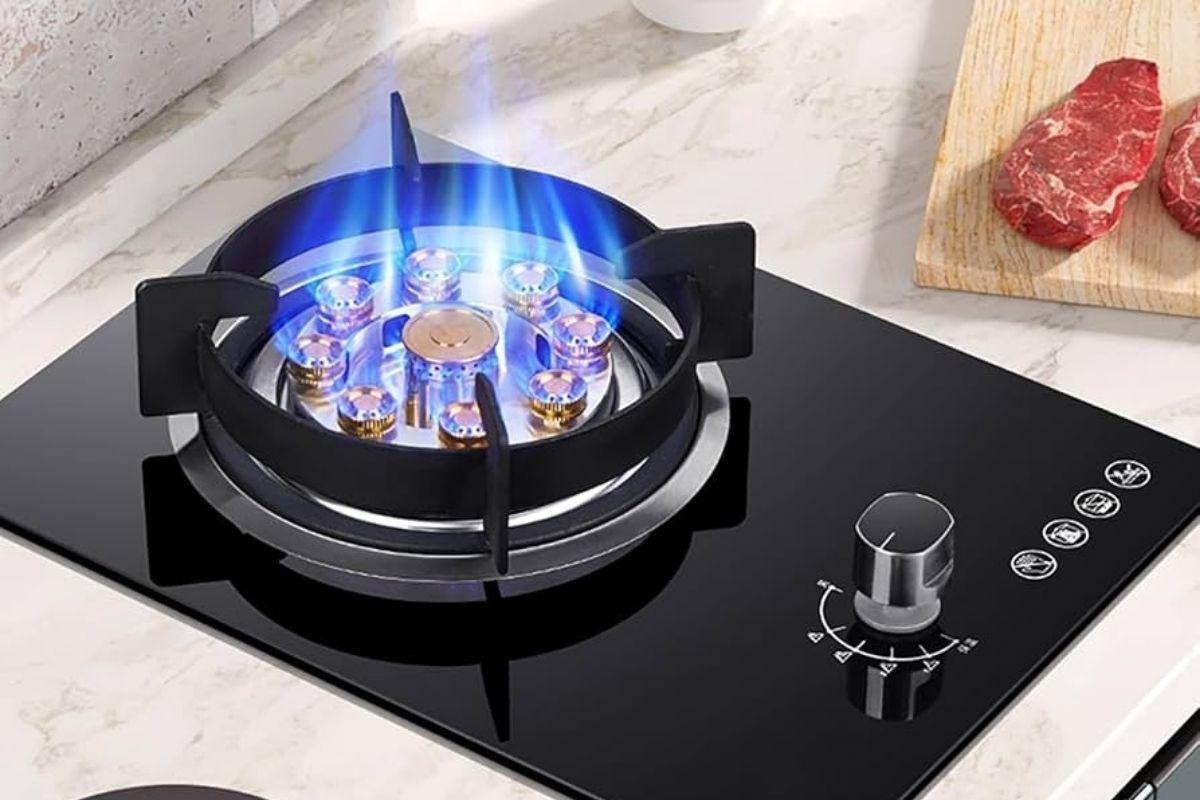 Using electric stoves with direct flames can pose a fire risk
Which Type of Electric Stove Should You Choose for a Modern Kitchen?
Instead of investing in complex “electric stoves that produce flames,” the current trend is to prioritize pure heating devices that are safe and easy to maintain. Specifically:
- Induction Stoves: This is the optimal choice for families of 2-4 people or larger families of 5 or more if choosing a stove with 3 cooking zones or more to increase the usable area. The device meets the needs for quick, clean, and safe cooking thanks to its mechanism that does not emit heat into the environment. However, users need to ensure they have pots with magnetic bottoms to ensure the best heat transfer efficiency.
- Infrared Stoves: This type of stove is suitable for small families of 2-4 people who want to reuse existing pots and pans such as clay pots, glass, or ceramics. Infrared stoves are good for dishes that require stable heat and maintain warmth for a long time, such as stews or braises. Users should note to clean the glass surface thoroughly after cooking to avoid grease buildup that reduces the durability of the heating element system underneath.
- Induction Infrared Stoves (Mixed Stoves): This is a suitable solution for families wanting to switch from gas stoves to electric stoves while still utilizing old pots.
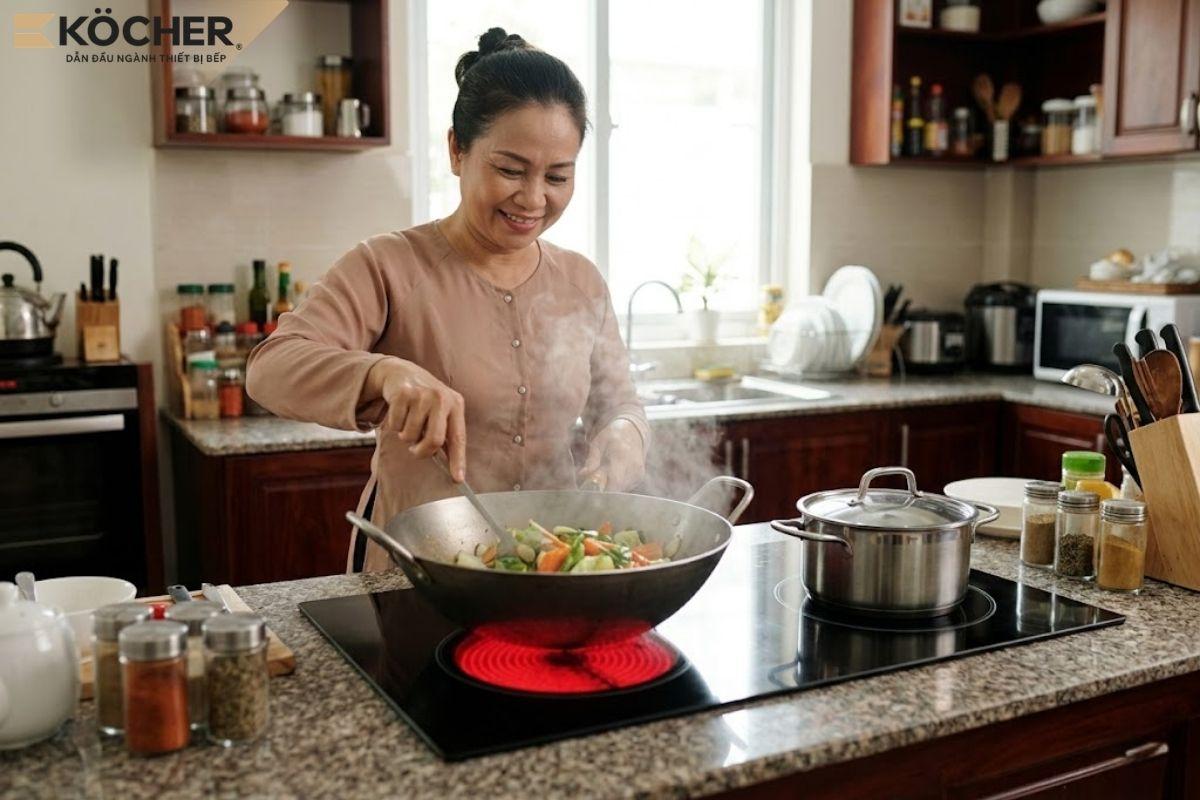 Using infrared stoves combined with induction stoves helps optimize cooking efficiency
3 Important Notes When Installing Electric Stoves
To ensure the device operates stably and protects the circuit board system for a long time, installation must adhere to the following technical principles:
- Ensure a Stable Electrical System and Separate Power Supply: To avoid overload, a separate power cord and circuit breaker (CB) should be used for the stove. Depending on the power, choose the appropriate wire (4mm² for stoves under 5500W, 6mm² for stoves up to 7000W) and install the corresponding CB (25A for 4000W stoves, use 30A – 45A for stoves over 4000W).
- Choose a Well-Ventilated Location for the Stove, Away from Flammable Materials: The stove should be installed in a dry location, with a safe distance (at least 5 – 10cm) from walls and surrounding flammable items to ensure good airflow.
- Prepare Pots and Pans Suitable for the Installed Stove: Before cooking, choose utensils with flat bottoms, magnetic attraction, or symbols compatible with induction stoves (Induction lettering, coil symbols…). Using the right pots helps optimize heat, save electricity, and protect the glass surface from scratches or sensor malfunctions.
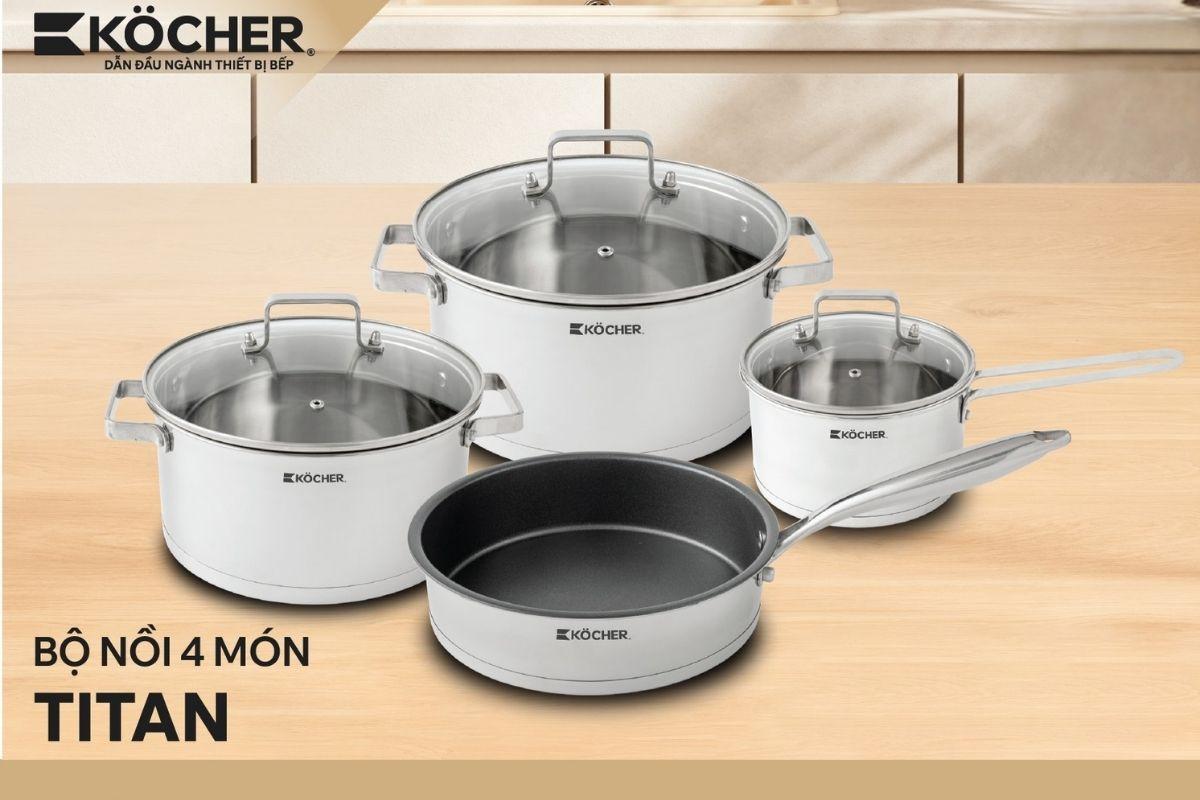 You should prepare suitable pots and pans if you decide to use an induction stove
Above is detailed information explaining electric stoves that produce flames, the 5 disadvantages of this type of stove, along with suggestions on how to choose and notes when installing electric stoves. We hope this article can help you understand the nature of electric stoves that produce flames, thereby making appropriate choices, prioritizing safety, efficiency, and durability in long-term use.
If you are looking for a safe, stable cooking solution suitable for modern kitchen spaces, prioritize choosing induction stoves with advanced technology, high-quality components, and comprehensive protection systems. Köcher induction stoves are a worthy consideration as they meet the criteria for performance, durability, and safety, optimizing the long-term user experience for families.
|
Köcher induction stoves pioneer German technology – For detailed product information, please contact:
|