How to Use a Dishwasher
1. Basic Use of the Dishwasher
Structure of the dishwasher:
To understand how to use a dishwasher correctly, safely, and effectively, you need to have an overview of the structure and operation of a household dishwasher.
Each type of dishwasher is produced with various sizes and numbers of racks, but generally, the internal structure of a dishwasher will be as illustrated below:
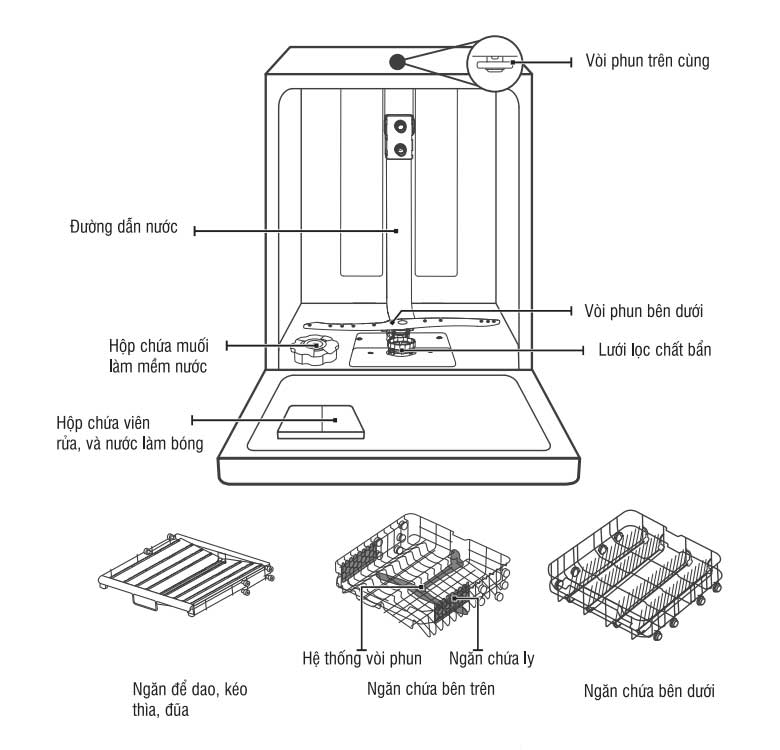
Overview of the dishwasher structure
Steps to use the dishwasher:
- Step 1: Pour water softening salt into the container
- Step 2: Remove leftover food from the dishes
- Step 3: Place the dishes into the dishwasher rack
- Step 4: Pour the detergent tablet and rinse aid into the correct position and correct amount.
- Step 5: Select the appropriate washing program and start
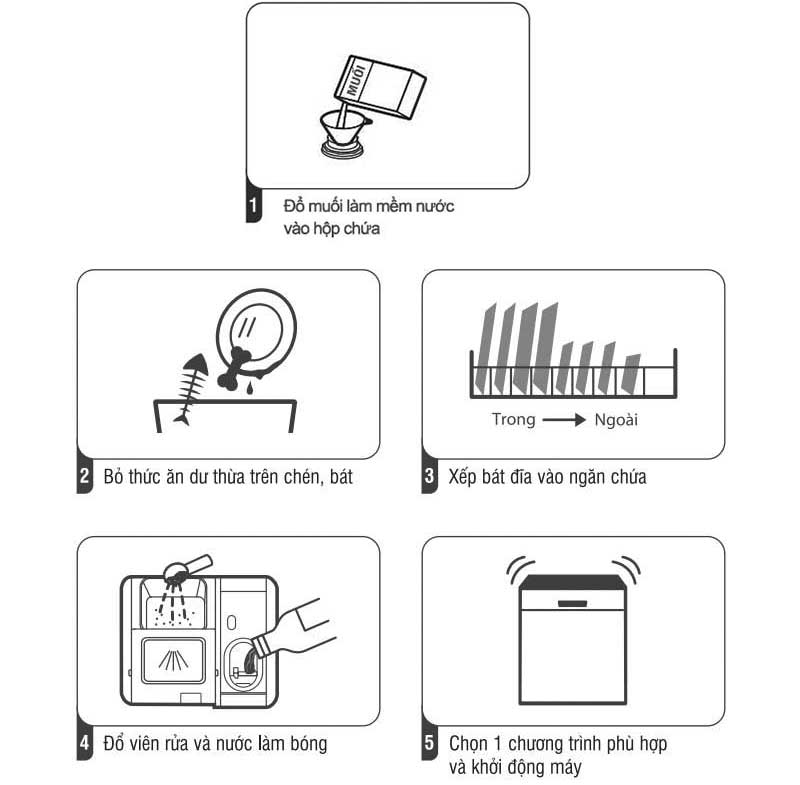
Steps to use the dishwasher
2. How to Use the Dishwasher with Detergents
For the dishwasher to operate well, be durable, and have a long lifespan, it is essential to use specialized products for dishwashers. There are three main types of detergents: water softening salt, rinse aid, and detergent tablets or powder.
Below is a detailed guide on how to use these detergents to optimize the dishwasher’s cleaning, drying, and deodorizing capabilities for our dishes, pots, and utensils.
How to pour water softening salt into the container when using the dishwasher
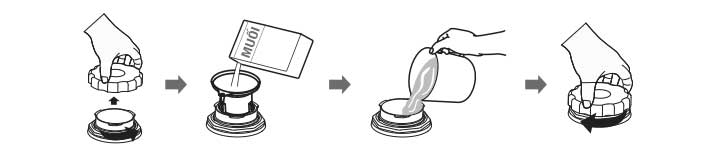
To pour the salt correctly into the dishwasher, follow these steps:
- Move the lower dish rack out, then remove the lid of the salt container
- Place a funnel into the container, then pour 1.5kg of salt into the container.
- Pour water into the salt container up to the maximum line; usually, a small amount of water will overflow from the container.
- Then tighten the lid of the salt container
- The salt indicator light will turn off when the salt container is full.
- Run a quick wash program immediately after filling the salt. This step is only necessary the first time you use the machine. This will help prevent the salt from damaging the filter system, pump, and other important components of the machine.
Note:
- Only use specialized salt for dishwashers to ensure the machine achieves maximum durability and efficiency.
- Only pour the right amount of salt into the container to avoid excess salt accumulating and damaging or corroding the equipment.
- Each time you pour salt, it can last quite a long time. When the salt in the tray runs out, the LED screen will display a warning for us to add more. (Note, the warning light may still be on even when the container is full of salt, depending on the salt’s solubility)
How to pour rinse aid into the dishwasher container
- Open the rinse aid container
- Pour rinse aid into the container, avoiding overflow
- Close the lid carefully
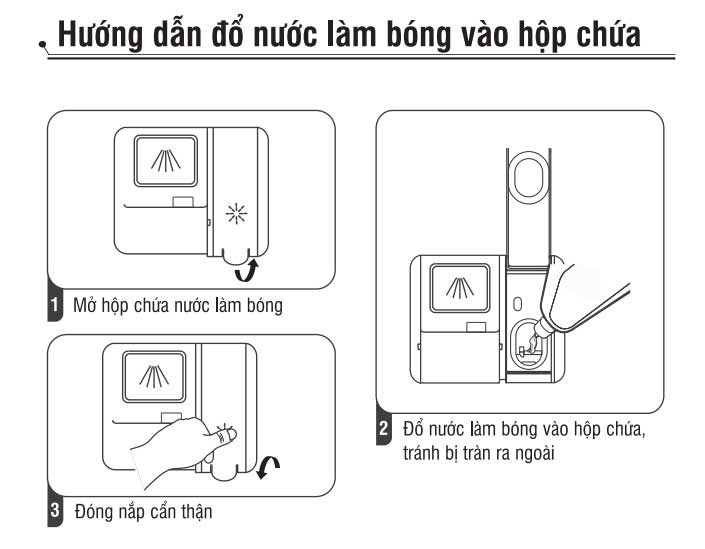
Note: When we finish washing and find that our dishes are not as dry as usual, it means that the rinse aid container is running low, and we have not noticed. Therefore, always check the rinse aid container when the warning light is on.
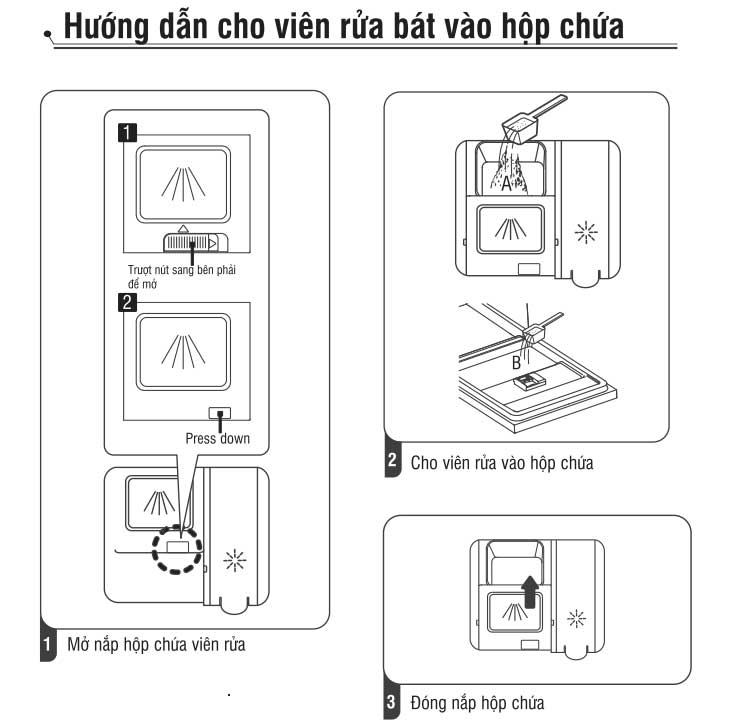
How to put the detergent tablet into the dishwasher container
- Open the lid of the detergent container
- Place the detergent tablet into the container
- Close the lid of the detergent container
Tip:
- Currently, some common detergents like Somat and Finish are recommended for dishwashers.
- Based on experience, you only need to add salt or rinse aid every 3 to 6 months when the warning light is displayed. In daily use, you only need to use detergent tablets or powder.
3. Guide on How to Load Utensils into the Dishwasher
1. Scrape food off before placing bowls, dishes, and utensils into the dishwasher
- Remove leftover food from the utensils to help the machine operate more efficiently and save energy.
- No need to rinse directly under running water to remove excess food.
- Soften burnt parts in pots and pans before placing them in the machine.
2. Tips for using the upper rack for bowls and dishes when using the dishwasher
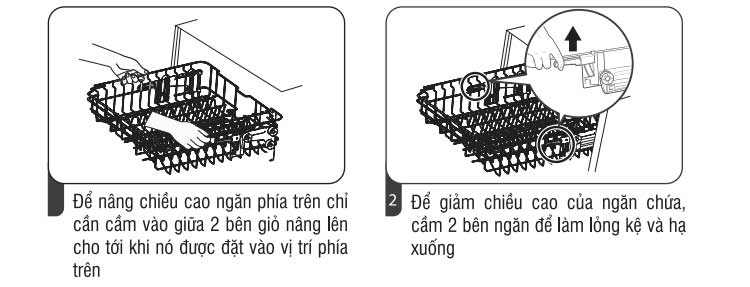
Adjust the upper dish rack in the dishwasher
You can adjust the height of the upper dish rack to create more space for larger utensils in the upper or lower rack.
To adjust the height of the rack, follow these steps:
Type 1:
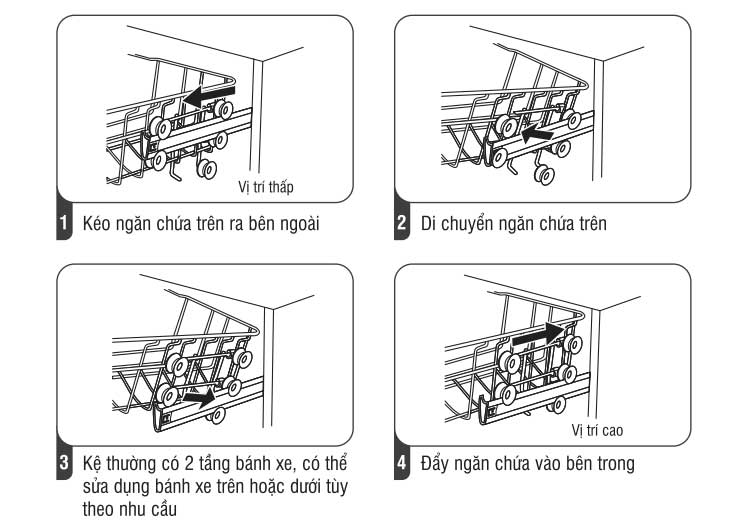
Type 2:
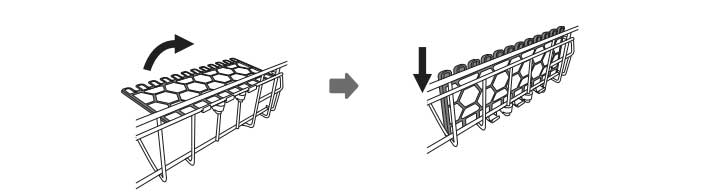
Fold the cup rack in the dishwasher
You can fold the cup rack (as shown in the picture) to create more space in the container.
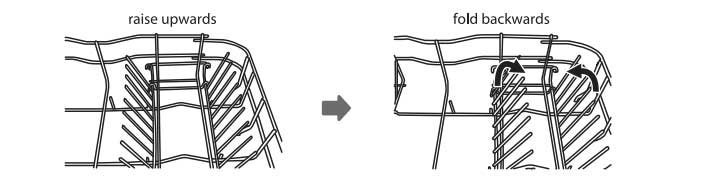
Fold the support bars in the dishwasher container
These support bars for bowls and dishes can be folded down to create more space for other utensils.
3. How to arrange dishes in the dishwasher container
To achieve the best washing efficiency, arrange the utensils according to the following arrangement standards:
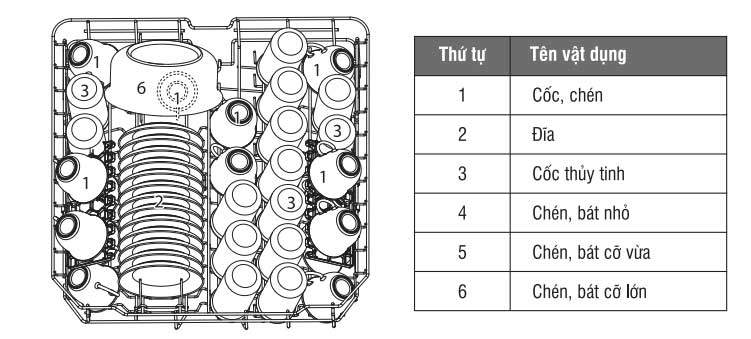
How to arrange dishes in the upper rack of the dishwasher
The upper rack is designed to hold lighter, thinner, and more fragile items such as glasses, cups, and bowls (as long as they are not too dirty). Arrange dishes and cooking utensils so they do not move when water is sprayed.
Arrange in the following order:
- Cups, bowls
- Plates
- Glass cups
- Small bowls
- Medium bowls
- Large bowls
How to arrange dishes in the lower rack of the dishwasher
It is advisable to place larger and harder-to-clean items on the lower rack, such as pots, pans, lids, and large dishes, as shown in the right image. It is best to place plates and lids at the edges of the rack to avoid touching the spray arm above.
Arrange in the following order:
- Dessert plates
- Large plates
- Soup plates
- Large bowls
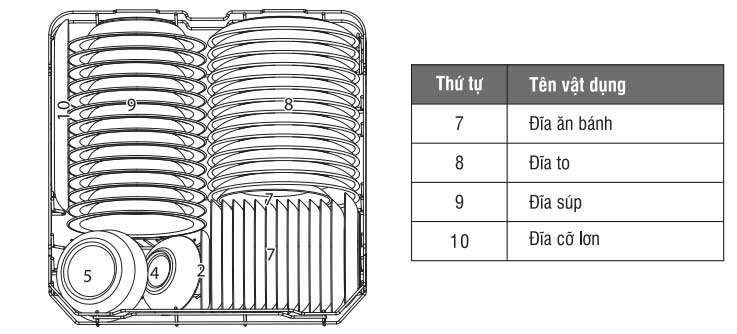
Rack for spoons, forks, knives, and chopsticks in the dishwasher
Arrange as shown:
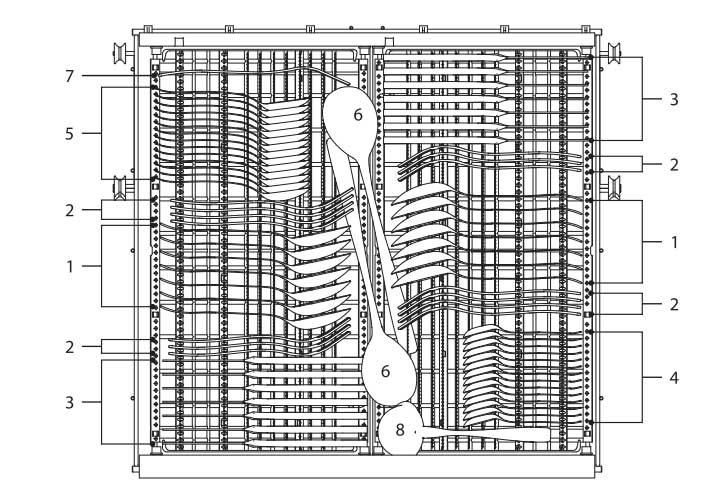
Place bowls and utensils into the dishwasher according to the following instructions:
- Utensils such as cups, bowls, and pans should be placed upside down.
- Curved or concave utensils should be placed at an angle to avoid water pooling.
- Ensure utensils are arranged correctly, in the right position, and do not shift during washing.
- Do not place items that obstruct or interfere with the spray arm while the machine is operating.
- Do not stack dishes and utensils on top of each other.
- To avoid breakage, glass items should not touch each other.
- Small, lightweight items like cups should be placed in the upper rack.
- Never allow long items to extend out of the rack.
- Do not place sharp knives upright as it can be very dangerous.
- Sharp utensils should be placed horizontally in the upper rack.
- Do not overload the machine with too many bowls, dishes, and utensils. This is very important for the machine to run well and consume energy efficiently while cleaning dishes.
- Do not put very small items into the machine as they can easily fall out of the dishwasher container.
4. How to Use the Dishwasher with the Control Panel
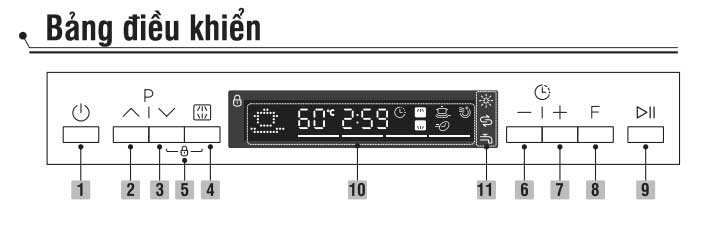
Structure of the dishwasher control panel
The control panel is the display area:
- Function buttons (the keys numbered 1 to 9 in the image)
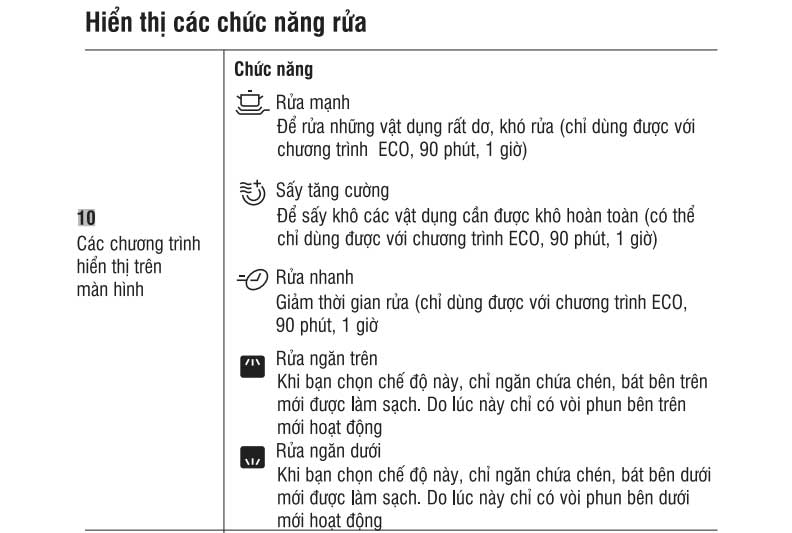
- Washing programs and washing functions: the LED display area numbered 10 in the image
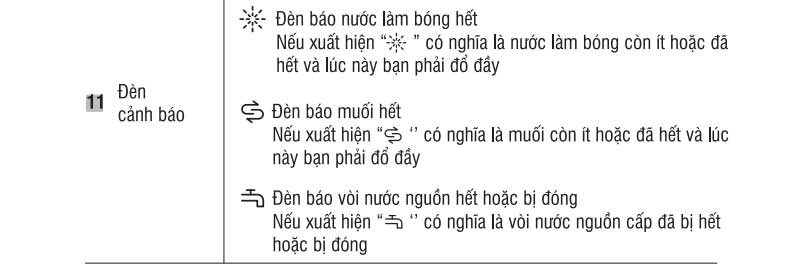
- Warning lights: the LED display area numbered 11 in the image
Guide to using the function buttons of the dishwasher
Let’s explore the functions of these buttons from 1 to 9.
- Power button: Press this button to start the machine
- Program selection button: Press this button to select the appropriate washing program
- Program selection button: Press this button to select the appropriate washing program
- Upper spray arm, lower spray arm selection button: Press this button to choose to wash the upper or lower rack.
- Child lock button: This button allows you to lock other buttons on the control panel (except for the power button). Press and hold both buttons simultaneously for 3 seconds to lock or unlock.
- Countdown timer decrease button: Press this button to decrease the countdown time
- Countdown timer increase button: Press this button to increase the countdown time
Washing programs of the dishwasher
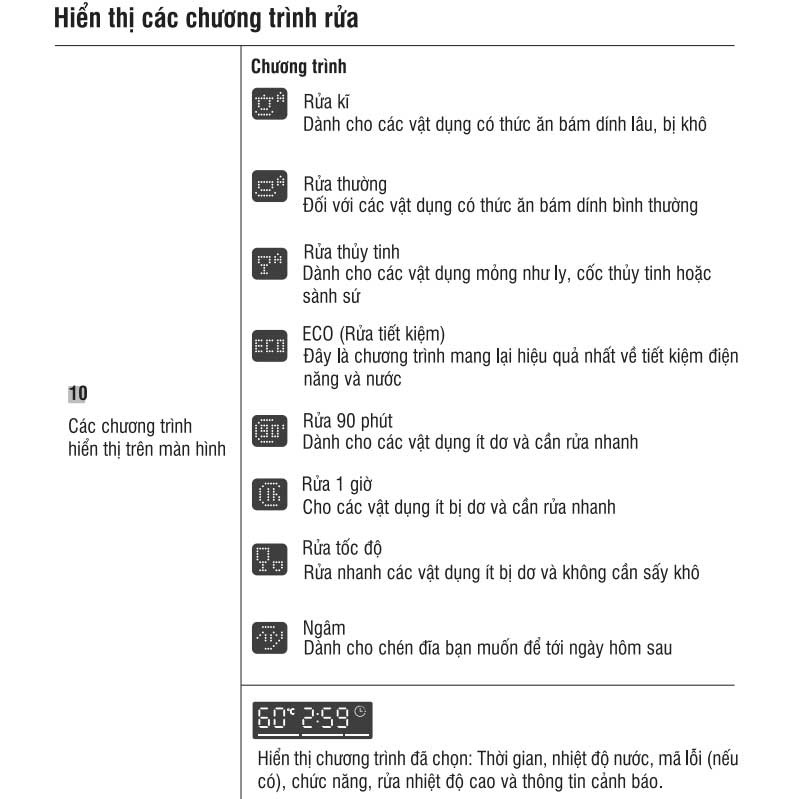
Washing functions of the dishwasher
Display of warning lights of the dishwasher
5. How to Use the Dishwasher with Common Washing Programs
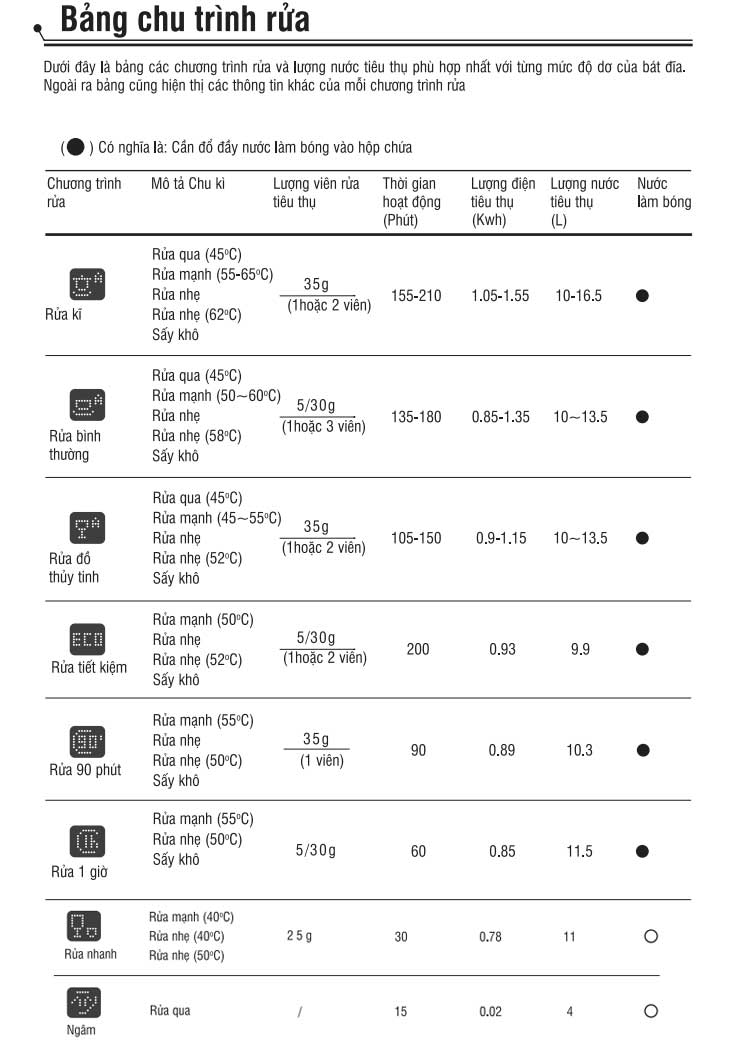
Washing cycle table of the dishwasher
Below is a table of washing programs and the appropriate water consumption for each level of dirtiness of dishes. Additionally, the table also displays other information for each washing program.
Note
- This program is washing according to the EN 50242 standard
- The actual washing program may differ from this program as it also depends on the conditions of use of dishes in different regions.
Changing the washing program of the dishwasher
You can only change the washing program when it has been running for a short time; at this point, the detergent tablet may have already popped out of the container. In this case, you must put the detergent tablet back into the container and reset it according to the instructions below:
- Press the Start/Pause button to pause
- Press the program button “^” for more than 3 seconds; the program will be canceled
- Press the program button “^” or “v” again to select the desired program
- Press the start/pause button; after 10 seconds, the machine will restart.
Forgotten items can be added at any time as long as the detergent/tablet has not popped out of the container. Follow the instructions below:
- Press the Start/Pause button to pause.
- Wait 5 seconds, then open the door. (It is very dangerous to open a running dishwasher as the hot steam can burn you)
- Add more items
- Close the door
- Press the Start/Pause button; after 10 seconds, the machine will restart.
Automatic door opening of the dishwasher
Note:
- The dishwasher door must not be blocked or locked when setting the automatic opening mode
- This may damage the automatic door opening function of the machine
6. Common Error Messages When Using the Dishwasher
If an issue occurs, the machine will display an error code as follows:
| Code | Explanation | Cause |
| E1 | Water supply time is longer | Water tap is not open, weak water source, or low water pressure |
| E3 | Unable to reach sufficient temperature | Malfunction in the heating element |
| E4 | Water overflow | Some part of the machine is leaking water |
| E8 | Safety valve malfunction | Faulty valve |
| Ed | Power loss | Faulty circuit board |
- If the dishwasher overflows, turn off the water supply or water valve, then call the warranty service
- Make sure to dry the leaked water thoroughly before restarting the machine
7. Notes When Using the Dishwasher
During the use of the dishwasher, you should also pay attention to the following points to ensure the machine operates better:
- Always pay attention to the warning light system for chemical status to check the cleaning chemicals in the tray before starting the washing program of the machine
- Regularly clean the dishwasher thoroughly to ensure it operates efficiently and protect and extend the lifespan of the device
- Do not let items collide or touch the detergent tablet container; if items touch, the detergent container may not open during washing. This will cause items to be dirty after the washing cycle ends
- For special material items, select a washing program with a lower temperature than usual
- To avoid danger and damage, do not remove glass items and sharp utensils from the machine within 15 minutes after the washing program ends.
- Buy dishes or utensils that are dishwasher safe.
- Do not put unsuitable items into the dishwasher
- Wood or horn items
- Non-heat-resistant plastic items
- Non-heat-resistant items
- Copper, tin items, or rusted items
- Items made from synthetic fibers

>>> See more: Items you should never put in the dishwasher to avoid regret
8. Conclusion:
We hope the information above will make your family’s use of the dishwasher easier and more effective. For more useful information and experiences on how to use the dishwasher, you can send requests to Kocher on the website or fan page, or call our support hotline for the most dedicated advice. Köcher is proud to be the pioneer in Vietnam bringing German technology into induction cooking products.