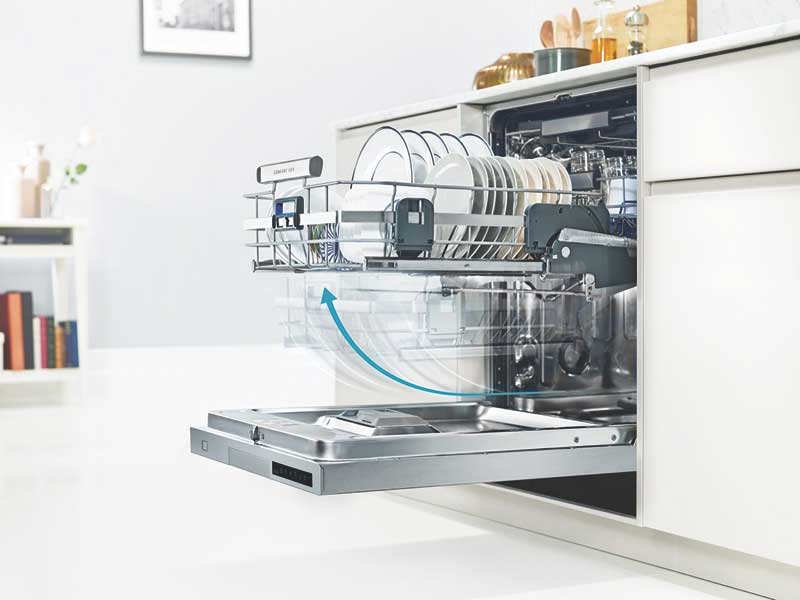
Is the dishwasher clean?
“Is the dishwasher clean?” is the first concern of anyone considering buying a dishwasher. Does using a dishwasher really eliminate all stains and disinfect dishes as advertised?
Let’s join Kocher in finding the accurate answer based on scientific analysis and genuine reviews from the community of those who have used dishwashers:
Quick content overview:
- How does the dishwasher clean dishes?
- Operating principle of the dishwasher
- Operating process of the dishwasher
- Is the dishwasher clean?
- Extremely clean washing, dry dishes
- Washing glassware in the dishwasher leaves no fingerprints
- High antibacterial and mold resistance
- Protects health.
- Why is the dishwasher not clean and smells bad?
- Reasons why the dishwasher is not clean.
- How to fix a dirty dishwasher.
- Review: Is the dishwasher clean?
- Opinions from fathers on otofun, tinhte
- Opinions from mothers on webtretho

1. How does the dishwasher clean dishes?
So, is the dishwasher clean? We need to understand the operating principle to know how it can remove stains and grease from utensils and whether it is as effective as hand washing.
Operating principle of the dishwasher
Typically, housewives often clean dishes by scrubbing vigorously with dish soap, but a dishwasher cleans dishes based on a completely different principle.
- The dishwasher uses the force of hot water at about 60 to 80 degrees Celsius combined with a detergent mixture sprayed at extremely high pressure, causing stains to be removed from the utensils.
- At the same time, the spray nozzles continuously rotate quickly, and water jets are sprayed to reach every nook and cranny of the dishes, making them spotless.
- Not stopping there, after the rinsing process, the dishwasher will dry the dishes using hot air.
- The time for a clean wash cycle is about 45 to 90 minutes and consumes 10-12 liters of water.
- For standard dishwashers, the energy consumption is about 1-3 kWh, while for high-end dishwashers, the energy consumption is reduced to about 0.9 kWh, maximizing energy savings.
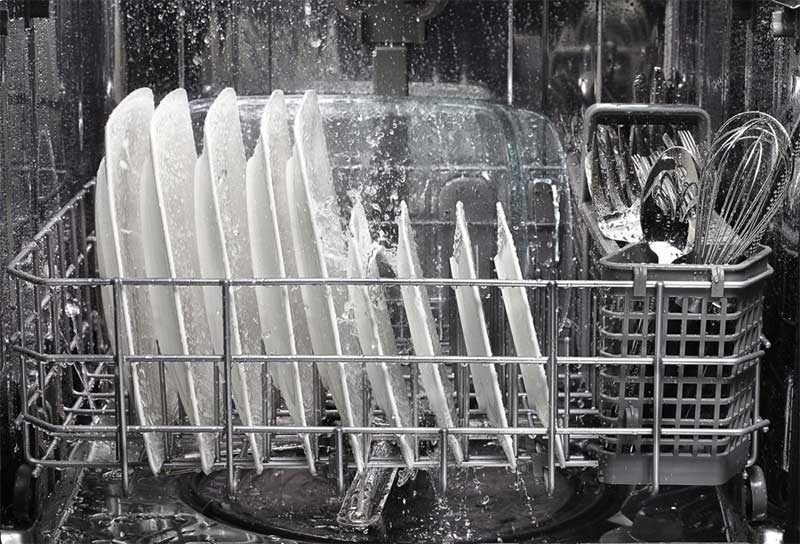
The dishwasher cleans dishes based on the principle of the swirling spray of hot water nozzles
Operating process of the dishwasher
Before the machine operates, you should remember to arrange the dishes according to the instructions into the racks and trays to ensure that the dishes to be washed are fixed in position when the dishwasher operates, avoiding strong collisions between utensils when the dishwasher is running. Then press the start button, and the dishwasher will begin the cleaning process with the following basic steps:
After you have loaded the items into the dishwasher according to the manufacturer’s instructions, and turn on the power, the machine will operate in the following cycle:
- After starting the machine, it automatically fills with water
- Then heats the water to the appropriate temperature
- At the right moment, the machine will automatically open the detergent compartment
- The machine sprays water through a high-pressure spray system to clean food residues on the dishes
- First rinse of dirty water
- The machine sprays more hot water at high pressure to rinse the dishes
- Second rinse of dirty water
- Drying is the final step. The heating element at the bottom of the machine will heat the air inside to help dry the dishes, disinfect, and eliminate odors. These actions cannot be achieved by hand washing.
=> All of the above processes aim for a common goal: Ensuring clean output and maximum sterilization of dishes (through heat and drying), giving your family complete peace of mind when using dishes.
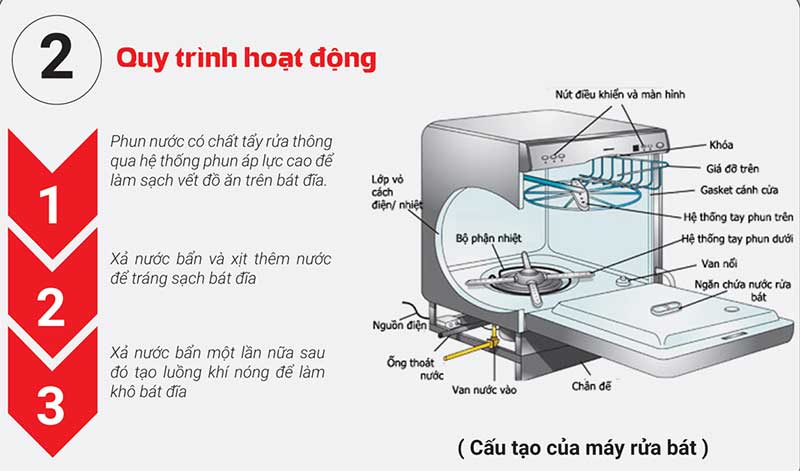
Operating process of the dishwasher
2. So, is the dishwasher clean?
Thus, all household dishwashers are constructed and operate on the principle of the swirling spray of water nozzles to clean dishes. Currently, dishwashers on the market all have the function of heating the water source, essentially boiling the water and using the spray force of the nozzles to clean the dishes. This helps dishes to be cleaner and disinfect better than hand washing. Some high-end dishwashers even have the ability to raise the internal temperature to 70 degrees Celsius to evaporate water, drying and sterilizing up to 99.99% of bacteria.
With the principles and operating processes mentioned above, we can assure you that you will be completely confident that your dishwasher will clean the number of dishes you need to wash.
Extremely clean washing, dry dishes
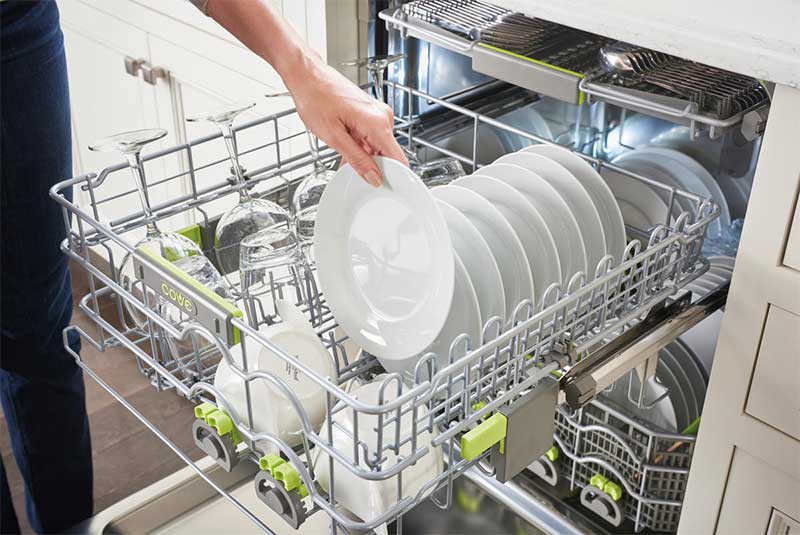
Washing glassware in the dishwasher leaves no fingerprints
Surely many of you, like me, find it impossible to perfectly clean glassware, especially wine glasses, because my hands always leave fingerprints when the glass dries! With the mechanism of using only the water jets from the dishwasher, it’s like an INVISIBLE HAND washing the dishes for me. Every time I take out the glassware, it is perfectly clear and shiny because it also has a polishing agent.
The transparent glass, when filled with water, makes you want to drink it all at once. If washing glassware, tea cups, frying baskets of the air fryer, toys for children, various baby bottles, and tiny utensils, you will truly see how “awesome” the dishwasher is at cleaning.
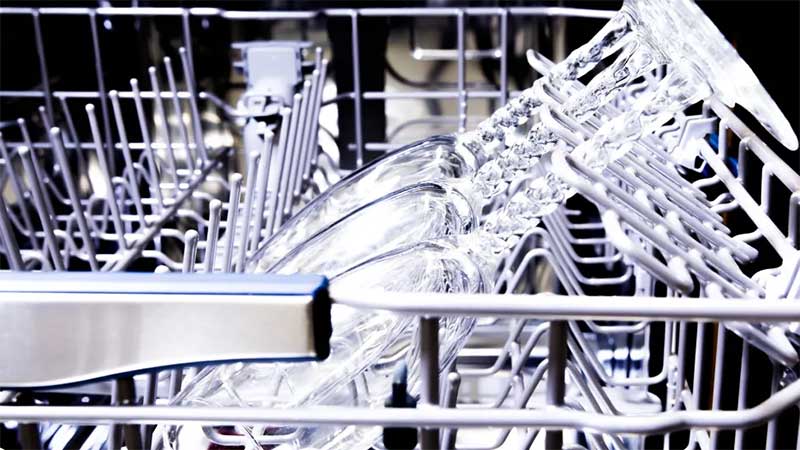
The dishwasher cleans glassware spotless and shiny
- Spray force: Effective in thoroughly cleaning stubborn stains, even those in the hardest-to-reach corners.
- Spray head: Contains many small-diameter water inlet holes on both ends, making it easier to clean the dishes.
If you want your dishes to be washed really clean and quickly, you should prioritize dishwashers with multiple spray heads, many water inlet holes, small diameters, and strong spray force. Standard dishwashers typically have only 3 standard spray nozzles. High-end dishwashers will also have an additional Vortex spray nozzle (whirlpool type) that effectively removes all stubborn stains.
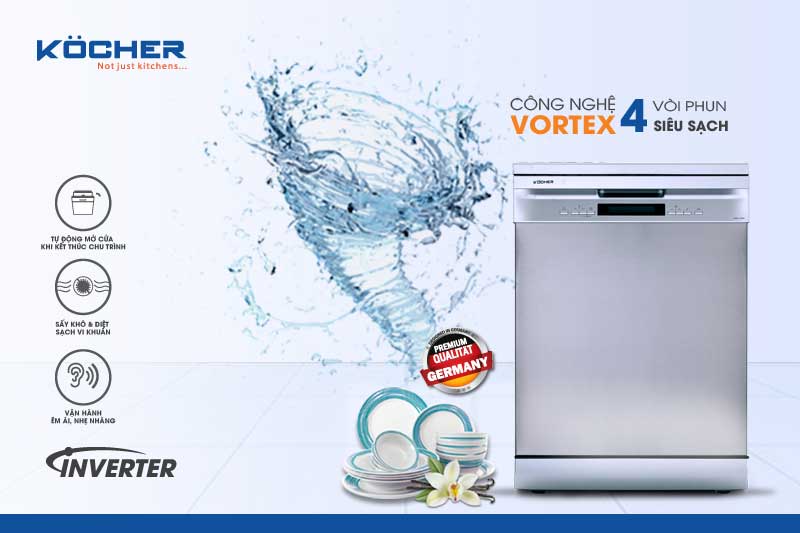
High-end dishwashers will have an additional Vortex spray nozzle for deep cleaning, effectively removing all stains
Antibacterial and mold resistance
It cannot be denied that using hot water (at temperatures depending on the selected wash mode) and strong water pressure to clean dishes will ensure a much higher level of disinfection compared to hand washing. The subsequent drying process with heat also helps to kill bacteria, prevent mold, and the accumulation of bacteria. Dishes coming out of the machine are already dry, and you can even place them directly on the dining table for immediate use. This is especially effective in high humidity weather or during cold, sunny seasons, where dishes, especially wooden utensils (chopsticks, spoons…) will dry quickly, kill bacteria, and prevent mold and bacteria from accumulating and developing in high humidity conditions. This is truly necessary for dishes used by young children.
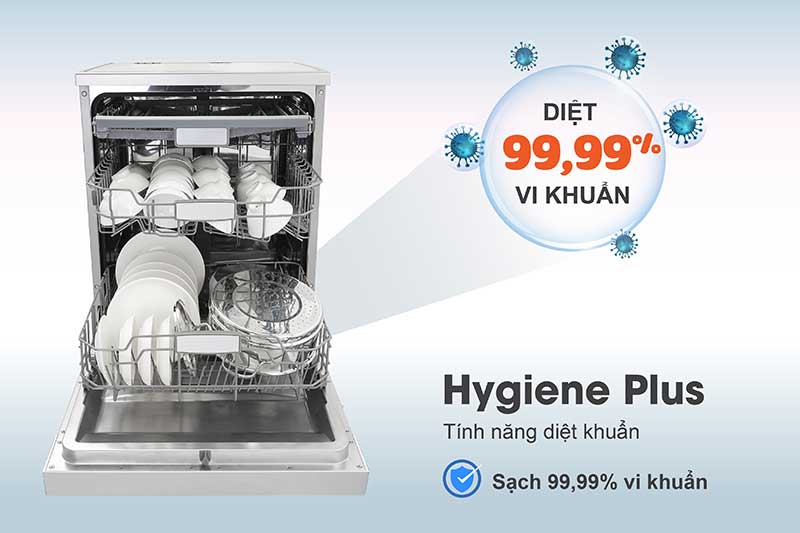
Hygiene Plus technology helps eliminate 99.9% of bacteria
Note: Currently, dishwashers are equipped with Turbo Drying technology that enhances drying speed and cleanliness.

Hot water and drying heat have antibacterial effects
Some high-end dishwashers will also integrate sensor technology that detects the cleanliness of pots and pans. With this technology, the machine can measure the amount of leftover food, grease, or detergent residues in the water, thereby automatically adjusting the amount of water and energy consumption to optimize the cleaning and disinfection process.
Protecting user health
To wash by hand, users need to use dish soap – a chemical that can affect asthma and respiratory issues if not careful during use. To ensure health, users must wear gloves to limit skin contact, which can cause peeling and irritation, especially for those with sensitive skin. Moreover, when pouring dish soap directly onto dishes without rinsing thoroughly, chemicals will remain on them and directly affect the user’s health.
In contrast, dishwashers use specially designed detergent tablets and powders. This is a type of salt that softens the hardness of water to clean dishes, reduce residue buildup, and help the machine operate better. Essentially, each wash uses only about a teaspoon of salt. A 1.2 kg pack of detergent powder costs about 180,000 – 300,000 VND and can last for several months.

The only recommendation when using a dishwasher is to remove large food scraps into the trash. For small food scraps, most modern dishwashers can handle them without human intervention. The belief that you need to “rinse” dishes before placing them in the dishwasher, as many Vietnamese people think, is also unnecessary. Therefore, before placing dishes in the dishwasher, you should scrape off leftover food.
3. How long should dishes stay in the dishwasher after washing?
After the dishwasher completes the wash cycle, if you want the dishes to air dry naturally, you should open the door 5 – 10 minutes after the dishwasher has finished washing. Because after washing, the machine or dishes may still be a bit hot or have some water left. You should wait a while for safety before taking the dishes out.
If you use the drying function to dry the dishes, you should take the dishes out about 20 minutes after the dishwasher has completed the drying cycle. Because after drying, the dishes and metal utensils are usually still quite hot, and the dishwasher itself is also hot. Therefore, it is safest to take the dishes out of the machine after 20 minutes.
>>> Some may wonder whether to leave dishes in the dishwasher until needed or not?
>>> Can dishes be left in the dishwasher all day or for a few days?
We recommend against it. Because dishwashers are usually placed low in the kitchen area. Dishwashers are often quite close to damp areas or near the floor. After about 20 minutes to 1 hour, at most 2 hours, you should move the dishes and utensils to a separate dish storage area. Because these areas are usually higher, dry, and clean. This will minimize the risk of bacteria sticking to the dishes and utensils and will be better for your family’s health.
In addition, taking dishes out of the machine also helps you clean the dishwasher quickly and easily every day. This also helps keep the dishwasher always clean and prolongs its lifespan.
4. Why is the dishwasher not clean and smells bad?
Spending a considerable amount of money to buy a dishwasher that does not clean well can be very disappointing, right? But what are the real reasons why the dishwasher is not clean, and how can it be fixed? Let’s explore with Kocher:
Reasons why the dishwasher is not clean
When the dishwasher is not clean and smells bad, the reasons may include:
- Arranging too many or incorrectly placed dishes, causing the spray nozzles to be blocked and unable to rotate or preventing the water jets from cleaning the stains.
- Selecting an inappropriate wash program.
- Using insufficient or incorrect specialized detergents.
- The dishwasher filter is dirty or improperly installed.
- The spray nozzles are blocked due to food debris, causing weak water spray and inability to clean the dishes.
- Not regularly cleaning the dishwasher, leading to bacteria buildup in the machine causing bad odors.
- Not storing dishes immediately after washing.

How to fix a dirty dishwasher
- If the reason is due to improperly arranged dishes, rearrange them, ensuring that dishes do not block the spray arms.
- If the wrong wash program is selected, choose a more appropriate wash program.
- Add more detergent if too little was poured or replace it with a new, stronger detergent.
- Regularly clean the filter, reinstall it correctly if it was installed incorrectly.
- Additionally, you should also clean the water inlet holes of the spray arms for better washing efficiency.
- Periodically perform a thorough cleaning of the dishwasher at least once a week, especially when you notice bad odors from the dishwasher, using white vinegar, baking soda, or you can purchase specialized dishwasher cleaning solutions.
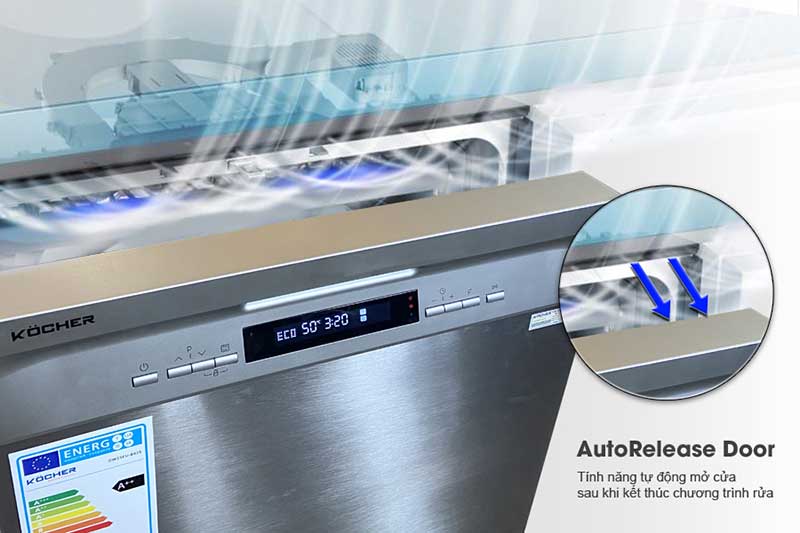
- When you finish washing dishes but haven’t stored them yet, you should slightly open the door for about 20 minutes to let the steam escape. You should not keep the door closed after washing, as the steam cannot escape and will condense on the dishes, causing odors to linger.
>>> You can learn more about: Common errors when using dishwashers.
5. How to clean the dishwasher?
In theory, your dishwasher should continuously self-clean – but unfortunately, this is not entirely the case. Over time, food particles, grease, undissolved detergent, and minerals in the water accumulate on the filter, rubber seals, and the interior walls of the dishwasher. Along with unpleasant odors, this residue can leave stains and grime on your utensils.
This means that if you do not regularly clean your dishwasher, your appliance will not be able to do its job. Moreover, if you allow food and grime to accumulate, it can damage the filter and pump of the dishwasher, ultimately leading to costly repairs.
The most effective way to clean your dishwasher is to periodically clean it with a soft cloth and specialized cleaning agents.
Let’s explore with Kocher the best way to clean the dishwasher:
Remove food scraps
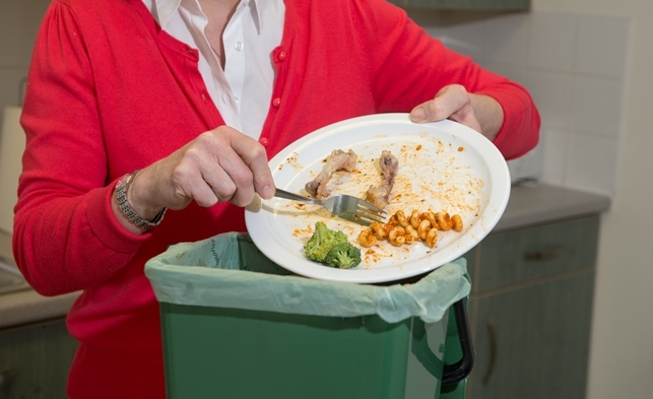
The main cause of odor issues is often due to leftover food remaining in the dishwasher. You should make it a habit to clean any leftover food after each wash cycle, pulling out the bottom rack to check for any food debris that may have fallen and wiping it clean with a soft cloth to prevent odors and future buildup.
Wipe clean the dirt on the door and the gasket.
To clean the inside of the door: Wipe away any debris that may have splattered or accumulated on the inside surface of the door, door edges, handles, or controls of the dishwasher with a damp soft cloth or sponge. To avoid damaging the touch screen or any special parts, do not use chemical cleaners.
To clean the dishwasher gasket: Gently use a soft toothbrush to scrub away any debris stuck on the rubber gasket. Wipe clean with a damp cloth or paper towel. Avoid using bleach-based cleaners if the inside of your dishwasher is stainless steel or has any stainless steel parts. Check the manufacturer’s instructions before using hydrogen peroxide to remove mold.
Remove and wash the dishwasher filter
It’s simple: The filter is located beneath the lower spray arm – you will need to pull out the bottom rack to access it. If you are unsure how to remove it, check the manufacturer’s instructions or the manufacturer’s website for more information.
- Unlock and remove the filter and rinse it under hot water.
- Use a soft toothbrush to scrub the mesh and plastic frame to remove grease or food particles stuck in the crevices. Then rinse it clean.
- Lock the filter back in place.
Do not operate your dishwasher when the filter is improperly installed, as this can cause serious damage to the machine and may void the warranty.
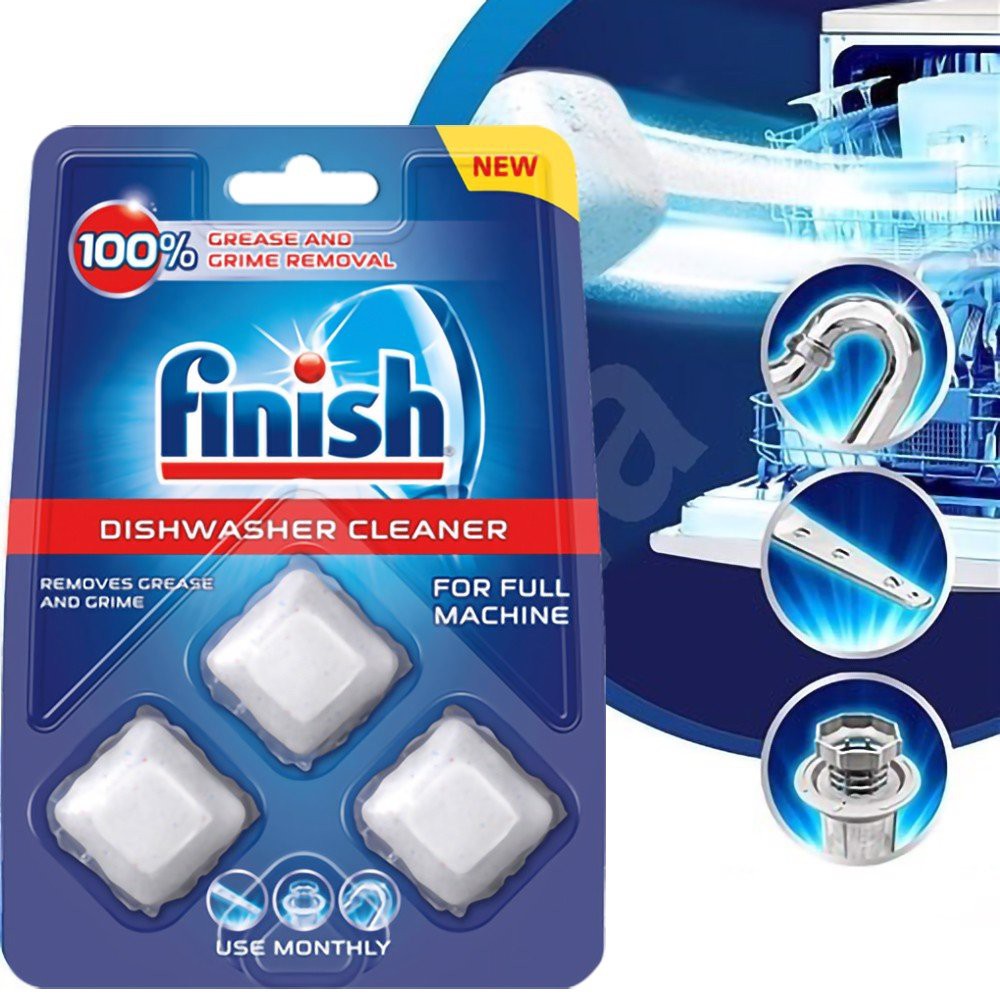
Deep clean your dishwasher every month with specialized cleaning tablets.
Monthly, it is important to clean to remove any trapped food and detergent residue. For a more thorough clean, we should use specialized dishwasher cleaning tablets as they contain surfactants that help dissolve food particles and grease. Ensure you read the instructions before using the cleaning tablets, as some types cannot run in the same cycle.
Or deep clean your dishwasher with vinegar
If you choose to DIY against grime and buildup, pour vinegar into the dishwasher. Place a bowl containing one cup of white vinegar on the top rack and run a normal (hot) cycle without detergent or dishes.
To clean your dishwasher with vinegar and baking soda, after running the cycle with vinegar, sprinkle a cup of baking soda into the bottom of your empty dishwasher and run a short hot cycle.
Vinegar and baking soda are acidic and over time can damage your dishwasher, especially rubber seals and soft hoses, so you need to be cautious not to use them frequently.
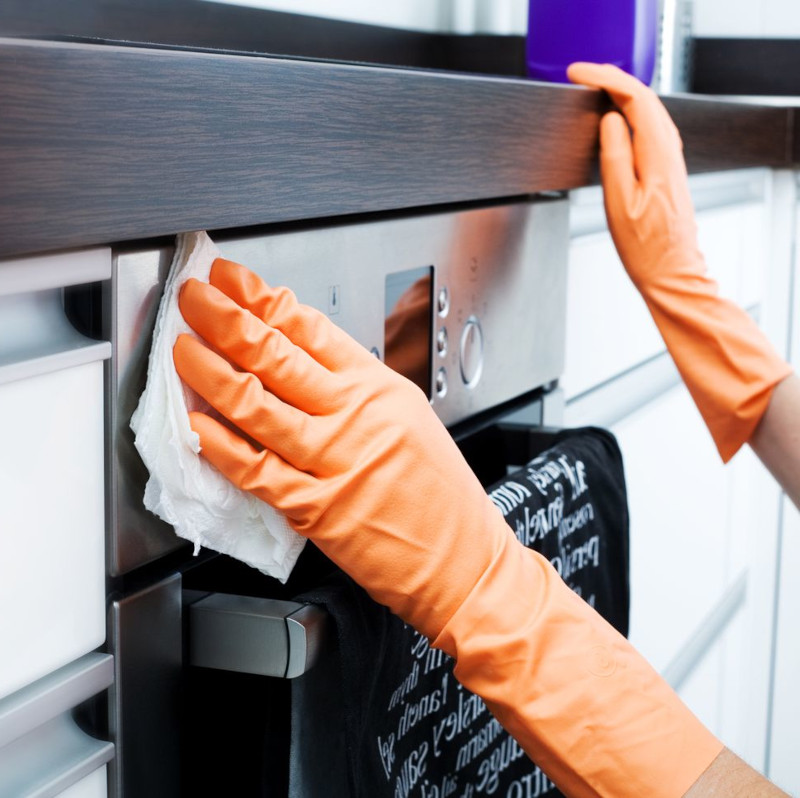
Clean and shine the outside of your dishwasher as needed.
Fingerprints make any surface look dull and dirty, especially on stainless steel appliances. That’s why we recommend using a cleaner specifically designed for stainless steel surfaces. The cleaner not only makes the dishwasher shine but also contains ingredients that help repel dirt and stains in the future.
You should avoid corrosive cleaners or pads that can scratch and damage the exterior of your dishwasher.
Clean the dishwasher drain trap
If water is pooling at the bottom of the dishwasher after the wash cycle ends, food chunks or foreign objects may be blocking the drain at the bottom of the machine. Follow these steps:
- Turn off the dishwasher: Remove any items from the dishwasher and take out the bottom rack.
- Remove any standing water at the bottom of the dishwasher using a small cup or absorbent cloth.
- Remove any visible food chunks or foreign objects from the drain trap using a soft cloth.
- If the dishwasher still does not drain properly and the manufacturer’s manual does not provide any further instructions, this may be the time to call a professional repair service for assistance. If your machine has a removable drain trap cover, check the manufacturer’s instructions for how to lift it up and handle it.
6. Genuine review: Is the dishwasher clean?
Above, Kocher has helped you answer the question “Is the dishwasher clean?” from a scientific perspective: based on the principles and operating processes of the dishwasher.
Additionally, we would like to repost the opinions and reviews of mothers and fathers on forums like webtretho, otofun, and tinhte who have used dishwashers, to give you a more objective view on whether “the dishwasher is clean?” so you can decide whether to choose to buy a dishwasher for your family.
Opinions from fathers on Otofun, Tinh tế about whether the dishwasher is clean?
- Do you think hand washing is cleaner than using a machine? This mindset comes from the idea that hand washing is cleaner than machine washing. But this is completely different! Clothes have complex structures and require special care for each area. Dishwashers, compared to hand washing, have many advantages. The machine washes with hot water, and you know that dishes are not afraid of hot water; the hotter the water, the cleaner it is, and the easier it is to wash away grease. The water jets are forced very small to create high pressure to wash away all stains. And the cleaning chemicals in the machine are also stronger than dish soap, which must protect your hands.
- I’m meticulous, and I find the machine quality is okay, with a light fragrance (whether it smells good or not depends on personal perception; I find it okay), and the porcelain dishes are shiny after washing.
- A dishwasher is something that should definitely be bought, similar to a TV or washing machine… Anyone who says hand washing is faster and cleaner may not have experienced it. The machine cleans extremely well (much better than hand washing) because it uses hot water and dries the dishes. For families with small children and both parents working, without help or grandparents… it should be on the essential shopping list.
- When I bought the dishwasher, the elders said it was a waste, and the daughters-in-law said it was laziness, we just kept quiet. But once we used it, we realized. My wife saves nearly 1 hour and 30 minutes every evening. And not only does it save time, but we also discovered a bunch of other points: It cleans extremely well. Using the machine, you don’t have to worry about hygiene anymore. Because it washes at 75 degrees Celsius, the dishes come out smelling great, and they feel squeaky clean. Anyone who says it doesn’t wash away grease just doesn’t know how to load the dishes – watch a 10-minute tutorial on YouTube, and you’ll become an expert. In winter, you don’t have to worry about wet hands – it’s so great. Personally, I think after the washing machine, the dishwasher is the most powerful liberator for women.
- Buy a type that can wash 12 sets if you eat less, it can wash all the dishes, cutlery, pots, and pans. Each time it uses about 12 liters of water, 1 unit of electricity if set to mode 4 (washing with hot water up to 60 degrees) like in my house. In general, it’s easy and keeps everything clean and fresh. When I first brought the dishwasher home, my wife and kids complained it was unnecessary, but now they say it’s indispensable. It cleans much better than hand washing and is very convenient.
- Here, here. Like this person said, it’s the most accurate. My family uses the dishwasher, and it’s great, quiet, and not noisy, and it cleans perfectly.
- I’ve been using the machine for over a month, and I find this person’s comments accurate; the machine cleans better than a person, and you don’t need to rinse the dishes beforehand, just scrape off the food and put them in the machine, at the end of the day, throw the pots in and press the button to go to sleep. Anyone worried about buying expensive cleaning tablets can switch to using specialized powder, salt, and rinse aid, which will be cheaper. With the dishwasher, organizing meals becomes much easier; just put the dishes in the machine and go sing karaoke. Those who say washing with the machine uses a lot of water have never used one; my machine uses only 7 liters of water each time, and it automatically opens after washing.





Opinions from mothers on webtretho about whether the dishwasher is clean?
- The dishwasher has become a FAMILY HAPPINESS SAVIOR for me, mothers. Just imagine. After a hearty meal, who wants to wash the dishes? Just load the items into the machine, press a button, and it’s done. Spotlessly clean. No need to dry the dishes anymore :)).
- The dishwasher helps elevate your life to a new level, experiencing clean and fragrant dishes, enjoying a modern and classy kitchen space. I have used this, and this machine cleans grease and food odors very well, effectively disinfecting with hot water.
- Buying a dishwasher in winter is reasonable. The dishwasher is just like a washing machine, you know. You should buy one from Kocher; they have both built-in and standalone options, and they clean very well.



Conclusion:
The summary of practical opinions from consumers shows that no one has ever experienced a dishwasher and claimed that this device does not clean well. The core issue here is simply how to find a dishwasher that suits your family’s needs and space; as for whether the dishwasher cleans well or not, the answer is definitely YES! Currently, the number of modern families trusting and confidently choosing this device is increasingly popular to free up labor. In addition to upgrading the convenience of the kitchen with a dishwasher, the trend of choosing smart cooking devices that save energy is also of great interest to many users; among them, Köcher proudly leads in Vietnam by bringing German technology into induction cooking products. Therefore, you can confidently invest in these high-end devices to enjoy a more convenient and relaxed life every day.