

Induction hob




Filter
Filter
Số lượng vùng nấu
Chất liệu mặt kính
Kích thước khoét lỗ
Loại lắp đặt
Công suất phải
Công suất trái
(4 product)
Order by:
Newest
Vietnam
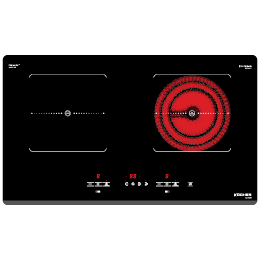
INDUCTION HOB EI-633

-
The EI-633 induction cooktop features a sleek design, optimizing kitchen space.
-
The premium Keramic glass surface offers a luxurious and sophisticated appearance.
-
The ultra-sensitive touch control panel allows for quick and easy operation.
9,990,000 VND

South Korea
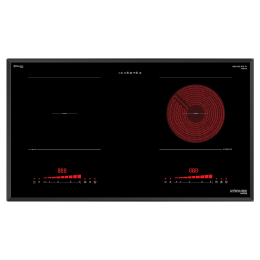
INDUCTION HOB EI-355
- Bringing the breath of modern Korean design
- Smoothly beveled Keramik glass surface, luxurious Aluminum edging
- Provides a light and premium feel for the kitchen space.
21,500,000 VND

Induction cookers are increasingly appearing in the modern kitchens of Vietnamese families, especially for those who want to enjoy the superior cooking speed of induction cookers with stainless steel pots, while also needing space for frying, stewing, and simmering with aluminum pans, clay pots, or traditional glass pots. The following article from the Köcher technical team will provide the most accurate purchasing criteria to help you find the perfect induction cooker for your family.
1. What is an induction cooker? Comparison with induction hobs and infrared cookers
An induction cooker (also known as a combined electric-induction cooker or hybrid induction cooker) is a type of cooker that integrates two cooking zones with two completely different heat generation technologies on the same glass surface: one zone uses induction technology and the other uses infrared technology. This smart combination helps solve the problem of choosing kitchen appliances for modern consumers.
Köcher EI-330E induction cooker combines induction and infrared zones on the same glass surface[/caption>
The induction zone operates based on the principle of electromagnetic induction. This cooking zone does not heat itself when in operation.
Under the glass surface of the induction zone is a copper coil. When electric current passes through, the coil generates a fluctuating magnetic field on the surface of the cooker. This magnetic field interacts directly with the bottom of pots made of ferromagnetic metals (such as stainless steel 430, cast iron, carbon steel) and activates eddy currents (Foucault currents) right at the bottom of the pot. These eddy currents cause the bottom of the pot to generate heat to cook the food, while the glass surface only serves as a passive heat conductor transferring heat back from the bottom of the pot.
Thanks to this principle, the induction zone achieves extremely high energy efficiency of 90% – 95%, allowing 1 liter of water to boil in just 2 – 3 minutes and is extremely safe as the surrounding surface of the cooker always remains cool.
Comparison of the operating principles of the induction zone and the infrared zone
The infrared zone operates based on the principle of direct thermal radiation from the carbon fiber heating element or halogen bulbs.
When powered, the heating wires or halogen bulbs under the glass surface glow red and emit a large amount of infrared heat. This heat is directly transmitted to warm the glass surface of the cooker, which then transfers heat from the glass surface to the bottom of the pot to cook the food.
Since heat is transferred through direct physical contact, the infrared zone is not picky about pots. You can comfortably use all types of pots and pans made from aluminum, copper, glass, as well as clay pots or ceramics that cannot be used on the induction zone.
Conclusion: The combined induction cooker is the perfect solution for families upgrading from gas stoves to electric stoves, or for families with diverse culinary habits who want to keep their clay pots for braising fish, traditional aluminum pans for stir-frying without wanting to waste them when switching stoves.
2. Advantages and notes when using induction cookers
Before investing in installation, understanding both the advantages and notes when using this type of cooker will help you be more proactive in using and maintaining the device for a long time.
2.1. Outstanding advantages of induction cookers
Maximum flexibility with cooking pots: You can boil water and cook soup super fast on the induction zone with stainless steel 403 pots, while simultaneously braising fish in clay pots or frying with aluminum pans on the infrared zone.
Outstanding energy savings compared to pure infrared cookers: Thanks to the support of the high-efficiency induction zone (90% – 95%) for boiling and cooking soup, the monthly electricity cost of the induction cooker is less than half compared to using a regular double infrared cooker.
Strong support for stewing, simmering, and braising dishes: The infrared zone transmits heat slowly and retains heat long after turning off the cooker, making it suitable for cooking dishes that need to be stewed or braised to absorb flavors. You can even use the infrared zone to grill dry foods like squid, fish, or sweet potatoes (be sure to clean thoroughly after grilling).
Easy to clean and maintain daily: The flat glass design allows you to simply wipe it with a damp cloth after cooking, making the cooker shine like new without needing to disassemble the greasy gas stove trivet.
The biggest advantage of the infrared induction cooker is that it is not picky about pots in the infrared zone, while cooking quickly and saving electricity in the induction zone[/caption>
2.2. Notes when using infrared induction cookers
The infrared zone has lower efficiency than the induction zone: Cooking time on the infrared zone will be longer than on the induction zone and emits more heat into the surrounding space during operation.
Be careful with residual heat in the infrared zone: After turning off the cooker, the surface of the infrared zone still maintains a very high temperature for 5 – 10 minutes. If there are small children or elderly people in the family, special care should be taken to avoid accidentally touching the hot surface.
Initial investment cost: Combined induction cookers often have a higher price than pure infrared cookers of the same component quality segment. In return, the fast power and energy-saving capability of the induction zone are worth considering.
Note to let the cooker surface cool completely (or residual heat warning off) before touching the surface or cleaning
3. Classifying induction cookers based on important criteria
Classifying induction cookers helps buyers easily visualize and determine which product line will best fit the existing technical infrastructure and kitchen cabinet space of their family.
3.1. Classifying infrared induction cookers by the number of cooking zones and their distribution
The number of cooking zones directly determines the working area of the cook and the speed of completing daily meals for the family. The most common on the Vietnamese market today is the double induction cooker (including 1 induction zone and 1 infrared zone).
For larger families or those with extremely spacious kitchens, you can choose induction cookers with 3 or 4 cooking zones with diverse distributions (for example: 2 induction zones + 1 infrared zone).
However, for the majority of families with 3 – 5 members, the double induction cooker remains the best balanced choice between functionality and cost.
3.2. Classifying induction cookers by installation method
The installation method directly affects the aesthetic appearance of the kitchen and the complexity of the initial stone table construction.
Built-in cookers: The entire body of the cooker is placed below the countertop, with only the flat, luxurious glass surface exposed. This is a modern kitchen design trend that helps keep the space airy and extremely easy to clean.
Surface-mounted cookers: Directly placed on the countertop, suitable for families renting or wanting to quickly replace an old gas stove without incurring stone cutting costs.
Surface-mounted cookers that can be built-in: A versatile cooker line that integrates both a raised base and a rim for built-in installation, allowing you to flexibly change the installation method when renovating the kitchen cabinet in the future.
3.3. By rated power and quick heating features
Each cooking zone on an induction cooker typically has a rated power ranging from 1,800W to 2,300W. In high-end cooker lines, the induction zone is often equipped with a Booster mode that pushes the power up to a maximum of 2,300W – 3,000W to minimize cooking time.
Due to the total simultaneous operating power of the double induction cooker being very large (from 3,600W – 4,000W), you need to install a separate circuit breaker (from 20A – 32A depending on the cooker line) to protect the household electrical system.
The EI-330 induction cooker features a sleek design, luxurious Keramik glass surface, and Booster function to save cooking time
3.4. By origin and quality of components
The origin and quality standards of components are factors that determine the mechanical durability and safety level of the device throughout its lifespan.
REFER NOW
REFER NOW
NOT PREFERRED
High-quality imported line from Malaysia / South Korea
Line assembled in Vietnam
Low-cost line with unclear origin
Price ranges from 10 – 22 million VND.
This segment achieves the best performance-to-price ratio for Vietnamese consumers due to high technical standards, good thermal shock-resistant glass, and proven durability.
Price ranges from 8 – 12 million VND, suitable for families with moderate budgets who still want to own a cooker with a clear origin and reputable warranty service at home.
Price under 5 million VND, mainly imported in small quantities from China.
These lines often have thin circuit boards, noisy cooling fans, and poorly sensitive temperature sensors, easily causing short circuits after a short period of use.
4. 7 criteria to identify quality induction cookers
Even if you have no experience buying products, you can evaluate and identify a good induction cooker through 7 criteria summarized by Köcher’s product experts:
4.1. The induction zone has a 100% pure copper induction coil
Copper has the best electrical conductivity, helping to generate a consistent magnetic field and convert energy with maximum efficiency of up to 95%. Low-quality induction coils made of aluminum or copper-plated alloys have higher resistance, generating significant heat within the machine compartment, causing the cooling fan to operate overload and easily damaging surrounding electronic components.
Quality standard: The copper coil of the induction zone must be 100% pure copper, with a thick winding density and a large coil diameter (at least 20 cm or more).
How to check in-store: Read the official technical specification catalog or images of the disassembled components of the cooker model. High-end cookers using copper induction coils from the E.G.O group (Germany) are always clearly shown in the catalog and the information label of the cooker.
The 100% pure copper induction coil conducts electricity well, distributes the magnetic field evenly, operates smoothly, and does not lose power over time
4.2. Glass surface prioritizes beveled Keramik or EuroKera
The infrared zone of the induction cooker emits a large amount of heat and retains heat directly on the glass surface. If using regular tempered glass or low-quality glass, the cooker surface will be very prone to cracking or shattering when cold water spills during high-temperature cooking.
Quality standard: The cooker surface must be made of specialized high-temperature resistant glass (up to 700 – 800 degrees Celsius), with good compressive strength (about 10 – 15 kg) and the ability to withstand sudden thermal shocks of at least 250 – 300 degrees Celsius or more.
How to check in-store: Carefully observe the corners of the cooker glass surface. High-quality glass lines such as genuine Keramik or EuroKera (K+) from France always have the brand logo clearly printed using laser technology, and when touched, they feel smooth, without any roughness or bumps, and cannot be scraped off with hard objects.
Quality Keramik glass surface
4.3. Integrated Inverter technology for the induction zone
Induction cookers without Inverter typically control temperature by continuously turning on and off (making a “clicking” sound). This causes the water in the pot to boil violently at times and then completely stop, making it very easy to burn the bottom of the pot when cooking long-simmered dishes. Additionally, Inverter technology actually helps save an additional 30% – 38% of monthly electricity consumption for the family.
Quality standard: The induction zone must be equipped with a smart Inverter power circuit, helping to regulate the current continuously, keeping the cooker operating stably at the lowest power levels (level 1 and level 2) without interruption.
How to check in-store: Place a small pot of water on the induction zone, turn on the cooker at the lowest power level (level 1 or 2). If the bubbles at the bottom of the pot rise steadily without any clicking interruptions, then it is a cooker integrated with Inverter technology.
Inverter technology actually helps save an additional 30% – 38% of monthly electricity consumption for the family, eliminating worries about saving electricity
4.4. Independent touch control panel for each cooking zone
Since the induction zone and the infrared zone operate on two completely different technology principles, a shared control panel can easily cause confusion and inconvenience for the elderly or helpers in the family when quick adjustments are needed.
Quality standard: The double induction cooker needs to have a design with an independent touch button system (preferably a slide type) for each cooking zone, without using a common power control button or central power adjustment button.
How to check in-store: Try to turn on the power and adjust the temperature simultaneously on both cooking zones. A visually standard cooker will allow you to adjust the power of each side independently very quickly with just one touch or a light swipe of your finger.
4.5. Complete system of 5 core safety features
Induction cookers are high-power electrical devices operating in high-temperature environments. The lack of warning features will not ensure safety during use.
Quality standard: The device should be fully integrated and sensitively operate 5 active safety protection features: automatic shut-off when there is no pot on the induction zone, overflow/overheat protection sensor, child safety lock (Child Lock), residual heat warning for the cooking zone (Residual Heat), and automatic display of error codes when issues occur.
How to check in-store: Start the cooker on the infrared zone for 30 seconds and then turn it off. Observe whether the display shows a flashing “H” symbol warning that the cooker surface is hot. Or lift the pot off the induction zone while it is operating to check the automatic shut-off speed and error reporting of the device.
Safety feature system on the infrared induction cooker
4.6. Fine power range
Vietnamese cuisine is incredibly diverse, from stir-fried dishes that require instant high heat for crispy vegetables, to braised dishes that need extremely low and stable temperatures. A power range of only 5 – 6 levels will make it very difficult for you to adjust the temperature just right, significantly reducing the deliciousness of the dish.
Quality standard: The control circuit of the cooker must divide the operating power range into at least 9 smooth temperature levels, helping the cook easily control the exact temperature for different dishes.
How to check in-store: Try adjusting the power from level 1 to level 9 and observe the sensitivity of the LED display. The temperature levels must change smoothly, responding immediately after each touch of the finger.
4.7. Installation size compatible with Vietnamese countertops
Choosing devices with this standard size helps you easily fit the new cooker into the old cutout without incurring additional costs of 500,000 – 1,500,000 VND for repairing the kitchen countertop.
Quality standard: The built-in double induction cooker must have a standard glass surface size of approximately 730 x 430 mm and a corresponding cutout size of 680 x 380 mm.
How to check in-store: You should use a measuring tape to directly measure the length and width of the glass surface and carefully compare it with the technical drawing included in the product catalog before deciding to purchase.
The built-in size of the Köcher induction cooker is compatible with most gas stove designs
5. How much do induction cookers cost? Suggested suitable segments
Currently, the price of hybrid induction cookers on the market varies widely, from about 3,000,000 VND for common cooker lines to 9,000,000 – 22,000,000 VND for high-end imported lines from Europe. To help you easily balance your finances, here is a suggested price segment table along with corresponding features:
Segment
Price
Typical model
Advantages
Limitations
Standard
8,000,000 – 10,000,000 VND
Cooker assembled in Vietnam / Malaysia
Full basic safety features, Booster power in 1 induction zone, sensitive independent touch control.
Not integrated with energy-saving Inverter technology.
Near high-end
15,000,000 – 20,000,000 VND
Induction cooker from South Korea
Keramik glass surface with beveled aluminum edging, modern Korean design, quality copper induction coil, full range of smart cooking modes (defrost, reheat, super-fast cooking iQuick Boiling), 3-year official warranty.
Relatively high initial investment cost.
6. FAQs – Frequently asked questions about induction cookers
Can induction cookers use aluminum pots, clay pots, or glass pots?
Yes, but only on the infrared cooking zone. The induction zone is only compatible with pots that have ferromagnetic metal bottoms (such as stainless steel 430, cast iron, carbon steel).
To quickly check if your pots can be used on the induction zone, simply use a small magnet against the bottom of the pot: if the magnet sticks tightly, then the pot can be used on the induction zone; if it does not stick, then switch to cooking on the infrared zone.
What amperage circuit breaker is needed for a double induction cooker?
Most double induction cookers today have a total operating power ranging from 3,600W to 4,000W at a voltage of 220V, equivalent to a rated current of 16A – 18A.
For greater safety, it is recommended to install a separate circuit breaker (automatic switch) with specifications from 20A to 25A specifically for the cooker, combined with electrical wiring with a minimum copper core cross-section of 2.5 mm2 or more and not to be plugged in with other high-power devices like refrigerators or microwaves.
Is the infrared cooking zone dangerous when there are small children in the house?
The surface of the infrared zone retains high temperatures for about 5 – 10 minutes after turning off the cooker, and the glass will glow red during operation to warn users.
To ensure maximum safety for small children, you should prioritize buying induction cookers that integrate child safety lock features (Child Lock) to lock the control panel when not in use and always pay attention to the residual heat warning light “H” displayed on the cooker surface before proceeding to clean the infrared cooking zone.
Why does the induction zone of the induction cooker sometimes make a “uu” sound?
The light “uu” sound is a completely normal physical phenomenon when the induction zone operates at high power. This is the result of the resonance of the fluctuating magnetic field between the copper coil of the cooker and the iron molecules at the bottom of the pot to generate heat.
7. Köcher induction cookers – A modern solution for Vietnamese kitchens
At Köcher, we deeply understand that a cozy kitchen of a Vietnamese family always contains rich and distinctive culinary habits. From stainless steel pots for light soups, aluminum pans for crispy stir-fried vegetables, to clay pots for braising fish with the rich flavors of home, Köcher induction cookers are born to cherish all those values.
With a strong commitment to modern technical quality standards, a transparent warranty of up to 3 years at home, and a professional installation team in Hanoi, Ho Chi Minh City, and neighboring provinces, Köcher proudly stands as a reliable companion on the journey to enhance comfort and keep the love alive in your family’s home.
Explore the premium induction cookers from Köcher or contact Köcher’s professional team for completely free home consultation support.
For detailed information about the product, please contact:
Website: kocher.vn
Hotline: 024.3399.6058 – 096 96 22 066
Facebook: https://www.facebook.com/kocher.official
Youtube: https://www.youtube.com/@kocher.official
TikTok: https://www.tiktok.com/@kocher.official
Group: https://www.facebook.com/groups/kinhnghiemchonthietbibeptot
Headquarters: Area B, Lot B45, LK11 Geleximco Urban Area, An Khánh Commune, Hanoi