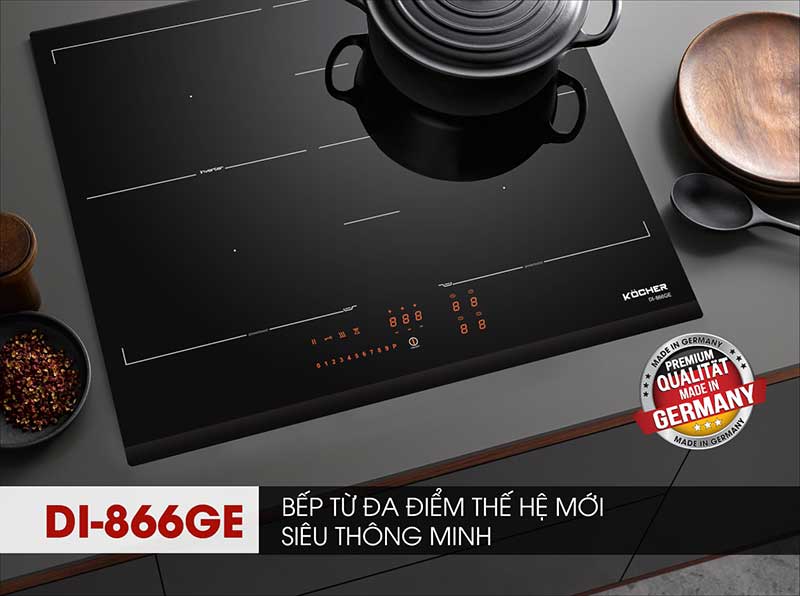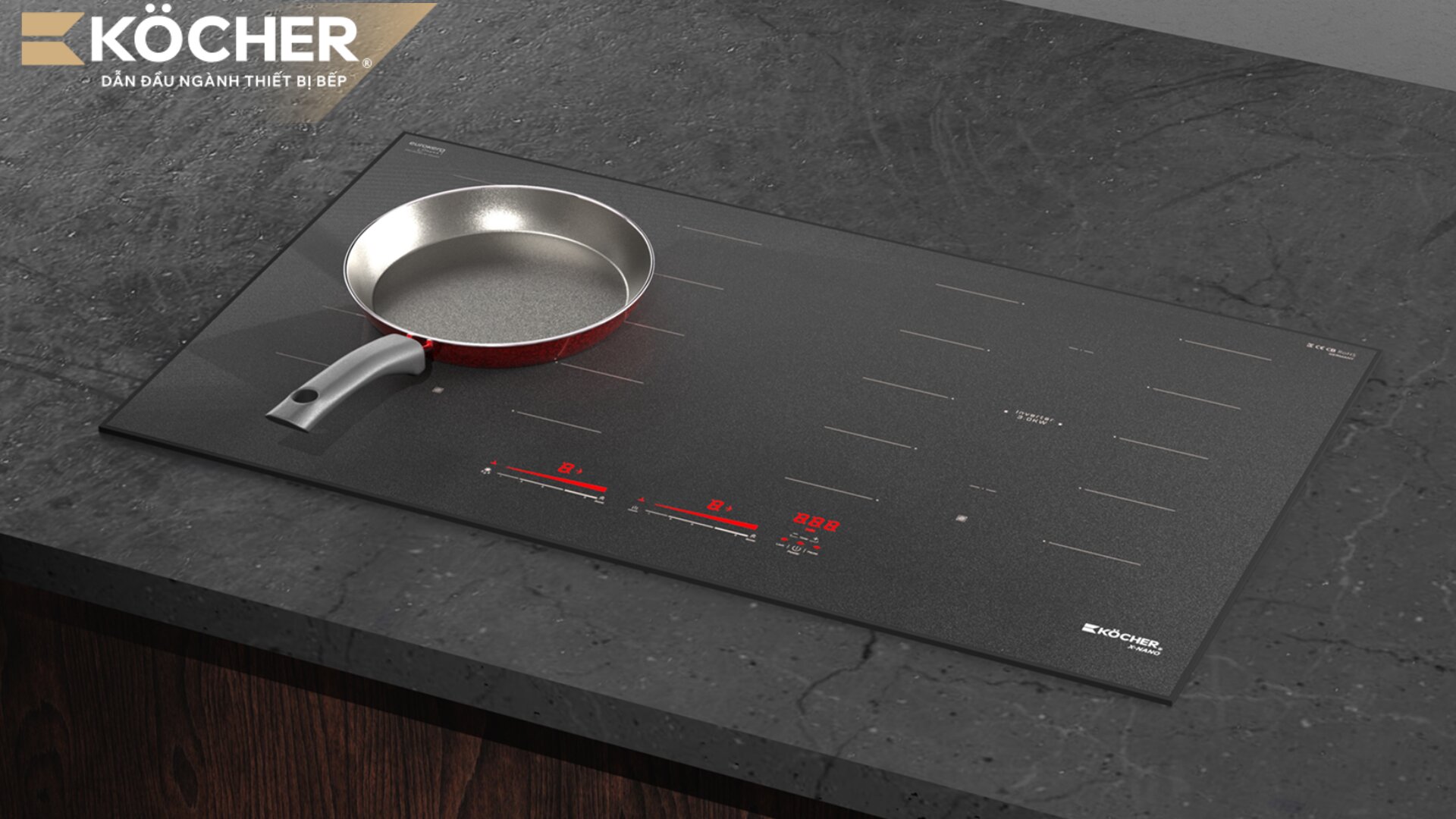
Modern electronic devices such as computers, air conditioners, or TVs are all equipped with a cooling system to operate stably. So do induction hobs have a cooling system, how does this system work? Understanding the cooling mechanism will help you accurately assess the durability and performance of induction hobs when used over a long period.
Do induction hobs have a cooling system? Why do induction hobs need a cooling system?
Yes. Induction hobs must have a cooling system to ensure safe and durable operation. Although induction hobs do not generate heat directly by fire, electronic components inside such as control circuits, IGBT power modules, and induction coils still generate heat when operating at high power. If not cooled, the accumulated heat can cause overheating errors, leading to automatic shutdown or component failure.
In induction hobs, the cooling system has three main roles as follows:
- Protect electronic components: During operation, the induction coil and circuit board generate a large amount of heat. The cooling system helps cool down promptly, preventing the hob from overheating, avoiding component damage, reducing the risk of short circuits, and extending the device’s lifespan.
- Maintain stable working performance: When the temperature is well controlled, the components always operate within safe limits, helping the hob maintain accurate induction capability, stable operation, and no power drop when used for a long time. Maintaining high performance not only protects the machine but also helps optimize energy consumption.
- Ensure user safety: Effective cooling helps reduce heat accumulation in the hob and cools the surface faster, minimizing the risk of burns when accidentally touching, while enhancing safety for users during cooking.

Structure of the cooling system of induction hobs
The cooling system of induction hobs consists of three main parts: a cooling fan, a heat sink, and ventilation slots. The function of each part is as follows:
- Cooling fan: Located under the hob surface, the fan draws cool air from outside into the hob chamber and pushes hot air out. When the hob operates, the fan runs continuously to maintain air circulation and cool the internal electronic components.
- Heat sink: Directly attached to the power module and control circuit area, these are the components that generate the most heat when the hob operates. When these components heat up, the metal heat sink absorbs excess heat, preventing the components from overheating.
- Ventilation slots: These are ventilation slots located at the bottom, sides, or back of the hob body. The ventilation slots allow cool air to enter and hot air to escape easily, helping the hob avoid heat buildup and operate stably.
Cooling fan
This is the most recognizable part of the induction hob. When the hob operates, you will hear a soft humming sound, which is the sound of the cooling fan running. The fan’s job is to draw cool air from outside and push hot air out of the hob. Budget induction hobs often use coaxial fans, which are noisier, while high-end induction hobs use squirrel cage fans that help the hob run quietly and cool more effectively.
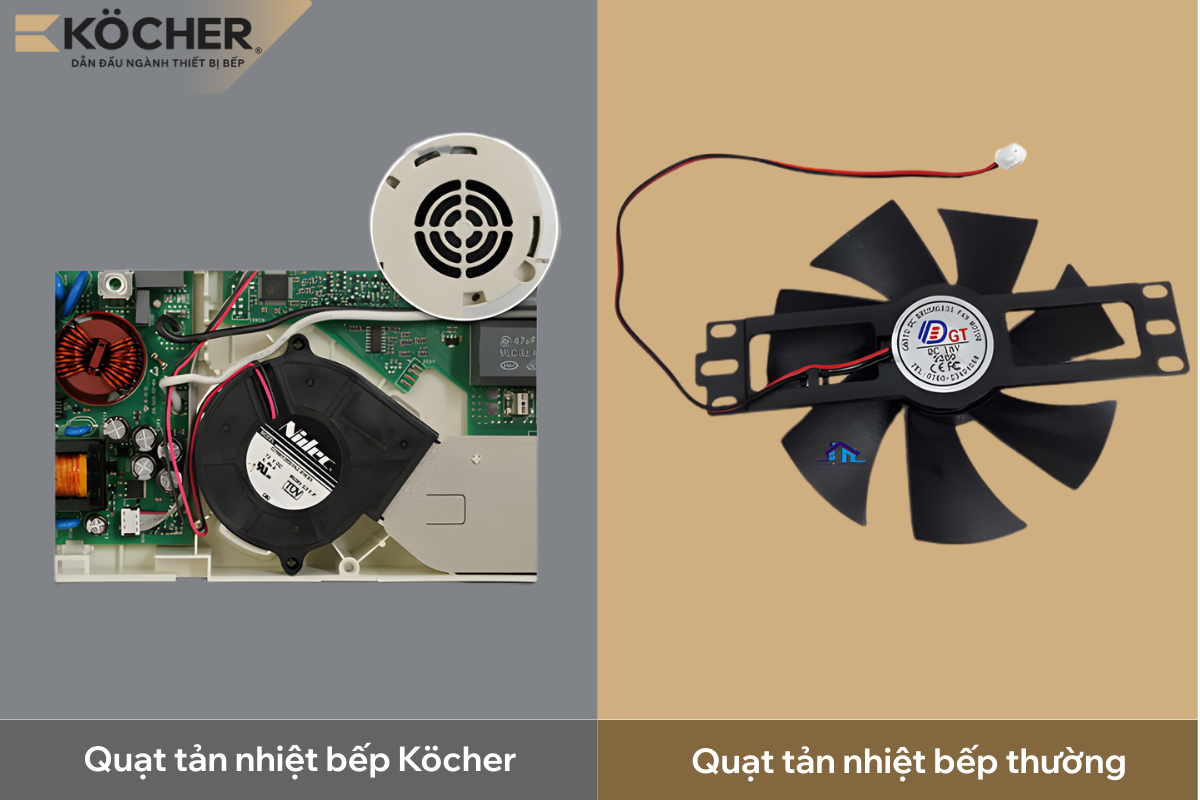 The cooling fan draws cool air and pushes hot air out of the hob chamber.
Heat sink
The heat sink is a block of metal, usually made from aluminum, directly attached to the large heat-generating components of the induction hob such as the power module (IGBT). When the hob operates, especially at high power levels or for long cooking times, the heat generated at these components will be absorbed by the heat sink and dissipated outside through the cooling fan system, helping to maintain a stable temperature for the entire circuit board.
In fact, the quality of the heat sink greatly determines the durability and stable operation of the hob. Ordinary induction hobs typically use thin aluminum heat sinks with few cooling grooves, resulting in slow heat dissipation. When heat accumulates for a long time, the hob is likely to lose power or even shut down to protect the components.
In contrast, a thick heat sink with large cooling grooves increases the surface area in contact with the air, thereby accelerating the heat dissipation process. Thanks to its effective cooling capability, the hob maintains stable power during long cooking sessions, reducing the risk of overheating in the IGBT and circuit board.
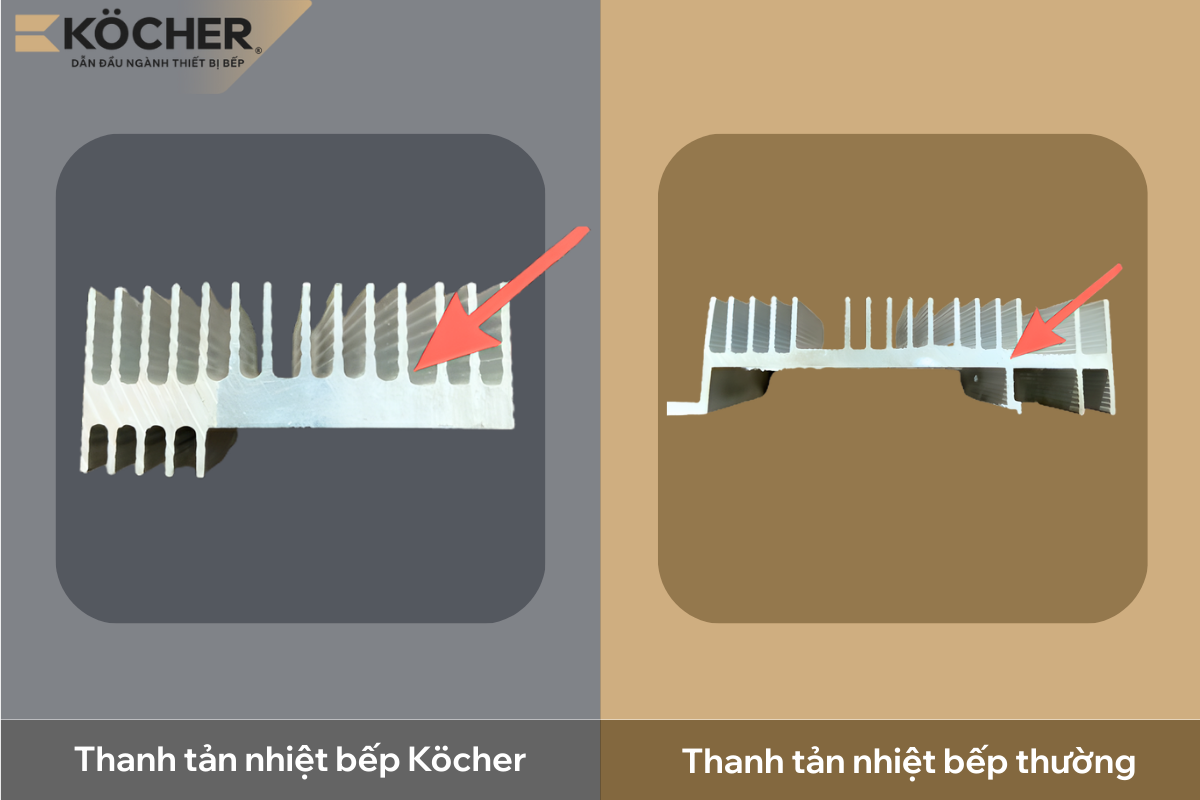 Comparison of the Köcher hob heat sink (left) which is thicker and the regular hob heat sink (right) which is only half as thick.
Ventilation slots
Ventilation slots are openings located on the sides or bottom of the hob casing, where hot air inside is pushed out into the environment. These slots help maintain continuous air circulation, preventing the hob from overheating. Well-designed ventilation slots usually have a mesh or small groove shape just enough to allow quick heat escape while still limiting insects from entering. The hob casing around the slots made of metal will be sturdier and support more effective cooling compared to plastic.
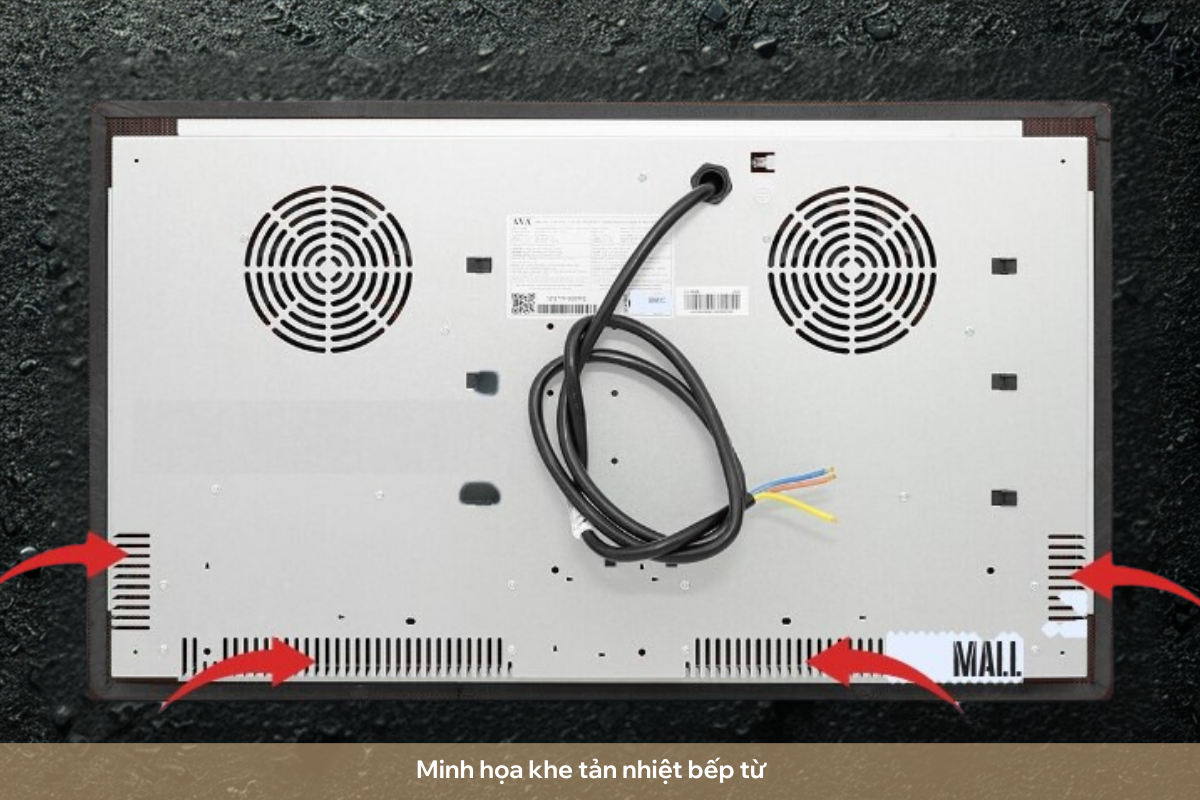 Location of the ventilation slots of the induction hob. (Source: Internet)
The design of a standard ventilation system combined with high-quality Schott Ceran glass not only optimizes the airflow but also makes it easy for users to clean the surface after each cooking session. However, if the glass surface and these ventilation slots accumulate too much grease and dirt over time, the passive cooling efficiency will be severely reduced. To keep the hob always shiny and not affect the cooling process of the components, you can refer to the guide on How to clean induction hobs correctly from experts to perform safely at home.
Operating principles of the induction hob cooling system
As soon as the temperature rises, the aluminum heat sink attached directly to the hot components will start to work. Heat from the components is transferred to the heat sink, spread over a large surface area thanks to the design of many small grooves, preventing heat from concentrating at one point and spreading evenly, preparing for the next cooling process.
At the same time, the cooling fan draws cool air from outside through the ventilation slots at the bottom or sides of the hob. This airflow blows over the hot heat sink, carrying and pushing hot air out through the ventilation slots. This smooth operation process helps tightly control the temperature of the induction hob in critical components, preventing risks caused by overheating. When the hob is turned off, the fan continues to run for a few minutes to cool down deeply, helping the components return to a safe temperature.
 Operating principle of the induction hob cooling system.
7 signs to identify an induction hob with a quality cooling system
All induction hobs are equipped with a cooling component, but the quality varies. You can identify a hob with a good cooling system based on the following 7 signs:
Using squirrel cage fans
High-end induction hobs often prioritize using squirrel cage fans. Compared to coaxial fans, squirrel cage fans operate more quietly, produce less noise, create a strong and stable airflow, and help dissipate heat faster. There are two ways to identify them as follows:
- Method 1: Use a flashlight to shine into the air vent at the bottom of the hob. If you see a fan that is round or spiral-shaped, similar to the fan in a range hood, then it is a squirrel cage fan. Conversely, square-bladed fans are usually coaxial.
- Method 2: You can observe the design of the hob’s belly. Models that use squirrel cage fans like DI-806GE02, DI-855GE, DIB4-888, X-NANO 8, X-NANO 8 Plus, X-NANO 9… from Köcher use squirrel cage fans, so they often have a compact hob belly.
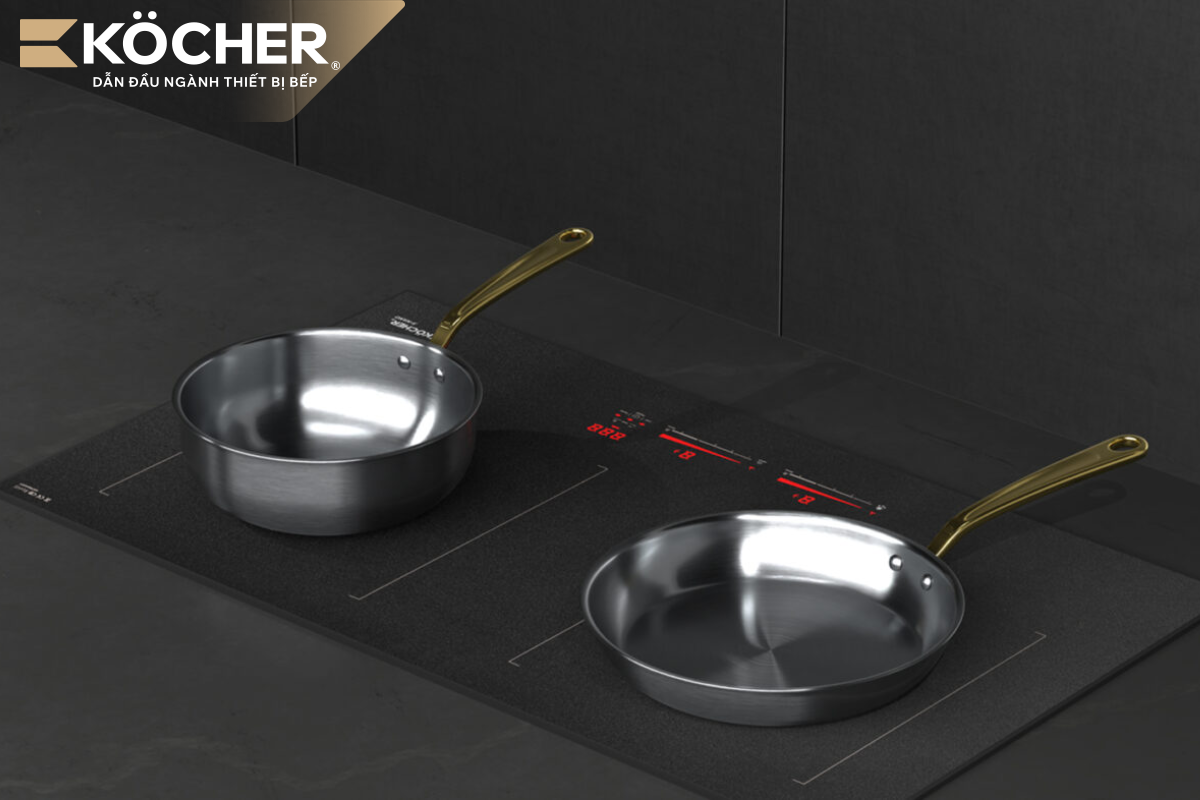 The scratch-resistant induction hob X-Nano 8 Plus and many other models from Köcher use squirrel cage fans to help the hob operate more reliably and quietly.
Quiet, stable fan noise
You turn on the hob in Booster mode and pay attention to the sound of air coming from the bottom or sides of the hob. If the fan noise is even, soft like a gentle “whirring” sound, and does not shake the hob, that is a sign that the cooling system is working well.
However, you need to clearly distinguish the sound of the cooling fan from the characteristic sound of the induction field. The fan noise is the sound of continuous airflow, while the induction sound is usually a soft hum coming from the cooking zone, unrelated to the cooling system.
Metal casing (Hob belly)
Metal helps dissipate heat passively very effectively, allowing heat inside the hob to be quickly transferred to the surrounding environment. If plastic is used, as in some budget induction hobs, heat is retained, causing the hob to heat up quickly, requiring the fan to run more, and components to degrade faster.
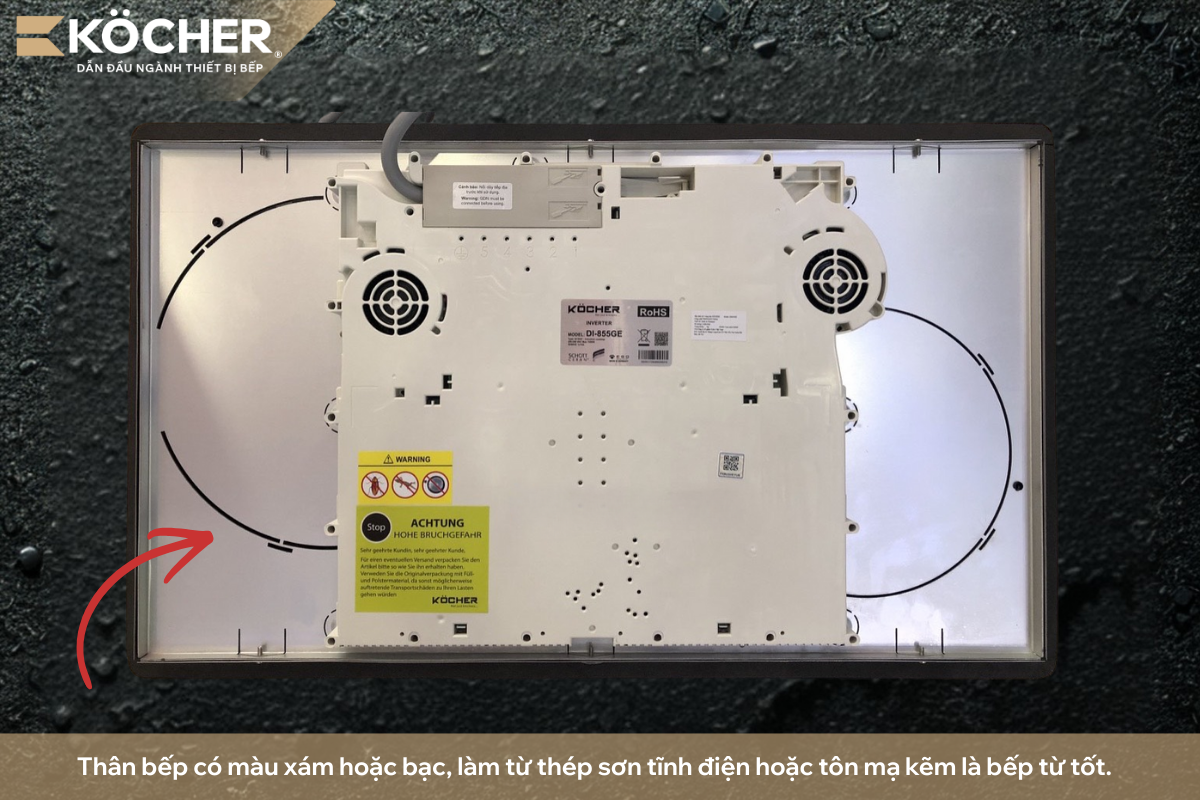 You observe the bottom of the hob; if the hob body is gray or silver, made of powder-coated steel or galvanized sheet, sturdy and firm, that is a sign of a good induction hob.
Small mesh or fishbone-shaped air vents or with filter screens
Air vents designed in small mesh or fishbone shapes help hot air escape evenly and quickly while limiting dust and insects from entering the hob chamber. As a result, the cooling system operates stably, reducing the risk of fan jams, component short circuits, and helping the hob last longer during use.
Hob with convection air vents
High-end induction hobs are often designed with two separate air vents (cooling slots) to create continuous convection airflow, helping to dissipate heat faster and more stably. Cool air is drawn in from one side, while hot air is pushed out the other side, avoiding the phenomenon of hot air lingering in the hob chamber.
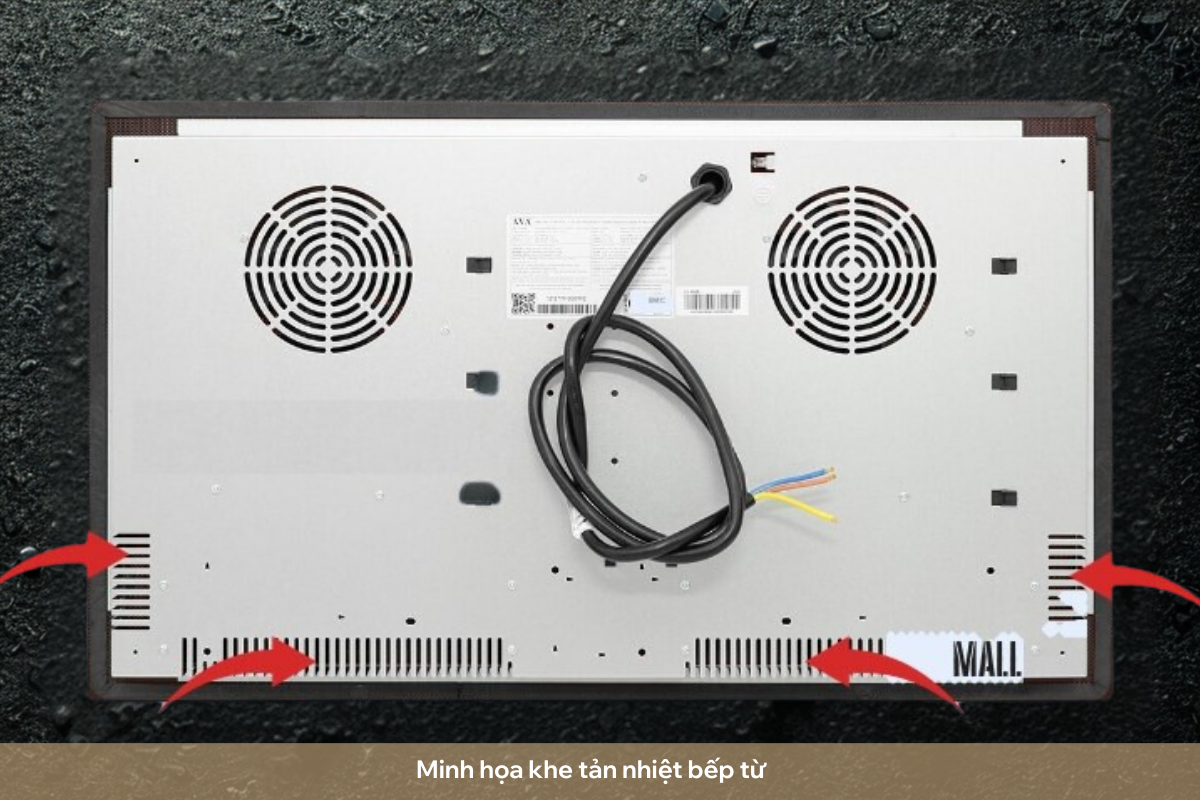 Induction hob with convection cooling slots.
Hob with residual heat cooling feature/warning
High-quality induction hobs often have an “H” indicator light to warn that the cooking zone is still hot after turning off the hob. When you have just finished cooking, if you see “H” lit on the control panel, that is a sign that the hob is still retaining residual heat and the cooling system is working.
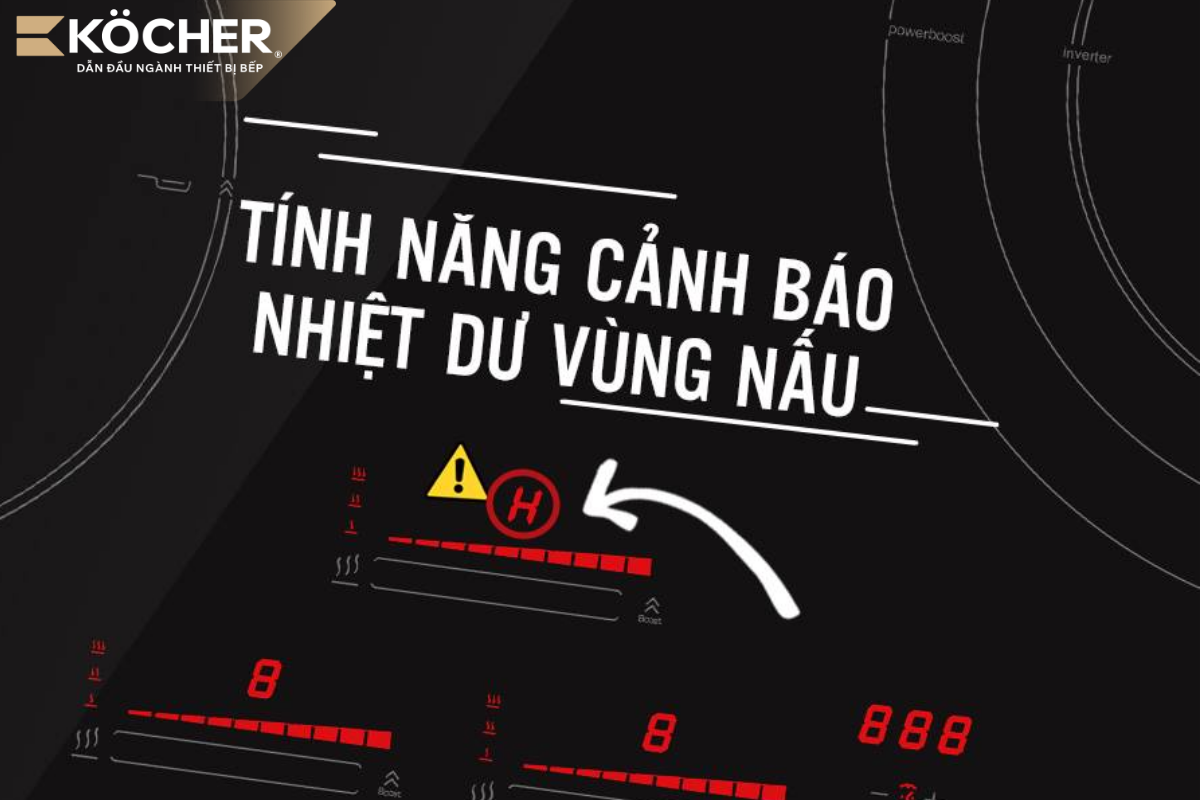 The ‘H’ indicator light warns that there is still residual heat in the cooking zone.
Control panel always cool when cooking for long
When you turn on the hob at high power continuously for a few minutes, lightly touching the control panel and still feeling cool or only slightly warm indicates that the cooling system is working well.
Owning a hob with a good cooling system is just a necessary condition; the sufficient condition for the device to operate reliably over many years completely depends on your usage behavior. If operated incorrectly, no matter how smart the cooling system is, it can become overloaded, leading to reduced lifespan of the expensive circuit board components underneath. Therefore, it is essential to memorize the core technical guidelines and induction hob usage notes daily from experts to ensure the hob always operates smoothly and efficiently.
4 notes when using induction hobs for effective cooling
To ensure the cooling system of the induction hob operates effectively, helping the hob run stably and limiting overheating, you should pay attention to some important principles as follows:
- Do not block the air outlet: When installing a built-in hob, the cabinet space underneath needs to have ventilation slots. If the air cannot escape, hot air will accumulate inside, causing the hob to heat up quickly, easily report errors, and reduce component lifespan.
- Do not unplug immediately after turning off the hob: After turning off the hob, the cooling fan continues to run to cool the circuit board and components. You should wait 1-2 minutes for the fan to stop completely before unplugging or turning off the circuit breaker.
- Regularly clean the cooling slots: Cooling slots can accumulate dust, hair, or cobwebs over time. Monthly cleaning helps ensure good airflow, ensuring cooling efficiency and avoiding overheating during cooking.
- Avoid excessive use of the Booster mode: The Booster mode generates a large amount of heat in a short time. Continuous use at maximum power will put heavy pressure on the cooling system, causing the hob to heat up quickly and easily lead to overheating errors.
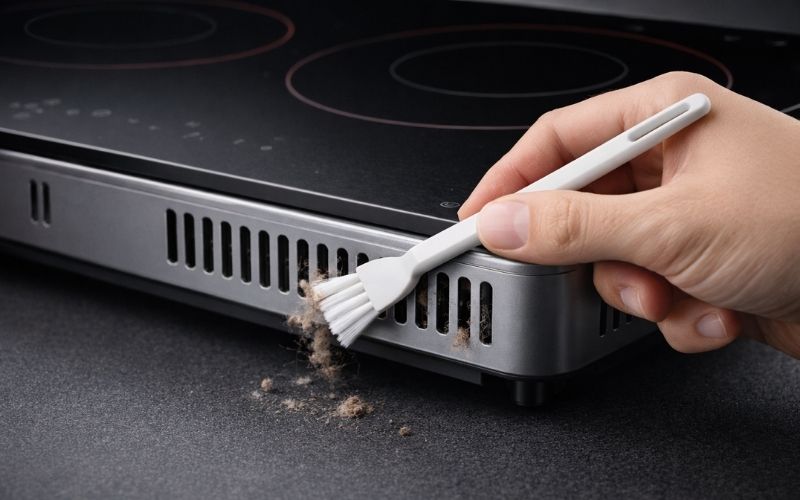 You should regularly clean the cooling slots to ensure the best cooling efficiency. (Source: Internet)
Above is detailed content answering whether induction hobs have a cooling system along with their structure, operating principles, and 7 signs to identify induction hobs with quality cooling systems. We hope this article can help you choose a good quality induction hob for your family.
|
Köcher induction hobs pioneer German technology – For detailed information about the product, please contact:
|