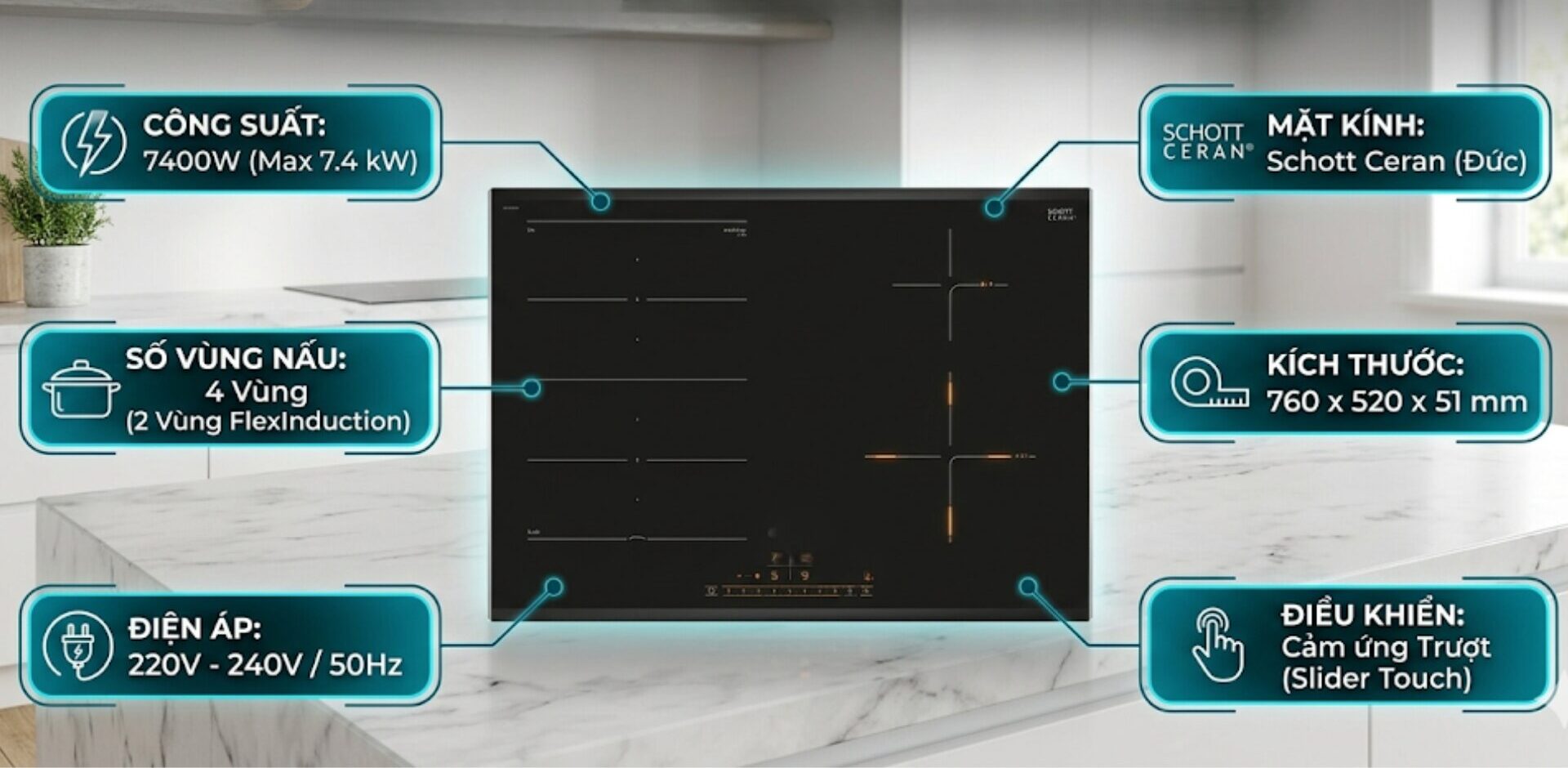
Error E3 on the induction cooktop appears on the display screen, causing the cooking process to be abruptly interrupted, making many users worry that the device is experiencing a serious issue. In fact, this situation is mainly related to abnormalities in the power supply or the cooling system. Understanding what error E3 is, the causes of the induction cooktop displaying error E3, and how to fix it will help you troubleshoot quickly and use the cooktop more safely.

What is error E3 on the induction cooktop?
Error E3 is a warning code that appears when the power supply to the cooktop is unstable, lower than or higher than the manufacturer’s rated voltage (usually below 170V or exceeding 250V). When this abnormality is detected, the protection system will automatically shut down to avoid the risk of damage or short-circuiting of the internal components of the cooktop.
However, you should note that error E3 on some designs of induction cooktops from different brands may vary:
- For cooktops like Kangaroo or Junger, error E3 is a warning of weak power supply below 170V or higher than the rated voltage of the cooktop, causing the cooktop to be unable to maintain normal operation.
- For Sunhouse induction cooktops or some infrared cooktops, E3 appears when the cooking zone overheats or the temperature sensor is damaged.
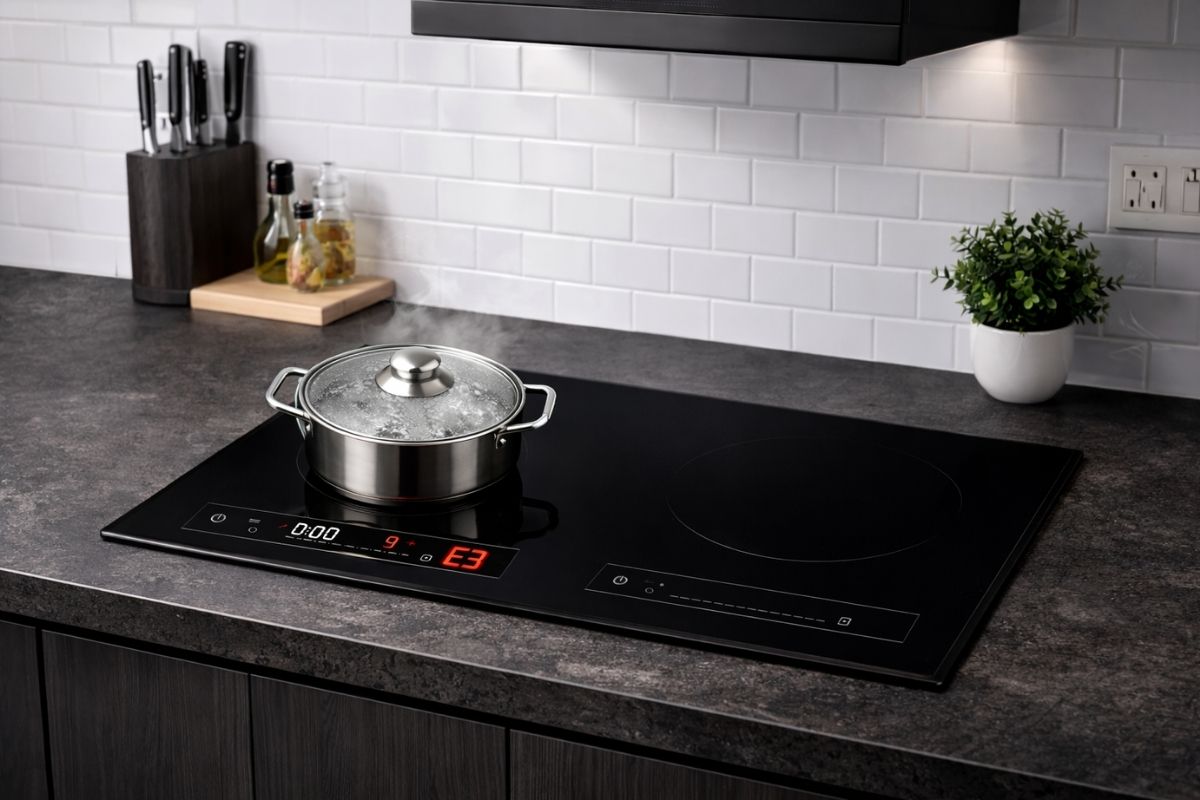
4 common causes of error E3 on the induction cooktop
Error E3 usually occurs due to unstable input voltage, electrical overload, component failure, or malfunctioning cooling fan. Specifically as follows:
Input voltage too low
Input voltage that is too low directly affects the protection system of the induction cooktop.
- Signs: The cooktop flickers, often occurring in areas with poor electrical infrastructure, where the voltage frequently drops (weak electricity) below 170V. The cooktop may be cooking normally but suddenly stops, displaying error code E3 along with a continuous beeping sound.
- Causes: When the voltage drops (below 170V), the current flowing through the IGBT and induction coil must increase sharply to compensate for the voltage deficiency to maintain the set power level, causing the temperature sensor to send an overheating signal to the microcontroller. To protect the semiconductor components from the risk of fire, the voltage monitoring circuit will issue an emergency shutdown command and display error E3.
In addition, for areas with low voltage or unstable power grids, Köcher’s X-Nano cooktops such as X-Nano 9, X-Nano 8 Plus, X-Nano 8… are equipped with VoltSafe and PowerShare+ technology, making them the most suitable choice to ensure safety for the device and household electrical system.
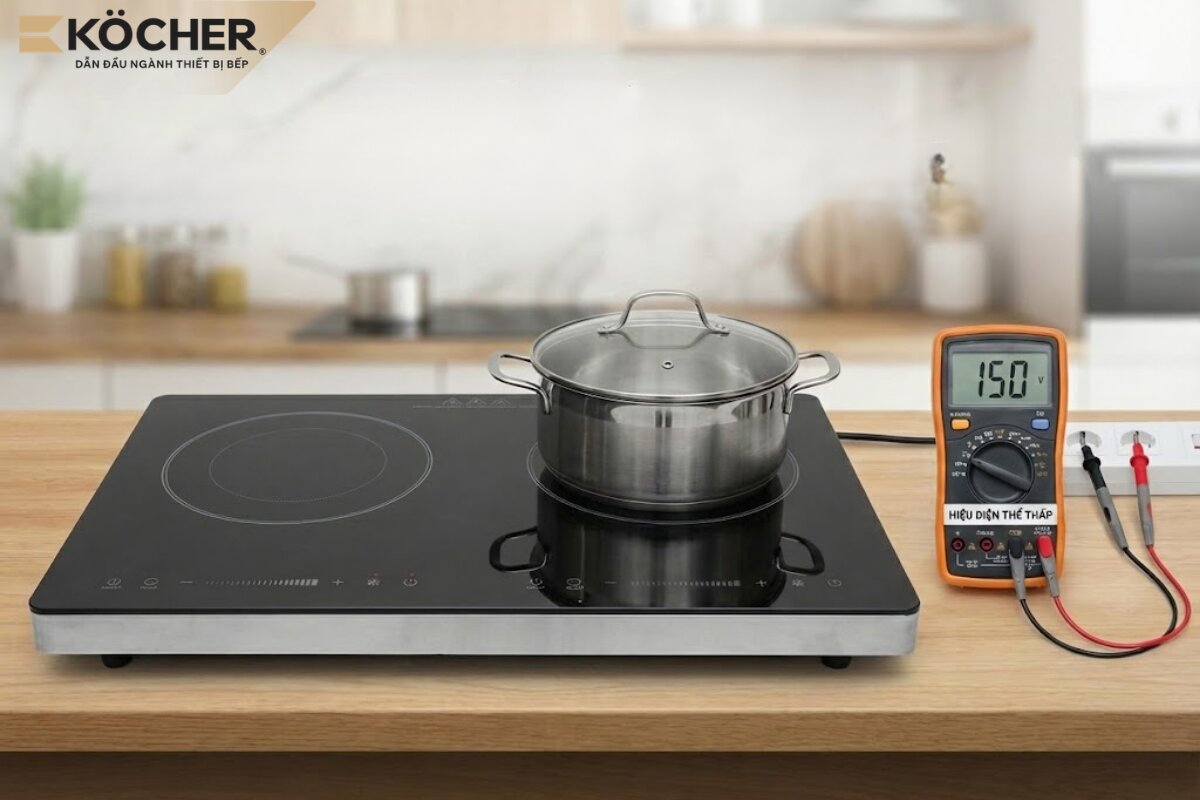 Input voltage too low due to too many devices using electricity at the same time is the cause of error E3 on the induction cooktop
Electrical overload
When many high-power devices such as air conditioners, water heaters, and microwaves operate simultaneously on one circuit, the system may become overloaded.
- Signs: The cooktop is operating and suddenly stops cooking and displays error E3, especially during peak hours or when using multiple high-power devices in the household at the same time.
- Causes: When the current exceeds the load capacity of the wiring or socket, the power supply to the cooktop becomes unstable. The cooktop’s power protection circuit will detect the abnormality and activate error E3 to shut down, preventing the risk of overload causing component damage.
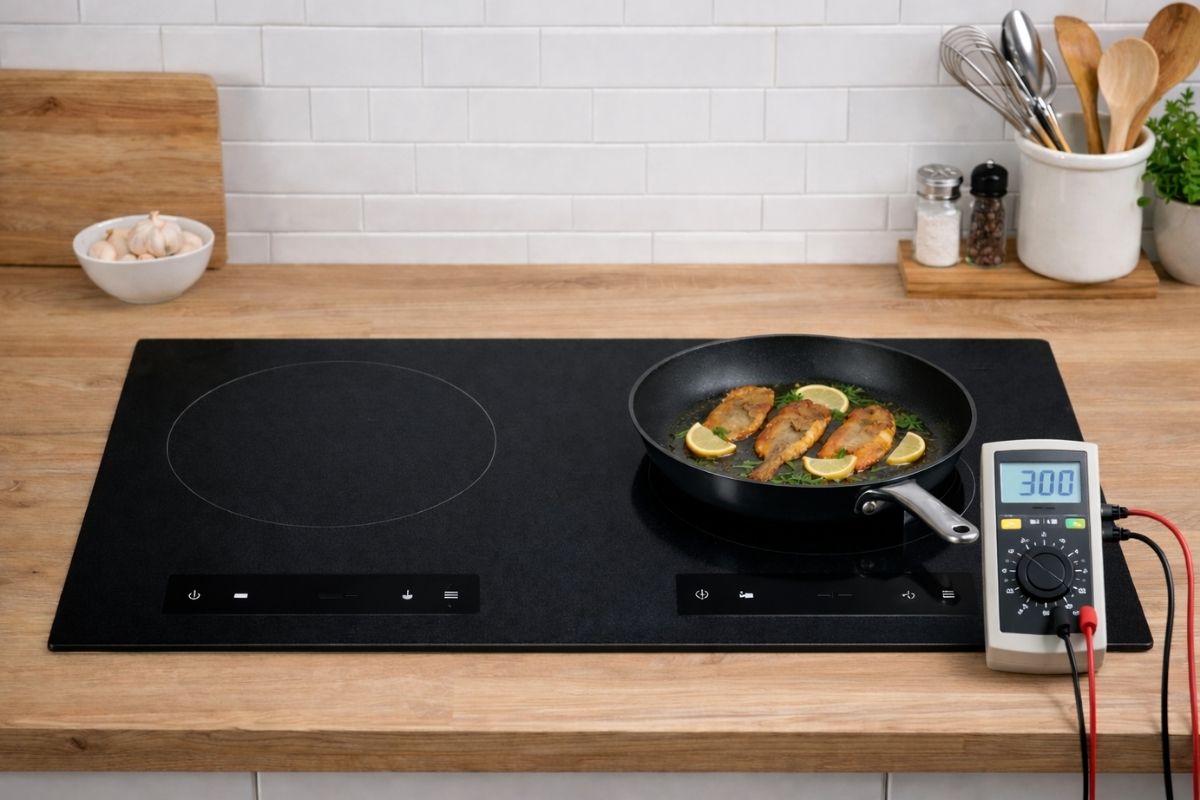 Overloaded voltage during peak hours may be the cause of error E3
Component/sensor failure
When the electronic components inside the cooktop malfunction, the induction cooktop may display error code E3 and stop operating to ensure safety.
- Signs: The cooktop just starts or is cooking and suddenly displays E3, even though the power supply in the house is stable and other devices are operating normally.
- Causes: Components such as voltage sensors, power circuits, or control boards are responsible for monitoring the input voltage status. When components age due to prolonged use, malfunction, or the signal transmitted to the board is distorted, the system may misinterpret the abnormal power supply and activate error E3 to shut down. In some cases, a deep data transmission circuit break may also mistakenly report a pot sensor error or error e4 on the induction cooktop, causing the temperature detection of the glass surface to be completely interrupted.
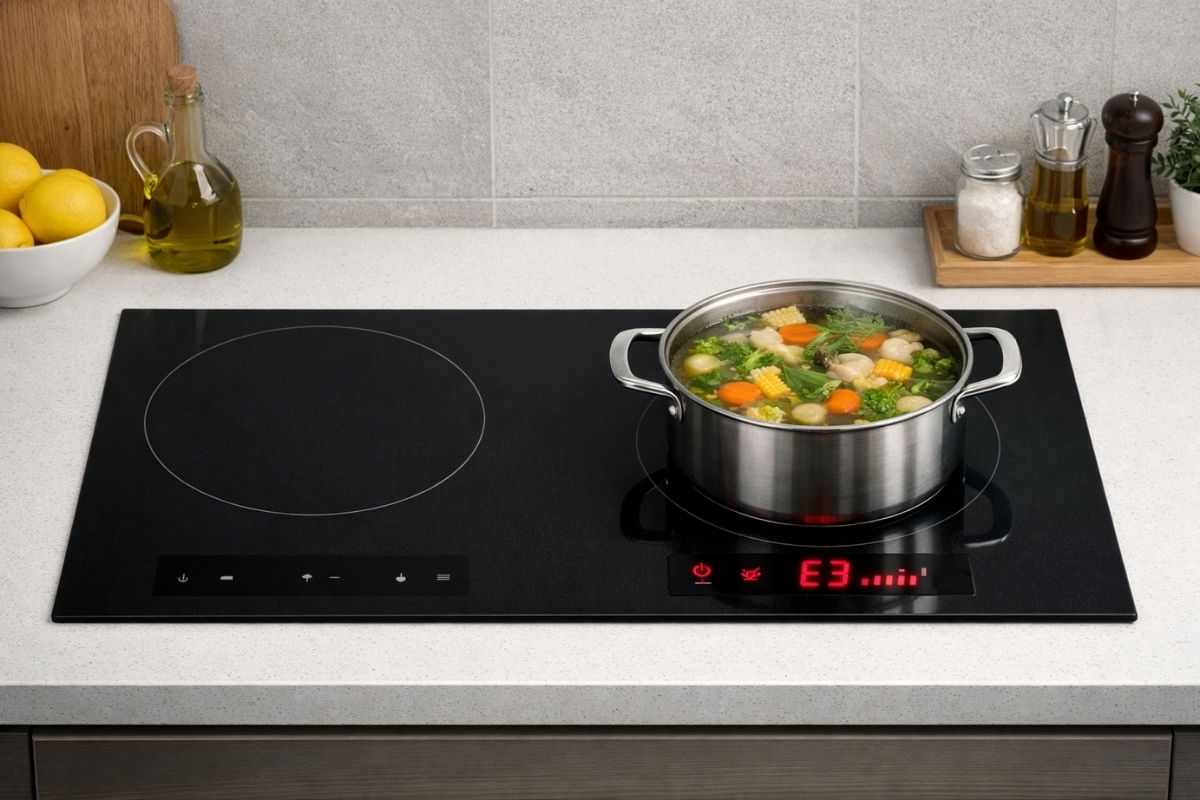 A faulty temperature sensor can cause error E3
Cooling fan failure or poor cooling
The cooling fan plays a role in maintaining temperature stability for the internal components; if the airflow is blocked, the accumulated thermal energy will cause the cooktop to report an error.
- Signs: The cooktop operates normally for 5 – 10 minutes and then reports error E3. Upon inspection, no sound of the fan spinning is heard, or the fan spins very weakly, and the cooktop body is unusually hot.
- Causes: When the cooling fan is faulty, clogged with dust, or the ventilation slots are blocked, the heat from the power components cannot escape. The heat accumulation in the cooktop body causes the temperature sensor to send a warning signal to the board, activating error E3 to shut down and protect the components.
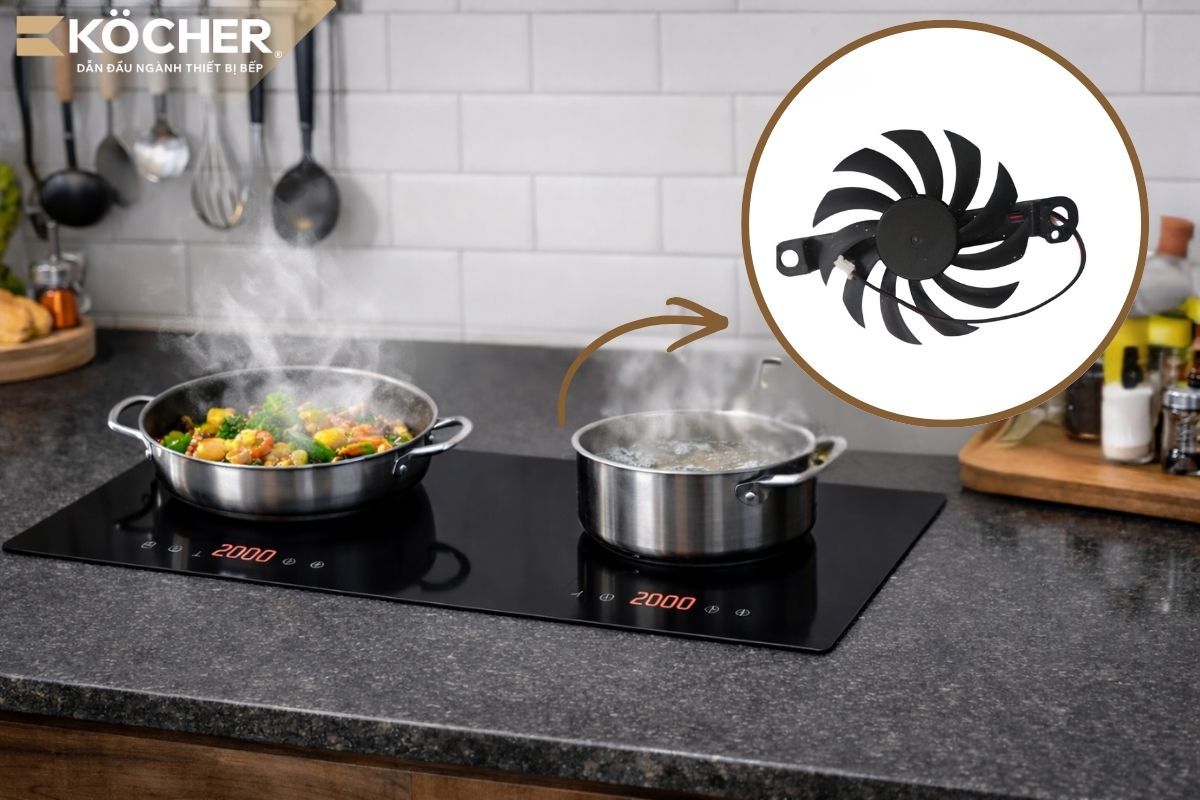 A faulty cooling fan may be the cause of error E3 on the induction cooktop
How to fix error E3 on the induction cooktop
To effectively fix error E3, you need to follow these steps:
- Step 1 – Disconnect the power and cool the cooktop: Turn off the cooktop (do not unplug the power plug/circuit breaker immediately to allow the fan to continue running if it is still operating), then wait about 20 – 30 minutes. This helps the system self-cool and reset the temporary error memory due to overheating or thermal shock.
- Step 2 – Check the household power supply: Use a multimeter or observe other devices to determine if the voltage is too low (<170V) or too high (>250V). If the power is unstable, install a voltage stabilizer (Lioa) to maintain a stable current at 220V, avoiding damage to the components.
- Step 3 – Clean the cooling system: Check the ventilation slots under the cooktop and the cooling fan. If you see thick dust buildup or other objects blocking, use a vacuum cleaner or a soft brush to clean thoroughly to ensure good airflow, preventing the IGBT from overheating.
If you have followed the above steps and error E3 still appears immediately upon turning on, you should contact a professional technician to disassemble the cooktop and check the internal components. In case the sensor or IGBT is damaged, it needs to be replaced with new components that meet the technical specifications.
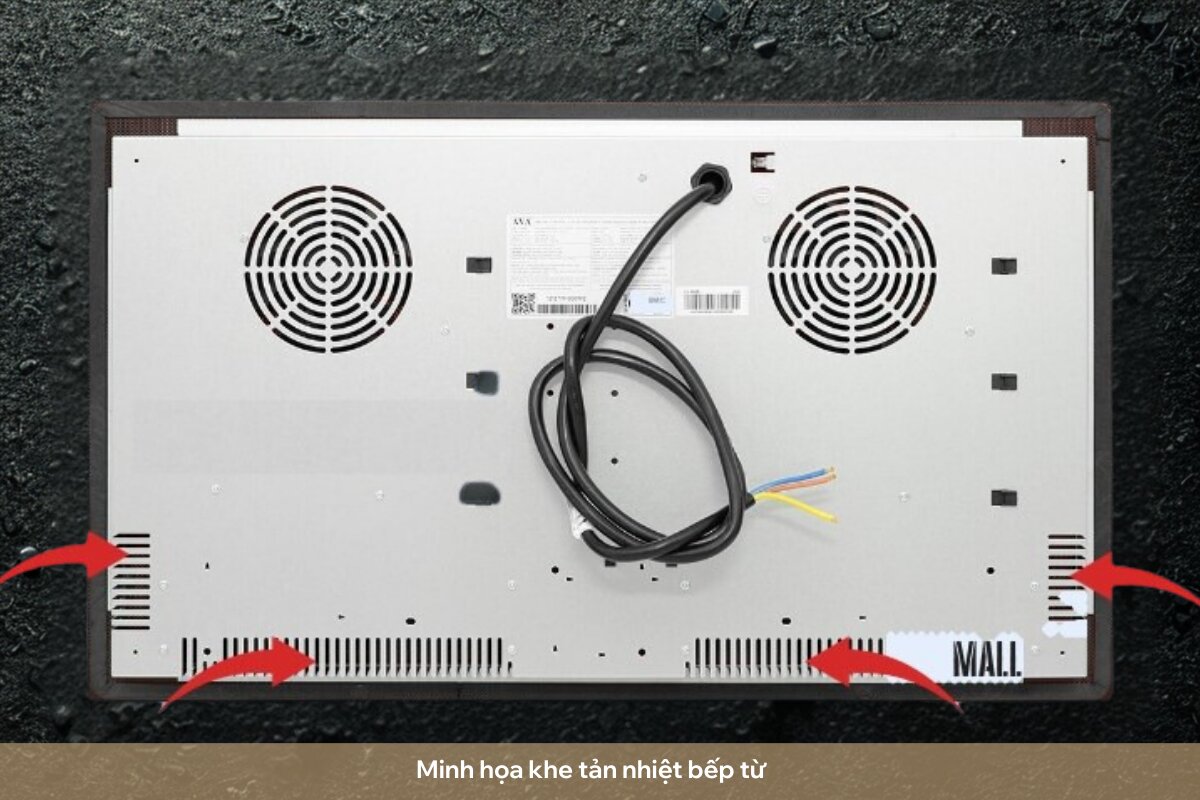 Clean the ventilation slots to ensure no dust remains in the cooling slots
Frequently asked questions when the induction cooktop displays error E3
Below are answers to some common issues related to error E3 on the induction cooktop that many users are concerned about.
What does it mean when the cooktop displays E3 along with a “tack tack” sound inside?
This is often a sign of electrical arcing or the relay continuously opening and closing due to the input power being too high or too low. The “tack tack” sound occurs when the protection circuit tries to open/close the current to prevent damage to the internal power components (IGBT).
What is the cost of repairing error E3 due to circuit failure?
Depending on the brand of the cooktop and the type of component that is faulty, the cost of repairing error E3 ranges from 300,000 VND to 1,200,000 VND.
Can error E3 on the induction cooktop be fixed at home?
If the cause of the error is due to unstable voltage or a dusty cooling fan, you can fix it at home. However, if the cause is due to faulty components, temperature sensors, or a malfunctioning cooling fan, you need to contact the manufacturer for warranty service or ask a professional technician for repairs.
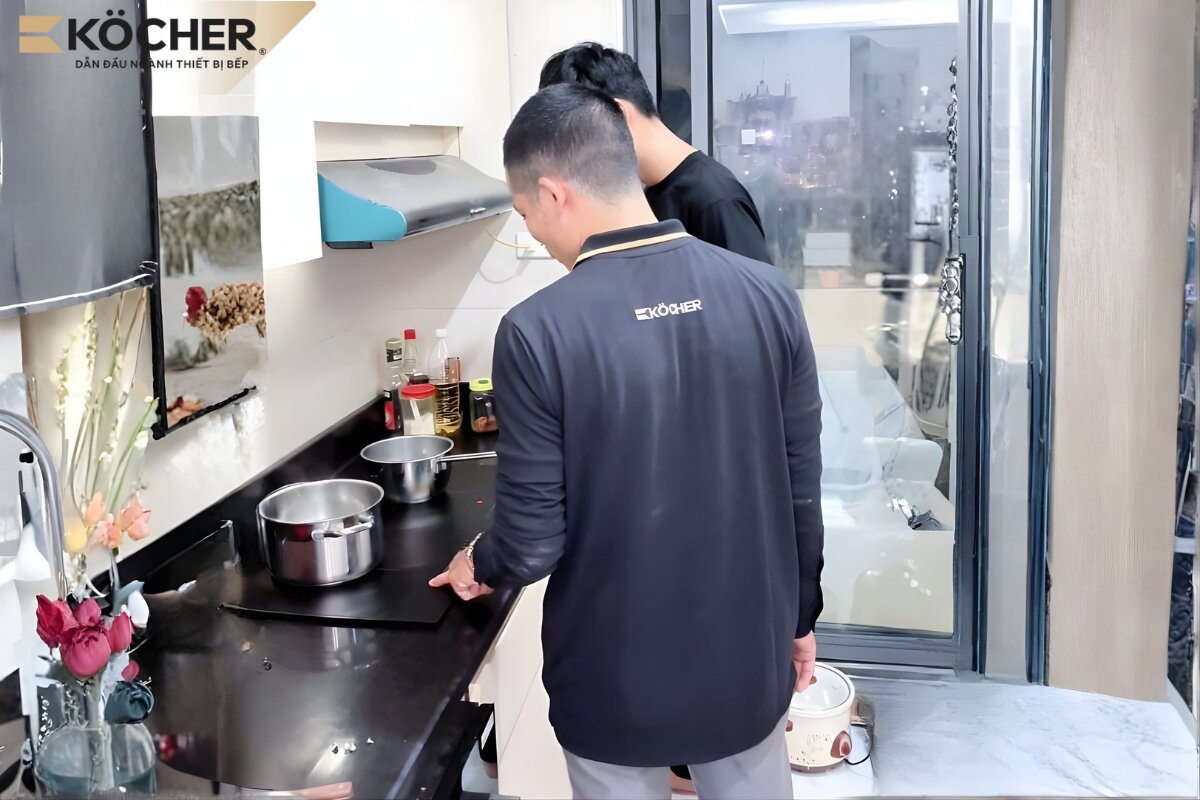 For errors caused by internal component failure, you should seek assistance from a professional technician, do not attempt to repair it yourself
Besides E3, what other errors can the induction cooktop have?
In addition to E3, the induction cooktop often encounters common error codes related to pots, temperature, and the electrical system as follows:
- Error E0 – Unable to detect the pot: Occurs when you use a pot without a magnetic base, too small, or the bottom of the pot is not flat. Check with a magnet; if the bottom of the pot does not attract the magnet, you need to replace it with a suitable pot for the induction cooktop.
- Error E1 – Cooktop overheating: Appears when you continuously cook at high power, causing the internal components to overheat beyond their load capacity. You need to turn off the cooktop immediately, remove the pot, and let the cooling fan run until the cooktop cools down before continuing to cook.
- Error E2 – Pot overheating or empty pot: Occurs when the temperature at the bottom of the pot rises too quickly (usually due to cooking with an empty pot). The solution is to add food to the pot or turn off the cooktop to allow the pot to cool down, avoiding cracking the glass surface.
- Error E4 – Power overload or pot temperature too high: Usually due to cooking at extremely high temperatures for a long time (above 280°C). Check the fan, clean dust, and ensure there is adequate ventilation under the cooktop. When this overheating sensor phenomenon repeats continuously without being addressed, the board may switch to display error e5 on the induction cooktop to cut off the main power.
- Error E5 – Sensor (IGBT) overheating: The main cause is a faulty cooling fan or the ventilation slots under the cooktop being blocked. Check the fan, clean dust, and ensure the space under the cooktop is ventilated to protect the components.
- Error E6 – Component temperature exceeds maximum safety threshold: If the cooling system completely stops operating while cooking at high power, the device will issue a warning error e6 on the induction cooktop to shut down urgently, ensuring safety for the entire control circuit.
Frequently Asked Questions
What is error E3 on the induction cooktop?
Error E3 is a warning code when the power supply to the cooktop is unstable (usually too weak below 170V or too high above 250V). Additionally, in some cooktop models, E3 may also indicate overheating in the cooking zone or sensor failure.
Why does the cooktop suddenly display error E3 with a beeping sound?
The most common cause is voltage drop during peak hours or the household electrical system being overloaded when using many high-power devices simultaneously. Additionally, a malfunctioning cooling fan or dust buildup can also cause heat to accumulate and trigger this error code.
What does it mean when the cooktop displays error E3 with a “tack tack” sound inside?
This sound is due to the relay continuously opening and closing to prevent abnormal current from entering sensitive components (such as IGBT). This helps protect the cooktop from the risk of fire when the voltage is unstable.
How to fix error E3 at home?
First, turn off the cooktop but keep the power on for the cooling fan to run. Then, check the power supply (you may need to install a stabilizer if the power is weak) and thoroughly clean the ventilation slots under the cooktop. If the error persists after the cooktop has cooled down, you should contact a technician to check the internal components.
The above is a summary of the causes and solutions for error E3 on the induction cooktop along with some frequently asked questions during use. We hope this information will help you accurately identify the issue and address it promptly, thereby ensuring the cooktop operates stably in your kitchen.
Explore the X-Nano series cooktops like X-Nano 8, X-Nano 7 with VoltSafe and PowerShare+ technology, automatically protecting the device from abnormal voltage and sharing power intelligently. The product can operate safely even in areas with weak power grids, enhancing the European-class cooking experience for your family!
|
Köcher induction cooktops pioneer German technology – For detailed product information, please contact:
|