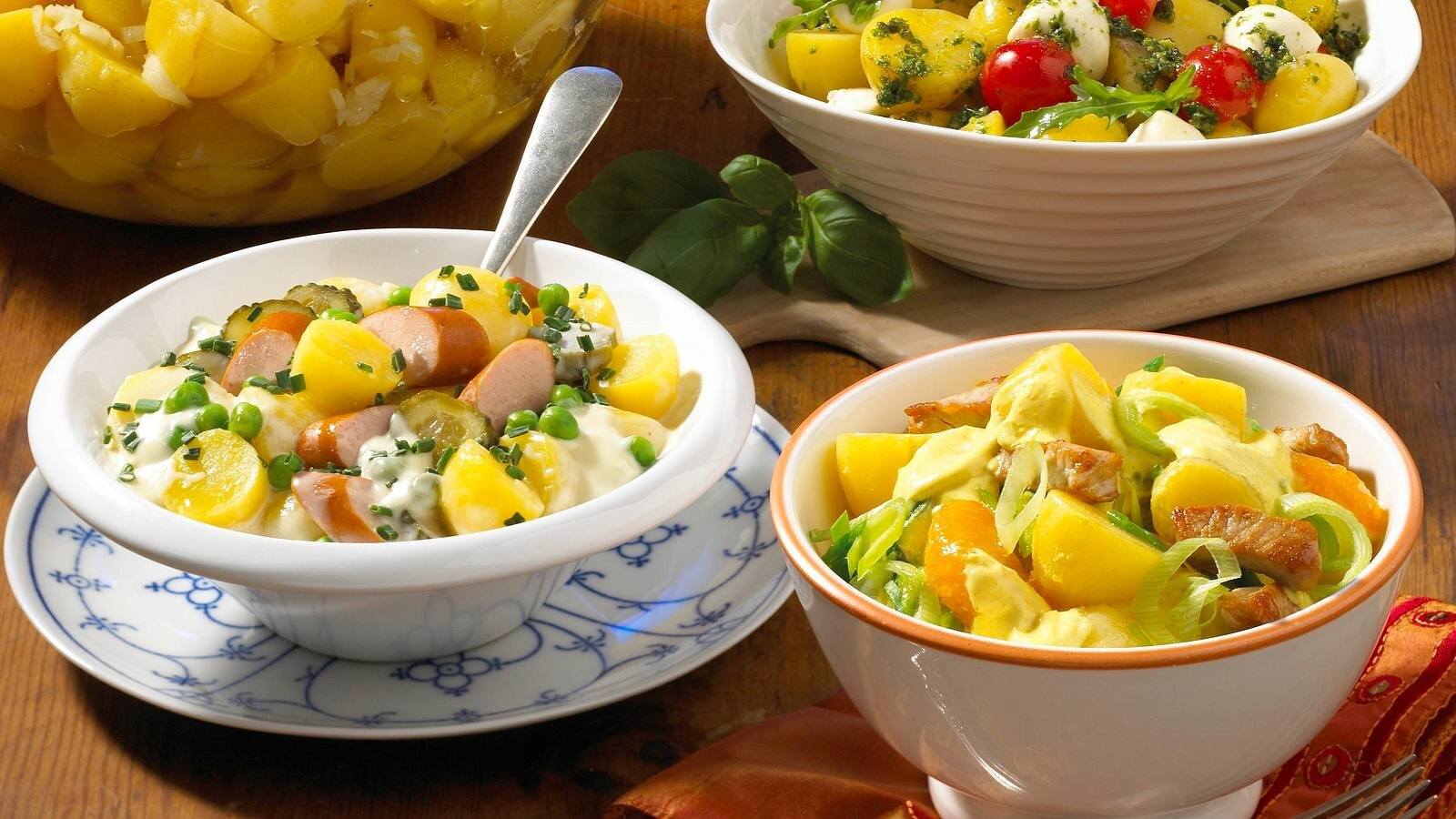
Sauerkraut – German-style fermented cabbage is one of the oldest food preservation techniques in Europe, and in German cuisine, it appears everywhere: from side dishes with grilled sausages to luxurious stews alongside roast duck. This article from Köcher will guide you on how to make authentic Sauerkraut.
|
Main content summary:
|
What is Sauerkraut? Why do Germans call it “white gold”
Sauerkraut – pronounced “zao-er-kraut” – literally means “sour cabbage” in German. However, calling it “pickled cabbage” in the conventional sense is inaccurate: Sauerkraut is not made by soaking in vinegar or heavy salting like Vietnamese pickled cabbage, but by natural lactic fermentation – one of the oldest food preservation methods known to humanity, traceable back to the 16th century in the Alsace-Lorraine region bordering France and Germany.
The method of making this dish is very simple: finely shredded cabbage mixed with salt. The salt draws water out of the cabbage cells, creating a natural brine environment. Lactobacillus bacteria – present on the surface of the cabbage leaves – begin to consume sugars and excrete lactic acid. Lactic acid inhibits other spoilage bacteria, keeping the cabbage from rotting. The result after 1 to 4 weeks: Sauerkraut – sour, crunchy, aromatic, and richer in probiotics than any industrially fermented food.
Germans call it “white gold” not for its material value, but for its vital importance – for centuries, Sauerkraut was the only source of vitamin C during the long winter when fresh vegetables were unavailable. German and Dutch sailors carried barrels of Sauerkraut on every transoceanic voyage to prevent scurvy. And today, it remains the soul of hundreds of recipes in the Great German Recipes & German Style Recipes compiled by the German-American International Association.
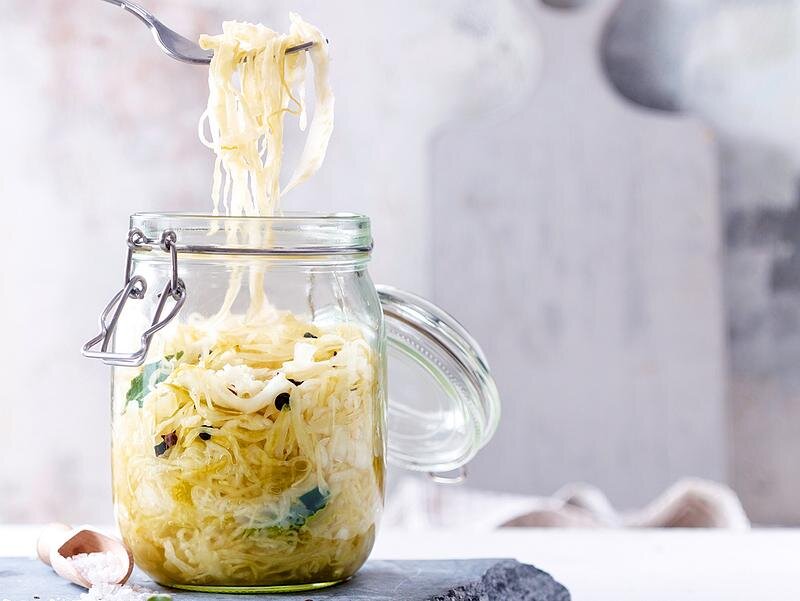
How to make German-style Sauerkraut at home
Homemade Sauerkraut is completely different from the canned variety – fresher, crunchier, and retains all live beneficial bacteria. The process does not require special equipment, just a clean glass jar and following the recipe.
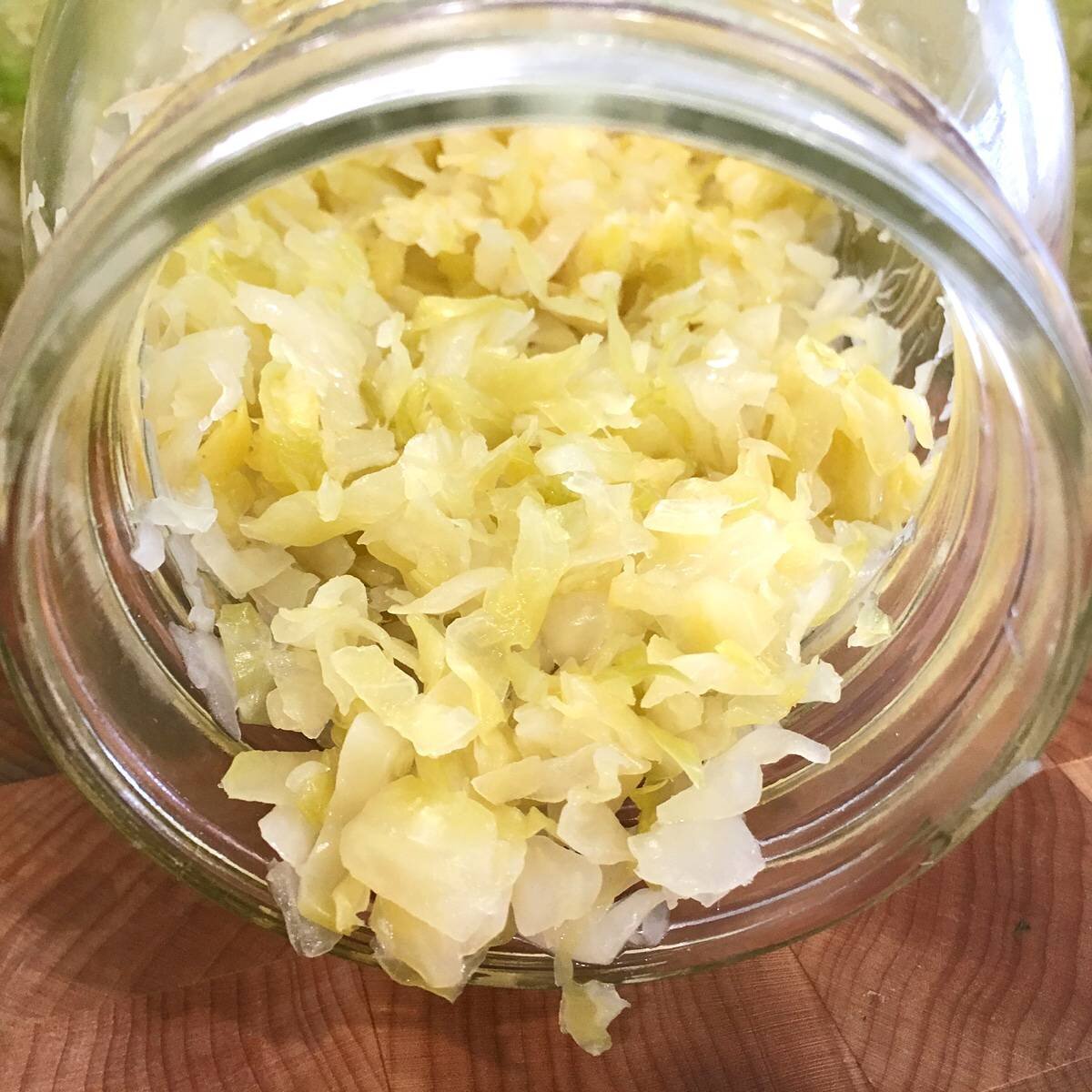
Ingredients (about 1 kg of finished Sauerkraut):
- 1 medium white cabbage (~1.2 kg after removing outer leaves and core)
- 24 g coarse salt (exactly 2% of the cabbage weight – do not use iodized salt, iodine inhibits fermentation bacteria)
- Caraway seeds to taste (1 teaspoon – the characteristic aroma of German-style Sauerkraut)
Instructions:
Step 1 – Shred the cabbage: Remove 2 to 3 outer leaves, keeping 1 large leaf for later use. Shred the cabbage into thin strips about 2 mm thick – you can use a knife or a shredder. The thinner and more uniform the strips, the crunchier and more evenly fermented the Sauerkraut will be.
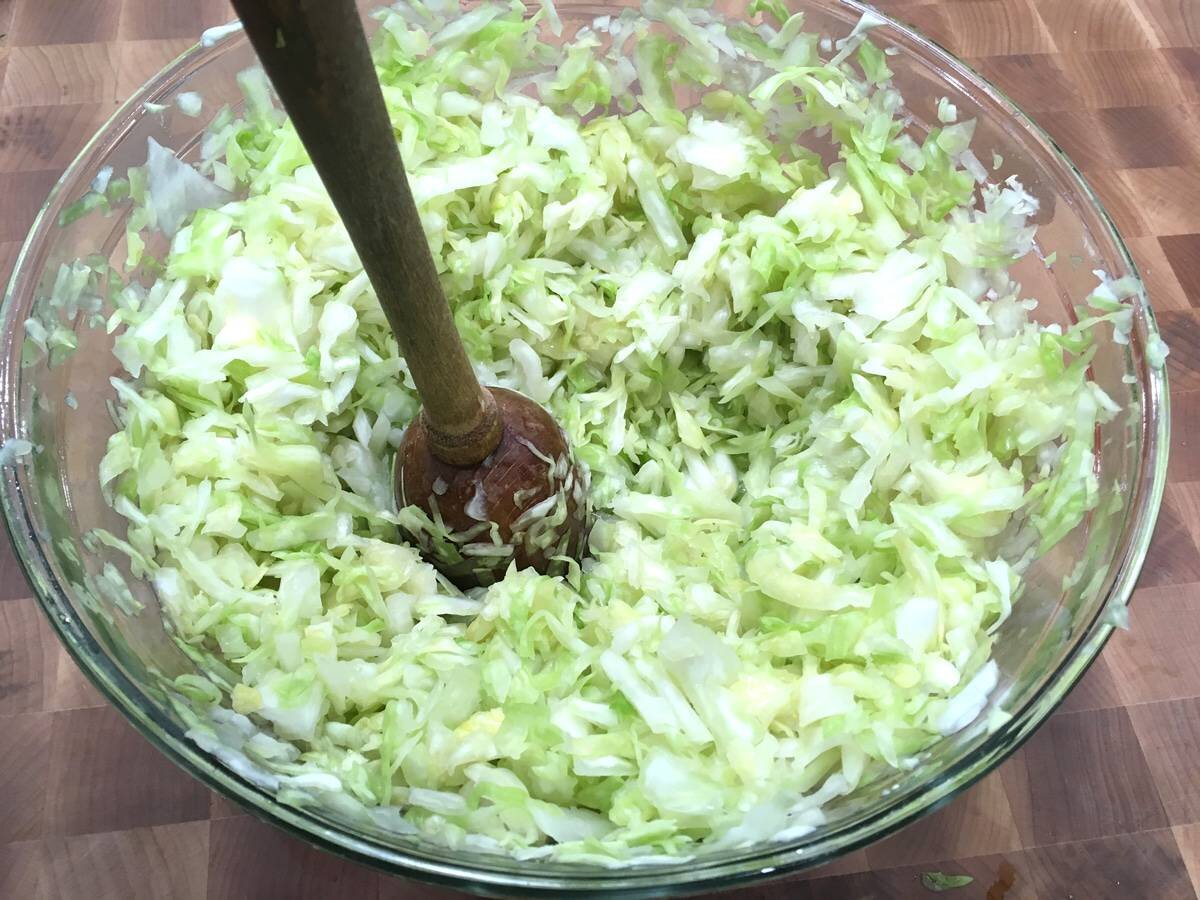
Step 2 – Mix salt and knead: Weigh the cabbage after shredding, calculating 2% salt. Place the cabbage and salt in a large bowl, using your hands to massage and knead vigorously for 8 to 10 minutes continuously – this is the most important step. Initially, the cabbage is firm, but after a few minutes, you will see water starting to flow out. Continue kneading until there is enough liquid to completely submerge the cabbage when pressed down.
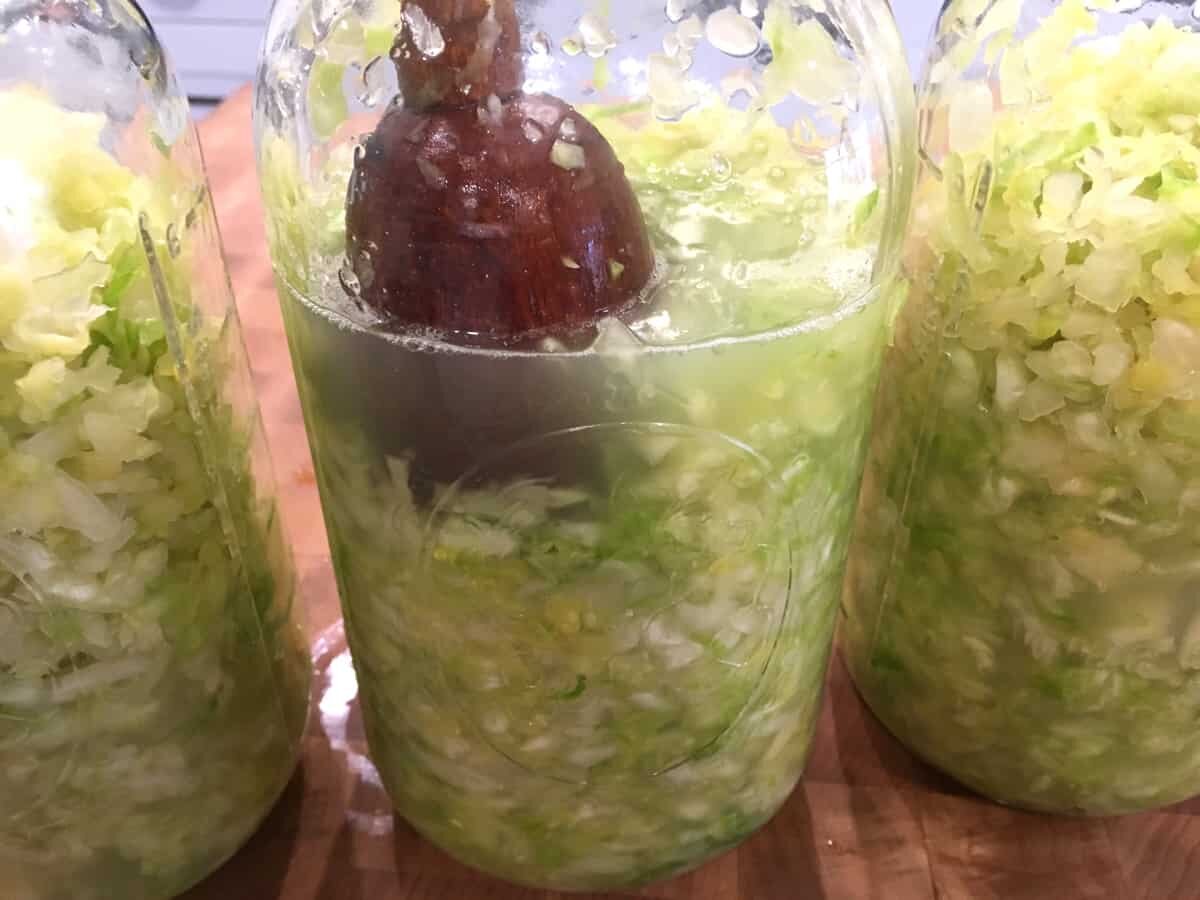
Step 3 – Pack the jar: Firmly pack the cabbage into a clean glass jar (do not use metal jars – acid corrodes metal). Press down firmly after each layer to push out air bubbles and ensure the cabbage is submerged in liquid. Roll the reserved cabbage leaf into a cylinder and place it in the mouth of the jar to keep the cabbage from floating above the liquid. Cover the lid loosely (CO2 needs to escape during fermentation).
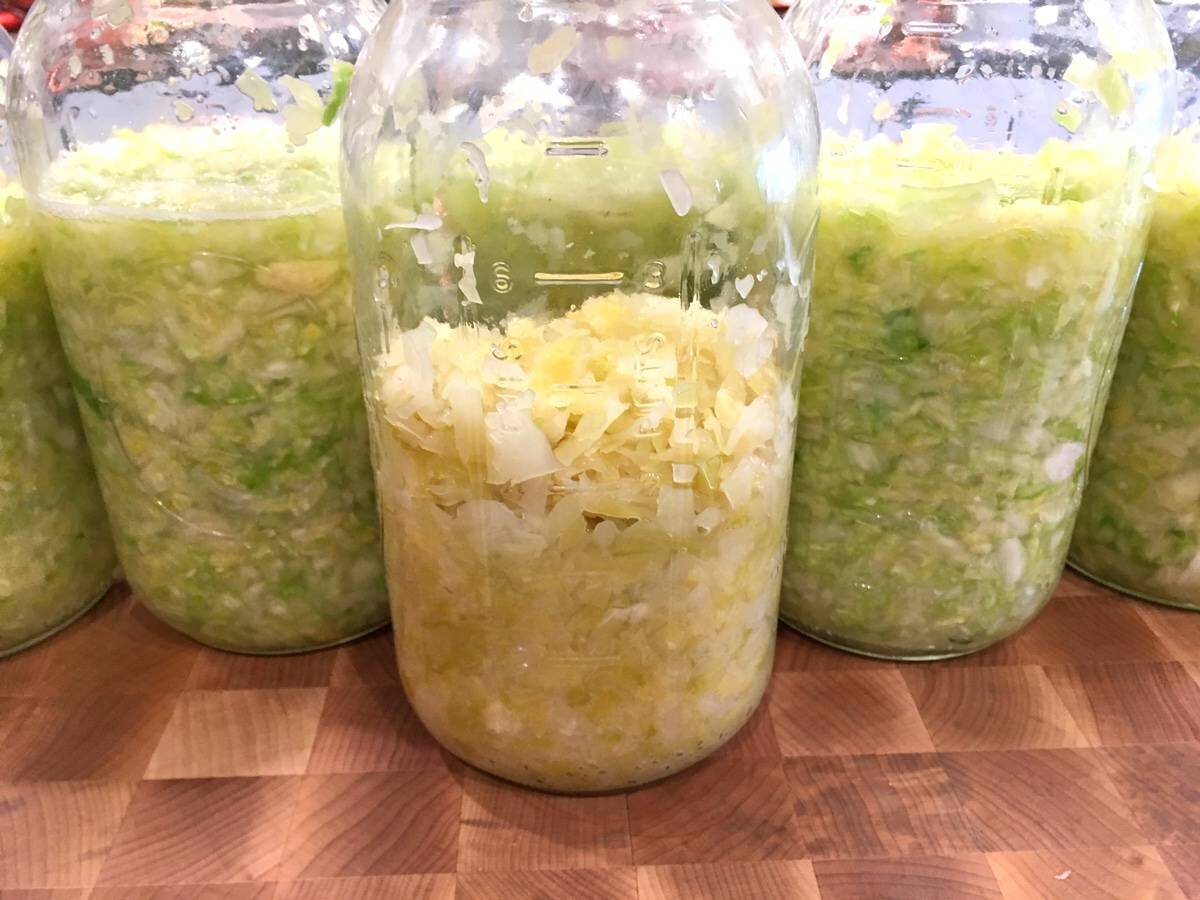
Step 4 – Ferment: Leave the jar at room temperature 18 – 22°C for 1 to 4 weeks. Press down on the cabbage daily to ensure it remains submerged in the brine. After 3 to 5 days, you will see small bubbles appearing – that is CO2 from the fermentation process. Taste after 1 week: if it is sour enough to your liking, seal the lid tightly and store in the refrigerator. The longer it ferments, the deeper and more complex the flavor.
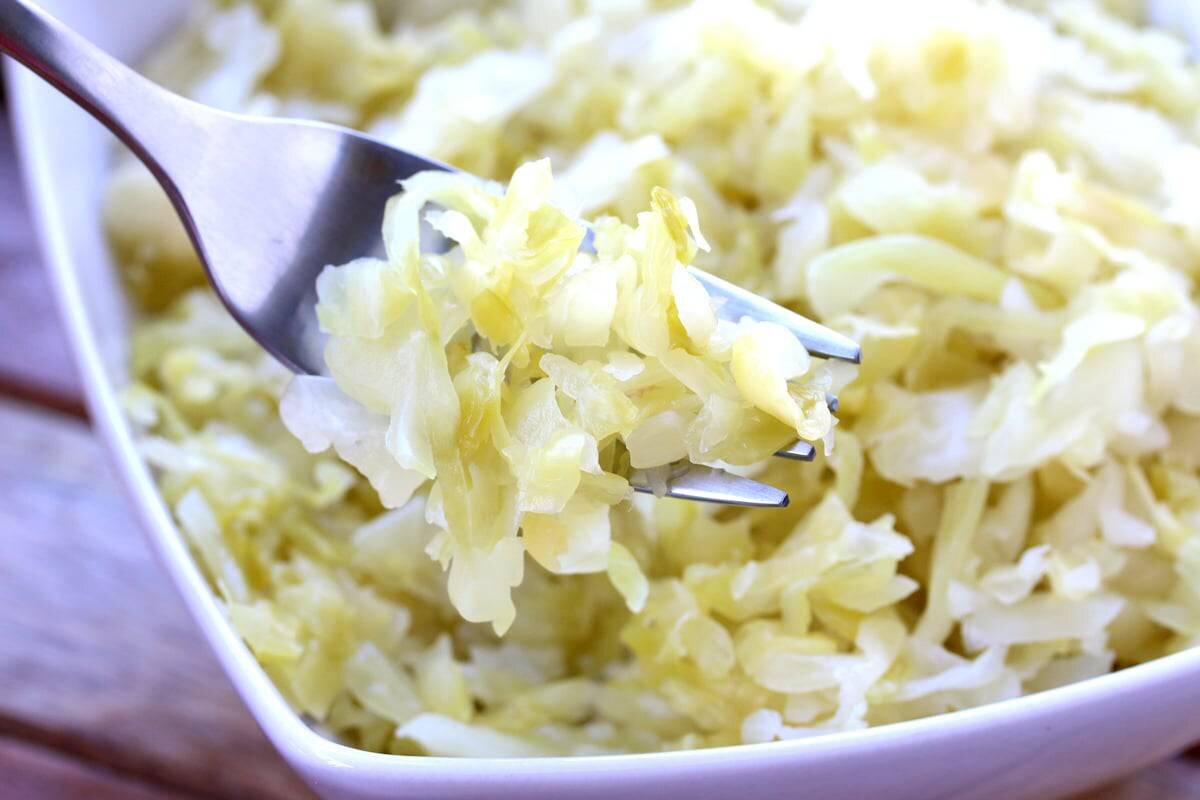
German-style Sauerkraut stew recipe
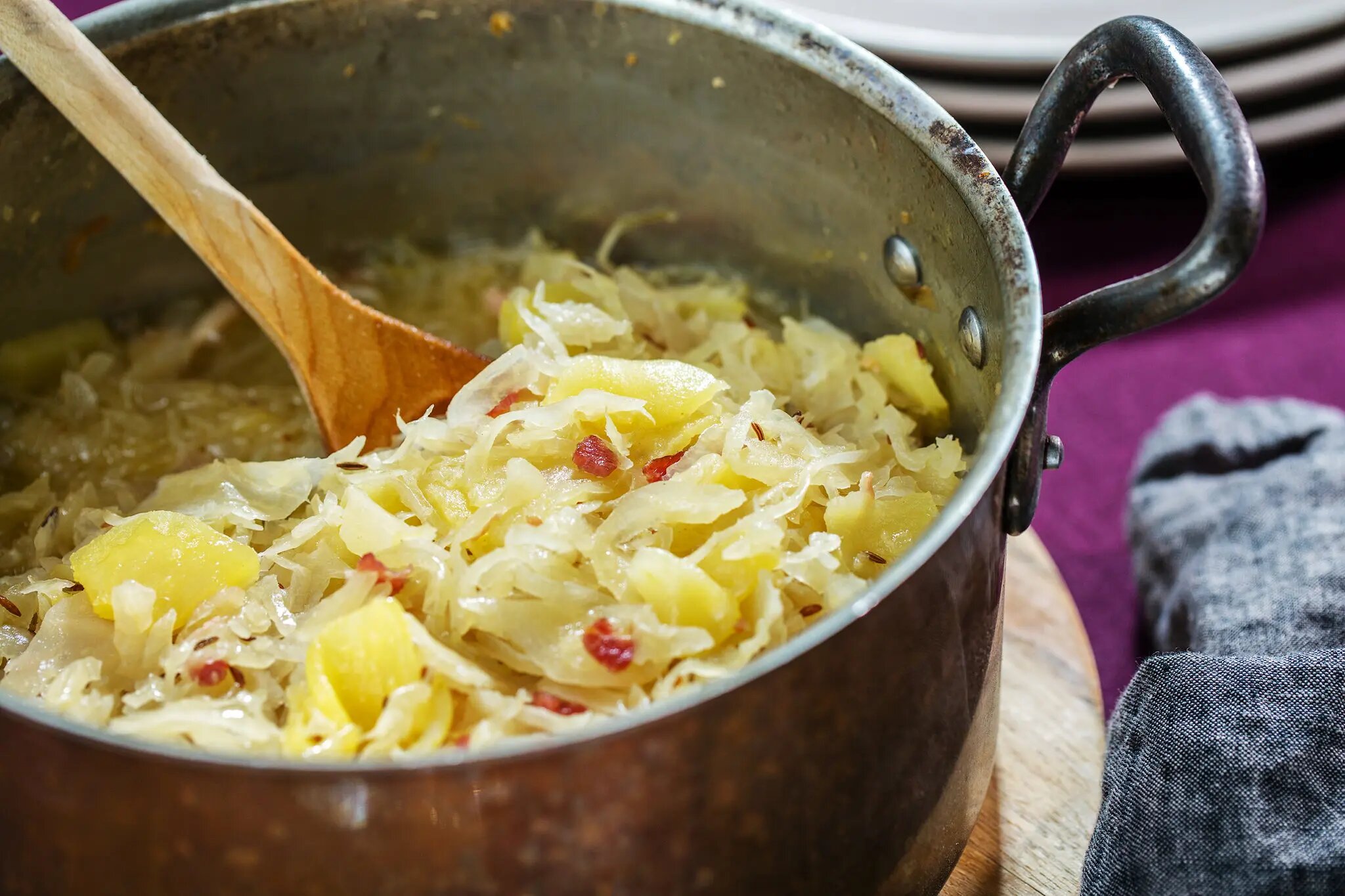
This is how Germans eat Sauerkraut in formal meals – not directly from the jar but stewed with sour apples, white wine, and spices. The recipe Geschmortes Sauerkraut in the Great German Recipes & German Style Recipes results in a side dish with a completely different depth of flavor compared to raw fermented cabbage: still sour but lighter, with added sweetness from the apples and aroma from the wine, rich enough to stand alongside strongly flavored meats without being overwhelmed.
Ingredients (serves 4):
- 500 g Sauerkraut (homemade or canned – if buying canned, choose the non-pasteurized type to retain beneficial bacteria)
- 1 onion, chopped
- 2 tablespoons lard or cooking oil
- 1 medium sour apple, diced
- ½ cup (120 ml) dry white wine (or broth if not using wine)
- 1 bay leaf + 5 black peppercorns
- Salt and a little brown sugar
Note: If the Sauerkraut is too sour, rinse it with cold water before use. This reduces the sourness but also washes away some beneficial bacteria – you can consider this based on your taste.
Instructions:
Step 1 – Sauté the onion: Heat the lard or oil in a thick pot on the Köcher induction stove over medium heat. Add the onion and sauté until light golden – do not let it burn, as burnt onions will make the whole pot bitter. Lard gives a characteristic aroma of German cuisine more than regular cooking oil.
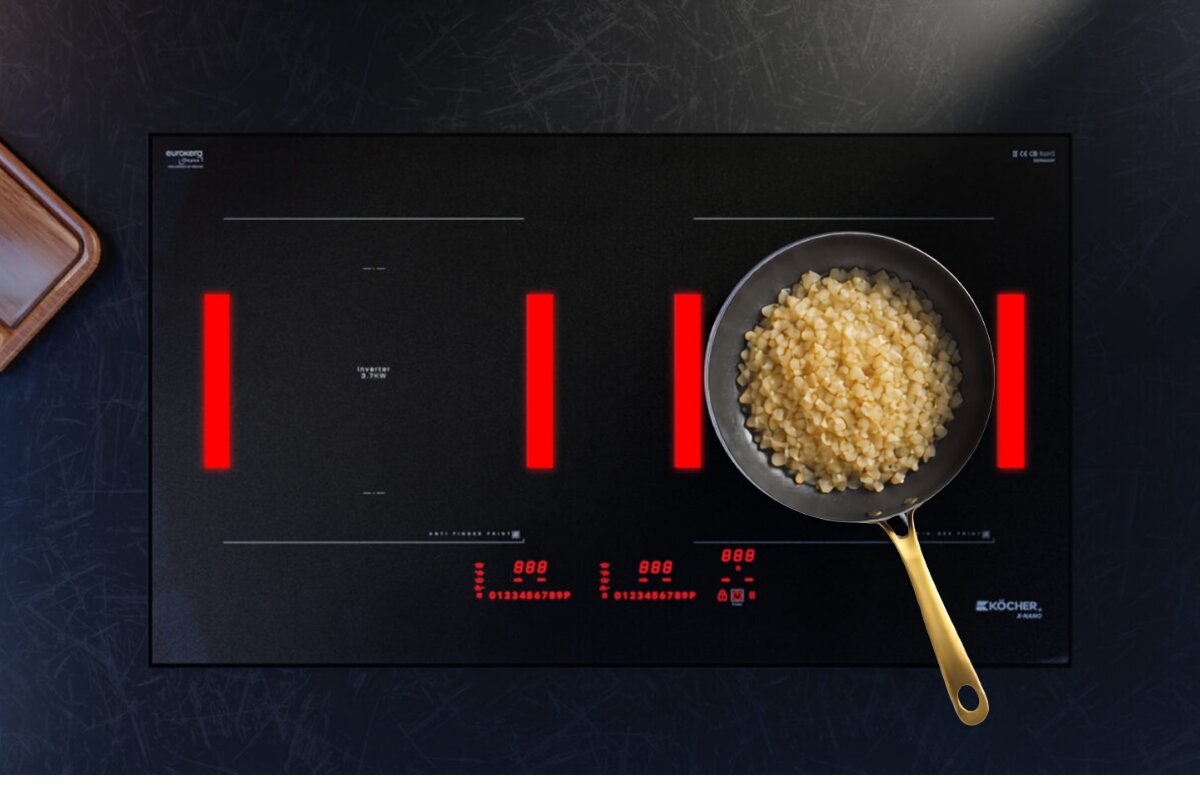
→ Discover the Köcher induction stove that suits your kitchen here
Step 2 – Add Sauerkraut and apple: Add the Sauerkraut to the pot, using a fork to fluff it up so the strands do not clump together. Add the diced sour apple – the apple balances the sourness of the Sauerkraut while adding a light natural sweetness when stewed. Stir well to combine the onion, Sauerkraut, and apple.
Step 3 – Pour in the wine and spices, stew: Pour in the white wine, add the bay leaf and peppercorns. Cover, adjusting the Köcher induction stove to a low simmer – the ideal temperature is about 85 – 90°C, enough to stew slowly without boiling vigorously. Stew for 30 to 40 minutes, occasionally lifting the lid to stir gently. The wine gradually evaporates, leaving behind aroma and light sweetness; the apple breaks down, creating a slight thickness for the entire dish.
Step 4 – Season and serve: Remove the bay leaf. Season with salt and a little brown sugar to balance the sourness and round out the flavor.
What to serve with Sauerkraut? The classic duo in German cuisine
The book Great German Recipes & German Style Recipes suggests serving Sauerkraut with sausages, smoked pork, and roast duck – not by coincidence. In German cuisine, Sauerkraut is always paired with fatty meats, as the lactic acid in the fermented cabbage stimulates the secretion of digestive enzymes, cutting through the fat and making the meal significantly lighter.
| Main Dish | How to use Sauerkraut | Notes |
| Grilled Bratwurst | Hot Stewed Sauerkraut | The most classic combination – a must-have at Christmas markets |
| Kasseler (smoked pork loin) | Stewed Sauerkraut with wine | The original book lists this as a traditional pairing in the North |
| Roast duck or roast goose | Stewed Sauerkraut with more apples | The sweetness of the apples balances the fat of the duck |
| Sauerbraten (vinegar-marinated beef) | Used raw or lightly stewed | Both dishes use vinegar – complementing each other |
| Pork knuckle (Eisbein) | Simple Stewed Sauerkraut | The most rustic dish from Berlin |
In addition to its role as a side dish, Sauerkraut also appears in many other recipes from the book: Cabbage Casserole (Sauerkraut combined with meat and baked pasta), Cabbage Salad (Sauerkrautsalat served cold with caraway seeds), and even Lentil Soup where Sauerkraut is added at the end to create a light sourness.

Frequently asked questions about Sauerkraut
How is homemade Sauerkraut different from canned Sauerkraut?
They differ significantly in the quality of beneficial bacteria. Homemade Sauerkraut or non-pasteurized canned varieties retain live lactobacillus bacteria – this is a valuable source of probiotics. Canned varieties that have been pasteurized to extend shelf life have killed off nearly all beneficial bacteria, essentially becoming just sour cabbage without live cultures. When cooking Stewed Sauerkraut, both types can be used since the stewing temperature will kill the beneficial bacteria.
Why does my homemade Sauerkraut feel slimy or have an odd smell?
A slight sliminess on the surface of the brine is normal in the first week – this is a harmless type of bacteria competing with lactobacillus. Skim off the slimy layer and continue fermenting. If there is a clearly rotten smell (not the natural sour smell) or black or green mold appears – discard the entire jar, do not eat. The usual cause is cabbage exposure to air (not submerged in brine) or the jar not being clean enough.
Can I substitute wine in the Stewed Sauerkraut recipe?
Yes. The original book notes: use broth instead of wine if not using alcohol. Chicken or beef broth works well. The sour apple remains – this is a more important ingredient than the wine in balancing the flavor of the dish.
How long can Stewed Sauerkraut be stored?
In the refrigerator for 3 to 4 days, even better after sitting overnight as the spices penetrate deeper. Reheat on the Köcher induction stove over low heat for 5 to 8 minutes – no need for a microwave, as it will lose the remaining crunch of the cabbage.
Sauerkraut is evidence of German culinary philosophy at its most basic level: just cabbage, salt, and time. But from these three elements, Germans create an ingredient that appears in hundreds of recipes, standing strong for centuries and today remains an indispensable companion to every fragrant grilled Bratwurst plate.
Contact Köcher for advice on choosing the right induction stove for your kitchen space and cooking habits. Because delicious cuisine starts with a good stove.
|
For detailed product information, please contact:
|