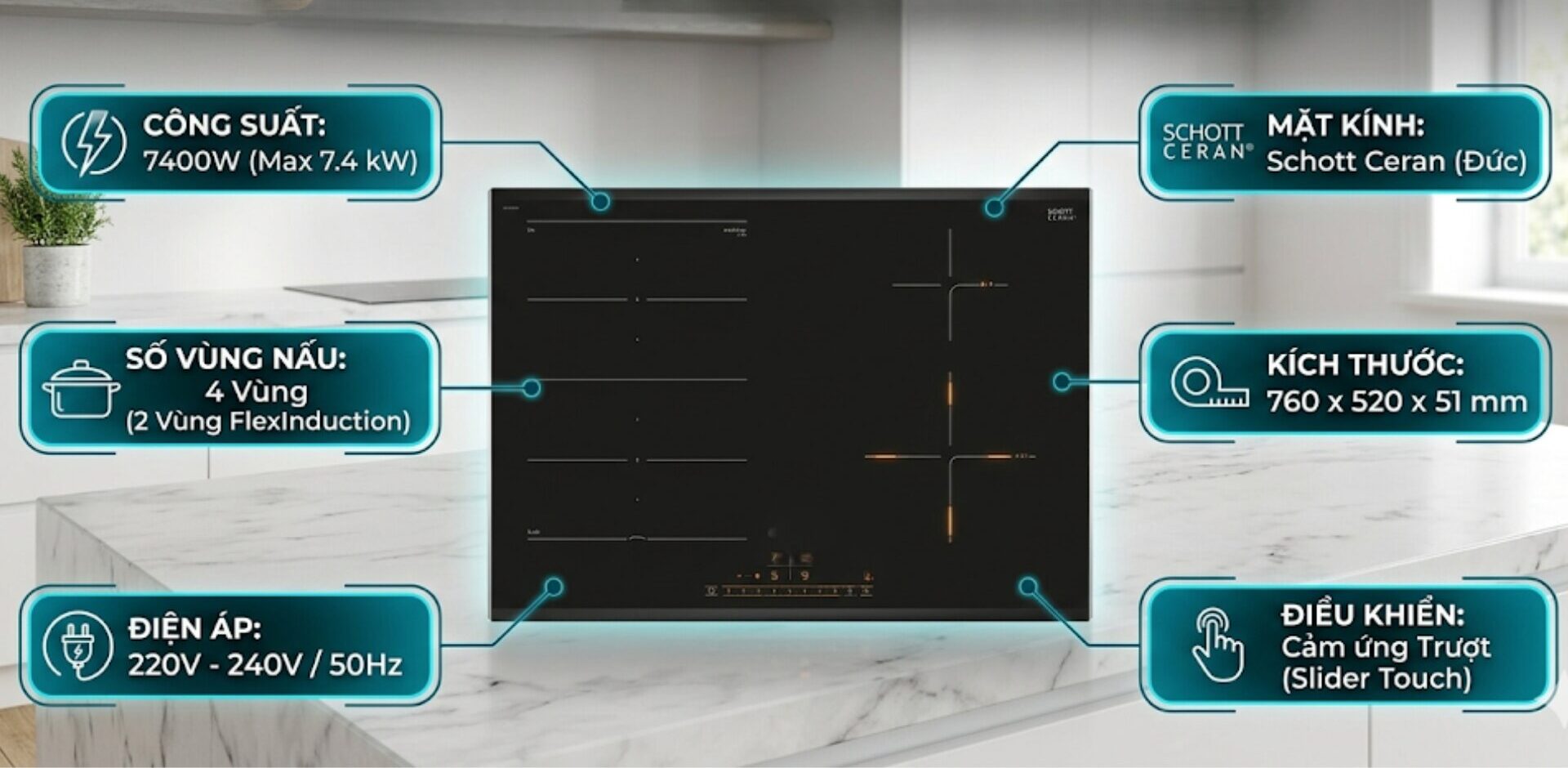
Kartoffelpuffer – the crispy potato pancakes of German cuisine are appealing thanks to their golden, crispy exterior and soft, fragrant potato interior. This article from Köcher will guide you through two original recipes from the book Great German Recipes, explaining each step to maximize the performance of the Köcher induction hob.
|
Summary of content:
|
What is Kartoffelpuffer? Its place in German cuisine
Kartoffelpuffer – pronounced roughly as “kar-tof-el-puf-fer” – can be understood as fried potato pancakes. This dish is made from coarsely grated potatoes, mixed with eggs, onions, flour, and spices, then flattened and fried in hot oil until both sides turn a beautiful golden brown. The finished product must have a lightly crispy exterior, with a soft, fragrant interior of potato and onion.
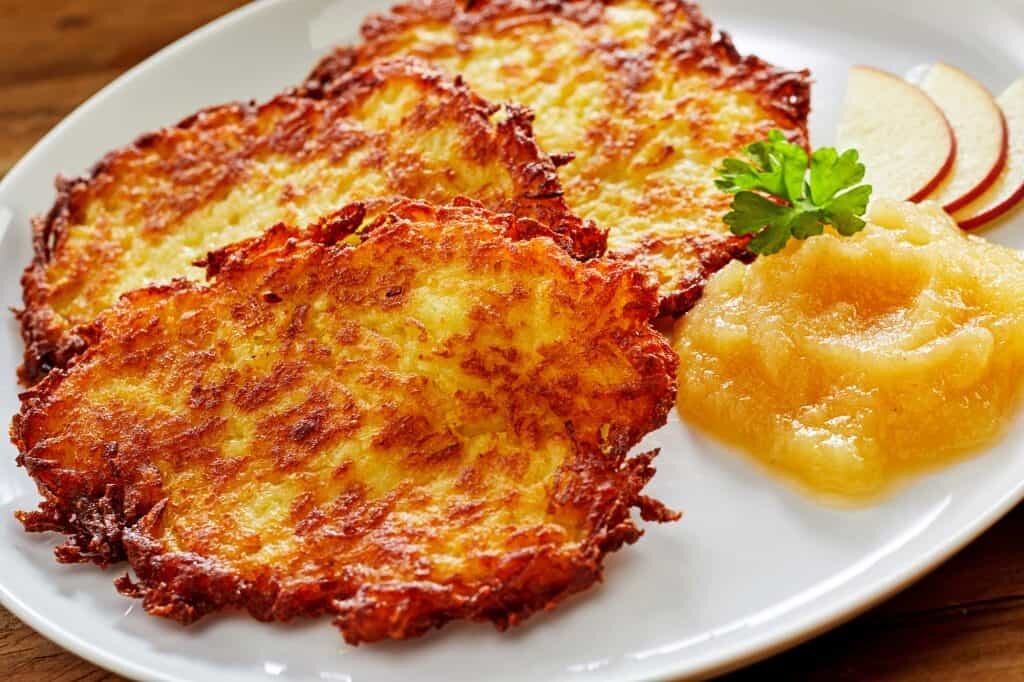
In the book Great German Recipes compiled by the German-American Association, Kartoffelpuffer is categorized under Appetizers and Snacks with a version served with apple sauce. This arrangement shows that Kartoffelpuffer is not only a simple family dish but also holds a special place in traditional German meals.
Besides formal meals, Kartoffelpuffer is also a familiar street food at Christmas markets in Germany. The potato pancakes are fried fresh on-site, served with apple sauce or sour cream, creating a flavor that is both rustic and characteristic of the festive season.
This dish also intersects with Eastern European Jewish culinary culture. In Ashkenazi tradition, a similar potato pancake is called latke and is often associated with the Hanukkah festival. In German culture, Kartoffelpuffer became popular as potatoes gradually became a staple ingredient in daily meals and were passed down through generations.
Suggestions for 2 famous German-style Kartoffelpuffer recipes
Recipe #1 – Basic Kartoffelpuffer
This is the most suitable recipe for beginners making Kartoffelpuffer because the ingredients are simple, the process is easy to control, and the preparation time is quick. This recipe appears in the Vegetables and Side Dishes chapter of the book, using 6 familiar ingredients that are easy to find in a family kitchen.
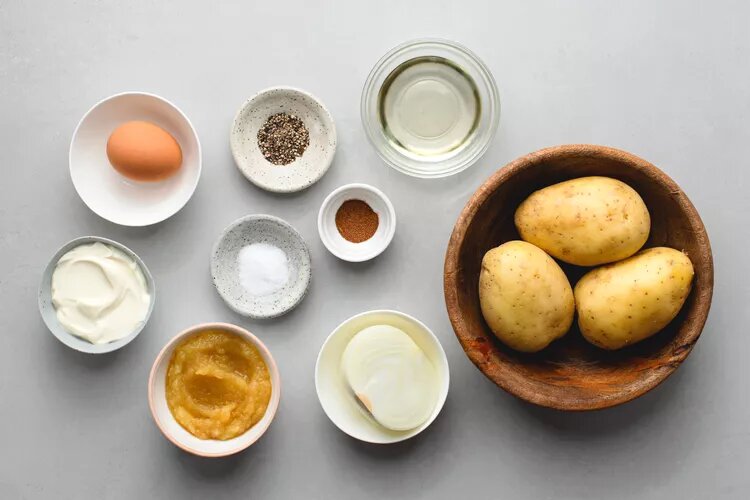
Ingredients (4 people, about 10 – 12 pieces):
2.25 lbs (~1 kg) potatoes
1 egg
1 onion, coarsely grated
2 tablespoons flour
1 teaspoon salt
2 tablespoons oil for frying
Instructions:
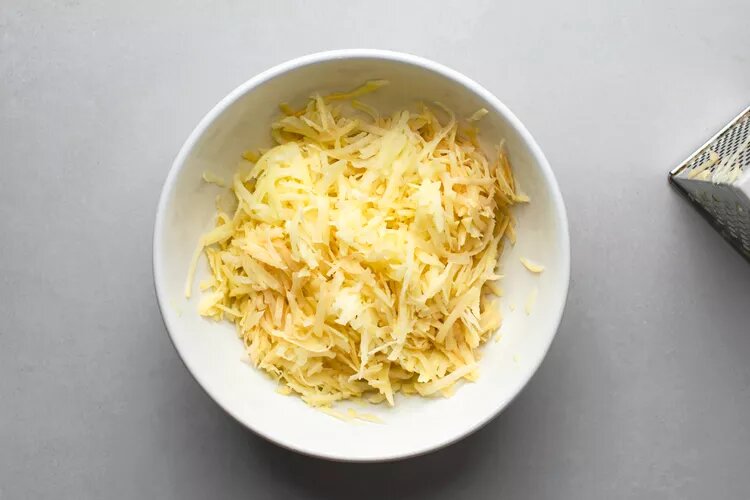
Step 1 – Grate and squeeze the potatoes: Peel the potatoes, then coarsely grate them into a clean bowl. Place the grated potatoes into a clean cloth and squeeze thoroughly to remove as much water as possible. If the mixture is still too wet after mixing, you can add a small amount of flour to adjust the consistency.
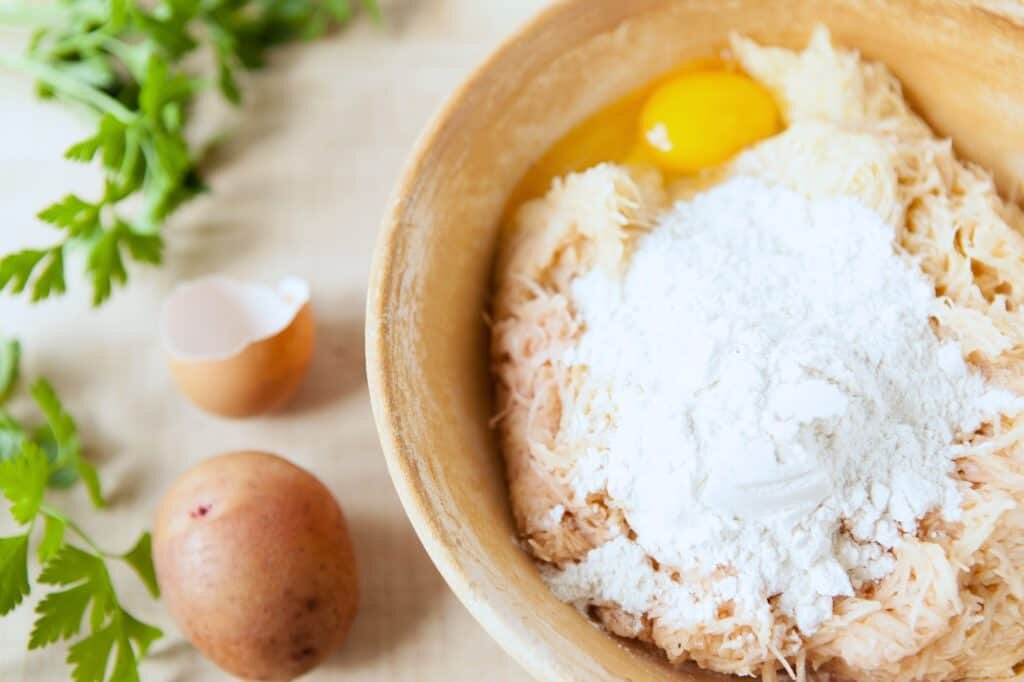
Step 2 – Mix the mixture: Add the squeezed potatoes to the bowl, add the egg, grated onion, flour, and salt, then mix well. The mixture is ready when it can be pressed into thin pancakes without falling apart and is not too dry. After mixing, it should be fried within about 15 minutes because the salt will continue to draw moisture from the potatoes, causing the mixture to become thinner if left too long.
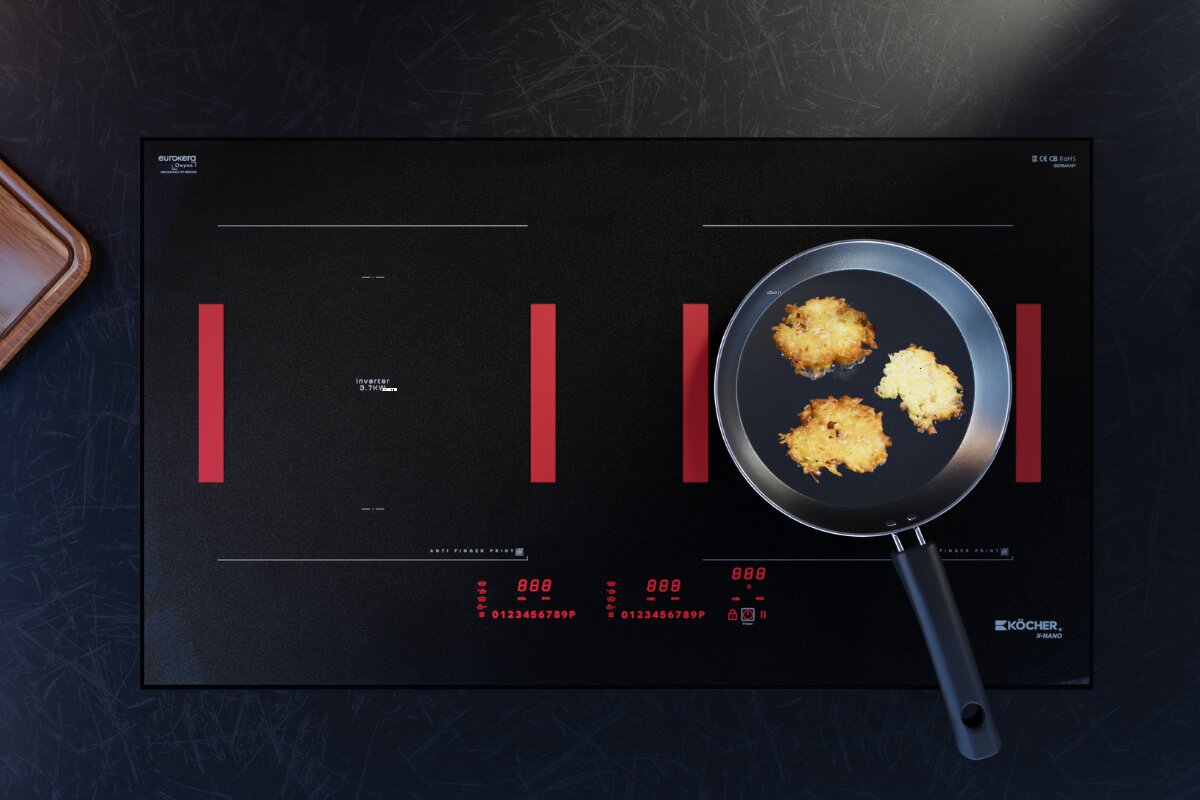
Step 3 – Fry the pancakes: Place a heavy-bottomed pan on the Köcher induction hob, add oil, and heat until a piece of potato sizzles when dropped in. Scoop large spoonfuls of the potato mixture into the pan, flattening them to about 8 – 10 mm thick. Fry each side for about 3 – 4 minutes, without flipping too much to allow the pancakes to form a crispy crust. When the bottom side is golden brown, flip the pancakes once and continue frying the other side.
→ Discover the Köcher induction hobs suitable for your kitchen here
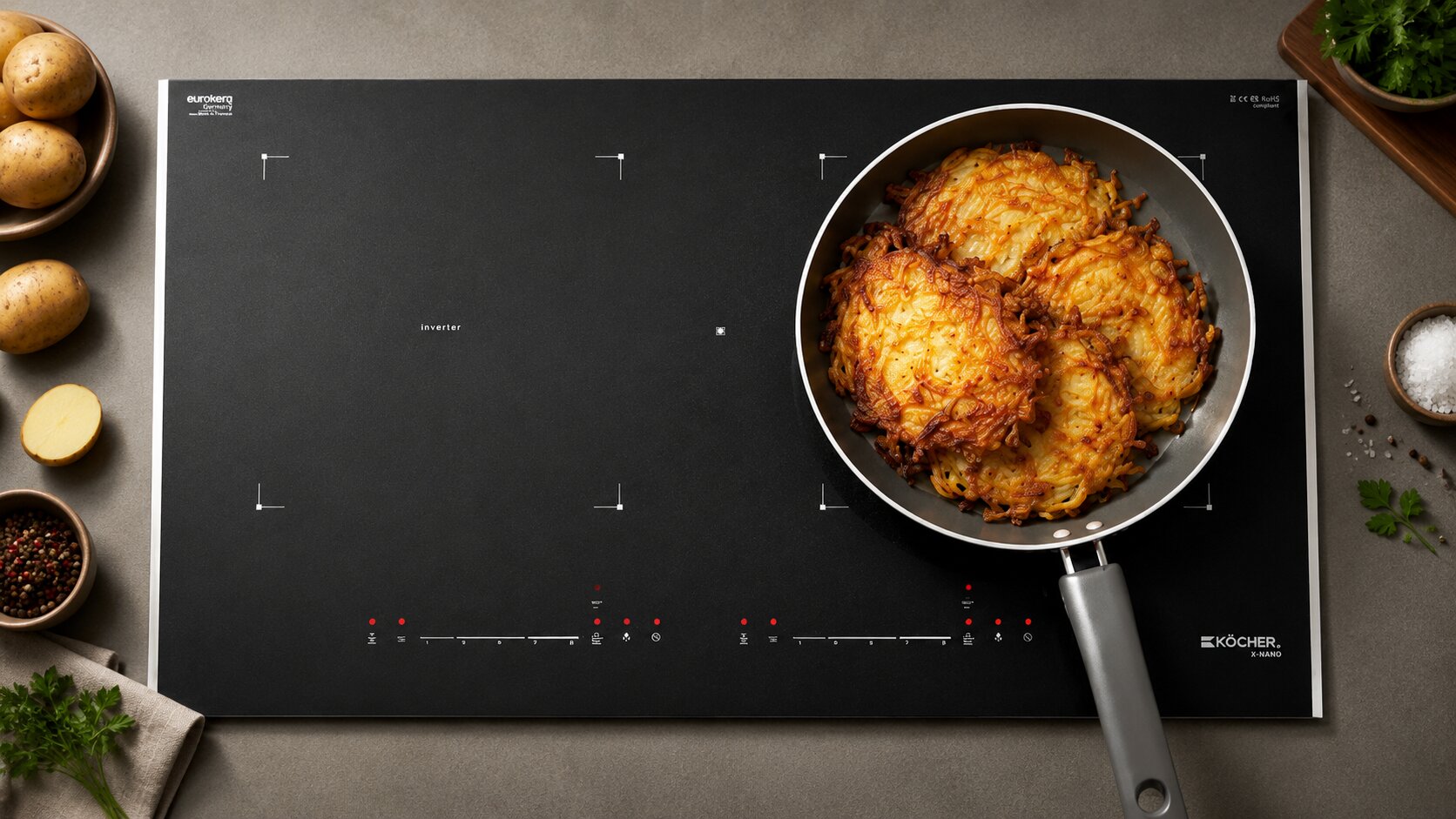
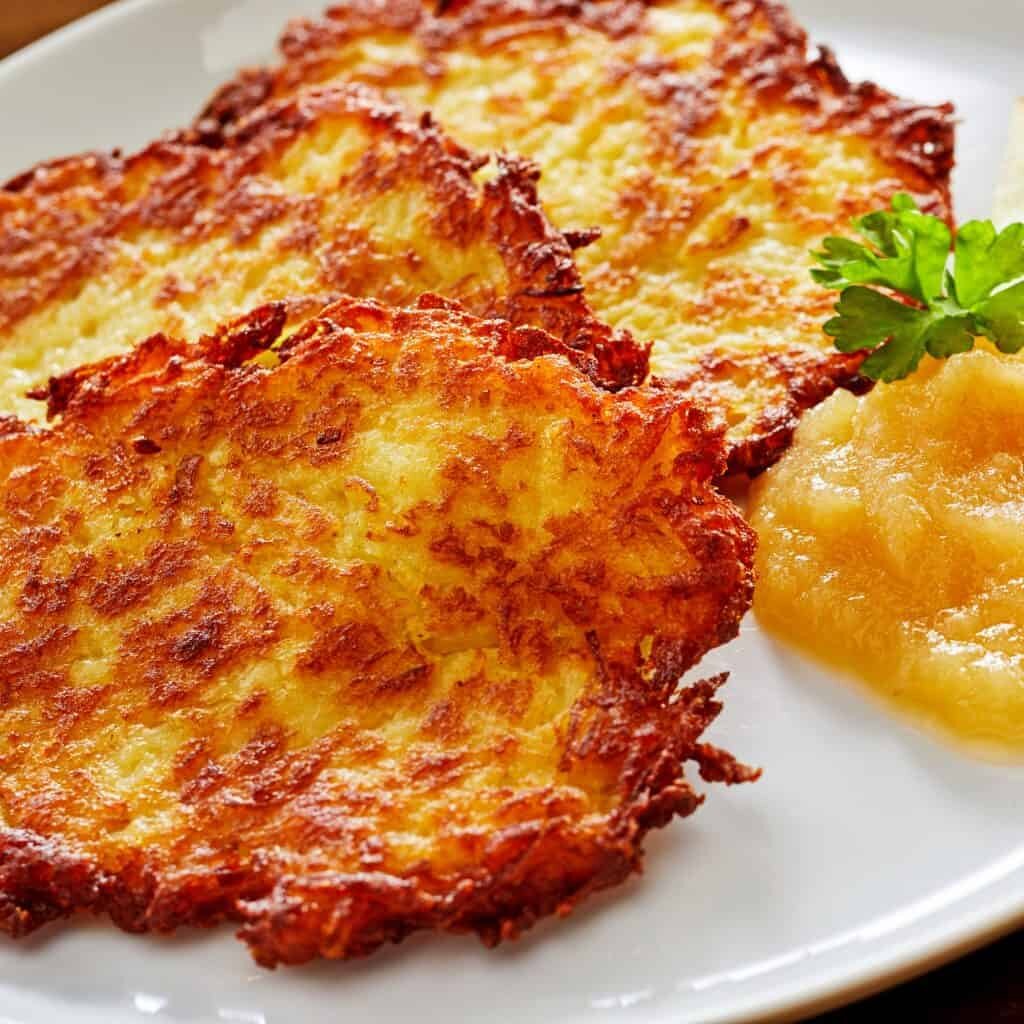
The most challenging part of this dish usually occurs from the second frying batch. Each time you drop the cold potato mixture into the pan, the oil temperature drops quickly, causing the pancakes to absorb more oil if the heat is not restored in time. With Köcher induction hobs, the quick heating ability and stable temperature control help the oil return to the appropriate state quickly, resulting in pancakes with a uniformly golden color and relatively consistent crispiness.
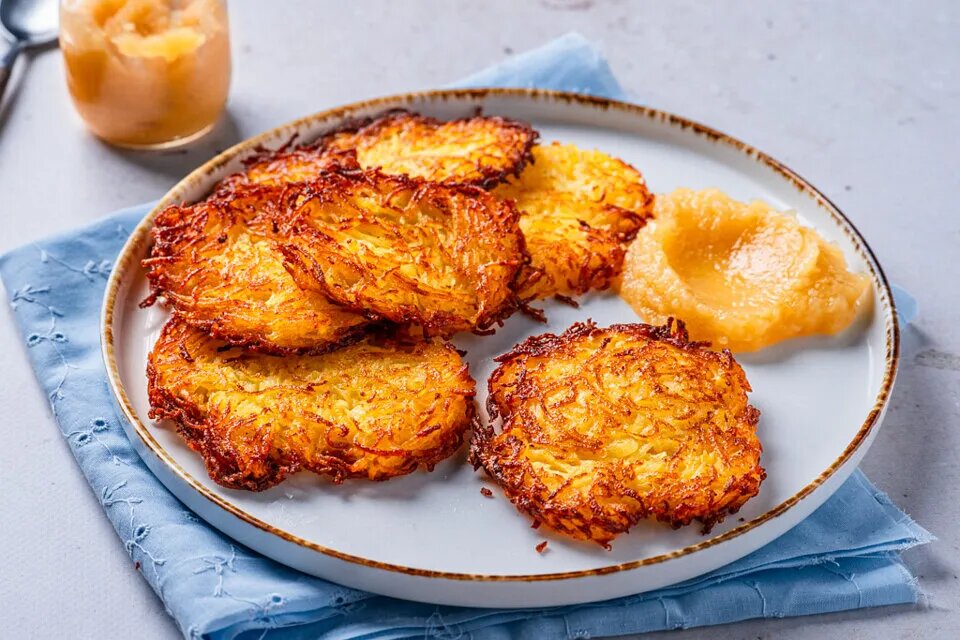
Uniformly golden pancakes, beautifully done thanks to stable heat. (Source: chefkoch.de)[/caption>
East Amana Recipe – Kartoffelpuffer with Pink Applesauce
The East Amana recipe is a version by Carol Schuerer Zuber in East Amana, Iowa – an area associated with a community of German settlers spanning many generations in the Amana Colonies. Compared to the basic recipe, this version has a richer flavor thanks to the use of 2 eggs, the addition of nutmeg, black pepper, and the technique of soaking the potatoes in ice water before squeezing.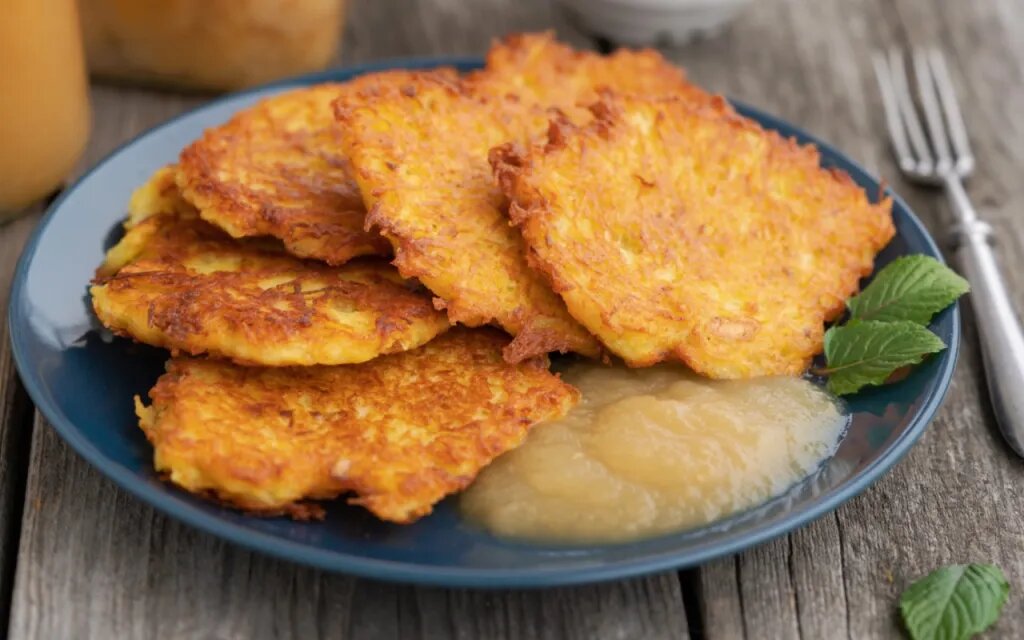
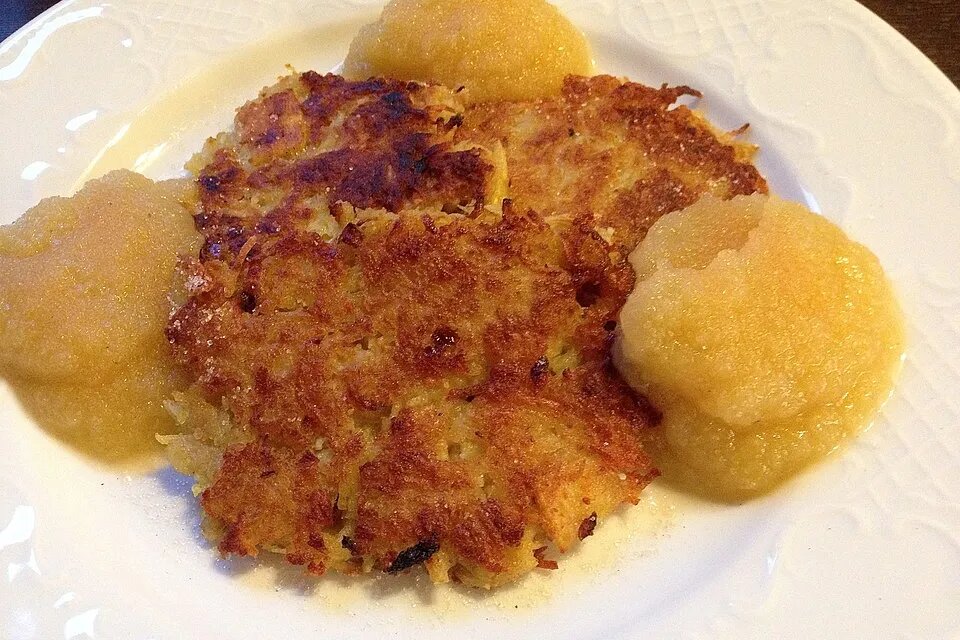
The special feature of this recipe also lies in the pink applesauce served with it. The pink color of the sauce does not come from food coloring but is naturally created from the skin of red apples. When cooked soft and strained, the red hue from the apple skin blends into the apple flesh, creating a sauce that is visually appealing, with a mild sweet and sour flavor that pairs perfectly with crispy fried potato pancakes.
Ingredients for Pink Applesauce:
1.4 kg red McIntosh apples or other tart red apples
½ cup cold water
¾ cup sugar
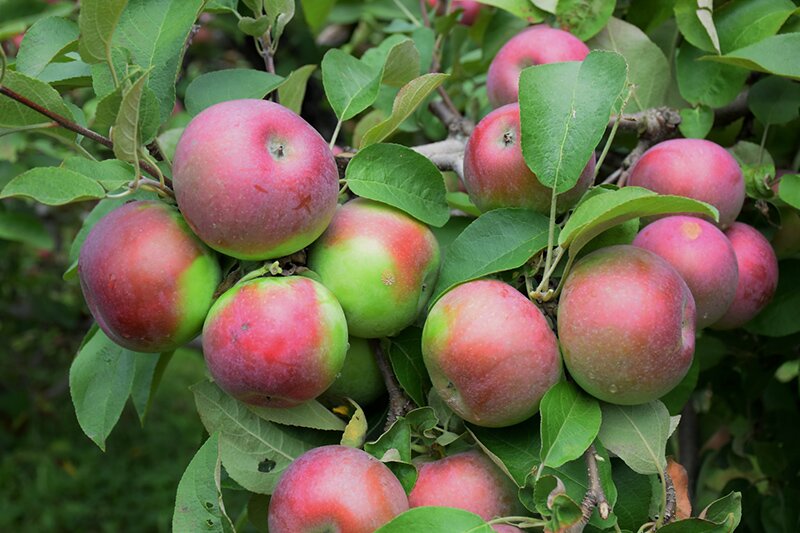 McIntosh apples, also known as Mac, are a variety of apple with red and green skin, tart flavor, and soft white flesh. (Source: tedsgargens.com)
Ingredients for Potato Pancakes:
3 large potatoes (~900 g)
1 medium onion
2 eggs
2 tablespoons flour
¾ teaspoon salt
A pinch of nutmeg and black pepper
Oil for frying, with a depth of about 3 – 4 mm in the pan
Instructions for Pink Applesauce:
Wash the apples, cut them into quarters, remove the cores while keeping the red skin intact. Place the apples in a pot with ½ cup of cold water, simmer for about 15 minutes until the apples are completely soft. Then strain the apples through a sieve or blend until smooth so that the red skin color blends into the sauce. Add sugar, stirring until fully dissolved.
The pink applesauce can be used immediately after cooling, but it will taste better if made in advance and stored in the refrigerator for a few hours. When served with hot Kartoffelpuffer, the mild sweet and sour flavor of the sauce helps balance the richness of the frying oil, making the dish less greasy and more harmonious.
Instructions for the pancakes:
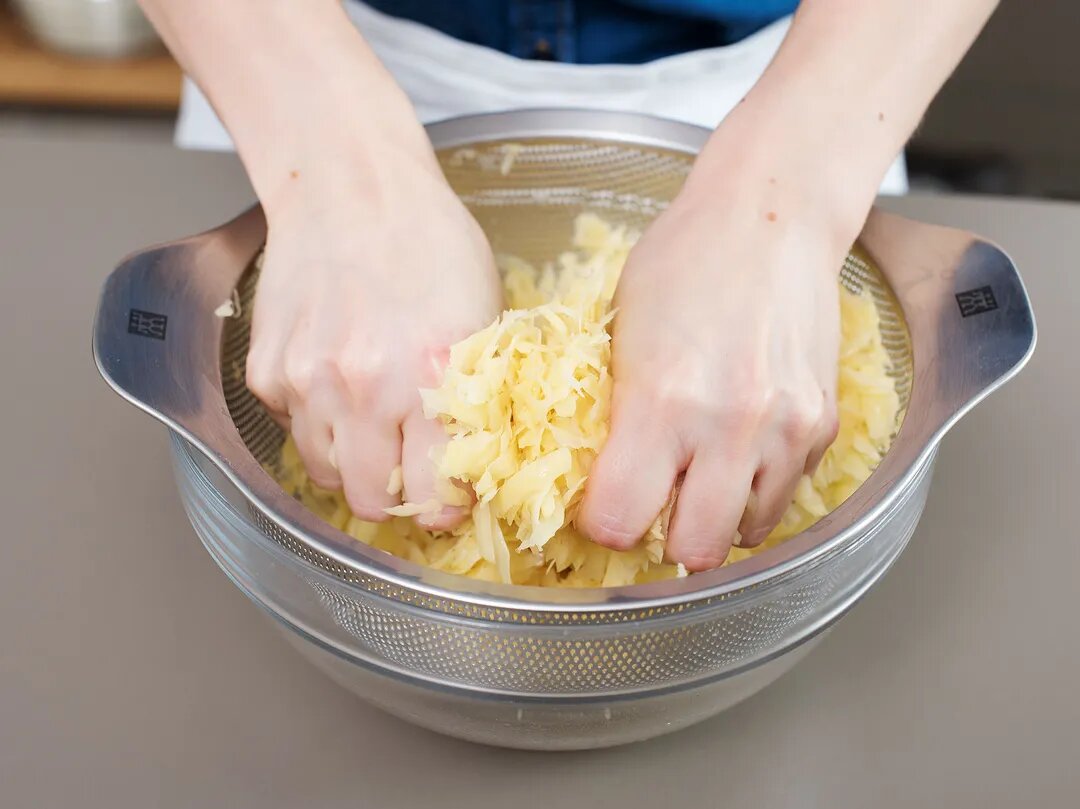
Step 1 – Soak the potatoes in ice water: Coarsely grate the potatoes into a bowl of ice water and soak for about 15 minutes. This step helps slow down the oxidation process, reducing the browning of the potatoes after grating. At the same time, the cold water also helps wash away some of the surface starch, making the pancakes crispier after frying.
Step 2 – Squeeze and mix: Remove the potatoes, drain, then use a clean cloth to pat and squeeze them dry. If the potatoes are still too wet, it is advisable to repeat the drying step once more. Grate the onion to yield about ½ cup. In another bowl, whisk the eggs with the onion, flour, salt, nutmeg, and black pepper, then mix with the squeezed potatoes. Nutmeg adds a warm aroma, giving this version more depth compared to the recipe that only uses salt.
Step 3 – Frying: Heat the oil on the Köcher induction hob at medium heat, avoiding smoking oil. Scoop portions of the potato mixture into the pan, flattening them, and fry for about 2 – 3 minutes on each side until the pancakes are golden and crispy. With the amount of ingredients above, you can make about 12 pancakes.
What to serve with German-style Kartoffelpuffer?
Kartoffelpuffer can be served in various ways. Depending on the meal and personal taste, this pancake can be used as an appetizer, side dish, brunch, or snack.
| Serving style | Accompaniments | Suitable occasions |
| Traditional appetizer | Pink applesauce (Apfelmus) | Formal German meals, Christmas markets |
| Savory style | Sour cream | Parties, light dinners |
| Served with main dishes | Sauerbraten marinated beef, Rotkohl braised red cabbage | Full German meals |
| Sweet version | Applesauce + powdered sugar sprinkled on top | Breakfast, snacks |
| Weekend brunch | Fried eggs, bacon | German-style late breakfast |
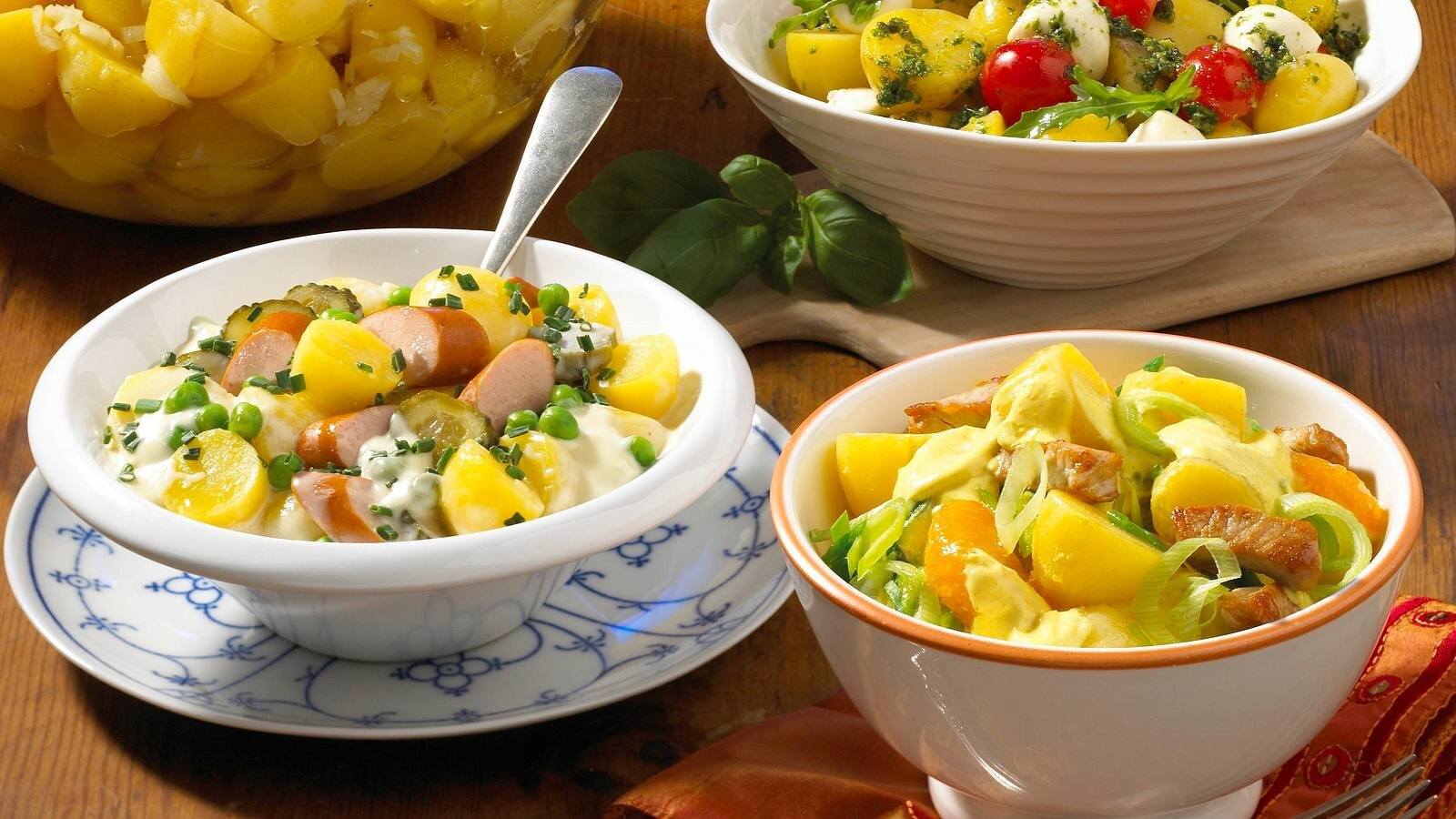
If you want to complete a German meal at home, you can combine Kartoffelpuffer with dishes like Sauerbraten, braised red cabbage Rotkohl, or Kartoffelsalat – German-style potato salad.
Frequently asked questions about Kartoffelpuffer
Why is my pancake soggy even though I followed the recipe correctly?
The most common reason is that the potatoes were not squeezed dry enough. After grating, the potatoes contain a lot of water; if left to drain briefly, the mixture can still become watery when mixed with salt and eggs. You should use a clean cloth to squeeze firmly, even squeezing a second time if the potatoes still feel damp.
If you have squeezed them well but the pancakes are still soggy, check the oil temperature. Oil that is not hot enough will cause the pancakes to absorb more oil, making it difficult to form a crispy crust and easy to become soft. When frying, it is advisable to heat the oil first, then add the pancake portions to the pan.
Can Kartoffelpuffer be reheated?
Yes, but Kartoffelpuffer is best when freshly fried. If you need to reheat, avoid using a microwave as the steam will make the pancakes soft and lose their crispiness.
A better way is to place the pancakes in an oven at 180°C for about 5 – 8 minutes, or fry them again in hot oil for about 1 – 2 minutes on each side. However, reheated pancakes often do not achieve the same crispiness and aroma as when they first came out of the pan.
How long can Kartoffelpuffer be stored?
Kartoffelpuffer is best within the first 5 – 10 minutes after frying, when the crust is still crispy and the interior is hot and soft. If you need to store them, let the pancakes cool completely, then place them in an airtight container. It is advisable to place paper towels or parchment paper between layers of pancakes to prevent sticking and keep them drier.
The pancakes can be kept in the refrigerator for up to about 2 days. When eating again, it is best to reheat them in the oven or pan-fry rather than using a microwave.
Can Kartoffelpuffer be made for vegetarians?
The basic recipe does not use meat, so it is suitable for vegetarians who consume eggs. If you want to make a version without eggs, you can replace 1 egg with a mixture of 2 tablespoons of ground flaxseed and 6 tablespoons of water. After soaking for a few minutes, this mixture will have a similar consistency and binding ability to eggs.
When replacing eggs with flaxseed, the texture of the pancakes may be slightly different from the original recipe, but they will still retain the flavor of potatoes, onions, and the characteristic crispy crust.
Kartoffelpuffer is a clear testament to the sophistication of German cuisine: with just potatoes, onions, eggs, and a little flour, the cook can still create a crispy, fragrant pancake that is easy to eat and rich in tradition. Combined with the Köcher induction hob, which has quick heating capabilities and maintains stable temperatures, you can confidently make Kartoffelpuffer at home with uniformly golden results in each batch.
Contact Köcher for advice on choosing the right induction hob for your kitchen space and cooking habits. A delicious dish always starts with good ingredients, the right technique, and a stove that helps the cook control the heat more accurately.
|
For detailed information about the product, please contact:
|