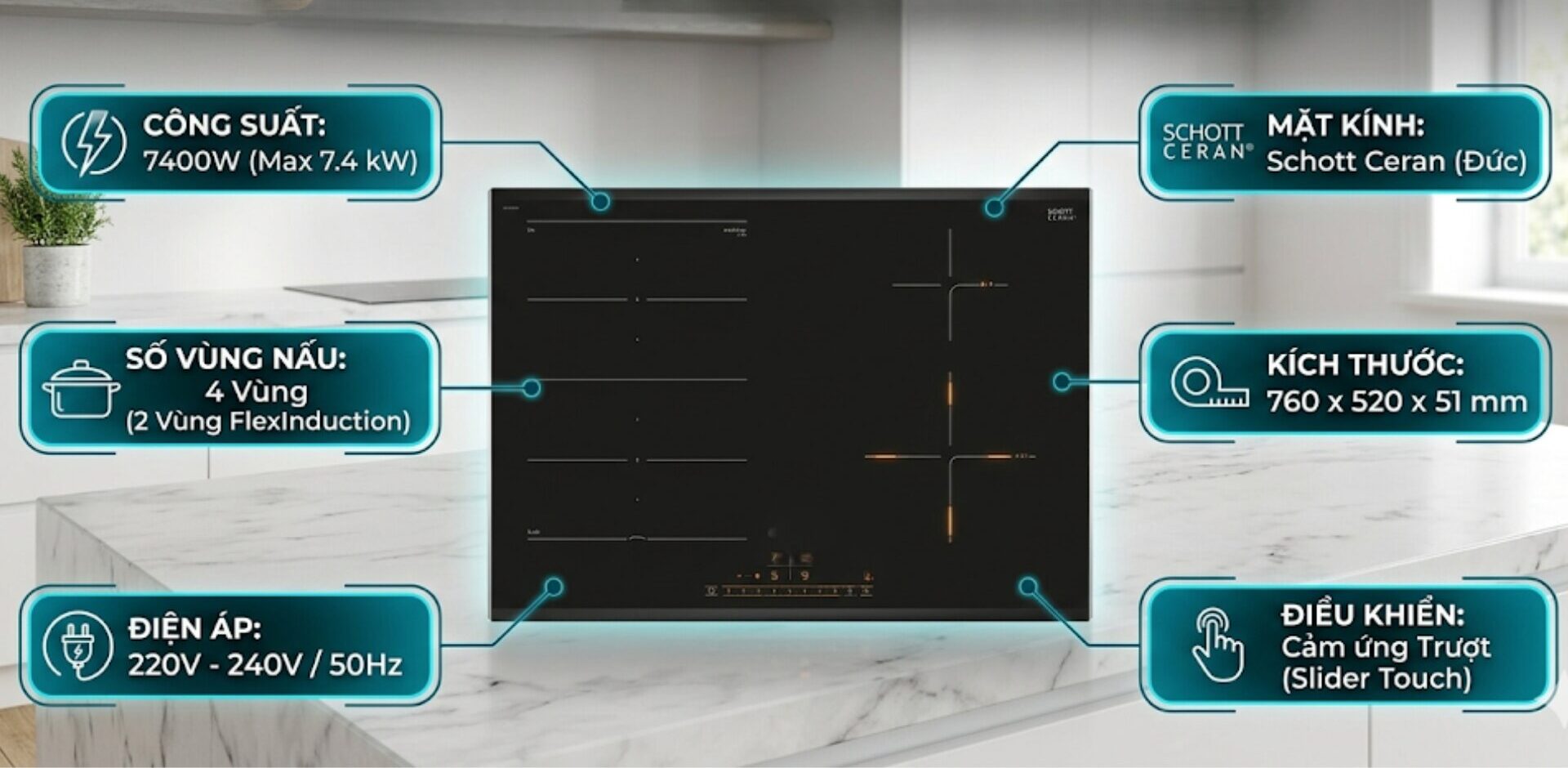
Between gas stoves and electric stoves, which is more economical is always a question that many families ponder when choosing cooking equipment. Each type of stove has its own advantages and disadvantages regarding initial investment costs, monthly fuel expenses, cooking time, and maintenance. The article below will compare in detail to help you easily evaluate and choose the most economical and optimal option for your family.
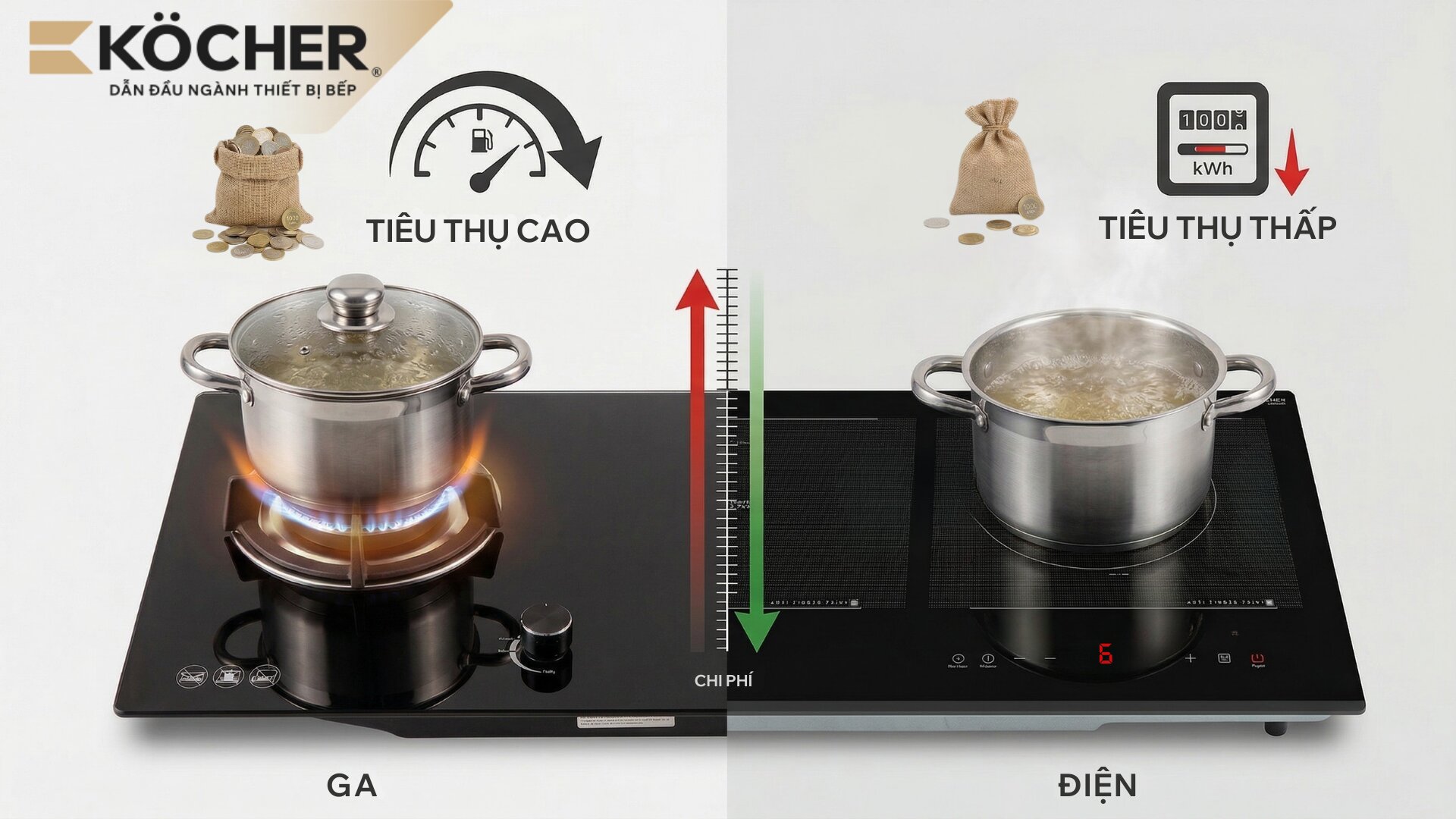
Which is more economical: gas stoves or electric induction stoves? Overview assessment
Although the initial investment cost is higher, electric stoves are more economical than gas stoves in terms of long-term usage costs due to their high thermal efficiency of up to 90%, quick cooking time, and the use of cheaper fuel sources. Specifically as follows:
| Comparison Criteria | Electric Stove (Induction) | Gas Stove |
| Initial Investment Cost | Higher
Includes the price of the stove and specialized cookware for induction stoves. |
Lower
The stove price is cheaper and can utilize all types of old cookware. |
| Monthly Expenses | More economical
High efficiency (80% – 90%) helps reduce electricity consumption. |
Higher
Low efficiency (40 – 60%), significant heat loss to the outside. |
| Maintenance/Parts Costs | Lower
Complex electronic components but high durability. |
Higher
Simple components (grates, burner plates) but need to be replaced after about 1 – 2 years. |
| Cooking Time | Faster
Boiling water takes only 2 – 3 minutes thanks to concentrated heat at the bottom of the pot. |
Slower
Takes longer (5 – 6 minutes) due to heat dispersion. |
| Fuel Replenishment Time | No time lost
However, it cannot be used during power outages. |
15 minutes – 5 hours
Must wait to change the gas cylinder when it runs out in the middle. |
| Cleaning Time | Faster, about 30 seconds – 1 minute
Flat glass surface, just wipe lightly after cooking. |
Longer, about 15 minutes
Must disassemble the grates, burner plates to scrub off stains. |
| Design | Compact, lightweight, can be built-in, optimizing space. | Takes up more space due to needing space for the gas cylinder. |
| Convenience | More diverse
Integrates many functions such as timer, automatic cooking, defrosting, frying. |
More limited
Mainly just has the function of adjusting the flame size. |
| Safety | Higher than gas stoves
No open flame, no smoke, integrates many safety features such as automatic shut-off when overheating or overflow, safety lock… |
More dangerous
Risk of gas leaks, explosions, causing heat and CO gas. |
| Usage Method | More complex with many button types | Simpler
Uses a rotary knob, anyone can use it immediately. |
| Price | Higher
From 1 million to over 30 million VND (high-end type). |
Lower
From several hundred thousand VND to about 15 million VND. |
| Usability in Bad Weather | Can be used in bad weather | Can be affected by wind, rain… posing a risk of explosion. |
Detailed comparison of gas stoves and electric stoves: which is more economical?
Initial Investment Cost
The initial investment cost of gas stoves is usually lower by 1,000,000 – 20,000,000 VND compared to induction stoves due to the lower stove price and the ability to utilize existing cookware:
- Gas Stove: The cost of purchasing a stove ranges from 200,000 VND to over 15,000,000 VND. Gas stoves are not picky about cookware; you do not need to buy new pots and can continue using old pots and pans (made from various materials such as aluminum, cast iron, clay), helping to save on shopping costs. However, you need to spend an additional 700,000 VND to buy a gas cylinder and hose valve.
- Induction Stove: The cost of purchasing a stove ranges from 1,000,000 VND to over 30,000,000 VND. There are single induction stoves priced as low as 500,000 VND, but quality built-in double stoves usually start from 8,000,000 VND. In addition to the stove purchase cost, you must spend an additional 500,000 – 1,000,000 VND for specialized induction cookware and technical items such as wiring for load-bearing, installing a separate circuit breaker. Before choosing to buy, understanding the nature of how induction stoves and electric stoves differ will help consumers accurately distinguish the structure of cooking zones to balance the initial investment budget appropriately.
Monthly Gas or Electricity Costs
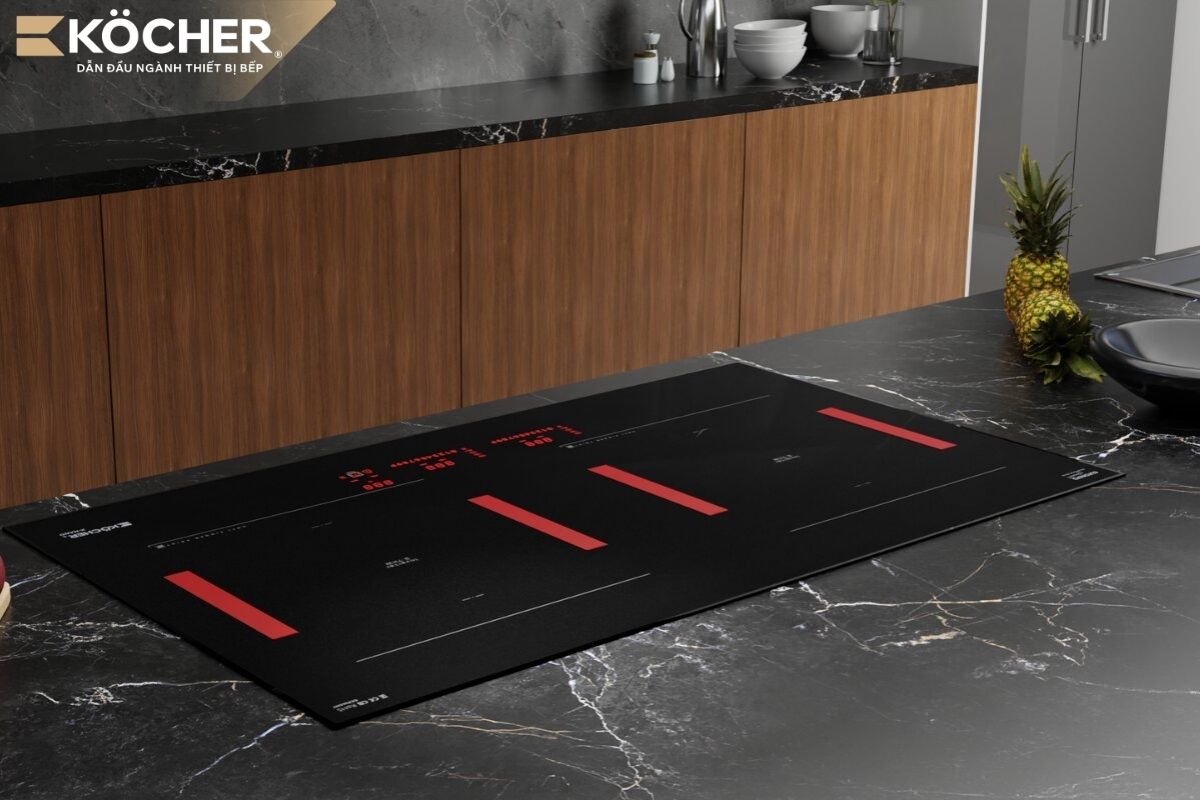
The monthly usage cost of induction stoves is slightly lower than gas stoves due to their high thermal conversion efficiency, helping to minimize energy waste:
- Induction Stove: More economical with thermal efficiency reaching up to 90%. Assuming a family cooks for 1 hour each day, using an electric stove with an average power of 2000W, the monthly electricity bill is about 107,000 – 140,000 VND.
- Gas Stove: More expensive due to efficiency only reaching about 40 – 60% (heat is lost significantly through the flame). On average, a family of 4 will use up a 12kg gas cylinder in about 2 – 3 months. The current price of a gas cylinder is 350,000 – 500,000 VND, averaging 185,000 – 250,000 VND per month for gas.
Maintenance and Parts Costs
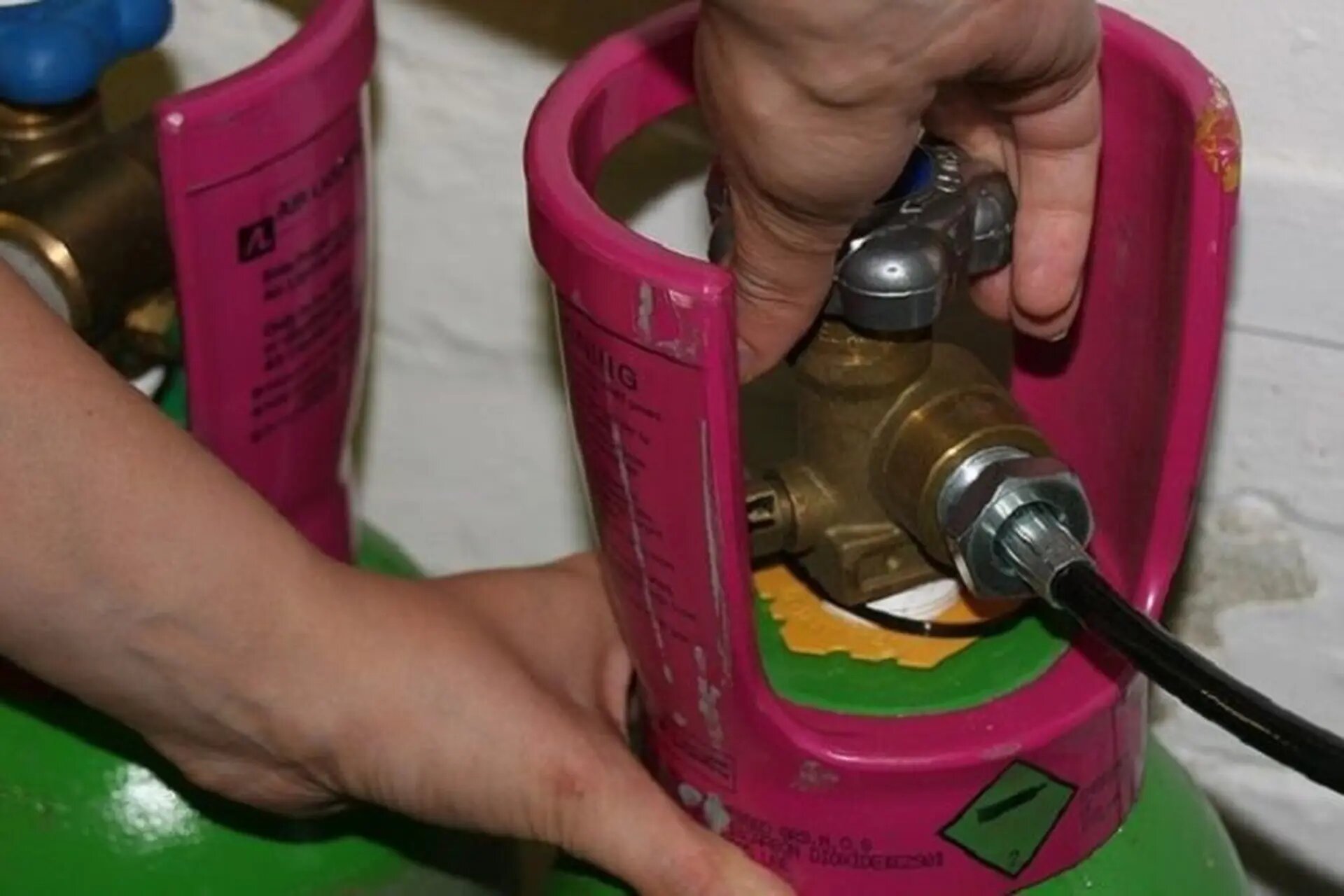
If parts need to be replaced, the replacement cost for induction stoves is higher than for gas stoves. However, induction stove parts last longer and can be used for a long time without replacement. In contrast, the mechanical parts of gas stoves wear out quickly due to heat and rust, requiring periodic replacement, making maintenance and parts costs for gas stoves higher than for induction stoves:
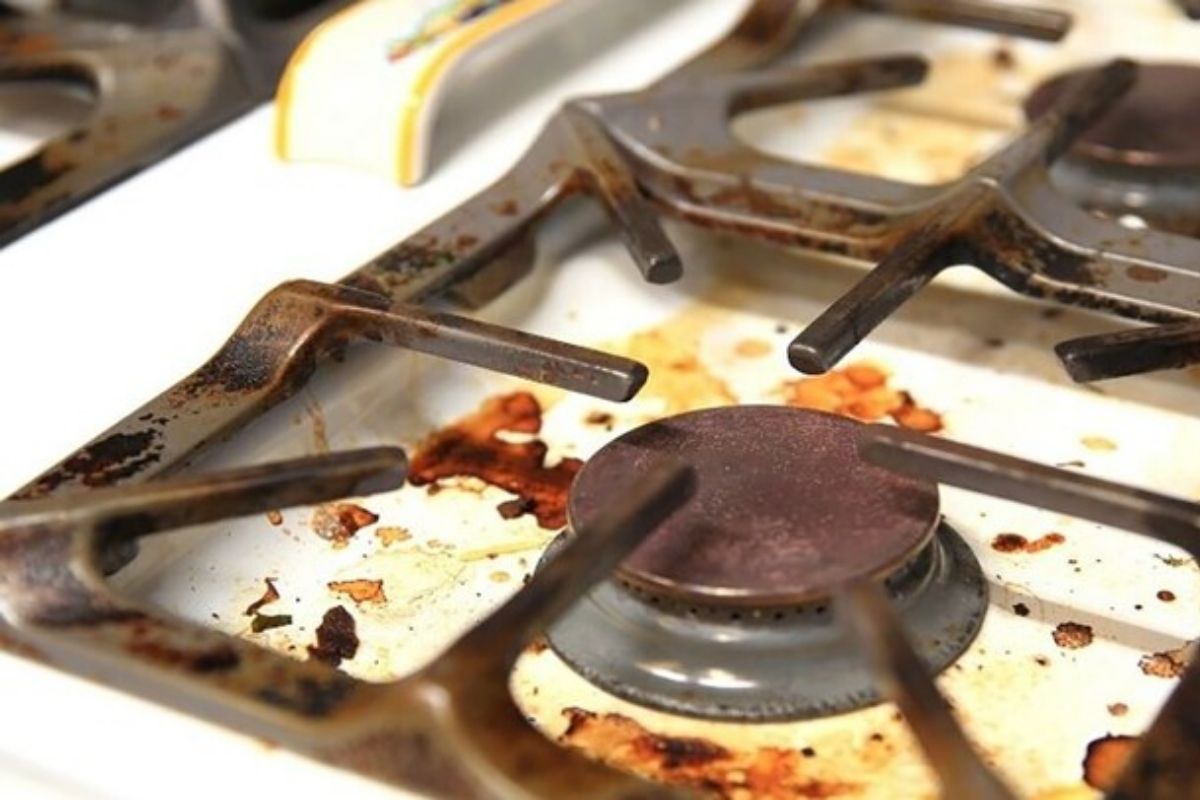
- Gas Stove: More expensive and troublesome due to components being directly exposed to fire. After about 1 – 2 years, you often have to spend from 200,000 – 500,000 VND to replace rusted grates, warped burner plates, or broken igniters. Additionally, periodically replacing gas hoses and safety valves is mandatory to ensure safety, leading to ongoing costs throughout the usage period.
- Induction Stove: Almost no annual maintenance costs for separate parts. With a flat glass surface design and sealed circuit board, induction stoves are not affected by flames or oxidation that cause rust on external components. Except for rare electrical incidents, users only need to clean thoroughly for the system to operate reliably for many years without needing periodic replacements like gas stoves.
Time-Saving Cooking Capability
The cooking time of induction stoves is faster than gas stoves due to the mechanism of directly transferring heat to the bottom of the pot, helping to minimize energy loss:
- Induction Stove: Saves significant time with thermal efficiency reaching 90%. In fact, boiling 1 liter of water takes only about 2 – 3 minutes thanks to the mechanism of directly transferring heat to the bottom of the pot using magnetic fields, without heating the surrounding air, concentrating all energy to cook food quickly.
- Gas Stove: Significantly slower due to thermal efficiency only reaching about 40 – 60%. To boil the same 1 liter of water, a gas stove takes about 5 – 6 minutes because the flame has to heat the grate and the surrounding air before transferring heat to the pot, prolonging the cooking process and causing discomfort for the cook.
Which is faster for fuel replenishment: gas or induction stoves?
The energy replenishment time of induction stoves is faster than gas stoves because they use the available electricity in the household:
- Induction Stove: Can provide electricity immediately by plugging in the induction stove’s power cord or turning on the circuit breaker, unless there is a power outage.
- Gas Stove: Takes time because it relies on a separate gas cylinder. When the gas runs out in the middle of cooking, you must spend at least 15 – 30 minutes to call a technician and wait for the new cylinder to be replaced, interrupting meal preparation for the family.
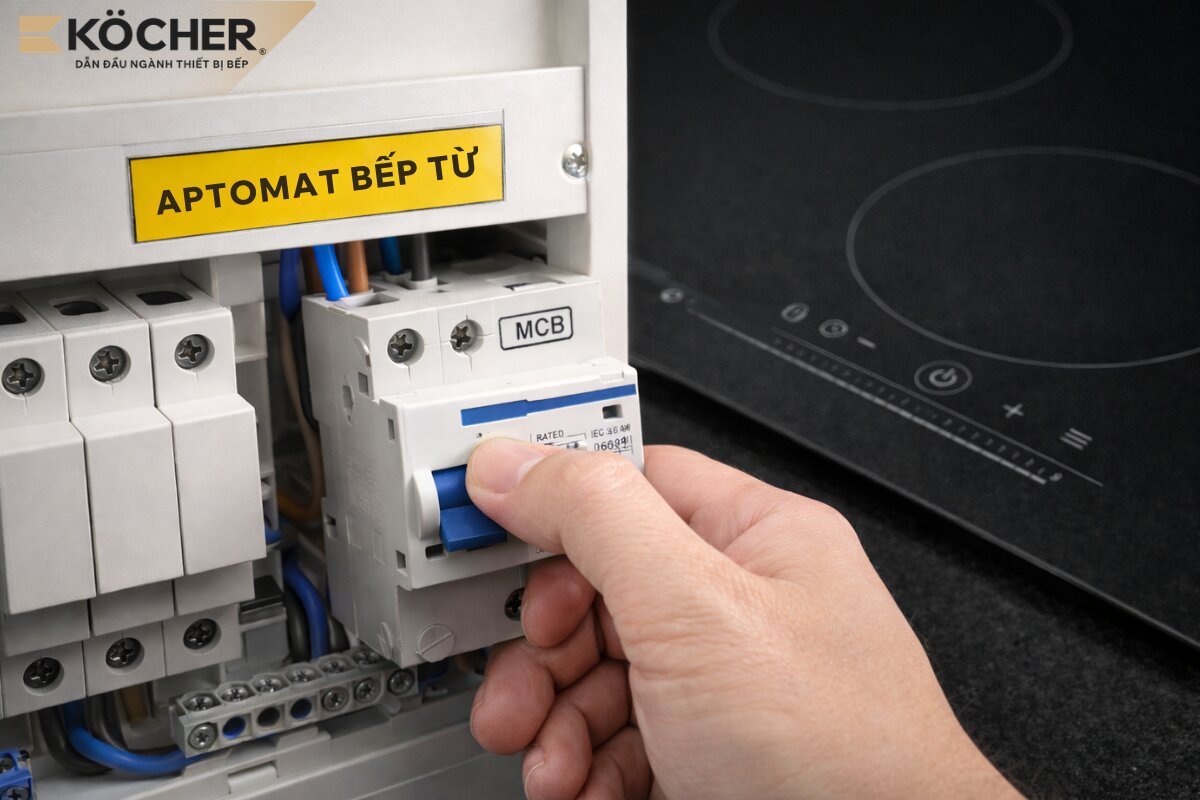 Induction stoves use the household’s available electricity, making them more convenient than gas stoves.
Time-Saving Cleaning Capability
Cleaning induction stoves is faster than gas stoves due to the flat glass surface design, which has no rough details or crevices for grease to accumulate:
- Induction Stove: Saves maximum time thanks to the flat glass surface, just use a soft cloth to wipe clean after cooking. Especially, the X-Nano Köcher induction stove line applies X-Nano scratch-resistant matte glass developed exclusively by EuroKera (France) to effectively reduce fingerprints and grease, cleaning twice as fast as regular glass. You only need about 30 seconds to clean grease stains on the glass surface with a damp cloth.
- Gas Stove: Takes more time and effort due to the complex structure with grates, burner plates, and burners. Grease and food that fall onto the direct flame will burn, clump, and stick tightly into the crevices. To clean thoroughly, you must disassemble each component, soak in cleaning chemicals, and scrub thoroughly, usually taking 15 – 20 minutes each time.
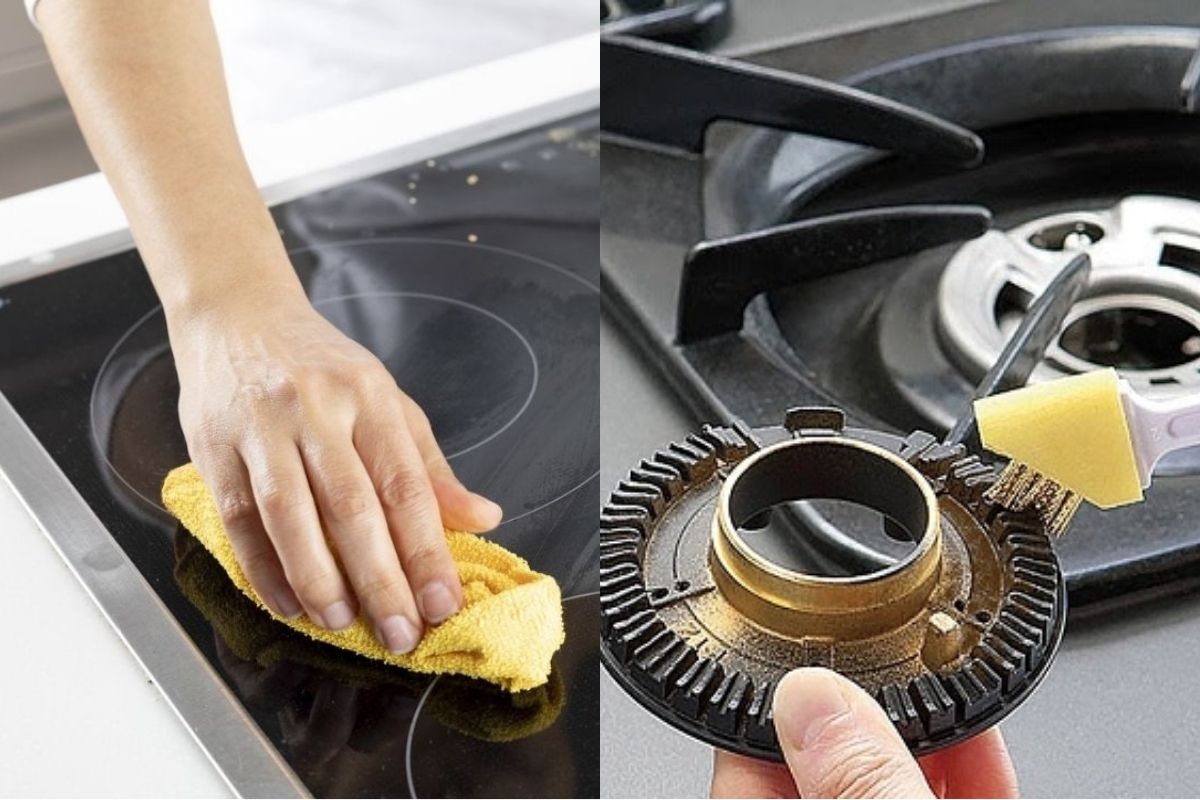 Induction stoves only need a damp cloth to wipe the glass surface clean, while gas stoves require disassembly of each component for cleaning, taking more time. (Source: Internet)
Gas or induction stoves: which is more economical based on other criteria?
In addition to the above criteria, many other factors also affect the long-term usage costs of stoves as follows:
- Space-Saving Capability: Electric stoves are designed to be thin and can be built into the countertop, keeping the cooking area tidy. Gas stoves require an additional gas cylinder placed underneath or beside, taking up kitchen cabinet space.
- Cooling Cost-Saving Capability: Gas stoves use direct flames, radiating a lot of heat around, causing the kitchen temperature to rise, which may require additional fans or air conditioning to cool the cooking area in summer. Induction stoves transfer heat directly to the bottom of the pot, radiating less heat, keeping the cooking area cooler.
- Safety: Induction stoves have many protective features such as automatic shut-off when overheating, child locks, residual heat warnings, and timers, ensuring safety for users. Gas stoves have the risk of gas leaks and explosions if valves, hoses, or burners malfunction. To consider comprehensively before switching devices, evaluating which is safer: gas or electric stoves will provide users with a solid basis to protect their families from dangerous fire hazards.
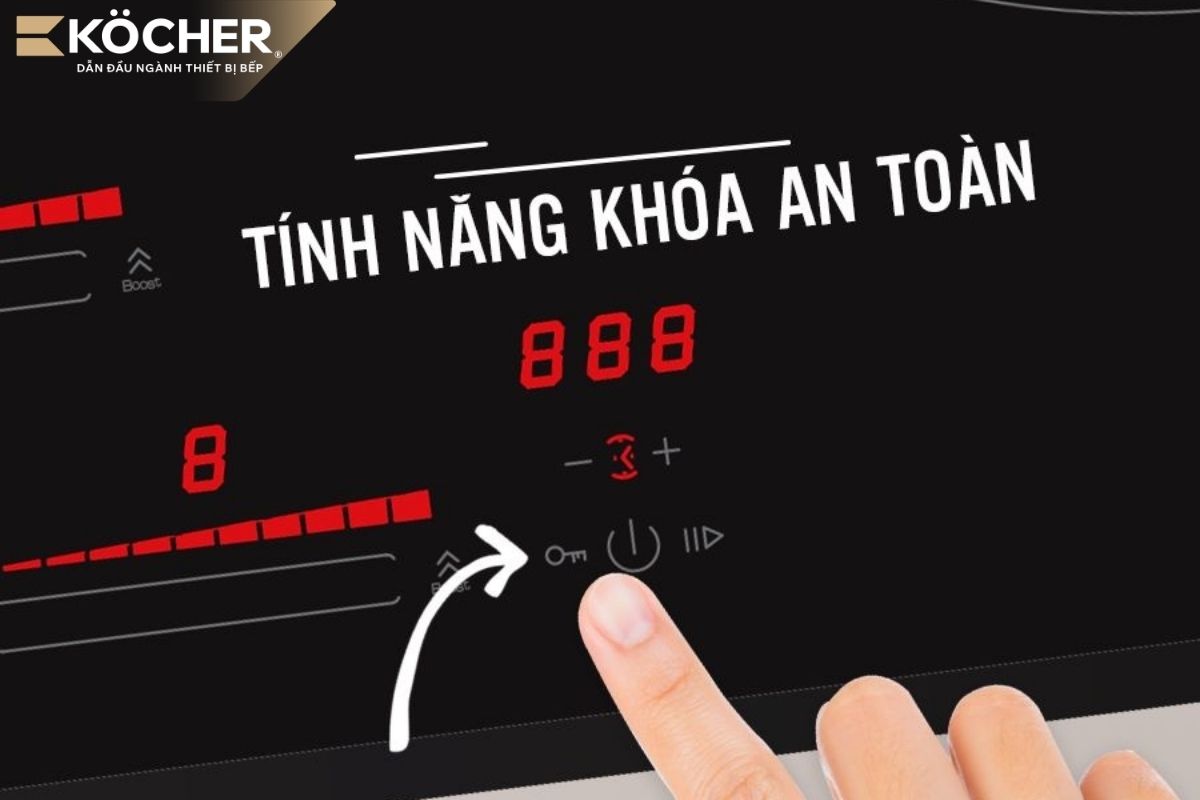 Induction stoves have safety features that ensure user safety.
| Conclusion: Although the initial investment cost is higher, overall, considering monthly usage costs, cooking efficiency, cooking time, cleaning time, and safety level, induction stoves are more economical than gas stoves in the long run due to reduced energy loss, faster cooking, less maintenance, and safe operation, suitable for the long-term usage needs of many families today. |
Experience in choosing economical induction stoves
Here are 4 experiences in choosing induction stoves to help you save costs and optimize stove usage efficiency.
Prioritize buying stoves from units with discounts and promotions
To save costs, look for major promotions (Holidays, Tet, Black Friday) or choose to buy from large authorized dealers that often offer discounts of up to 20%. Additionally, purchasing in a combo (stove, cookware set, range hood) will help you save a significant amount compared to buying each item separately.
Choose stoves with Inverter technology for energy savings
Prioritize stove models that integrate Inverter technology. This technology helps the stove operate steadily at low temperatures, avoiding continuous on-off cycles, thus saving 20 – 35% on monthly electricity costs.
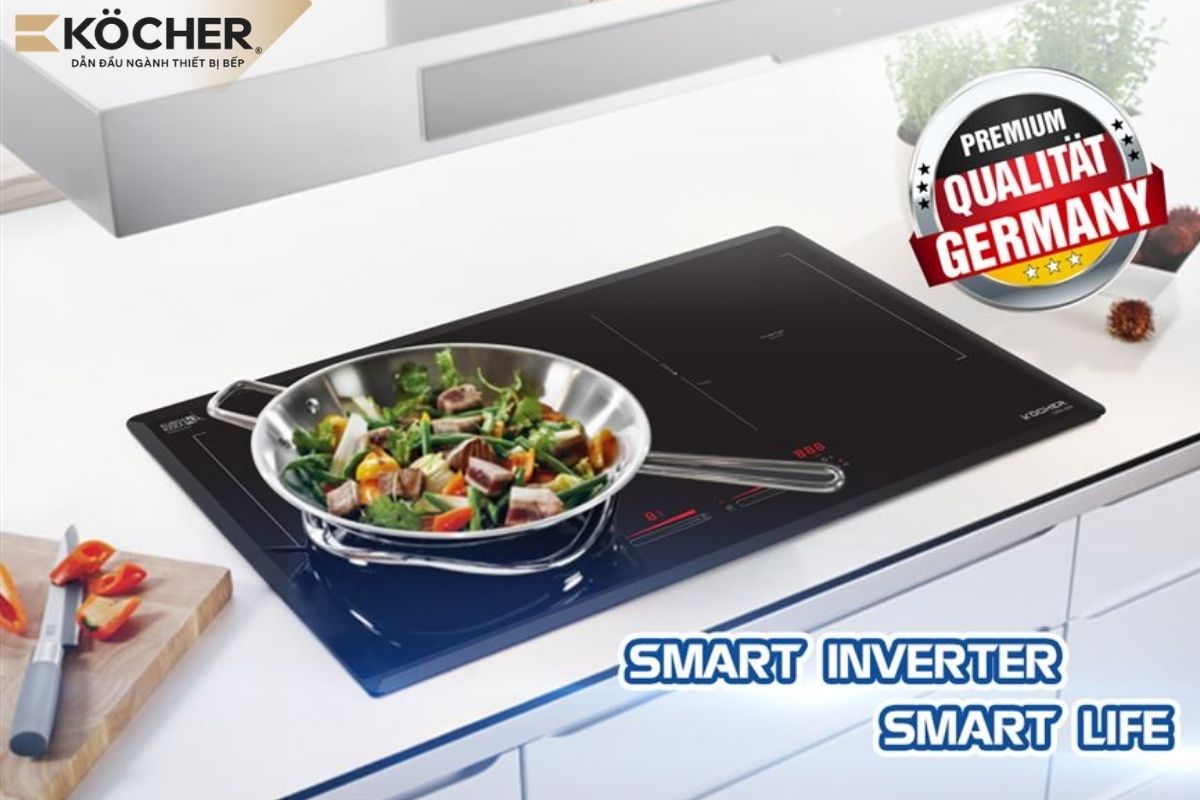 Induction stoves with Inverter technology help save energy.
Do not buy expensive stoves with too many features
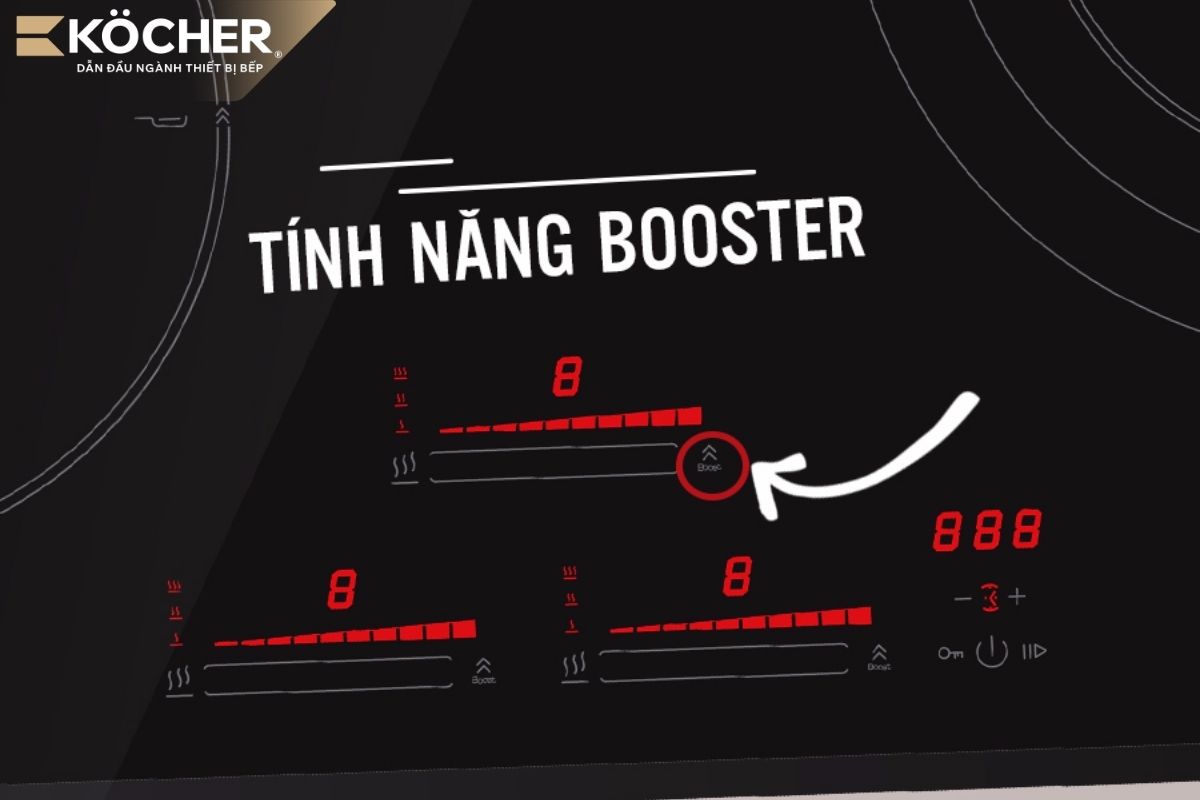
An induction stove with too many features may not necessarily suit you. You should clearly define your usage needs to choose an induction stove with appropriate features such as Booster, timer, child lock, overflow warning… to avoid wasting money, as the more features integrated, the higher the price.
Choose the number of cooking zones according to your needs
You should clearly define your cooking needs to choose an induction stove with the appropriate number of cooking zones. For example, a family of 2 – 4 members with daily cooking needs would find a 2-zone induction stove suitable, while choosing a 3-zone stove would waste the initial investment cost. If the family has more than 5 members, with a larger number of dishes and food, you may consider choosing a 3-zone stove to save cooking time. Conversely, if you are young students living away from home looking for a cheap induction stove for students to optimize dormitory space, a small single induction stove would be the most reasonable option to save both investment costs and living space.
Above is a detailed comparison of 7 criteria between gas stoves and induction stoves along with 4 experiences for optimizing induction stove costs. I hope this article helps you answer the question which is more economical: gas stoves or electric stoves, thus choosing a product that suits your family’s needs.
If you are looking for an induction stove that helps optimize usage costs, please refer to Köcher’s product lines. Köcher brand induction stoves apply Inverter technology to effectively control energy consumption combined with E.G.O components, durable pure copper heating elements that help minimize breakdowns and maintain stable long-term thermal efficiency.
|
Köcher induction stoves pioneer German technology – For detailed product information, please contact:
|