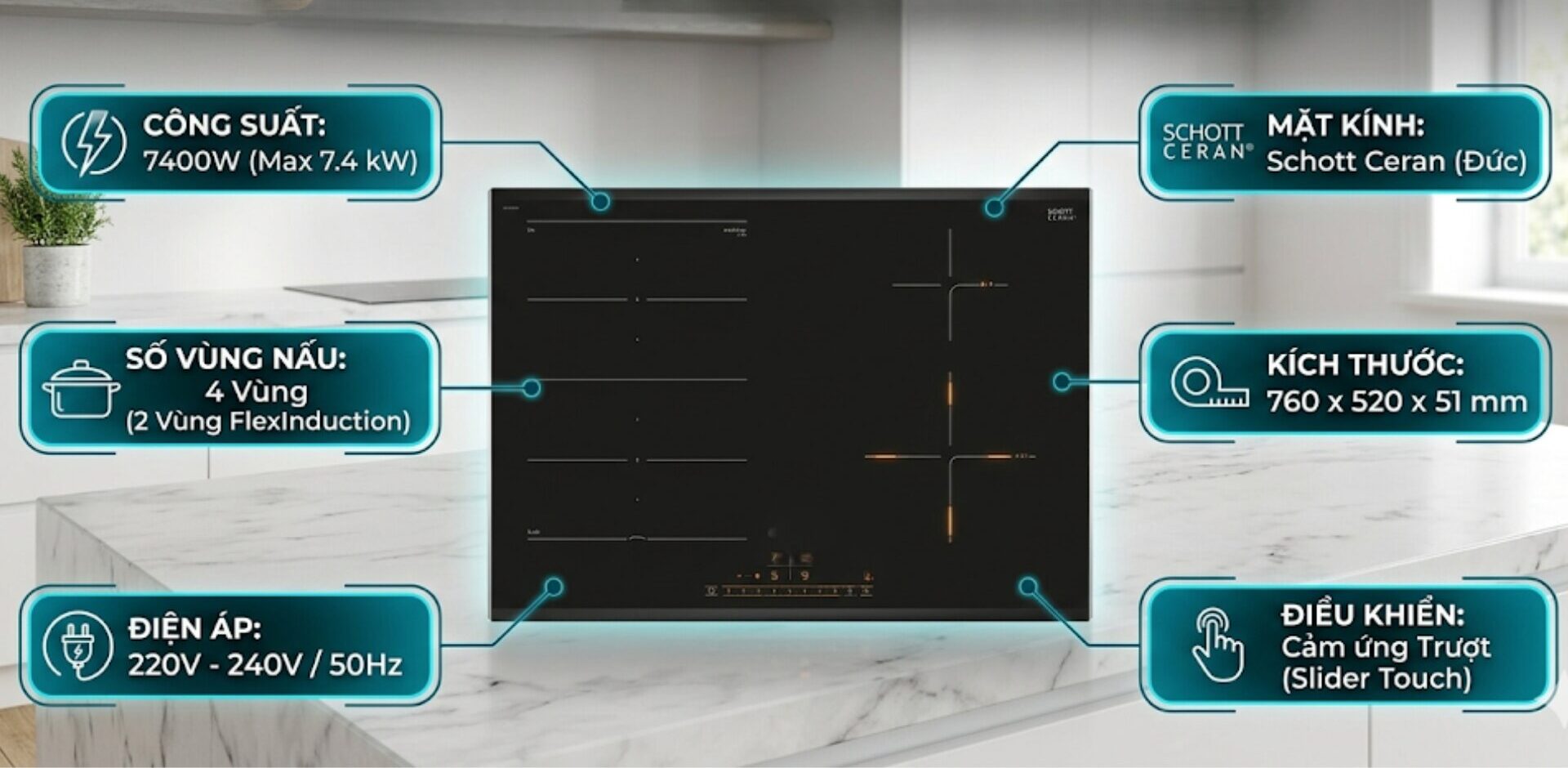
Many families today still wonder whether induction cooktops consume a lot of electricity, especially when looking at the power levels of two cooking zones reaching up to 4000W – 7000W. In fact, despite having a relatively high rated power, induction cooktops are currently the most energy-efficient cooking devices. Let’s analyze the technical specifications and modern technology with Köcher to get the most accurate view of monthly electricity costs.
Do induction cooktops consume a lot of electricity?
Induction cooktops do not consume electricity as we often assume; they are actually the most energy-efficient cooking devices available today. The reason lies in their extremely high thermal efficiency, often exceeding 95%. In contrast, gas stoves only achieve about 40 – 50% efficiency, while infrared cooktops reach about 60%. With this efficiency, the heat is concentrated almost entirely to cook the food, minimizing heat loss to the surrounding environment.
Moreover, although induction cooktops have high power (usually from 2000W – 4000W), the cooking time is significantly reduced, resulting in a total electricity consumption of only about 20 – 70 kWh per month. In standby mode, the cooktop consumes a very small amount of electricity, about 0.72kWh if plugged in continuously 24/7 for 30 days. Therefore, the question of whether induction cooktops consume a lot of electricity is no longer a major concern for users wanting to protect the cooktop components from continuous plugging and unplugging.
When comparing performance and operating mechanisms, many people often ask which consumes more electricity: induction cooktops or electric cooktops to consider before deciding to change their cooking habits to modern devices.
Comparison of electricity consumption of induction cooktops with infrared cooktops and other electrical devices
Thanks to their extremely high efficiency and maximum cooking time reduction, the total cost of induction cooktops is usually significantly lower than that of conventional heating devices, while also providing safety during use. Below is a quick comparison table of the electricity consumption of induction cooktops compared to other electrical devices in one month:
| Criteria | Thermal Efficiency | Estimated Electricity Consumption (1 month) | Operating Mechanism |
| Induction Cooktop | ~ 95% | 20 – 70 kWh | Variable magnetic field, directly heating the bottom of the pot |
| Infrared Cooktop | 60 – 70% | 130 – 160 kWh | Radiant heat heats the glass surface and then transfers to the pot |
| Electric Kettle | ~ 85% | 15 – 20 kWh | Heating element directly heats the water |
| Electric Pot | 70 – 75% | 40 – 60 kWh | Heating plate directly heats the bottom of the pot |
| Microwave | ~ 70% | 10 – 15 kWh | Microwaves vibrate water molecules in food |
| Air Fryer | ~ 65% | 25 – 40 kWh | Heating wire combined with a convection fan |
Why do induction cooktops not consume much electricity?
To understand why a high-power device saves electricity, we need to delve into the operating principles and integrated technologies within the circuit board. Additionally, in some areas with unstable electricity infrastructure, many people also wonder whether weak electricity can be used with induction cooktops and whether it affects electricity consumption.
High efficiency thanks to the principle of direct heat transfer to the bottom of the pot – no heat loss
Induction cooktops operate based on the principle of eddy currents. When current flows through the induction coil, it generates a magnetic field that directly heats the bottom of the pot instead of the glass surface. Therefore, heat is not lost to the outside like gas or infrared cooktops. The actual efficiency of induction cooktops can reach up to 95%, meaning that almost all of the electricity consumed is converted into heat to cook food.
Cooking time is reduced by half compared to gas and infrared cooktops
Thanks to the principle of direct heat transfer to the bottom of the pot, the cooking time of induction cooktops is only about 50% – 60% compared to gas and infrared cooktops. For example, to boil 2 liters of water, an induction cooktop only takes about 4 minutes, while a gas stove requires 8 – 10 minutes, helping to shorten the time spent cooking.
Integrated cooking features suitable for each dish
Induction cooktops integrate a variety of preset cooking programs that allow users to customize the temperature range precisely for each stir-fry, stew, or braise. Choosing the right cooking mode helps the device maintain an adequate heat level, eliminating unnecessary electricity waste.
Includes energy-saving features like Inverter/Eco
The Inverter feature on induction cooktops works by continuously adjusting the frequency and power of the current, rather than switching on and off like traditional cooktops. This allows the cooktop to maintain a stable temperature, preventing boiling over or burning food. This mechanism helps save electricity, cook more accurately, and reduce wear on components.
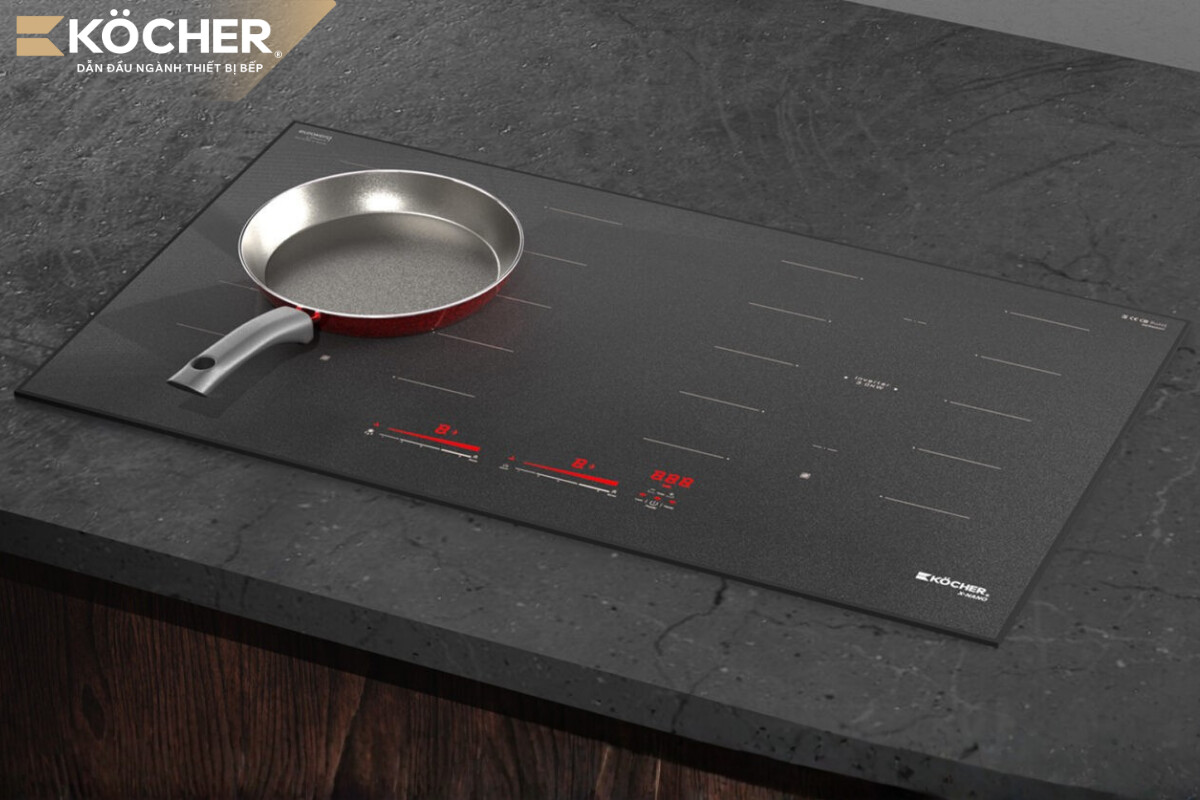
7 tips to save electricity when using induction cooktops
Here are 7 tips for using induction cooktops correctly to help your family optimize your monthly electricity bill:
Turn off the cooktop when food is about 95% cooked
You should turn off the cooktop 2 – 3 minutes before the food is fully cooked; the residual heat in the pot will continue to cook the food without consuming additional electricity.
Prepare ingredients first, then turn on the cooktop
Induction cooktops heat up instantly as soon as they receive a command from the control panel, so turning on the cooktop before finishing food preparation will waste electricity in unnecessary standby mode. You should have all ingredients ready and cook dishes consecutively to maximize the accumulated heat on the cooking zone.

Use flat-bottomed ferromagnetic pots with high stainless steel content and even distribution
The magnetic induction efficiency completely depends on the density of the magnetic field lines passing through the bottom of the pot, so you should use a magnet to test the bottom of the pot to determine its quality: The stronger the magnet sticks, the higher the ferromagnetic content, helping the cooktop heat up quickly and save electricity.
Additionally, check the flatness by placing the pot on a flat surface and gently rotating it: If the pot wobbles or is dented in the middle, the contact area will decrease, forcing the cooktop to increase the current to compensate for the heat loss.
Choose pot sizes compatible with the cooking zone
You can compare the diameter of the pot’s bottom with the cooking area marked on the glass surface: If the pot’s bottom is smaller than 2/3 of the cooking zone area, part of the magnetic field from the induction coil will not be absorbed and will be dispersed into the environment. Choosing a pot of appropriate size helps the Pot Detect feature (automatic pot size detection) work optimally, focusing energy precisely on the bottom of the pot without wasting electricity.
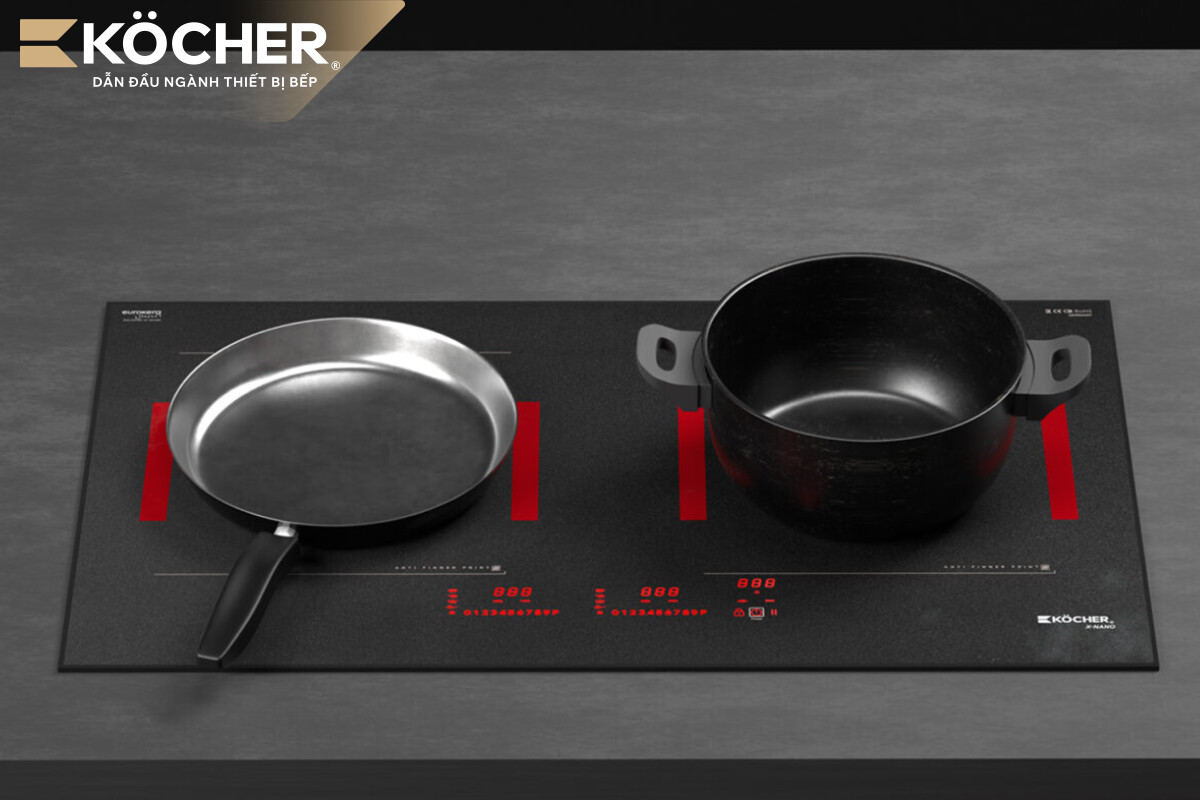 Choose the right pot size for the Pot Detect feature to work optimally.
Cover the pot to prevent heat loss
During cooking, covering the pot helps retain heat and pressure inside, preventing energy loss through steam. If the pot is not covered, the cooktop must operate at a higher intensity to compensate for the heat lost to the air, resulting in more electricity consumption.
Only use Booster when necessary
The Booster mode is activated through the button marked (B) or (P) on the control panel to push the current intensity to the maximum level for a short time (usually limited to 10 minutes). This mode should only be used to boil large amounts of water or handle stir-fried dishes that require immediate high heat. As soon as the water reaches boiling point, proactively reduce to a medium heat level (level 5 – 7) to maintain a stable temperature, protect components, and save electricity.
Prioritize cooktops with Inverter/Eco technology
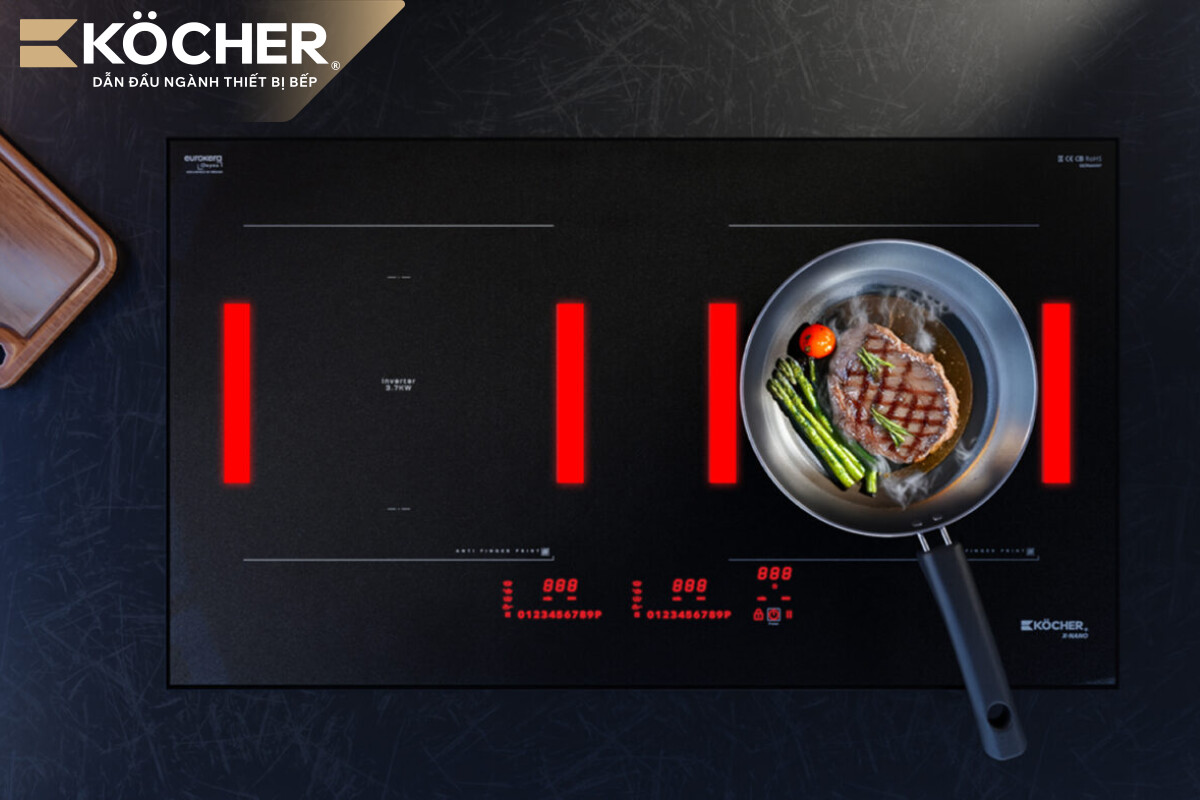
Inverter technology operates based on the ability to convert the current to adjust power according to actual needs, eliminating the continuous on-off mechanism of the power circuit that causes energy waste. As a result, the device can save 20% to 35% of total electricity consumption compared to traditional cooktops. You can refer to the article on How to save electricity when using Köcher induction cooktops to understand the steps to set the optimal Inverter mode for your device.
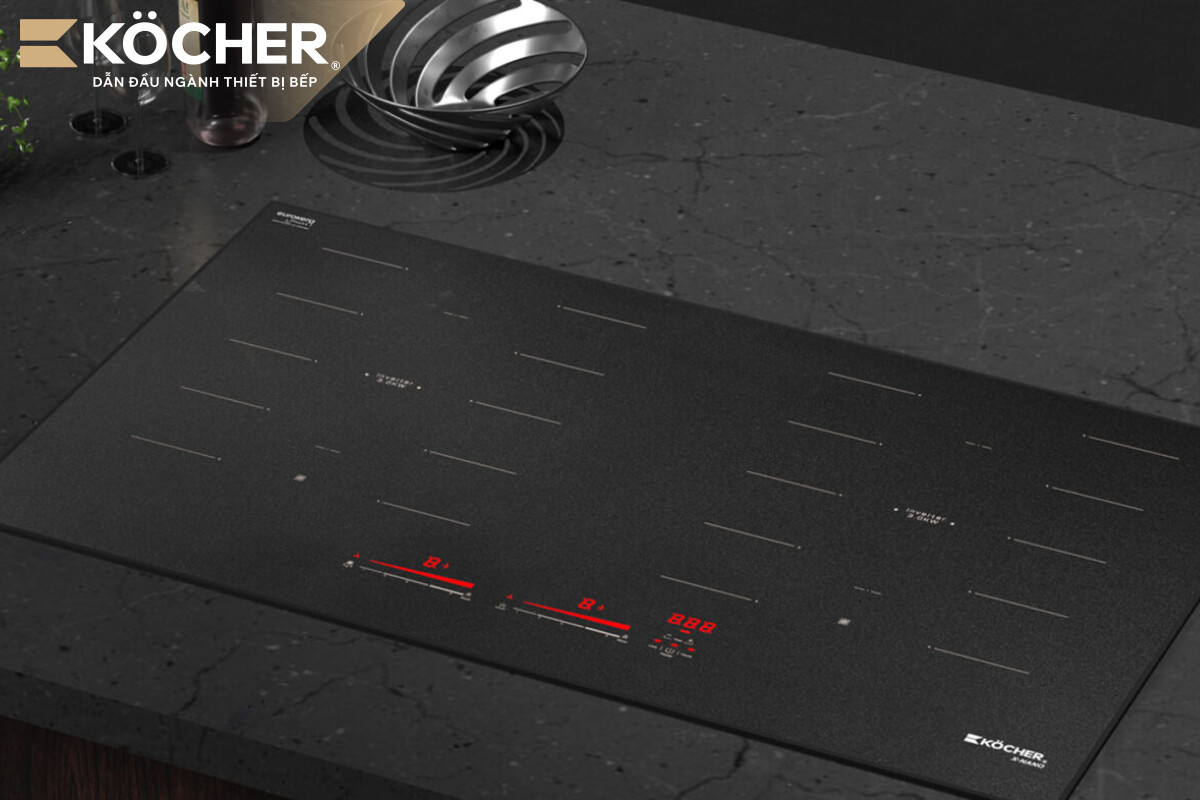 Köcher induction cooktops with modern Inverter technology ensure stable operation and energy savings.
Hopefully, the above article has helped you answer the question whether induction cooktops consume a lot of electricity and gain more knowledge to choose the right device. Using induction cooktops correctly not only helps optimize monthly electricity costs but also ensures the durability of the device.
With superior X-Nano scratch-resistant glass technology and E.G.O components made in Germany, Köcher is proud to offer durable and high-class cooking solutions for your family.
|
Köcher induction cooktops pioneer German technology – For detailed product information, please contact:
|