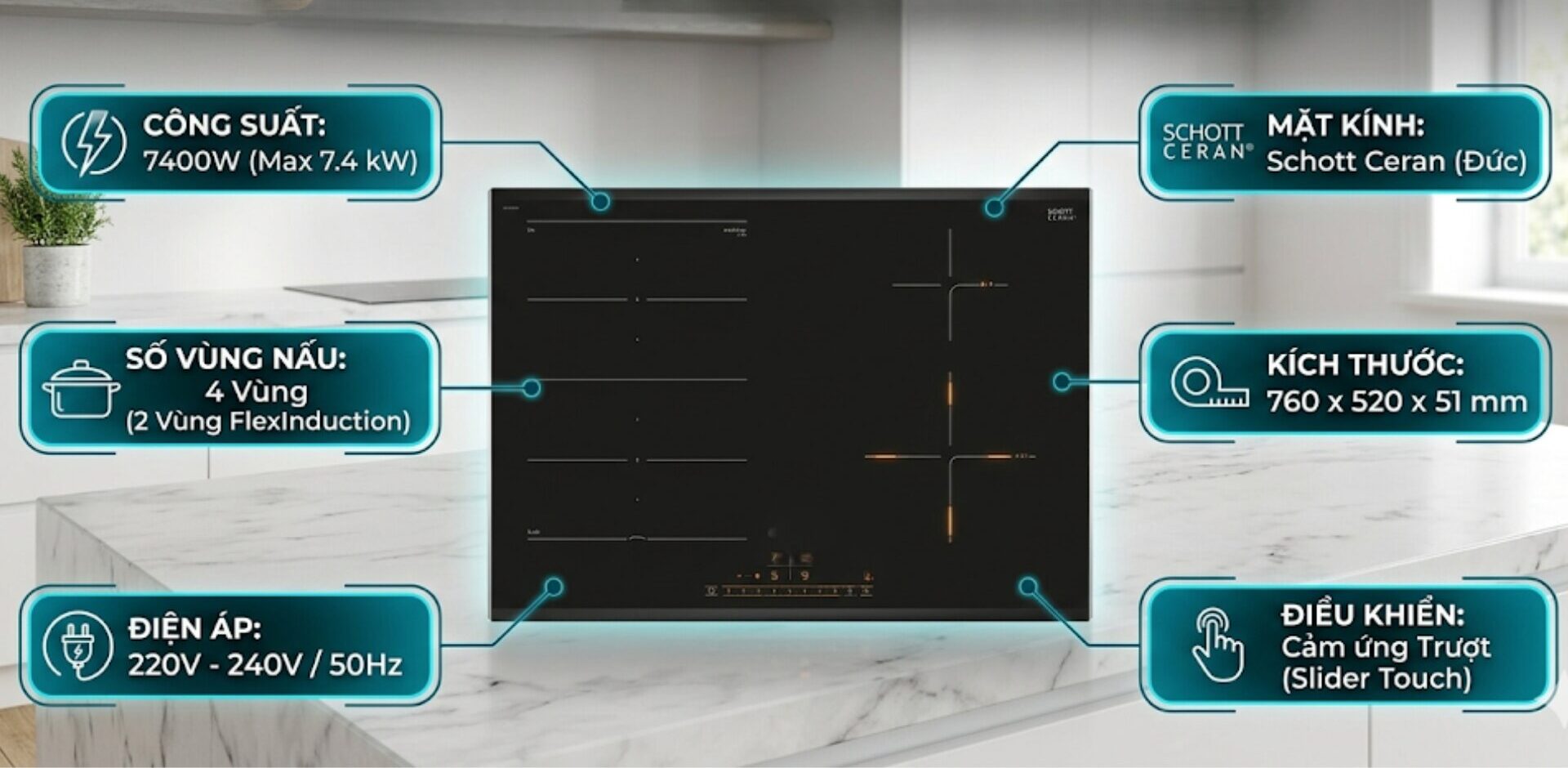
Pressure cookers can release steam when they just heat up, causing steam to escape, and even making noise from this evaporation process. This affects cooking time, food quality, consumes electricity, and can even pose a danger, causing burns to users if the steam escapes too forcefully.
If you are experiencing issues with a mechanical pressure cooker leaking steam or using an electric pressure cooker that is leaking steam. Below is the quickest way for you to “diagnose” and “treat” your pressure cooker right at home before you have to take it for repairs.
Causes of pressure cooker steam leakage and how to handle it
1. Mechanical pressure cooker leaking steam due to pot seal
The pot seal is a rubber gasket attached under the lid of the pressure cooker that prevents steam from escaping or leaking. After each use, it is crucial to clean the lid and rubber gasket. Dirt and food residue can damage the rubber seal of your pressure cooker and cause steam to leak during cooking.
The most common cause of steam leakage from the pressure cooker is this rubber gasket. Steam leakage can be dangerous, as the hot steam escaping from the pressure cooker can severely burn your body.
Therefore, if you notice that your mechanical pressure cooker is leaking steam while cooking, the first thing to do is quickly turn off the stove. If it is an electric pressure cooker leaking steam, the best way to handle it is to disconnect the heat source and release the pressure valve.
After that, you should let the pot cool down, remove the food from the pot, and check the rubber gasket to see if it is damaged or broken due to age. Replace it with a new rubber gasket. If the rubber gasket is dirty, food or dirt stuck on the lid or pot wall may prevent the lid from sealing properly. Clean it thoroughly and reassemble it tightly, then try cooking again to see if it leaks steam again.
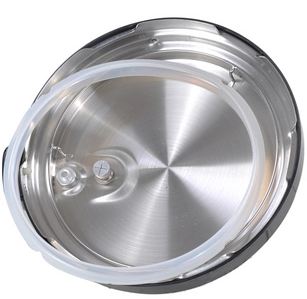
Another reason for the pressure cooker leaking steam, with hot steam escaping around the pot lid, is that the rubber gasket has not been installed correctly or is misaligned. They usually have two sides that fit the grooves of the pot lid. Check to see if your rubber gasket is installed upside down.
If the cause of your pressure cooker leaking steam is not due to the rubber gasket, check other components under the lid of the pressure cooker. It is possible that the lid rim is damaged, dented, or deformed due to poor material quality, preventing it from sealing tightly with the pot. This causes steam to leak out.
Induction pressure cookers made from materials like aluminum can easily become dented or warped if subjected to strong impacts. Even a slight bend can lead to steam escaping, affecting other components of the pot.
Therefore, if you are using an aluminum pressure cooker, be careful when cleaning and storing it to avoid scratching or denting.
2. Electric pressure cooker leaking steam, pressure release valve is loose
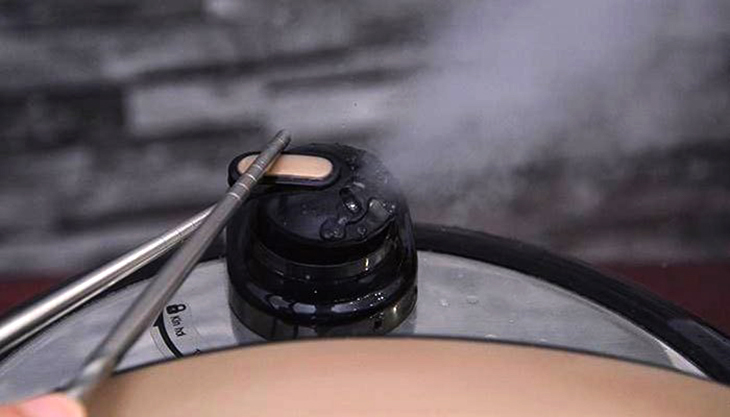
A loose pressure release valve may be due to purchasing low-quality products, and the valve malfunctioned right after purchase. The longer you cook, the more steam is released from the valve, and the louder it becomes. If the valve is old and increasingly leaks steam, the best solution is to replace it with a new pressure valve for the pot.
If you notice excessive steam escaping, you can adjust the valve or adjust the temperature, lowering the heat to reduce steam release from the valve.
To prevent the valve from malfunctioning, wearing out, or becoming loose, you should regularly clean it thoroughly, avoiding clogging the pressure valve with food or dirt after each use. Absolutely do not attempt to disassemble the pressure valve for repairs or tamper with the assembly of the pressure valve. If done incorrectly, the consequences can be severe.
3. Pressure cooker leaking steam from the handle
Symptoms: Steam escaping from the handle
Some mechanical pressure cookers have detachable handles that can be removed and installed for storage. Most of these handles are made from heat-resistant materials and are quite sturdy so you can lift the pot even when it is hot.
Some pressure cookers have pressure release valves installed directly in the handle, and sometimes this pressure valve will release steam to adjust the pressure. Check if your device has a pressure valve designed this way. If so, this is not an issue you need to worry about.
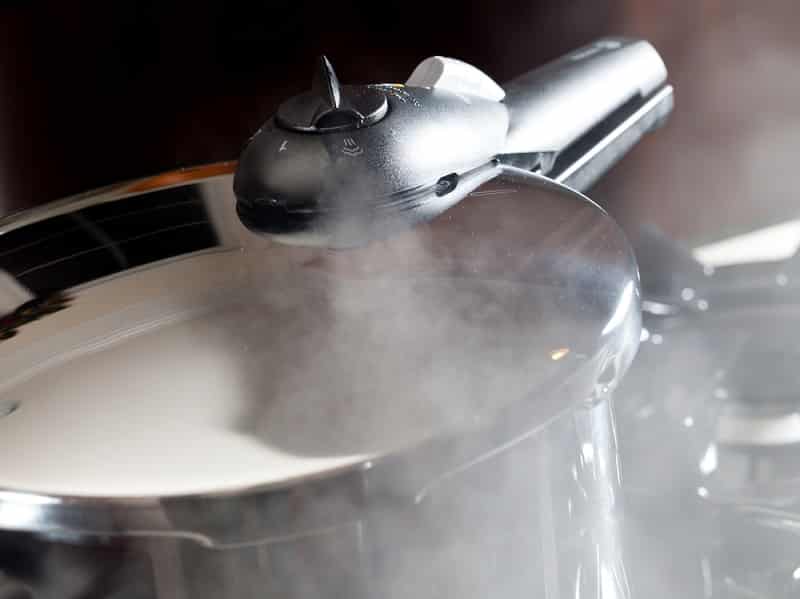
However, if you notice steam escaping from the handle area, causing the handle to become hot and wet due to steam, then the pressure cooker is leaking steam and it is very dangerous to touch the handle. It could cause burns. First, turn off the stove and let your pressure cooker cool down. Then check if your handle is loose or not installed correctly. You must always ensure that the handle is securely and correctly assembled before turning on the stove.
Now you know why the pressure cooker is leaking steam and the best ways to fix it, right? Above are solutions for you to temporarily handle the situation at home before rushing to take them for repairs. I hope that these tips will help you manage the situation best if your mechanical pressure cooker is leaking steam.
A high-quality imported German induction cooker will help you cook deliciously, safely, and save energy. But do you know which German induction cookers are good, and whether the cooker you purchased is an imported German induction cooker? Check out the experience of buying imported induction cookers from Germany below to gain more tips and wisdom in choosing high-quality German induction cookers! See information about Imported German induction cookers.