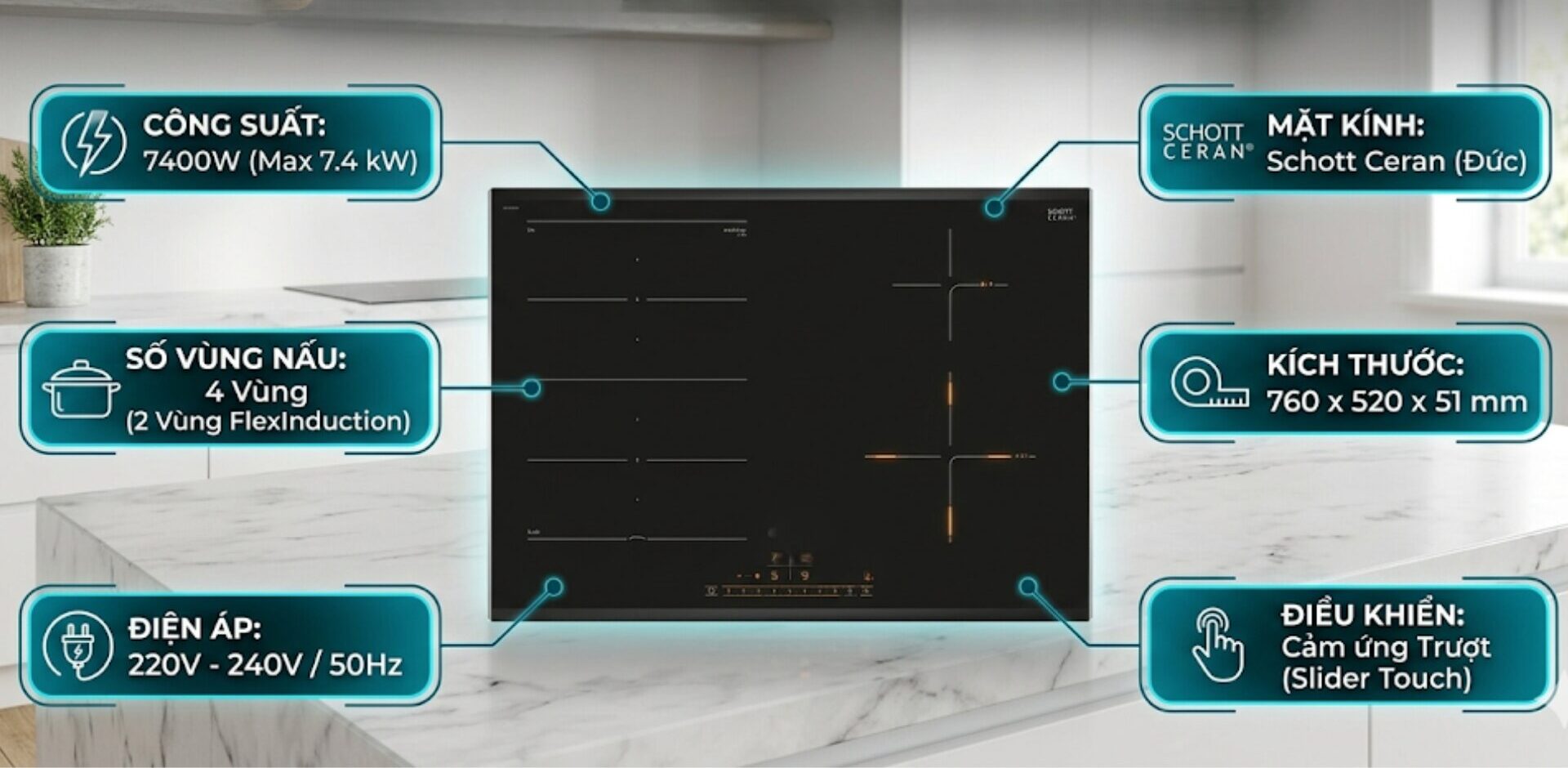
Is the induction cooker not recognizing the pot interrupting your cooking process? To answer all the questions related to the issue of induction cookers sometimes not recognizing pots, not heating pots. In some cases, there is even a warning that the induction cooker does not recognize the pot with a clicking sound.
Don’t rush to blame the cooker; check the causes we have compiled below to have a quick, accurate solution and effectively fix the induction cooker not recognizing the pot to avoid wasting money.
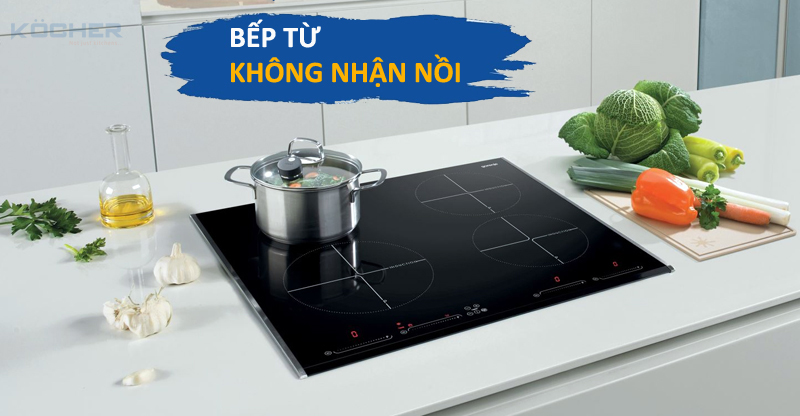
Causes and how to fix induction cooker not recognizing pot
Induction cookers are very easy to use; however, they require certain conditions such as a suitable power connection and the correct cooking utensils. Although many women have complied and purchased a high-quality induction pot set for this modern cooker, there are still many instances of the induction cooker not recognizing the pot.
First, let’s look at the causes that make the induction cooker not recognize the pot.
1. The pot’s bottom does not contain magnetic material
Are you sure that the pot set you are using is the type with a magnetic bottom? Pots with ceramic bottoms, glass bottoms, aluminum, etc., cannot be used on induction cookers. The pots suitable for induction cookers are usually made from cast iron or stainless steel. Before taking the induction cooker for repair, please check the pot set you are using first!
However, many women may mistakenly believe that: As long as it is a stainless steel pot, it will definitely work on the induction cooker. But that is not the case.
Pots used for induction cookers are marked with a spring symbol on the bottom or have the word “induction” printed on them. If you are careful and want to ensure that the pot you are using is suitable for induction cooking, try using a magnet to check. If the magnet sticks tightly to the bottom of the pot, it means the pot is suitable for the induction cooker. Otherwise, it is not.
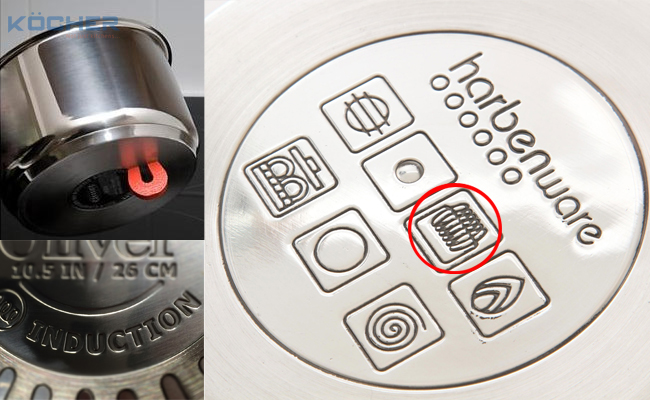
Stainless steel pots used for induction cookers are made from 304 stainless steel, which is a standard, high-quality material proven to be suitable for induction cooking, ensuring safety and especially helping to cook quickly and save energy. Fixing the induction cooker not recognizing the pot due to this reason is extremely simple. You just need to change to another pot with a magnetic bottom. Or if your pot is of the type with a non-magnetic bottom, you can use thermal transfer plates for induction cooking.
2. Induction cooker not recognizing small pots – pot size too small
An equally important factor when choosing a pot set for the induction cooker is the size.
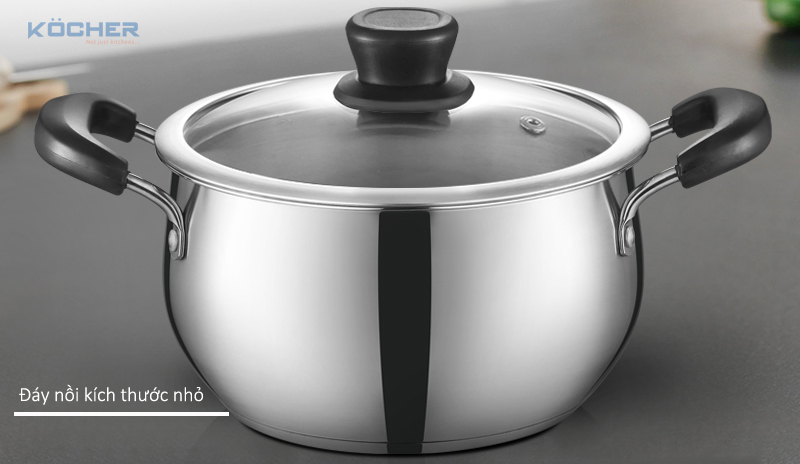
You may already know this, but when shopping, you might not pay attention to the fact that the diameter of the pot’s mouth is always larger than the bottom of the pot. However, due to shopping habits, consumers often only care about the mouth of the pot and mistakenly buy a pot with a fitting mouth but a too small bottom.
Each type of induction cooker specifies the diameter of the cooking zone corresponding to the diameter of the pot’s bottom. Typically, induction cookers accept pot bottom sizes from 12cm to 30cm. However, not all cookers can use pots with diameters smaller than 12cm.
For example, if you use a mini-sized pot with a bottom smaller than 12cm, the cooker will immediately report an error. Conversely, if you use a chicken boiling pot for induction cooker or a pressure pot for induction cooker with a large bottom size that meets the standards, the magnetic field system of the cooker will easily recognize and operate stably. Therefore, if the magnetic contact area at the bottom does not meet the minimum standard of the cooking zone, the cooker’s sensor system will immediately issue a warning about the induction cooker not recognizing the small pot.
3. The pot is misaligned with the cooking zone
This cause may seem unlikely, but in reality, there have been cases where due to being too busy or in a hurry, women placed the pot misaligned with the cooking zone.
Misalignment can also occur when the pot is boiling, slightly shifting from the cooking zone, or during the process of flipping or stirring food. At this time, the temperature sensor of the induction cooker will automatically detect the cooking pot and activate the automatic shut-off function.
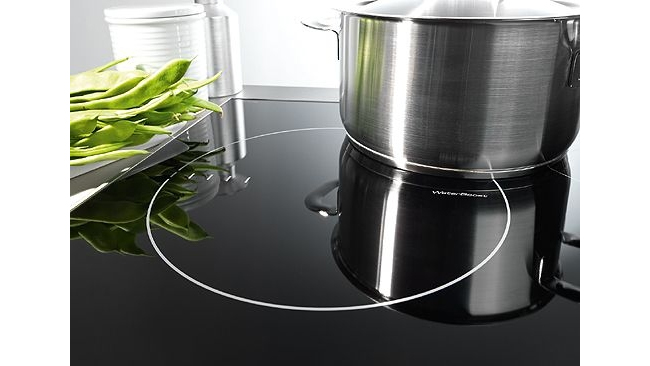
To fix the induction cooker not recognizing the pot when placed incorrectly, you just need to adjust the pot’s bottom to the center of the cooking zone so that it fits, and reactivate the functions to continue cooking.
4. The pot’s bottom is deformed or there are obstacles under the bottom
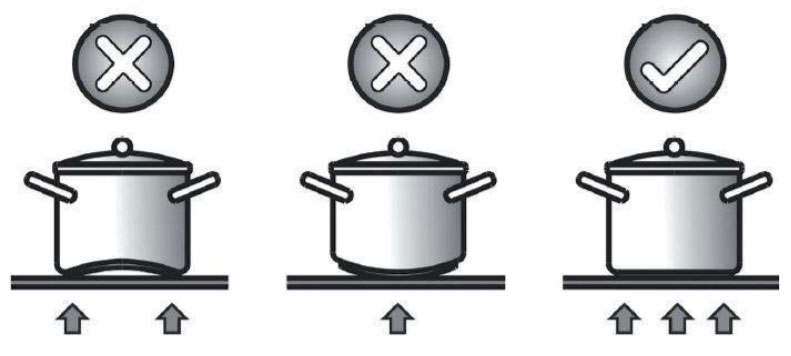
Another common error of induction cookers not recognizing pots is using pots with uneven bottoms, dented, warped, or uneven surfaces. Induction cookers do not operate if they do not make contact with the entire bottom of the pot.
For old pots, when used at high temperatures, the bottom of the pot often becomes deformed, causing interruptions in the cooking process. You may have previously cooked with that pot on the induction cooker, but suddenly today it encounters an error. Check to see if your pot’s bottom is in that condition.
If your pot has indeed become deformed and the induction cooker is not recognizing the pot with a clicking sound when cooking, with a noise inside the pot. Stop the cooking process and switch to another pot with a flat magnetic bottom.
5. Error due to the induction cooker malfunctioning the sensor or control panel
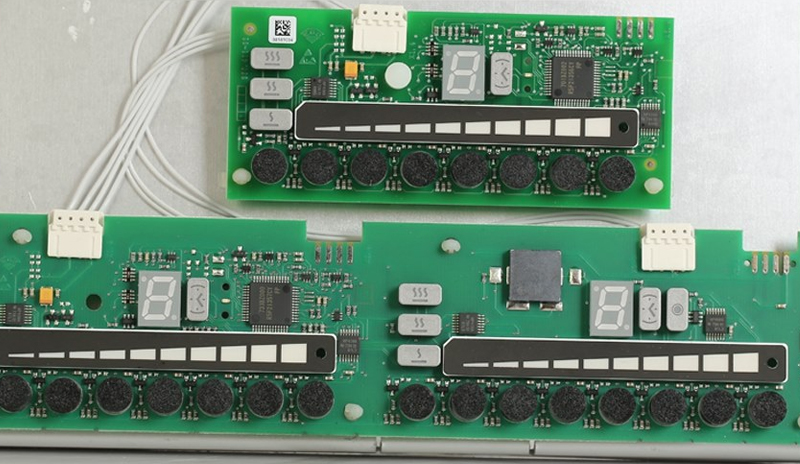
The only way to fix the induction cooker not recognizing the pot in this case is to replace or repair the sensor or IC of the cooker. You need to rely on induction cooker technical experts for this process; absolutely do not attempt to replace or repair it yourself, as it may worsen the cooker’s condition.
Above are the complete causes and the simplest ways to fix the induction cooker not recognizing the pot so that you can quickly resolve the issue and continue cooking. We hope that through this article, you will gain some practical tips for using induction cookers to become a more knowledgeable and effective user.
A high-quality imported German induction cooker will help you cook deliciously, safely, and energy-efficiently. But do you know which German induction cooker is good, and whether the cooker you bought is an imported German induction cooker? Köcher is proud to be a pioneer in Vietnam bringing German technology into induction cooker products. Check out the experience of buying imported induction cookers from Germany below to know tips and be wiser in choosing high-quality German induction cookers! See information about Imported German induction cookers.