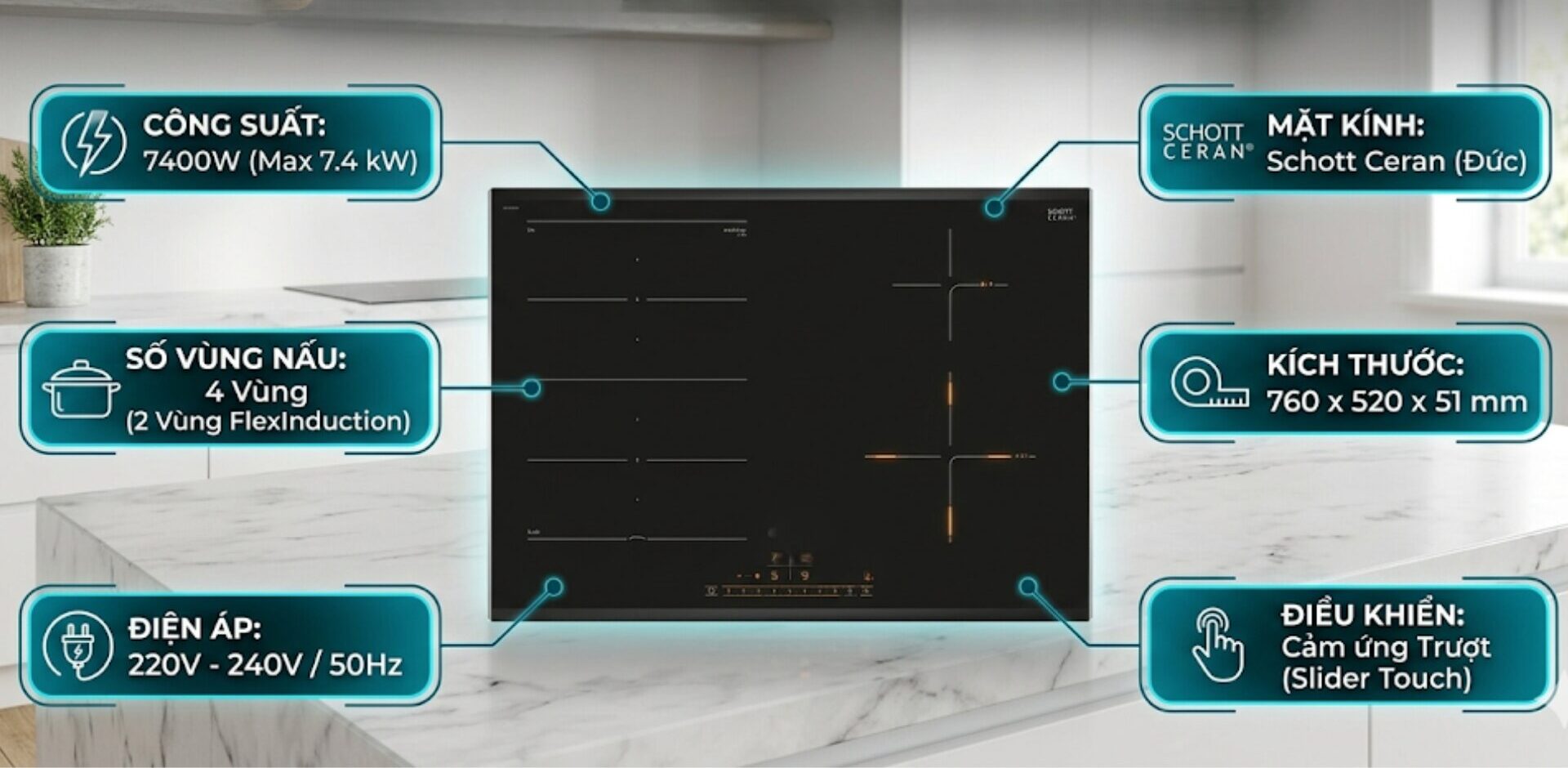
When switching from gas stoves to modern cooking appliances, users often wonder which electric stove is the most picky about pots. In fact, induction cookers are currently the most picky appliances due to the principle of indirect heat transfer through magnetic fields. In this article on the Köcher website, we will analyze in detail the operating mechanisms of each type of stove so that you can understand the technical nature, thereby making the most economical and suitable shopping choice for your family.
Which electric stove is picky about pots? Induction or infrared stove?
To know exactly which type of electric stove is picky about pots, we need to delve into the operating principles of each product line. The difference in the way heat is generated is the decisive factor for compatible cooking pots.
Induction stove: Very picky about pots
Induction stoves operate based on the principle of electromagnetic induction. Under the glass surface of the stove is a system of copper coils. When alternating current passes through the coil, it generates a fluctuating magnetic field on the stove surface. This magnetic field only interacts with materials that can conduct magnetism to create eddy currents (Foucault) right at the bottom of the pot, generating direct heat to cook food without transferring heat indirectly through the glass surface.
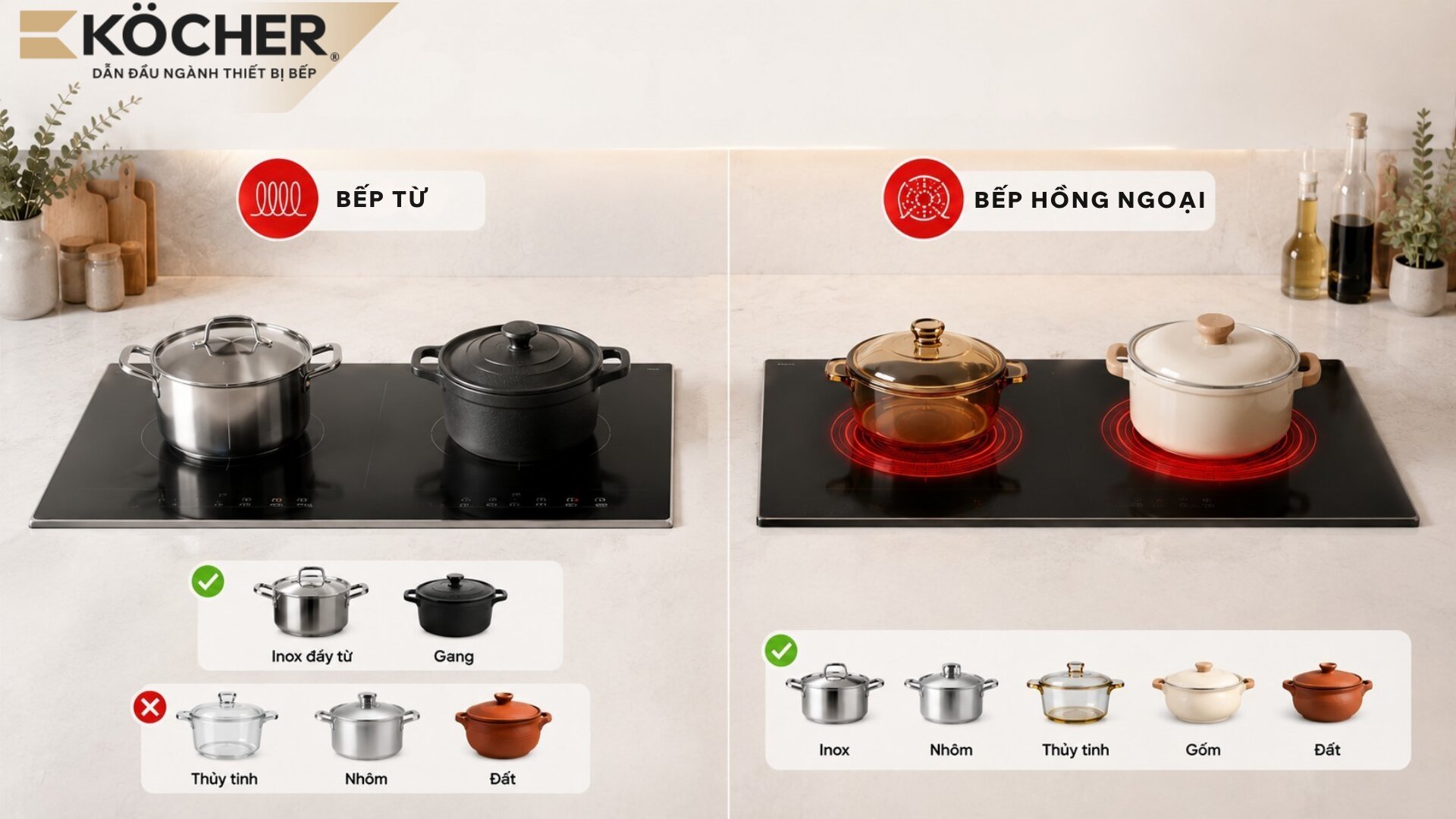
- Types of pots that can be used: Only pots with bottoms made from ferromagnetic materials (can be attracted by magnets) such as stainless steel 430, cast iron, enamel-coated steel, or high-end pots with multi-layer bottom structures (like 304 stainless steel integrated with an outer layer of ferromagnetic steel).
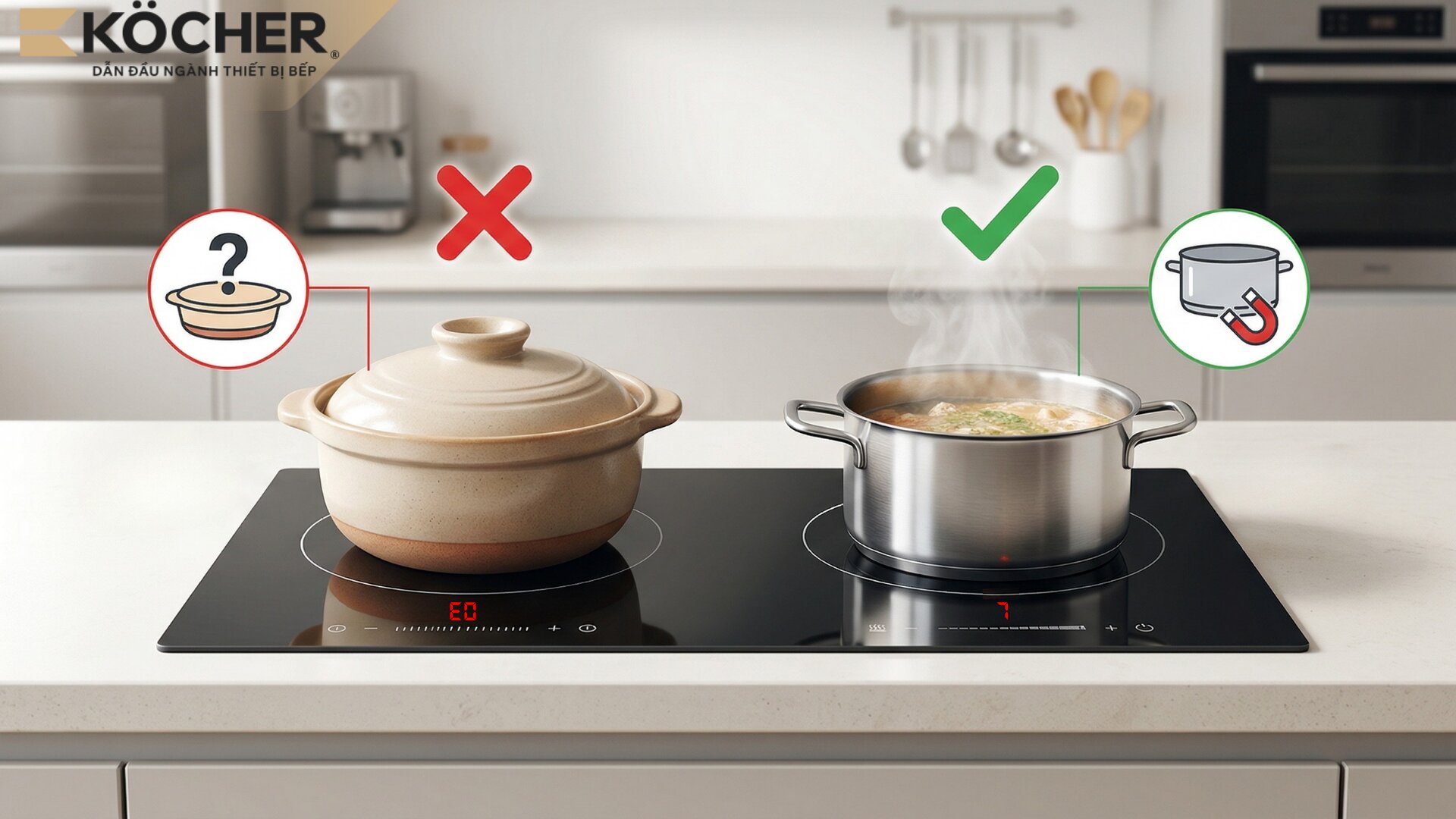
- Types of pots that CANNOT be used: Pots made of pure aluminum, copper, ceramic, glass, or non-ferromagnetic stainless steel (like solid 304 stainless steel without a magnetic bottom). When these types of pots are placed on an induction stove, the stove will report an error (usually error E0) and automatically stop operating.
- Quick identification method: You can check for the coiled spring symbol or the word “Induction” embossed on the bottom of the pot. The most practical way is to use a small magnet against the bottom of the pot; if the magnet sticks firmly, that pot can be used on the induction stove.
Infrared stove: Not picky about pots
Completely different from induction stoves, infrared stoves use a system of heating wires or specialized halogen bulbs to generate thermal radiation, directly heating the glass surface of the stove. The heat from the red-hot glass surface will directly transfer to the bottom of the pot through normal conduction and radiation mechanisms.
- Compatibility features: Infrared stoves are not picky about pots at all. You can use any type of pot available in your home: from aluminum pots, cast iron pots, stainless steel pots, heat-resistant glass pots to clay pots and ceramics. In fact, users can even place a grill directly on the infrared cooking surface to prepare grilled dishes.
- Quick identification method: When the stove is operating, the cooking zone of the infrared stove will emit bright red light and radiate a large amount of heat into the surrounding environment. The stove surface will still retain high temperatures for a relatively long time after the power is turned off.
 Infrared stoves are characterized by many closely arranged red heating circles[/caption>
Induction and infrared stove: Flexible use of different types of pots
To completely overcome the picky pot disadvantage of induction stoves while retaining the superior advantages of this cooking technology, manufacturers have developed a line of induction stoves combined with infrared.
- Operating features: This stove line integrates both induction cooking zones and independent infrared cooking zones on the same glass surface. As a result, users can flexibly use the induction cooking zone for quick cooking needs, boiling water daily with specialized pots; while using the infrared zone to braise fish in clay pots, cook soup in heat-resistant glass pots, or utilize high-quality aluminum pots available at home.
- Quick identification method: On the glass surface, the induction cooking zone is usually simply marked with a thin circle accompanied by a spring symbol or the word “Induction”. Meanwhile, the infrared cooking zone is often designed with many closely arranged concentric red circles.
Comparison: Should you buy an induction stove or an infrared stove?
If you prioritize quick cooking, energy savings, and safety during use, induction stoves are a more suitable choice thanks to their high efficiency of 90 – 95%, helping to cook quickly and save about 30 – 40% energy compared to infrared stoves. Meanwhile, infrared stoves have the advantage of not being picky about pots but consume more electricity and the stove surface remains hot for a long time, requiring caution to avoid burns during use.
Specifically:
| Comparison Criteria | Induction Stove | Infrared Stove |
|---|---|---|
| Efficiency & Speed | Achieves thermal efficiency of up to 90 – 95%. Boiling 1 liter of water takes only about 2 – 3 minutes |
Achieves thermal efficiency of about 60 – 70%. Boiling 1 liter of water takes longer, about 5 – 7 minutes |
| Energy Savings | Induction stoves help save about 30 – 40% of electricity consumption compared to infrared stoves for the same cooking cycle. | Consumes more electricity due to indirect heat transfer and longer cooking time. |
| Safety | Very safe. The glass surface around the cooking zone is only slightly warm due to receiving heat from the bottom of the pot. | The glass surface reaches high temperatures during operation, posing a risk of mild burns if accidentally touched. Users need to wait for the stove surface to cool completely before cleaning and tidying up. |
Optimal solution: Currently, the most popular and practical solution for many families transitioning from gas stoves is to own a hybrid stove (including one induction cooking zone and one infrared cooking zone).
Top electric stoves that are not picky about pots from the Köcher brand
If you are looking for a durable, safe European-standard electric stove solution to solve the picky pot problem for your family, Köcher’s hybrid electric stove lines are a worthy consideration. Below are 4 outstanding models of induction stoves combined with infrared from Köcher, using high-quality components from Germany and France:
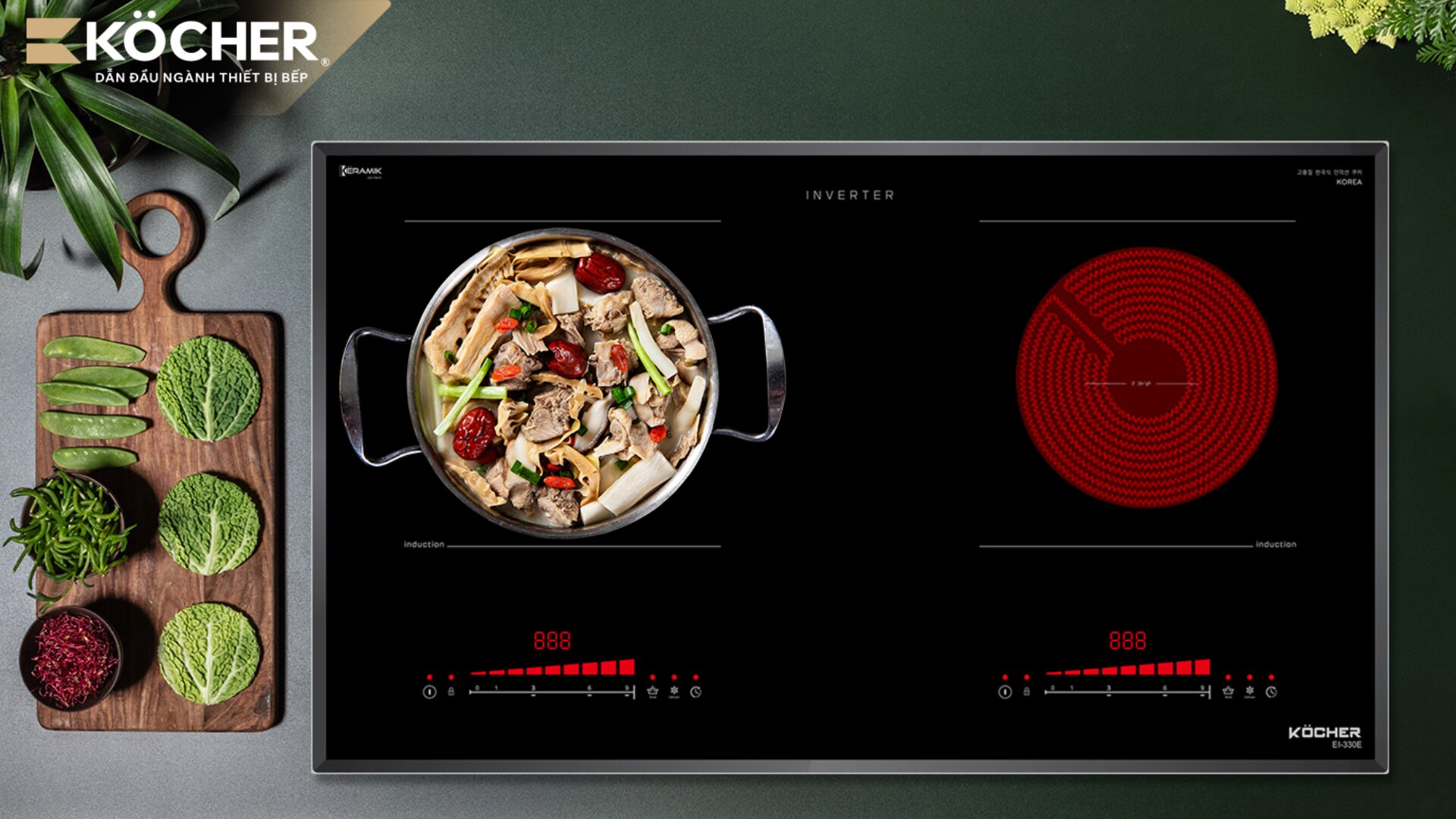
Köcher EI-330E Induction Stove
| Technical Specifications | Details |
|---|---|
| Power per zone | Left: 2000 W (Booster 2300 W) Right: 2000 W (Booster 2300 W) |
| Features | Inverter technology saves 30% energy, ECO mode, iQuick Boiling super fast cooking, direct food defrosting, automatic pot detection, overflow sensor, automatic shut-off when overheating |
| Cooking modes | 9 flexible power levels, independent timer for each zone, child safety lock |
| Glass & Circuit Board | Elegant beveled Keramik glass, aluminum frame; Standard Korean electronic components |
| Cooling Fan Design | Smart cooling system, stable operation helps protect the circuit board and power components |
| Retail Price | 15,100,000 VND |
| Warranty | 3 years |
Köcher EI-330E Induction Stove carries the breath of modern Korean design with soft beveled Keramik glass combined with a sophisticated aluminum frame, creating a graceful and high-end beauty for the family kitchen space.
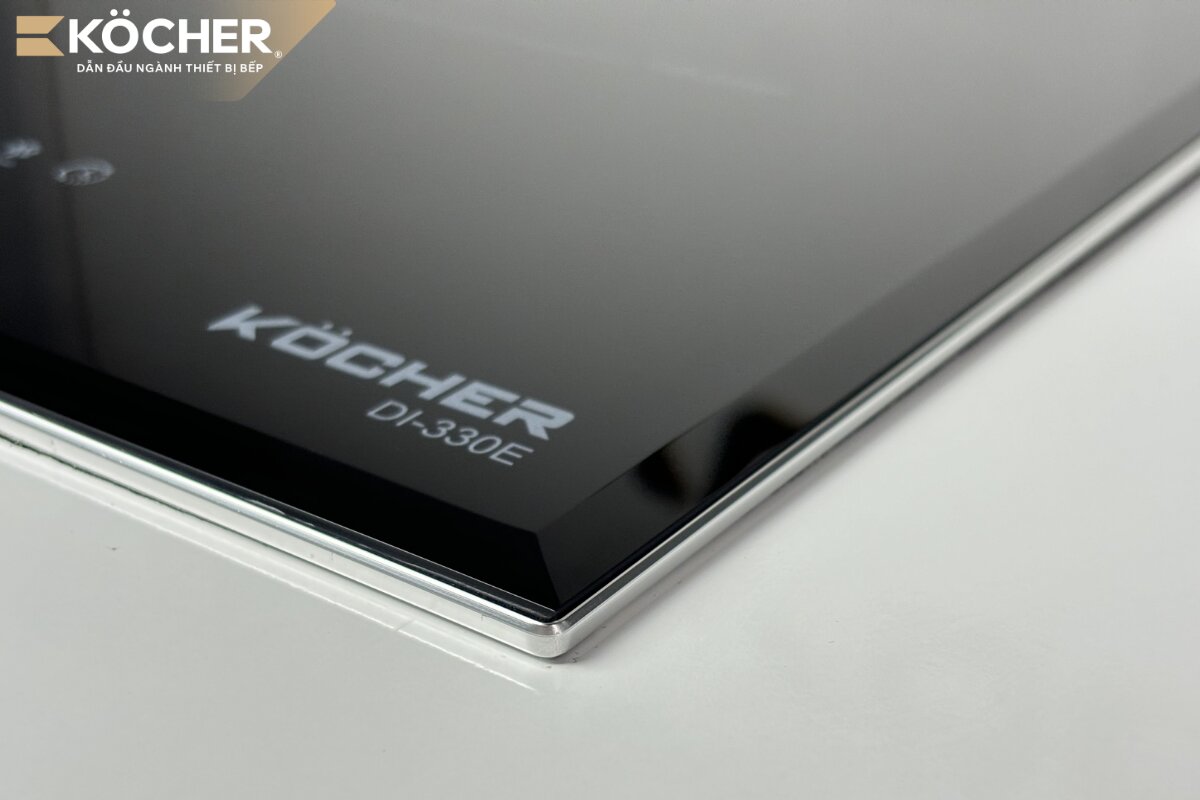 Köcher EI-330E Induction Stove
The device has two outstanding advantages: Inverter technology helps save 30% of energy consumption and the direct food defrosting mode, allowing for quick processing of frozen food without altering nutrients. With the flexible combination of induction and infrared cooking zones, this is the optimal solution for homemakers to utilize all available pots and pans while ensuring superior cooking efficiency.
Köcher EI-221 Induction Stove
| Technical Specifications | Details |
|---|---|
| Power per zone | Left: 1800 W Right: 1800 W (Booster 2000 W) |
| Features | Automatically detects pot size, warns of residual heat in the cooking zone, automatically turns off when forgotten or without a pot, automatically shuts off when the temperature is too high |
| Cooking modes | 9 flexible power levels, independent timer for each cooking zone, simmering mode |
| Circuit Board | Durable Trinno IGBT components |
| Cooling Fan Design | Standard cooling system, stable operation helps protect electronic components |
| Retail Price | 10,600,000 VND |
| Warranty | 3 years official warranty |
Köcher EI-221 Induction Stove is an imported product from Malaysia, featuring a sleek and modern design, suitable for minimalist kitchen spaces. The device boasts two outstanding advantages: Trinno IGBT components that handle loads well, ensuring the stove operates durably over time and a variety of features: simmering mode, automatic pot size detection, independent timer for each cooking zone, Booster acceleration, independent control of 9 levels.
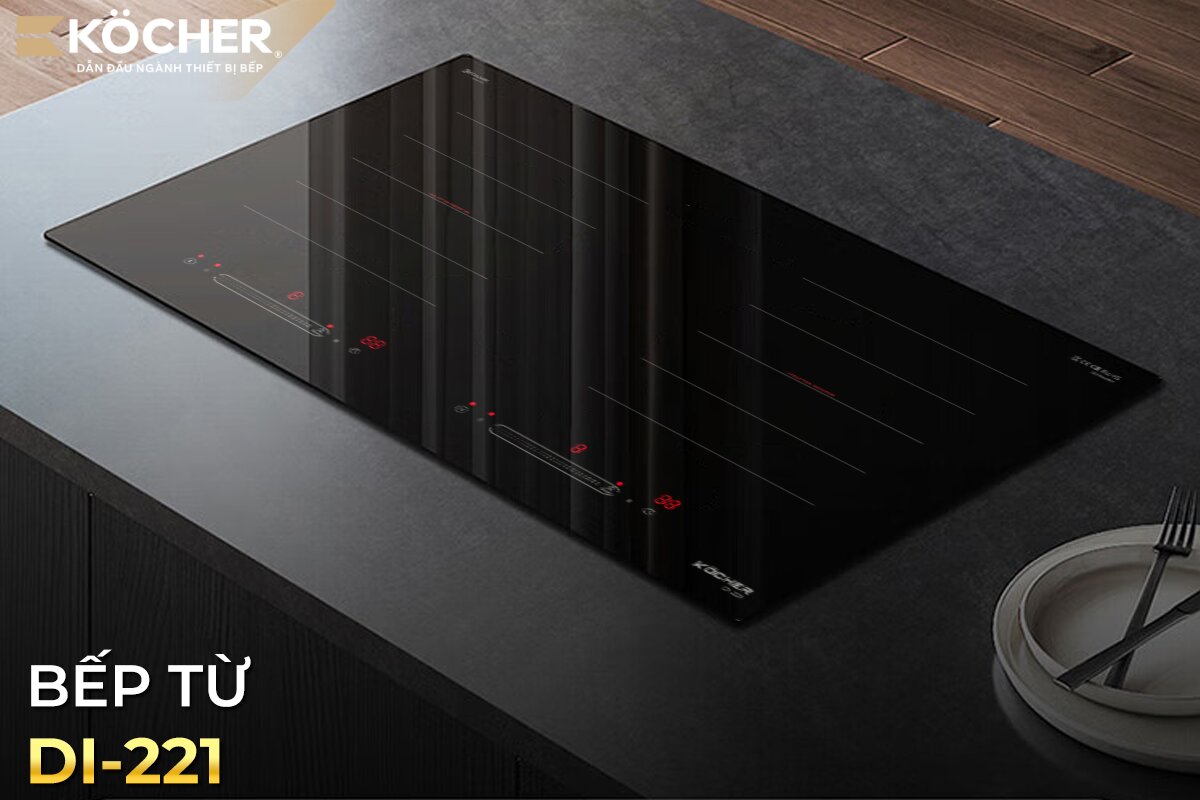 Köcher EI-221 Induction Stove
Köcher EI-633 Induction Stove
| Technical Specifications | Details |
|---|---|
| Power per zone | Left (Induction): 1800 W (Booster 2200 W) Right (Infrared): 1800 W |
| Features | Automatically detects induction cooking zone, overflow sensor, automatically shuts off when overheating or overloaded, child safety lock |
| Cooking modes | 9 flexible power levels, independent timer up to 99 minutes, simmering mode |
| Circuit Board | Siemens IGBT components (Germany) |
| Cooling Fan Design | Standard cooling system combined with thick aluminum heat sink helps protect power components |
| Retail Price | 9,990,000 VND |
| Warranty | 3 years official warranty |
Köcher EI-633 Induction Stove stands out with its sleek, modern design, using luxurious beveled Keramic glass to enhance the aesthetics of the kitchen space. The device has two outstanding advantages: the flexible combination of induction cooking zone and 2-ring infrared cooking zone allows the use of all types of pots and pans, along with a system of IGBT Siemens components from Germany ensuring the stove operates durably and stably. With the simmering mode at low temperatures, EI-633 helps family stews and braised dishes always cook tenderly without worrying about interrupted heat or burning.
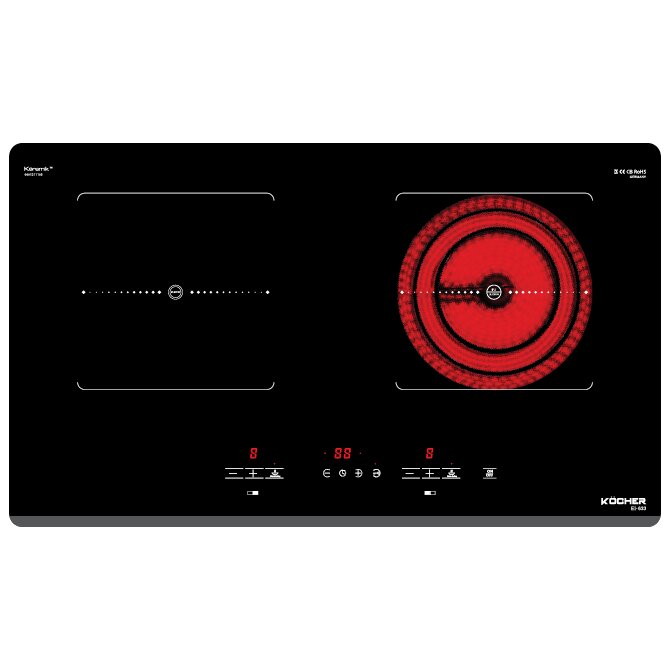 Köcher EI-633 Induction Stove
Köcher EI-355 Induction Stove
| Technical Specifications | Details |
|---|---|
| Power per zone | Left: 1800 W (Booster 2000 W) Middle: 1500 W Right: 1800 W (Booster 2000 W) |
| Features | ECO Inverter technology saves electricity, cooking zone automatically detects pots, iQuick Boiling super fast cooking, direct food defrosting, overflow sensor, automatic shut-off when overheating, child safety lock |
| Cooking modes | 9 flexible power levels, independent timer up to 99 minutes |
| Glass & Circuit Board | Beveled 4-edge Keramik glass, aluminum frame; Standard Korean electronic components |
| Cooling Fan Design | Smart cooling system helps cool components quickly, ensuring durable operating performance |
| Retail Price | 21,500,000 VND |
| Warranty | 3 years official warranty |
Köcher EI-355 Induction Stove carries the breath of modern Korean design with soft beveled Keramik glass combined with a luxurious aluminum frame, bringing a sense of elegance and class to the family kitchen space. The device has two outstanding advantages: ECO Inverter technology helps optimize energy consumption and the direct food defrosting mode, allowing for quick processing of frozen food without cooking edges or altering nutrients.
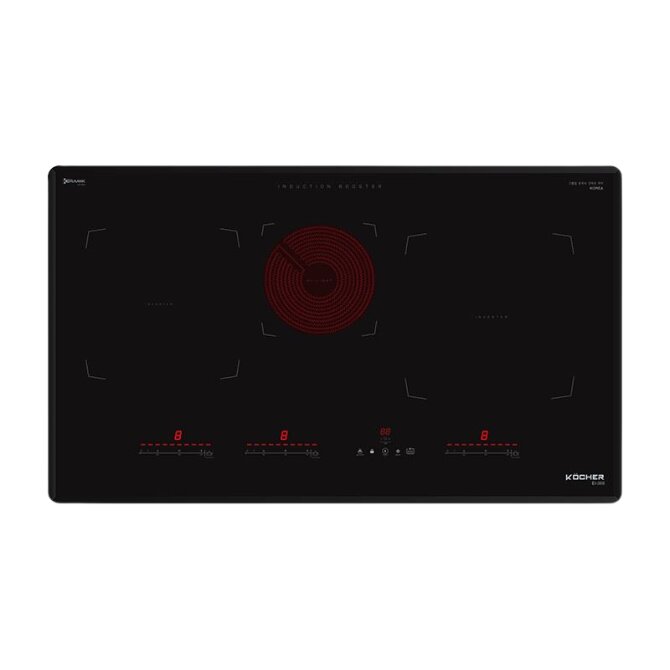 Köcher EI-355 Induction Stove
Understanding which electric stove is picky about pots helps you grasp the operating mechanisms of the stove, thereby purchasing the right cooking utensils. It is clear that induction stoves are products that are not picky about pots, which can be used with almost all types of flat-bottomed pots without needing to replace the separate cooking pot set.
If you need deeper advice on installation dimensions, safe electrical layout, or direct experience with the smart features on the Köcher hybrid induction stove line, please contact us immediately through the official information channels below.
|
Köcher Induction Stoves pioneer German technology – For detailed product information, please contact:
|