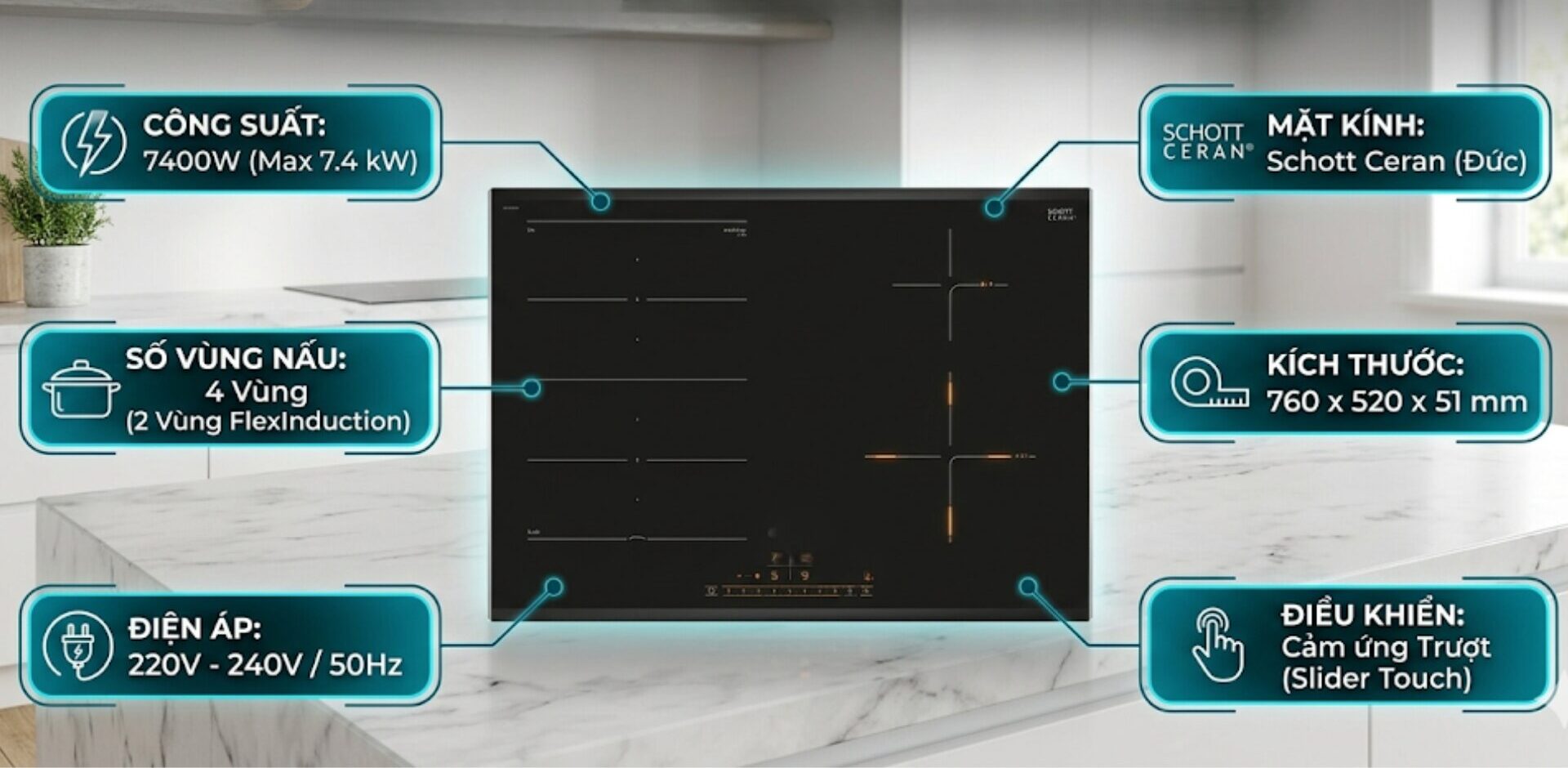
Induction hob with electric leakage is a situation that rarely occurs, but it poses a serious safety risk if not detected and addressed promptly. Induction hobs operate based on electromagnetic induction and have a circuit board and control panel completely separated from the metal casing by an insulating plastic layer, which does not conduct electricity directly to the cooking surface. Therefore, if the induction hob shows signs of electric leakage, this is a fault that needs immediate attention. The article below will analyze in detail the causes and provide step-by-step instructions for safe handling at home.
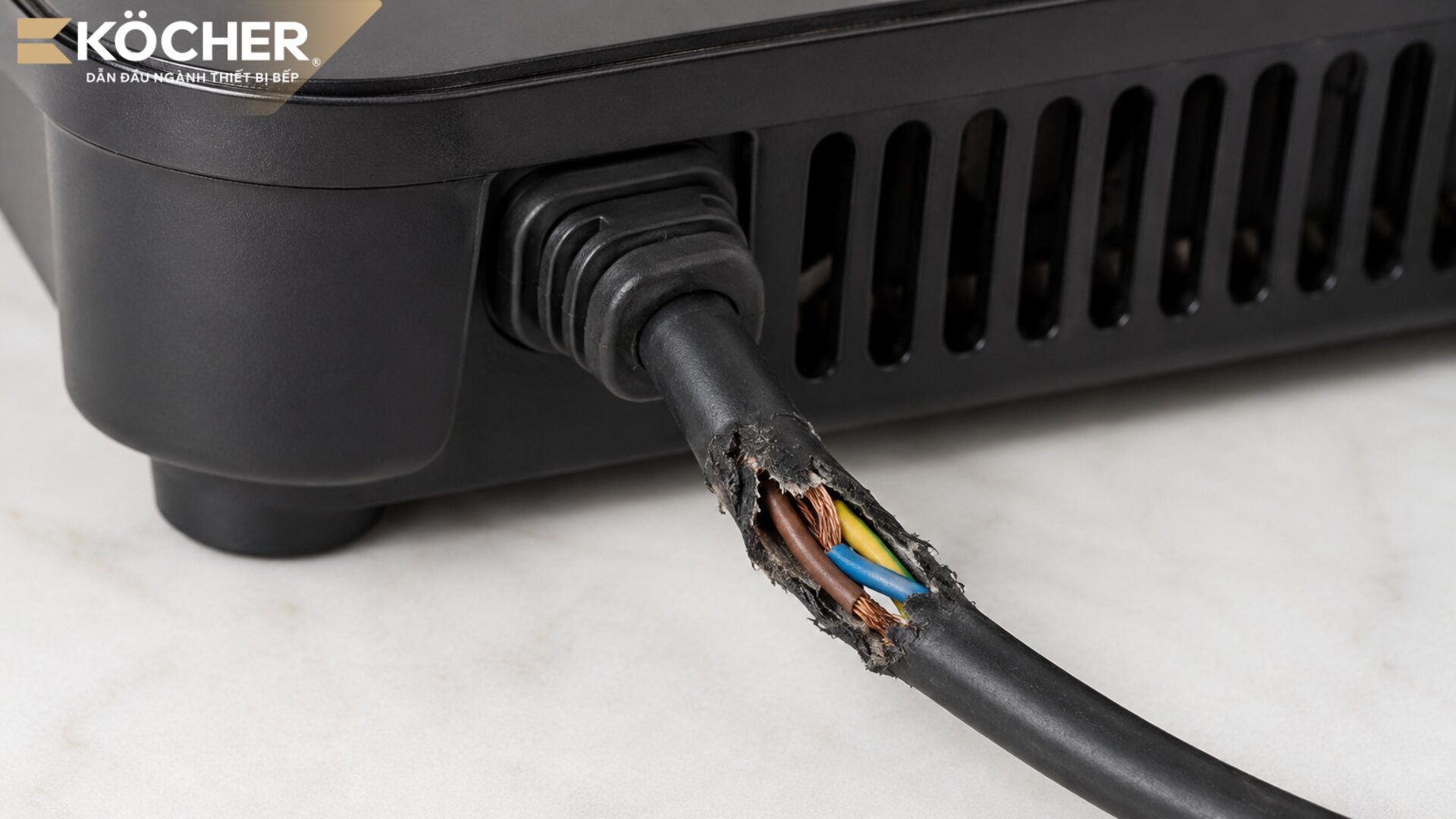
5 common causes of electric leakage in induction hobs
Identifying the correct cause will help you address the issue accurately, avoiding further damage to components or potential dangers later on.
Incorrect grounding or lack of grounding wire
- Signs: You feel a slight tingling in your hands when touching the body of the hob or the pot while cooking, even though the hob is still functioning normally and does not display any error codes.
- Cause: The grounding wire serves to drain excess leakage currents generated during operation. If the hob is plugged into a 2-pin socket without grounding, or if the grounding wire is broken or not properly connected, the currents generated during use will have no escape route, accumulating on the metal casing and causing a tingling sensation for the user.
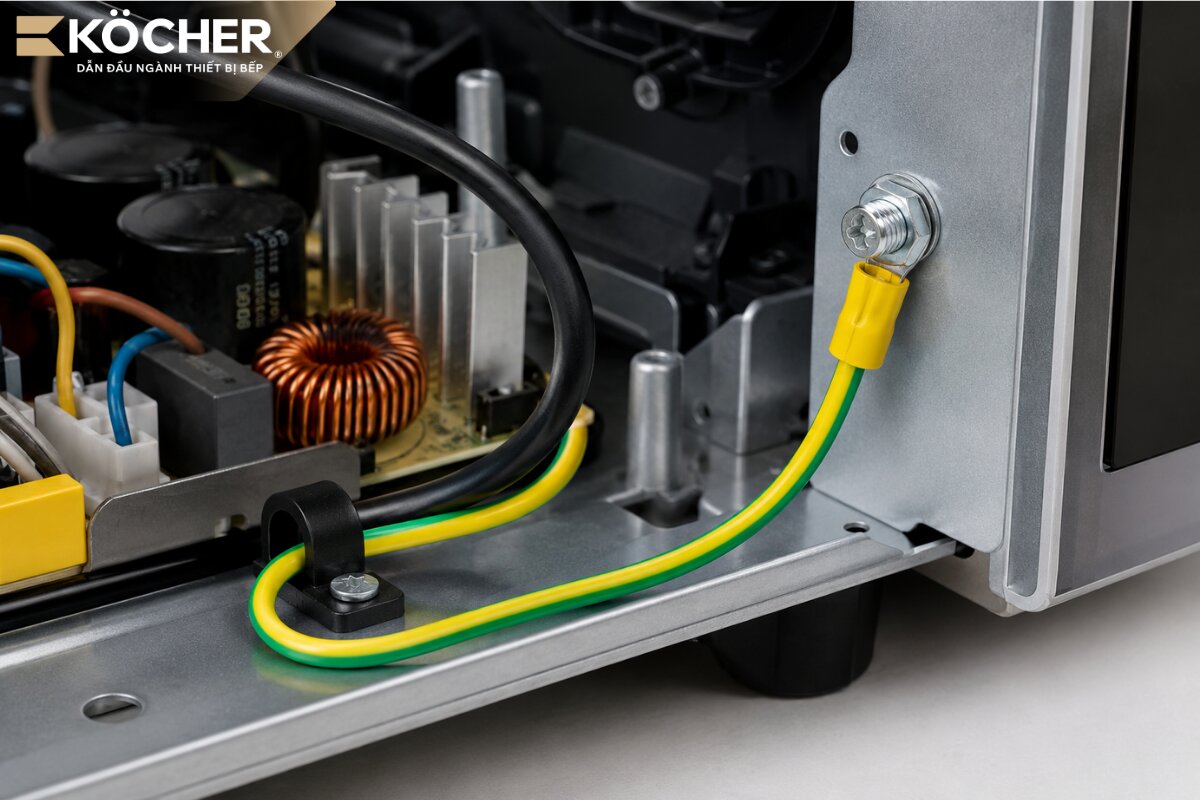
Insect intrusion
- Signs: The hob emits a faint burnt smell when not in use, or begins to leak electricity after a long period of inactivity (for example, after a long holiday or during a hot summer).
- Cause: Insects such as geckos and cockroaches can enter the hob’s internal compartment through the ventilation slots. When their bodies simultaneously touch the electrical circuit and the metal casing, they become a bridge conducting electricity from the circuit board to the outside of the hob, causing electric leakage.
Cracked glass surface
- Signs: The hob surface shows cracks resembling a spider web or is clearly broken, which may be accompanied by the hob shutting off automatically or a slight shock when a wet hand touches the area near the crack.
- Cause: The ceramic glass surface of the induction hob acts as an important insulating layer between the internal coil and the external environment. When the glass is cracked, the fissures create openings for water and moisture to seep down to the circuit board and components below, increasing the risk of short circuits and electric leakage to the hob body or cooking pot.

Severely rusted hob body
- Signs: Rust spots and peeling paint appear on the bottom or body of the hob. Users may feel a tingling sensation when touching heavily rusted areas while the hob is in operation.
- Cause: Grease, water, and spilled food that accumulate on the hob body over time without cleaning will cause the protective powder coating to peel off. The exposed metal in contact with the humid environment will oxidize and rust, gradually creating a conductive path from the internal components to the hob casing.
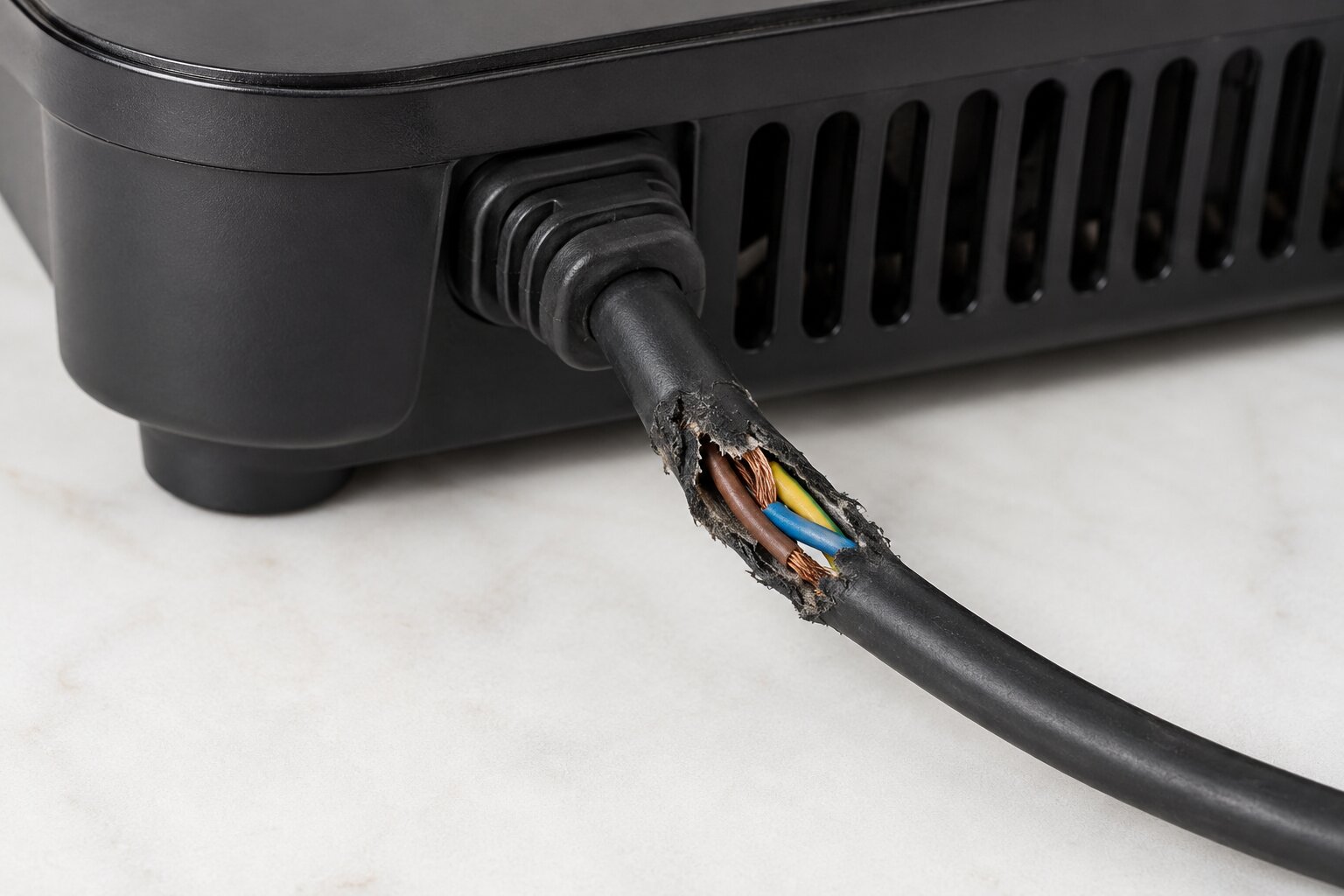
Exposed or broken electrical wire
- Signs: The hob exhibits a shocking sensation, especially when the electrical wire is bent or pulled tight. A close inspection of the wire near the plug or where it runs close to the cabinet may reveal scratches or cracks in the casing.
- Cause: Over time, the outer insulating plastic layer of the wire may wear down due to continuous friction with the edge of the kitchen cabinet, or be gnawed by rodents and insects. When the internal conductor is exposed and touches the metal frame of the hob or the underside of the cabinet, the entire hob body will become electrified, posing a danger to users when touched.
3 steps for safe handling when the induction hob has electric leakage
When you detect electric leakage in the induction hob, the most important thing is to remain calm and absolutely not touch the device with bare hands until the power is turned off. Follow the three steps below in order to handle the situation safely and effectively.
Step 1 – Turn off the power immediately: Use an insulating object (dry cloth, rubber mat) to unplug the device from the socket, or turn off the circuit breaker for the hob. Never unplug the device with wet hands or bare hands when the hob is leaking electricity.
Step 2 – Identify the cause and address accordingly: Observe and check the cause of the electric leakage in the hob and address it accordingly.
- Cracked glass surface: Do not use the hob when the glass is cracked. Contact the warranty center to replace the glass or consider replacing the hob if the damage is severe.
- Exposed electrical wire: If the exposed area is small and localized, you can use electrical tape to wrap it tightly as a temporary measure. If the exposed area is long or there are multiple breaks, the entire electrical wire needs to be replaced.
- Severely rusted hob body: Clean all dirt and grease. If the protective powder coating has peeled off extensively, it is advisable to take it to the warranty center for repainting or replacing the damaged parts.
- Install grounding wire: You can connect the grounding wire to an existing 3-pin socket or use a copper wire tied to the hob casing and screw it down to a metal bar buried deep in the ground according to electrical standards.
Important note: If you do not have electrical technical expertise, do not attempt to disassemble the hob or connect components at home. Please take the device to a warranty center or a reputable repair unit for proper inspection and handling, ensuring safety for your family.
Step 3 – Warn family members: If the issue has not been completely resolved, turn off the power to the hob and post a clear notice on the hob surface (for example: “Hob is leaking electricity – Please do not use”) to prevent family members, especially children or the elderly, from accidentally touching the device that is malfunctioning.
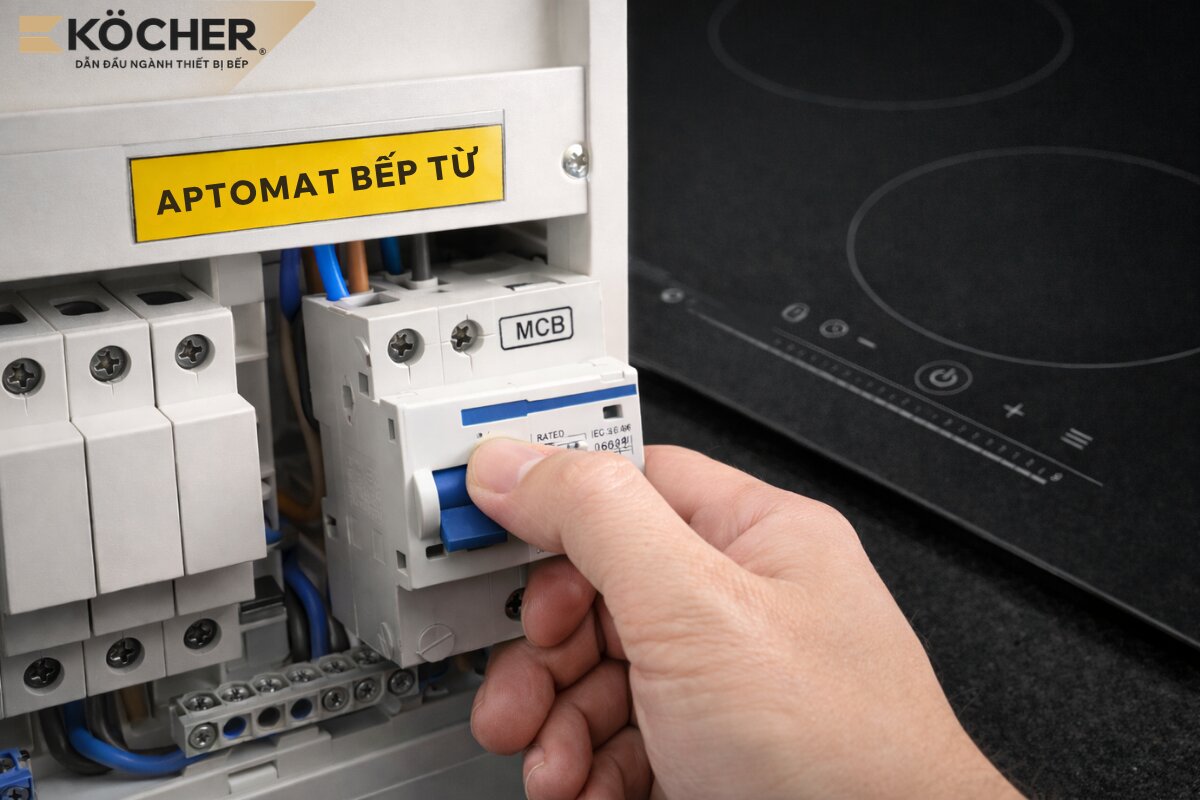 Turn off the power to the induction hob immediately if electric leakage is detected.
5 ways to reduce the risk of electric leakage in induction hobs
The following proper usage and maintenance habits will significantly help you minimize the risk of electric leakage in your induction hob during long-term use.
- Install supporting devices according to standards: Use an automatic circuit breaker suitable for the hob’s power and electrical wire with sufficient cross-section (usually from 2.5mm² to 4mm² depending on the device’s power), the circuit breaker will automatically cut off when an electrical fault occurs, protecting both the hob and the household electrical system.
- Install the hob in a suitable location: Prioritize installing the hob in a dry, cool area, away from sinks and water sources. Ensure that the electrical socket has a 3-pin grounding and do not share a socket with other high-power devices.
- Maintain regular cleaning of the hob: Dry the bottom of the pot before placing it on the hob, avoiding water and grease from spilling into the ventilation slots. After each cooking session, use a soft damp cloth to clean the glass surface and hob body to prevent grease accumulation that can cause rusting of internal components over time.
- Check the underside of the hob and electrical wires every 6 months: Carefully observe the ventilation slots to detect signs of insect intrusion, while also checking the entire protective casing of the electrical wire for scratches, cracks, or signs of gnawing.
- Only replace components at authorized warranty centers: Components of unclear origin, especially circuit boards lacking moisture-proof coating, are very likely to cause electric leakage in humid weather conditions. Replacing with genuine components at reputable units is the best way to ensure the device’s durability.
 Regularly clean the induction hob to prevent grease accumulation that can cause rust.
Electric leakage in induction hobs is not an accidental incident but usually has specific causes from the installation, use, or maintenance of the device. Understanding the causes and knowing how to handle them correctly will help you ensure safety for your family and extend the device’s lifespan. Additionally, regular inspections and maintaining proper cleaning habits will help the hob operate stably and safely for many years.
If you are looking for high-quality induction hobs, please check out Köcher’s products here. As a leading brand in the kitchen appliance industry with E.G.O components that meet German standards, Köcher induction hobs operate stably over long periods, minimizing electric leakage issues during use.
|
Köcher induction hobs pioneer German technology – For detailed product information, please contact:
|