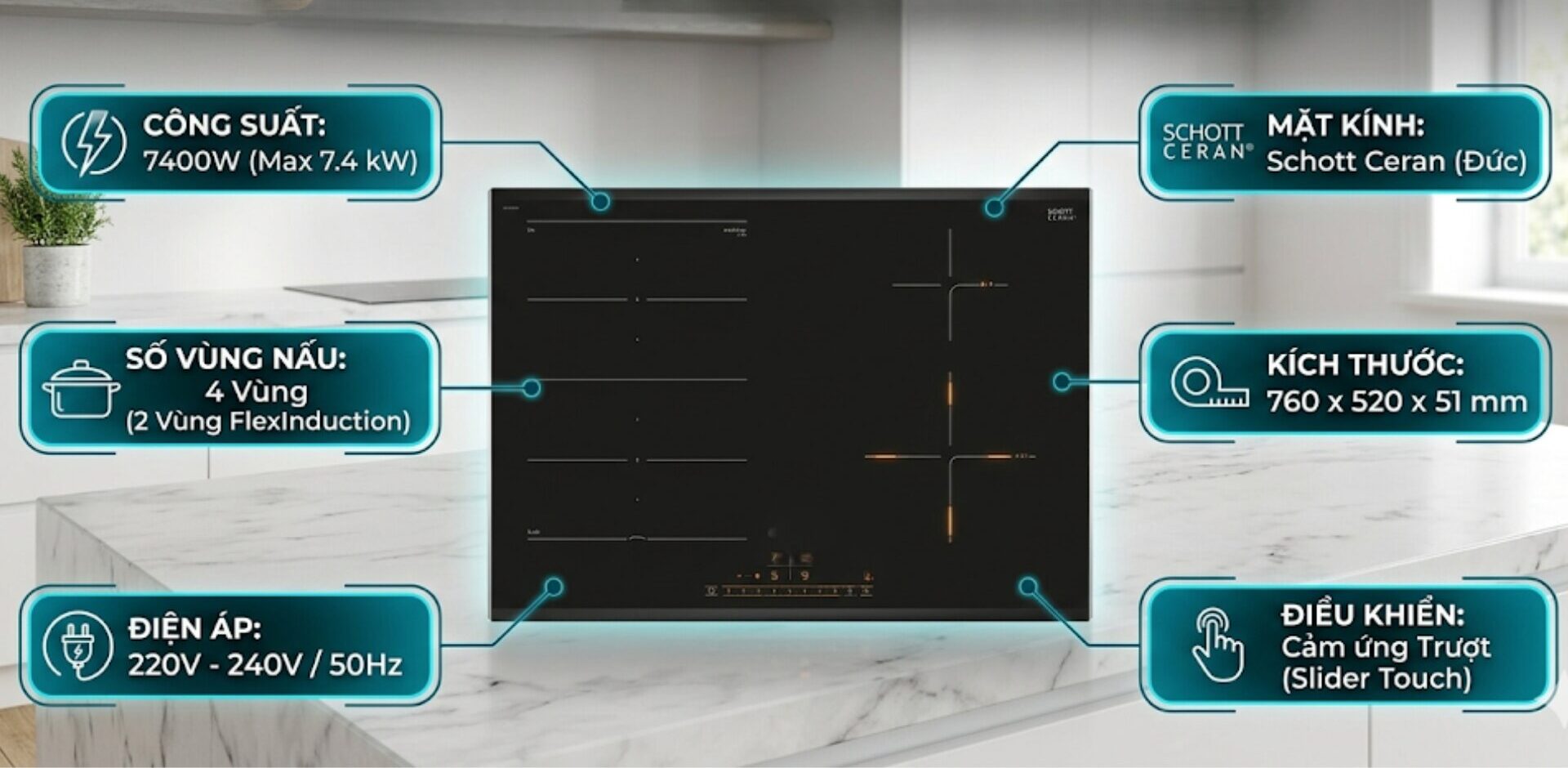
The situation of the induction hob fan not running is one of the less common technical faults but poses many risks, affecting the internal circuit board. In this article on the Köcher website, our technical experts will analyze in detail 7 root causes and guide you on how to check and fix this issue safely and effectively.
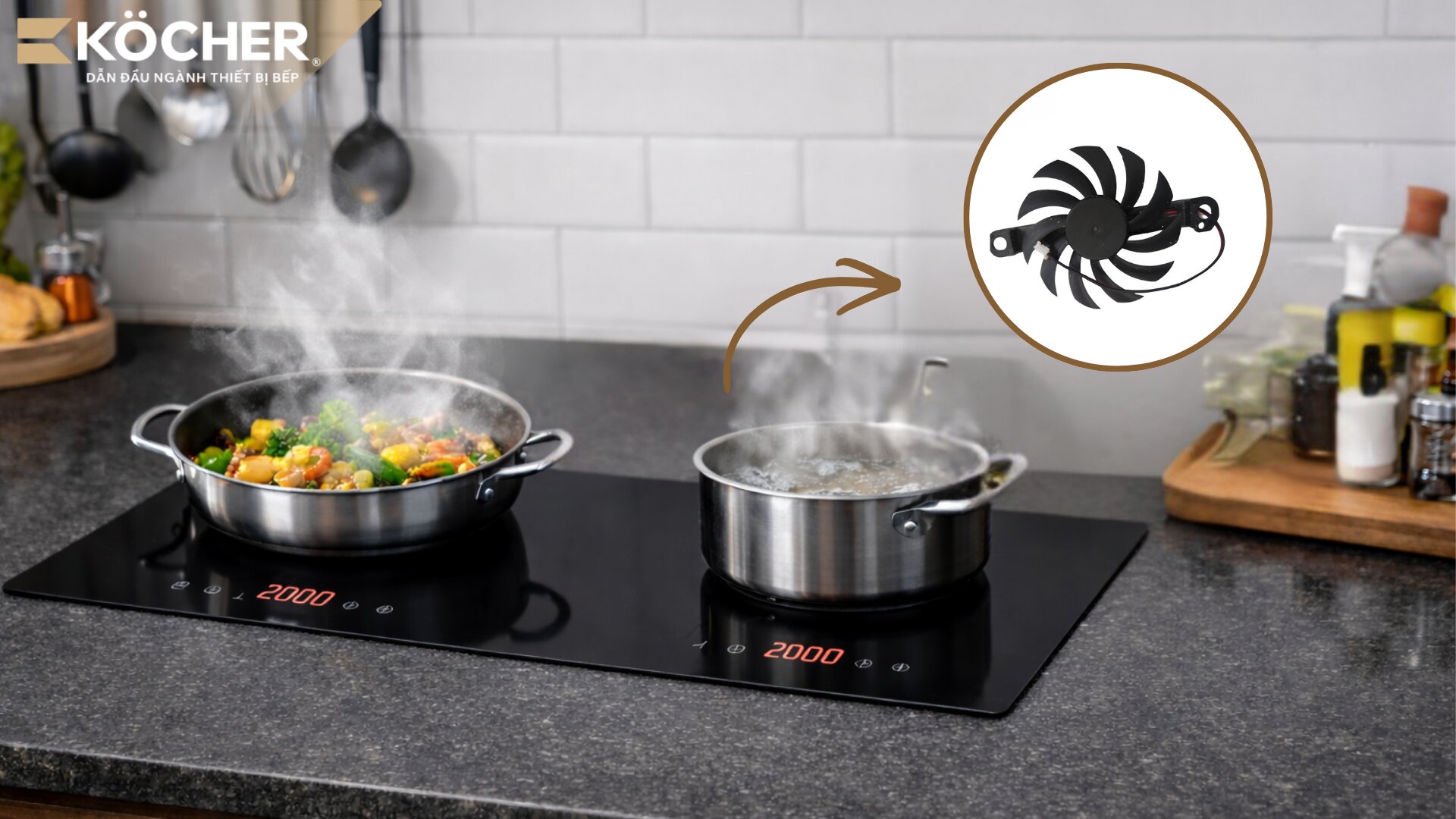
7 reasons why the induction hob fan does not run & how to fix it
To help you easily check the device at home, here are the details of the causes along with visual identification signs and corresponding technical solutions:
Dust and grease accumulation
In the kitchen environment, the grease vapor from cooking combined with fine dust in the air can easily accumulate inside the hob body through the ventilation slots at the bottom.
- Signs: You hear a low humming sound coming from the bottom of the hob but the fan does not spin, or the fan spins very slowly accompanied by a heavy whirring noise. Looking through the ventilation mesh at the bottom of the hob, you can see a lot of black dust or a layer of cloudy yellow grease sticking around the fan blades.
- Cause: The cooling fan operates by sucking cool air from outside to cool the circuit board. This process inadvertently sucks in dust and grease vapor. After a while, this mixture condenses like glue, sticking tightly to the rotating shaft, increasing mechanical friction, causing the shaft to seize or the fan blades to get stuck.
- How to fix:
- Completely disconnect the power supply of the hob.
- Use a cotton swab or a small brush to clean the dust and cobwebs from the fan blades through the ventilation mesh at the bottom of the hob.
- If you have expertise, you can remove the hob’s casing, use a soft brush and specialized alcohol to clean the fan blades, then drop 1 – 2 drops of sewing machine oil onto the fan shaft to lubricate.
- If you are not confident in disassembling the hob, please contact a technician for deep cleaning.
Wiring connection fault
The signal and power wiring system from the circuit board to the fan being interrupted will cause the fan to be unable to start at all.
- Signs: The hob still recognizes the pot, the control panel displays normally, the water in the pot still heats up but looking under the hob, the fan does not spin, and there is no blowing sound.
- Cause: The wire connecting the fan to the main circuit board has a loose connector due to the hob shaking during long-term use, or the wire has been chewed through by a mouse.
- How to fix:
- Unplug the hob to ensure safety.
- If you have basic electrical knowledge, remove the screws at the bottom of the hob to open the casing.
- If you find the wire is broken, reconnect it according to the wire color and use electrical tape to insulate it. If you are not familiar with electrical work, disconnect the hob and call the warranty center to avoid short-circuiting sensitive components nearby.
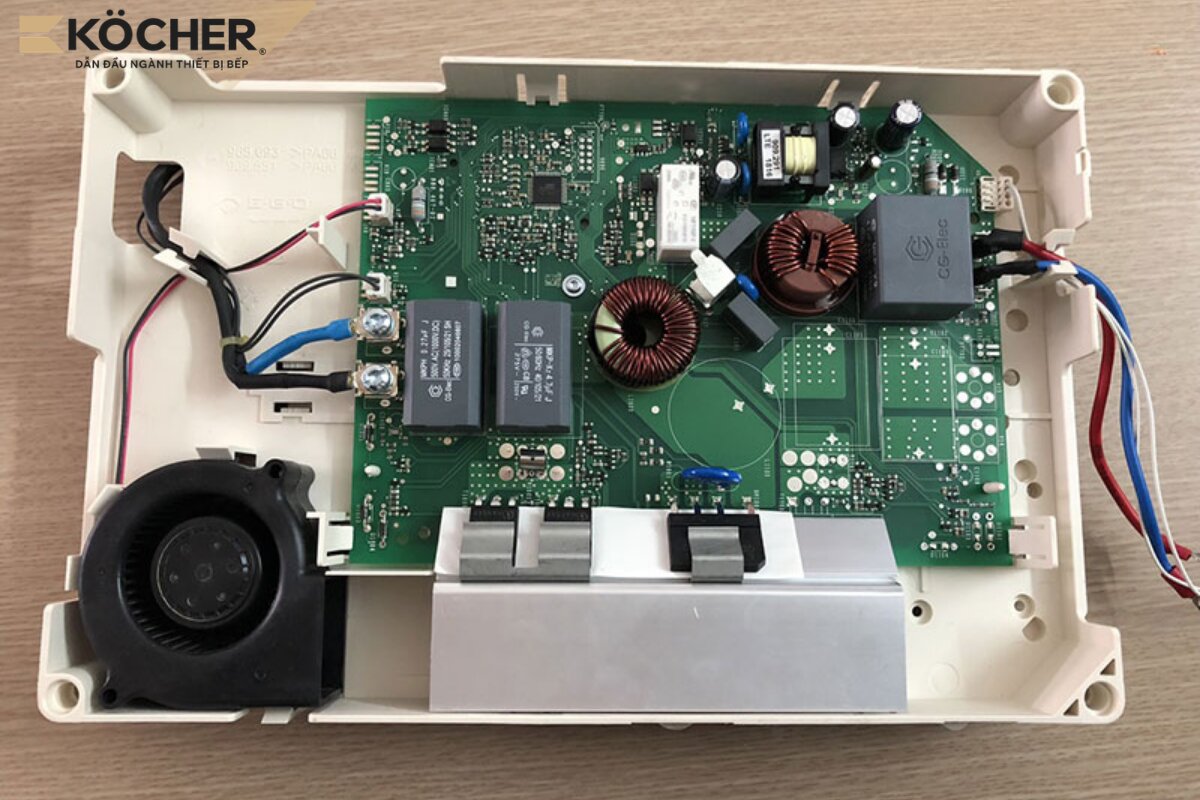
Fan damaged or out of lifespan
The cooling fan of the induction hob is a small direct current motor, which has a limited operational lifespan after many years of use.
- Signs: The hob can cook for about 1 – 2 minutes then automatically shuts off and reports an overheat error (usually error E4 or E5). When the hob cools down, using a small stick to gently push the fan blades, they still spin smoothly (not mechanically stuck) but when turning on the hob, the fan remains still.
- Cause: The copper wire inside the fan motor has burned out due to overload, or the semiconductor components on the fan’s small circuit have failed after prolonged continuous operation.
- How to fix:
- Disconnect the power supply of the hob to ensure safety.
- Repairing the fan coil at home is not feasible. You need to remove the old fan, bring a sample or take a picture of the specifications on the fan (usually 18V or 12V power supply, along with the blade diameter) to buy a new fan with equivalent specifications for replacement.
- If you do not have the necessary tools for disassembly, please call a technician for assistance in replacing the fan at home.
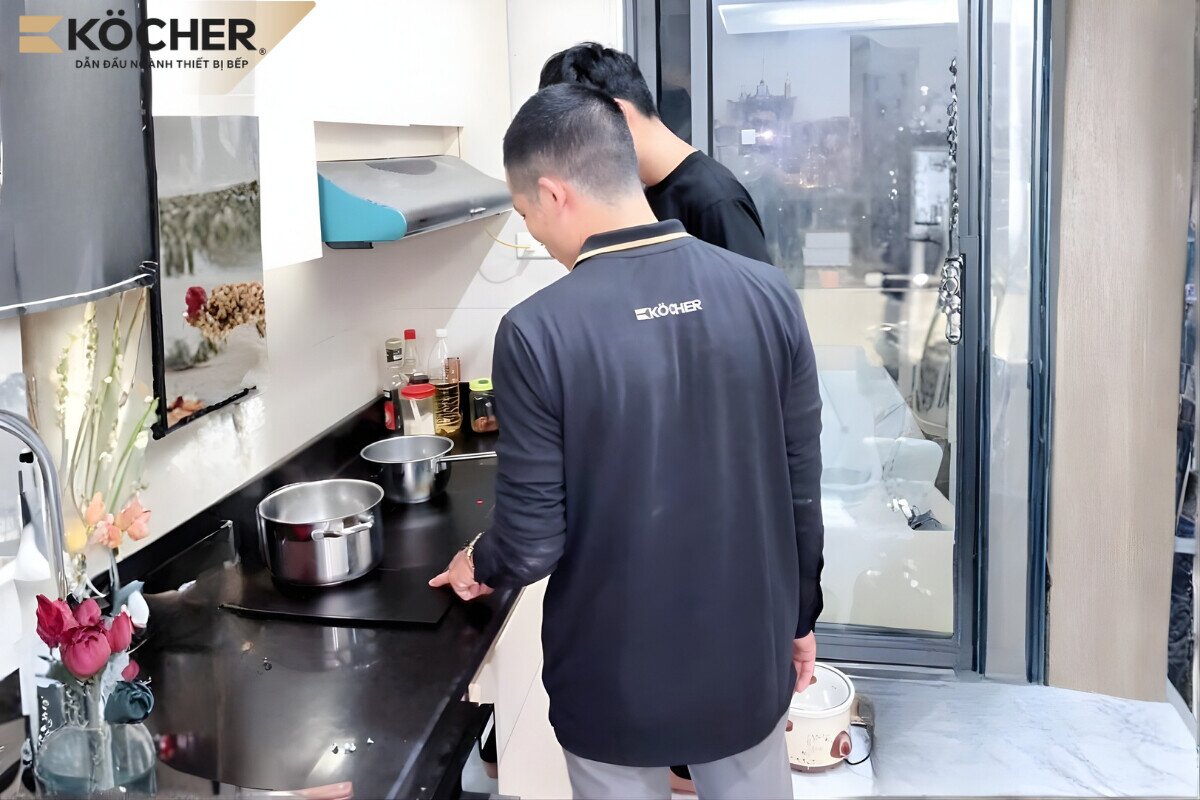
Control board damage
The control board is likened to the command center for all operations of the induction hob, including issuing commands to run the fan.
- Signs: After trying a new fan that matches the specifications but when turning on the hob, the fan still does not spin. The hob can only run for a short time before shutting off and reporting an overheat error accompanied by continuous beeping.
- Cause: The semiconductor component controlling the power supply to the fan on the main circuit board (usually a transistor model 8050 functioning as an electronic switch) has a broken leg, burned out, or is leaking electricity, preventing the circuit board from closing the circuit to supply power to the fan.
- How to fix:
- Preliminary handling: As soon as you notice the fan is not spinning and the hob reports an overheat error, turn off the hob using the power button, allow the hob to cool naturally, do not unplug it immediately.
- Note: This is a specialized fault related to electronic components on the main circuit board. You absolutely must not use a soldering iron to intervene in the circuit without expertise, as it is easy to damage sensitive components such as the power IC or expensive IGBT. Please contact the official warranty center of Köcher or a reputable electronics repair shop for a technician to measure and replace the transistor accurately.
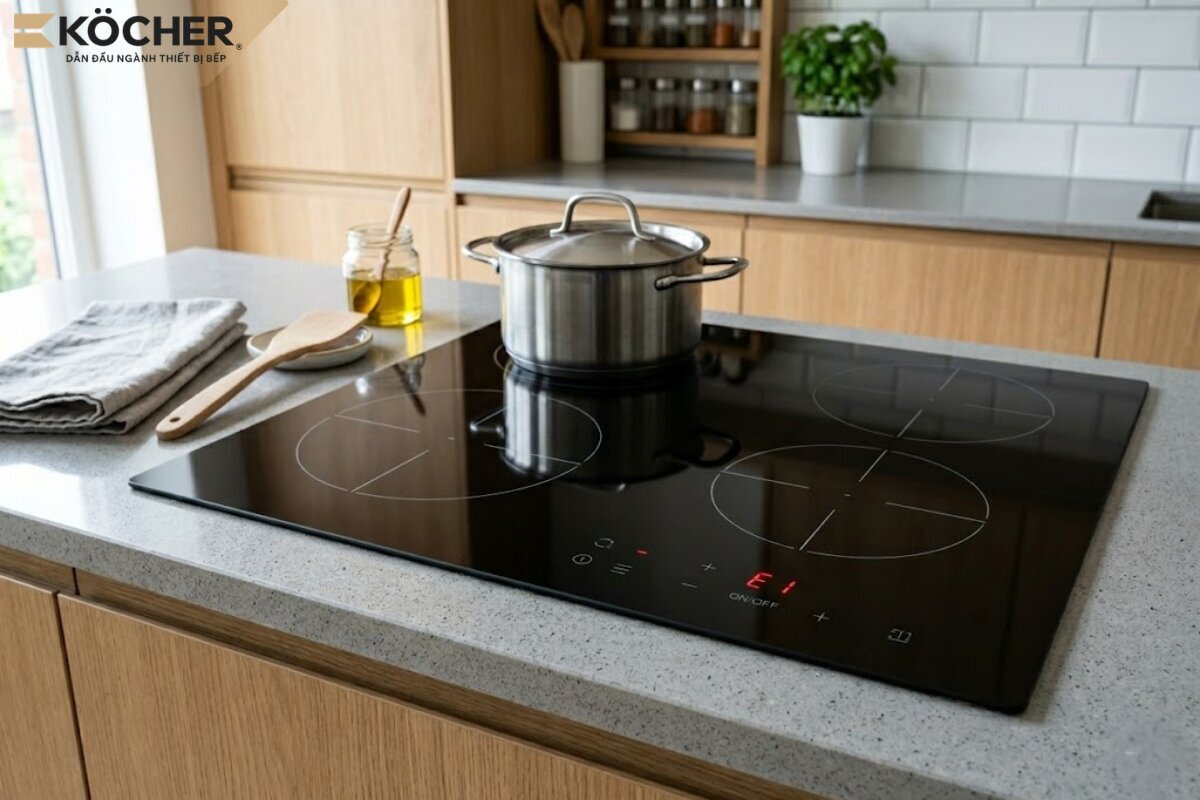
The induction hob reports overheat error E1 due to the induction hob fan not running
Missing 18V power supply
Most current induction hob cooling fans operate on direct current with a stable voltage supplied from the hob’s power supply unit.
-
- Signs: The hob’s glass surface is completely dark, no display lights, buttons do not respond, and the cooling fan does not operate when plugged in.
-
- Cause: The 18V auxiliary power line on the circuit board (responsible for supplying power to the fan and driver circuit) has a severe voltage drop or is completely lost due to a blown fuse resistor, a faulty filter capacitor, or a burned-out power IC.
-
- How to fix:
-
- Preliminary handling: Unplug the hob from the socket or turn off the circuit breaker to isolate the hob from the power grid, preventing widespread short-circuiting.
-
- Note: The power loss fault requires using a multimeter to measure each component on the power supply unit. You should call a technician to handle it; do not attempt to repair the power unit at home.
-
- How to fix:
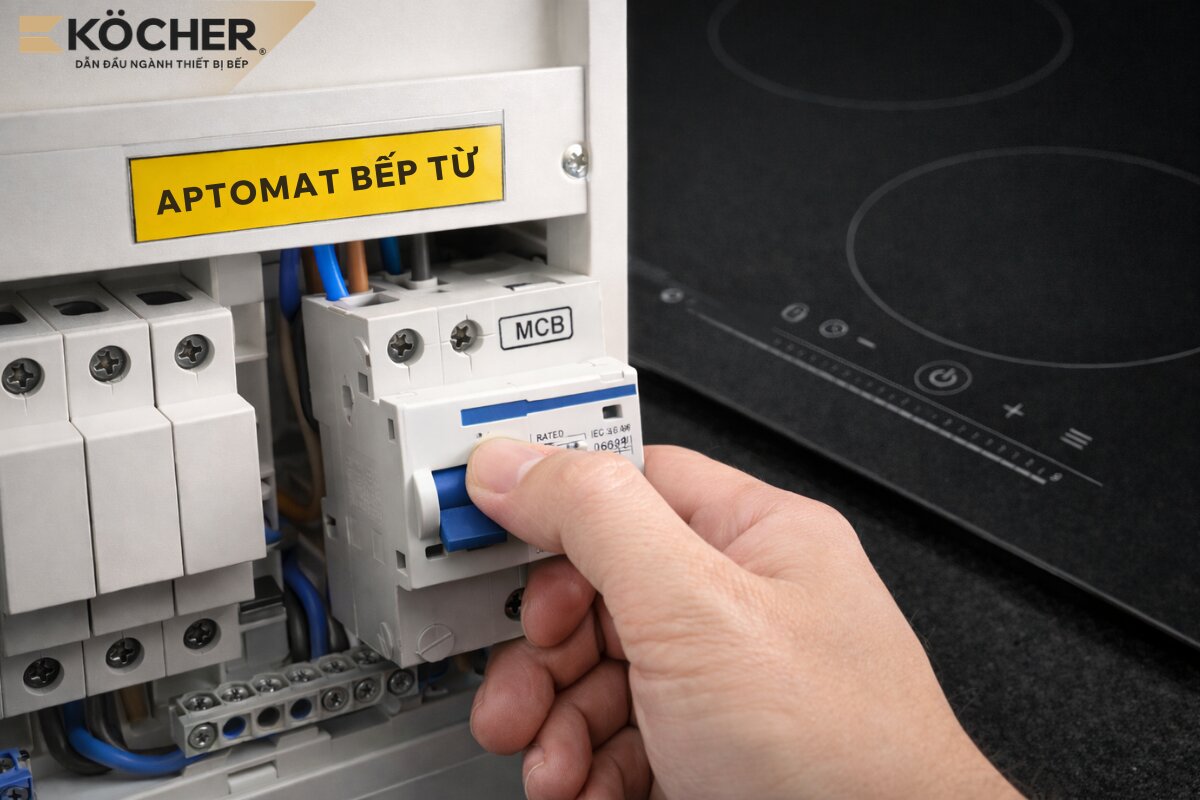 Disconnect the induction hob from the power supply to fix the induction hob fan not running
Microcontroller (MCU) fault
The microcontroller (MCU) is the component that decides to activate or deactivate the operation of peripheral components based on a pre-programmed routine.
- Signs: The button system is still responsive, the hob still recognizes the cooking pot normally, the 18V power lines are still intact, the intermediate components controlling the fan are functioning well, but the signal output pin from the microcontroller to the fan is always low (not issuing a run command).
- Cause: The microcontroller has a control program error due to an electrical shock, or the logic gate outputting the control signal to the fan is damaged.
- How to fix:
-
- Preliminary handling: Disconnect the power supply of the hob completely, wait about 10 minutes for the microcontroller to discharge all accumulated electricity to reset the program to its default state, then plug it back in to test again.
-
- Recommendation: If after resetting the hob still has faults, you cannot intervene yourself. The most practical and safest solution is to contact warranty service to replace the original main circuit board.
-
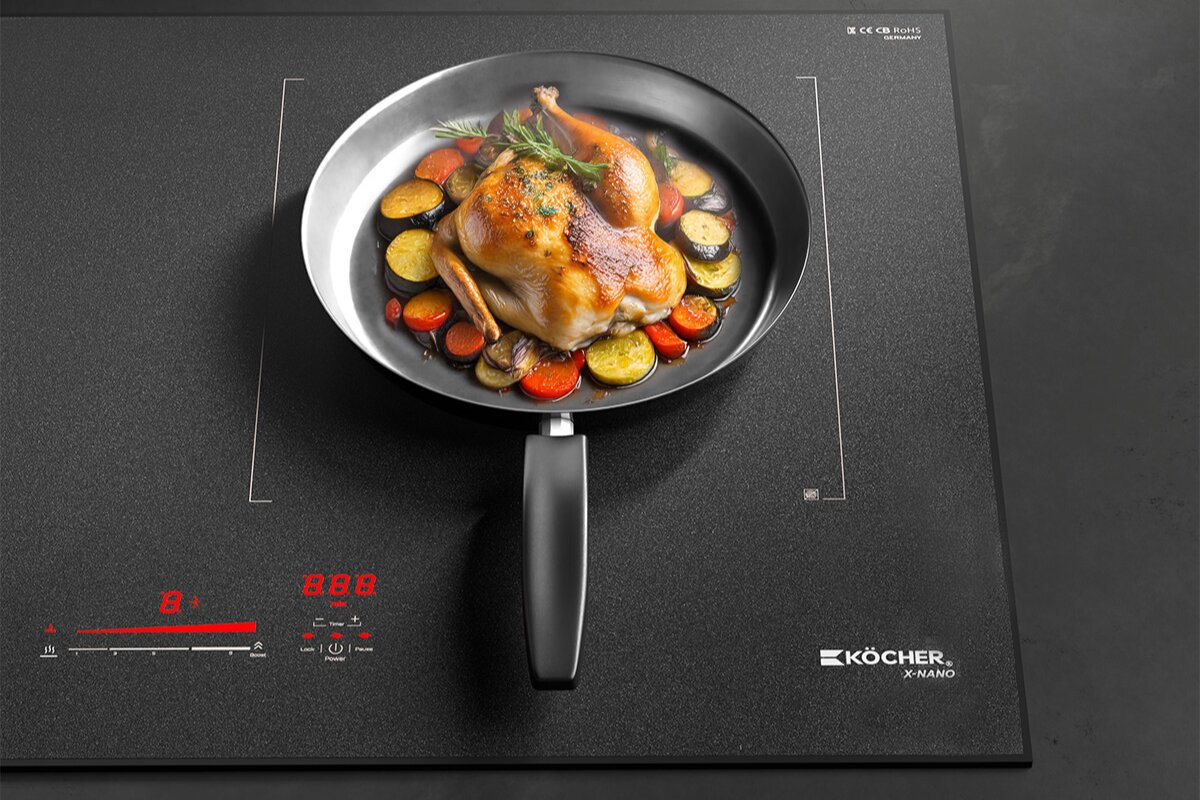 After restarting, if the hob operates normally, it indicates no fault
Temperature sensor fault
The temperature sensor (NTC) placed under the induction coil or close to the aluminum heat sink is responsible for reporting the temperature back to the microcontroller to activate the fan.
- Signs: You just turned on the hob without cooking anything, and it immediately reports a sensor error (usually displaying error codes E1, E2, or F depending on the hob model) and the fan does not run. Or conversely, the hob cooks very hot, emitting a slight burnt plastic smell, but the fan still does not automatically spin.
- Cause: The temperature sensor has increased resistance value excessively, has broken wires, or is short-circuited. This causes the microcontroller to misidentify the information: the hob is still very cool, so it does not issue a command to supply power for the cooling fan to operate.
- How to fix:
- Preliminary handling: Turn off the hob immediately, remove the pot from the cooking zone, and allow the hob to cool completely for 30 minutes.
- Recommendation: Determining the resistance value of the sensor (usually fluctuating around 10k Ohm to 100k Ohm at room temperature of 25 degrees Celsius) requires specialized measurement techniques. If the sensor is faulty, you need to contact a technician to replace the new sensor with the correct value for the hob model being used to ensure the hob automatically shuts off accurately when overheating.
How to prevent the fan from not running
To extend the lifespan of the cooling system and prevent sudden fan stoppage while cooking, users should pay attention to perform the following periodic maintenance measures:
- Clean the fan periodically every 3 – 6 months: Disconnect the power supply and use a small handheld vacuum cleaner or a soft brush to clean all dust accumulated in the ventilation slots and fan blades at the bottom of the hob to ensure the best airflow.
- Do not let water or liquids spill into the ventilation slots: When cleaning the hob surface or kitchen floor, absolutely do not let water leak down the ventilation slots at the bottom of the hob to avoid causing short circuits in the fan motor and the circuit board below.
- Do not unplug immediately after turning off the hob: This is a harmful habit of many users. After pressing the hob’s off button, the cooling fan still needs to operate for an additional 1 – 2 minutes to cool the coil and IGBT. Unplugging immediately will cause accumulated heat to make components and the fan brittle and damaged.
- Avoid continuous cooking at high power: Avoid using the super-fast Booster mode continuously for more than 10 minutes at a time. After using Booster, actively reduce the power to a medium level to ensure the cooling system operates stably without overheating.
- Periodic maintenance: For older hob models, it is advisable to periodically contact the warranty center for technicians to check the play of the fan shaft and perform lubrication with specialized oil.
- Do not disassemble without expertise: If the hob is still under warranty or you are not knowledgeable about electrical safety, absolutely do not disassemble components to avoid losing warranty rights or causing technical safety issues.
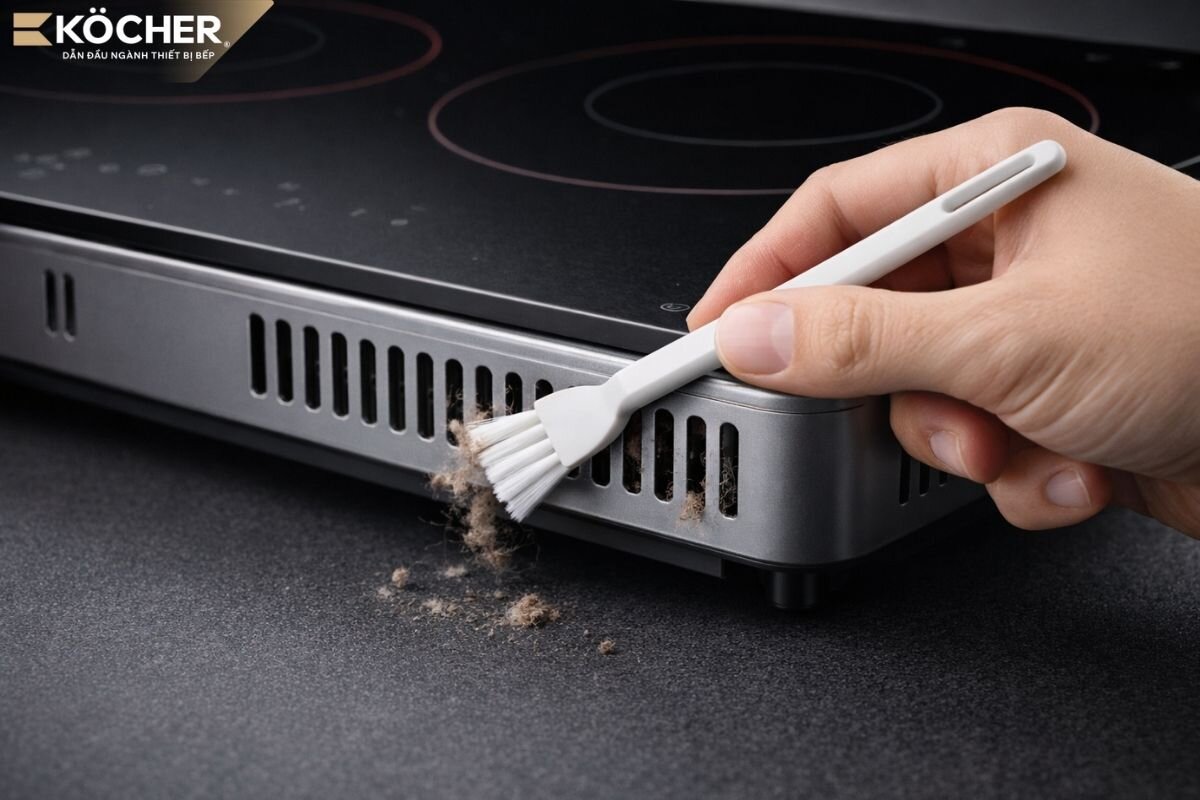 Clean the ventilation slots periodically every 3 – 6 months.
Frequently asked questions about the induction hob fan not running
Below are answers from technical experts to the most common consumer questions regarding this issue:
Can the induction hob still cook if the fan does not run?
Absolutely NOT recommended to continue using. When the cooling fan stops working, the temperature of the induction coil and power transistor (IGBT) will spike within just 1 – 2 minutes of cooking. Although high-end hobs have automatic shut-off sensors for protection, attempting to cook when the fan is broken will increase the risk of IGBT explosion and short-circuiting the main circuit board of the hob.
How much does it cost to replace the induction hob cooling fan?
The cost of replacing a new cooling fan ranges from 250,000 VND to 650,000 VND depending on the type of fan (standard coaxial fan or new generation squirrel cage fan) and the brand of hob you are using. To ensure durability and technical safety, users should prioritize replacing genuine components at reputable warranty centers.
If the induction hob fan runs for 3 – 5 seconds and then stops, is it broken?
Not necessarily a fault. In some high-end induction hob models (such as Köcher models using E.G.O circuit boards or Gx technology), when you just plug in the power, the system will automatically activate the fan to run for a test for 3 – 5 seconds and then turn off. The fan will only operate continuously when the temperature of the pot bottom or heat sink reaches the specified temperature threshold set in the control program.
Is the fan not running on a newly purchased hob covered by warranty?
Yes. Cases where a newly purchased hob is found to have a non-functional fan due to a manufacturer’s technical fault are usually covered for replacement or free repair at home under the brand’s official warranty policy.
Early detection and proper handling of the induction hob fan not running issue will help you maximize the protection of valuable components inside the hob, avoiding unnecessary breakdowns. When encountering hardware-related issues with the circuit board or complex power supply, the safest and most effective solution is always to contact the manufacturer’s warranty center for accurate technical support.
|
Köcher induction hob pioneers German technology – For detailed product information, please contact:
|