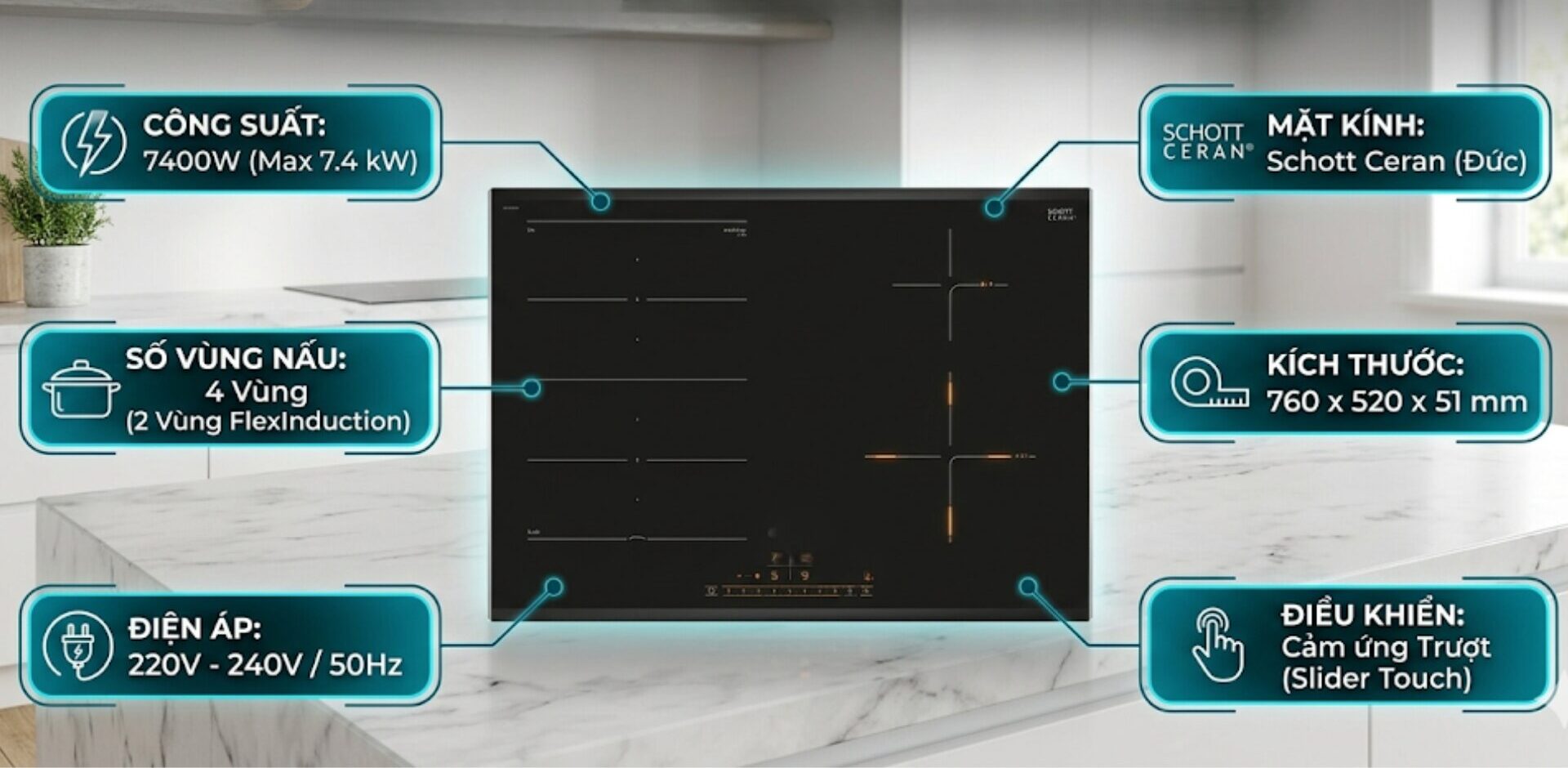
The electric stove makes a buzzing sound is a fairly common phenomenon that many families encounter during use. The buzzing sound may just be a normal indication when the stove operates at high power, but it can also be a warning sign that internal components are having issues. The article below will help you accurately identify the cause and understand how to effectively handle it at home, preventing a small issue from becoming a more serious malfunction.
4 causes of the induction stove buzzing
The cooling fan operates strongly when the stove runs at high power
When the stove is set to a high temperature or used continuously for a long time, the internal temperature rises quickly, forcing the cooling fan to increase its rotation speed to expel hot air. The buzzing sound at this time is usually louder than normal but remains within the stove’s designed operating threshold.
However, if the stove continues to buzz even after reducing the power to a medium level, you need to check more thoroughly to avoid issues during use.
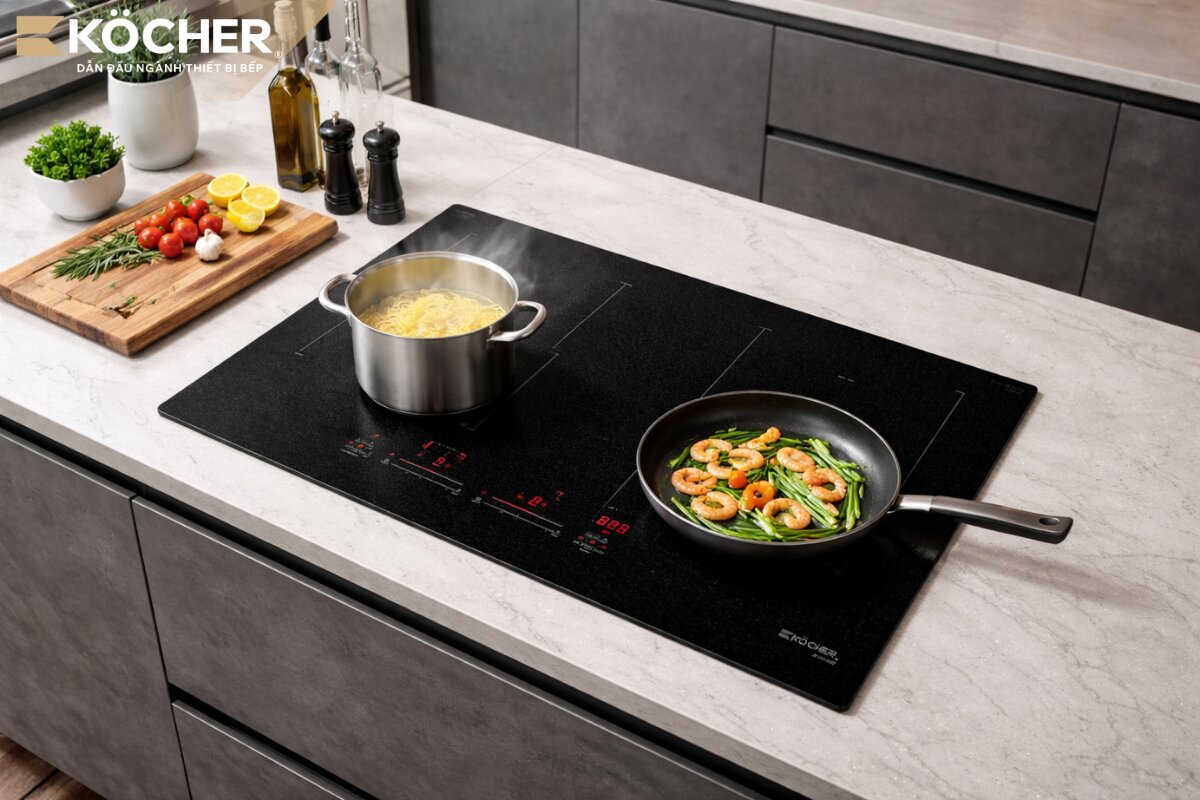
The fan continues to run after turning off the stove to cool down
After turning off the stove, the cooling fan may continue to run for a few minutes to cool down internal components such as the circuit board, heating element, or induction coil. At this time, the buzzing sound is usually normal; users should allow the fan to continue cooling and should not cut off the power immediately after cooking.
Cooling system issues
This is the most common cause of prolonged buzzing sounds, especially in stoves that have been used for many years or have not been regularly maintained.
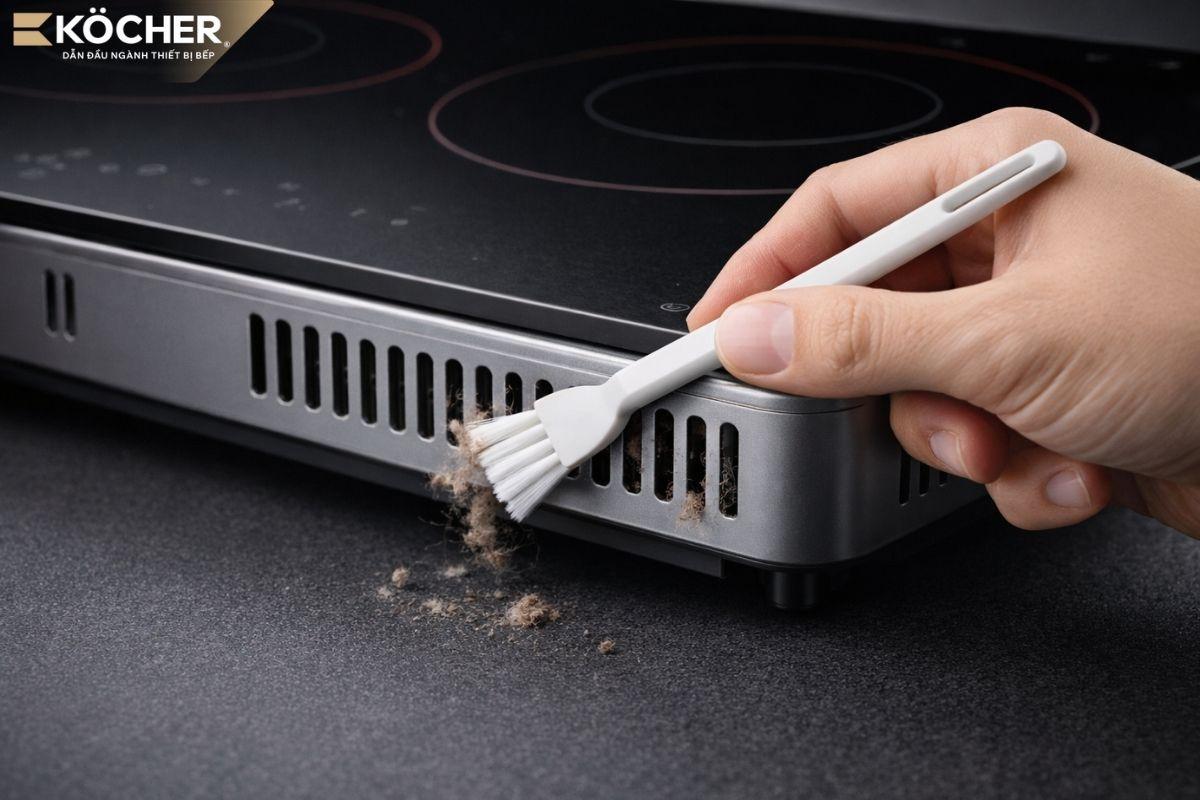
- Dust and grease accumulation: After a period of use, dust and grease build up thickly on the fan blades, causing the blades to become unbalanced when rotating, making the fan vibrate strongly and emit a characteristic buzzing sound, sometimes accompanied by a rattling or scraping noise.
- Foreign objects stuck: Hair, food debris, or small foreign objects can be sucked into the ventilation slots and wrap around the fan shaft, obstructing rotation and causing abnormal noise.
- Degraded fan components: Worn fan bearings due to lack of maintenance, deformed fan blades, or incorrectly installed fan motors can cause the fan to operate unstably and produce noise even when the stove is running at low power.
The type of cooling fan affects the noise level of the stove
Each type of induction stove uses different cooling fan technologies, which directly determine the sound intensity produced during operation:
- Coaxial fan: This type of fan blows air parallel to the rotation axis; due to the design characteristics of flat and large fan blades, the outgoing airflow can easily become turbulent, creating noise. When there are slight changes in temperature or dust accumulation, the buzzing of the coaxial fan will be very clear.
- Squirrel cage fan: Although this type of fan operates much more quietly than the coaxial fan, if the airflow system is blocked or the squirrel cage fan blades are slightly deformed due to high temperatures, it can lead to the characteristic buzzing sound during operation.
3 effective ways to fix the buzzing electric stove at home
Most cases of buzzing electric stoves can be handled at home without needing to take them to a service center, if you correctly identify the cause and implement the right methods.
Clean and maintain the cooling fan
First, completely disconnect the power and wait for the stove to cool down. Use a handheld vacuum or a soft brush to clean the dust and grease accumulated on the fan blades, ventilation slots, and surrounding areas. Carefully check the fan shaft, removing any hair or foreign objects that may be wrapped around it. After cleaning thoroughly, turn the stove back on to check if the noise has decreased.
To prevent recurrence, it is advisable to clean the cooling system periodically every 3 – 6 months, especially for families that cook frequently.
Reduce power or turn off the stove
If the buzzing sound appears after cooking continuously at high temperatures, reduce the power or turn off the stove for about 5 – 10 minutes. This time allows the cooling fan to reduce its load and the internal components to gradually cool down to a safe level.
After the stove has cooled down, turn it back on and monitor whether the noise has decreased. If the buzzing only occurs when cooking at high power and stops after reducing the temperature, the stove is operating normally. Conversely, if the noise persists even at low power, you need to check the cooling system again.
Replace the fan
If you have cleaned thoroughly but the buzzing persists, the fan bearings may be severely worn or the fan motor may be damaged. At this point, you need to completely replace the fan for the stove to operate stably again.
This operation requires technical skills; you should contact a service center or a professional repair unit to replace the genuine components, avoiding the use of low-quality replacement fans that could cause the stove to continue buzzing or fail more quickly.
| Important note: Do not ignore unusual sounds from the fan, as when the fan operates inefficiently, heat inside the stove will accumulate and may trigger overheating error codes, potentially damaging the circuit board or IGBT components if left unattended for too long. |
Additionally, to completely limit the buzzing sound of the stove from the start, you should prioritize choosing induction stoves equipped with squirrel cage fans, which operate significantly more quietly, dissipate heat effectively, and have a longer lifespan under frequent cooking conditions. If you are looking for high-quality squirrel cage induction stoves that operate stably, durably, and minimize noise during use, please refer to Köcher’s products here.
The phenomenon of the electric stove buzzing can mostly be quickly resolved if you correctly identify the cause and address it in a timely manner. Regularly clean the cooling fan, avoid using the stove continuously at maximum power for long periods, and pay attention to any unusual changes in the device’s sounds.
If you are looking for high-quality induction stoves, please refer to Köcher’s products here. As a leading brand in the kitchen appliance industry with high-quality squirrel cage fan systems, Köcher induction stoves operate stably over long periods, minimizing the buzzing error during use.
|
For detailed information about the product, please contact:
|