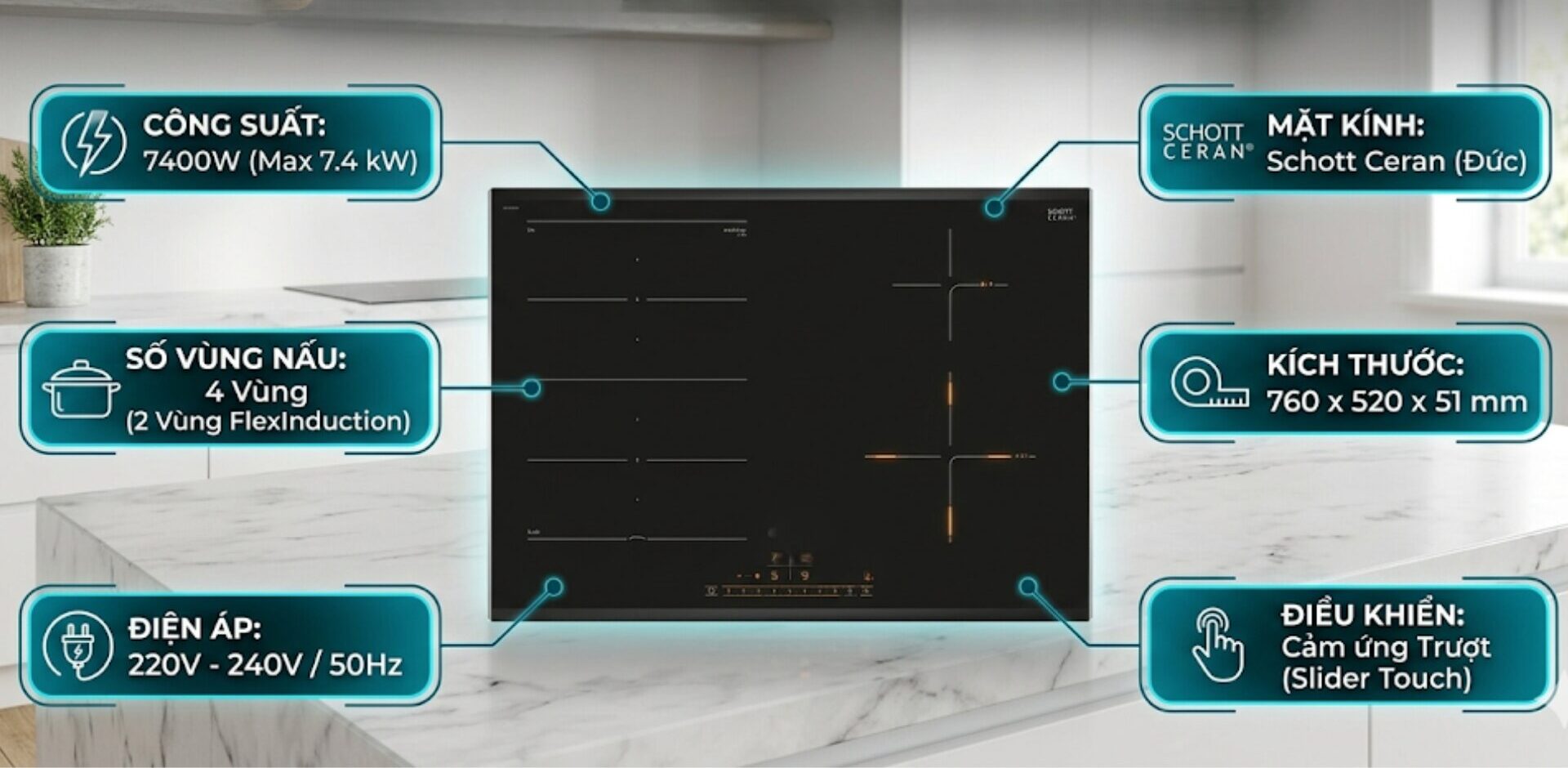
Understanding the technical specifications of induction hobs is the first step to choosing the right hob that truly fits your kitchen and your family’s cooking habits. The article below will help you decode each important specification in the easiest way, from size, power to the material of the glass surface and international safety certifications.
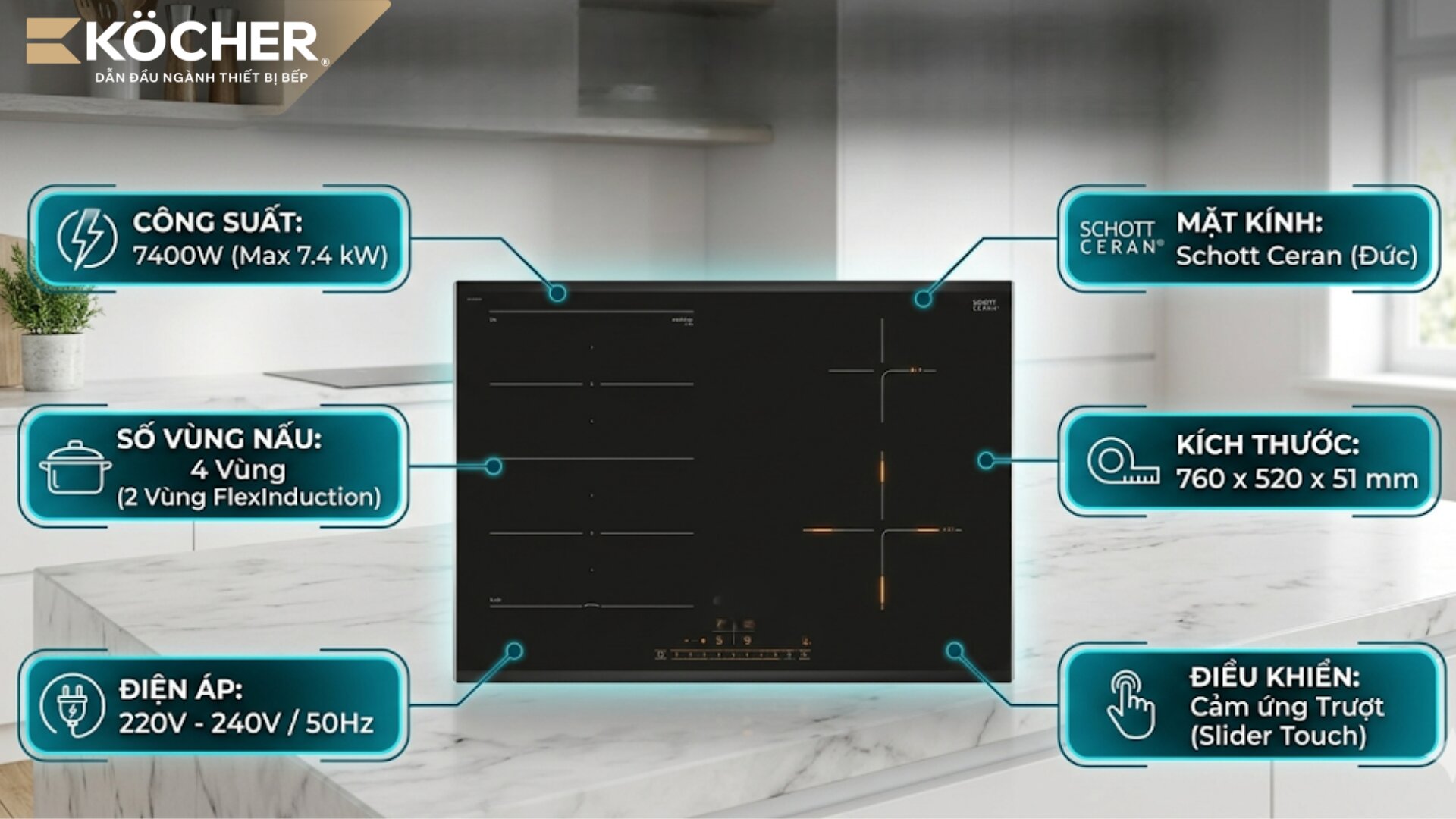
Summary of basic technical specifications of induction hobs you must know
Each induction hob has its own technical specifications, but not all indicators are equally important. Below are 11 specifications you need to understand before making a purchasing decision.
Specifications about the size of the induction hob
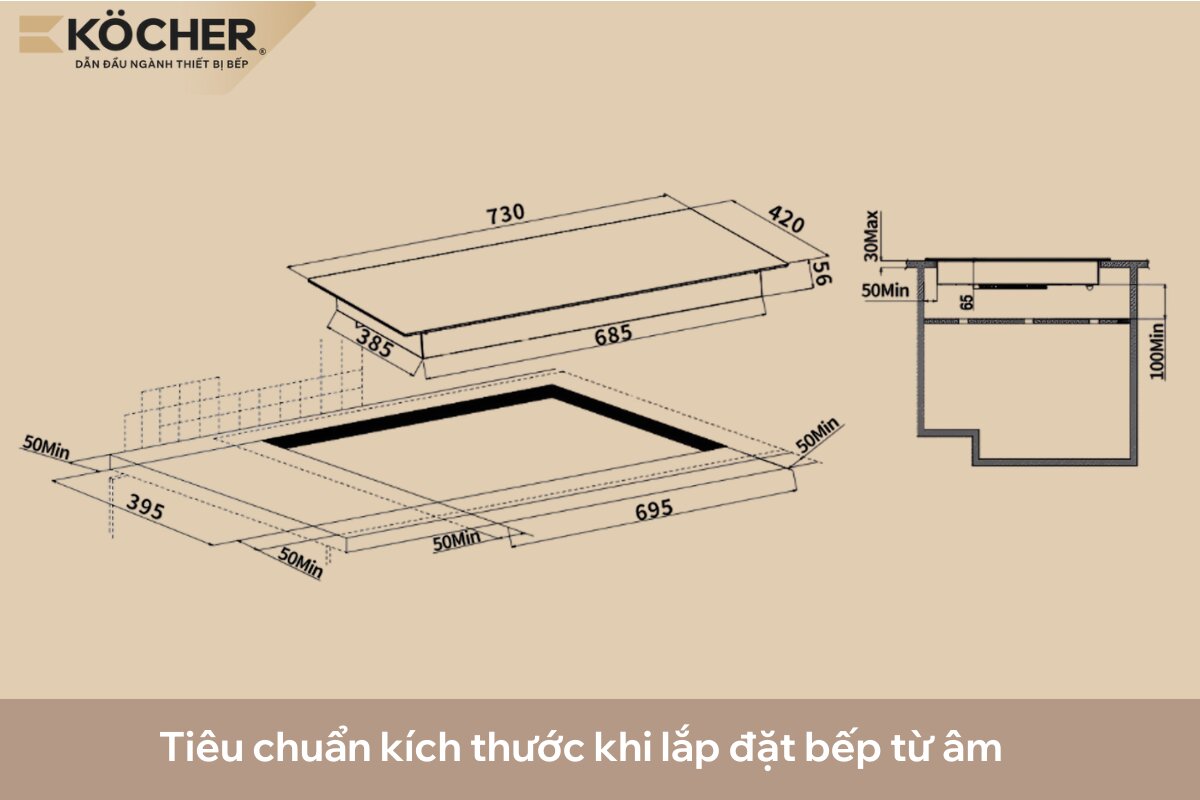
Choosing the size of the glass surface and the cut-out size helps ensure accurate installation, ensuring stable operation and optimizing heat dissipation. In terms of functionality, the appropriate size allows the cook to operate comfortably, cooking multiple dishes at once without pots and pans colliding. Additionally, combining the hob size with the height of the countertop according to the Lỗ Ban measurement also carries feng shui significance, helping the homeowner receive wealth and peace. To ensure the aesthetics of the kitchen, you should carefully read the article about induction hob sizes to choose the most fitting model for your cabinets.
Below is a table of common glass surface sizes today and their corresponding cut-out sizes:
| Number of cooking zones | Width (mm) | Depth (mm) | Thickness (mm) | Cut-out size Width x Depth (mm) |
| 1 cooking zone (single hob) | 280 – 350 | 300 – 400 | 40 – 80 | Not applicable |
| 2 cooking zones (double hob) | 700 – 750 | 400 – 450 | 40 – 60 | 670 – 710 x 370 – 410 |
| 3 cooking zones – square hob | 580 – 620 | 510 – 530 | 50 – 65 | 480 – 560 x 490 – 500 |
| 3 cooking zones – rectangular hob | 750 – 860 | 430 – 450 | 50 – 65 | 710 – 800 x 380 – 410 |
| 4 cooking zones | 590 – 900 | 520 – 600 | 50 – 70 | 560 – 850 x 490 – 560 |
Note: The cut-out size is always smaller than the glass surface by 25 – 35mm on each side so that the glass can rest on the countertop without falling through. Each brand may have slightly different cut-out specifications by a few millimeters, so please check the specific installation guide of the product before construction.
In addition to the size of the device, the standard installation distance from the wall and cabinet space is a key technical specification to optimize hot air circulation. Adhering to these specifications helps the cooling fan system effectively protect the internal components from overheating risks.
Power and voltage of induction hobs
Power: This specification reflects the amount of electricity consumed and the heating capacity of the hob. There are 3 types of power you need to pay attention to: total power (the maximum amount of electricity the hob can consume), power of each cooking zone, and Booster mode power (super-fast heating mode on the hob). When choosing an induction hob, you should select a power level suitable for the number of family members and needs:
- Single hob 1400 – 2100W: Suitable for individuals or families of 1 – 2 people, small kitchen spaces, and simple cooking needs.
- Double hob 3000 – 4200W: Suitable for families of 2 – 4 people, cooking daily at a normal level.
- Double or multiple zones from 5000W and above: Suitable for large families, often cooking multiple dishes at once or needing to cook large quantities.
To better understand power and how to choose the appropriate power for your family, you can refer to the article What is the power of induction hobs? How to choose the power of induction hobs.
Voltage:
The standard voltage for induction hobs in Vietnam is 220V – 240V, frequency 50Hz. If your area frequently experiences unstable voltage, prioritize models with wide voltage adjustment capabilities or install a separate voltage stabilizer for the hob’s power line.
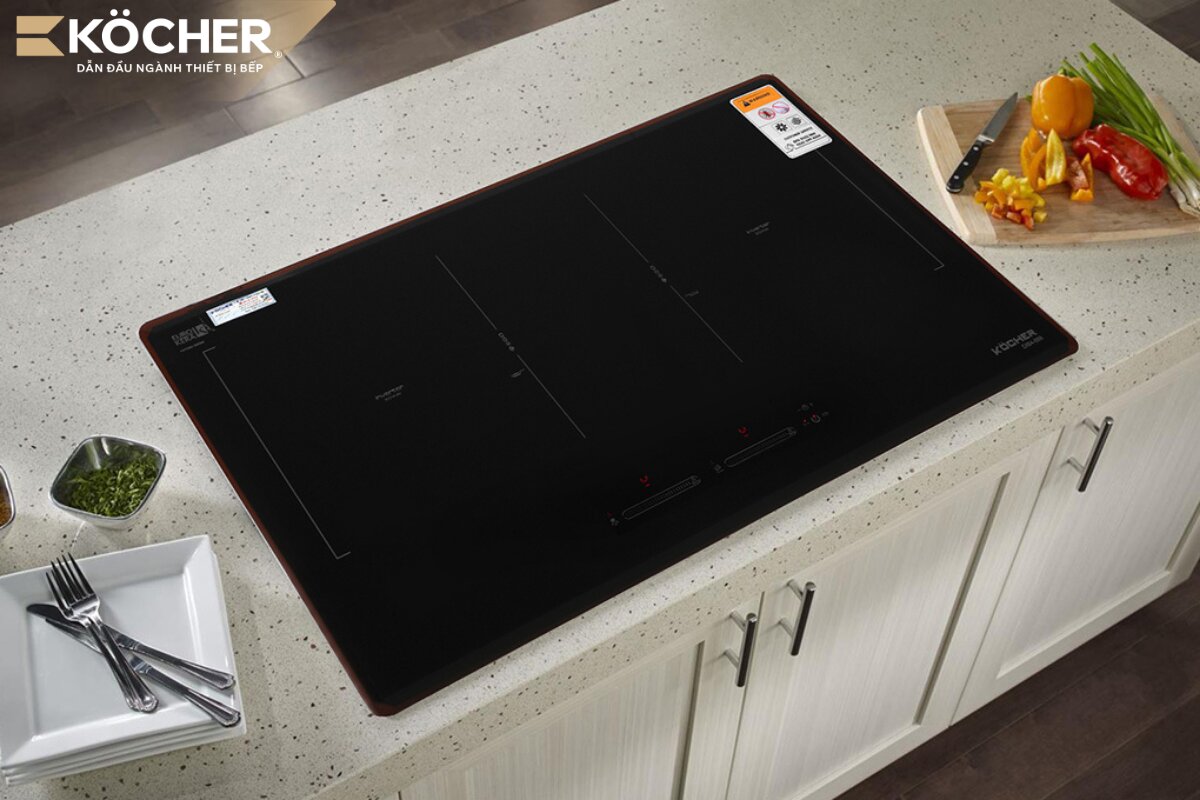
If you are living in an area with unstable electricity, consider the DIB4-888 induction hob from Köcher – a hob designed specifically to operate stably even when the voltage fluctuates.
Induction coil
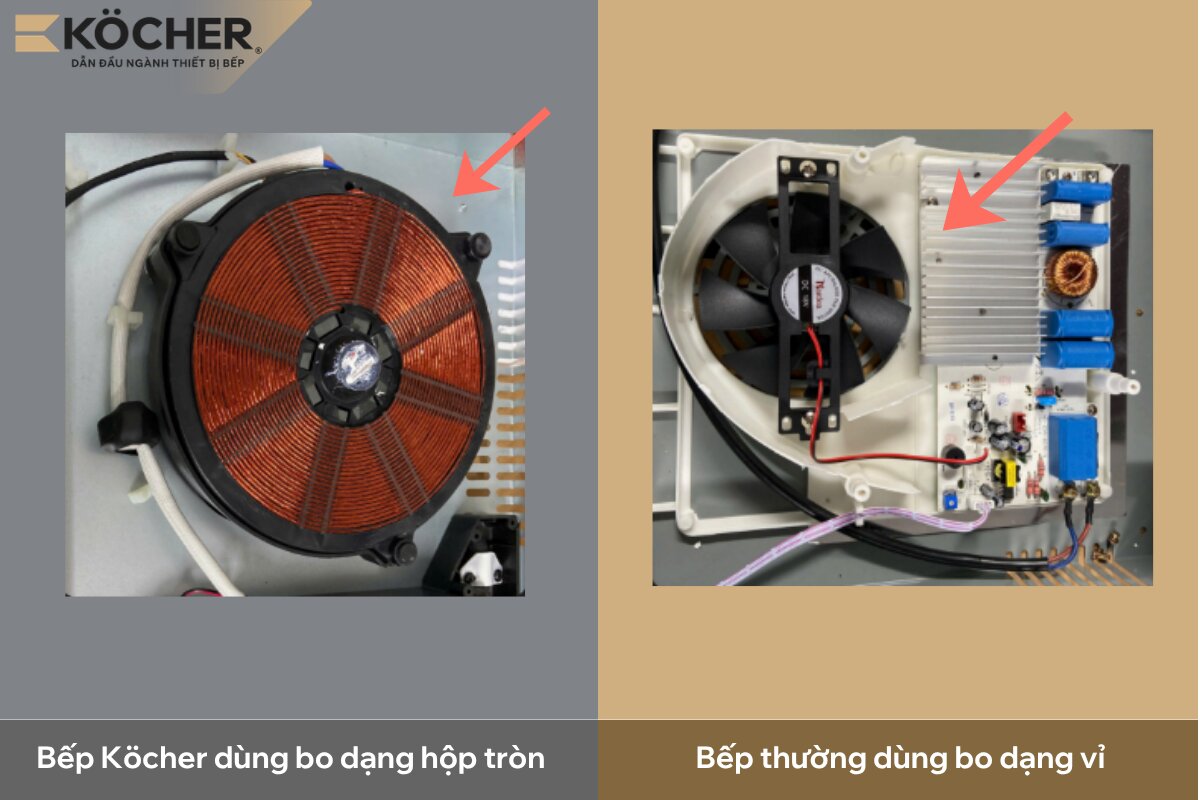
The induction coil is considered the “heart” of the induction hob, the component that generates the magnetic field to heat the bottom of the pot. The material of the induction coil directly reflects the heating efficiency, durability, and energy-saving capabilities of the device. Currently, induction coils are mainly made from two types: copper and aluminum, with significantly different efficiency and operating costs:
- Copper induction coil: This is a material with superior electrical and heat dissipation properties. Copper wire has lower resistance than aluminum wire, helping to reduce energy loss during the magnetic field generation process, thus heating more efficiently and saving more electricity. Copper coils are also more durable and less prone to oxidation over time in humid environments like Vietnam.
- Aluminum induction coil: Cheaper, lighter but has about 40% lower electrical conductivity than copper, thus requiring more electricity to achieve the same temperature.
When choosing an induction hob, you should prioritize models using copper coils to ensure stable performance and save electricity costs in the long run.
Control board system
The control board is the “brain” of the induction hob, responsible for processing signals, coordinating power, and activating protective mechanisms when abnormalities are detected. Currently, there are two common types of induction control boards:
- Sealed round box control board: Encased in a protective shell, completely isolated from the external environment. This type has better moisture resistance, is less affected by steam, and is suitable for the humid tropical climate of Vietnam.
- Open board control: Components are directly mounted on the circuit board without a protective casing. This type is more prone to mold over time, especially in households that cook frequently or have the hob near a water source.
When choosing an induction hob, prioritize models using sealed round box control boards to enhance moisture resistance from steam, ensuring durability in the Vietnamese kitchen environment. Users can intuitively control the functions of this control board through the modern induction hob buttons designed on the glass surface.
Cooling fan system
The cooling fan is responsible for cooling the IGBT power components and the control board during the hob’s operation, directly affecting the device’s lifespan. Currently, there are two common types of fans used in induction hobs:
- Squirrel cage fan (centrifugal fan): Designed in a snail shape, it draws air from the axis and pushes it out at a right angle, creating a higher pressure airflow, more effectively dissipating heat in enclosed spaces like kitchen cabinets. The fan operates quietly, with less vibration and is more durable due to the better protection of the blades against dust and grease.
- Axial fan (flat blade fan): Designed like a conventional fan blade, it draws and pushes air along the same straight axis, resulting in lower production costs, often found in common hob models. However, the airflow generated has lower pressure, less effective heat dissipation in enclosed spaces, and is more prone to dust accumulation on the blades causing axis jamming over time.
You should prioritize hobs using squirrel cage fans, especially for built-in hobs, where ventilation space is often limited. Squirrel cage fans create a stronger airflow, ensuring heat is effectively expelled, thereby significantly reducing the risk of overheating errors during long-term use.
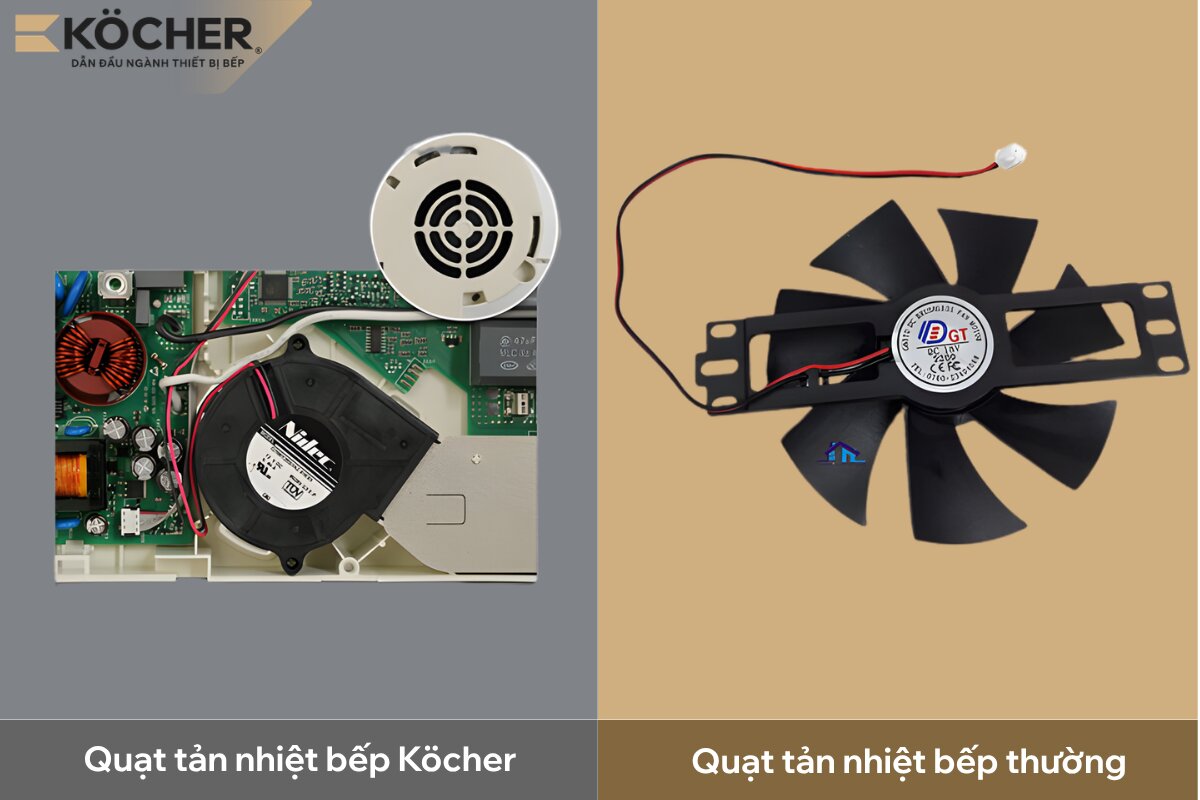
Köcher induction cooling fans are squirrel cage fans that help improve airflow.
Glass surface material
The glass surface is the part that comes into direct contact with the cooking pot and the kitchen environment daily, so the glass material greatly affects the durability, heat resistance, and electrical safety of the device. Currently, there are quite a few types of glass with different origins and characteristics on the market, specifically as follows:
| Type of glass | Origin | Characteristics |
| Schott Ceran | Germany | Top-quality ceramic glass, good heat resistance, extremely low thermal expansion coefficient, scratch-resistant and thermal shock resistant, long lifespan |
| EuroKera | France | Quality equivalent to or better than Schott Ceran in some high-end hob models, popular in European hob lines, with good heat resistance and electrical insulation |
| NEG (Nippon Electric Glass) | Japan | High-quality ceramic glass from Japan, good material uniformity, stable heat resistance, often found in high-end Asian hob lines |
| Hegon | Germany | Ceramic glass produced in Germany, of moderate quality, popular in the mid-range hob segment |
| Crystallite | China | Mid-range ceramic glass, commonly used in moderately priced hob models in the Asian market |
| Kanger | China | Common ceramic glass, often found in low-cost hob models, with basic heat resistance and scratch resistance |
| Keramik | China | Common ceramic glass, quality equivalent to the budget segment |
| Glass ceramic (Ceramic) | Many countries | Unlike specialized ceramic glass, this type has lower hardness and thermal shock resistance, often found in infrared or resistive electric hobs rather than induction hobs |
In general, prioritize hobs using Schott Ceran or EuroKera if you need long-lasting durability and the highest electrical safety. If the budget is more limited, NEG is a worthy consideration in the mid-range segment. As for ceramic glasses produced in China, the quality is inconsistent between batches, so prioritize products with independent international certifications.
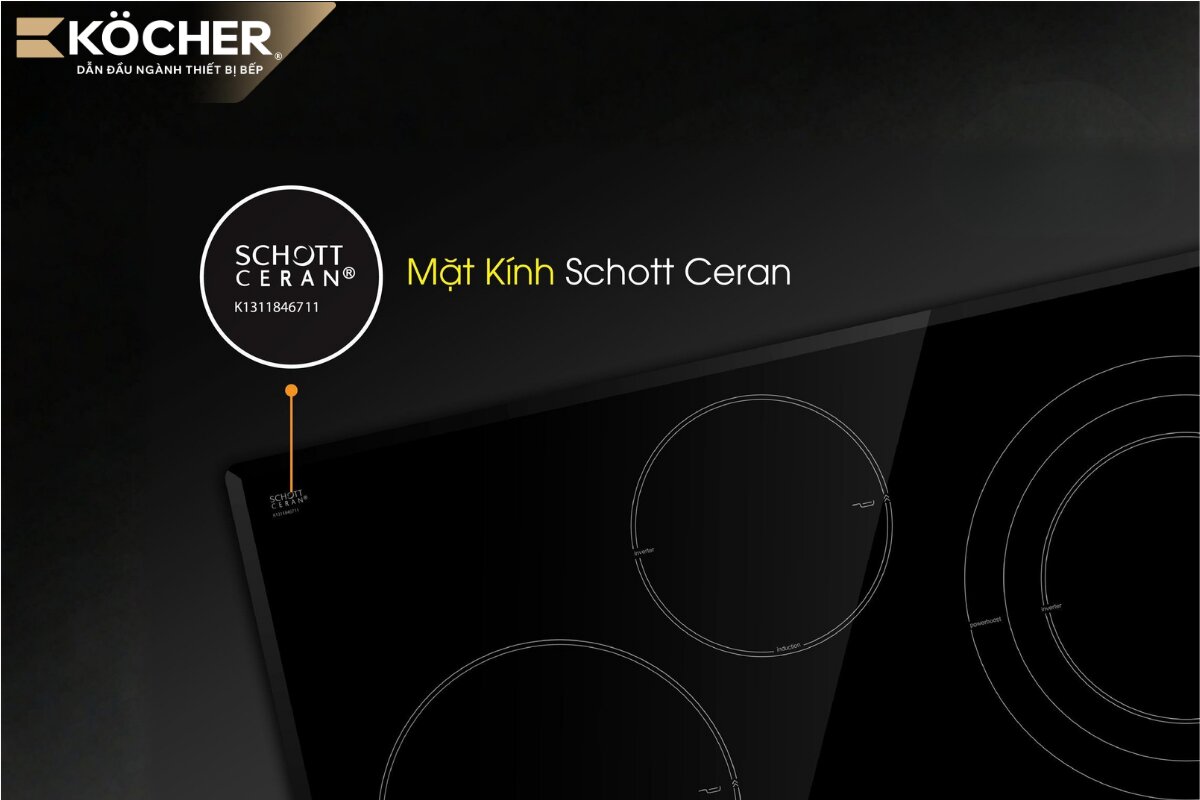
To better understand the types of glass for induction hobs, you can refer to the article The best types of induction hob glass and 5 evaluation criteria
Features of induction hobs
The features reflect the practicality of the device in daily use and ensure user safety. Below are common features and their practical effects:
Feature
Effect
Timer
Automatically turns off the cooking zone after the set time, preventing forgetting the hob when cooking for a long time
Child Lock
Disables the control panel, preventing children from accidentally turning on or changing the hob’s mode
Automatic pot detection
Automatically detects when a pot is placed on or lifted off, cutting off the corresponding cooking zone to save electricity
Residual heat warning
Displays “H” on the screen when the glass surface is not completely cool, preventing burns
Auto-off when no pot is present
When a pot is lifted off the hob for a certain period without being replaced, the hob will automatically turn off that cooking zone, preventing electricity waste and reducing the risk of overheating the glass surface
Auto-off when forgotten
If the hob operates continuously for a long time without any adjustments from the user, the system will automatically cut off to ensure safety, especially useful when accidentally leaving the hob on
Overflow warning
Sensors detect sudden changes on the glass surface when food or boiling water overflows, sending a warning signal for the user to handle in time, preventing liquids from seeping into the hob’s gaps causing damage
While using, if you see strange characters displayed on the screen, you can refer to the induction hob symbols article to accurately decode what these messages mean. When choosing, you should prioritize features that truly match your family’s cooking habits. For families with young children or elderly people, safety features such as child lock, auto-off when forgotten, and residual heat warning should be prioritized. For those who cook frequently, timer and automatic power management will be the two features that provide the highest practical value in daily use.
Installation methods
The installation method informs you whether the hob is designed to be embedded into the countertop or placed independently on the surface, thereby affecting the construction and layout of the kitchen space.
Built-in:
The hob is cut into the countertop, with the glass surface level with or slightly lower than the countertop surface by a few millimeters. This is the most common installation style for household induction hobs today.
- Advantages: High aesthetics, neat, easy to clean the entire hob surface.
- Disadvantages: Requires cutting the countertop, needs to ensure the ventilation space underneath according to the manufacturer’s requirements (usually at least 5cm).
On-top:
The hob is placed directly on a flat surface, no need for cutting the countertop.
- Advantages: Flexible, easy to move, no construction required.
- Disadvantages: Less aesthetic than built-in, usually only suitable for simple kitchen spaces or portable hobs.
When choosing the installation method for the hob, for fixed household hobs, built-in is the optimal choice for aesthetics and cleanliness. If you are renting or need a portable hob, on-top installation will be more convenient and save construction costs.
[caption id="attachment_10853" align="aligncenter" width="1200"]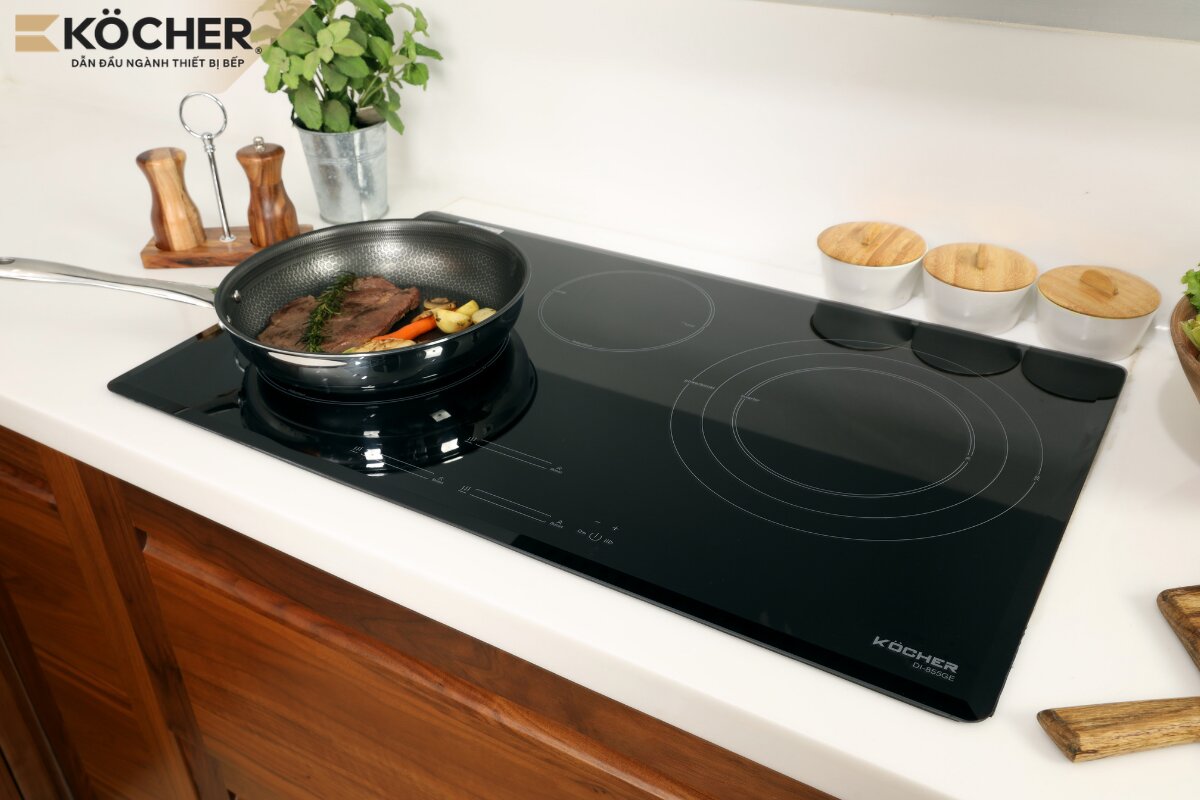 Built-in induction hobs have high aesthetics and are easier to clean than on-top hobs.
Origin
The origin reflects the country of manufacture or assembly of the product, and is often accompanied by the quality inspection standards of that country.
- European origin (Germany, Italy, Sweden): Comply with strict EU electrical safety standards, components usually have clear origins and independent inspections.
- Korean, Japanese origin: Good production quality, strict control but higher costs.
- Chinese origin: Quality varies greatly depending on the manufacturer. Some factories in China produce for European brands with strict export standards, while many low-cost products do not meet safety standards.
Number of cooking zones
The number of cooking zones reflects the ability to cook multiple dishes at once and the family’s usage needs. The appropriate number of cooking zones will depend on the family size and cooking frequency:
- 1 cooking zone: Suitable for those living alone, simple cooking, or used as a secondary hob.
- 2 cooking zones: Suitable for families of 2 – 4 people, average daily cooking needs. This is the most popular choice for apartments.
- 3 cooking zones: Suitable for families of 4 – 6 people or those who often cook multiple dishes at once, with a habit of having full meals.
- 4 cooking zones or more: Suitable for large families, frequently hosting parties or having professional cooking needs.
In addition to the number, pay attention to the layout of the cooking zones. Some hobs have flexible cooking zones or zones that can be paired, providing greater flexibility when using long pots or large pans.
[caption id="attachment_10849" align="aligncenter" width="1200"]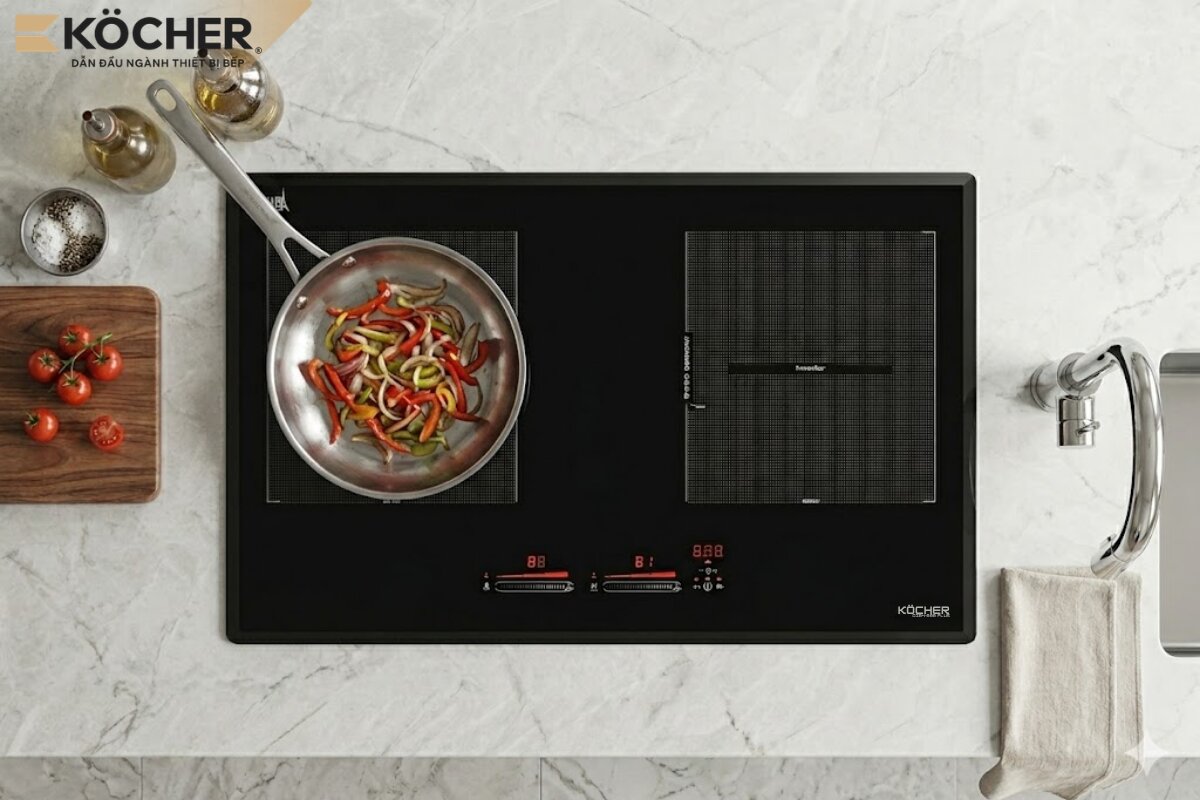 Double induction hobs are suitable for most Vietnamese families.
Wire core structure
The wire core here refers to the power supply wire from the socket to the hob, often overlooked but directly affects electrical safety in the household. When choosing an induction hob, you should prioritize wires with pure copper cores for stable electricity conduction and resistance to oxidation over time. Additionally, the wire should have 5 cores instead of 3, with a minimum cross-section of 2.5mm² for hobs under 4000W and 4mm² for hobs of 4000W and above to reduce the risk of local overheating and burning the protective casing when under high load.
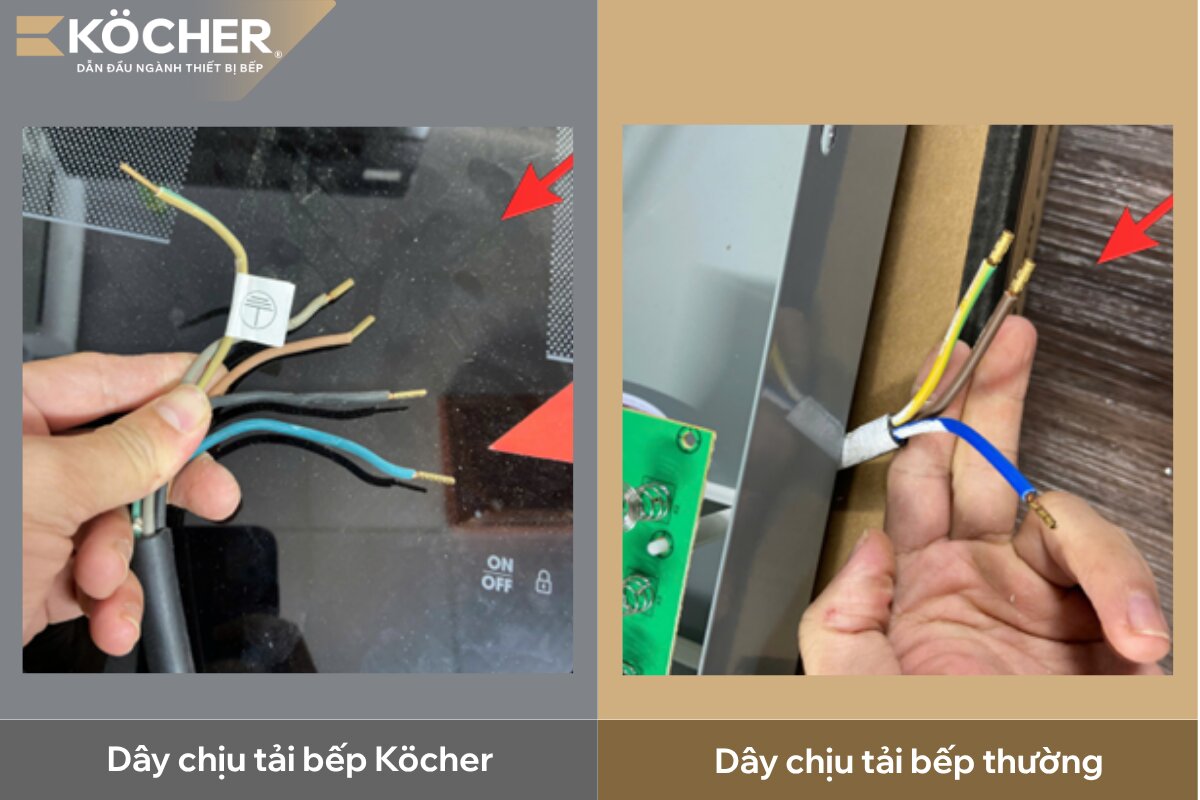 Köcher induction hobs have a 5-core structure instead of 3 cores to avoid overheating.
International certifications that should be on induction hobs
In addition to technical specifications, international certifications are objective evidence of the product’s quality and safety, inspected by independent organizations rather than self-declared by the manufacturer. Below are the two most important certifications you should look for on the label or product documentation.
VDE standard (Germany)
VDE (Verband der Elektrotechnik) is one of the strictest electrical inspection standards in the world, issued by the German Association for Electrical Engineering, Electronics and Information Technology.
This standard directly reflects the insulation capability of the glass surface, thermal durability of the components, and the level of dielectric leakage of the entire device. A hob that meets VDE certification means that the insulation and thermal resistance of the components have passed rigorous testing and are within safe limits for users, even in case of incidents. For families with young children or elderly people, this certification should be prioritized when making a choice.
EMC standard
EMC (Electromagnetic Compatibility) is the electromagnetic compatibility standard, ensuring that the device operates stably in environments with many surrounding electronic devices.
The EMC standard reflects the electromagnetic radiation index and the immunity to interference of the control board. Hobs that meet EMC standards will not interfere with other electronic devices in the home such as TVs, phones, refrigerators, or especially hearing aids. At the same time, the hob is also capable of resisting electromagnetic interference from the surrounding environment, ensuring the control system operates accurately and is not disrupted by signal noise.
Frequently asked questions about induction hob technical specifications
Below are quick answers to common questions users often encounter when learning about induction hob technical specifications.
Why is the cut-out size always smaller than the glass surface size?
The cut-out size is always smaller than the glass surface so that the glass edge has a support point, helping the hob to be securely held and not fall through during installation. This design also helps cover the cut edges, enhancing aesthetics and creating necessary gaps for heat dissipation.
What power level is suitable for induction hobs?
For families of 2 – 4 people cooking normally, a double hob with a total power of 3500W – 5000W is sufficient. For larger families or those who often cook large quantities, it is advisable to choose hobs from 5000W and above to ensure efficiency.
Which type of induction hob glass is the best?
Currently, Schott Ceran (Germany) and EuroKera (France) are the two highest-rated ceramic glass lines on the market, with high heat resistance and significantly better scratch resistance compared to ordinary ceramic glass.
Which specifications should be prioritized when choosing induction hobs?
When choosing an induction hob, you should prioritize specifications regarding the induction coil, control board, and glass surface material. The induction coil determines heating efficiency and stability during cooking, while the control board directly affects the durability and long-term operation of the hob. Additionally, high-quality glass ensures good resistance to force and heat, ensuring safety during use.
Understanding the technical specifications of induction hobs not only helps you compare products more easily but also forms the basis for making smart purchasing decisions, avoiding overlooking factors that truly affect performance and durability. Take the time to compare each specification with your actual needs before choosing to own a quality induction hob that fits your family.
If you are looking for high-quality induction hobs, consider Köcher’s products. With transparent disclosure of technical specifications of induction hobs, from the material of the induction coil, type of control board to the origin of each component, Köcher proudly offers durable and high-class cooking solutions for your family.
|
Köcher induction hobs pioneer German technology – For detailed product information, please contact:
|