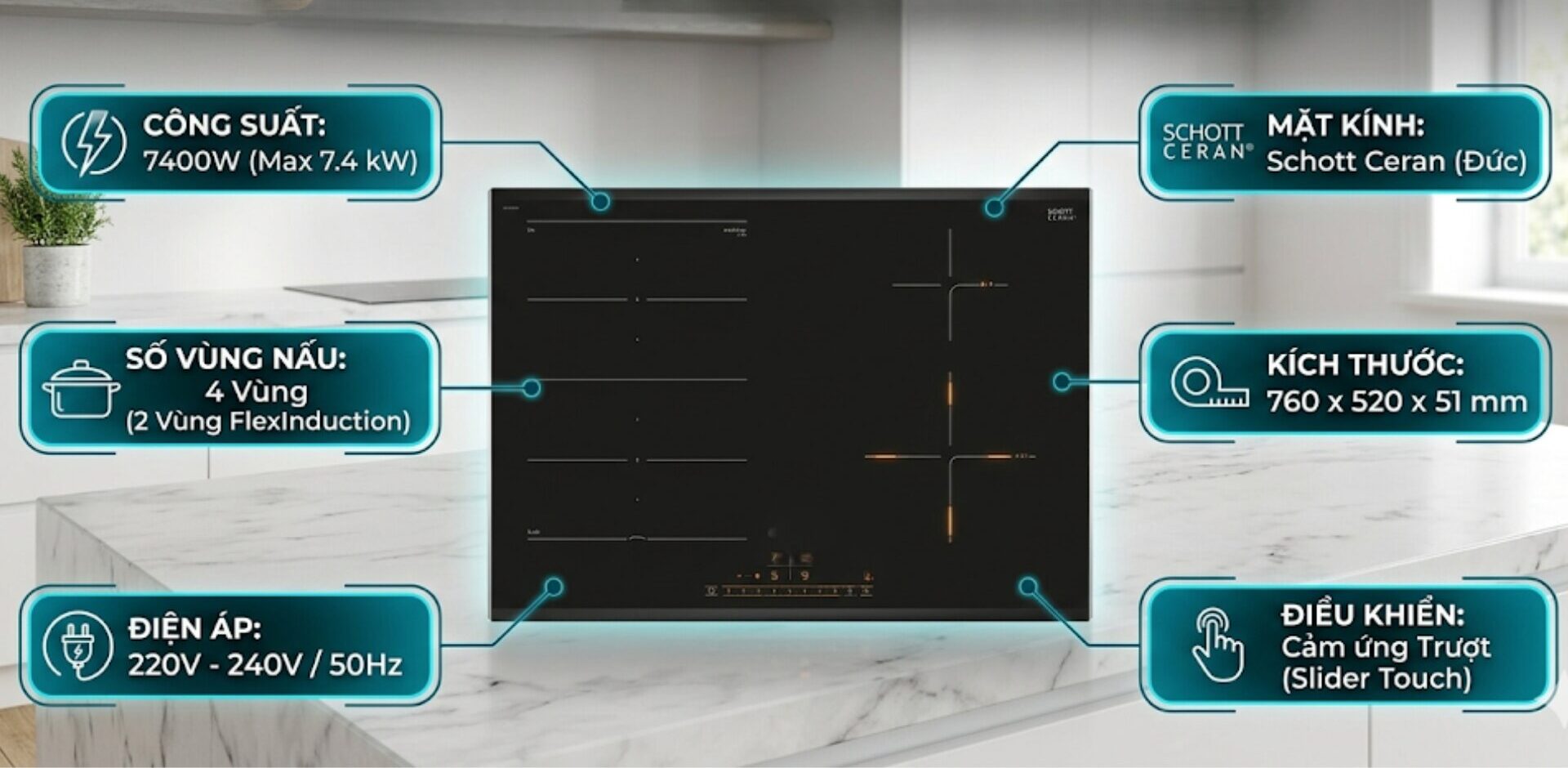
Induction hob continuously turning off is a common issue that interrupts cooking, causing the food not to heat evenly and rapidly reducing the lifespan of the circuit board. This situation may arise from choosing incompatible cookware or due to internal component faults. This article will analyze 10 causes and guide you on how to safely handle this hob error at home.

| Note: The induction hob continuously turning off is a condition where the hob is powered on, has detected the pot, and has started the heating process (or partially cooking the food), but during operation, the hob continuously stops automatically, then restarts or completely turns off, causing the temperature to not be maintained steadily. |
Pots and pans with low metal content, uneven distribution
This situation often occurs when users use low-quality cookware sets that have a thin magnetic base or insufficient iron content.
- Cause: Cheap cookware sets often have low magnetic iron content or the metal layer at the bottom is unevenly distributed. When the hob operates, the magnetic field cannot maintain stable interaction with the pot’s base, leading to the microprocessor detecting intermittent signals. Using incompatible pots not only causes power interruptions but also leads to the phenomenon of uneven boiling, affecting the quality of the dish.
- Solution: You should prioritize using a set of stainless steel 430 or cast iron cookware with strong magnetism. A practical way to check is to use a magnet to test the pot’s base; if the magnet sticks firmly and decisively at all points on the bottom surface, the hob will operate smoothly without interruptions.
Poor contact at the pot’s base due to warping or pot slippage
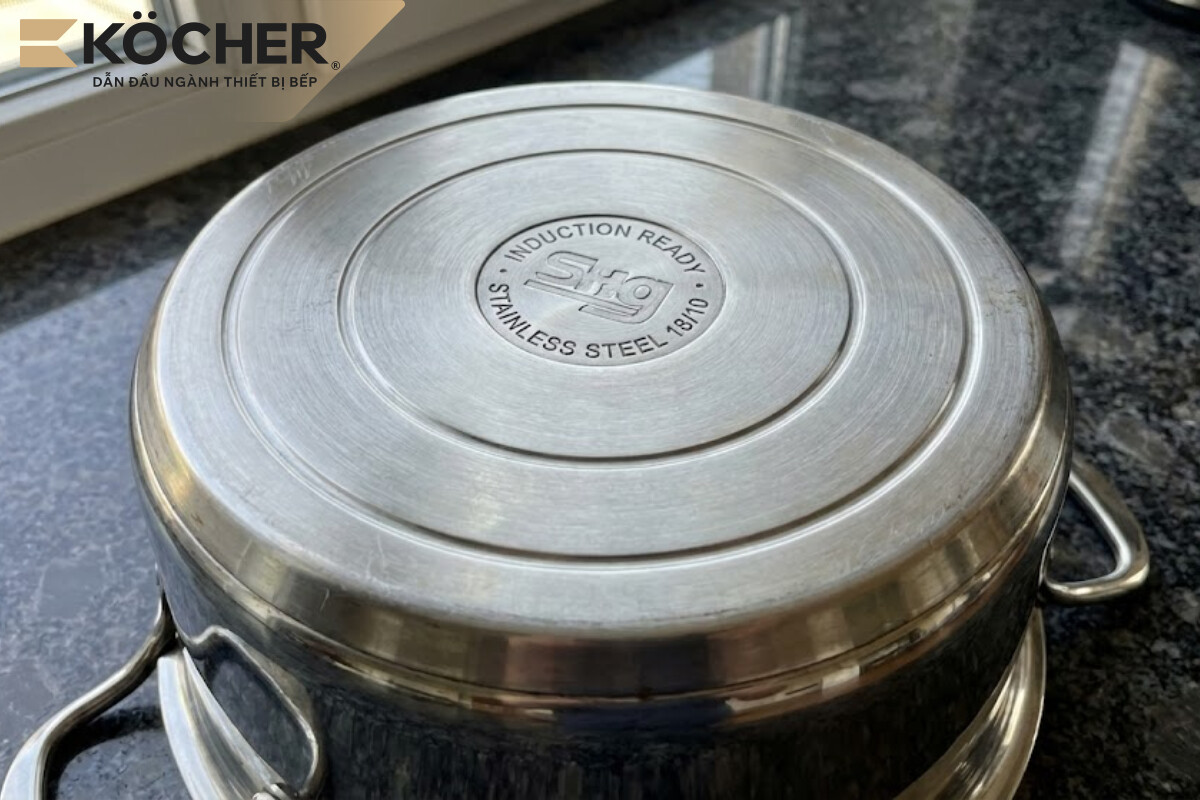
Even if the pot has good magnetism, if the contact area is not ensured, the phenomenon of the hob continuously turning off will still occur.
- Cause: A deformed pot base (curved, bulging) causes the distance between the induction coil and the pot’s base to be inconsistent. Additionally, a wet hob surface or oil causing slipperiness can also cause the pot to slip out of the cooking zone, breaking the magnetic connection. The telltale sign is that the hob often reports error E1 when trying to restart.
- Solution: Use pots with a flat base and regularly wipe the hob surface dry before cooking. If the glass surface is too slippery, consider using Köcher’s X-Nano textured glass hob to increase friction, helping to stabilize the pot at the center of the cooking zone and reduce interruptions due to slippage.
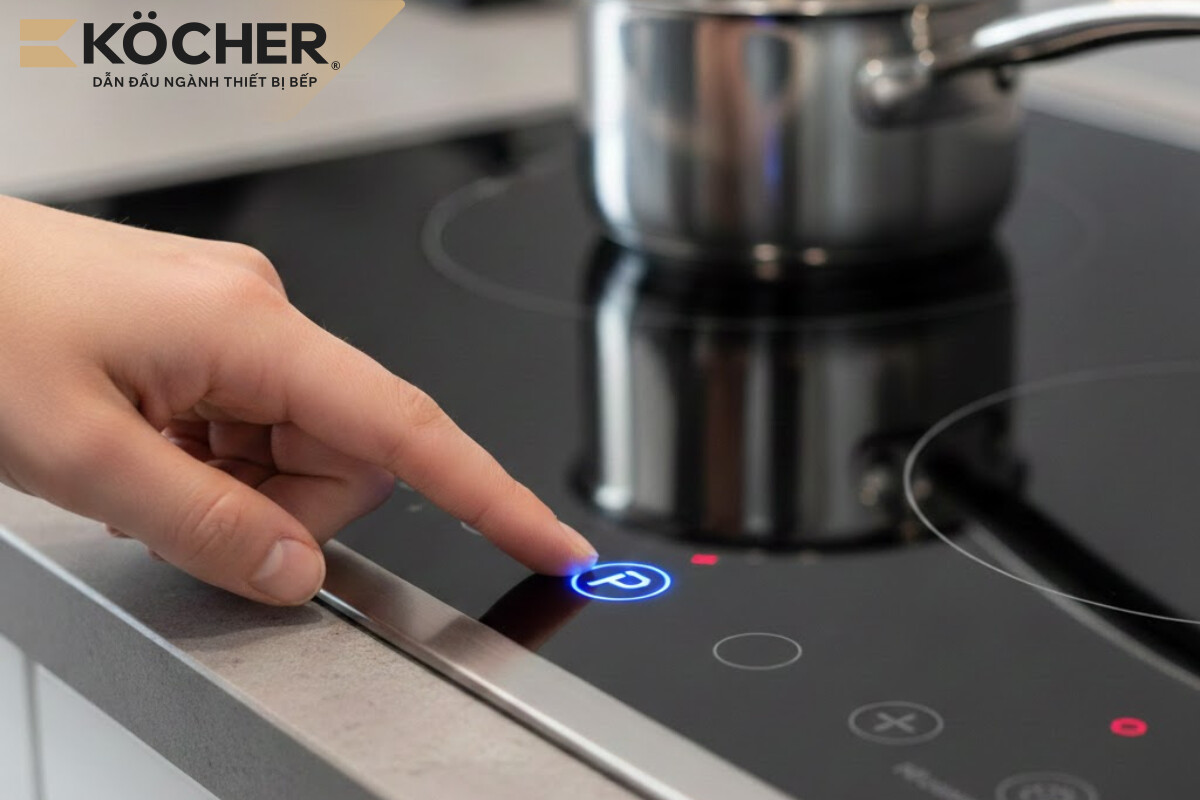
Touch control panel malfunction
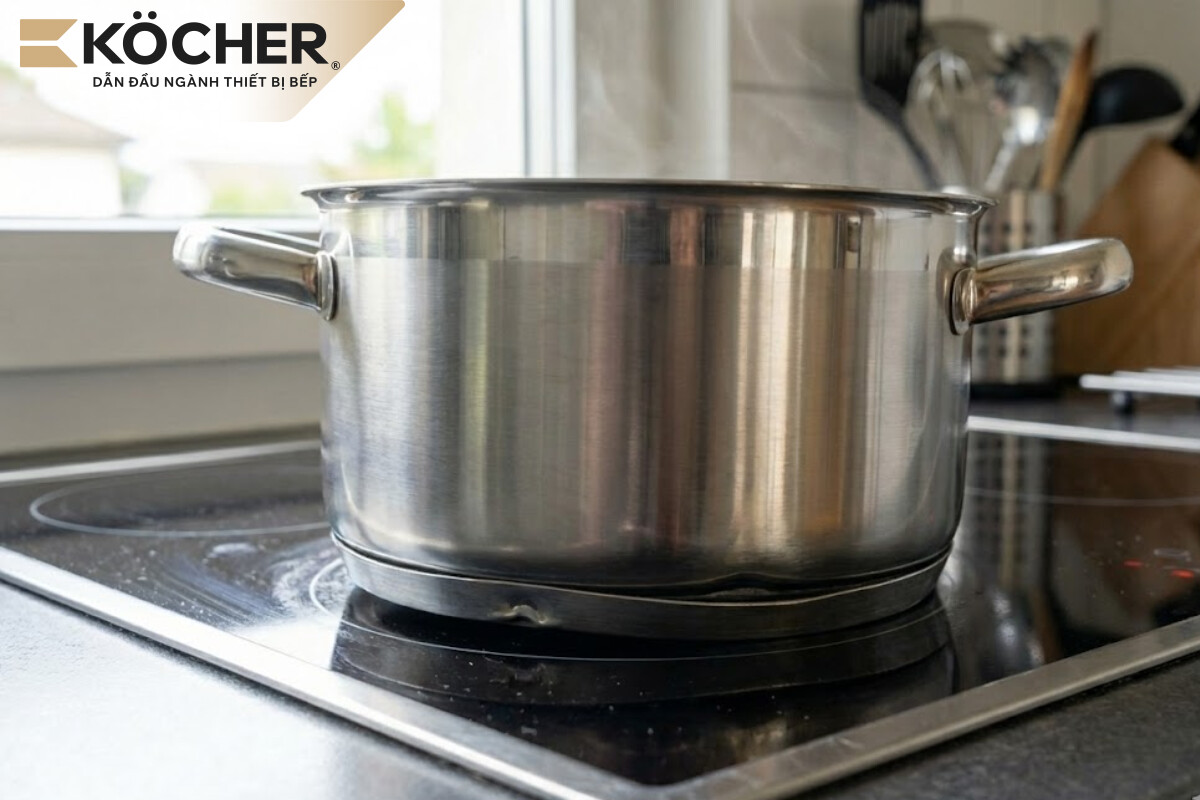
The control panel is the area that receives commands to perform all operations; if this component malfunctions, the hob will not operate as desired.
- Cause: Oil and grease buildup or water pooling on the touch key area changes the capacitance of the glass surface. Especially if the controller underneath is damp, command signals will be disrupted, causing the hob to automatically cut off power continuously even if the user does not directly operate it.
- Solution: Use a soft dry cloth to clean the control panel area. If the fault originates from the inside, contact a professional technician to check and replace genuine components, avoiding unauthorized disassembly that could damage the hob’s structure.
Unstable power supply voltage
Quality induction hobs often require a stable input power supply to maintain operational capability and component lifespan.
- Cause: During peak hours (usually from 6 PM to 8 PM) in densely populated areas, poor electrical infrastructure may cause the grid voltage to drop below 170 – 190V due to too many electrical devices operating simultaneously. When the power supply is insufficient to maintain operation for high-power circuits, the microprocessor will automatically cut off heating to prevent burning out the power filter capacitor and will only resume operation when the voltage recovers.
- Solution: Use a voltage stabilizer if your area has unstable grid electricity. Additionally, you may consider the Köcher induction hob DIB4-888 with E.G.O components designed specifically for the Asian market, where many areas have unstable voltage.
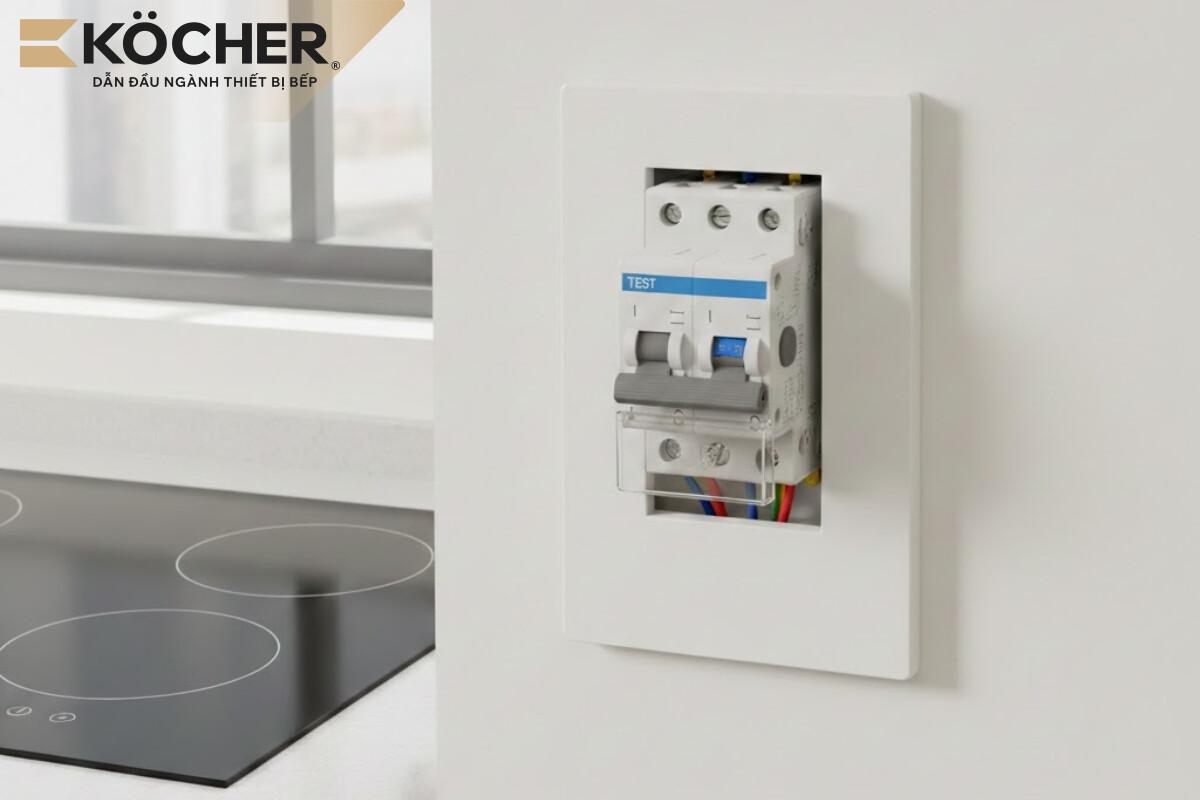
Intermittent circuit breaker or loose power plug
Physical connections are often overlooked when checking for continuous induction hob errors.
- Cause: After prolonged use, the springs inside the socket may stretch or the circuit breaker contacts may oxidize, causing tiny electric sparks. When the current increases, the contact point heats up and expands, causing the electrical connection to be interrupted. After cooling down, the connection resumes, creating a continuous interruption cycle. This is also the reason why the main power supply system for induction hobs may be intermittent, disrupting the entire cooking process for the user.
- Solution: Check the power plug and the connections to the circuit breaker for any signs of looseness. If you notice any deformation of the plug’s plastic or black burn marks, you need to replace the connecting device with a new one that has a minimum load capacity of 20A to ensure safe electrical transmission.
Overusing the Booster mode causes the hob to continuously turn off
The Booster mode helps cook quickly but needs to be used correctly to avoid overload.
- Cause: The Booster mode pushes the power to maximum levels (from 3000W – 3700W), generating a large amount of heat at the IGBT and induction coil. If this state is maintained for too long, the sensor system will activate a cut-off command to prevent component damage due to overheating.
- Solution: Only use the Booster mode for a short period (about 5 – 10 minutes) to quickly boil water or stir-fry. After that, switch to a lower power level to ensure even and stable heat distribution without harming the components.
Hob dissipating heat slowly due to cooling system issues
An inefficient cooling system causes electronic components to overheat and must cut off power to protect themselves.
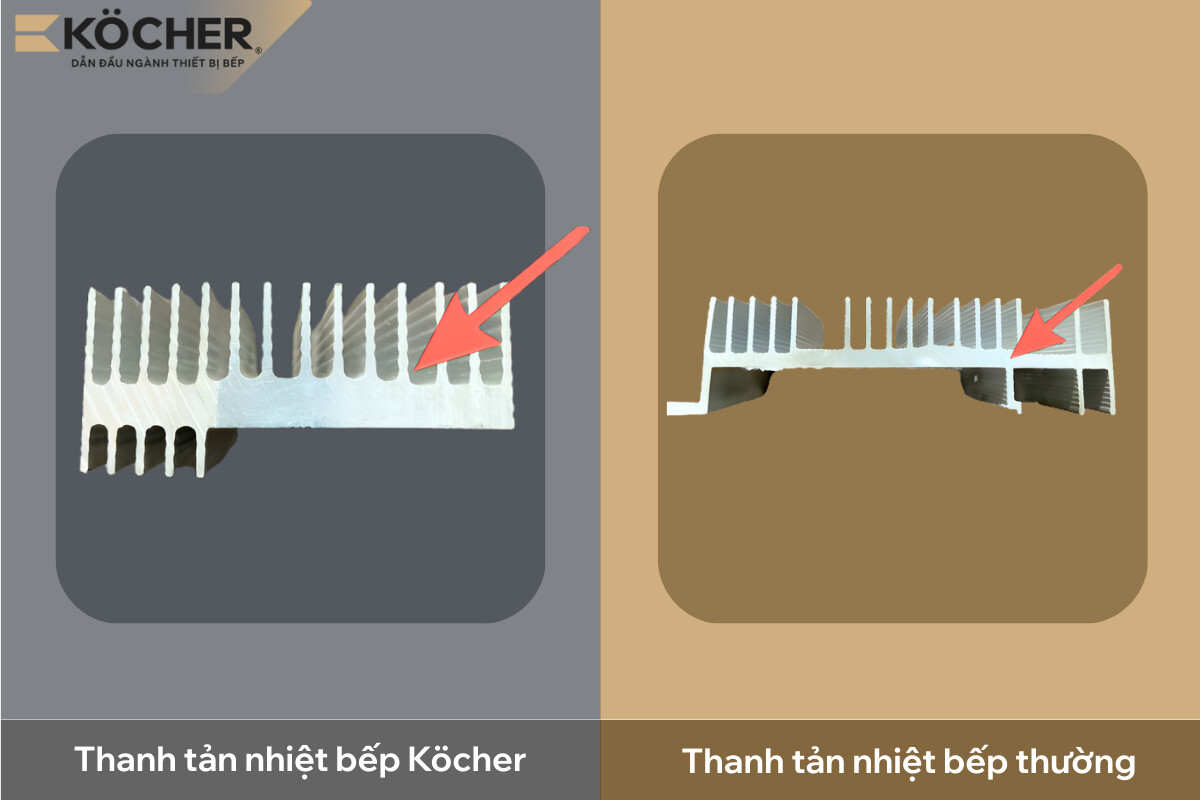
- Cause: The cooling fan may be stuck by fabric fibers, dirt, or grease buildup, reducing airflow. When this happens, hobs with thin aluminum heat sinks and few heat dissipation grooves will cause the IGBT to heat up quickly, forcing the system to cut the circuit to cool the components.
- Solution: Use a handheld vacuum cleaner or soft brush to clean the hob’s ventilation slots every 3 – 6 months. During cleaning, do not spray water directly onto the fan; instead, use a slightly damp cloth to gently wipe the fan guard to remove the sticky grease layer. If the fan is completely damaged, contact the warranty center to replace genuine components to maintain optimal cooling performance for the circuit board.
When the cooling fan is weak, the hob’s power will automatically reduce to protect the circuit, with the most obvious manifestation being weak induction compared to normal.
Poor wiring causing the hob to turn off due to overheating
Using wiring that does not match the actual power of the device is a common cause of circuit interruptions due to local current overload.
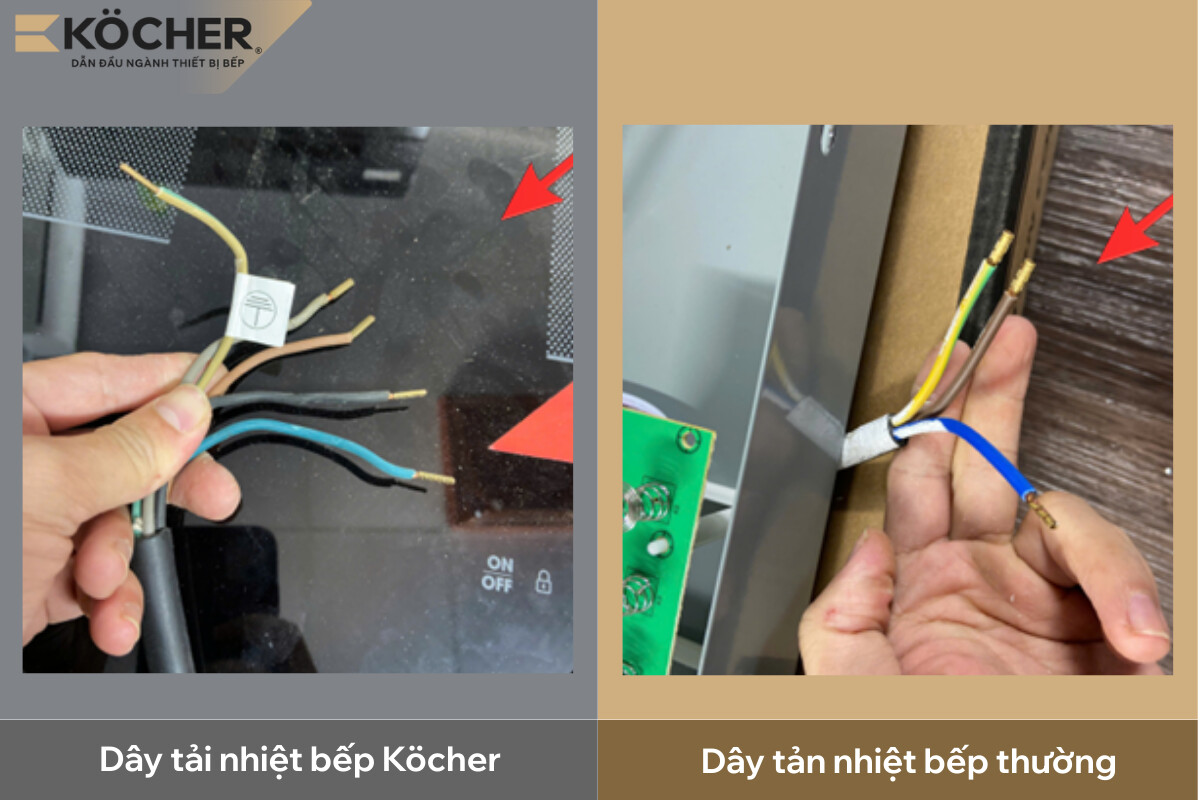
- Cause: Induction hobs using 3-core power cables often have poor load capacity. When the hob operates at high power, small wires will overheat, causing sudden voltage drops. This situation makes the current supplied to the power circuit unstable, and the hob will automatically turn off to prevent short circuits, protecting the household electrical system.
- Solution: Check the power cable for signs of overheating or melting plastic. You can refer to the process of Wiring the induction hob with 5 wires to replace it with a high-load power cable system (5-core large cross-section type) and connect it through a separate circuit breaker instead of using a regular plug to ensure stable and safe electrical transmission.
Improper induction coil material or broken copper wire
Issues with the induction coil can also cause the hob to operate intermittently or not detect the pot.
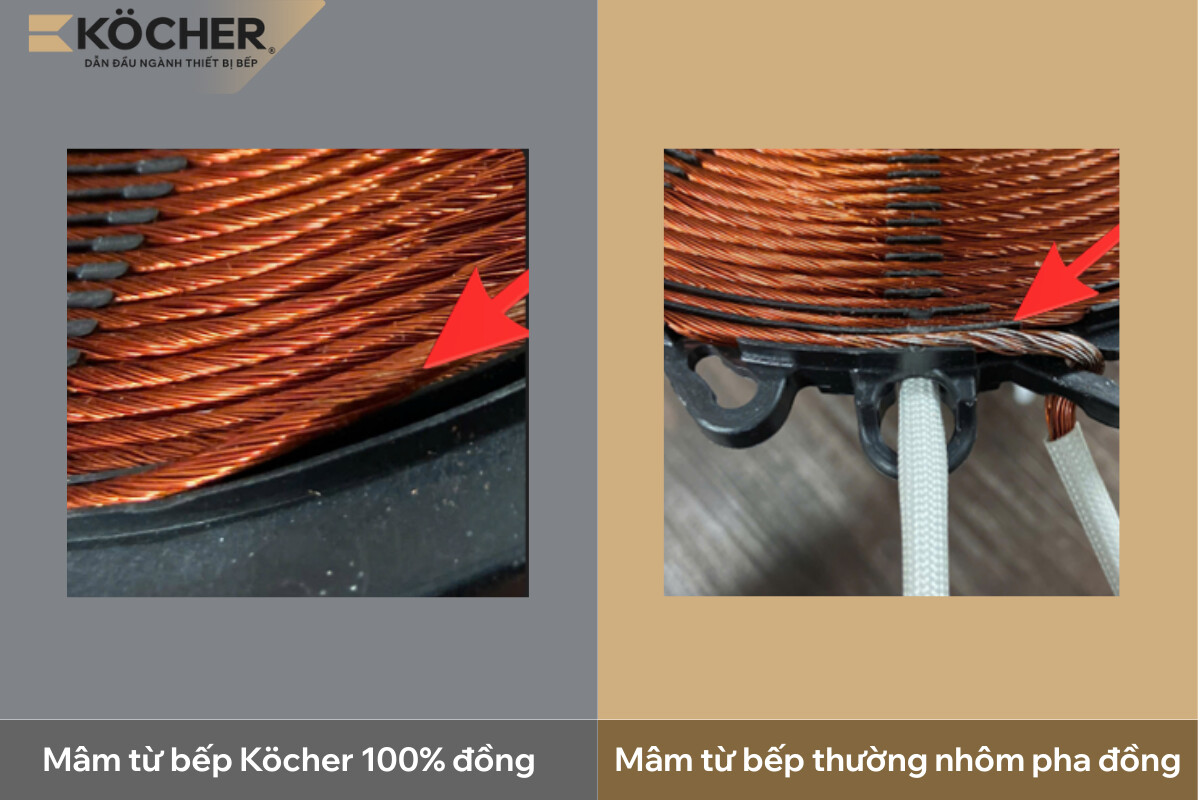
- Cause: Low-quality induction hobs use induction coils made of aluminum or aluminum alloys, which expand quickly at high temperatures, easily deforming and breaking connections after a short period of use. When the wire breaks, the generated magnetic field weakens and becomes unstable, causing the hob to turn off mid-operation. To better understand the structural role of this component, users can refer to the guide What is an induction coil? Understanding the types of induction hobs to identify the most accurate induction coil types.
- Solution: If the hob emits a loud buzzing sound or does not detect the pot, contact a technician for inspection. You can replace it with a 100% pure copper induction coil to ensure better magnetic detection capability.
Blown thermal fuse
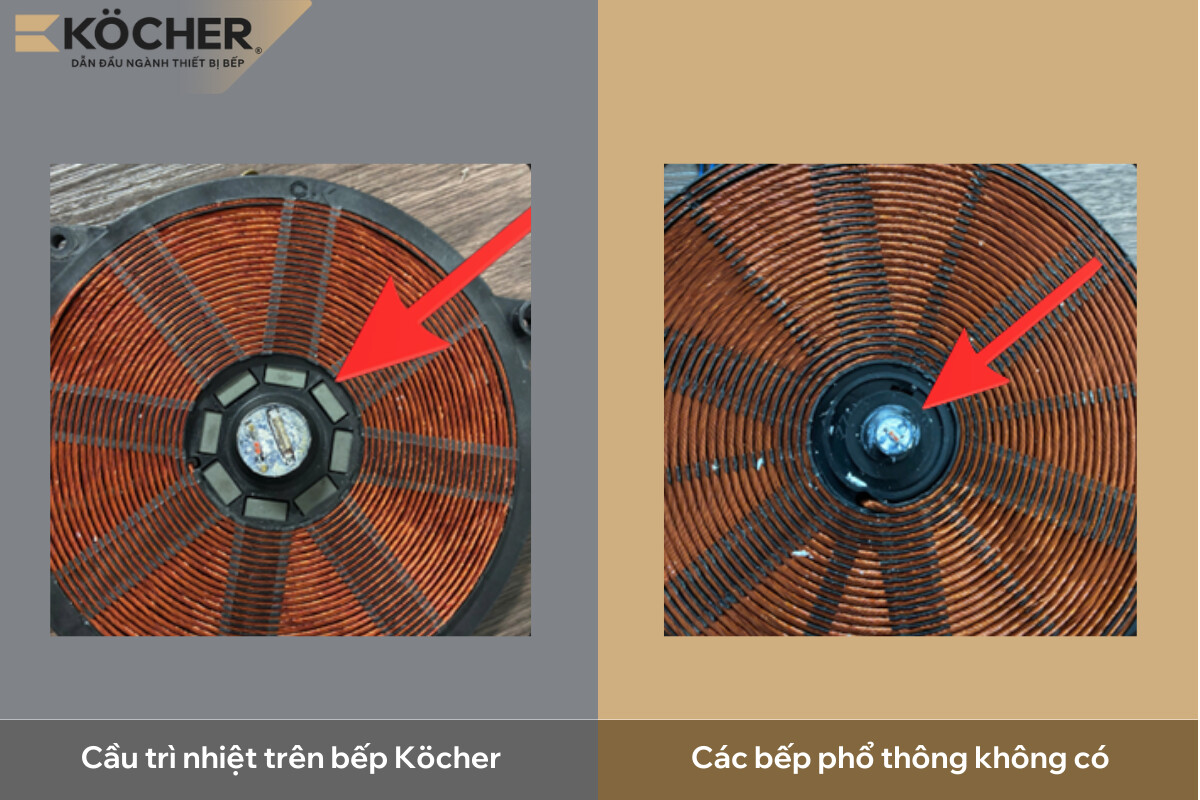
A blown thermal fuse is a sign that the hob has turned off to prevent more serious fire hazards.
- Cause: The thermal fuse is located close to the induction coil or IGBT. If this component becomes aged or damaged (circuit broken), the hob will not be able to maintain power to the cooking zone, causing continuous on-off or complete shutdown of the hob.
- Solution: Never bypass the thermal fuse; call a professional technician to check the cause of overheating and replace the thermal fuse with a new one that meets specifications. This fault can also cause the hob not to heat even though the power light is still on.
Notes when encountering the continuous turning off induction hob error
When the induction hob shows signs of unstable operation, you need to note:
- Temporarily stop using the hob: If the interruption occurs continuously, you should stop cooking as the issue may relate to internal component faults.
- Do not disassemble on your own: Components inside the induction hob are very complex; unauthorized disassembly without expertise can cause more serious damage and void the warranty.
- Do not abruptly unplug or trip the circuit breaker: If the hob just turned off, wait about 5 – 10 minutes for the cooling fan to cool the components before unplugging. Keeping the hob on without turning it off only consumes a very small amount of electricity to maintain standby mode. You can refer to the article on whether the induction hob consumes electricity when not unplugged to understand this issue better.
- Stop troubleshooting at home if the hob does not respond: If you have checked the basic faults and the hob still does not operate, contact the warranty center for an expert to check the power circuit and internal components.
- Check the displayed error code: Observe the screen to see if the hob displays any error codes (such as E1, E3, E5) to provide accurate information to the technician when repairs are needed.
- Wipe the pot’s bottom and the glass surface dry: Use specialized cleaning liquid and a soft cloth to dry the glass surface and the pot’s bottom before cooking to avoid the hob not detecting the pot.
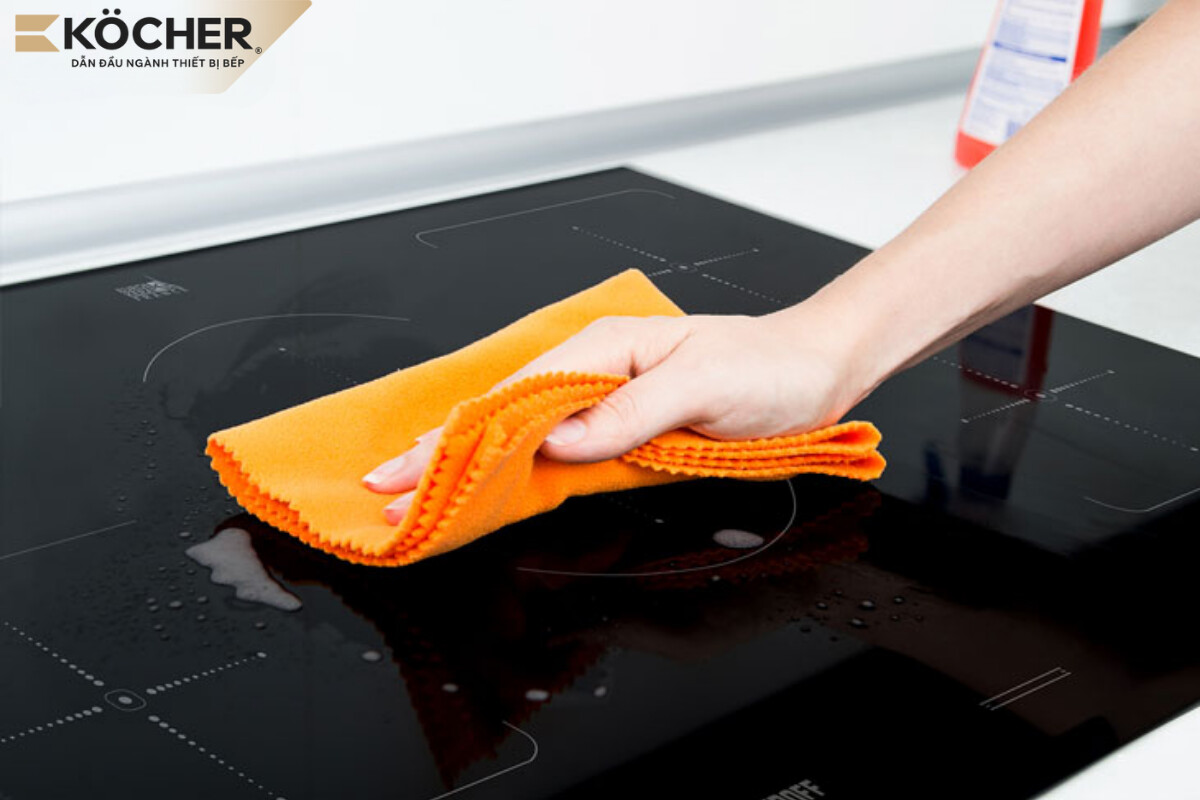 Use glass cleaner and a soft cloth to dry the induction hob before use.[/caption>
Hopefully, the detailed analysis of the causes and solutions for the induction hob continuously turning off above has helped you gain more knowledge to operate your kitchen safely and effectively. Understanding the principles of device operation not only helps to quickly resolve issues but also extends the product’s lifespan.
With superior X-Nano scratch-resistant glass technology and E.G.O components designed in Germany, Köcher proudly offers durable and high-class cooking solutions for your family.
|
Köcher induction hob pioneers German technology – For detailed product information, please contact:
|