Be cautious with the cooking equipment in your kitchen, as it always poses risks of serious health issues, even endangering your life and that of your family members. In this article, Kocher shares information on the topic of whether stainless steel cookware is toxic, to provide you with the best answers.| How to use newly purchased stainless steel cookwareThe truth about whether stainless steel cookware is toxic?
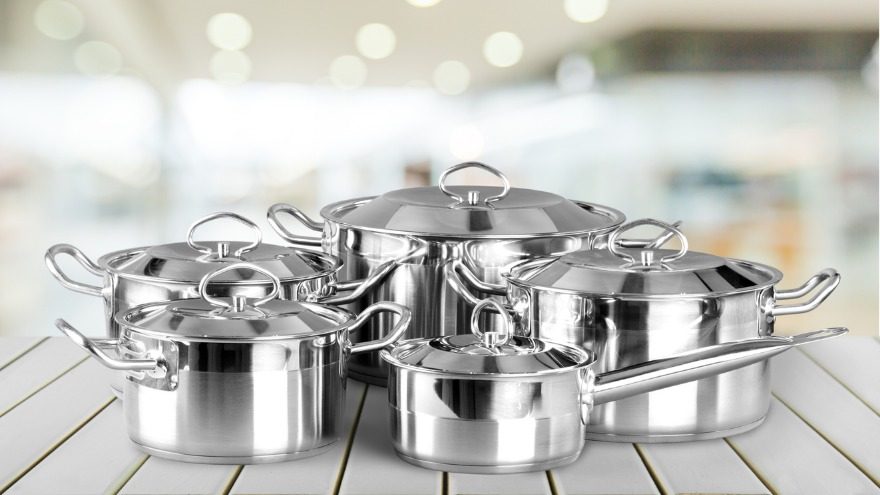
However, there are many types of stainless steel cookware. To date, there are over 150 types of stainless steel based on combinations of metals. Common stainless steel cooking utensils are made from various alloys, including scrap metals.
-
Series 200 stainless steel (Inox 201):
Composed of 16-18% Cr, 3.5-5.5% nickel, 0.15% carbon, and 5.5-7.5% manganese. To reduce production costs, unreliable cookware manufacturers sometimes substitute part of the nickel content with manganese.
These are usually non-magnetic stainless steel cookware that cannot be used on imported induction cooktops. Its advantage is its low cost; however, they are prone to corrosion and this type of stainless steel is toxic to health when cooking.
-
Series 300 stainless steel: Divided into 2 types
The minimum composition includes 18% chromium and 8% nickel, plus a maximum carbon content of 0.08%. Therefore, it is also known as Inox 18/10. When it comes to cooking utensils, Inox 304 is the most commonly used stainless steel. This non-magnetic material is very shiny due to its higher chromium and nickel content. Compared to the Inox 201 line, Inox 304 has better rust and corrosion resistance. Its disadvantage is that it tends to rust when exposed to salt.
It consists of 16% chromium, 14% nickel, and 2% molybdenum. This makes this type of steel expensive, so there are not many cooking utensils made from it. This is the best steel for stainless steel cookware; if you can afford it, you may want to try this set. However, 316 is non-magnetic and incompatible with induction cooktops.
316 is high-quality stainless steel known for its excellent corrosion resistance. In fact, it is also called marine-grade stainless steel because it can withstand corrosion from salt exposure and is often used in marine applications. Inox 316 also has many medical applications and is referred to as surgical stainless steel.
So, are stainless steel cookware toxic? The truth is that they are harmful to health. However, consumers should note that different brands of stainless steel cookware are manufactured differently, with various components and qualities of stainless steel. An alloy component, stainless steel combines multiple types of metals, containing chromium and nickel.
Our bodies also need a small amount of chromium, which it usually gets from a normal, healthy diet. However, nickel should not be consumed; ingesting large amounts of nickel can cause heavy metal poisoning.
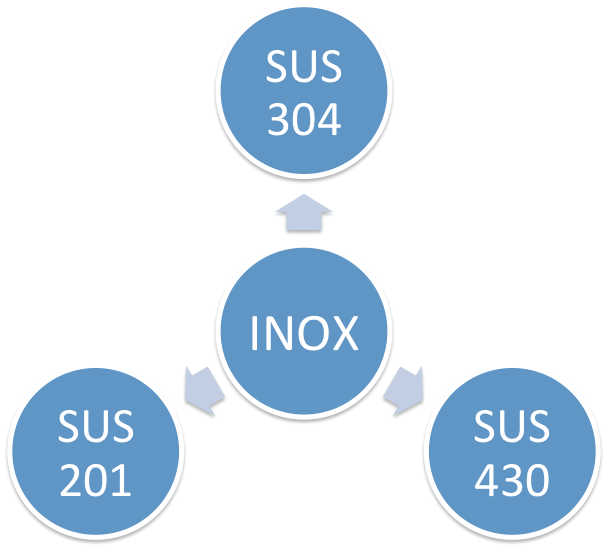
Is 430 stainless steel safe?
430 stainless steel has a main composition of chromium and Fe, low carbon content, and contains little to no nickel (only from 0-0.75%). This type of cookware has many good properties such as being shiny, rust-resistant, and highly magnetic. 430 stainless steel can be used on induction cooktops with good magnetic sensitivity.
However, compared to materials like Inox 201, 304, and 316, Inox 430 is the lowest quality material. This material is prone to oxidation; 430 stainless steel is not safe to use and can cause some dangerous health issues. Therefore, even though 430 stainless steel is quite cheap, do not buy it for use. You should opt for other stainless steel materials instead of using 430 stainless steel.
Now you know whether 430 stainless steel is safe, right? Which brand of stainless steel cookware should you buy?
Which brand of stainless steel cookware is good for safe cooking?
- If you don’t know which brand of stainless steel cookware is good, you can look at their materials. As mentioned above, you can choose Inox 304 or 316 cookware. However, while Inox 316 is of good quality, it is non-magnetic and more expensive. If you are using an induction cooktop, I recommend choosing Inox 304 cookware, which is the safest, reasonably priced, and particularly magnetic.
- Inox 304 is usually coated with nickel resistance; even cooking acidic foods will not adversely affect your health. Inox 304 has higher corrosion resistance, remains shiny over time, and has little to no chemical reaction when cooking at high temperatures.
So, which brand of stainless steel cookware is the best on the market today? Here are a few well-known brands of stainless steel cookware trusted by users:
- Elo induction stainless steel cookware set
- Kocher Lubeck 5-piece cookware set
- Elmich stainless steel cookware set
- Sunhouse stainless steel cookware set
- ….
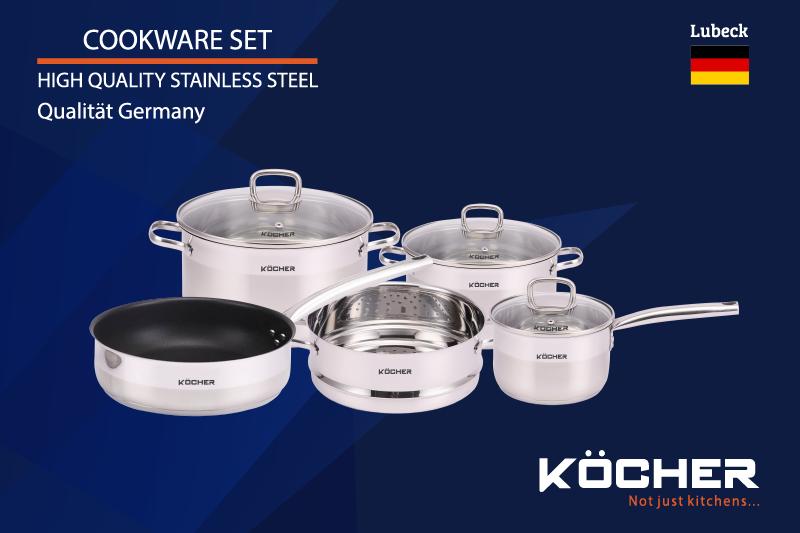
The common advantages of the above stainless steel cookware sets are:
- Easy to clean and maintain cleanliness and shine
- Will last long, durable if properly cared for
- Buying these best stainless steel cookware can be used reliably on induction cooktops, infrared cooktops, and gas stoves
- Can be used in the oven
- Available in various sizes and shapes, a complete set for cooking.
- Durable and resistant to rust, corrosion, and scratches
- Has a shiny appearance, high aesthetics, luxurious, suitable for any kitchen
- Completely recyclable material
- Most utensils made from this material are dishwasher safe
Are there ways to minimize risks when cooking with potentially toxic stainless steel?
If you have been using a set of low-quality stainless steel cookware and do not want to change to another set to save costs, there are still ways to minimize risks while continuing to cook with that stainless steel set.
So, what are the ways to minimize risks when cooking with potentially toxic stainless steel?
- If you or a family member is sensitive to components of the cookware such as chromium or nickel. Even if you are not sure whether stainless steel is toxic, you should avoid simmering or boiling acidic foods or highly corrosive foods such as tomato sauce, vinegar, alcohol, or lemon juice in the cookware.
- Do not store acidic foods and highly corrosive foods for too long in low-quality, unsafe stainless steel cookware.
- When cooking or cleaning the cookware, do not scrape metal utensils harshly against your stainless steel. Especially for non-stick coated cookware. If you have burnt food or yellowed stainless steel, read the articleHow to clean yellowed, rusty, burnt stainless steel cookware to clean these stains in no time.
- Another important thing when cooking with stainless steel is to properly care for your cooking utensils. Using high-quality wooden or silicone cooking utensils will not scratch the surface of the cookware. You should also ensure to clean the cooking surface gently and carefully to avoid affecting the integrity of the cooking utensils.
Whether stainless steel cookware is toxic entirely depends on the set you choose and how each person uses it.
The above are shares about the toxicity of stainless steel cookware, whether 430 stainless steel is safe, which brand of stainless steel cookware is good, and how to use stainless steel cookware to minimize risks when cooking. I hope that from the above shares, you can choose and use stainless steel cookware correctly, safely, and effectively.