After each cooking session, removing grease and leftover food from the cooktop is essential to keep the kitchen space clean. However, many users still wonder if wiping the induction cooktop with a wet cloth can cause short circuits or crack the glass? The answer is no if you wipe according to Kocher’s instructions.
Expert-approved steps to clean the induction cooktop with a wet cloth
Cleaning the cooktop with a wet cloth is the quickest method to remove grease after cooking. Whether using a damp cloth or a specialized wet cloth, you need to follow the correct procedure to avoid damaging the touch control system:
Step 1: Wait for the cooktop to cool completely
After cooking, the glass surface usually displays the letter “H” (Residual heat warning). Wait about 10 – 15 minutes until this symbol disappears before unplugging. Absolutely do not wipe the cooktop with a wet cloth while it is still hot. Sudden temperature changes (thermal shock) can cause the glass surface to crack and damage the protective layer.
Step 2: Wipe down once with a wet cloth
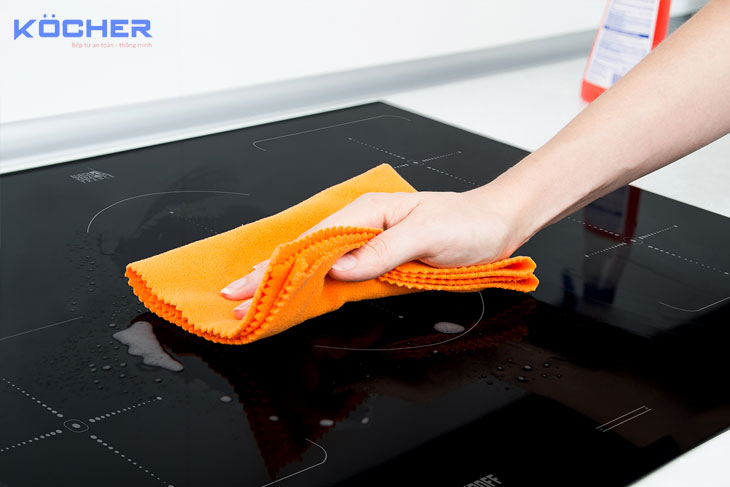
Use a clean microfiber cloth that has good absorbency. Avoid using rough cloths or metal scrubbers as they can scratch the induction cooktop’s glass surface. Then:
- Soak the cloth with clean water or specialized Japanese-German cooktop cleaner to enhance the effectiveness of quick grease removal without damaging the glass’s shine.
- Wring the cloth thoroughly, leaving it damp. An overly wet cloth can allow water to seep into gaps or the control panel, causing short circuits.
- Gently wipe the grease stains on the induction cooktop surface.
Step 3: Wipe stubborn stains
If there are burnt stains, use a damp cloth soaked in vinegar/lemon juice/baking soda to apply to the stain for 1 – 2 minutes, then wipe again. Wipe in a circular motion for better stain removal. Understanding the names and functions of each cooking utensil will help you optimize your daily cleaning tasks; if you want to enhance your knowledge about this equipment system, you can refer to the list of 100 kitchen tools in English to enrich your useful vocabulary.
Step 4: Wipe dry
After wiping with a wet cloth, it is essential to use a dry cloth to wipe again, ensuring the cooktop shines and does not leave any water streaks. To avoid moisture on the induction cooktop, use a dry cloth to wipe the cooktop once more until it is completely dry.
-

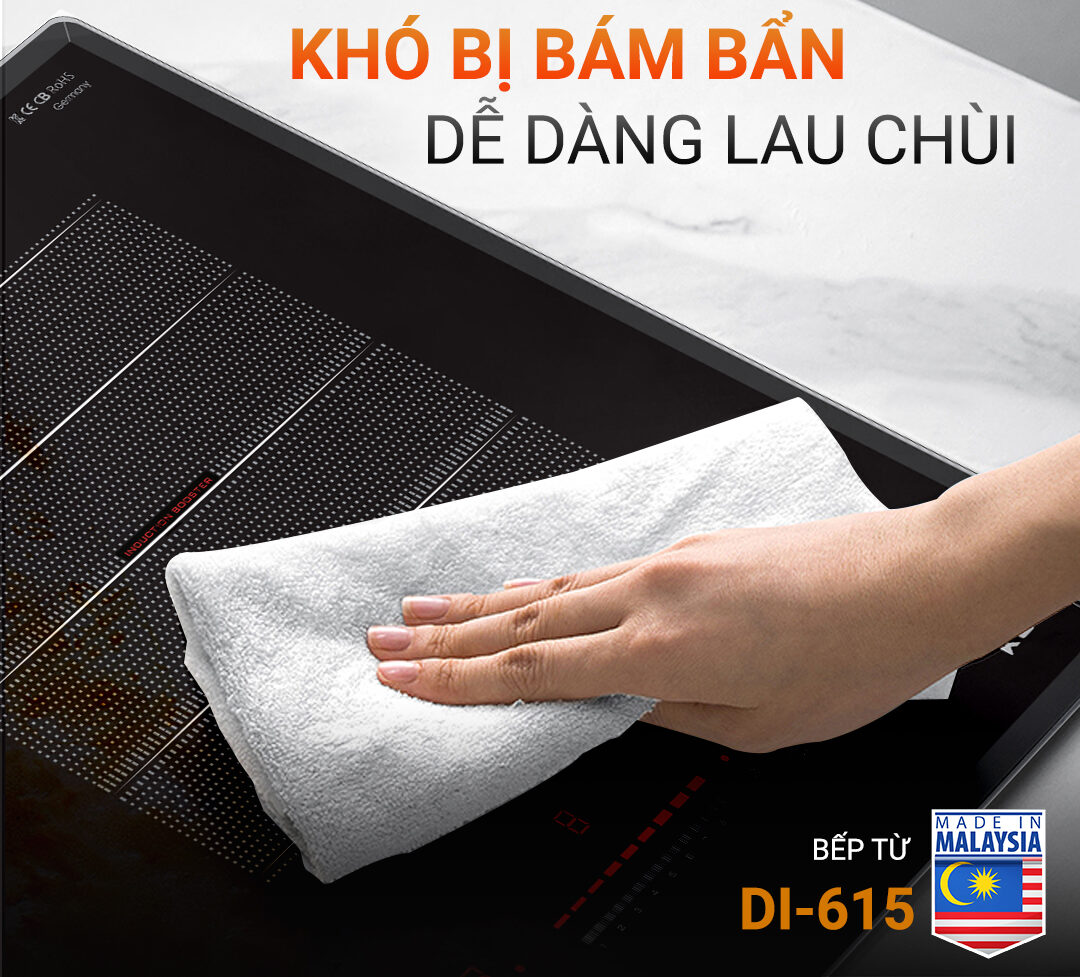
Wipe the induction cooktop with a dry cloth after using a wet cloth
Important notes when using a wet cloth to clean the induction cooktop
To protect the lifespan of E.G.O components and the high-quality glass surface, you need to remember the following “golden” rules:
- Absolutely do not wipe when the cooktop is hot: Using a cold wet cloth that suddenly contacts a hot glass surface (over 300°C) can cause thermal shock, reducing durability or even causing the glass to crack.
- Avoid letting water seep into the control panel: The touch button area is very sensitive. If the cloth is too wet, water can spill into gaps or disrupt the control sensors.
- Do not use strong detergents: When soaking the wet cloth, only use diluted dish soap or lemon juice, vinegar. Avoid highly corrosive chemicals that can dull the cooktop’s shine.
- Wring the cloth thoroughly: This is the most important note to prevent water from flowing into the cooktop’s internal compartment, where important electronic circuits are located.
Cleaning the induction cooktop with a wet cloth is the safe and effective way to clean the induction cooktop if you follow the principle: wait for the cooktop to cool and wring the cloth thoroughly. This cleaning habit not only keeps the cooktop shiny like new but also prevents stubborn stains from hindering the temperature sensor. We hope the above sharing has helped you feel more confident in taking care of your family kitchen.
Köcher is proud to be the pioneer in Vietnam bringing German technology into induction cooktop products.