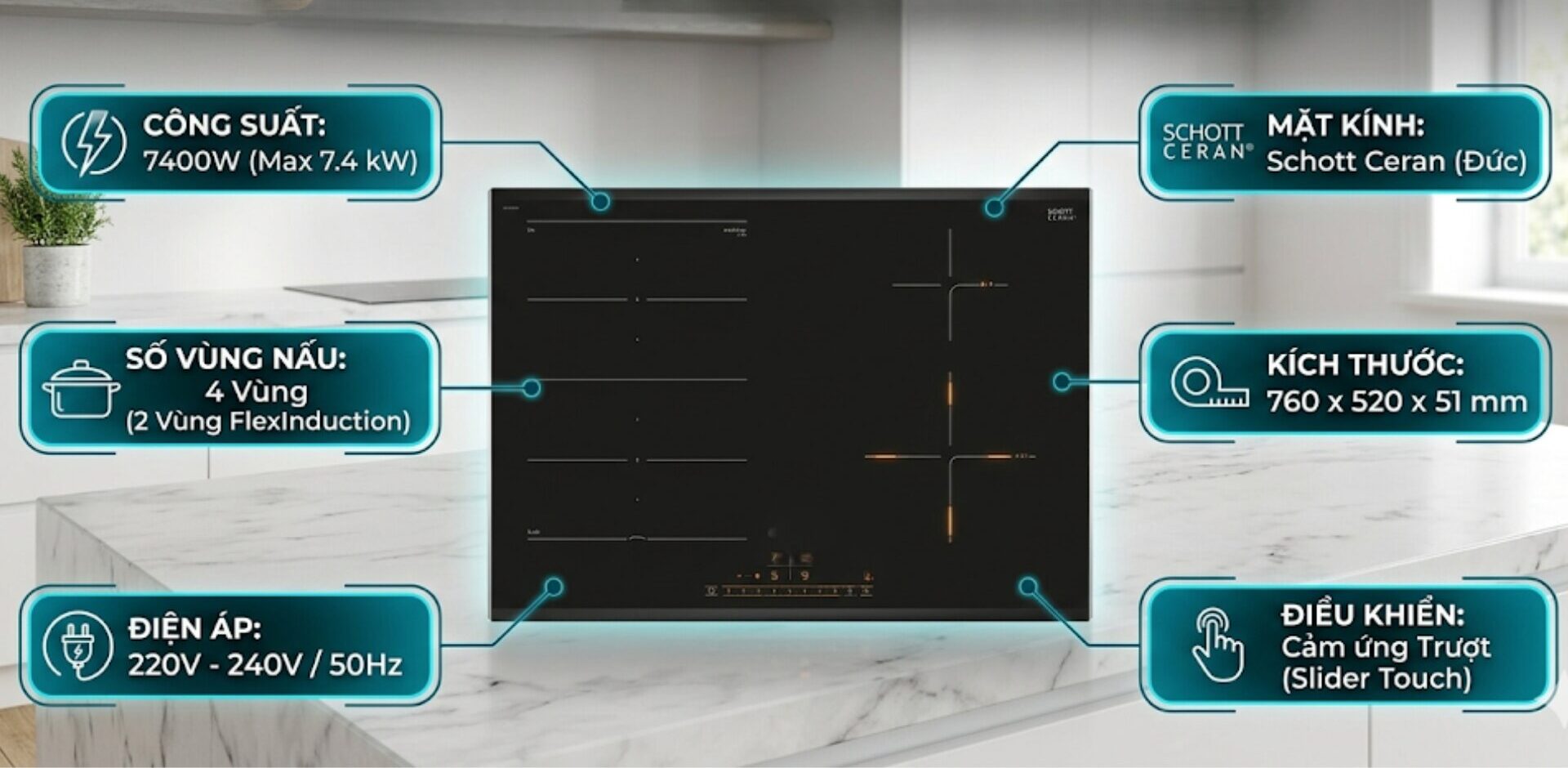
German induction cookers are famous for their superior component quality, energy-saving capabilities, and high durability – but the current market is flooded with products labeled “Made in Germany” with very different actual quality. Without the right experience in buying German induction cookers, you may easily spend tens of millions on a poorly made cooker with vague warranty and deterioration after just a few years. The 5 criteria below will help you check the right places, compare the right points, and choose a cooker truly worthy of the money spent.
Check for clear origin
When looking to buy a German induction cooker, the first thing to do is verify the product’s origin – this is the foundation for evaluating the rest. You also need to distinguish between “German brand” and “made in Germany.” Many cookers bear the German name but are actually assembled in China or Vietnam with some components imported from Germany – this is not necessarily bad, but you need to understand clearly what you are buying to have the right expectations of value. The market currently has 3 product groups:
- Fully imported from Germany: Kocher, Bosch, Hafele,…
- German brands manufactured in a third country (Spain, China…)
- Vietnamese brands using German OEM components: companies that assemble in Vietnam but use Schott Ceran glass and E.G.O induction coils or any components from Germany.
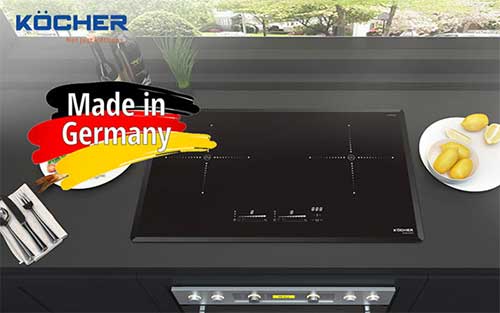
Thus, if you evaluate safety and assurance for German induction cookers of German quality, you should buy fully imported products from Germany. To ensure your rights, ask the seller to provide CO/CQ certification (origin and quality). With reputable brands like Bosch, Hafele, or Kocher, you can completely verify authenticity through the electronic warranty label system or the Serial Number on the official website. Many consumers often wonder about the printed text on the glass, specifically the symbol Made in Germany is from which country, which certifies that the products are produced and assembled entirely in Germany with the strictest quality control standards in Europe.
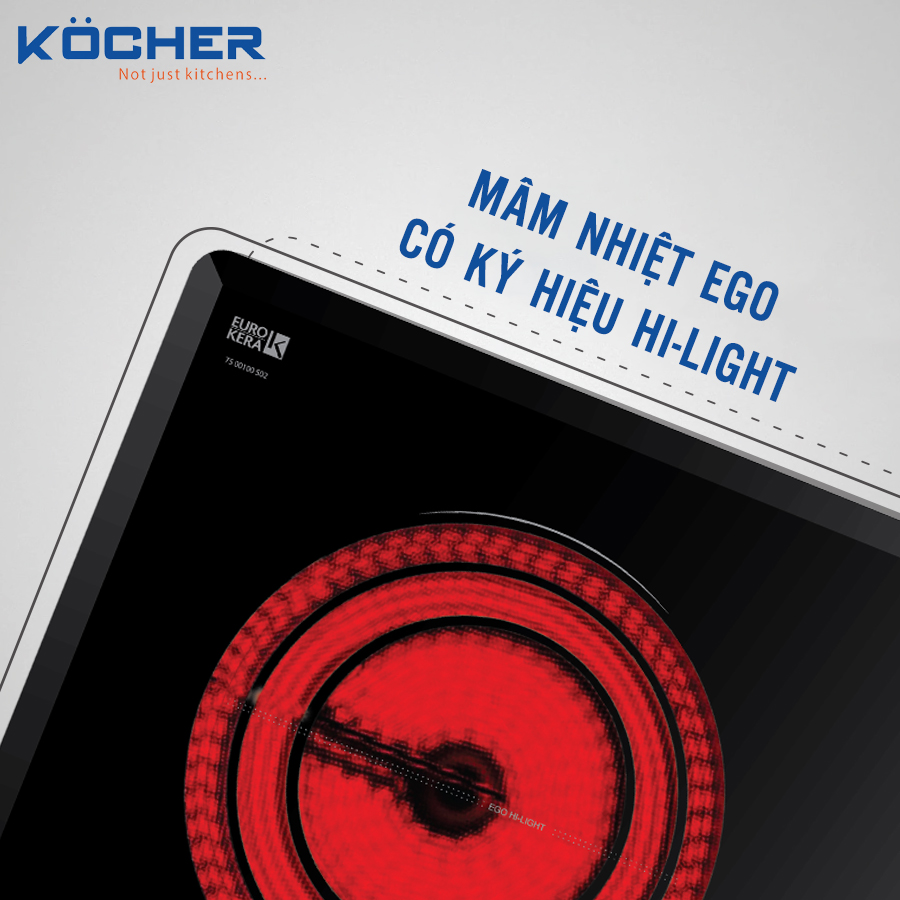
Type of cooker components (Schott Ceran glass, EGO induction coils)
The two most important components to check are the glass surface and the induction coil. For the glass surface, the highest standards currently are Schott Ceran (made in Germany) or EuroKera (France) – both are heat resistant, impact resistant, and easy to clean. Avoid cookers that use ordinary glass or have unclear origins as they are prone to cracking when exposed to sudden temperature changes. For the induction coil, the gold standard is the E.G.O. coil from Germany – providing high thermal stability, durability, and energy savings thanks to Inverter technology. Besides the component factors, the installation style is also very important, with the trend of choosing built-in German induction cookers becoming popular due to their elegant sunk design, optimizing kitchen space while protecting the machine body from external impacts.
Check after-sales service and electronic warranty
German induction cooker components are very expensive, so warranty is a necessary factor to consider before buying. Genuine cookers always have electronic warranty labels. As soon as you purchase, scratch the code and send a message according to the manufacturer’s format. If the hotline returns a message confirming the correct model and warranty period, it is genuine.
- Choose brands with Electronic Warranty (check scratch code/QR Code) to avoid counterfeit products.
- Confirm whether the brand has available replacement parts in Vietnam (to avoid cases where broken glass must wait for 2-3 months for import).
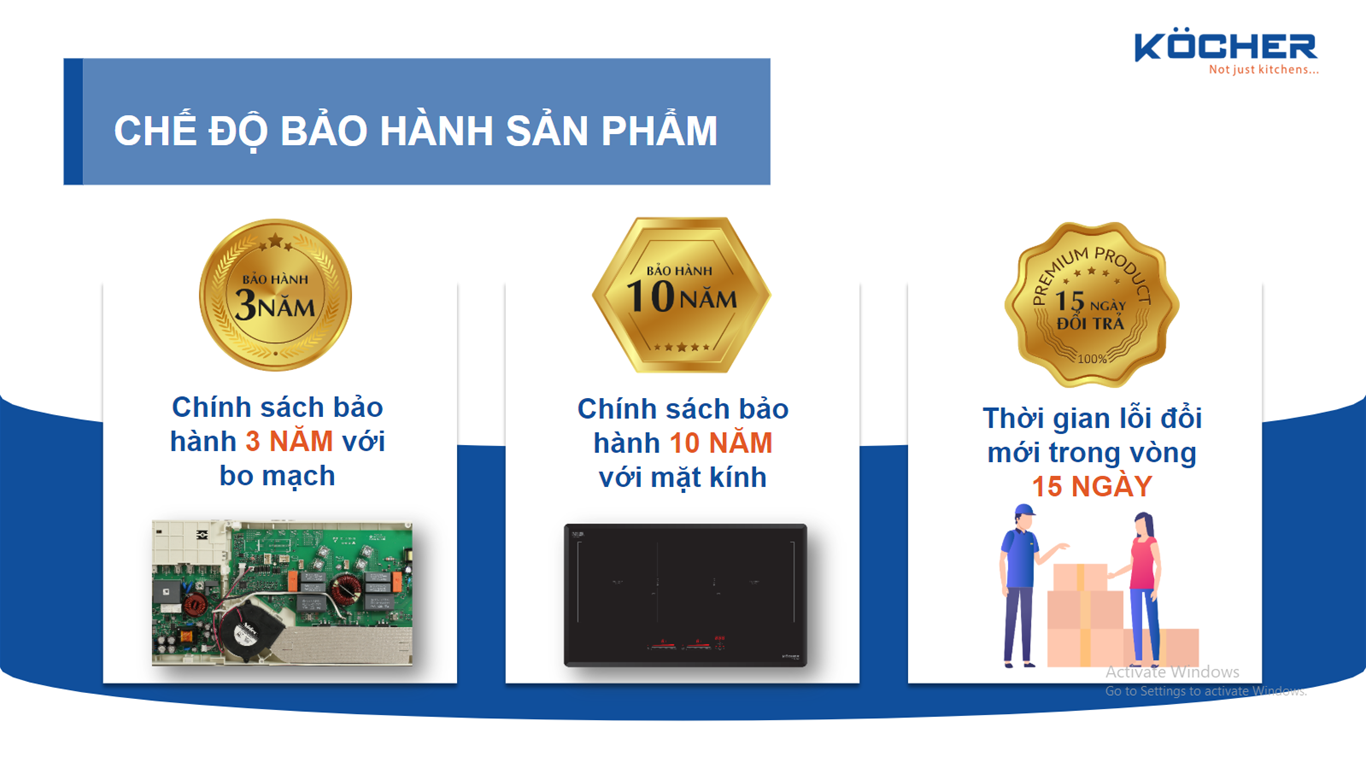 Kocher confidently offers a transparent warranty policy for German induction cookers
Balance your budget: good price cooker or long-term investment?
The price of German induction cookers ranges from about 5 million to over 50 million VND depending on the brand and configuration. Knowing which segment you belong to helps you immediately eliminate unsuitable options and focus on accurately evaluating the right product group.
Under 10 million is the segment of Vietnamese brand induction cookers using German components – basic features sufficient for families with simple cooking needs and no high aesthetic requirements. From 10–20 million is the best balance zone: quality components, diverse features, beautiful design without being too expensive. This is also the most competitive segment with the most worthwhile options. Over 25 million usually features pure German brands like Bosch or high-end Hafele, with long warranties and durable value over time.
The experience of many families buying German induction cookers shows: do not just look at the initial purchase price. A cheap cooker that breaks down after 2 years will cost more than a good cooker that lasts 10 years when considering repair costs, component replacement, and energy consumption. If you are still unsure which price segment is optimal for your family, refer to the article which German induction cooker is good for an overview of the top models worth buying today.
Prioritize reputable sellers and guaranteed warranty policies
Buying from the right place is just as important as choosing the right product. The induction cooker market in Vietnam has no shortage of hand-carried or counterfeit goods sold at attractive prices, along with the risk of no warranty or poor after-sales service.
Prioritize purchasing at:
- Authorized dealers (with certification from the manufacturer)
- Reputable large electronics chains or specialized kitchen showrooms with knowledgeable consulting staff.
Investing in a genuine German induction cooker is a long-term decision for the whole family. Köcher is proud to be a pioneer in Vietnam bringing German technology into induction cooker products. Instead of saving a few million when buying only to have to replace it after 2 – 3 years, take the time to research thoroughly and choose a durable, good, safe, and economical product. Applying the 5 experiences in buying German induction cookers above will help you purchase a cooker that meets your needs and is genuinely authentic.