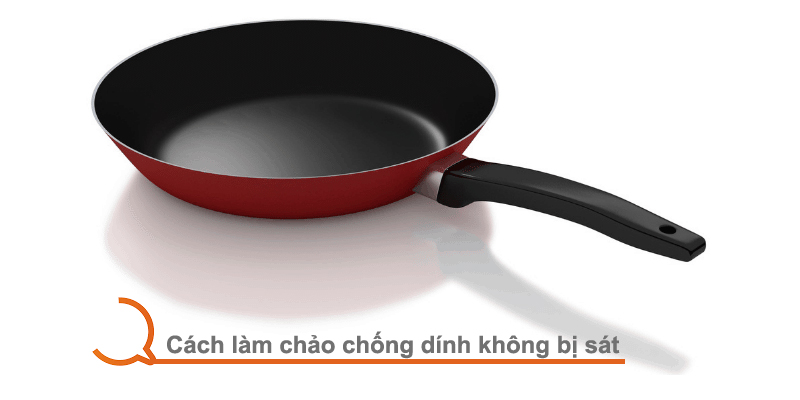
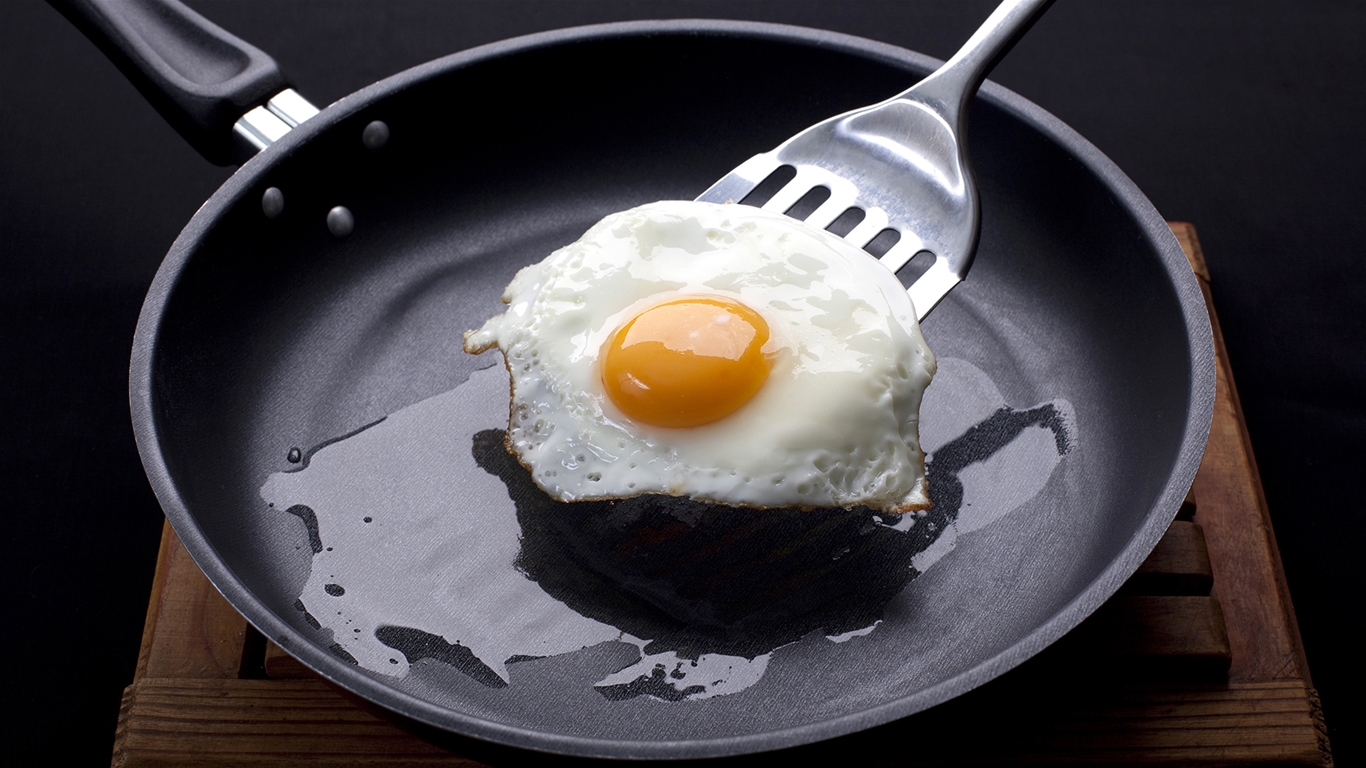
Are you looking for ways to make your non-stick pan not stick and food not adhere when frying? Some non-stick pans peel off after a period of use, causing food to stick and burn onto the pan. This not only ruins the food and looks unappealing but also makes cleaning more time-consuming and exhausting.
The reason non-stick pans stick is due to stains, scratches, using sharp objects for cleaning, and not being cleaned properly after each use,… Over time, grease and food will accumulate in the scratches, causing the non-stick coating to peel off. Therefore, frying food is severely affected, dishes are easily burnt, stick to the pan, and are no longer intact.
If you are experiencing the above situation and do not know how to fix a sticky non-stick pan, here are some useful tips to improve your pan with each use.
The oil we mention here can be cooking oil, olive oil, or coconut oil. If you are afraid your pan will stick, first check if the pan has been cleaned of any old food residues. Then proceed as follows:
1 – Place the pan on the stove at medium heat, heating your pan for 2-3 minutes.
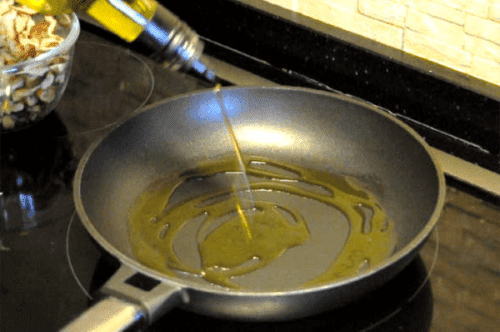
2 – Add your coconut oil or cooking oil to the pan, heat the oil until it smokes on the stove, and swirl the pan to spread the oil evenly around. You can let the oil smoke because afterward, the excess oil will be discarded, so you can rest assured about the oil burning. Coat the oil evenly around the surface of the pan until you see it truly covers the pan like a mirror. Turn off the stove, lift the pan off the cooking area, and let it cool.
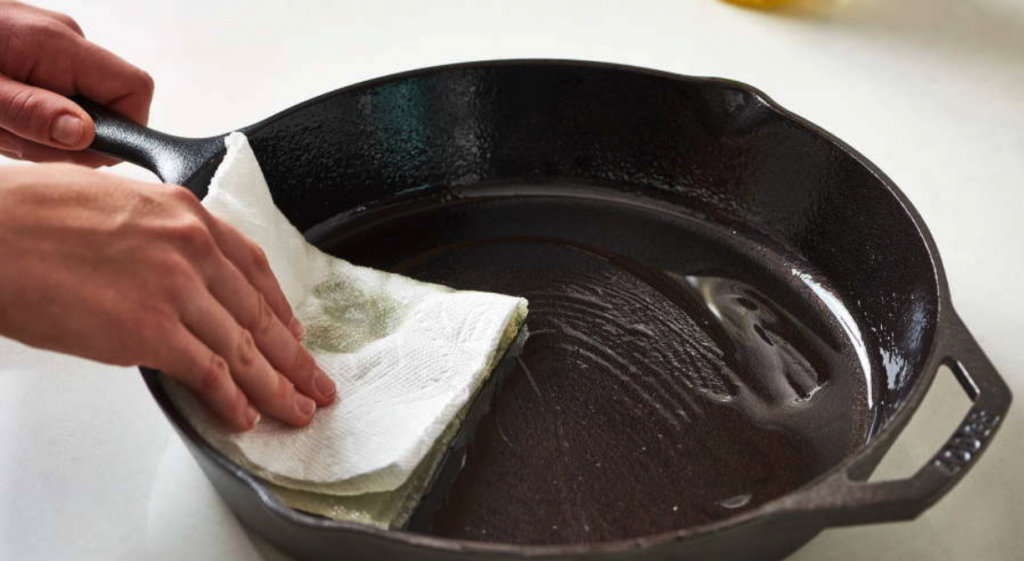
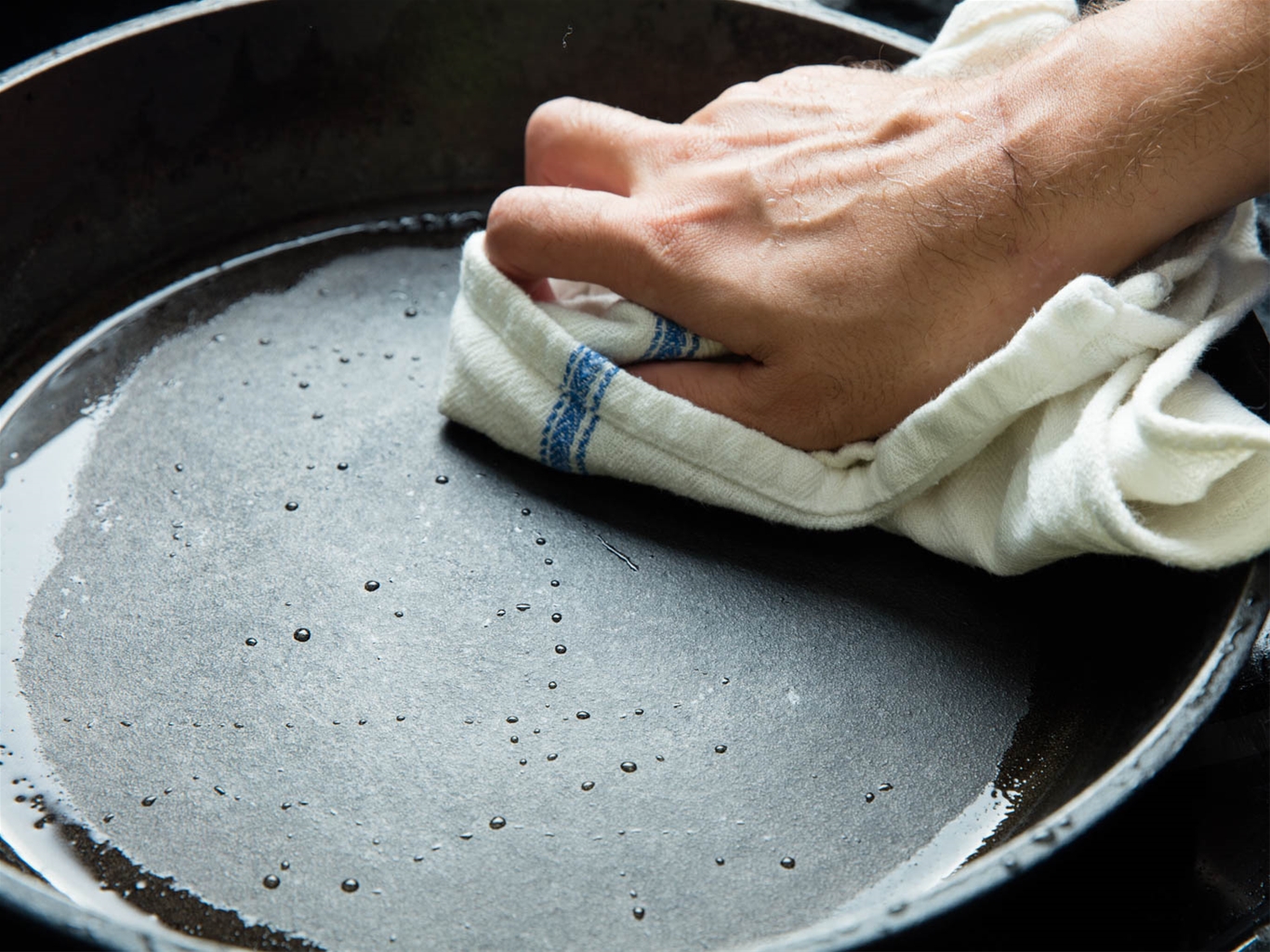
3 – When the pan has cooled, pour out the burnt oil and gently wipe the oil from the pan with a clean paper towel without rinsing with water.
Now you have a great pan for frying without sticking. You can now fry your desired dishes without them sticking to the pan anymore. This method of making a non-stick pan not stick with oil is quite effective and has been successfully applied by many people. The ingredients to ensure the pan is non-stick are also easy to find, and coconut oil, olive oil, and cooking oil are always available in your kitchen.
How to fix a sticky non-stick pan with salt
Adding a little salt to prevent food from sticking to the pan is the second method you should try.
1 – Heat the pan, dry it, then add oil to the pan and heat it up. Note, keep the temperature moderate to avoid burning the cooking oil in the pan.
2 – If you have sunflower oil or olive oil at home, spread a thin layer of sunflower oil on the pan, add a little salt, and ensure the salt is evenly sprinkled on the surface.
Doing this will reduce the sticking of your food. But you need to be careful not to overdo it and add too much salt to the oil, as it will affect the flavor of your food.
Using apple cider vinegar to restore non-stick pans
A very effective way to restore a peeling non-stick pan without sticking is using apple cider vinegar. Have you tried it yet?
The method to fix a sticky non-stick pan is very simple.
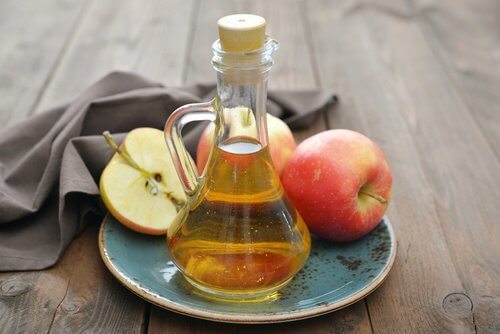
1- Heat the pan, dry it, then pour oil or butter into the pan until it is very hot. Add a small drop of apple cider vinegar to the oil in the pan. Gently swirl the pan to spread the apple cider vinegar evenly over the surface of the pan.
2 – Continue to heat the pan at a low temperature and evaporate at a safe level, do not let the oil in the pan burn and smoke. After that, you can add food to the pan and start frying as usual. You will find that your pan is completely non-stick.
Using baking soda
The method of making a non-stick pan not stick has not been widely applied in Vietnam. Because this material is not readily available in many kitchens. However, if you have baking soda at home, you should try this method to fix a sticky non-stick pan when frying.
The formula is very simple. If the non-stick pan is peeling, you just need to mix 1 cup of water, 2 tablespoons of baking soda, and ½ cup of white vinegar in a pot or pan that has lost its non-stick coating. Place it on the stove and boil for 10 minutes. Remove the pan from the heat, let it cool slightly, and then wash it clean as usual.
Then pour vegetable oil onto the surface of the pan and use it for cooking as usual. This method of restoring a non-stick pan not to stick is quite effective; you will find that your pan is completely non-stick like when you first used it.
Let the pan or oil in the pan heat enough before adding food
You should also let your pan heat up sufficiently before adding food for frying. Because when the pan or oil, butter, fat in the pan is not hot enough, adding food too early will easily cause it to stick to the pan.
Moreover, if the pan is not dry and still has water, you should not pour oil into it. Please dry the pan or let it heat enough to dry the water in the pan before pouring oil, butter, or fat into the pan. For fried dishes that require a lot of oil, or stir-fried dishes, you should use deep frying pans for more effective cooking.
Please dry your food before adding it to the frying pan. Of course, this cannot be applied to frying eggs. But try to dry other foods as best as you can, such as sausages, meat, fish, shrimp,… by using paper towels to absorb the moisture. You should also thaw food about 2 – 3 hours before cooking to reduce the amount of water released from the food. This is also a very good way to fix a sticky non-stick pan.
Do not cook the pan at high temperatures
Another way to make a non-stick pan not stick that you need to pay attention to is that when the pan has lost its non-stick coating, the risk of sticking is high. You should not cook them at high temperatures. Only keep the heat low; this will help you control the food better and reduce the situation of food sticking to the pan.
Tips for using non-stick pans without sticking and peeling
Although there are many ways to fix a sticky non-stick pan, nothing can compare to a non-stick pan that is intact and durable. Therefore, when using non-stick pans, you should pay attention to the following issues:
Avoid using metal utensils when cooking
You should never use metal spoons, chopsticks, or utensils when cooking with non-stick pans as they can damage the non-stick surface over time.
Instead, buy utensils made of wood, plastic, or silicone that do not scratch the non-stick surface. This is a way to make non-stick pans not stick and helps prolong the use of the pan for frying.
Do not use steel wool scrubbers
Steel wool scrubbers and sponges can scratch and enlarge existing scratches on non-stick pans. Over time, this scrubbing will cause the pan to completely lose its original non-stick coating.
Use soft sponges or dishcloths to clean the pan. You should also use mild cleaning solutions, absolutely do not use strong abrasive cleaners.
Avoid stacking pots and pans
Keeping pans dry to prevent food from sticking is what you need to do. Stacking pans can deform, warp, and even scratch the surface of the pan.
Wipe your pan dry before storing it
After you wash the pan thoroughly, you should let it dry completely before storing it in the cupboard. Or if you want to be more careful, you can wipe it dry and then store it. Because when it is damp, the pan is very prone to oxidation, rust, and peeling of the non-stick coating. This makes the non-stick pan stick and food adhere more when cooking.
You should also store the pan in a dry place, as humidity can cause mold to develop, leading to the pan deteriorating quickly and making food stick to the surface.
By following the methods to make non-stick pans not stick and the simple usage tips above, you can confidently fry without worrying about the pan sticking or food breaking apart. To enhance the cooking experience and optimize the non-stick effectiveness of pots and pans, it is essential to combine them with an induction cooker that can accurately control and distribute heat. Accompanying Vietnamese homemakers, Köcher proudly leads the way in Vietnam by bringing German technology into induction cookers, helping to create perfect meals, comfortable cooking, and making cleaning easier than ever.
SHARE
post related
Induction hob circuit diagram
Imported induction cookers are increasingly loved and widely used in Vietnam due to their beautiful design, many smart features, high durability, absolute cooking safety, good energy savings, and enhancing the aesthetic beauty of the kitchen space. Moreover, imported induction cookers also partly reflect luxury and class, serving as a basis for guests and friends to [...]
Sharing Corner
The irresistible way to grill meat with an infrared stove
A high-quality imported German induction cooktop will help you cook deliciously, safely, and save energy. But do you know which German induction cooktops are good, and whether the cooktop you bought is a fully imported German one? Check out the experience of buying imported induction cooktops from Germany below to gain more tips and insights [...]
Sharing Corner
“Made in Spain” is which country? Top famous products made in Spain
Imported induction cookers are increasingly loved and widely used in Vietnam due to their beautiful design, many smart features, high durability, absolute cooking safety, good energy savings, and enhancing the aesthetic beauty of the kitchen space. Moreover, imported induction cookers also somewhat reflect luxury and class, serving as a basis for guests and friends to [...]
Sharing Corner
The irresistible way to grill meat with an infrared stove
A high-quality imported German induction cooktop will help you cook deliciously, safely, and save energy. But do you know which German induction cooktops are good, and whether the cooktop you bought is a fully imported German one? Check out the experience of buying imported induction cooktops from Germany below to gain more tips and insights [...]
Sharing Corner
The irresistible way to grill meat with an infrared stove
A high-quality imported German induction cooktop will help you cook deliciously, safely, and save energy. But do you know which German induction cooktops are good, and whether the cooktop you bought is a fully imported German one? Check out the experience of buying imported induction cooktops from Germany below to gain more tips and insights [...]
Sharing Corner
Top #7 famous products from Germany “you definitely should know”
Imported induction cookers are increasingly loved and widely used in Vietnam due to their beautiful design, many smart features, high durability, absolute cooking safety, good energy savings, and enhancing the aesthetic appeal of the kitchen space. Moreover, imported induction cookers also somewhat reflect luxury and class, serving as a basis for guests and friends to [...]