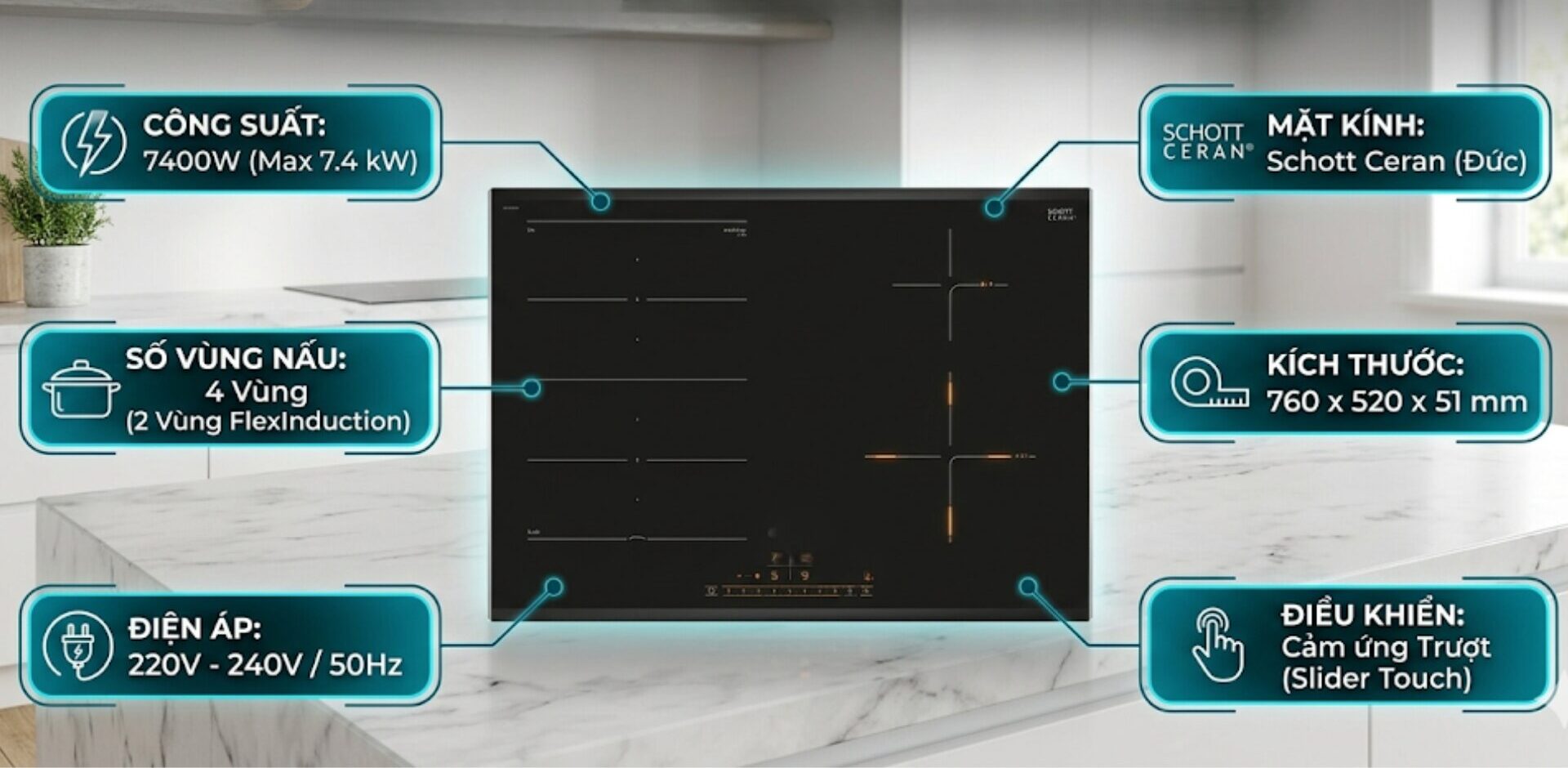
Kocher induction cookers are famous for their fast, safe, and energy-saving cooking capabilities. However, if not used correctly, electricity consumption can still increase. So, what are the ways to save electricity when using Kocher induction cookers? Below are some simple yet extremely effective tips you should apply immediately.
Maximize the Inverter feature (Simmering)
Choose the right type of pot suitable for Kocher induction cookers
One of the most important factors affecting electricity consumption is the type of pot you use.
Induction cookers operate based on the principle of electromagnetic induction, so only pots with good magnetic bottoms such as stainless steel 430, cast iron, or pots specifically designed for induction cookers can absorb heat effectively. When using the right type of pot:
- Heat is transferred directly to the bottom of the pot, without being lost to the environment
- Cooking time is significantly reduced
- The cooker does not have to operate at maximum capacity
Conversely, if using an unsuitable pot or one with a curved bottom, the cooker will have to operate at maximum capacity for a long time, leading to higher electricity consumption with poor cooking efficiency. Understanding the functionality of induction cookers and the mechanism of heat transfer through magnetic fields will help you select a pot set with the highest magnetic efficiency, thereby optimizing energy consumption.
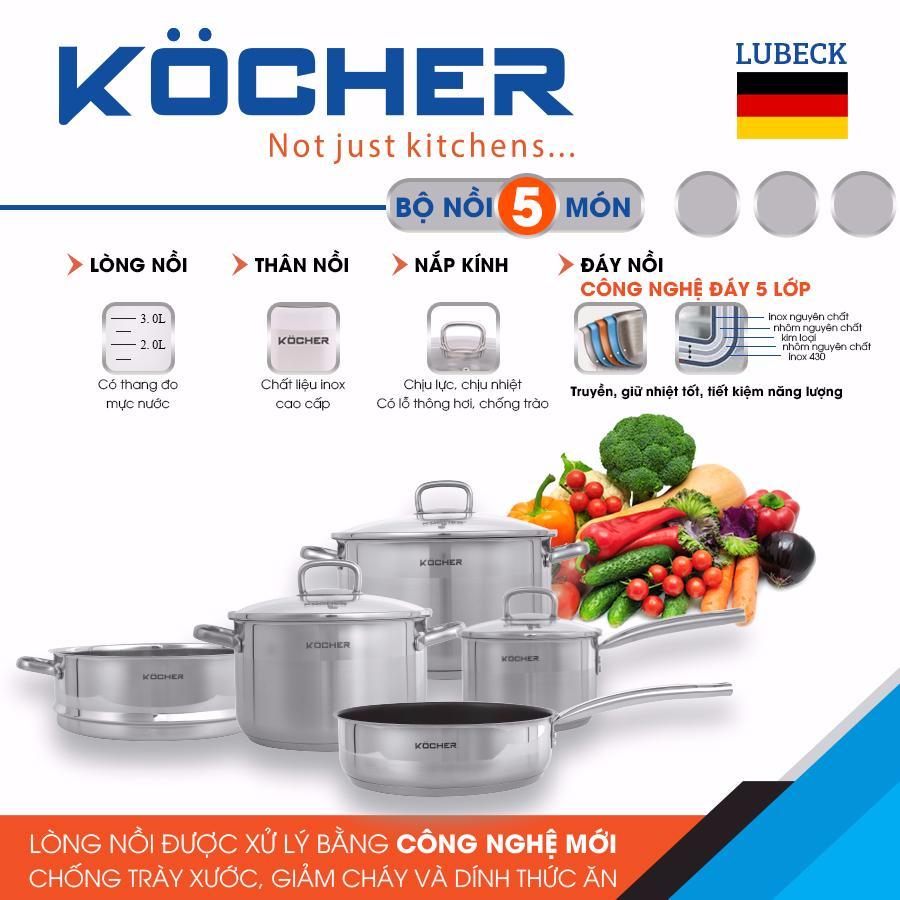
Kocher has its own pot set that fully meets the standards for cooking utensils for induction cookers
Use appropriate heat levels when cooking
A common mistake is to maintain a high power level throughout the cooking process. In fact, you only need to use high heat at the beginning to heat quickly, then reduce to medium or low heat once the food has boiled.
Adjusting the heat appropriately not only helps save electricity but also preserves the flavor and nutrition of the dish. Especially for dishes that require long cooking times such as braising or stewing, maintaining a stable low heat will be much more effective than keeping high heat continuously.
Utilize residual heat from the induction cooker
Although induction cookers can cut off heat quickly, after turning off, the cooktop and the bottom of the pot still retain a certain amount of residual heat. If utilized properly, you can reduce some electricity consumption.
Specifically, you should turn off the cooker a few minutes early and cover the pot to retain heat better before the dish is finished. The remaining heat is still sufficient to cook the food, especially for soups, broths, or stews. This is a small habit but can lead to significant electricity savings if maintained over time.
Limit the use of the Booster function for too long
The Booster function helps the cooker reach maximum power in a short time, very useful for quickly boiling water. However, this is also the mode that consumes the most electricity.
Maintaining this maximum induction cooker power continuously not only wastes electricity but can also quickly heat the internal components. If you abuse the Booster for a long time, electricity consumption will increase significantly without being truly necessary. The proper way to use it is to only turn on the Booster at the beginning, and after reaching the desired temperature, switch back to normal power to maintain.
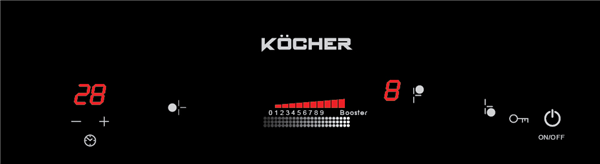
Limit the use of the booster feature for too long
Limit turning the cooker on/off continuously while cooking
Continuously turning the cooker on and off may seem to save electricity, but in reality, it has the opposite effect. Each time it restarts, the cooker needs a certain amount of electricity to heat up from the beginning, causing total electricity consumption to increase.
Instead of turning off the cooker when it is not necessary, you should maintain stable operation and adjust the heat level appropriately. This method not only saves electricity but also helps the cooking process proceed continuously, resulting in more evenly cooked dishes.
Place the pot in the correct cooking zone
The operational efficiency of the induction cooker depends greatly on the position of the pot. When the pot is placed in the center of the cooking zone, the magnetic field will distribute evenly, helping to heat quickly and more effectively.
If placed off-center, the cooker will have to operate longer to reach the desired temperature, thereby increasing electricity consumption. Therefore, a simple action like placing the pot in the correct position can also contribute significantly to electricity savings.
Once you have formed these good habits, you will notice a significant reduction in your household’s electricity consumption. As a result, the monthly spending issue is no longer a heavy burden for the homemaker, while also giving you the most objective answer to the question how much electricity does using an induction cooker cost in a month when compared to the cost of using traditional gas cookers before.
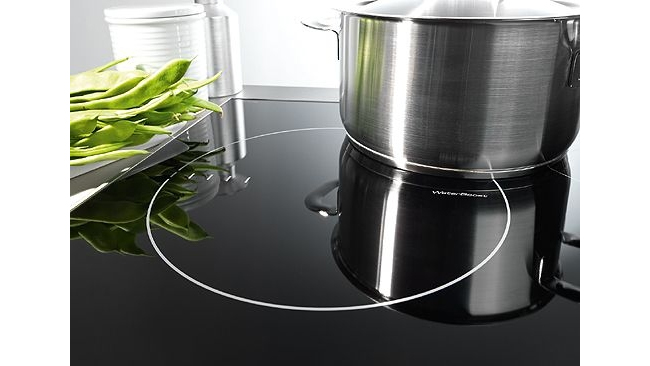
Place the pot in the correct cooking position marked on the Kocher induction cooker
Clean the Kocher induction cooker regularly
The surface of the cooker and the cooling system play an important role in maintaining operational efficiency. When the cooker is dirty or the cooling vents are blocked, its cooling ability decreases, causing the cooker to heat up more and consume more electricity.
Regular cleaning of the cooker not only helps it operate stably but also limits overheating, thereby saving electricity and extending the lifespan of the device.
See more: How to clean the induction cooker to shine like new in just 3 minutes
Choose the right pot size for the cooking zone
The size of the pot also directly affects electricity usage efficiency. If the pot is too small compared to the cooking zone, the cooker will not fully utilize the magnetic field area. Conversely, if the pot is too large, heat will be dispersed, increasing cooking time.
Choosing a pot with the appropriate size for the cooking zone will help optimize the heat transfer process, thereby significantly reducing electricity consumption.
Applying the correct ways to save electricity with Kocher induction cookers does not require complex techniques, but mainly comes from daily usage habits. When you understand how the cooker operates and adjust accordingly, the effectiveness of electricity savings will improve significantly over time. Kocher is proud to be a pioneer in Vietnam bringing German technology into induction cooker products.