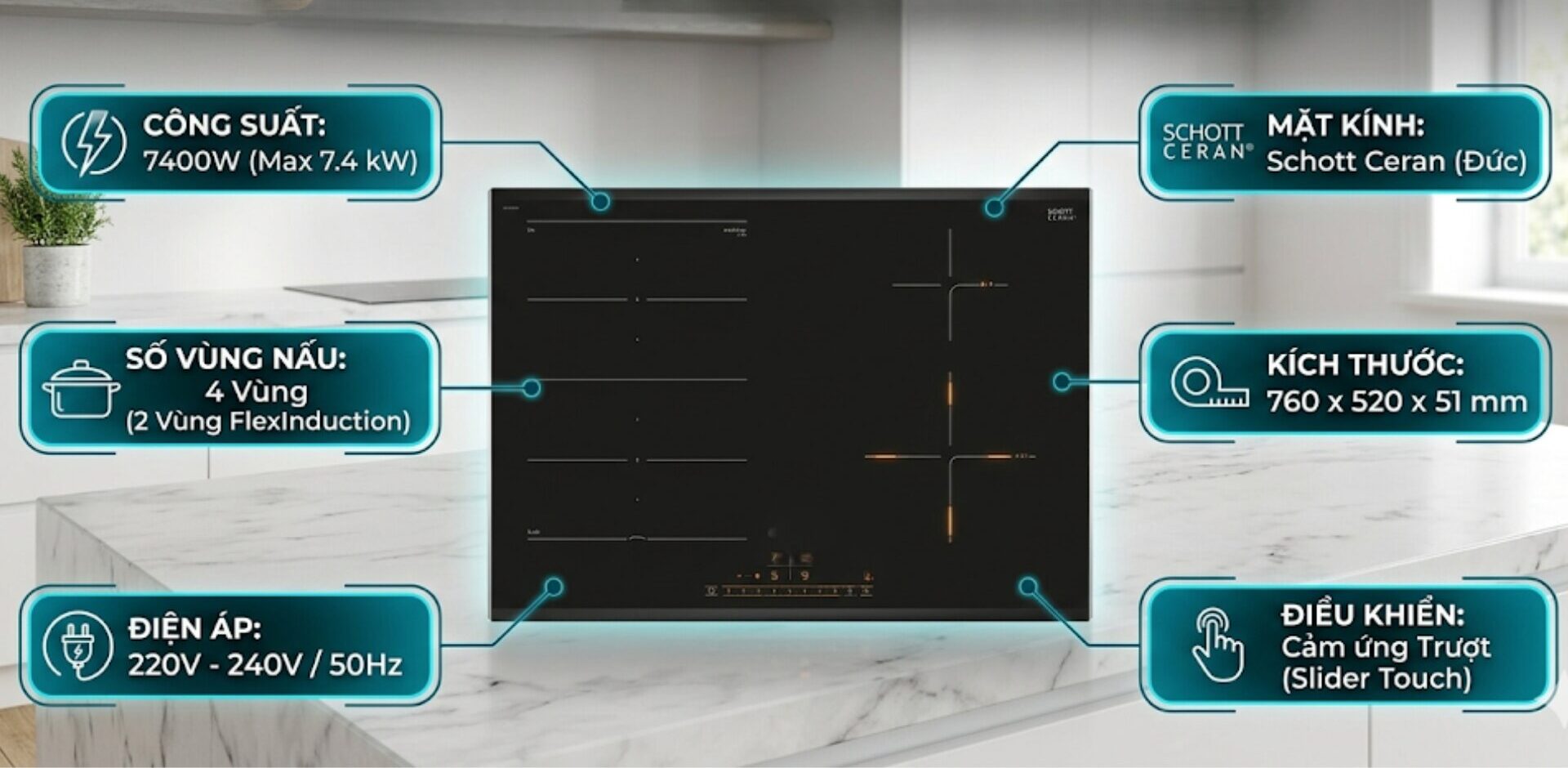
Induction hobs are a modern electric stove that uses magnetic fields to directly heat the bottom of the pot, with cooking efficiency faster than 90% and high safety. Therefore, this type of stove is very popular. The article below will help you understand “everything” about induction hobs to make the most suitable shopping decision for your kitchen.
Structure and Operating Principle
Induction hobs (induction cookers) are electric stoves that operate based on the principle of eddy currents to heat cooking utensils. Unlike conventional stoves that emit heat directly from the stove surface, induction hobs concentrate energy right at the bottom of the pot and are only compatible with ferromagnetic cooking utensils (iron, stainless steel).
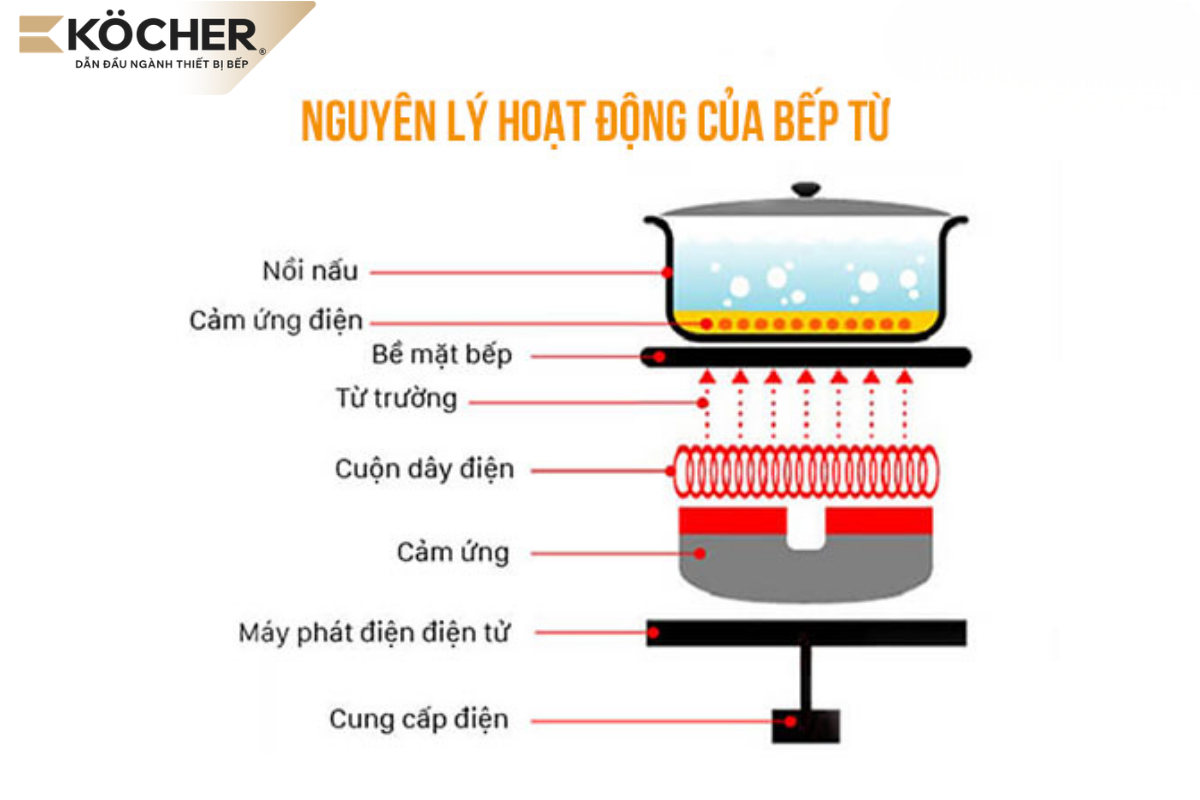
The structure of an induction hob includes: Heat-resistant/thermal glass surface, induction coil (induction plate), control circuit, cooling fan.
The operating principle of the induction hob:
Under the glass surface of the stove are copper coils. When an electric current passes through, this coil generates a varying magnetic field on the stove surface. When a pot with a ferromagnetic bottom is placed on top, the magnetic field will create eddy currents (eddy currents) causing the molecules at the bottom of the pot to vibrate strongly and generate heat energy. Therefore, heat is transferred directly into the food, helping to minimize heat loss to the environment.
Advantages of Induction Hobs
- High efficiency: Induction hobs have an efficiency of up to 90%, while gas stoves only about 40-50%. This helps you boil 1 liter of water in less than 3 minutes, significantly saving cooking time.
- Safety in use: Because it does not use flames and does not emit harmful gases such as $CO_2$ or $CO$, induction hobs are extremely safe. In particular, the glass surface does not get too hot during cooking, minimizing the risk of burns when accidentally touching it.
- Easy to clean: The stove surface is made of flat glass (Schott Ceran, Ceramic…), with no grates or gaps. If food spills over, you just need to use a damp cloth to wipe it clean because the glass surface does not stick due to high temperatures.
- Many superior features: Booster helps to push the power to the maximum for super-fast cooking; Inverter helps save electricity and maintain a stable low temperature; Smart timer for each cooking zone helps you be hands-free without worrying about burning food; Child safety lock to disable the control panel; Residual heat warning (H) notifies that the stove surface is still hot after cooking; …
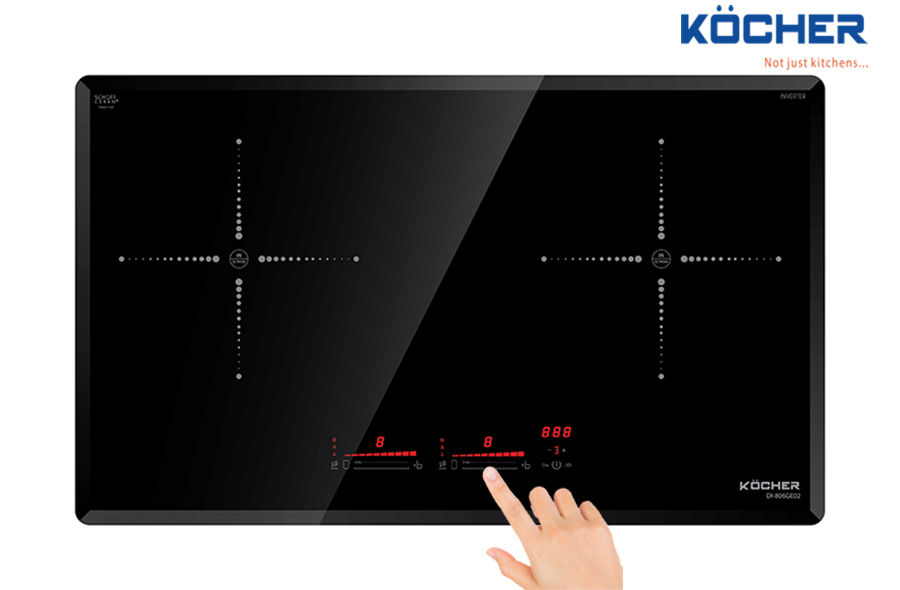 The induction hob is equipped with a series of modern technologies that make cooking simpler
Disadvantages of Induction Hobs
- Pot compatibility: This is the biggest drawback. The stove only accepts pots and pans with ferromagnetic bottoms (stainless steel 430, cast iron). Aluminum, ceramic, porcelain, or glass pots cannot be used directly.
- Dependence on electricity: Since it operates entirely on electricity, if there is a power outage, you will not be able to cook. This can be inconvenient in areas with unstable power grids.
- High initial investment cost: Compared to gas stoves, the cost of purchasing a quality induction hob along with specialized pots is usually higher. Additionally, repairing electronic components when they malfunction can also be more expensive.
Although there are a few drawbacks regarding cost and pot compatibility, the sophisticated electronic components inside the control system can sometimes malfunction due to environmental impacts. For example, when the stove surface is wet, thick oil accumulates, or the user’s hands are wet, you may encounter the induction hob not responding error causing the button system to temporarily freeze and not respond to actions. However, with the excellent benefits of safety and efficiency, induction hobs are definitely a worthy choice for modern families, especially in apartments.
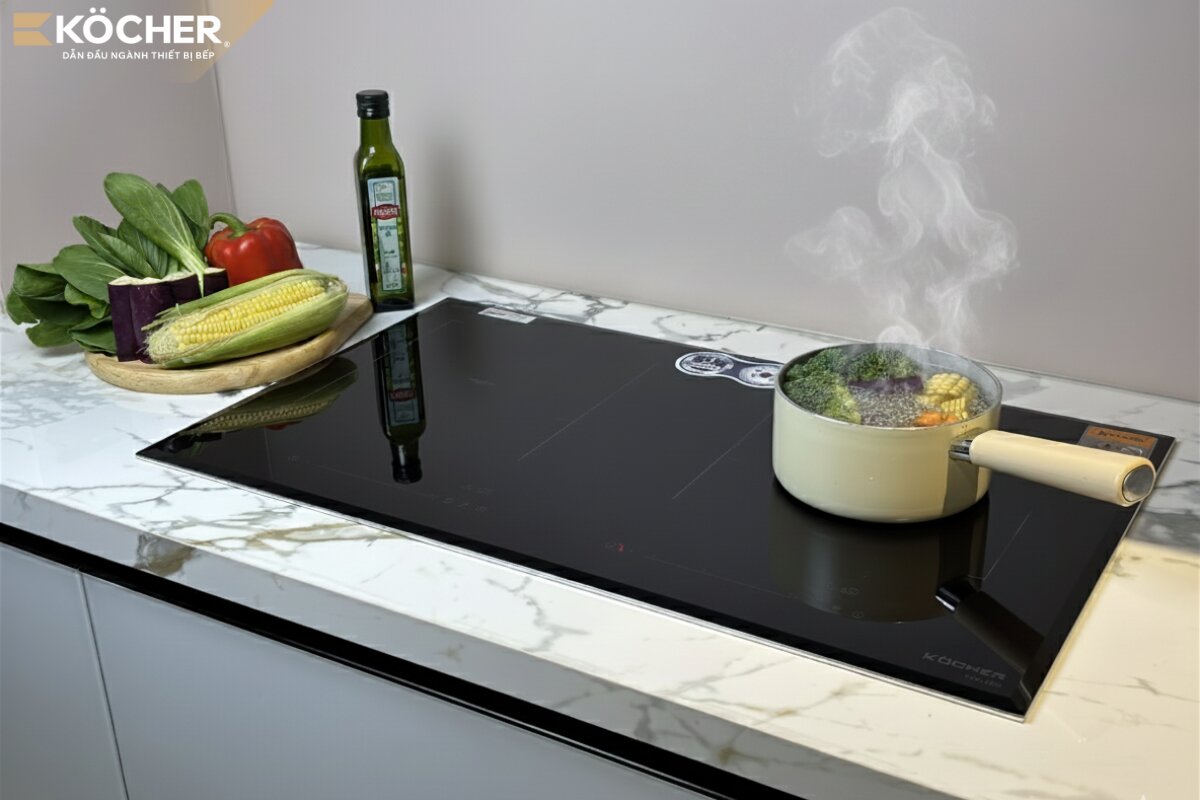 Induction hobs are not just cooking devices, but also the soul of a modern kitchen.
Notes When Choosing to Buy Induction Hobs
To choose a satisfactory and durable hob, you need to pay attention to the following points:
- Glass surface: Prefer top glass brands such as Schott Ceran (Germany) or EuroKera (France) to ensure the best resistance to impact and thermal shock.
- Number of cooking zones: A family of 2-4 people should choose a double hob (2 cooking zones). Larger families or those who often host parties can choose a hob with 3 or 4 cooking zones.
- Inverter technology: Choose a hob with integrated Inverter to help the stove operate smoothly and save 10-20% on monthly electricity bills.
- Origin: Kitchen electronic devices require high durability over the years. Therefore, buyers should actively refer to the list of top 10 durable induction hob brands highly rated by experts and the consumer community (such as Bosch, Teka, Malloca, Kocher,…) to own products with full CO/CQ certification and clear warranty policies.
- Installation: Check if the electrical system in the house can withstand high power (usually from 4000W and above) and needs to install a separate circuit breaker for the stove.
Induction hobs are not only cooking devices but also an aesthetic highlight for the kitchen. Although they require an initial investment, the safety, cleanliness, and speed they provide will make your cooking experience much more enjoyable and effortless. Köcher is proud to be a pioneer in Vietnam bringing German technology into induction hob products. Check out more induction hob products at Kocher to choose a genuine, durable, modern hob with a warranty of over 3 years at a good price just for you.