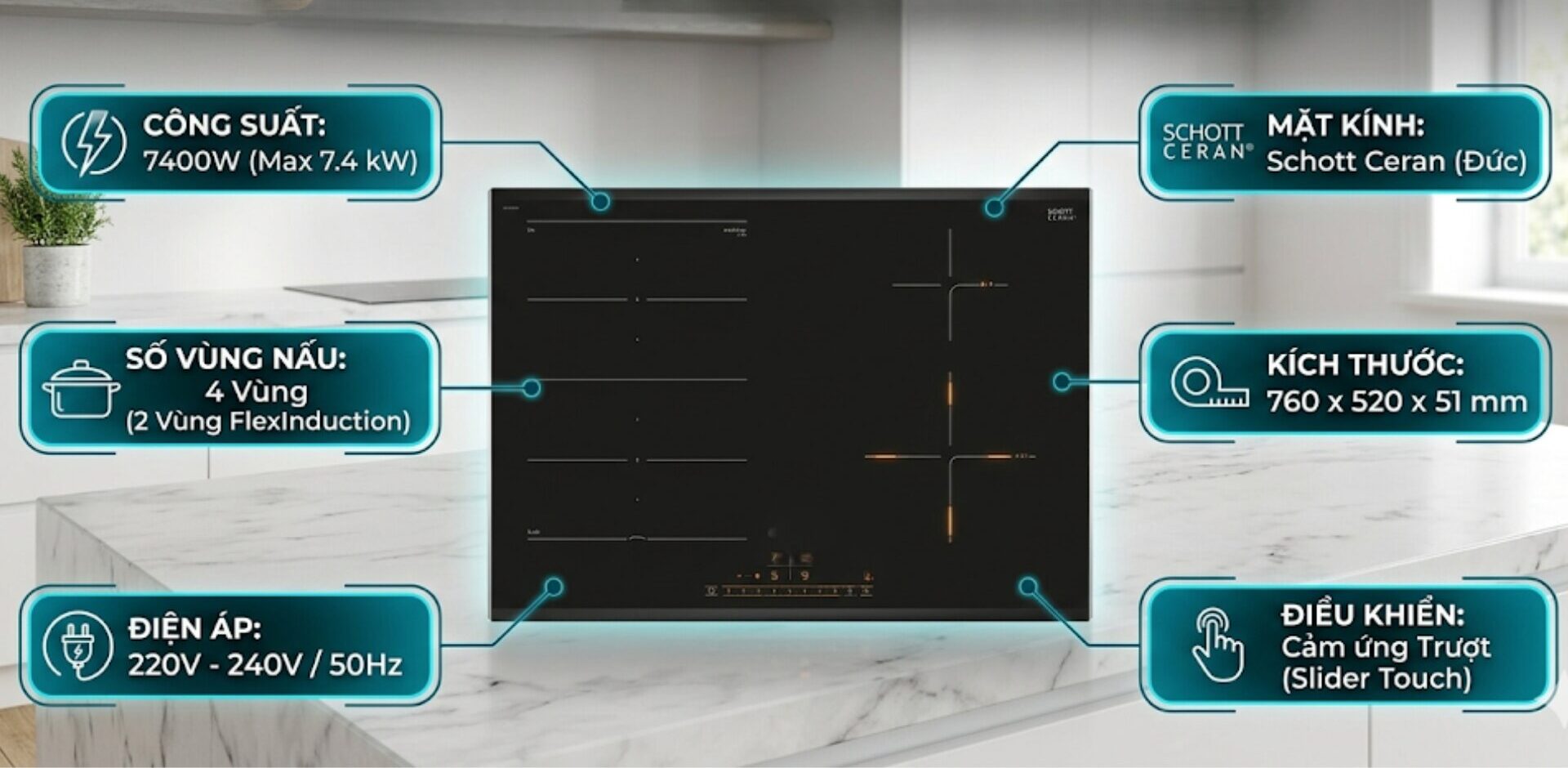
Electric stoves (induction hobs, infrared hobs) are safer than gas stoves as they eliminate the risk of gas leaks, explosions, have no open flames, and integrate smart safety features. If you are still unsure about choosing between these two types of stoves, follow the article below for the most detailed comparison based on safety criteria.
| Safety criteria | Gas stove | Electric stove (induction) |
| Risk of explosion | High risk – gas leaks can cause large explosions | Low risk – no gas used, no risk of gas explosion |
| Toxic emissions | Emits CO, NO₂ each time used | No toxic emissions, clean air |
| Safety mode | Open flame, no safety lock | The glass surface does not get hot when there is no pot, with features like: automatic shut-off, child lock,… |
| Handling in case of incidents | Need to turn off the valve, emergency ventilation | Just need to cut off the power |
Advantages and disadvantages of electric stoves
Currently, there are two popular types on the market with completely different operating principles.
- Induction hobs use electromagnetic induction to generate heat directly in the bottom of the pot – the glass surface does not get hot when there is no pot placed on it.
- Infrared hobs use infrared rays to heat the glass surface, which then transfers heat to the pot – meaning the surface remains hot for a while after being turned off. This difference directly affects the safety level of each type and needs to be clearly distinguished when compared to gas stoves.
Advantages of electric stoves
The biggest advantage of electric stoves over gas stoves is the complete elimination of open flames – a factor that causes most accidents in the kitchen. This is also why electric stoves are increasingly favored in modern households.
- No flames, no risk of explosion from gas: Electric stoves operate entirely on electricity, not using LPG or PNG gas, so there is no risk of gas accumulation in enclosed spaces – the most serious accident that gas stoves can cause.
- Many integrated safety features: Modern electric stove models all have automatic shut-off, child lock, voltage warning,…
- No toxic emissions during cooking: Since they do not burn fuel, electric stoves do not produce CO, NO₂, or formaldehyde – pollutants that gas stoves emit every time they operate. The air in the kitchen is significantly cleaner, especially beneficial for children and people with respiratory issues.
- Induction hobs have a safe glass surface when there is no pot: Since heat is only generated in the bottom of the pot through electromagnetic induction, the surrounding glass surface hardly gets hot. Children accidentally touching the induction hob will not get burned – which cannot be guaranteed with gas or infrared stoves.
- Reduced risk of burns: due to the unique operating principle, induction hobs do not heat the surface of the stove or the pot, thus reducing the risk of burns.
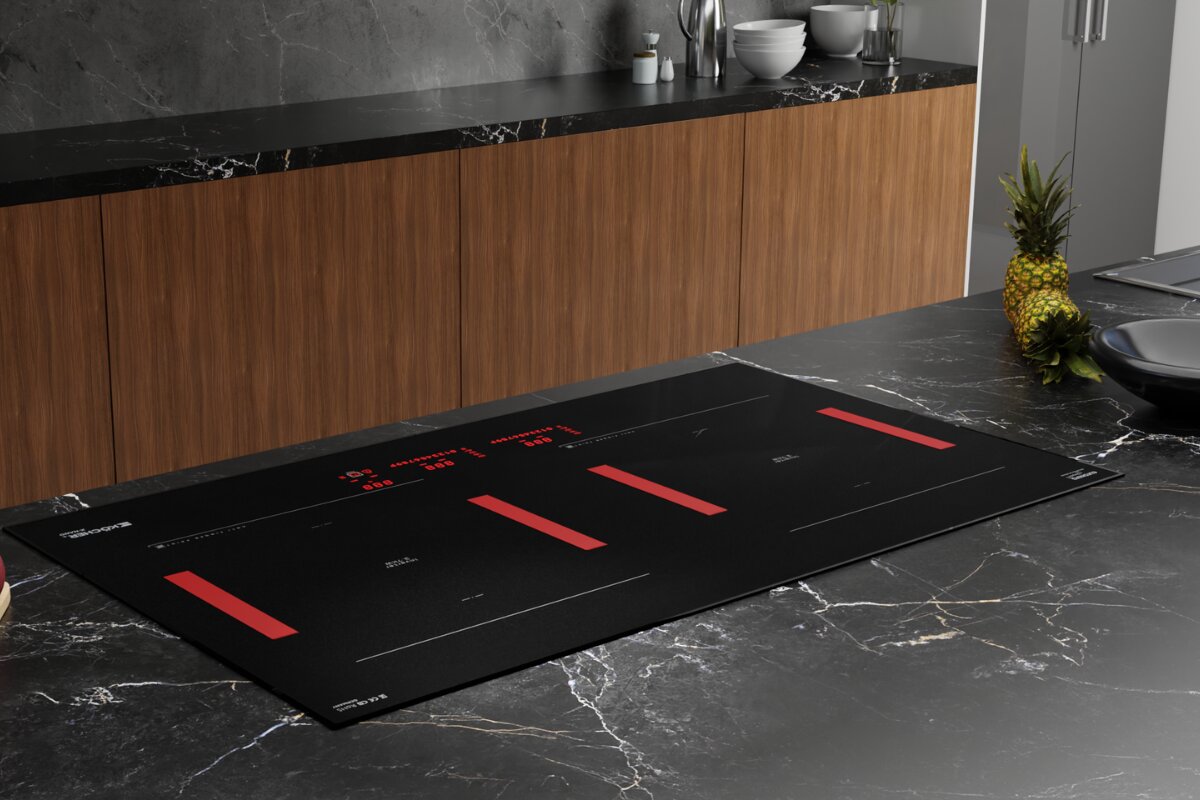
Disadvantages of electric stoves
In addition to the outstanding safety advantages, electric stoves also have certain limitations that users need to consider before deciding to switch.
- Infrared stoves still have a burn risk after being turned off: Unlike induction hobs, the glass surface of infrared stoves retains heat for a period after being turned off. If not careful, accidentally touching this surface can still cause burns, which is particularly dangerous for children.
- Induction hobs are picky about pots and pans: Induction hobs only work with pots that have a magnetic bottom, such as stainless steel 430 or cast iron, forcing families to invest in a new set of cookware.
- Completely dependent on the power grid: When there is a power outage, electric stoves do not operate at all. In areas prone to power cuts or families needing to cook outdoors, this is a significant inconvenience that gas stoves do not encounter.
- Significantly higher equipment costs: Induction hobs range from 1.5 million to over 30 million VND, much higher than built-in gas stoves (1.7 – 7 million) or portable gas stoves (300,000 – 3.5 million) in the same segment. With such a diverse price range, students living in dorms often tend to look for affordable induction stoves for students in the form of compact single stoves to save on initial investment costs while not worrying about taking up living space. Additionally, understanding the structure of the heating system and distinguishing how induction and electric stoves differ is also an important technical factor that helps consumers choose the right type of stove that fits their family budget.
Advantages and disadvantages of gas stoves
Gas stoves have been associated with Vietnamese kitchens for many generations. Familiarity, low cost, and flexible cooking capabilities are reasons why gas stoves still exist in most households. However, to make an accurate assessment, it is necessary to look directly at both the advantages and the real risks that this type of stove brings.
Advantages of gas stoves
Gas stoves have irreplaceable strengths, especially in the context of Vietnamese cuisine with many dishes requiring high flames and traditional cooking techniques.
- Instant high temperature, intuitive adjustment: Gas stoves create flames immediately when turned on, the cook just needs to turn the knob to increase or decrease the flame directly – no need to wait for the stove to “heat up” like some electric stoves. This is a clear advantage when stir-frying, grilling, or needing a quick reaction during cooking.
- Compatible with all types of pots and pans: Gas stoves do not differentiate between pot bottom materials. Aluminum pots, clay pots, copper pans, and ceramic pots can all be used equally. This is a flexibility that induction stoves cannot meet, especially for families that already have a set of traditional cookware.
- Operates independently, no need for electricity: When there is a power outage, gas stoves still operate normally. In areas prone to power cuts or when needing to cook outdoors, gas stoves are superior to electric stoves in terms of convenience.
- Low initial investment cost and easy access: Portable gas stoves start from just 300,000 VND, built-in gas stoves from 1.7 million – lower than induction stoves in the same segment. Gas stoves are also easy to purchase and repair at most electronic stores and repair services nationwide.
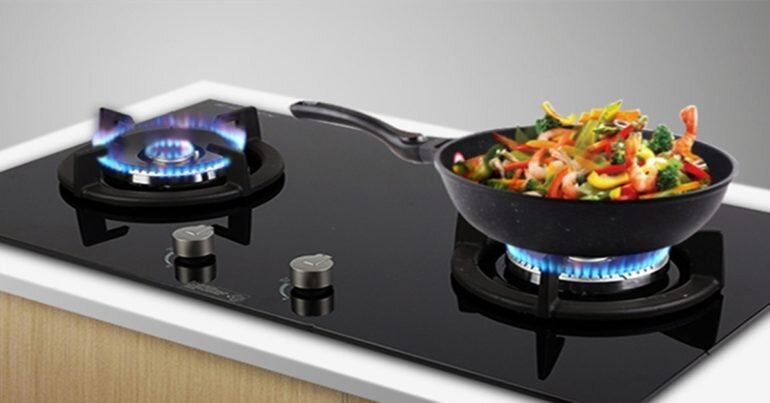
Disadvantages of gas stoves
The limitations of gas stoves are not just minor inconveniences – some of them are serious safety risks that need to be addressed directly.
- Risk of gas leaks leading to explosions: This is the biggest and most dangerous risk of gas stoves. Gas pipes, valves, and aging joints can all be points of leakage. LPG or PNG gas accumulates in enclosed spaces, odorless and colorless – when exposed to any small spark, from electrical switches to vibrating phones, the risk of explosion is very real.
- Emits toxic gases during combustion: Each time a gas stove operates, the combustion process emits CO (carbon monoxide), NO₂ (nitrogen dioxide), and formaldehyde into the kitchen air. According to studies cited by experts, the concentration of NO₂ in kitchens using gas frequently exceeds the WHO safety threshold, related to chronic respiratory diseases with prolonged exposure.
- Low thermal efficiency, hotter and stuffier stoves: With an efficiency of only 40–60%, most of the heat from gas stoves radiates into the surrounding environment rather than into the pot. This not only wastes energy but also significantly raises the temperature in the kitchen during cooking.
- Complex and time-consuming cleaning: The stove frame, gas nozzle, and stove surface have many hidden corners where grease and food easily accumulate. To clean thoroughly, each part must be disassembled, taking much more time than wiping the flat glass surface of electric stoves.
- Actual usage costs higher than electric stoves: When calculated specifically, the average gas cost is about 260,000 VND/month (12kg cylinder lasts 1.5–2 months), while the electricity cost for a 3,600W induction stove used for 45 minutes/day is only about 162,000 VND/month. In the long run, electric stoves are more economical even though the initial purchase price is higher.
Which is safer: gas stoves or electric stoves?
After understanding the advantages and disadvantages of each type, the key question that needs to be answered is: considering only safety criteria, electric stoves (especially induction hobs) are safer than gas stoves.
Induction hobs completely eliminate the risk of gas leaks, do not emit pollutants into the air, the glass surface does not get hot when there is no pot, and have full automatic shut-off safety features. This is the optimal choice for families with young children, elderly people, or kitchens with little ventilation. To have the most objective and comprehensive view of the financial equation as well as operational standards, referring to the guide Latest 2026 should use gas or induction stoves: the economic equation and 4 golden criteria will provide additional practical reference points for users before making a decision to change cooking equipment.
If the family still wants to continue using gas stoves, please simultaneously implement measures: install gas leak detection devices, check pipes and valves every 6 months, ensure the kitchen is well-ventilated, and absolutely do not allow children to access the stove while it is in operation.
With superior scratch-resistant X-Nano glass technology and E.G.O German standard components, Köcher is proud to be a pioneer in Vietnam bringing German technology into induction stove products, providing durable and high-class cooking solutions, European standard for your family.