Multi-zone induction cookers are becoming increasingly popular as they provide maximum flexibility for home cooks when using electric stoves without being limited by fixed heating zones. The article below will detail the advantages and disadvantages, as well as important considerations before you decide to purchase a multi-zone cooker.
What is a multi-zone induction cooker?
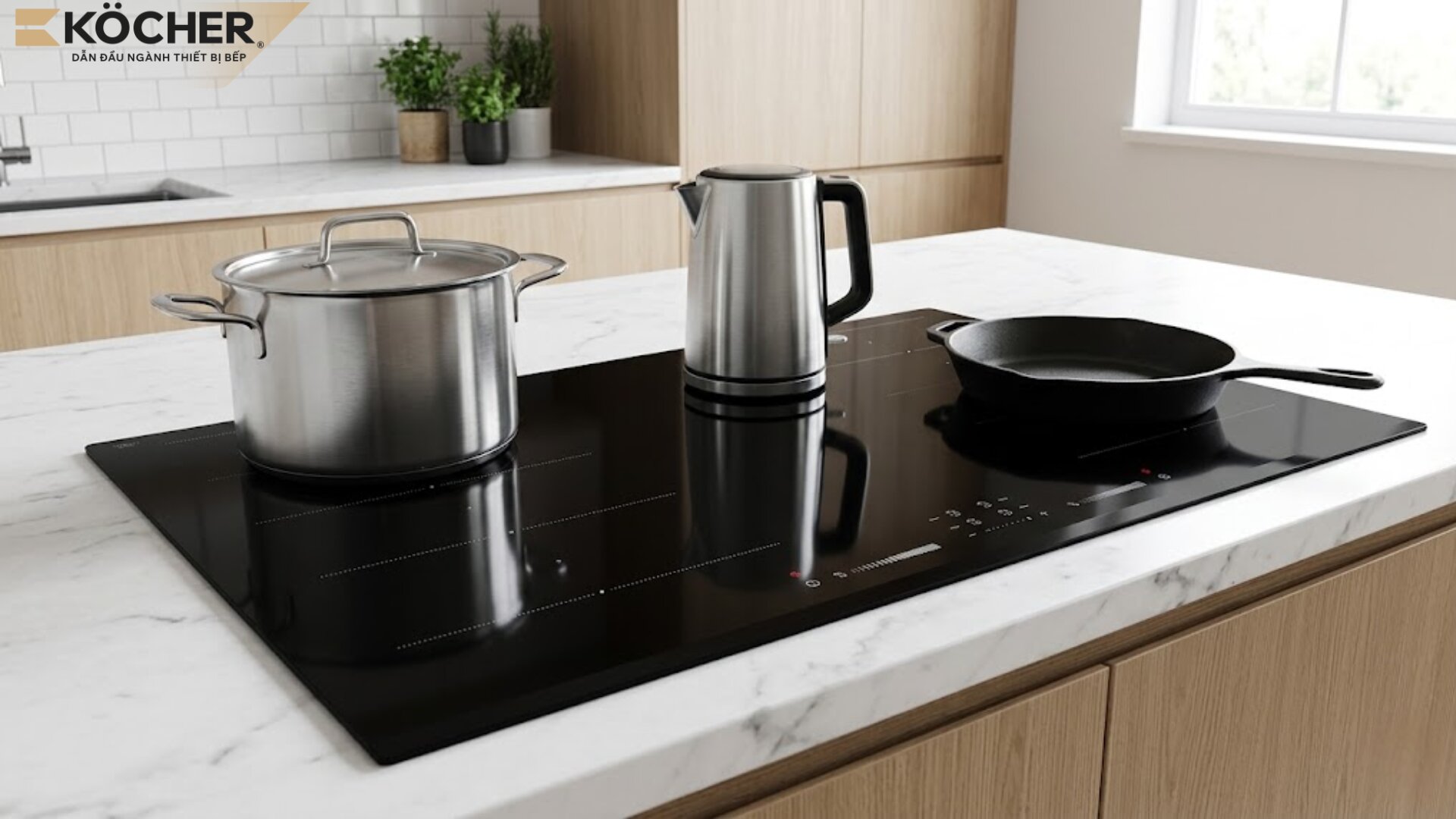
A multi-zone induction cooker (commonly referred to as FlexiZone or FlexInduction) is a high-end induction cooker that allows pots and pans to be placed anywhere on the cooking surface without being limited by fixed cooking zones. Beneath the glass surface is a system of multiple sensors and small induction coils arranged closely together, which automatically detects the shape and size of the pot’s bottom to transfer heat directly.
Special structure of multi-zone induction cookers:
- Heating element (induction coil): Unlike traditional cookers that only have 2 – 4 fixed round heating zones, the multi-zone line uses induction coils with special shapes (usually oval or small rectangular), arranged adjacent to each other and covering the entire cooking surface.
- Independent sensors: Under each heating element cluster is a system of independently operating sensors that detect whether there is a pot in that position to activate or turn off accordingly, preventing energy loss.
This special structure allows the cooker to operate like a “smart thermal grid.” Instead of users having to align the pot to the correct cooking zone, the cooker will automatically detect the position, size, and shape of the cooking utensil through independent sensors. Only the heating element clusters that come into contact with the pot’s bottom will be activated to supply energy, optimizing performance and preventing heat loss to the surroundings.

How is a multi-zone induction cooker different from a regular induction cooker? Overview comparison table
While regular induction cookers limit users to the available cooking zone sizes, multi-zone induction cookers replace fixed heating zones with a network system
| Criteria | Regular induction cooker | Multi-zone induction cooker |
| Cooking zone | Fixed (usually 2 – 4 separate cooking zones). | Flexible across the entire surface, no restrictions on pot placement. |
| Heating element | Single round induction element with a fixed size. | Composed of many small induction coils/heating elements densely layered across the surface. |
| Pot detection | Only operates when the pot is placed correctly in the center or within the cooking zone circle. | Automatically detects any shape (round, long, square…) and size at any point. |
| Efficiency | Easily loses heat if the pot’s bottom size does not match the induction zone. | Optimizes 100% efficiency as it only heats precisely at the contact area of the pot’s bottom. |
| Zone merging capability | Usually does not have or can only merge 2 adjacent fixed zones. | Automatically merges multiple small zones into one large cooking zone for oversized pots/trays. |
| Price | 1,500,000 – 20,000,000 VND | 18,000,000 – 90,000,000 VND |
This technological difference brings great convenience to the high-end segment; however, if your family still wants to find a product with a traditional cooking zone design but with equivalent powerful features, you can refer to the review of the DI 855ge induction cooker for an objective comparison before making a decision.
7 outstanding advantages of multi-zone induction cookers
Thanks to the dense copper coil system combined with position detection sensors, multi-zone induction cookers offer many advantages for users:
No cooking zone limitations
Users can place pots anywhere on the cooking surface without worrying about having to align them correctly with the heating zone. Compared to traditional cookers, you will no longer encounter situations where a pot is too large extending beyond the cooking zone leading to uneven heat, or a pot is too small causing the cooker not to detect it, displaying an E0 error or operating erratically.
Detection of pot size and shape
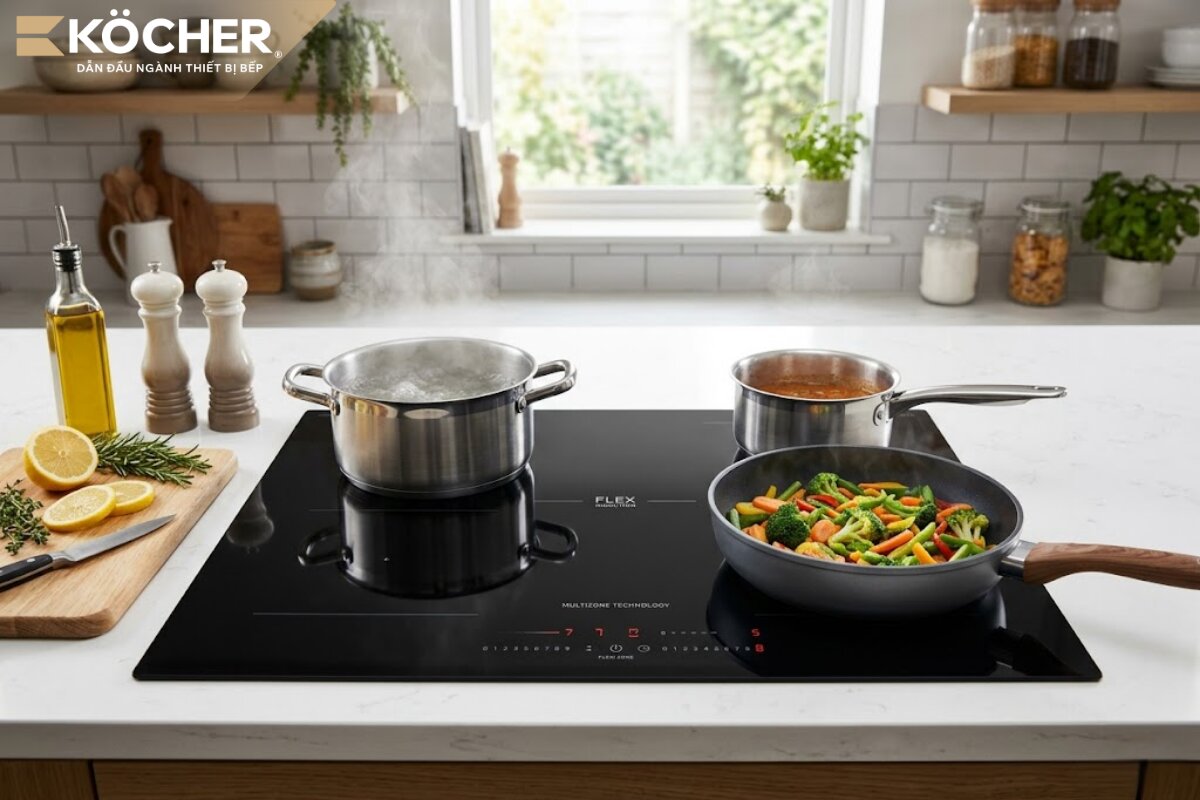
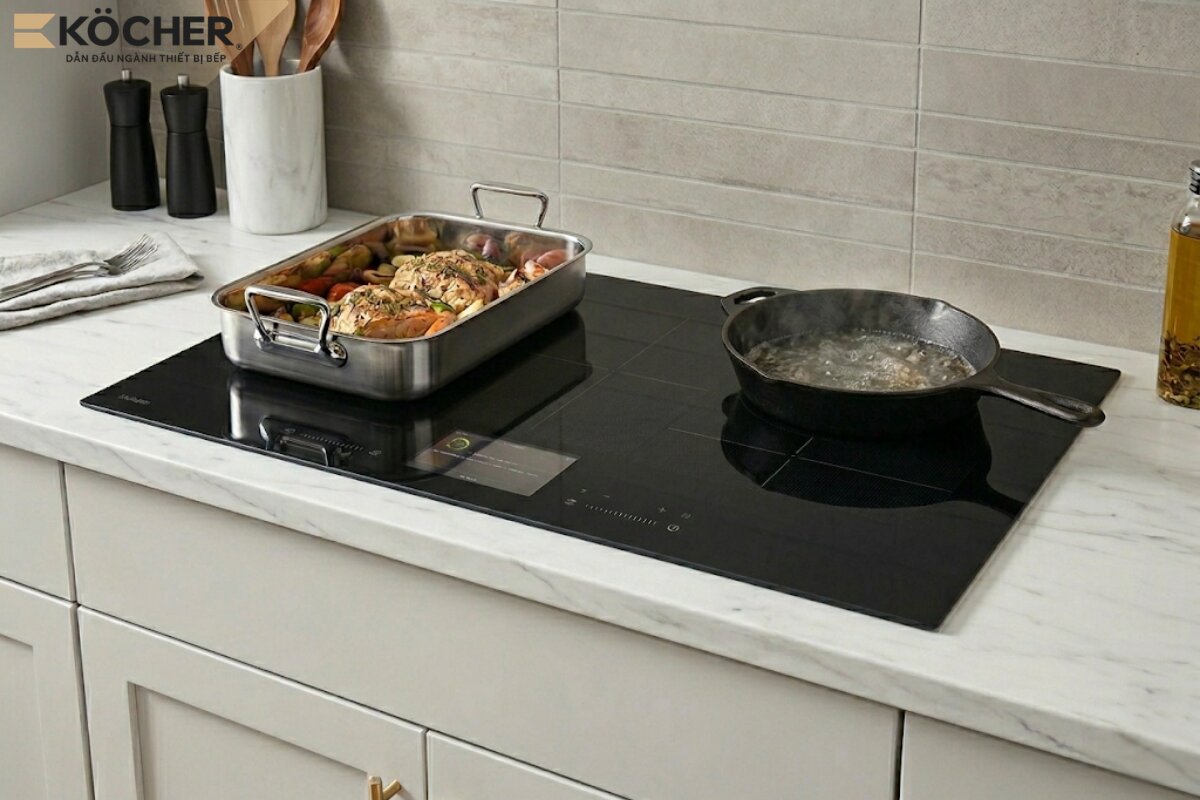
Thanks to the dense coil system and smart sensors, the cooker can detect any shape and size of the pot’s bottom. Whether you use a long oval pot, a rectangular tray, or a small round pot, the cooker will automatically activate the corresponding coils, allowing you to use a variety of specialized cooking utensils that regular induction cookers cannot effectively accommodate.
Even heat distribution, energy saving
The cooker only supplies heat to the contact area of the pot’s bottom, thus preventing energy waste in the surrounding empty areas, significantly reducing electricity costs for families using many pots of different sizes.
Cook multiple dishes at once without worrying about positioning
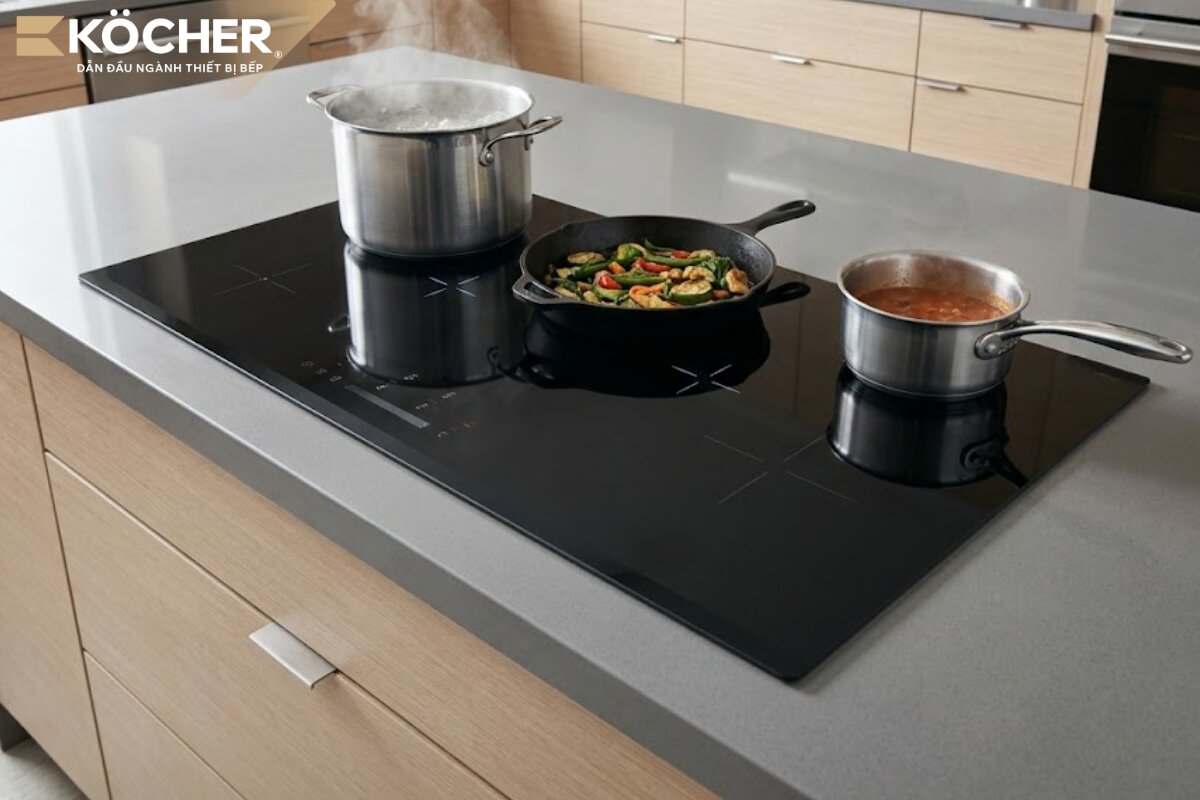
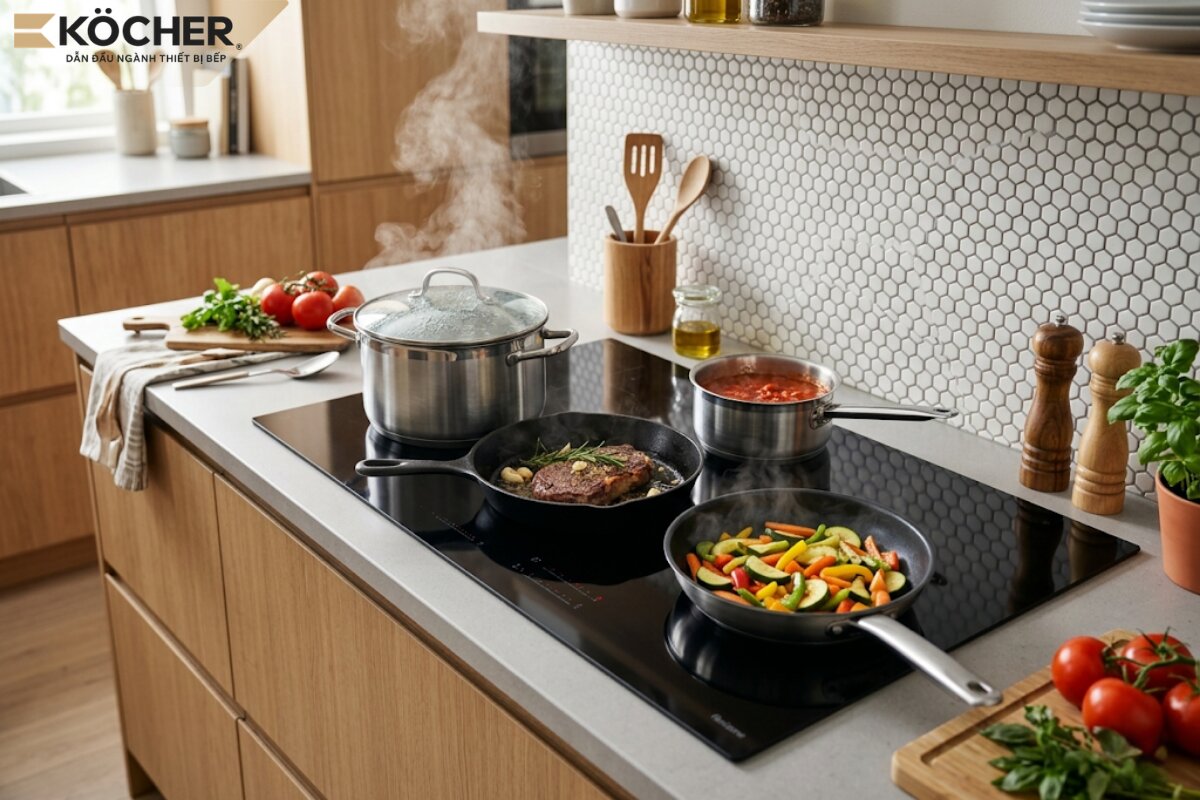
The multi-zone induction cooker allows you to place pots and pans at any position on the cooking surface without needing to align them according to fixed cooking zones, enabling you to flexibly use multiple cooking utensils at the same time. Whether it’s a large or small pot, all receive heat precisely at the placement position, making it easier to cook multiple dishes.
Smart cooking zone division by temperature level
This feature allows the cooking surface to be divided into zones with separate temperatures:
- Rapid boiling zone: Maximum power for boiling water or quick frying.
- Medium cooking zone: Maintains a stable temperature for stews and braised dishes.
- Keep warm zone: Low heat to keep food hot. Instead of pressing adjustment buttons, users simply need to move the pot between these zones to change the desired temperature level.
Maximize the cooking surface area
The multi-zone cooker utilizes almost the entire glass surface area, allowing you to merge multiple small zones into one giant cooking zone for oversized pots, or divide one zone to cook multiple small pots independently with separate temperatures, optimizing the usable area on the cooking surface.
Integration of many modern features
Multi-zone induction cookers are often equipped with modern technologies such as spill sensors and automatic shut-off, automatic shut-off when overheating/no pot is detected, child safety locks, and many other features to optimize the cooking experience, ensuring safety, saving time and energy for users.
5 disadvantages of multi-zone induction cookers
Despite having superior technology, this type of cooker still has some disadvantages that users need to consider:
- High price: Most high-end multi-zone cookers are priced from 20 to 40 million VND, significantly higher than regular induction cookers.
- Power is divided when cooking multiple pots: When activating multiple cooking zones at the same time, the total power will be evenly distributed among the coils, and the cooking speed may be slower compared to using a single zone.
- Complex repairs: Due to having complex technology, when malfunctions occur, the replacement and repair costs for components are often higher than for regular induction cookers.
- Requires a wide installation area: Due to the multi-zone design, the cooking surface is often large, requiring ample countertop space for installation.
Things to consider when purchasing a multi-zone induction cooker
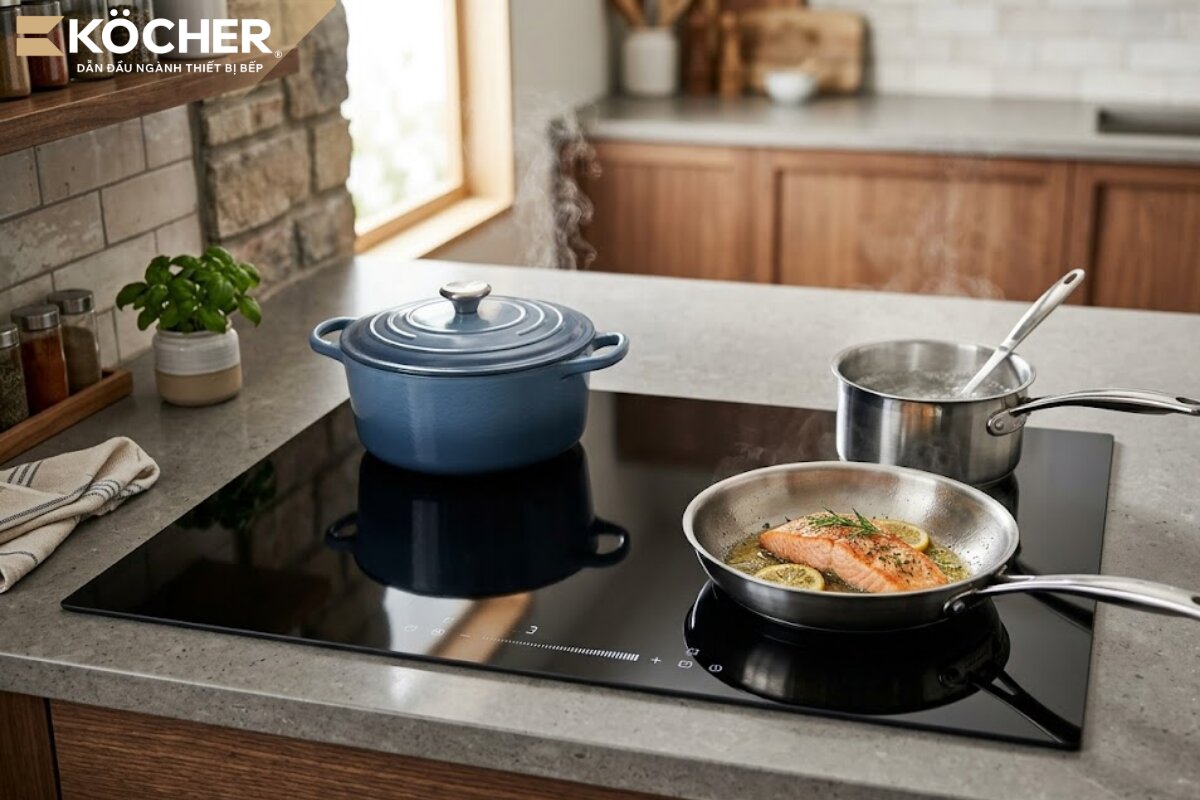
Investing in a multi-zone cooker requires careful consideration of technical specifications to ensure the device operates reliably and safely under the infrastructure conditions in Vietnam:
- Choose a cooking surface size compatible with the actual space: Ensure it fits the existing countertop size (usually 60cm or 90cm), selecting the correct size helps with technical installation and ensures aesthetic uniformity for the kitchen space.
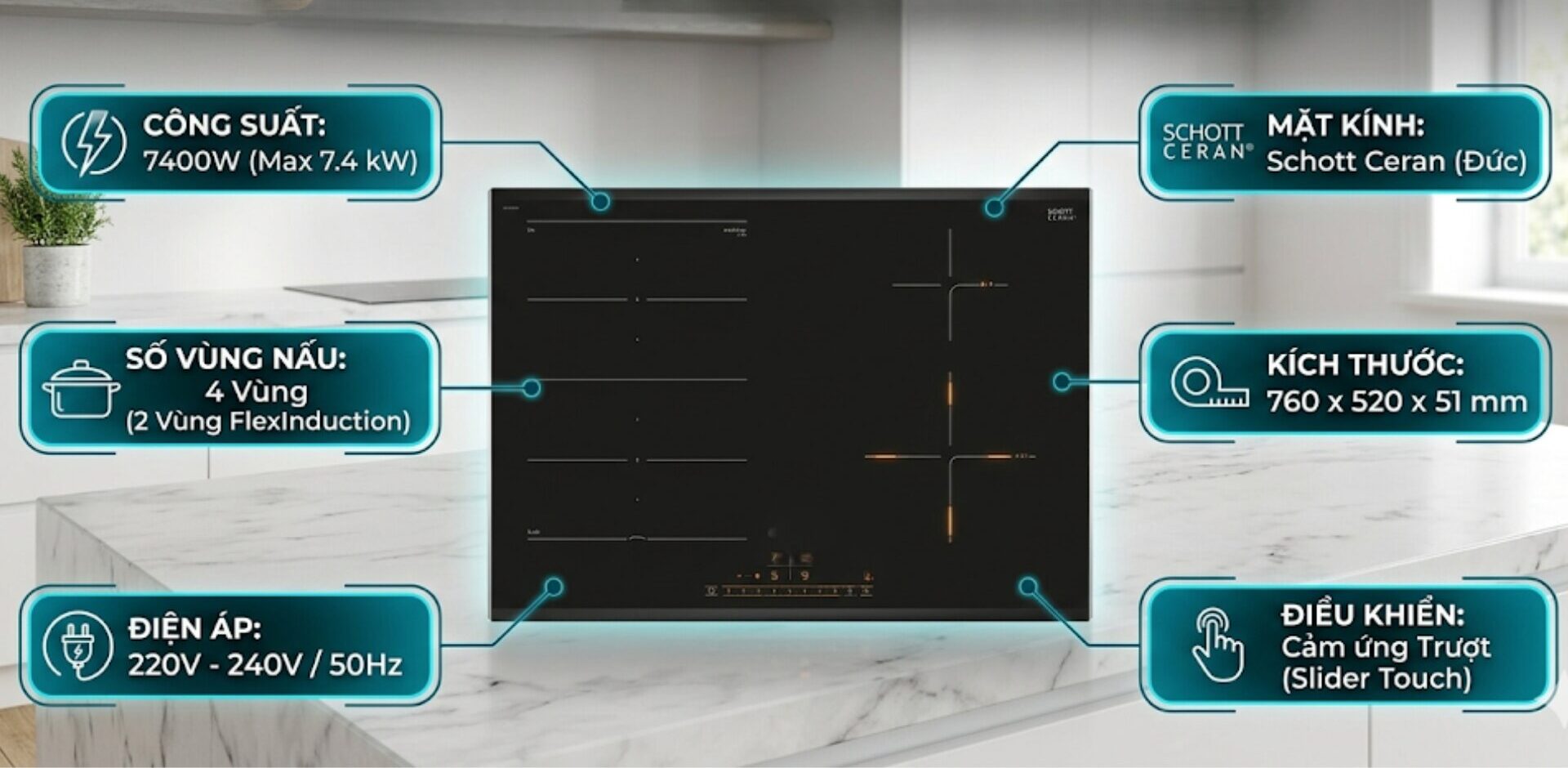
- Prioritize high-quality heat-resistant and shock-resistant glass materials: Choose products that use Ceramic glass from EuroKera (France) or Schott Ceran (Germany), as these types of glass have good resistance to impact and thermal shock, while also reducing scratches compared to regular glass surfaces.
- Ensure the household electrical infrastructure can support high power: Multi-zone cookers have very high power, so you need to ensure a separate electrical line (minimum cross-section of 4mm² – 6mm²) and install a circuit breaker with sufficient load to prevent electrical overload incidents.
- Pay attention to checking the quality of the pure copper heating element: Confirm that the device uses a 100% copper heating element for stable operation, optimizing Flexi Zone technology and extending the lifespan of components.
- Prioritize cookers with integrated pot detection features: Choose models with sensors that can measure the area and magnetic absorption capability of the pot’s bottom, helping the cooker automatically adjust the output power accurately, avoiding energy waste.
- Select products from reputable brands with official warranties: Prioritize brands with service centers and genuine parts warehouses in Vietnam to ensure technical support and sensor replacement are carried out quickly and professionally.
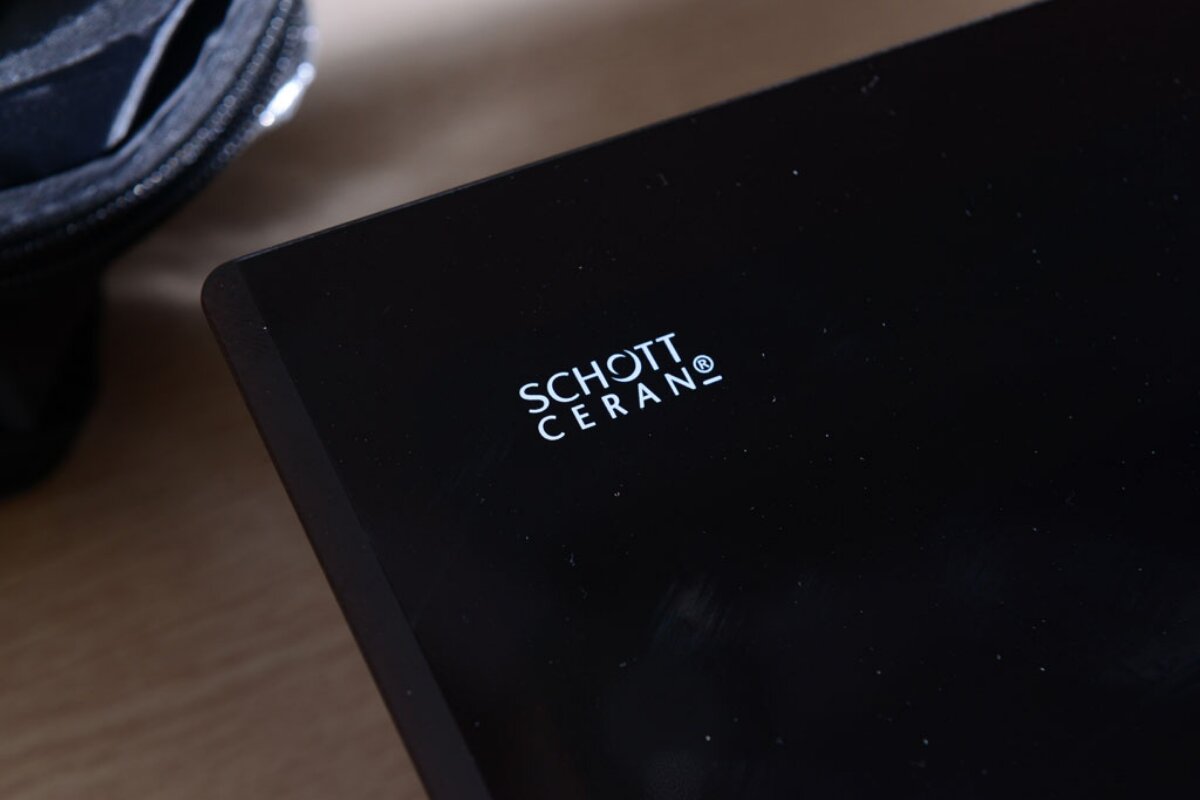 Choose glass surfaces with good impact resistance and high thermal shock resistance.[/caption>
Multi-zone induction cookers are the optimal technological solution for users who demand high flexibility and performance in cooking. We hope the detailed analysis of the advantages and practical benefits above has provided you with additional grounds to choose the most suitable cooking device for your family.
If you are looking for high-quality multi-zone induction cookers, please refer to Köcher’s products here. With E.G.O components that meet German standards and a transparent warranty policy, Köcher is proud to offer durable and premium cooking solutions for your family.
|
Köcher induction cookers pioneer German technology – For detailed product information, please contact:
|