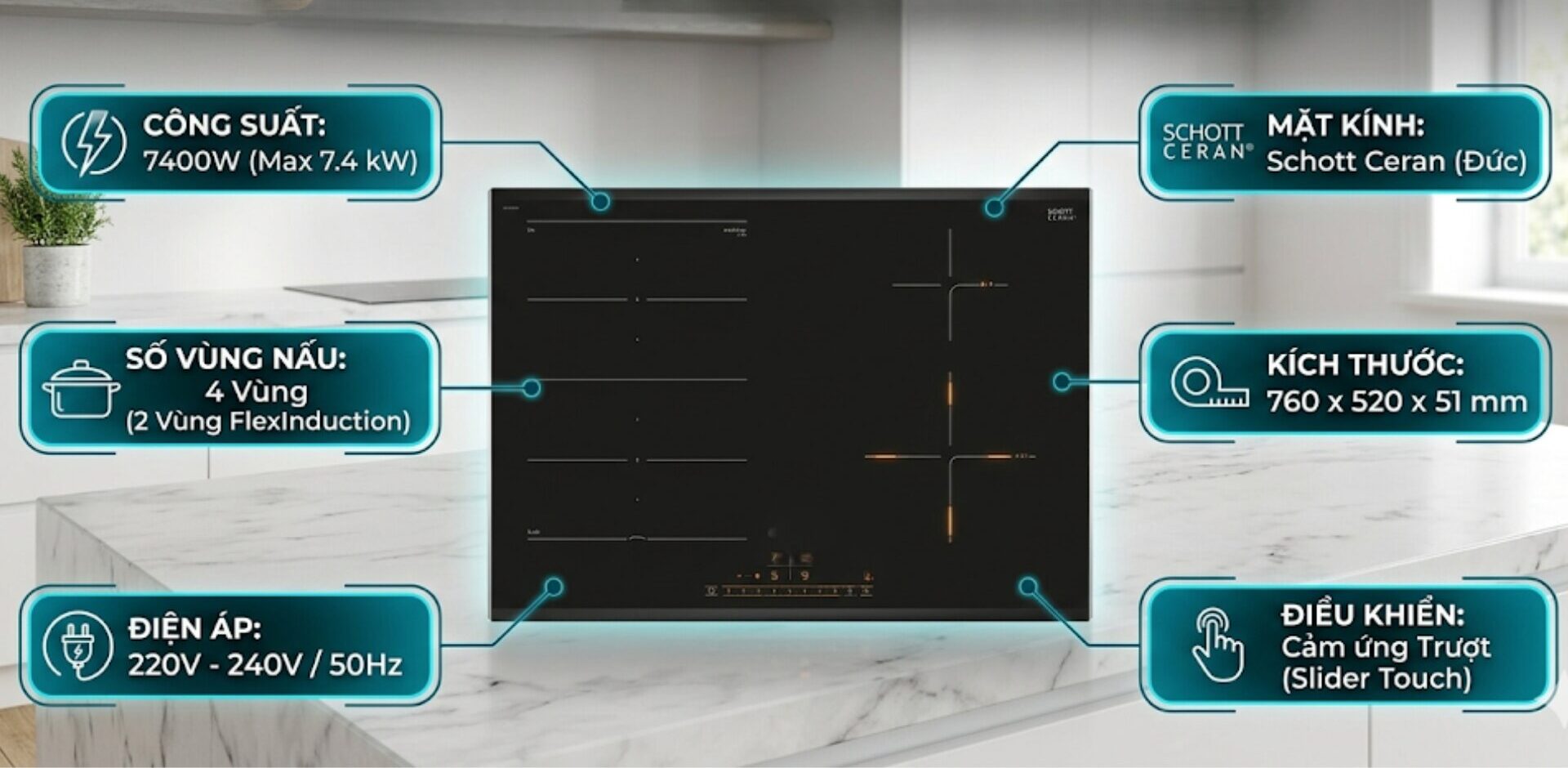
Many users wonder whether induction hobs without a power plug consume electricity? Or does maintaining a power connection reduce the lifespan of the internal components? The following article provides in-depth information to help you use the hob most effectively.
Do induction hobs without a power plug consume electricity? Power consumption in standby mode
Induction hobs without a power plug still consume a small amount of electricity. When you turn off the hob using the power button but do not disconnect the power supply, the device will switch to standby mode, consuming a very low amount of electricity to keep the sensors and LED indicators operational. Specifically, if you keep it plugged in continuously for 30 days without using it, the total electricity consumption is only about 0.72kWh (less than 1 unit), which costs only a few thousand dong per month. Understanding this mechanism helps users feel more at ease and no longer worry about the question does using an induction hob consume electricity when maintaining the power supply.
| Standby mode is a state of extremely low power consumption when the hob is off but still plugged in, maintaining basic functions such as LED lights, control panel, and cooling fan. |
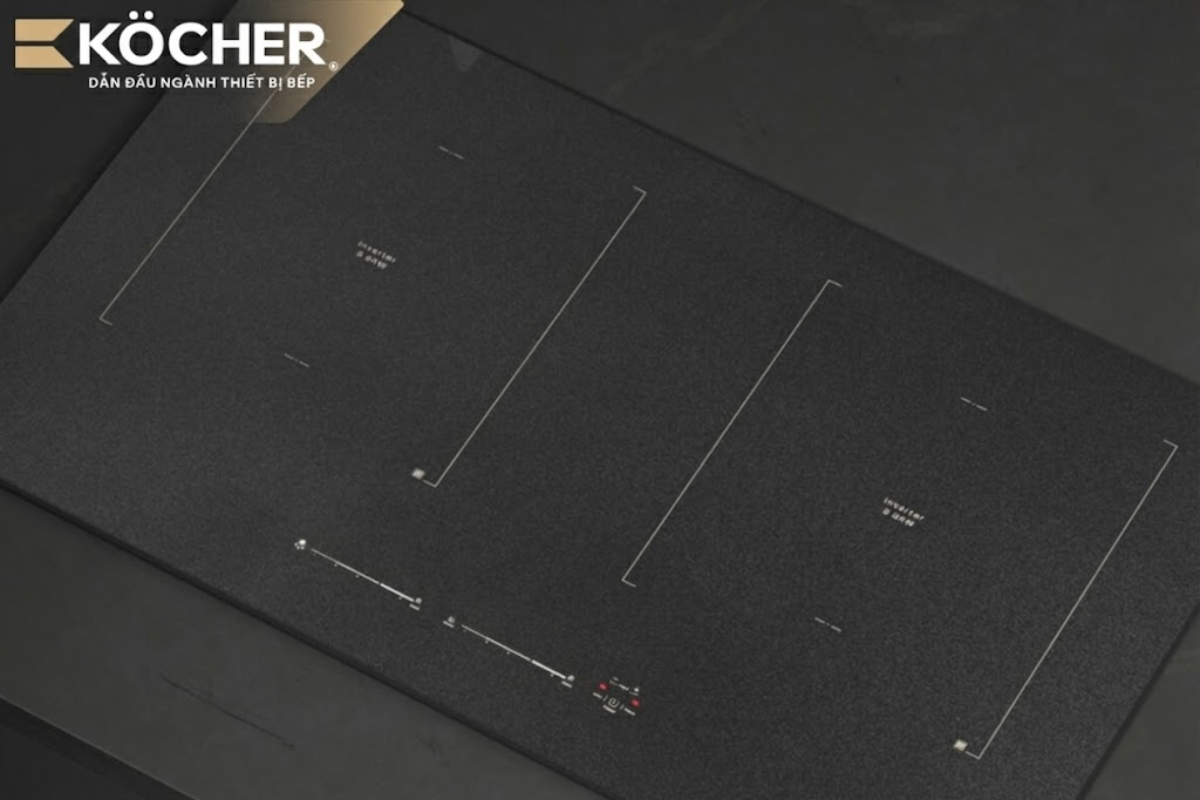
Should you unplug the induction hob after use?
You should not unplug the induction hob immediately after use as it may cause damage due to the high residual heat in the circuit board. Sudden disconnection of power can cause the cooling fan to stop, potentially leading to localized overheating of components and making electronic solder joints brittle.
To protect the durability and extend the lifespan of the device, you should maintain the power supply until the cooling fan has completely stopped, which takes about 5 – 10 minutes after turning off to allow the system to complete its natural cooling cycle.
| Note: To ensure the technical safety of Köcher induction hobs in general and high-power induction hobs on the market in particular, Köcher recommends that users install a separate circuit breaker instead of using a manual plug to protect the electrical system from overload incidents and maintain a stable power supply for the hob. The choice of protective devices should also correspond to the power rating of the induction hob in your household to ensure the best load-bearing capacity. |

5 situations when you should unplug the induction hob
Although frequent plugging in does not significantly consume electricity, in certain specific contexts, disconnecting the power supply is the optimal solution to protect the device:
When the family will not use the hob for a long time
If your family is traveling or away from home for 3 – 5 days or more, it is necessary to disconnect the power. This helps eliminate the risk of electrical fires due to unforeseen electrical incidents while also protecting the power supply from unnecessary continuous operation.
When there is thunder and heavy rain
In extreme weather conditions, lightning can cause high-voltage surges to propagate through the power lines. Although high-end induction hobs have over-voltage protection systems, disconnecting the power is still the safest option to avoid damaging the control circuit.
When the power supply in the area is unstable
When the voltage is unstable, semiconductor components like IGBT must operate outside their rated capacity, which can easily lead to overheating and electrical circuit fires. Fluctuating power can also create sparks or heat wires due to sudden current surges to compensate for voltage drops, posing a risk of fuse blowouts and fires at connection points. Therefore, proactively disconnecting the power when the electrical grid is unstable is extremely important to protect the components of the induction hob. Additionally, you can refer to the article answering the question can weak electricity be used with induction hobs to find a suitable voltage stabilizer installation for your device.
When cleaning or repairing the hob
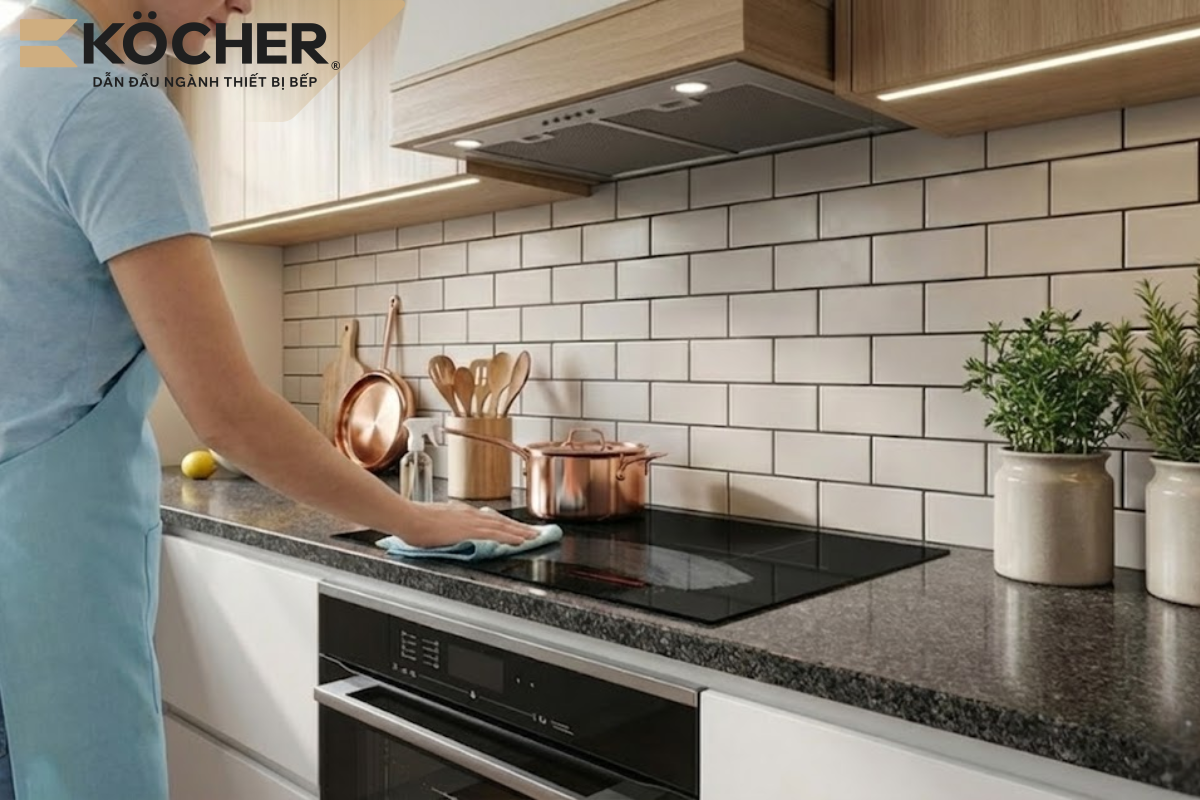
To ensure absolute safety, you must disconnect the power before cleaning the glass surface or performing technical checks. This not only avoids the risk of electric shock due to exposed wires but also prevents accidentally activating the touch buttons, causing the hob to turn on or report errors unexpectedly.
When there are cockroaches, mice, or insects invading the house
Electrical circuits when powered often create magnetic fields and slight heat, inadvertently attracting insects like cockroaches and ants. If they crawl into the circuit board causing a short circuit, the hob will suffer severe damage. Disconnecting the power when not in use (after cooling down) helps reduce this attraction and limits risks such as mice running across the touch screen turning on the hob.
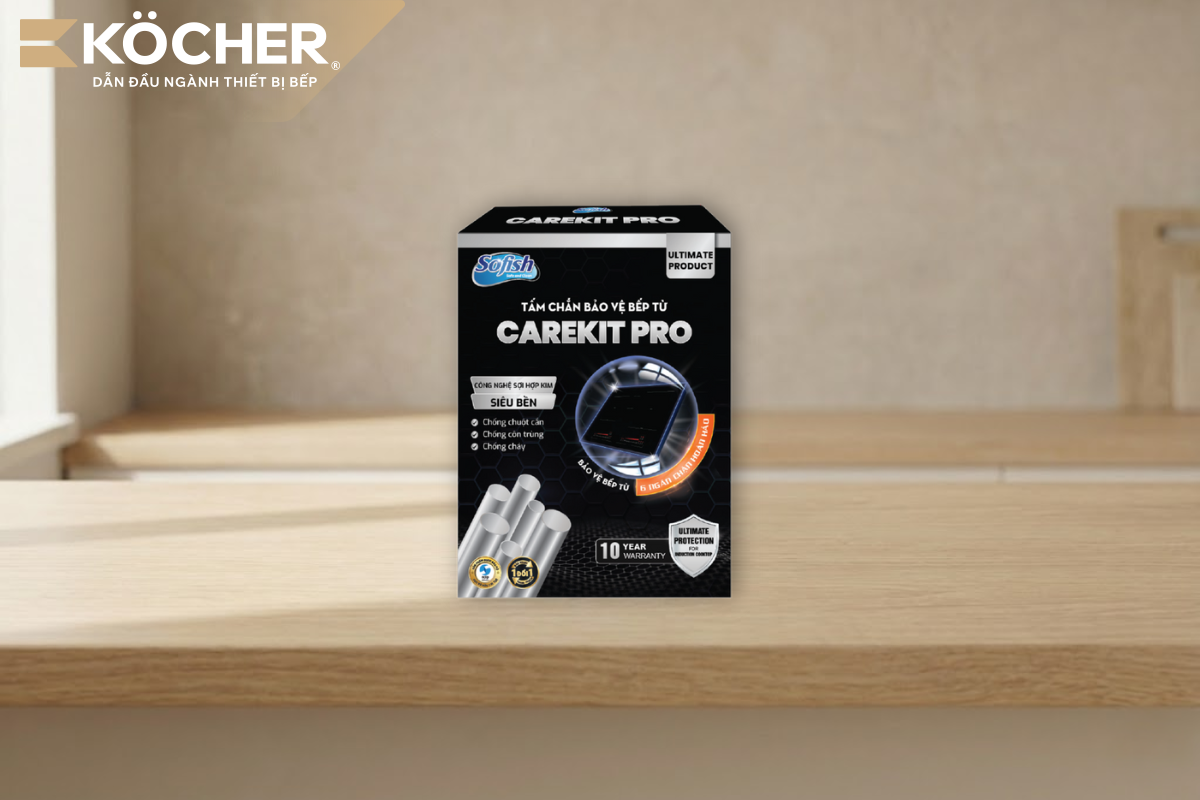
To protect the device from this situation, Köcher is providing Sofish CareKit and Sofish Carekit Pro insect protection nets, which help prevent foreign organisms from invading the circuit board, ensuring the hob operates stably and maintains the longest lifespan.
7 tips for using induction hobs to save electricity
To optimize your monthly electricity bill and enhance cooking efficiency, apply these 7 tips to optimize the energy consumption of your induction hob:
- Prioritize induction hobs with Inverter technology: Inverter technology helps to flexibly change the frequency of the electric current, maintaining stable heat and saving up to 35% energy compared to regular hobs. If you are considering a purchase, prioritize energy-saving hobs equipped with this technology to minimize monthly costs. You can also refer to how to save electricity when using Kocher induction hobs to operate these smart features most effectively.
- Choose pots with flat bottoms and appropriate sizes: Utilize the pot size detection feature (Pot Detect) so that the hob automatically recognizes the size of the pot’s bottom and focuses the magnetic field on the correct cooking area, ensuring maximum heat transfer efficiency and avoiding heat loss.
- Place the pot correctly in the center of the cooking zone: Always place the pot in the center of the marked induction area on the hob to ensure the magnetic field directly and evenly affects the bottom of the pot, helping to increase heat transfer efficiency and avoid wasting electricity.
- Turn off the hob a few minutes early to utilize residual heat: For stews or braised dishes, proactively turn off the hob when the food is about 90% cooked and keep the pot covered; the heat remaining on the glass surface will continue to cook the food in the last 2 – 3 minutes without consuming additional electricity.
- Cover the pot while cooking: Covering the pot helps retain heat that would otherwise escape with steam, allowing food to cook faster by 20 – 30%.
- Start at medium heat, then gradually increase if needed: Instead of using high power or Booster mode immediately, start the hob at medium power to stabilize the components’ temperature. When the water in the pot has boiled, you should lower the temperature to a low setting.
- Select the cooking mode suitable for the dish: Utilize the pre-set cooking programs on the touch control panel such as frying, stewing, stir-frying, or hot pot, allowing the hob’s processor to automatically calculate the optimal power level, ensuring the highest cooking efficiency with the lowest electricity consumption.
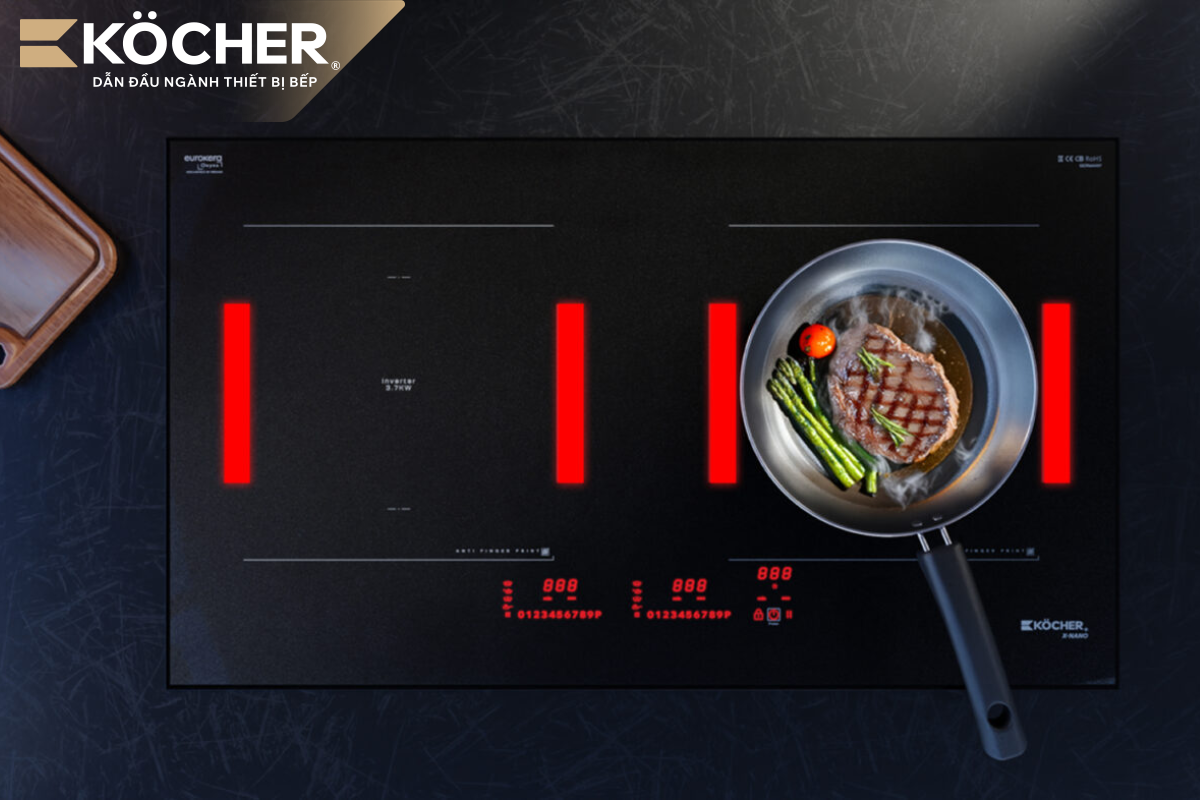
Applying the above tips not only helps save energy but also allows you to understand how much electricity an induction hob consumes in a month based on your family’s actual usage habits.
We hope the above article has helped you answer the question do induction hobs without a power plug consume electricity as well as grasp the tips for optimizing energy. You should only proactively disconnect the power supply when the cooling fan has completely stopped, when cleaning the hob, or when being away from home for an extended period to help the device operate durably and save costs maximally.
If you are looking for high-quality induction hobs, please check out Köcher’s products. With superior X-Nano scratch-resistant glass technology and E.G.O German standard components, Köcher proudly offers durable and high-class cooking solutions for your family.
|
Köcher induction hobs pioneer German technology – For detailed information about the products, please contact:
|