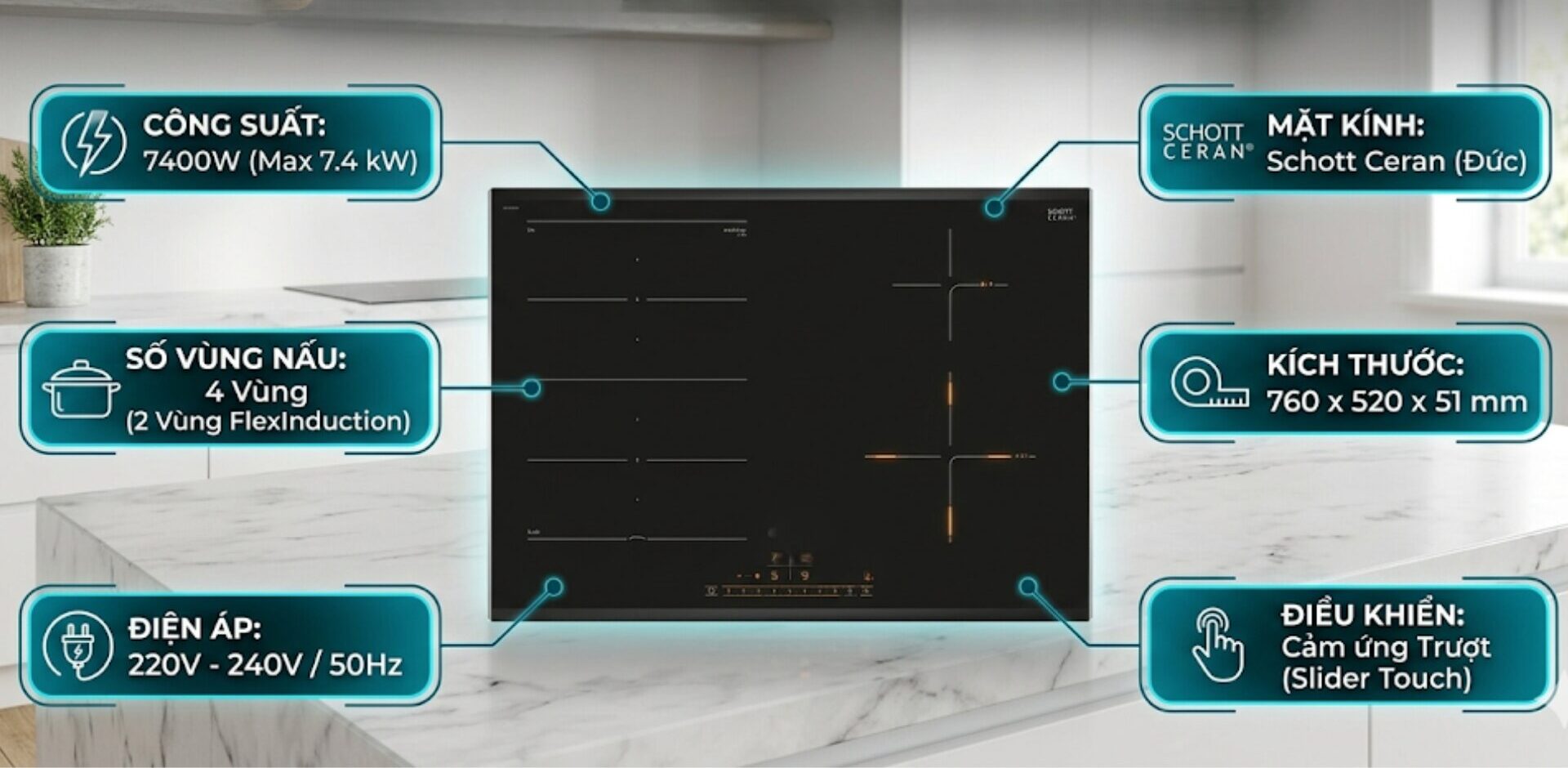
The glass surface is not only a protective component for the internal circuits but also a decisive factor for the durability, aesthetics, and heat transfer efficiency of induction cookers. If you are wondering which glass induction cooker is the best today, the answer is Schott Ceran (Germany). So what exactly is the glass surface of an induction cooker and how do we evaluate its quality?
The glass surface of an induction cooker is a type of ceramic glass that has excellent heat resistance, impact resistance, and thermal shock resistance. To evaluate whether a type of glass is good or not, we usually rely on 4 core criteria: high-temperature resistance, durability under sudden temperature changes (thermal shock), scratch resistance, and horizontal thermal conductivity (ensuring the glass only heats up in the cooking area). Let’s delve into the detailed comparison table below:
| Type of Glass | Main Advantages | Disadvantages | Rating |
| Schott Ceran | Heat resistant up to 1000°C, thermal shock resistant up to 750°C, most durable | Very high cost | Best |
| EuroKera (K+) | High aesthetics, very good heat and impact resistance | Easily counterfeited | Best |
| NEG | Good impact resistance, stable durability | Less popular in Vietnam | Good |
| Black Hegon | High gloss, decent heat resistance | Average scratch resistance | Good |
| Kanger | Reasonable price, widely available | Lower thermal durability than premium lines | Average |
| Crystallite | Shiny, low price | Brittle, easily cracks when used for a long time | Average |
| Regular Ceramic | Very low price | Poor thermal shock resistance, easily stains | Average |
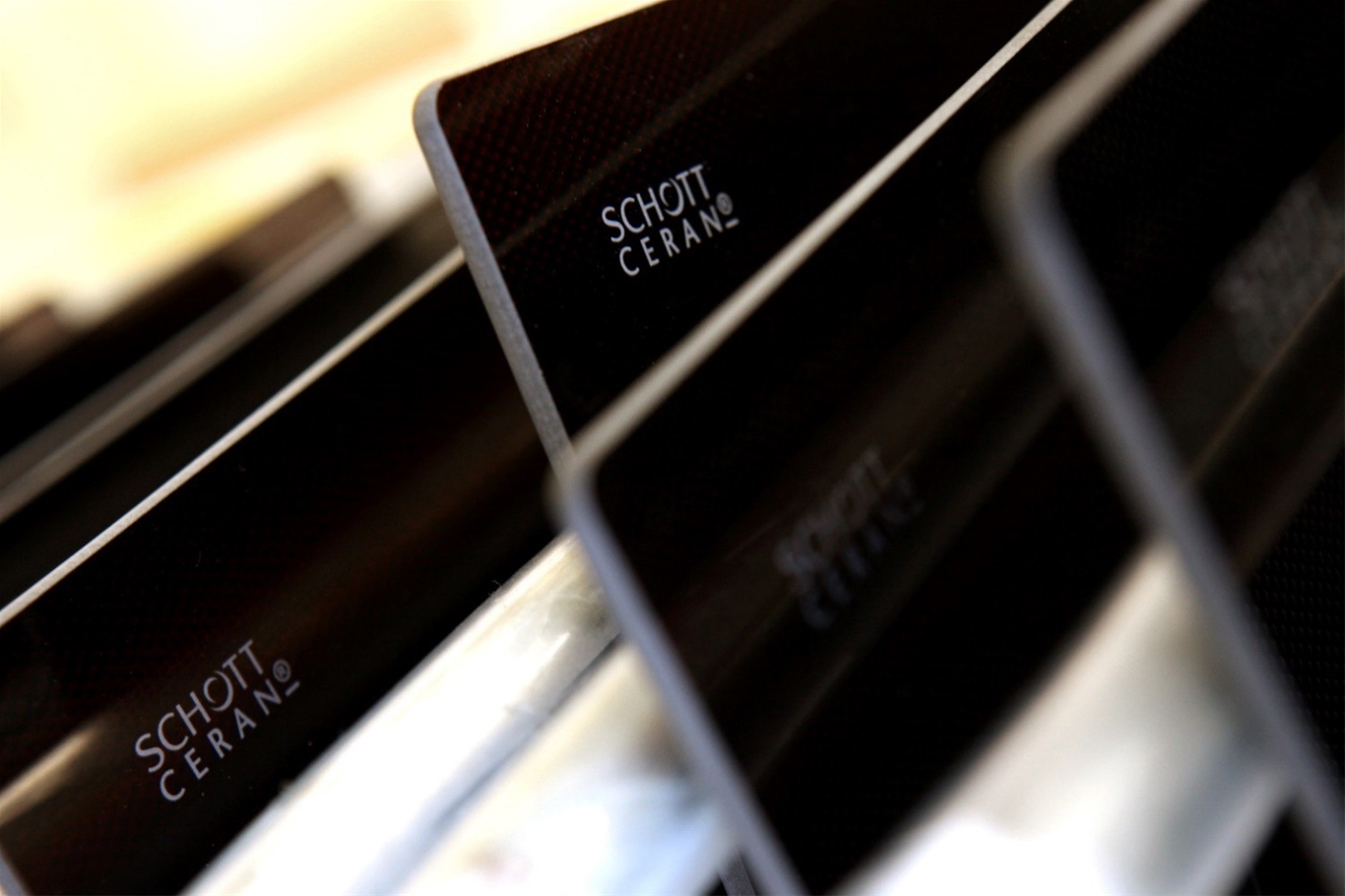
Schott Ceran Glass
This is the highest quality glass, a brand from the Schott technology group in Mainz, Germany, leading the market in quality and brand coverage.
Advantages:
- Heat resistance: Can withstand high temperatures up to 1000°C.
- Thermal shock resistance: Extremely good thermal shock resistance up to 750°C (pouring ice water on a hot surface does not cause cracking).
- Mechanical durability: High compressive strength, can withstand strong impacts from cooking utensils.
- Thermal conductivity: Very low horizontal thermal conductivity, keeping the surrounding area cool and safe to touch.
- Cleaning: Super flat surface, absolutely non-stick, quick heat dissipation prevents food from burning on the surface, easy to wipe clean with just a soft cloth.
Disadvantages:
- The production cost and price of products using this glass are usually very high.
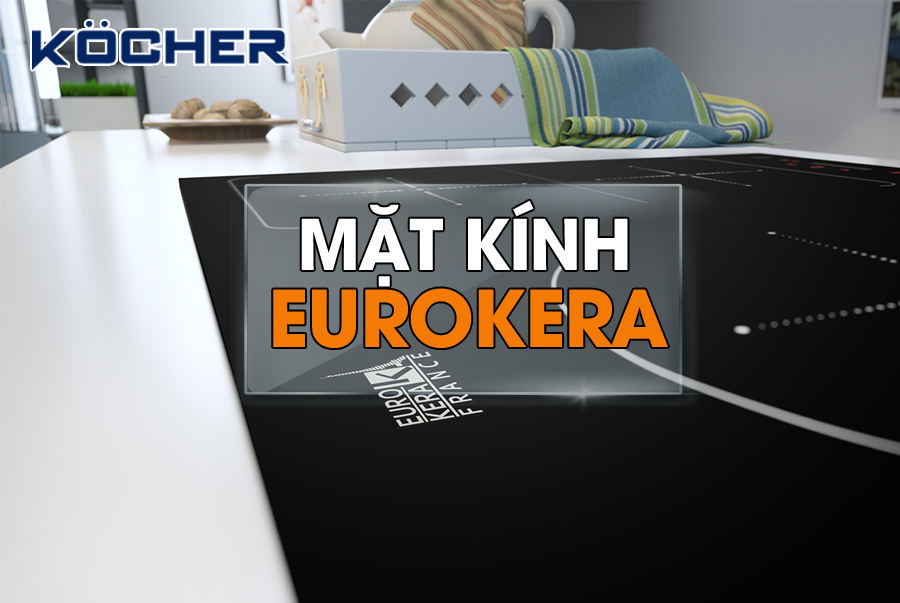
EuroKera (K+) Glass
A brand from France, owned by two large corporations, Saint-Gobain and Corning, a direct competitor of Schott Ceran in the premium induction cooker segment.
Advantages:
- Heat resistance: Good heat resistance at 700°C – 800°C.
- Thermal shock resistance: High thermal shock resistance, stable against sudden temperature fluctuations.
- Superior aesthetics: Diverse designs, glass patterns, and colors, bringing a luxurious and modern look to the kitchen space.
- Surface durability: Extremely good scratch and abrasion resistance, keeping the surface shiny after a long time.
- Cleaning: The surface is treated to resist dirt, preventing oil from sticking tightly, making daily cleaning easy.
Disadvantages:
- Compared to Schott Ceran, thermal shock resistance is slightly lower.
NEG Glass
A quality representative from Asia belonging to the Nippon Electric Glass group of Japan, often found on Japanese imported cookers.
Advantages:
- Mechanical durability: Known for high durability, impressive impact resistance and load-bearing capacity from heavy pots and pans.
- Thermal shock resistance: Can withstand sudden temperature changes up to 600°C.
- Stability: Extremely low thermal expansion, keeping the glass surface from deforming under continuous high temperatures.
- Cleaning: The glass surface is rough, smooth, leaves few fingerprints, and is extremely easy to clean grease stains.
Disadvantages:
- Design is often simple, not as diverse in patterns as European glass lines.
Black Hegon Glass
A famous brand from Germany, specializing in industrial ceramic glass. This type of glass is commonly found in mid-range and near-premium cookers.
Advantages:
- Heat resistance: Good heat resistance, meeting strict European standards for industrial ceramic glass.
- Distinctive design: Deep gloss, mysterious black color helps hide small stains during cooking.
- Scratch resistance: Good scratch resistance, protecting the surface from normal impacts.
- Cleaning: Smooth surface makes cleaning easy, requiring little effort.
Disadvantages:
- Durability over time cannot compare to Schott Ceran or EuroKera.
Crystallite (Crystal) Glass
Often used for single cookers or low-cost induction cookers, produced in China.
Advantages:
- Aesthetics: Extremely high gloss, good light reflection highlighting the kitchen space.
- Cost: Low production cost, providing reasonable prices for consumers.
- Thermal conductivity: Direct heat transfer vertically, helping to cook quickly at low temperatures.
- Cleaning: The shiny glass surface makes it easy to spot stains for immediate cleaning.
Disadvantages:
- Poor scratch resistance, the glass is brittle and can easily crack if cooked at high temperatures for too long.
Kanger (K) Glass
This is the “national” glass line of the Kanger brand from China, appearing on many induction cooker models in Vietnam.
Advantages:
- Market coverage: Low price, popular on mid-range and near-premium cookers.
- Heat resistance: Can withstand temperatures up to 700°C, meeting the daily cooking needs of families.
- Flexibility: Easily processed into various sizes and shapes of cookers.
- Cleaning: Stable dirt resistance, easy to clean if regularly wiped.
Disadvantages:
- After a period of use, the glass tends to become cloudy or show scratches.
Regular Ceramic Glass
The most basic type of glass, often used for old single electric cookers, usually sourced from China and Southeast Asia.
Advantages:
- Electrical insulation: Absolute electrical insulation, ensuring safety for users.
- Acid/base resistance: Not corroded by common cleaning chemicals.
- Cost: Very cheap, the most economical choice for single or auxiliary cookers.
- Cleaning: If cleaned immediately after cooking, the surface can maintain a certain level of cleanliness.
Disadvantages:
- Poor thermal shock resistance (easily cracks if cold water is poured on a hot glass surface). The surface is more prone to dirt and harder to clean than premium glass lines.
Which type of glass induction cooker should you buy?
Choosing the glass surface should match your usage needs, budget, and personal preferences. If you care about:
- Durability and high safety, you should choose Schott Ceran and Eurokera, the two premium glass types from Germany. Or NEG from Japan.
- Luxury and aesthetics, you might consider Crystallite glass.
- Low cost: Ceramic, Kanger.
To answer the question which glass induction cooker is good, it can be affirmed that the best induction cooker glass available today is Schott Ceran (Germany). Köcher is proud to be the pioneer in Vietnam bringing German technology into induction cooker products. This is a high-quality ceramic glass with heat resistance up to 1000°C and thermal shock resistance up to 750°C, ensuring the cooker surface remains durable and absolutely safe against sudden temperature changes during cooking. Not only leading in durability, Schott Ceran also excels in aesthetics with superior scratch resistance and rapid heat dissipation, making it easy for users to clean. Therefore, when considering which glass induction cooker is good for a long-term investment in the kitchen, cookers equipped with Schott Ceran glass are currently the number one choice.