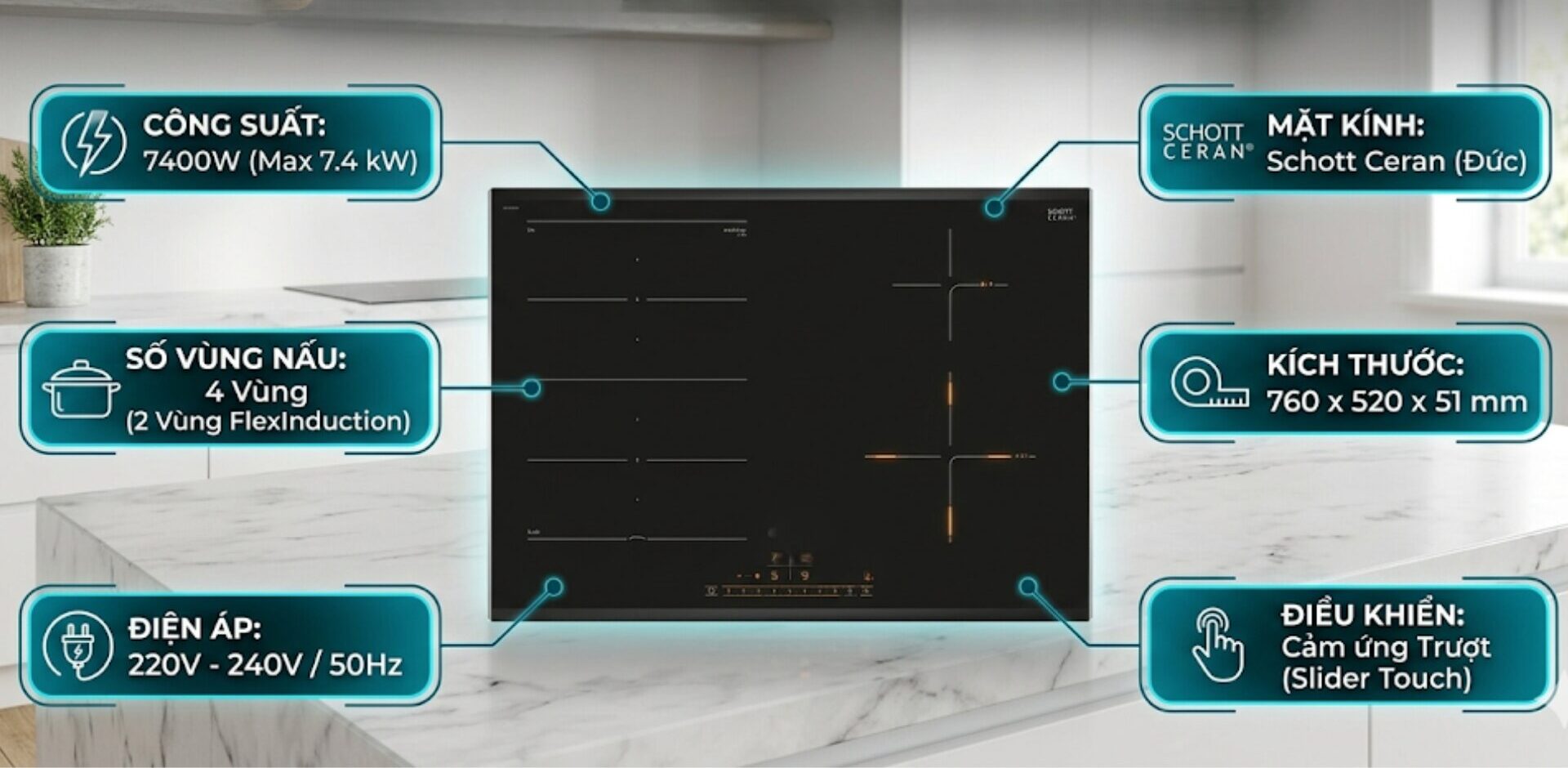
The induction cooktop automatically turns off while cooking is a situation that worries many users. This may be due to the cooktop’s automatic protection mechanism or a sign of internal component failure. The article below will help you distinguish when the cooktop turns off automatically due to features and when technical intervention is needed to handle it correctly, avoiding damage to internal components.
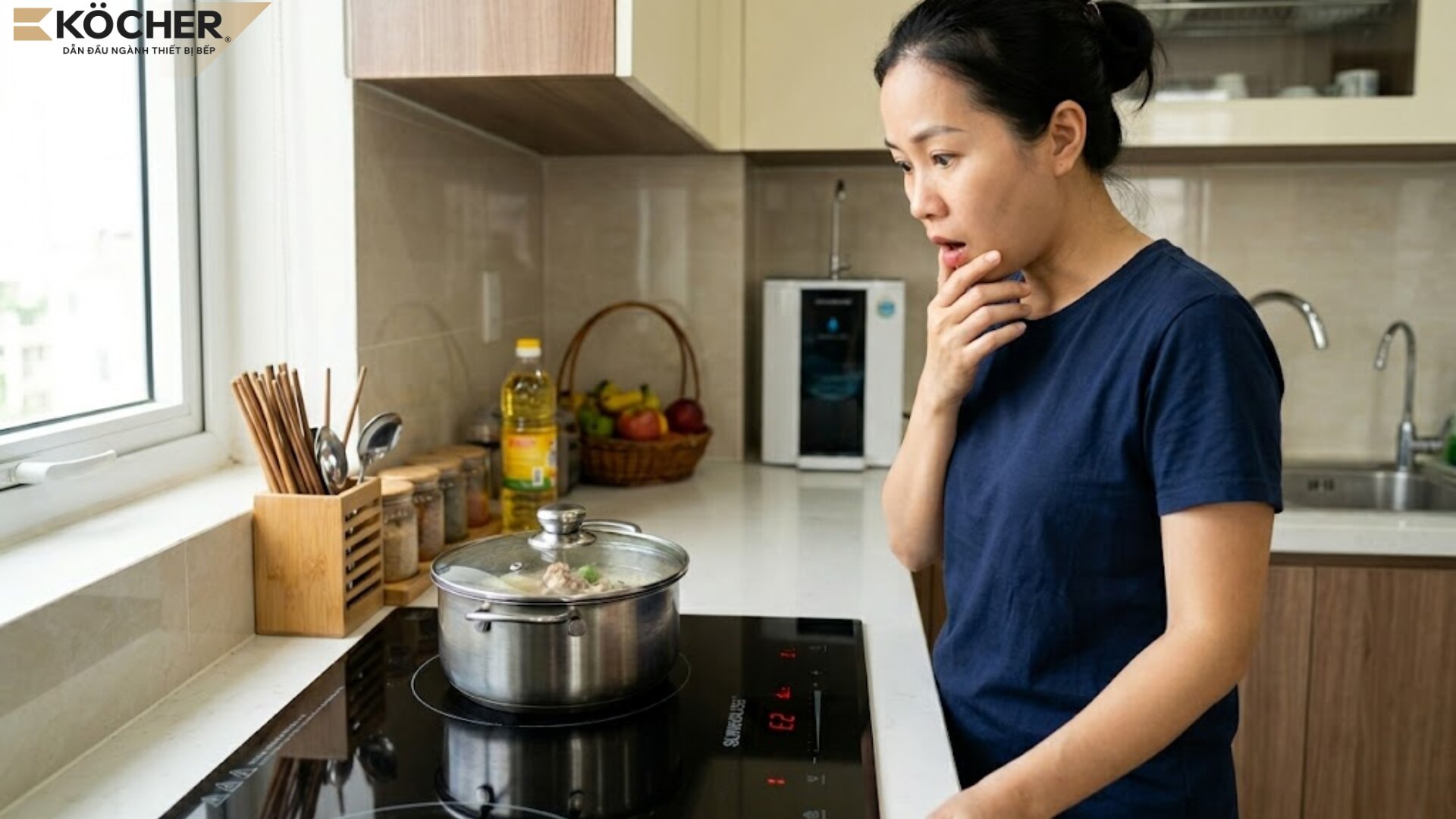
Below is a quick identification table for induction cooktops that turn off due to faults or features:
| Signs | Normal automatic shut-off (feature) | Automatic shut-off due to technical fault (needs handling) |
| Time of occurrence | When there is no pot, the pot is misaligned or made of the wrong material, water overflows, timer ends. | Suddenly in the middle of normal cooking. |
| Screen | No error code, or displays basic errors: E0 (no pot), E1 (overheating), E2 (high voltage), E3 (low voltage), E4 (pot bottom too hot). | Displays deeper system error codes: E5, E6, E7, E8, E9. |
| Can the cooktop be turned back on | Can be turned back on immediately after adjusting the pot or stabilizing the power supply. | Can be turned back on but will immediately turn off again. |
| Beep sound | Long, intermittent beeping, slow rhythm indicating notification. | Fast, continuous beeping indicating emergency warning. |
| Cooktop body | Normal heat emission. | Cooktop body is very hot or the cooling fan has stopped working. |
5 cases of induction cooktops automatically shutting off due to protection mechanisms
Modern induction cooktops are integrated with many self-protection mechanisms to ensure user safety and extend the lifespan of components. When encountering the following situations, the cooktop will actively shut down without you needing to worry.
No pot, lifting the pot while cooking, or unsuitable pot
Induction cooktops can only generate heat when they detect a pot with a magnetic base placed correctly on the cooking zone. When there is no pot or the pot is unsuitable, the cooktop will automatically shut off or not operate.
- Signs: The cooktop shuts off immediately after starting or when you lift the pot, the screen displays error code E0, accompanied by 1 – 2 short beeps then stops.
- Cause: The sensor under the glass surface does not detect the pot’s magnetic base (aluminum, glass, and ordinary ceramic pots are not compatible with induction cooktops), or the pot is misaligned from the center of the cooking zone causing insufficient contact area to activate the copper coil. To understand more about the coil structure and the heating principle, you can refer to the article What is an induction coil? Understanding the types of induction heating coils to choose the right compatible accessories.
- How to handle: Use a magnet to test the bottom of the pot; if the magnet sticks tightly, the pot is usable. Place the pot in the center of the cooking zone and ensure the pot’s bottom diameter is compatible with the induction ring, the cooktop will automatically detect the pot and continue heating.

Water or food spills onto the glass surface
When liquid spills and flows into the touch control area, the cooktop will actively shut off to avoid the risk of short circuit or misreading signals from the buttons.
- Signs: The cooktop suddenly turns off after food or water spills, the control panel may automatically light up buttons or change modes abnormally, without displaying technical error codes.
- Cause: When water from the pot spills into the control panel area, the sensor will trigger an alarm, and the anti-overflow feature will activate, causing the induction cooktop to turn off after 3 – 5 seconds.
- How to handle: Turn off the cooktop, clean the entire glass surface and the touch button area with a dry soft cloth. Once the surface is completely clean and dry, you can turn the cooktop back on and use it normally.

Cooking timer ends
Some users forget that they have previously activated the timer feature; when the timer expires, the cooktop automatically shuts off at the set time.
- Signs: The cooktop shuts off after a fixed period, the screen displays a clock icon or counts down to 0, emits 1 – 2 beeps to notify.
- Cause: The built-in timer feature on the cooktop has completed the pre-set cycle.
- How to handle: The timer feature is a convenient feature integrated into the cooktop. If you want to continue cooking, you just need to turn the cooktop back on, select the appropriate power level, and use it normally. To avoid this situation from recurring, check the timer settings before each use.
Unstable voltage
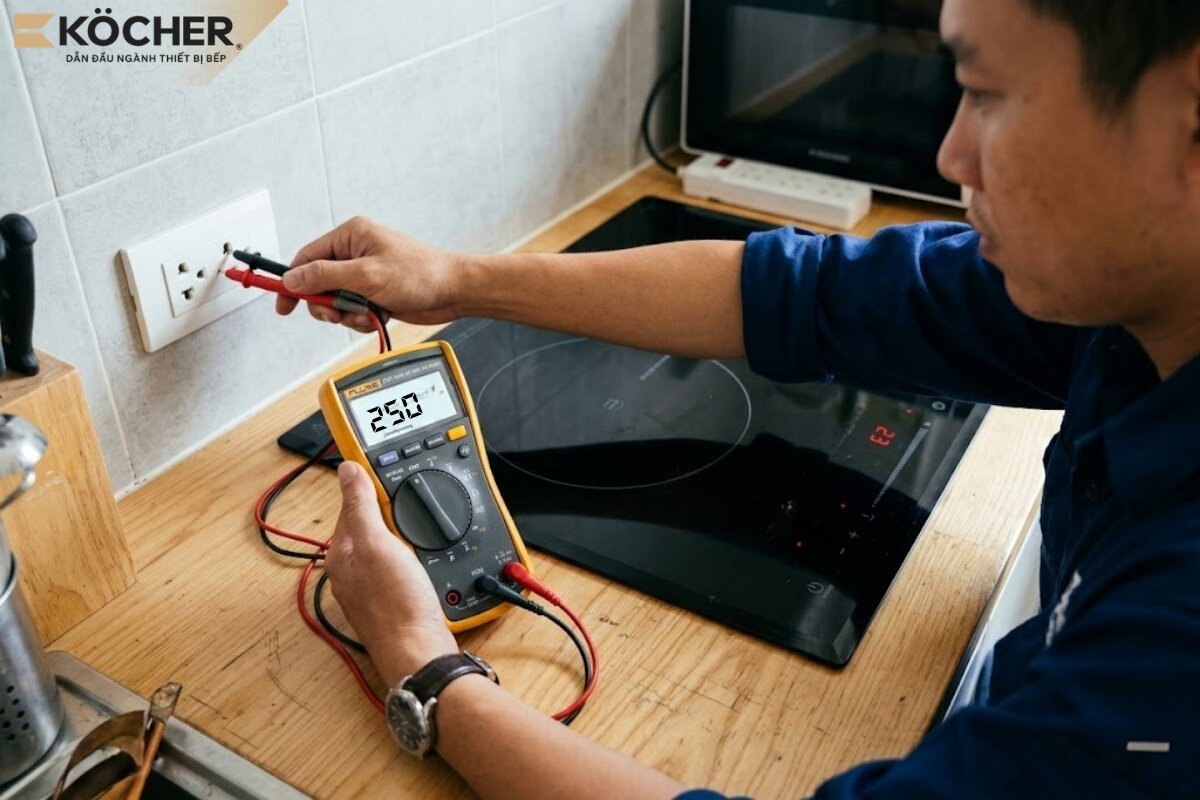
Induction cooktops are high-power devices that require a stable power supply to operate correctly. When the voltage exceeds the allowed range, the cooktop will automatically shut off to protect all internal components.
- Signs: The cooktop shuts off during peak hours or when many electrical devices are operating simultaneously, the screen may display error codes E2 (voltage too high, usually above 260V) or E3 (voltage too low, usually below 185V).
- Cause: The power grid experiences voltage drops due to overload, or voltage spikes due to lightning or grid switching. Both cases cause the circuit board to activate the automatic protection mode.
- How to handle: Check the input power supply of the induction cooktop with a multimeter and limit the use of many high-power electrical devices on the same circuit as the cooktop. If the unstable voltage situation occurs frequently, it is advisable to install a separate voltage stabilizer for the cooktop to protect the device in the long term.
Cooktop overheating or pot bottom temperature too high
When the temperature sensor detects that the temperature at the bottom of the pot is too high (usually above 250 degrees Celsius) or the cooktop’s temperature spikes beyond the safety threshold, the cooktop will automatically shut off to protect the internal components.
- Signs: The control screen displays error code E1 (cooktop overheating) or E4 (pot bottom overheating); the cooktop emits intermittent beeping, suddenly stops heating while the fan still runs at maximum speed.
- Cause: Continuous use at high power for too long or cooking dishes that require frying, leading to burnt pot bottoms. Additionally, it may be due to the cooktop’s ventilation opening being obstructed by obstacles or dirt. This situation is very likely to occur if users forget to turn off the induction cooktop while simmering food, causing the water to evaporate completely, resulting in a rapid increase in pot temperature that triggers the emergency cut-off relay.
- How to handle: Immediately turn off the cooktop but do not disconnect the power supply so that the cooling fan can continue to cool the copper coil and circuit board. Remove the pot from the cooking zone, check and clean the ventilation slots, wait 15 – 20 minutes for the cooktop to cool down to an acceptable level before continuing to use.
Induction cooktop shuts off due to technical faults – 4 causes and home handling methods
Induction cooktops that shut off due to technical faults usually come with error codes on the screen or exhibit unusual prolonged symptoms despite correct operation. Below are 4 common technical causes and appropriate handling directions.
IGBT component overheating
When the cooktop operates continuously at high power for an extended period, the heat generated inside exceeds the safety threshold, and the system must stop urgently to protect the components.
- Signs: The cooktop suddenly turns off after 30 – 45 minutes of cooking at high power or using the Booster mode for too long (usually over 10 minutes), the screen displays error code E5 (IGBT overheating), the cooktop body emits strong heat, and the fan runs at maximum power.
- Cause: The heat from the IGBT power component and the copper coil accumulates faster than the cooling system’s ability. When the temperature in the IGBT area exceeds the load threshold, the safety sensor immediately activates the stop command.
- How to handle: Turn off the cooktop using the power button but do not disconnect the power supply immediately so that the fan can continue to cool the components. Remove the pot from the cooktop to prevent heat from the pot from transferring back into the cooktop. Wait at least 15 – 20 minutes for the cooktop to cool completely, then turn it back on at a medium power level. If it cannot be used, you need to take it to a service center for inspection.
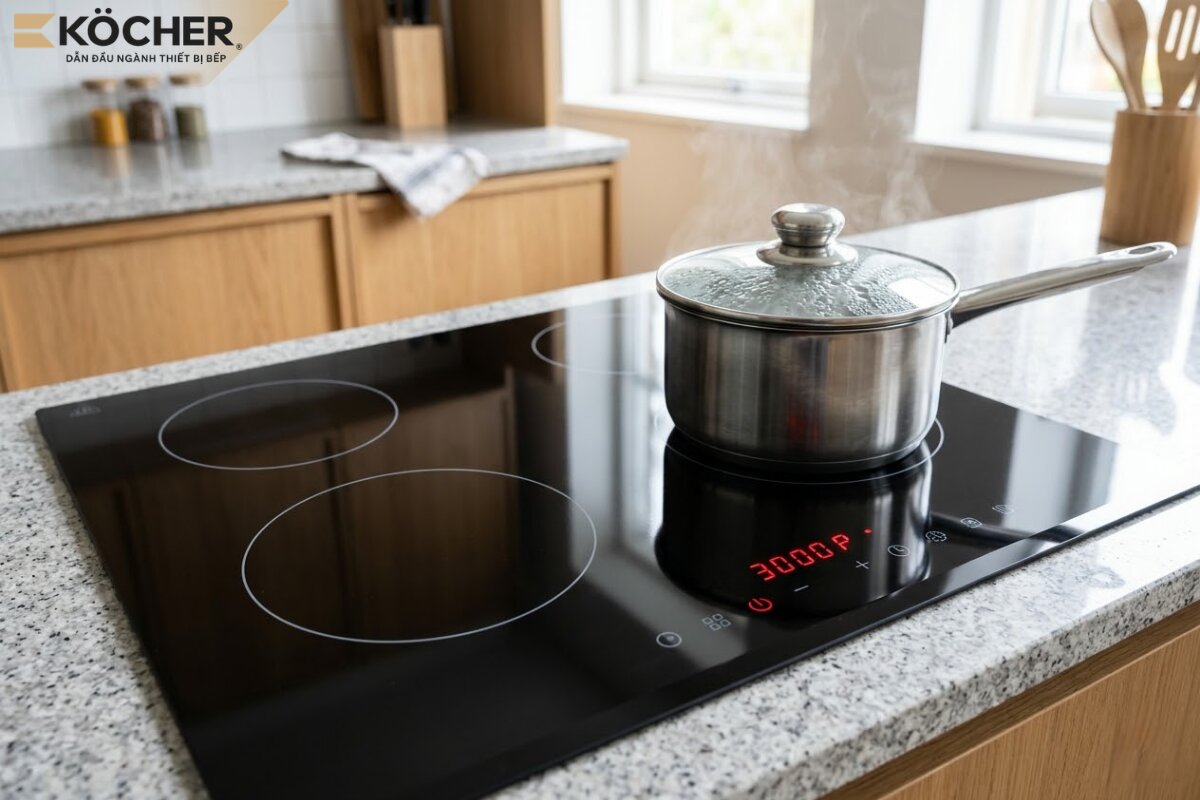 Using high power or Booster mode for too long causes IGBT to overheat.
Cooling fan malfunction or dust blockage
The cooling fan system plays a crucial role in maintaining the stable operating temperature of the cooktop. When the fan operates inefficiently, the entire system will quickly overheat even if you are only cooking at normal power levels.
- Signs: The cooktop turns off even when cooking at low power, the cooktop body area is abnormally hot, no sound of the fan running, or the fan makes strange noises.
- Cause: The fan blades are covered with too much dust and grease, leading to a stuck shaft, or the fan motor has completely failed. Additionally, if the ventilation opening at the bottom of the cooktop is obstructed (by plastic bags, cleaning rags, or objects placed too close to the cooktop), the cool air cannot circulate even if the fan is still running.
- How to handle: Check and clean the ventilation opening at the bottom of the cooktop, ensuring there are no obstacles blocking the vent. If the fan does not run or runs weakly, use a mini vacuum cleaner or a soft brush to clean the fan blades. If the fan is completely broken, contact the service center for replacement.
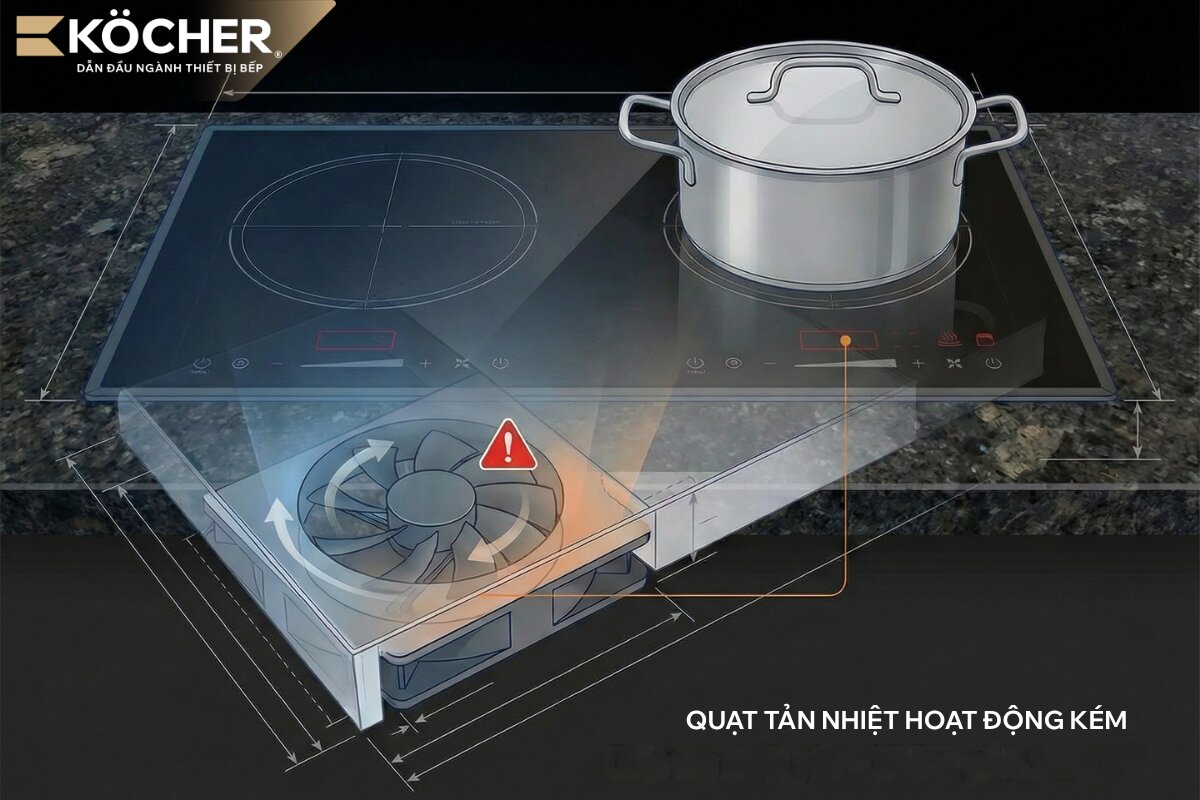 The cooling fan operates poorly, causing cool air not to circulate.
Temperature sensor malfunction
The temperature sensor in induction cooktops plays a core role in measuring, controlling temperature, ensuring safety, and sending signals to the circuit board to coordinate operations. When this component malfunctions, the cooktop will misread the actual temperature and shut off even though the user is cooking at normal power levels.
- Signs: The cooktop turns off immediately after being turned on even if nothing is cooked, the cooktop continuously shuts off or operates erratically, the screen displays error code E6 (temperature sensor malfunction).
- Cause: The sensor’s wiring may be broken due to oxidation, rodent chewing, or the connector may be loose over time. In many cases, the sensor component may have completely failed after prolonged exposure to high temperatures, causing the microprocessor to be unable to read the signal and shut off the cooktop to protect other components.
- How to handle: Disconnect the cooktop’s power supply for about 5 minutes, then turn it back on. If the error still appears immediately upon startup, it may be due to a faulty sensor. You should not disassemble the cooktop if you do not have technical expertise; please contact the service center to check and replace the original sensor.
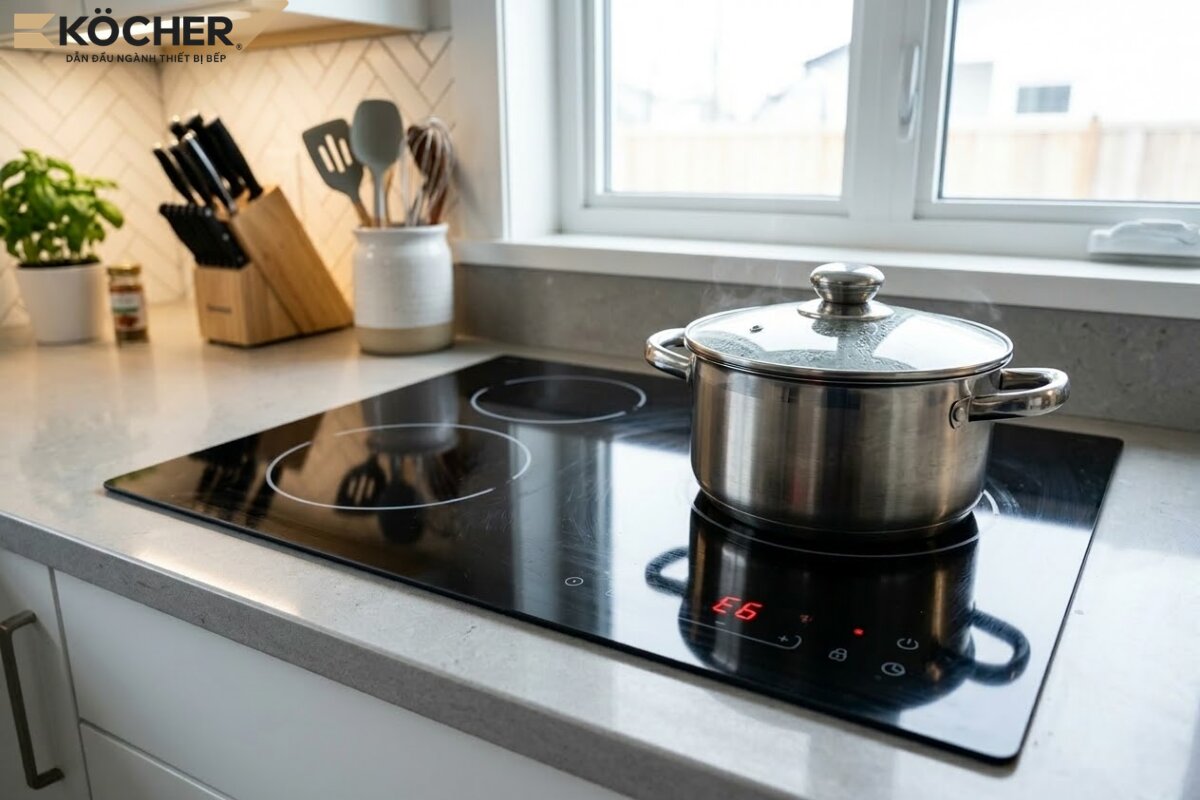 Error E6 may be related to the temperature sensor of the induction cooktop.
Control board malfunction or aging
The control board is the “brain” of the entire induction cooktop system. After many years of operation in high-temperature and high-humidity environments, the components on the control board gradually age and may cause abnormal automatic shut-off.
- Signs: The screen displays erratic error codes or shows errors immediately upon turning on the cooktop, the cooktop repeatedly shuts off after a few seconds even though it has completely cooled down, or the touch buttons respond incorrectly. When the power IC chip or button IC on the control board is damaged or short-circuited, the device may fall into a state of the induction cooktop receiving power but not turning on the touch panel even though the notification sound for receiving the total current still rings when plugged in.
- Cause: The power filter capacitor may be dry or swollen, the circuit traces may be oxidized causing electrical leakage, or the control IC may have incorrect values due to component aging. Unstable voltage over a long period can also cause the circuit board to deteriorate faster.
- How to handle: This is a case that cannot be handled at home without the necessary equipment and experience in electronics. Stop using the cooktop immediately and contact the service center to check and replace the original circuit board, avoiding further damage to other components.
The phenomenon of the induction cooktop automatically shutting off is not always a cause for concern; what matters is that you know how to correctly identify the cause to handle it in a timely manner. If the cooktop turns off with an error code, turns off continuously, or cannot be turned back on after cooling, that is when technical intervention is needed instead of continuing to use it. Understanding the above situations will help you use the device longer and ensure safety throughout your daily cooking process.
If you are concerned about purchasing a low-quality induction cooktop, please refer to Köcher’s products here. As a leading brand in the kitchen appliance industry with E.G.O standard German components, Köcher is proud to provide durable and high-class cooking solutions for your family.
|
Köcher induction cooktops pioneer German technology – For detailed product information, please contact:
|