
Sisters often use steel wool, scrubbing, and rubbing to clean stainless steel pots that are burnt and blackened to restore their shine. However, this method will remove the inherent gloss of the pot, causing the surface to become scratched, and over time, the scratches will grow larger. Food and dirt fill the scratches, making cleaning even more difficult.
In this article, Kocher would like to share with you gentle methods to clean burnt, yellowed, or rusty stainless steel pots that save time and effort, and especially maintain the shine of the pot without scratching. Are you curious about these methods?
See more:
- 7 Ways to keep non-stick pans from sticking
- What to do with a newly purchased non-stick pan?
Guide to cleaning yellowed, stained stainless steel pots
Yellowed stainless steel pots are unsightly, making your equipment look dirty and aged quickly. However, cleaning stained, yellowed stainless steel pots is not as simple as cleaning other yellowed materials like porcelain or glass. So how can you clean yellowed stainless steel pots?
Ingredients needed:
- White vinegar
- Baking soda
- Water
- Sponges
- Yellowed, stained stainless steel pot/pan
The method for cleaning yellowed stainless steel pots is very simple. First, pour vinegar into the pot to cover all the stains, yellowness, and discoloration. Then add about twice the amount of water, enough for the solution to boil for about 20 minutes without drying out.
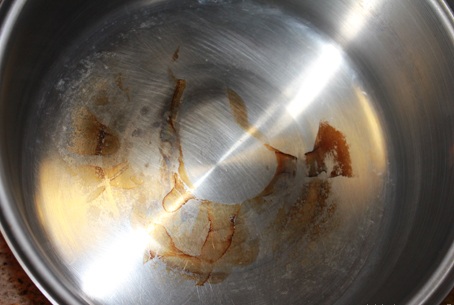
Then, place the pot on the stove and bring the solution to a boil for about 15-20 minutes, continuously checking to see if the liquid in the pot is evaporating. Do not let the water in the pot evaporate too much, as this will burn the pot. When you see that the water in the pot is almost gone, turn off the stove and remove the pot from the heat.
This solution will automatically eliminate the yellowed, stained areas inside the stainless steel pot, which is why the water will turn a brown color. You can pour this solution away. Then continue to add baking soda to the pot while it is still hot. Use a sponge to scrub away any remaining yellowed, dirty spots inside the pot. Be careful not to burn yourself.
Finally, when you check and see that the pot is clean, you can rinse it with clean water to complete the cleaning process of the stained, yellowed stainless steel pot.
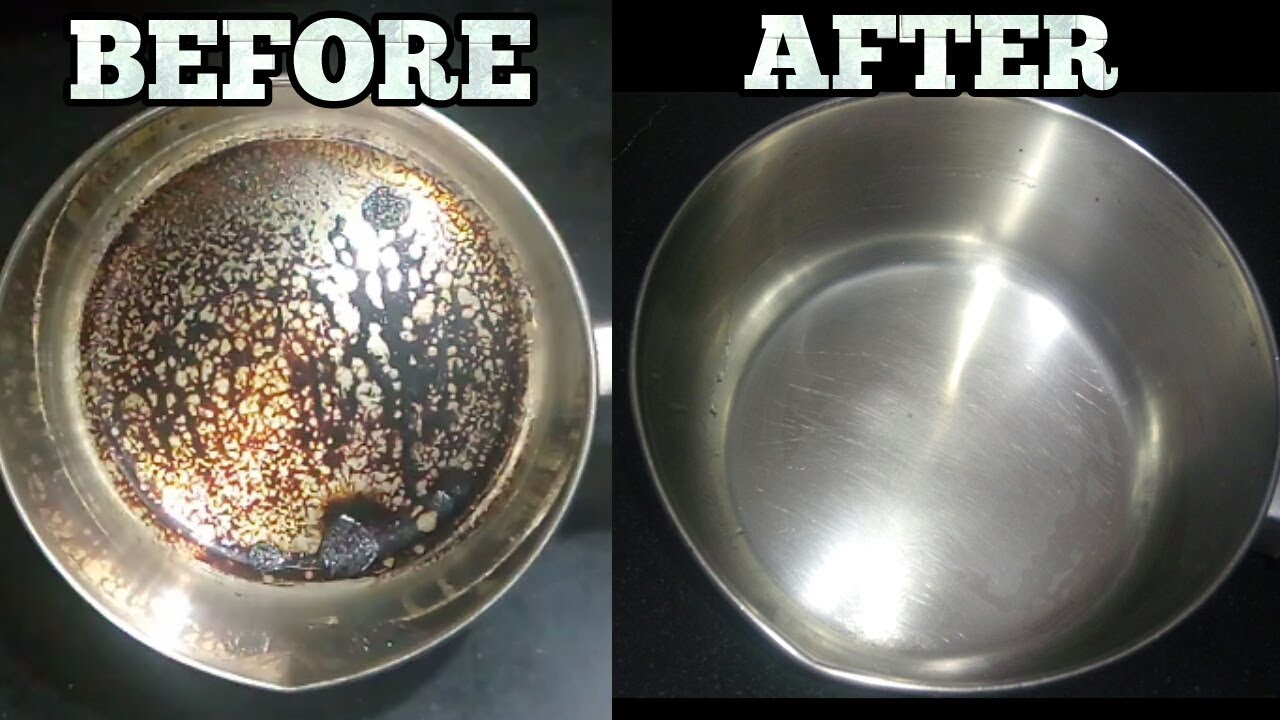
3 Ways to clean burnt black stainless steel pots
Daily cleaning: using a sponge and warm water
Over time, most stainless steel cooking utensils become yellowed, rusty, or even burnt black both inside and outside the pot. Even if you maintain a regular daily cleaning habit, pots and pans can still easily become yellowed and dirty. If you only wash with regular water and do a quick scrub, you definitely won’t be able to clean those stains. Pots and pans also lose their aesthetic due to food spilling out and easily burning when cooking. Over time, these stains will rust.
However, cleaning burnt black stainless steel pots with steel wool is not a good solution. If the pot is burnt black, try soaking it in hot water mixed with dish soap. Then use a non-scratch sponge to scrub.
When soaking the burnt stainless steel pot in hot water, the burnt spots will soften, making it easier for you to scrub compared to scrubbing directly under cold water. Then use a wooden spoon or nylon spoon to scrape off the burnt spots.
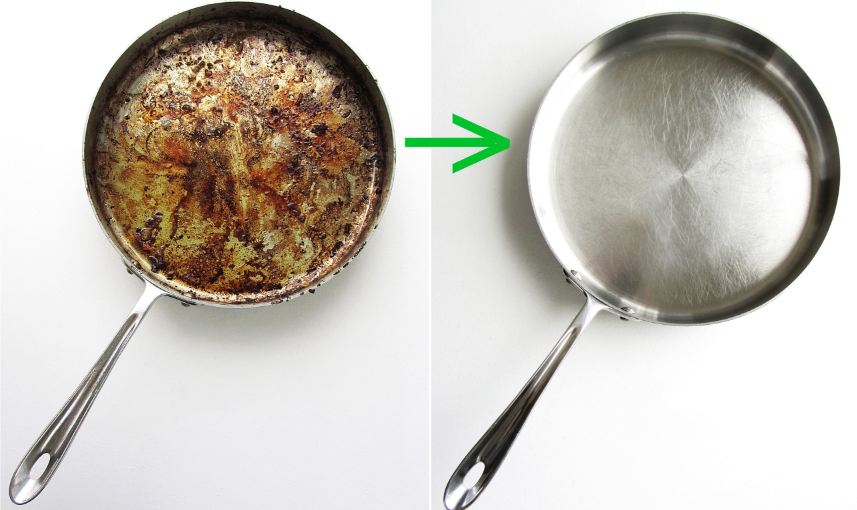
Cleaning burnt black stainless steel pots with salt and lemon
Salt and lemon are definitely kitchen ingredients that everyone has and are very easy to find. These are two components that effectively clean burnt black stainless steel pots and pans. Because the acidity of lemon helps counteract hard particles while the coarseness of salt helps remove burnt food.
So, how is this method of cleaning burnt black stainless steel pots performed?
Ingredients needed:
- Fresh lemon
- Salt
- Sponges
- Burnt pans, pots
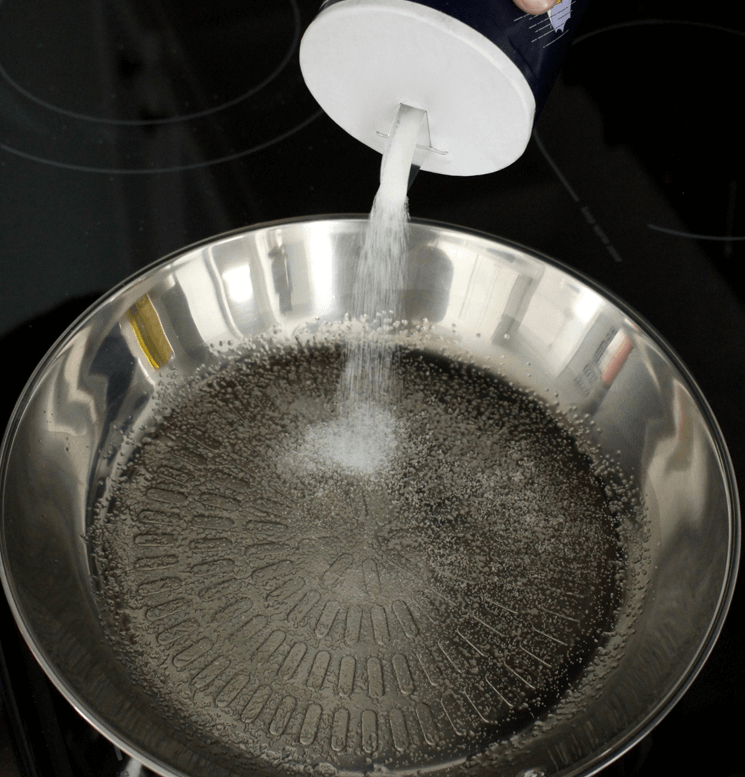
To clean the pot most effectively, you can use warm water for better cleaning results.
Removing burnt spots with Baking Soda
The method of cleaning burnt black stainless steel pots with baking soda is also as effective as the methods we have shared above.
For this method, you need to ensure that the stainless steel pot is completely dry. Then sprinkle baking soda evenly over the burnt area of the pot. Use a dry cloth to scrub the baking soda into the burnt spot. You can add a small amount of water to the baking soda to create a paste if you wish.
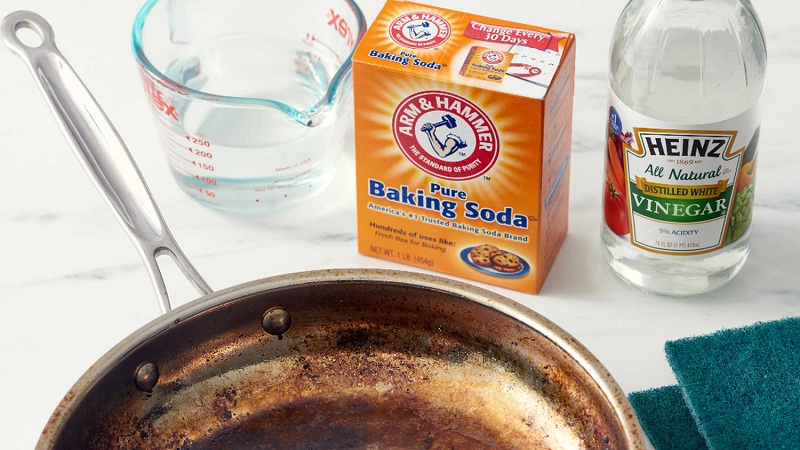
When you see that the burnt spots have been removed, rinse off the baking soda and dry. To be more careful, you can rinse the pot with warm water.
Baking Soda is both a way to clean yellowed stainless steel pots and helps remove burnt spots. If you have been following articles about cleaning pots, pans, induction cookers, and induction cooktop glass, you may notice that Baking Soda is always an essential material for every cleaning battle, effectively cleaning kitchen equipment.
How to keep stainless steel pots from yellowing and rusting
When you first use or when you have successfully applied methods to clean yellowed, burnt black stainless steel pots. To keep your stainless steel pots always shiny and clean like new, you should keep in mind some following usage tips:
- Regularly clean immediately after cooking. Thoroughly clean stains before storing.
- Prevent yellowed, stained water spots by always drying the stainless steel pot immediately after washing. Because as long as there is water left in the pot, it is very easy to become yellowed, and if left for a long time without cooking, it can cause rust and mold.
- If you accidentally forget to dry and find the stainless steel pot stained or yellowed. Wipe off the excess water, dampen the pot, and then use a damp sponge to scrub clean. You can add baking soda if necessary. Don’t overlook this stain and continue cooking for the next time, as this will make the stain harder to clean.
- Never add salt to water until it boils. This can cause corrosion, pitting the surface of the stainless steel pot, leaving small dents in the pot.
- Cold food is more likely to stick to pots and pans. They can easily burn and stick tightly to the pot. Make sure to dry food, especially foods stored in the refrigerator that need to be thawed a few hours beforehand.
- Do not use cold water to clean hot pots and pans, as this can cause warping and deformation of the pot due to thermal shock.
- Steel wool or metal spoons used for scraping and scrubbing can scratch the surface of stainless steel pots. Therefore, in the methods for cleaning yellowed, burnt black stainless steel pots above, we recommend that you only use sponges and plastic or nylon spoons for scrubbing.
- Chlorine is an effective bleach for stainless steel. However, you should not use solutions containing chlorides, as they can clean quickly but easily cause your stainless steel pot to become dirty again and harder to handle.
Applying the methods for cleaning yellowed, stained, burnt black stainless steel pots that we have shared above will help you quickly restore the aesthetics and the shiny newness of your beloved stainless steel pots. This is also a way to extend the lifespan of your cookware and save costs so you don’t need to replace pots that are yellowed or burnt black anymore.
Many housewives still have the habit of using steel wool to scrub hard and vigorously to remove burnt black spots, hoping to restore the shine of the stainless steel pot. However, this rough scrubbing method will remove the inherent gloss, causing the pot’s surface to show countless scratches that are difficult to restore. Over time, these scratches will deepen and spread, creating gaps for food and dirt to cling tightly, making it even more difficult to clean and maintain the hygiene of the pots in the future.