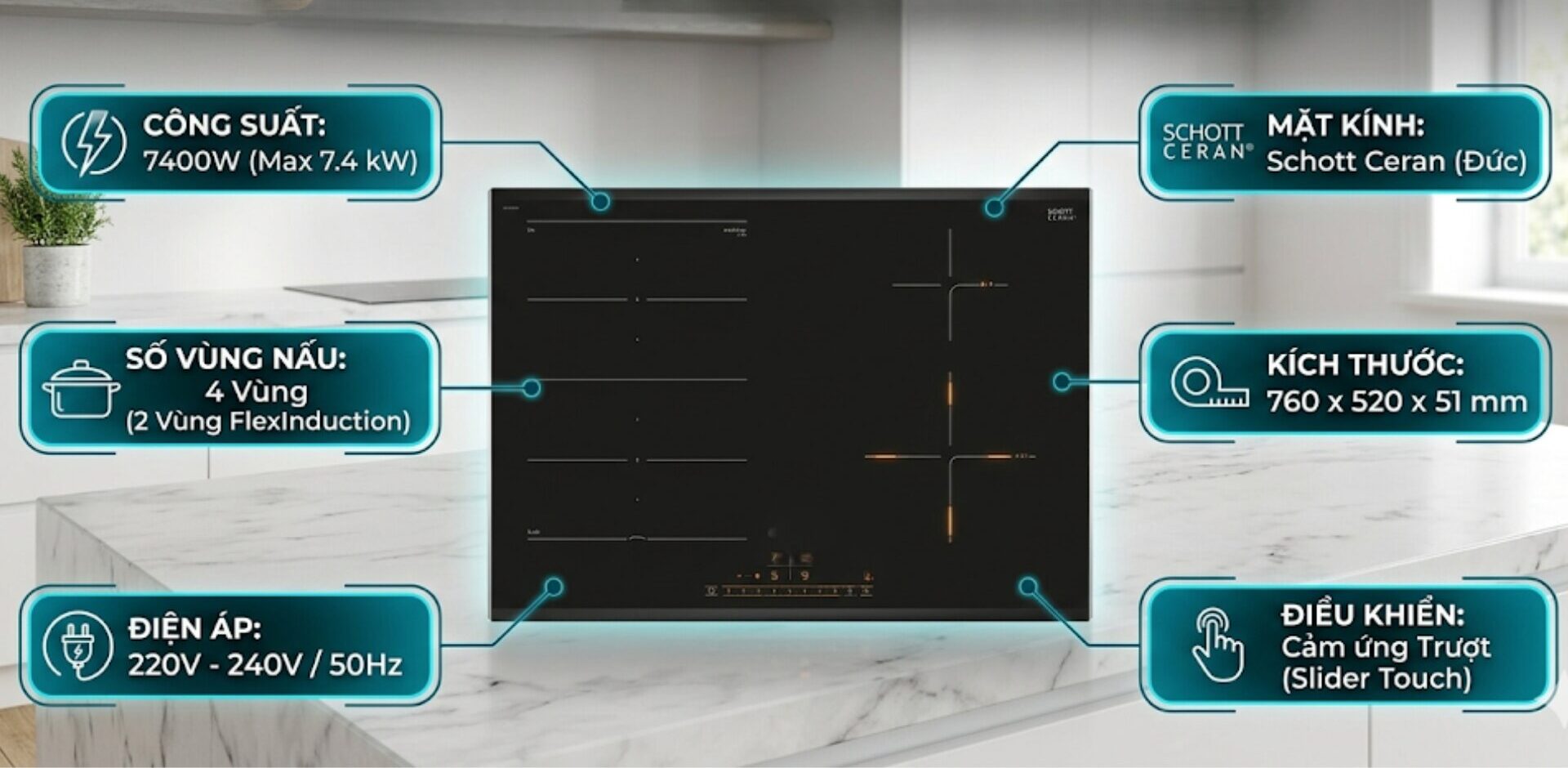
Installing an induction cooker incorrectly can pose dangers to users, not only causing electrical short circuits or fires but also damaging the cooker. If you are unsure how to install an induction cooker according to standards, here are the installation standards for built-in induction cookers that you need to be aware of:

How to install an induction cooker according to standards correctly?
Unlike countertop induction cookers or gas stoves, built-in induction cookers require a specific installation method. This is because installing a built-in induction cooker requires cutting stone, patching stone, ensuring the underground electrical source, moving or adjusting kitchen cabinets,… there are many issues that arise when installing built-in induction cookers. Moreover, the installation of built-in induction cookers is fixed and cannot be moved once installed. Therefore, users need to have a plan and know how to install built-in induction cookers accurately.
To make the installation of the induction cooker easier and ensure the inherent aesthetics of the cooking area, without having to patch stone, cut stone, or move the electrical source or kitchen cabinets, you should be clear on the following criteria.
1. Installation location of the induction cooker

The location of the induction cooker depends on habits and kitchen space
First, users need to observe the location where they want to install the induction cooker in the kitchen. Abroad, especially in European countries, they often install built-in induction cookers in separate areas due to the relatively large kitchen space.
However, in Vietnam, induction cookers are often installed against the cooking wall, near the sink, shelves, and kitchen cabinets for convenience and to save space in the family’s small kitchen. Therefore, depending on needs and usage habits, you should choose a suitable installation location.
Users should also place the induction cooker in well-ventilated areas so that the bottom and body of the cooker can dissipate heat best when the cooker operates at high temperatures.
2. Size of the induction cooker
You cannot overlook this criterion if you want to install the induction cooker correctly. Built-in induction cookers come in various sizes. You need to know the size of the cooker body, glass surface, and the size of the stone cutout for each type of two-burner, three-burner, four-burner, or five-burner cookers.
Accurately determining the size of the cooker body and glass surface will help you cut the stone just right, avoiding excessive adjustments that could detract from the aesthetics of the cut stone area or affect the electrical system or kitchen cabinets.
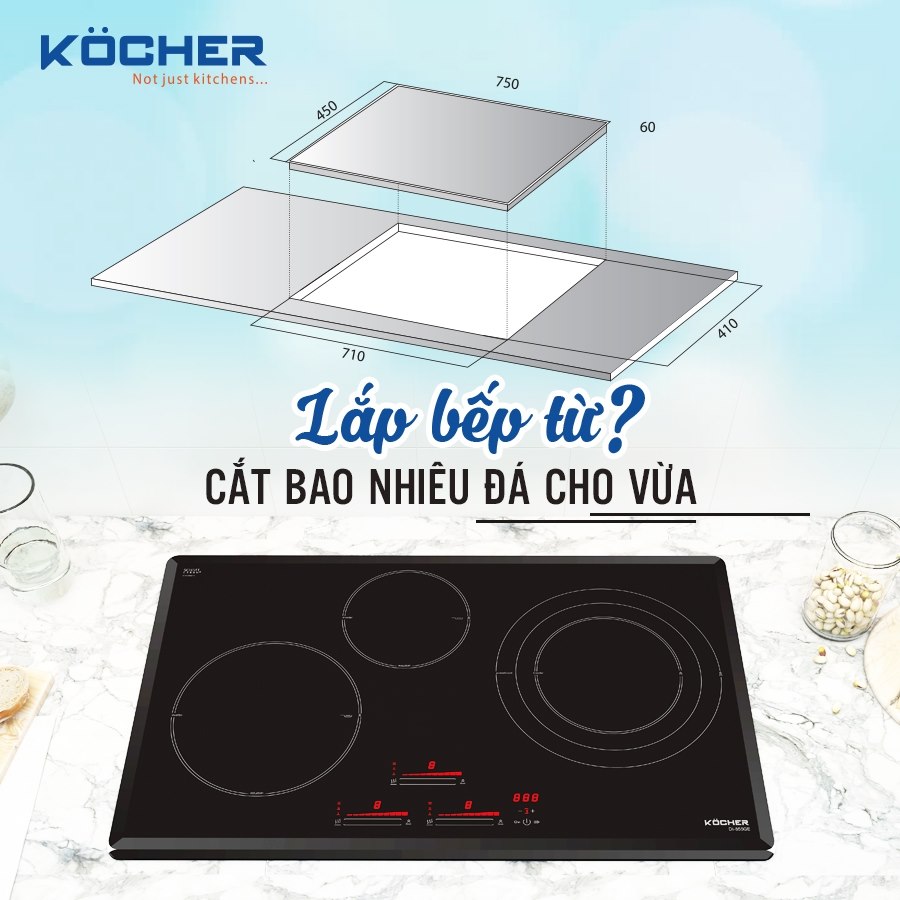
Determine the size of the induction cooker
If the cooking area has previously been cut for a built-in gas stove or an old induction cooker, you should choose an induction cooker with a similar size to avoid excessive adjustments.
Notes when choosing the installation size of the induction cooker:
-
Do not cut the installation hole for the cooker too large (no more than 1cm on each side of the cooker) as this will detract from aesthetics and affect the glass surface of the induction cooker.
-
Do not choose a location for the induction cooker too close to the sink, water faucet, water pipes, refrigerator, washing machine,… as this can easily cause water leaks, water accumulation, and low temperatures leading to electrical short circuits and rusting of the cooker.
-
The ideal distance from the surface of the induction cooker to the kitchen cabinet or kitchen hood is 65 cm.
-
The inner edge and outer edge of the stone surface to the cooker rim is 15 cm.
-
The gap between the bottom of the cooker and the partition below (clearance) is 15 cm. When designing this lower cabinet, many families often wonder Whether to place the oven under the induction cooker; the answer is you should limit this, or if placed, ensure this minimum ventilation distance for the cooling fan to operate effectively.
3. Induction cooker electrical system
Connecting the power source is an extremely important criterion, directly affecting the safety and operational capability of the cooker. Therefore, users need to pay attention to:
- The standard power source includes 3 wires: live wire, neutral wire, and ground wire. The process of connecting the induction cooker must follow the correct technical procedure to eliminate leakage current on the metal surface, ensuring safety for members when in contact.
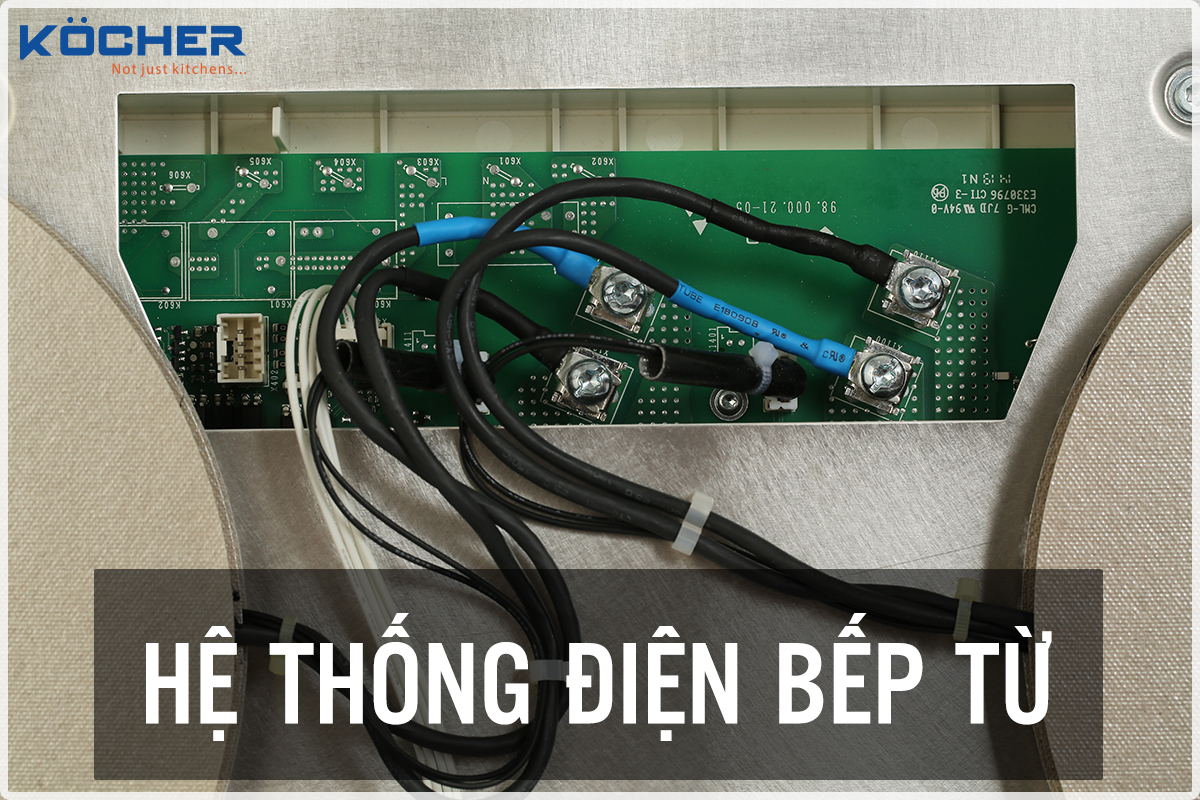
The standard induction cooker power source must include 3 live, neutral, and ground wires
-
Use a separate power outlet, do not plug in washing machines, refrigerators, rice cookers, kettles,… with the induction cooker. Ensure the power source must provide enough from 190-230V.
-
It is advisable to install a separate circuit breaker for the induction cooker. To ensure the system is sensitive and can handle the load well, you can refer to the guidelines on Choosing a circuit breaker for the induction cooker to find the most suitable 16A or 32A type for your family’s cooker power.
-
Choose high-quality electrical wires to handle large power loads.
-
For imported induction cooker products from Japan or Thailand with lower power efficiency, you need to use a voltage converter from 220V down to the voltage level of that induction cooker.
4. Notes after installation
After installing the induction cooker, you need to check the small notes below:
-
After placing the cooker in the cutout position, you need to secure the cooker to the countertop so that it does not shift.
-
Use a damp cloth to wipe the cooker and remove dust.
-
Check and test the cooker to see its operational capability after installation.
To install the induction cooker according to standards, users should fully implement the criteria above to install the induction cooker correctly, ensuring safety and efficiency. Wishing you success!
A high-quality imported German induction cooker will help you cook deliciously, safely, and save energy. But do you know which German induction cookers are good, and whether the cooker you bought is an imported German induction cooker? Köcher is proud to be the pioneering unit in Vietnam bringing German technology into induction cooker products. Check out the experience of buying imported induction cookers from Germany below to know tips and be wiser in choosing quality German induction cookers! See information about Imported German induction cookers.