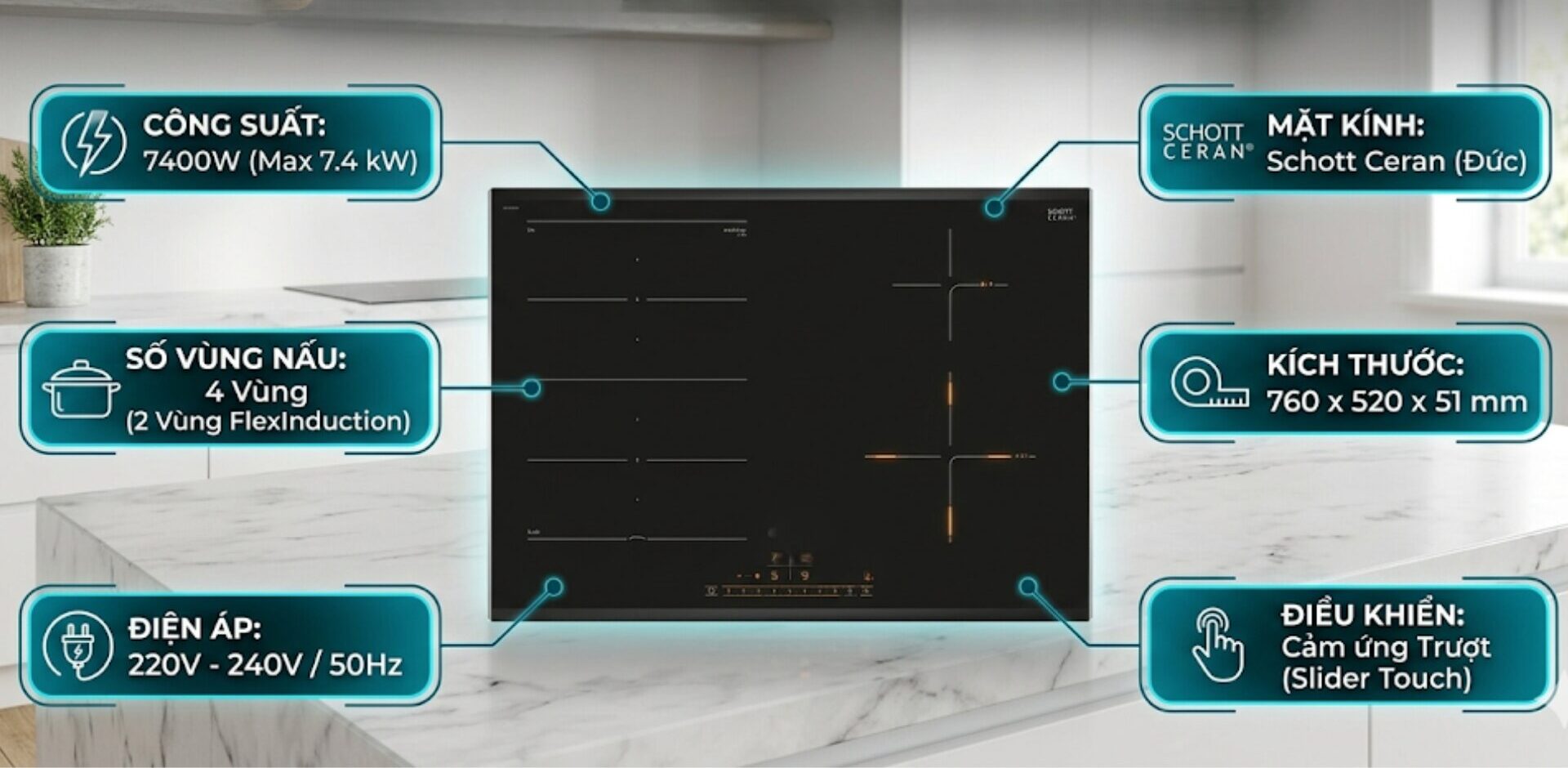
The stove operates based on the phenomenon of electromagnetic induction, directly heating the bottom of the pot without transferring heat through intermediaries. Thanks to its high efficiency and limited heat loss, induction cookers are increasingly favored in modern kitchens, gradually replacing traditional gas stoves. Below is detailed information about the structure of induction cookers and their main components.
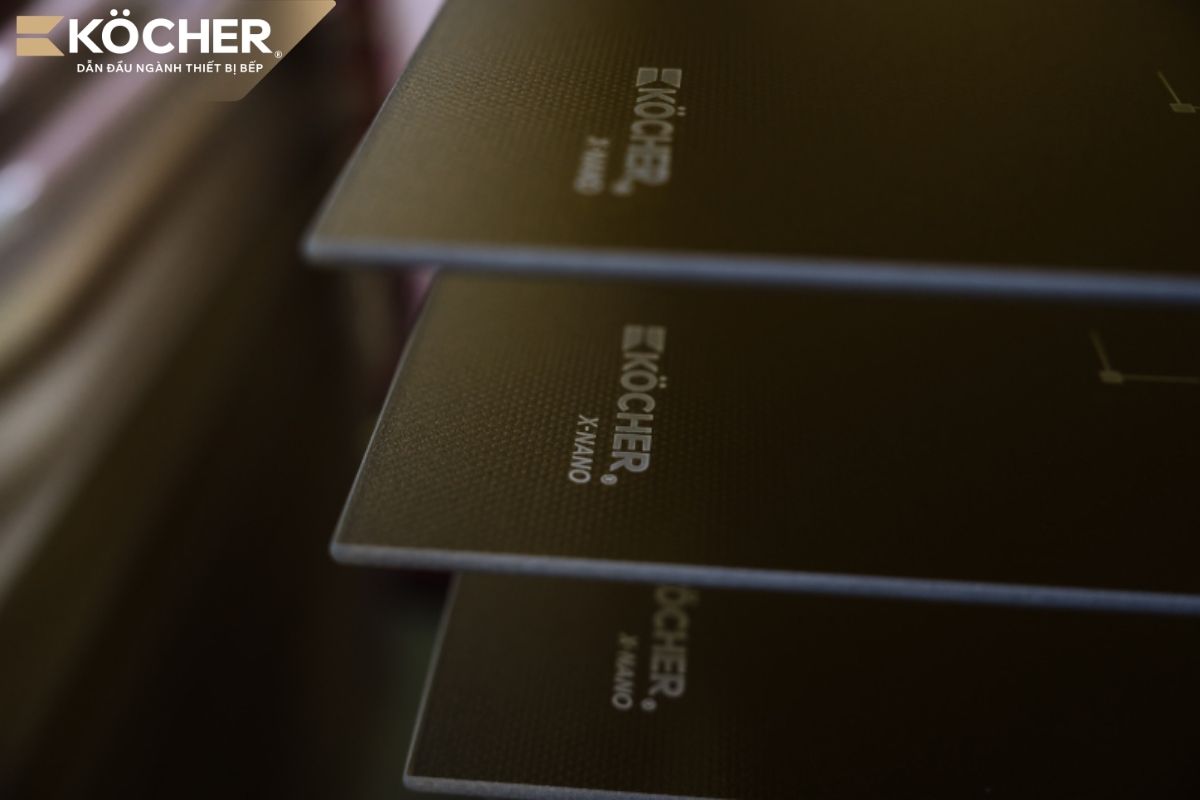
Heat-resistant and heat-proof glass surface
The glass surface is not only the cooking area but also the most important protective layer of the induction cooker. The ceramic glass type is favored for its ability to withstand strong impacts and impressive heat resistance of up to 750°C. In particular, the thermal shock resistance feature up to 250°C prevents the glass from cracking when you accidentally pour cold water onto the hot stove surface. This surface is also designed to be smooth, making it easy to clean grease and enhancing the luxurious aesthetic of the kitchen space. When purchasing, users should pay attention to the information printed on the glass surface or in the user manual to clearly understand the technical specifications of the induction cooker, thereby using the stove within the load capacity of the glass surface.
Heating element and induction coil
The induction coil is considered the “heart” of the induction cooker, where the process of converting electrical energy into a magnetic field occurs. The use of tightly woven pure copper wires not only optimizes heat transfer efficiency but also minimizes energy loss. A good quality induction coil will create a uniform magnetic field across the bottom of the pot, helping food cook faster and extending the lifespan of surrounding electronic components thanks to effective thermal radiation control.
Control system and electronic circuit board
This is the “brain” coordinating all activities of the stove. This system is divided into two main parts: the control circuit, which acts as a communication interface, receiving user touch commands; while the power circuit handles the conversion of current to power the induction coil. Modern induction cookers often integrate smart microprocessor chips, allowing the stove to automatically recognize the cooking zone and adjust power flexibly, helping to maximize energy savings.
On this control surface, users will operate through induction buttons that are either touch-sensitive or physical to activate cooking modes. Understanding how the circuit system operates will help you quickly troubleshoot when control buttons encounter issues.
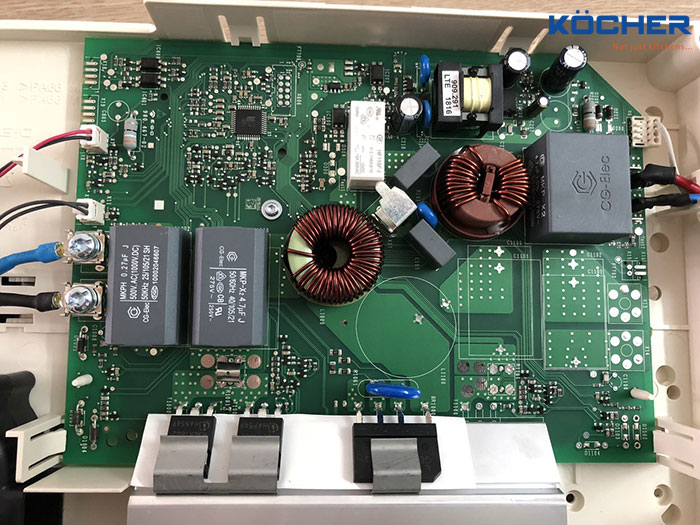 The structure of the main circuit board of the induction cooker
Cooling mechanism and air circulation
For the stove to operate reliably at high power levels (often up to 2000W – 4000W), the cooling system plays a crucial role. The combination of a high-speed cooling fan and aluminum heat sinks helps push hot air out through scientifically arranged heat escape vents. If this system operates inefficiently, excessive heat accumulation will damage internal electronic components, causing the stove to shut down or rapidly reduce its lifespan.
Sensor devices and protection features
The temperature sensor is the “gatekeeper” ensuring absolute safety for the cook. Placed just below the glass surface and in close contact with the bottom of the pot, the sensor continuously monitors the temperature throughout the cooking process. When it detects an unusually high temperature (such as in the case of burnt food or a pot running out of water), the sensor will send a signal to the circuit board to cut off the power immediately, preventing the risk of fire and equipment damage. In some cases, if the stove stops operating and displays an error code, you can refer to the induction cooker symbols to know exactly what issue the sensor is warning about.
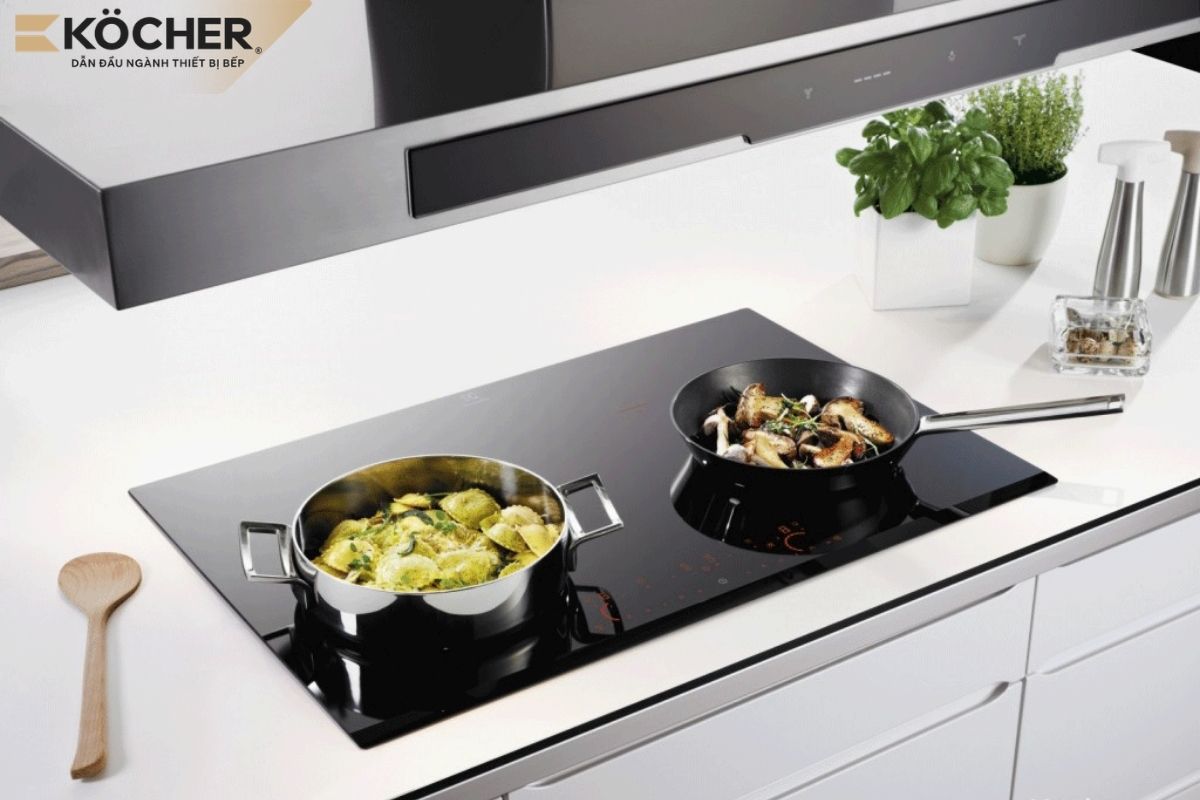
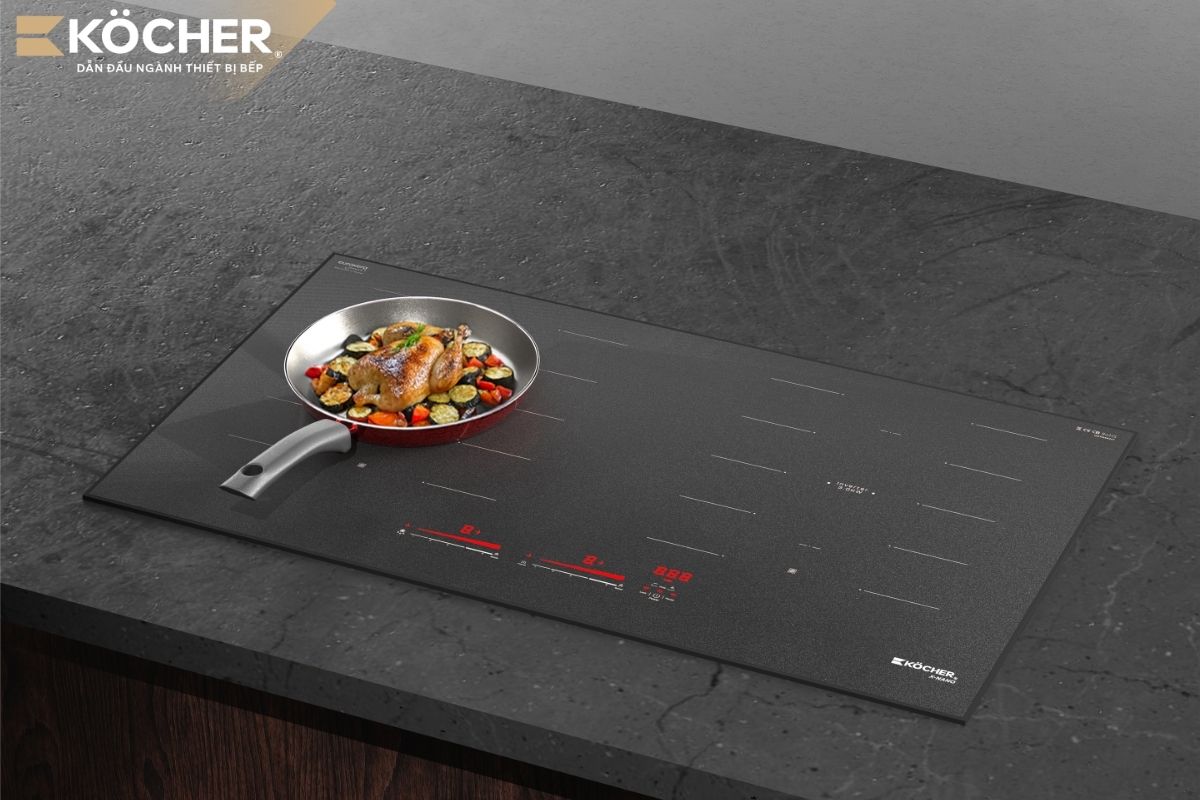 The luxurious design of the induction cooker is suitable for modern kitchen spaces
Above are detailed explanations of the main components to better understand the structureof the induction cooker. We hope this article provides you with useful information to make the most worthwhile investment choice for your home.
|
Köcher induction cookers pioneer German technology – For detailed product information, please contact:
|