
Sharing Corner

How to connect the grounding wire for the induction hob

The induction hob needs to be connected to a power source as it operates on electricity. However, many people fear that electrical leakage may pose a danger during use. If you are worried about electric shock or electrical contamination when using the induction hob, grounding it is a safe solution for both you and your family members.
However, does the induction hob really need to be grounded, and in what cases should grounding be performed? In this article, Kocher will provide detailed advice for customers purchasing and using induction hobs to make the best and safest choice for these modern electrical products.
How to ground the induction hob

Does the induction hob need to be grounded?

The induction hob is an electrical device, and of course, before leaving the factory, the products have been thoroughly tested for electrical leakage. But no one can confidently assert that the hob will never experience electrical leakage during installation or use. Even if it is a high-end imported induction hob, it is still safe.

Electrical leakage from the induction hob may not be caused by the hob itself but by other factors and causes. For example, errors during installation, choosing non-standard wiring, mistakes in wiring the induction hob, or due to the hob being old, installed in damp places, or insects biting the wires…

|   You can find more about Causes & solutions for induction hobs with electrical leakage here.

Moreover, the electrical supply that Vietnamese households are using has a voltage of 220V, which is quite high and dangerous if this current flows through. According to scientific evidence, a voltage of 40V can cause death by electric shock upon contact. Therefore, using electrical appliances requires utmost caution.
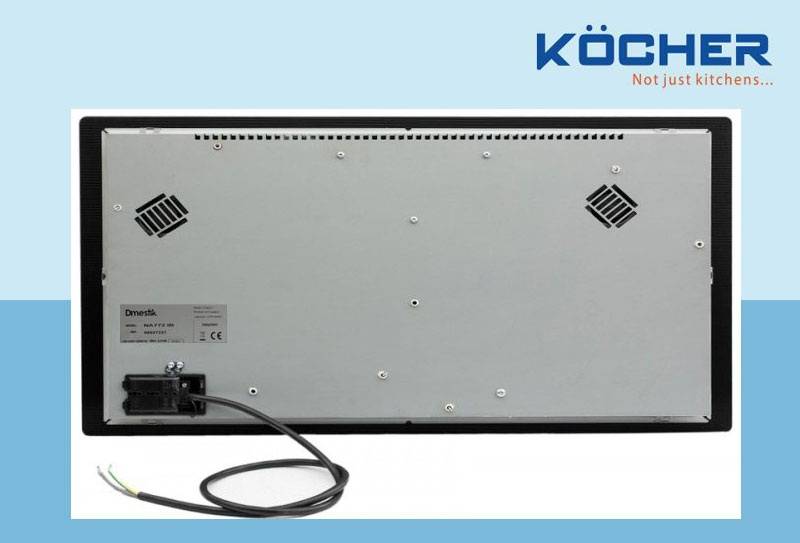
Does the induction hob need to be grounded

Customers often ask whether the induction hob needs to be grounded. According to Kocher, for single induction hobs, especially those used in restaurants for hot pot, this solution is not suitable as they often move the equipment and only use Common types of sockets for induction hobs. However, for double induction hobs that are fixed for cooking, grounding the induction hob is a necessary solution.

  • With 2 cooking zones or more, the induction hob needs to be grounded because this product line has high cooking power and consumes a large amount of electrical energy. Grounding will help ensure the cook’s safety, avoiding electrical leakage phenomena.
  • Grounding the induction hob reduces the resistance of the hob to be lower than the resistance of the human body. In case the induction hob experiences electrical leakage, the current will flow to the ground, and the user will not be shocked or endangered when touching or coming into contact with the hob. Thus, it avoids risks when the induction hob has electrical leakage.
  • Grounding the induction hob is necessary because the cooking area often has water, which is a very good conductor of electricity. If the induction hob leaks electricity and comes into contact with water, it can pose unpredictable dangers to the cook and other family members.
  • For induction hob products with metal casings, or old induction hobs that are rusty and have lost their insulation, they can also pose a danger to users. If the electrical source is exposed, the casing of the induction hob can become a conductor.
  • Grounding the induction hob does not cost much or take much time; do not compromise your safety and that of your family members due to negligence.
From these reasons, you now know whether the induction hob needs to be grounded, right? Grounding the induction hob is a safe choice not only for housewives but also for all family members.

Guide to grounding the induction hob simply

Since electrical devices in general and induction hobs in particular have the risk of electrical leakage, it is essential to take precautions. When installing the induction hob, you should ground it to ensure safety and prevent electrical leakage. Below, Kocher shares 2 methods for grounding the induction hob for households living in houses and those living in apartments, cooking on high floors.

1. Grounding method for induction hobs – houses
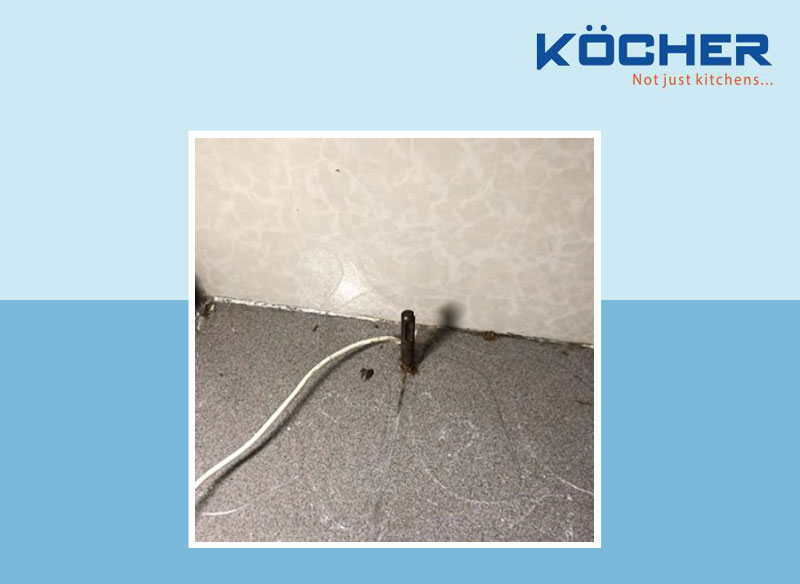
For households using induction hobs for cooking on the ground floor, close to the ground. The cooking area often has water, and the environment is much more humid than households living in apartments or cooking on high floors. However, the advantage of grounding the induction hob is quite simple.
Step 1: Use a metal rod or copper rod driven into the ground at a depth greater than 10cm.
Step 2: Use one end of the wire to connect to the metal rod that has been driven into the ground and the other end of the wire to connect to the metal casing of the induction hob.
How to ground the induction hob - house
Note:
You should mark the grounding wire and the wire connected to the casing of the induction hob. Moreover, the intermediate wire connecting between the casing of the induction hob and the electrical device must have a layer of safe insulation.

2. Grounding method for induction hobs – apartment

If your family lives in an apartment, a high-rise building, cooking on high floors, you also do not need to worry about grounding the induction hob. Just follow these steps:
#1: Instead of driving a metal rod into the ground, plug it into the metal frame of the window or door that has a metal part. Or simply plug it into the floor or wall with a minimum depth of 10cm.
#2: If you do not want to apply the above method, you can prepare a plastic bag of soil, plant a tree in the soil with a depth of more than 10cm, and do it similarly to method 1. Below is an illustration of how to ground the induction hob that you can easily follow.
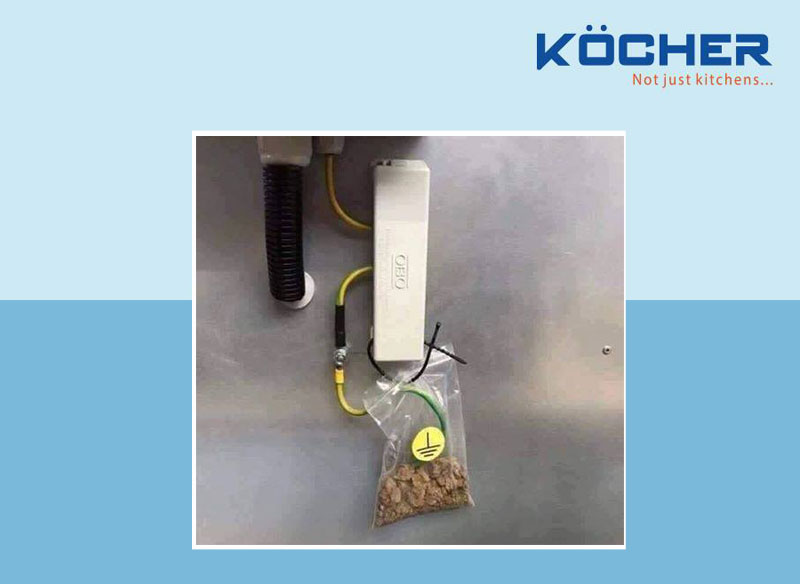
How to ground the induction hob - apartment
Now you know whether the induction hob needs to be grounded, the methods for grounding the induction hob for houses and apartments, and high floors simply. You can ask technicians to install the grounding for the induction hob right from the start to ensure greater safety during use.

In addition, for professional repair technicians, alongside protecting the machine casing, they will also periodically check the How to check the power module IGBT inside the circuit board to detect early risks of short circuits causing leakage to the cooling system. Wish you success in your implementation.

Köcher is proud to be the pioneer in Vietnam bringing German technology into induction hob products.
post related

Decoding 11 important technical specifications of induction hobs when choosing to buy a stove

Understanding the technical specifications of induction hobs is the first step to choosing the right hob that truly fits your kitchen and your family’s cooking habits. The article below will help you decode each important specification in the easiest way, from size, power to the material of the glass surface and international safety certifications. Summary [...]
Sharing Corner

What is a smart induction hob? 11 essential features for induction hobs

Smart induction cookers are a line of premium induction cookers integrated with modern technologies such as sensors, automation, wireless connectivity, remote control… ensuring safe cooking and enhancing user experience. Below is a summary of 11 essential features and suggestions for some worthwhile induction cooker products. 2 groups of smart features on induction cookers today To [...]
Sharing Corner

German-style potato salad: 3 authentic recipes with Köcher

German Potato Salad (Kartoffelsalat) is not just a side dish – it is the soul of German meals for 200 years. This article from Köcher will summarize the 3 most classic variations from two different regions of Germany, clearly explaining the secrets behind the distinctive sweet and sour flavor that no two lines are alike [...]
Sharing Corner

2 authentic German potato pancake recipes Kartoffelpuffer

Kartoffelpuffer – the crispy potato pancakes of German cuisine are appealing thanks to their golden, crispy exterior and soft, fragrant potato interior. This article from Köcher will guide you through two original recipes from the book Great German Recipes, explaining each step to maximize the performance of the Köcher induction hob. Summary of content:   [...]
Sharing Corner

Sauerbraten recipe: tender, flavorful German-style vinegar-marinated beef

Sauerbraten is a national treasure of German cuisine – even the toughest beef becomes tender after being marinated in vinegar for 3 to 6 days, then slow-cooked until the brown sauce is thick and glossy. This article from Köcher will guide you step by step in preparing authentic Sauerbraten, explaining the secrets behind the marinating [...]
Sharing Corner

German-style Sauerkraut recipe

Sauerkraut – German-style fermented cabbage is one of the oldest food preservation techniques in Europe, and in German cuisine, it appears everywhere: from side dishes with grilled sausages to luxurious stews alongside roast duck. This article from Köcher will guide you on how to make authentic Sauerkraut. Main content summary: Sauerkraut is not just pickled [...]
Sharing Corner