The induction cooktop makes a clicking sound and does not heat is one of the technical issues that disrupts the cooking experience, causing users to worry about the durability of the device. The following article from Köcher will help you understand the causes and provide accurate solutions to minimize the clicking sound error on the device.
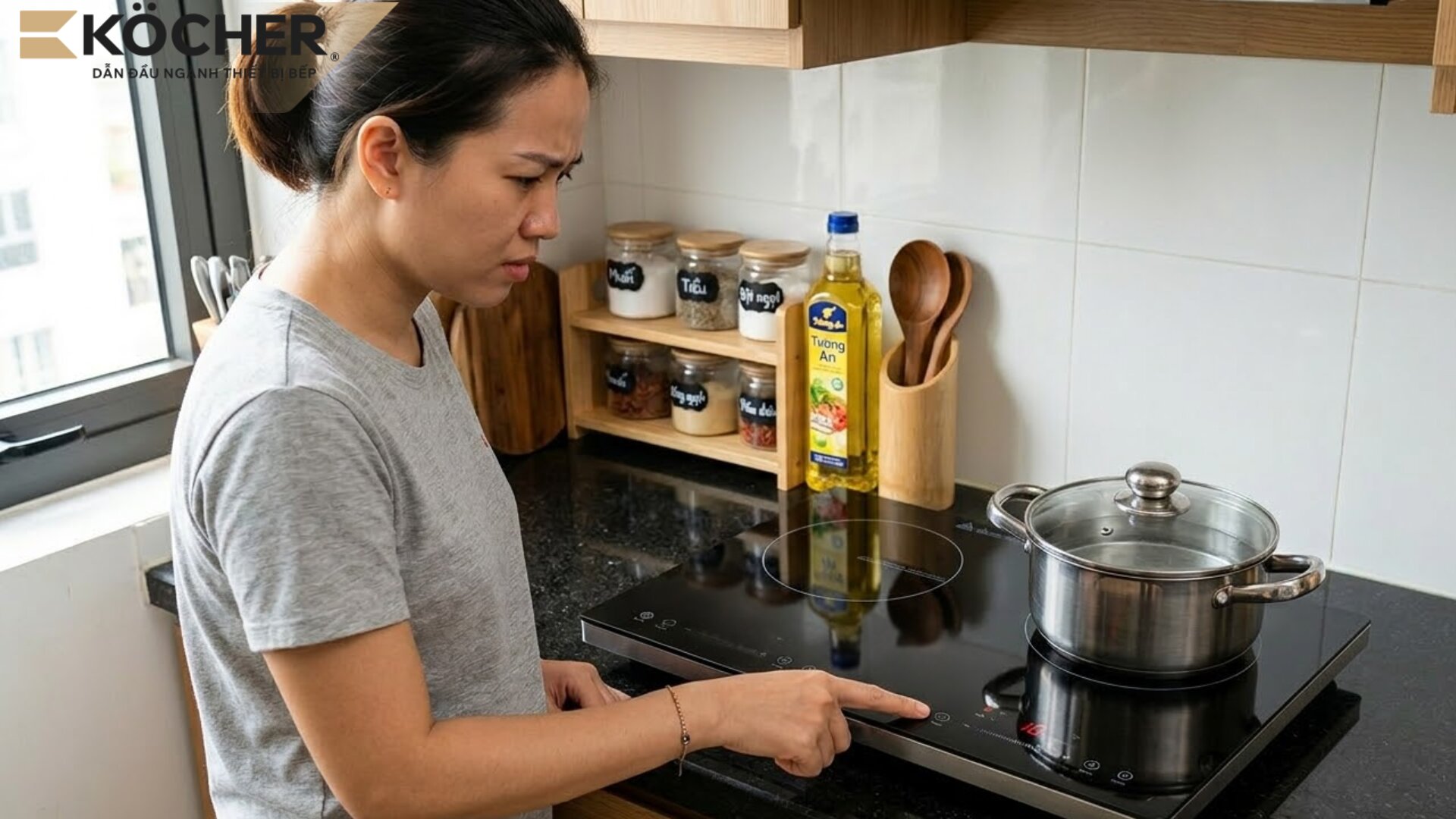
4 common causes of the induction cooktop making a clicking sound and not heating
The “clicking” sound is often a sign that the control system is trying to operate but encounters an obstacle or a malfunction. Here are 4 causes of this error:
Using incompatible cookware or poor-quality magnetic base
Induction cooktops operate based on the principle of eddy currents to directly heat the bottom of the pot. For this process to occur, the pot’s bottom must have a sufficiently high ferromagnetic content and the contact surface must be flat.
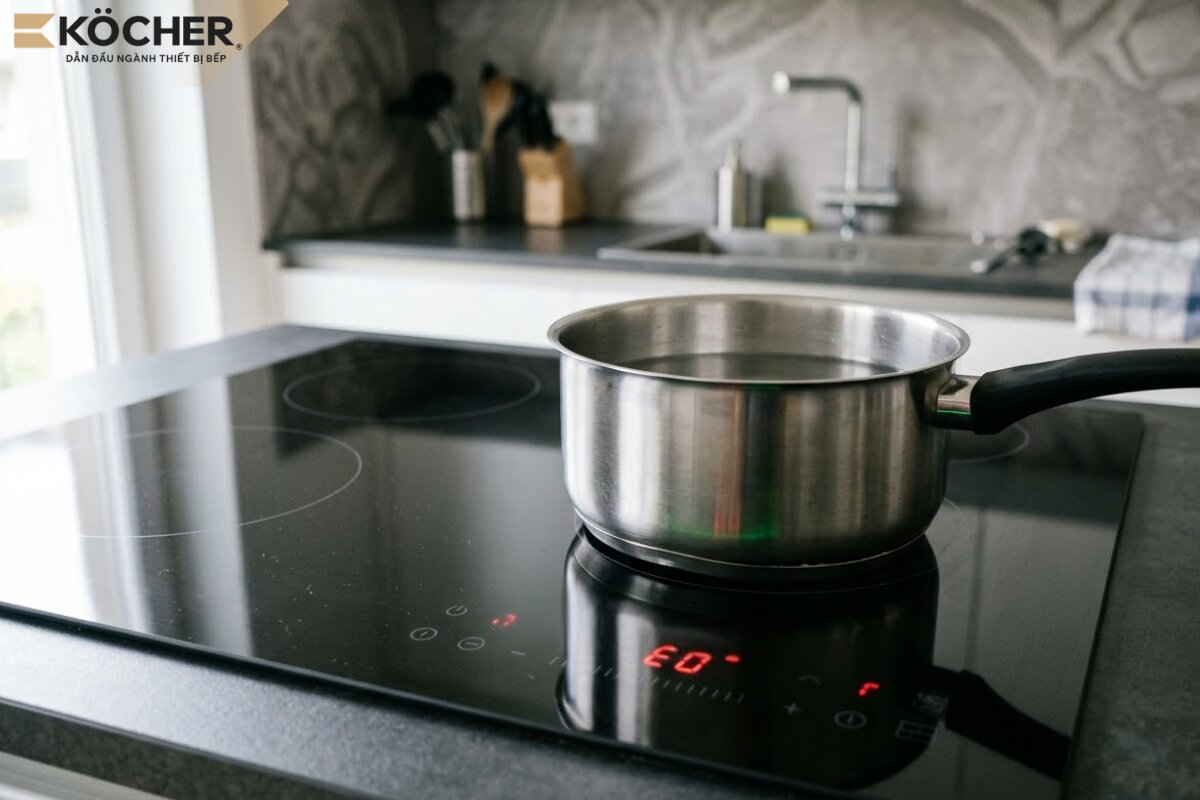
- Signs: The cooktop emits a “clicking” sound at a regular rhythm, the power indicator light flashes or shows an error (usually error E0). In some other cooktop models, this phenomenon may accompany the condition of the induction cooktop making a continuous beeping sound to signal a warning to the user.
- Error mechanism: When the sensor detects non-magnetic materials or the pot’s bottom is warped, the control board will continuously turn the relay on and off to “try” to detect the pot, then turn off due to incompatibility, creating the clicking sound.
Unstable input power supply or voltage drop
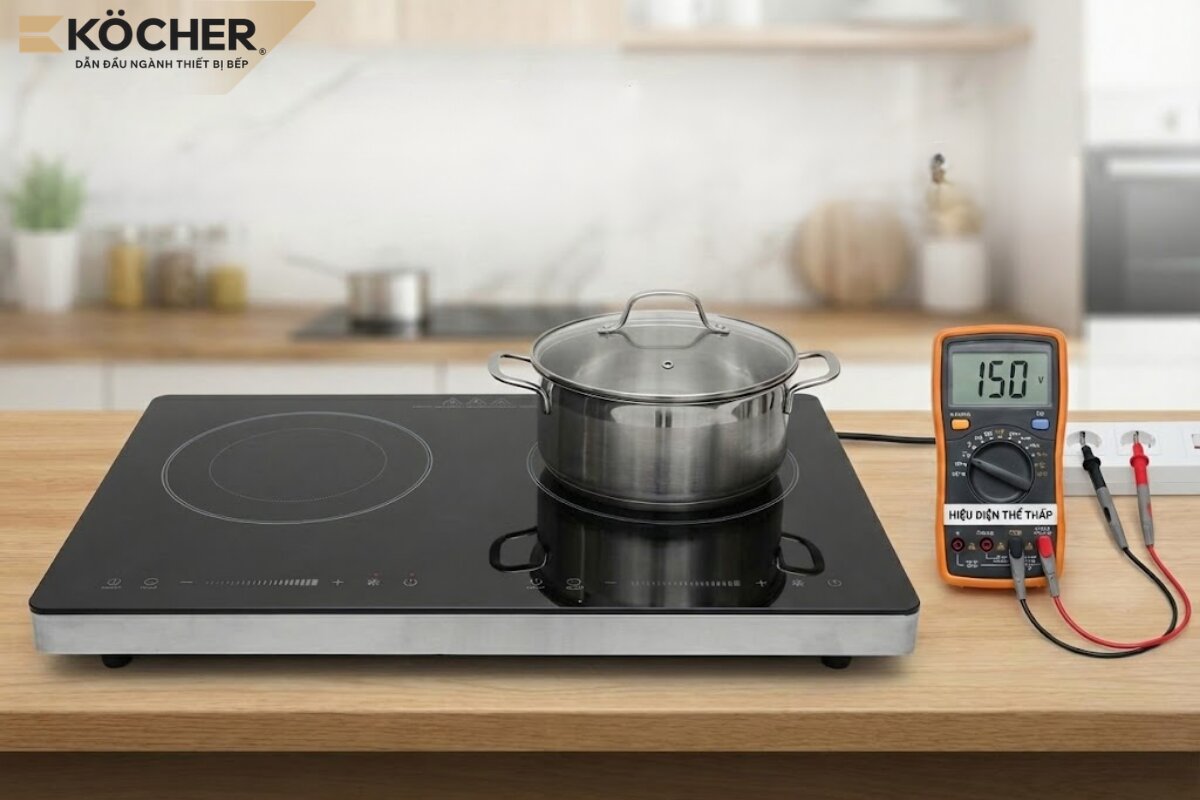
Modern induction cooktops usually have high power and require a stable input voltage in the range of 220V – 230V to maintain the operation of the induction coil and control system.
- Signs: The cooktop makes a clicking sound accompanied by weak fan operation, and the cooktop surface does not heat up even when a high power level is selected.
- Error mechanism: When the voltage drops (especially during peak hours) or the electrical wires are too small to handle the load, the power circuit will be abruptly cut off to protect the components, and this on-off cycle repeats continuously, causing the clicking sound.
Cooling fan system malfunction
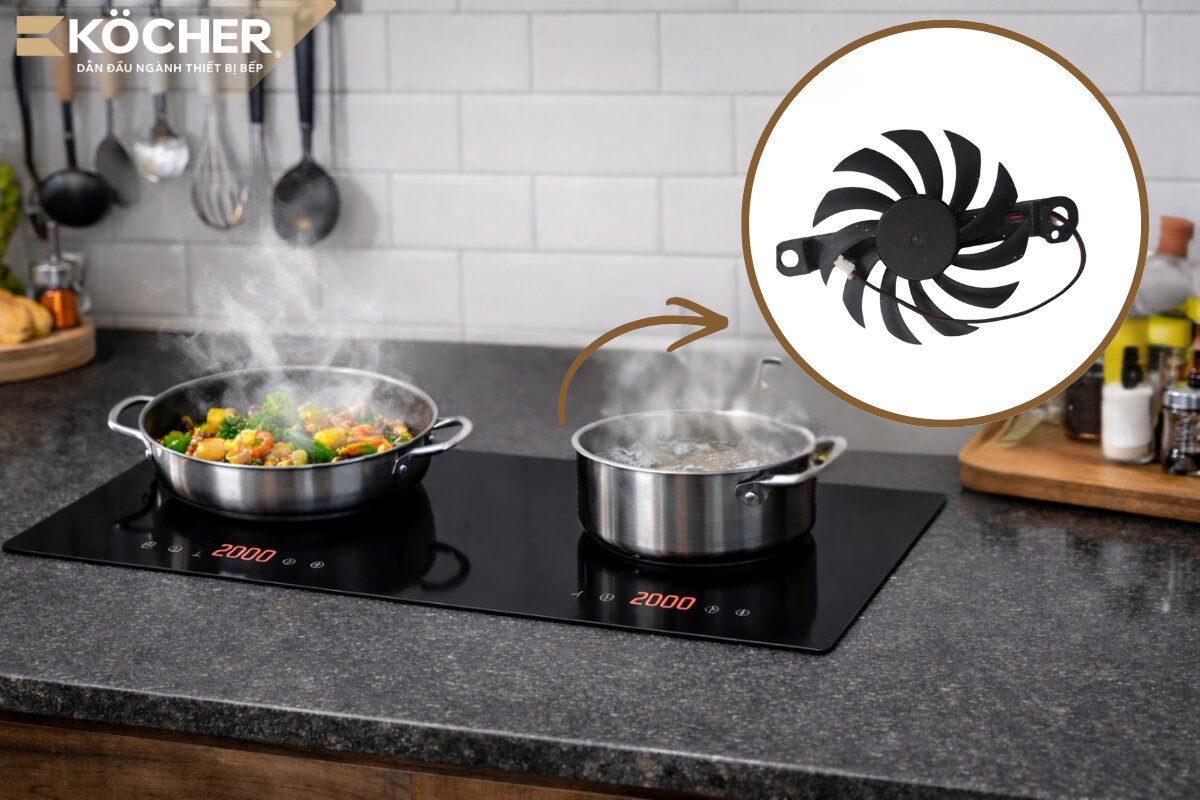
The cooling fan plays an important role in cooling the circuit board and the copper induction coil. If the fan does not operate effectively, hot air will not circulate, causing the internal temperature to rise rapidly.
- Signs: The cooktop operates for a few minutes, then starts making noise and stops heating, the cooling fan does not spin or spins very weakly.
- Error mechanism: When the fan is stuck with dust or the shaft is broken, the temperature at the power components (such as IGBT) exceeds the safe threshold, the thermal protection mechanism will activate continuous circuit interruption to cool down, leading to the clicking sound.
Circuit board component failure (capacitor or temperature sensor)
This error relates to internal components of the cooktop, often appearing after a long period of use, causing the cooktop to not operate.
- Signs: The cooktop makes a clicking sound even when a pot is placed on it or just turned on.
- Error mechanism: The power filter capacitors are dry, swollen, or the temperature sensor is misaligned, causing the system to incorrectly detect overheating or power supply errors, and the protection system will automatically cut off the circuit to prevent component fires.
How to effectively fix the induction cooktop making a clicking sound and not heating
To fix this issue, you should follow the technical inspection steps below:
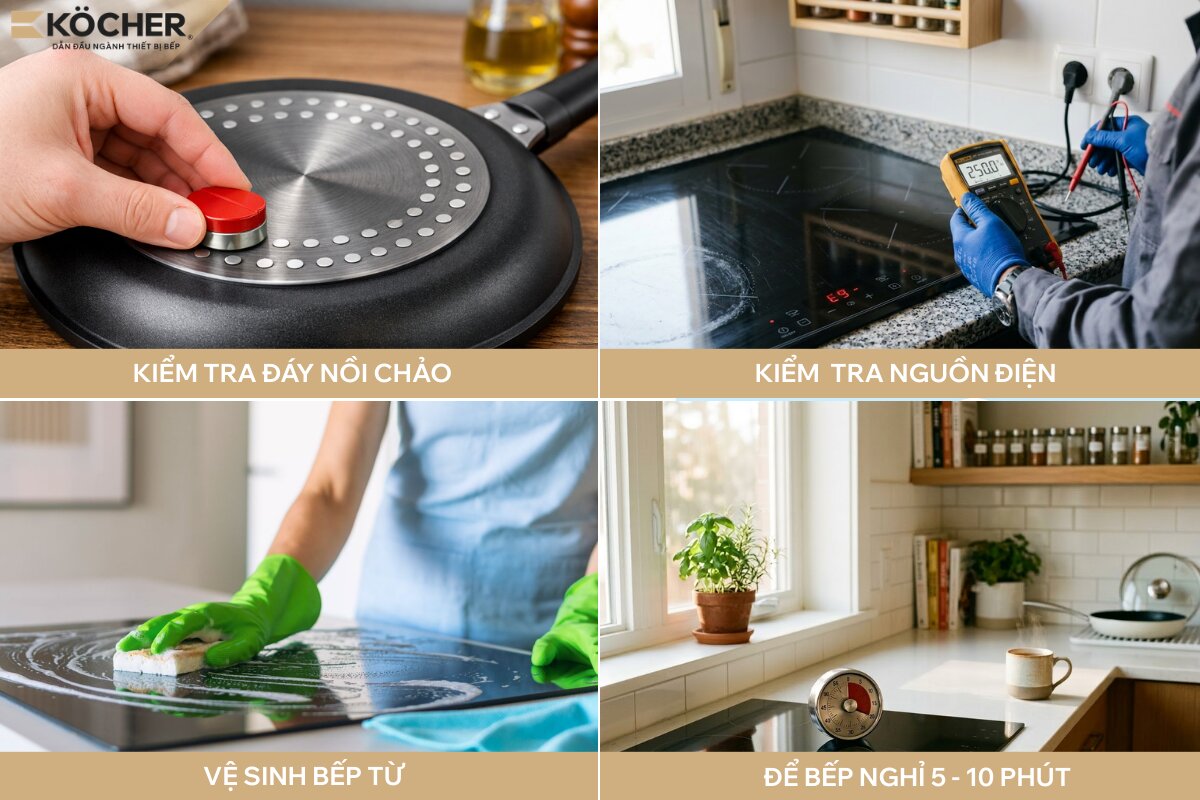
- Step 1 – Check the cookware set: Use a magnet to check the magnetic susceptibility of the pot’s bottom. Ensure the pot’s bottom is flat, not deformed, the pot diameter is compatible with the cooktop’s induction zone, and prioritize high-quality stainless steel 430 or cast iron pots. If the cooking utensil has no magnetic properties, the protection system will activate the warning Induction cooktop does not recognize the pot and stop supplying power.
- Step 2 – Check the power supply: Ensure the cooktop is not plugged into the same outlet as large power devices such as microwaves or electric kettles. If the area has unstable voltage, use a voltage stabilizer to maintain a stable voltage for the device.
- Step 3 – Clean the cooling fan: Check the air vents and fan for any obstructions or accumulated dust. Use a handheld vacuum cleaner to clean the dust to improve airflow.
- Step 4 – Reset the cooktop: Disconnect the power for 5 – 10 minutes, then turn the cooktop back on to see if the error persists.
- Step 5 – Check the circuit board: If the cooktop still has issues after performing the above steps, it may be due to a malfunctioning circuit board. Please contact the warranty center to check the components. If you have technical expertise in induction cooktops, you can check the capacitors and temperature sensors yourself to repair or replace the components.
8 tips for using induction cooktops to minimize errors
To extend the lifespan of electronic components and minimize the occurrence of errors in induction cooktops, users need to adhere to the following usage principles:
- Use compatible pots and pans: Only use pots and pans with magnetic bottoms (cast iron, stainless steel 430, enameled iron) and with flat bottoms, the diameter of the bottom must correspond to the size of the cooking zone.
- Avoid maximum power: Avoid cooking at the highest temperature for more than 10 minutes to protect electronic components from overheating.
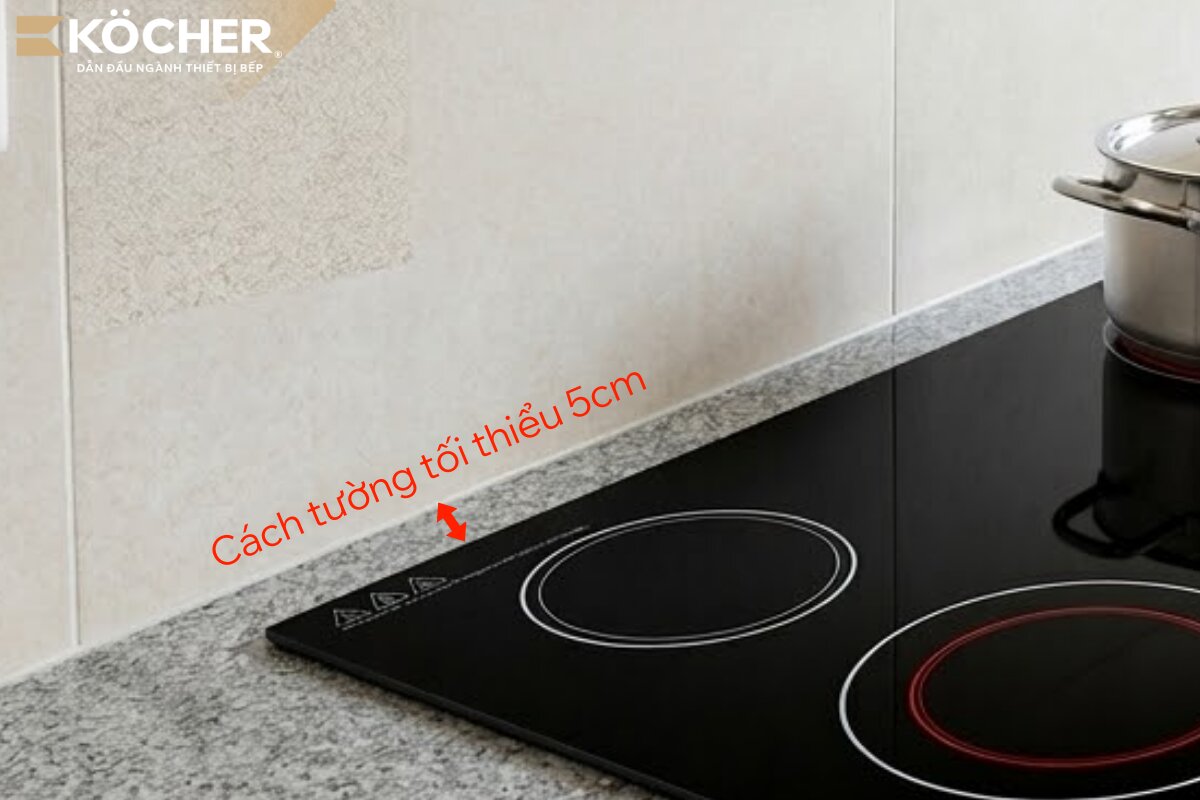
- Ensure proper installation location: Ensure that the area under the cooktop is ventilated, at least 5cm away from walls to allow the cooling fan to operate effectively, avoiding overheating errors.
- Clean properly: Wipe the cooktop surface with a soft cloth after cooking. Do not use sharp objects or strong detergents that may scratch or damage the glass surface.
- Use a separate power supply for the induction cooktop: It is advisable to use a dedicated socket or circuit breaker for the induction cooktop, not to plug it in with other large power devices (microwave, electric kettle) to avoid overload.
- Do not disconnect the power immediately after cooking: After turning off the cooktop with the power button, wait for the cooling fan to stop completely (about 10 – 15 minutes) before disconnecting the power to cool the internal components.
- Do not turn on the cooktop without food: Minimize turning on the cooktop when there is no pot or the pot is empty of food or ingredients.
- Avoid metal objects on the cooktop surface: Do not place metal knives, forks, or spoons directly on the cooktop while cooking, as metal utensils can disrupt the magnetic field, causing the cooktop to operate incorrectly and potentially damaging the internal electronic components due to overheating.
Frequently asked questions about the induction cooktop making a clicking sound
Is the small clicking sound when first turning on the cooktop an error?
The small clicking sound when first turning on the cooktop is usually the sound of the thermal relay turning on and off or the initial pot detection sound, not a serious error.
Why does the cooktop click and then turn off by itself after 1 – 2 minutes?
The cooktop clicking and then turning off by itself after 1 – 2 minutes is usually due to overheating, using incompatible pots, unstable power supply, or a malfunction of the cooling fan not running, causing dust accumulation that blocks the cooling airflow. The cooktop will automatically shut off to protect the electrical system and internal components.
Should I disassemble the cooktop to fix the clicking sound?
You should not disassemble the cooktop to fix the clicking sound. Induction cooktops have complex electrical circuits, and unauthorized intervention can not only void the warranty but also pose a risk of short circuits and danger to the user.
The issue of the induction cooktop making a clicking sound and not heating can be completely prevented if users pay attention to choosing compatible cookware and ensuring a stable power supply. Following the usage tips mentioned in this article will help the device operate reliably and extend the lifespan of the internal components of the cooktop.
If you are concerned about the induction cooktop operating erratically or heating inconsistently, please refer to Köcher’s products. With a foundation of German-standard components, especially the thick heat sink and cooling fan system, Köcher induction cooktops operate stably, minimizing the clicking sound error.
Köcher induction cooktops pioneer German technology – For detailed product information, please contact:
|