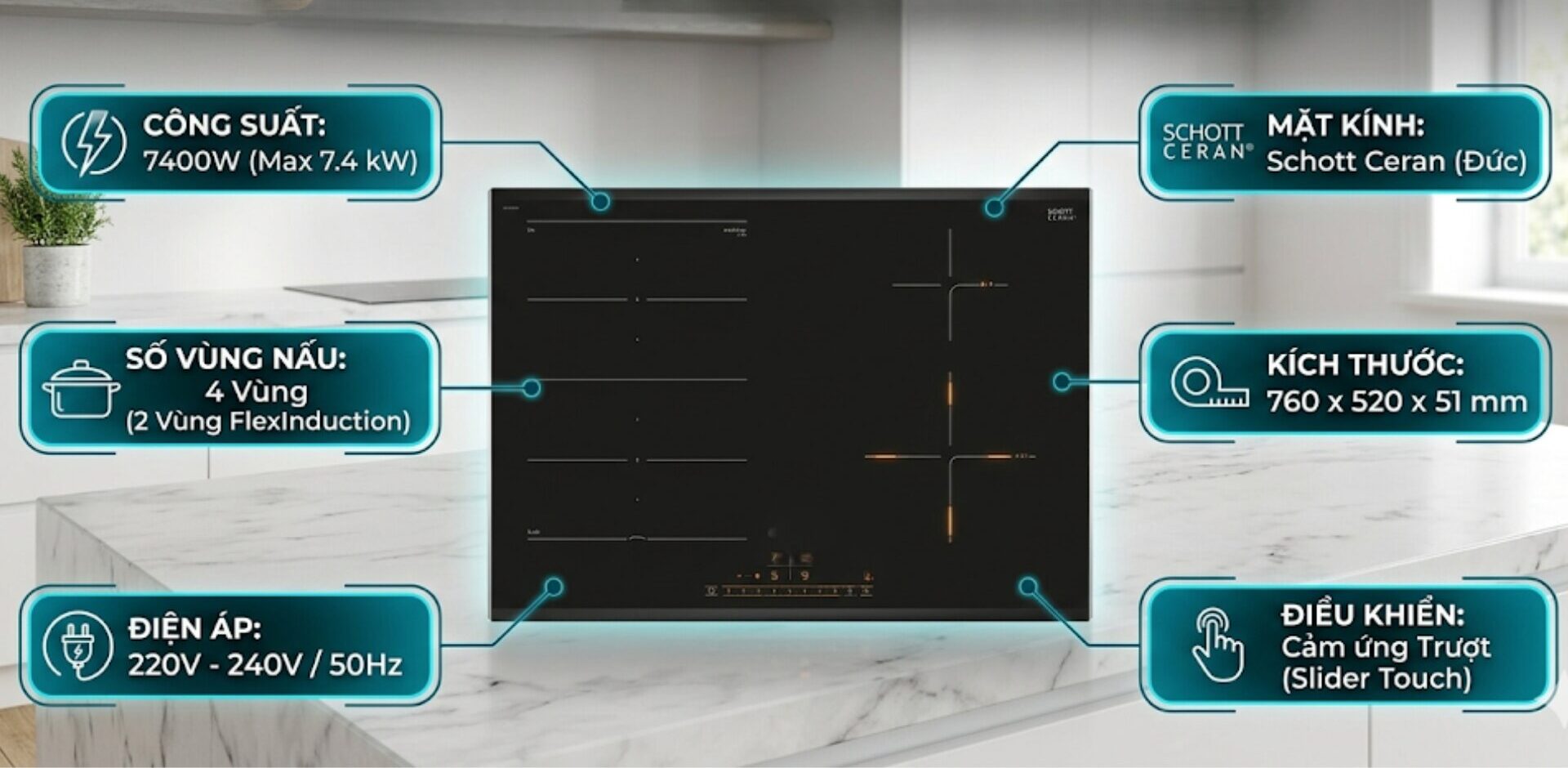
Error E2 induction hob indicates the input voltage is too high (usually above 250V) or the cooking pot’s temperature is rising abnormally due to the absence of food in the pot. The error appears on the display screen, usually accompanied by a beeping alarm, and the hob suddenly stops heating. The article below will help you understand the core causes and the correct troubleshooting process to resolve the issue quickly.
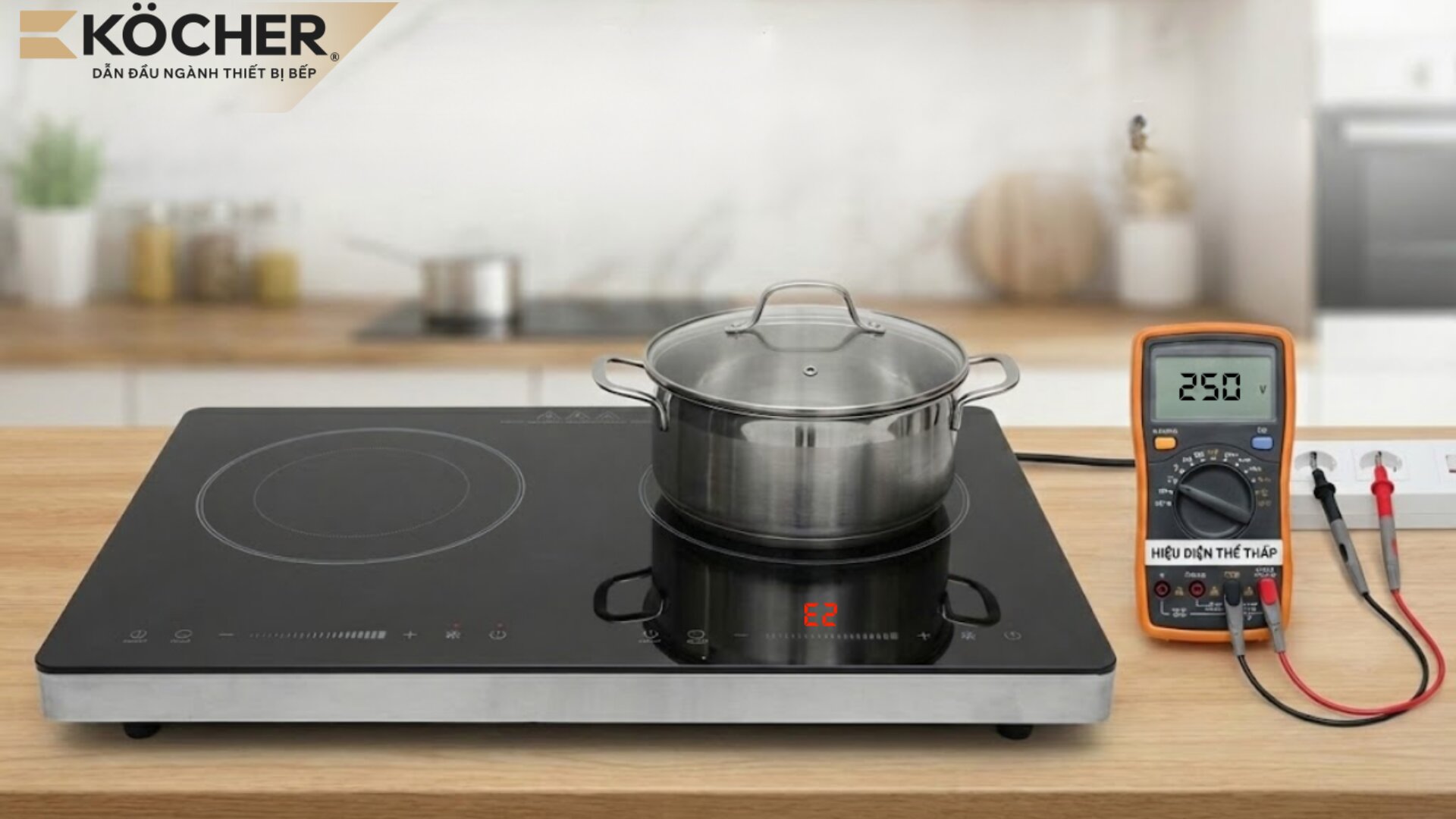
4 common causes of E2 error on induction hobs
Correctly identifying the cause will help you save time and perform the troubleshooting correctly. Below are 4 common causes that lead to the induction hob displaying error E2:
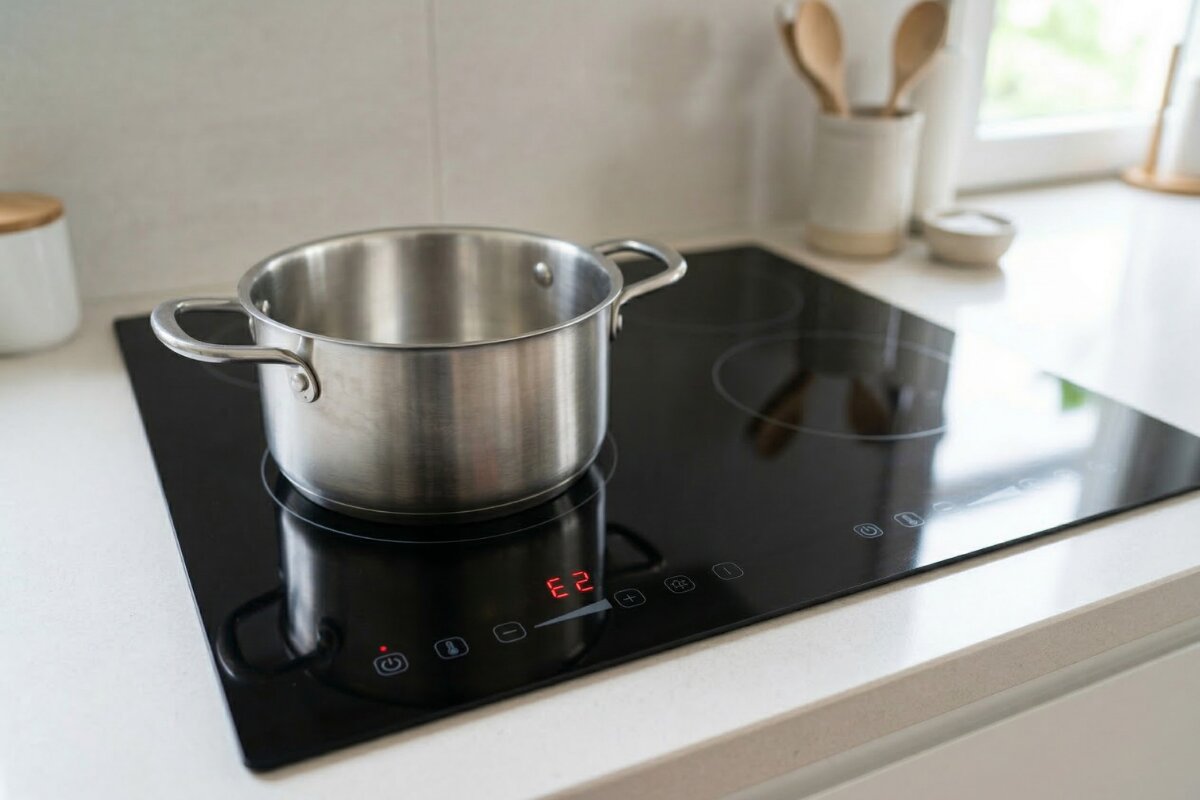
Placing the pot on the hob without food or water
This is the most common cause, often occurring due to users’ habit of preheating the pot.
- Signs: The hob operates for about 30 – 60 seconds, then emits intermittent beeping and the LED screen displays the blinking E2.
- Cause: Due to the principle of electromagnetic induction transferring heat directly to the bottom of the pot. When the pot is empty, the temperature at the bottom of the pot rises sharply in a short time. The temperature sensor under the glass surface will send a signal to the microprocessor to cut off the circuit to limit the risk of fire and explosion.
Temperature sensor error inside the hob
If the pot has food but the hob still displays error E2, it is likely that the temperature measurement system is experiencing hardware issues.
- Signs: Error code E2 appears immediately when the power level is selected, or appears randomly even though the hob surface temperature is not too hot.
- Cause: After a long period of use, the temperature sensor may age, leading to inaccurate temperature readings. Additionally, if the hob is damp or has insects invading causing short circuits in the signal line, the sensor may send incorrect data to the mainboard.
Input voltage too high (above 250V)
High-end induction hobs are usually designed to operate stably at a voltage range of 220V – 230V. When the input current is too high (above 250V), the E2 error will be triggered.
- Signs: The error often occurs during late-night or early-morning hours when the grid voltage rises, or in areas near substations.
- Cause: When the input voltage exceeds the safe threshold, the over-voltage protection circuit will detect the danger to the capacitor and IGBT. Reporting error E2 at this time is necessary to prevent capacitor explosion or component short circuit due to voltage overload. In contrast, if the main supply suddenly drops too low (below 170V), the monitoring system will switch to activate error e3 induction hob to indicate that the grid power is insufficient to support the cooking power circuit.
Error in voltage detection circuit on the mainboard
In some cases, your home’s power supply is completely normal, but the hob still “misunderstands” that the voltage is too high, which may indicate a fault in the mainboard.
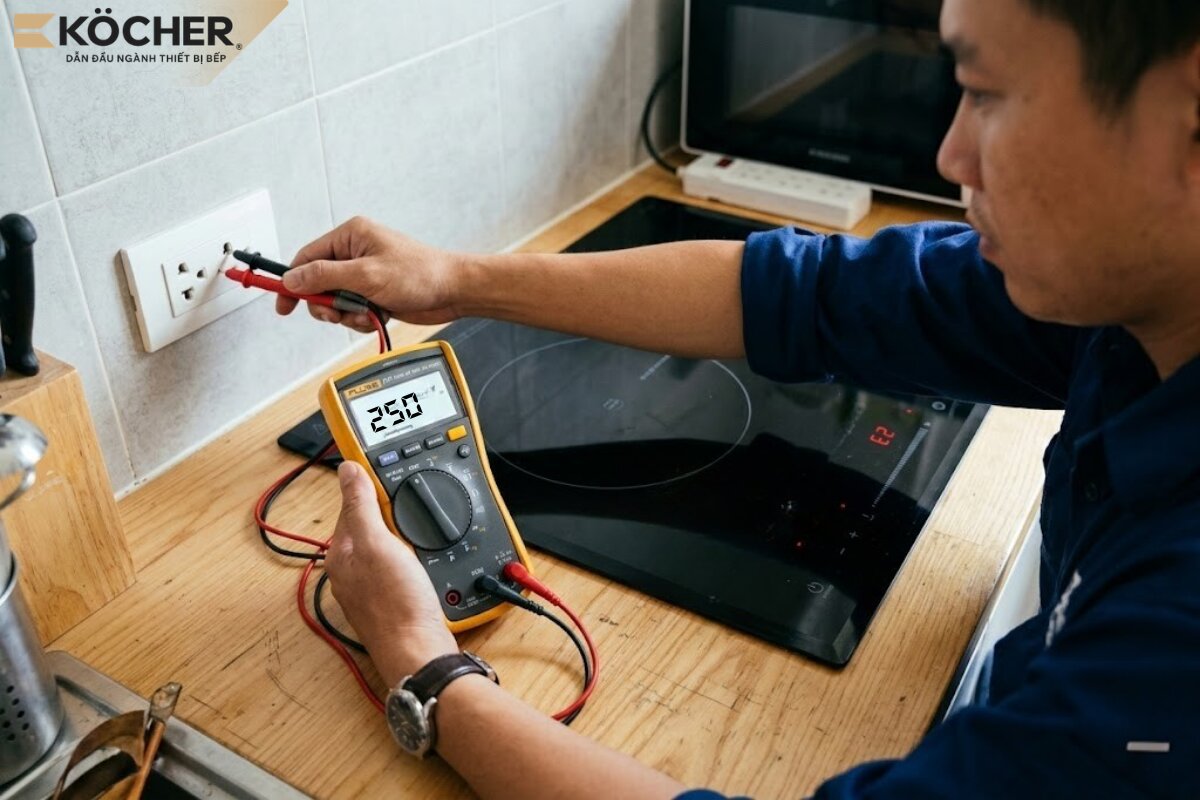
- Signs: Checking with a multimeter shows that the grid voltage is stable at 220V, but the hob still displays error E2.
- Cause: On the mainboard of the induction hob, there is a circuit block that monitors and detects the input voltage level. If one of the components in this block (such as voltage divider resistors, filter capacitors, or comparison ICs) is damaged or changes value, the hob will not be able to accurately identify the actual voltage level, leading to incorrect signal processing logic, mistakenly activating the protection code. This circuit error state sometimes also accompanies noise pulses related to the signal transmission of the cooking area temperature sensor, causing the display of error e4 induction hob on the control LED screen.
How to troubleshoot E2 error on induction hob in 5 steps
When the display shows E2, please follow the 4 steps below to fix the error:
- Step 1: Turn off the hob and maintain power: Press the power button (On/Off) to stop heating but do not unplug it immediately. Keeping the power helps the cooling fan continue to operate to cool the internal components more quickly.
- Step 2: Check the pot and food: Remove the pot from the cooking zone. If the pot is empty, add food or water inside.
- Step 3: Let the hob rest and cool down: Wait about 15 – 20 minutes for the glass surface temperature and sensors to drop to normal levels. At the same time, check if the cooling vents under the hob are obstructed by any objects.
- Step 4: Check the power supply: If you suspect high voltage, you should observe other electrical devices or use a voltage meter. If the grid power is frequently unstable, consider installing a voltage stabilizer to protect the device.
- Step 5: Restart the device: After the power supply stabilizes, turn on the hob and start cooking at a medium power level to monitor its operational status.
If after performing the above steps the hob still displays error E2 during use, this may be due to a fault in the mainboard or sensor, please contact the authorized service center for support in repairing or replacing new components.
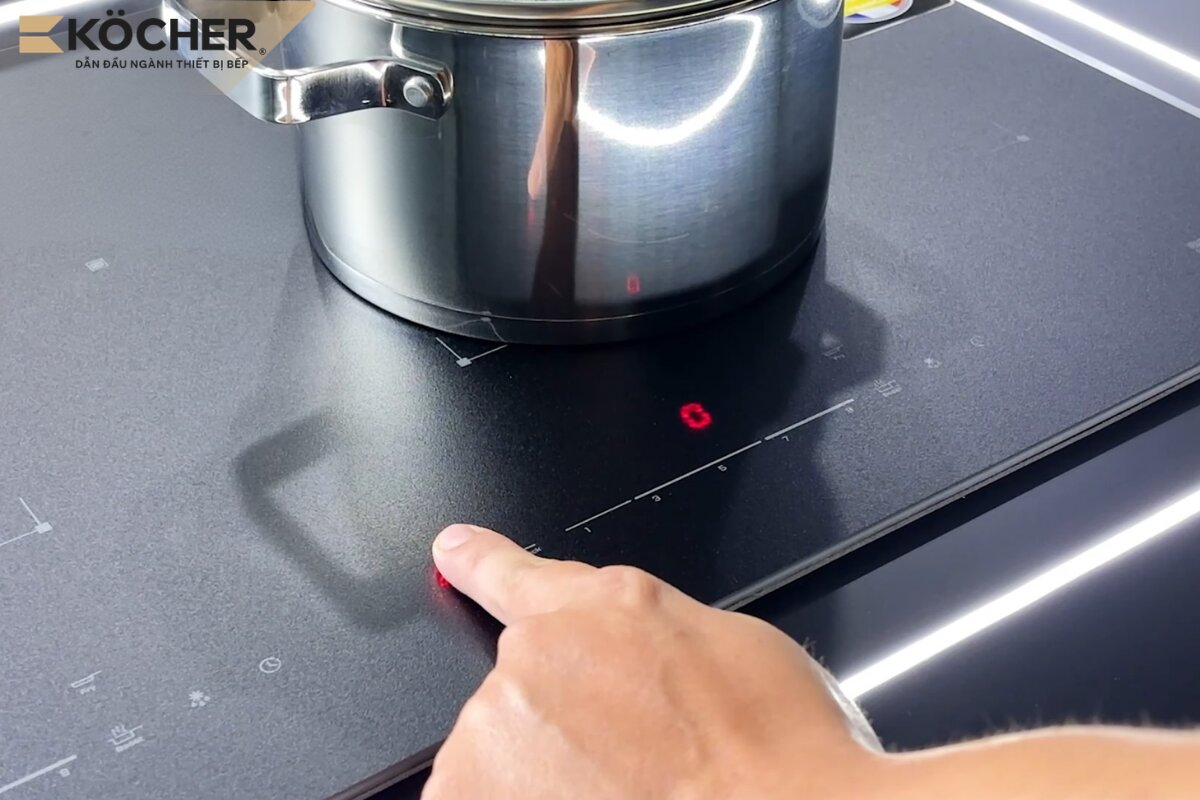
Some notes when using induction hobs to minimize E2 errors
Below are some notes when using induction hobs to ensure stable operation and minimize the occurrence of error E2:
- Check cooking utensils: Use pots with flat and magnetic bottoms. If using low-quality pots, the hob must work harder to compensate for power, easily causing sensor errors.
- Clean the hob surface and pot bottom: Keep the surface dry and clean to ensure accurate heat contact, avoiding false sensor readings.
- Ensure ventilation: Do not block the hob’s cooling vents and avoid placing the hob near other heat sources such as ovens or air fryers.
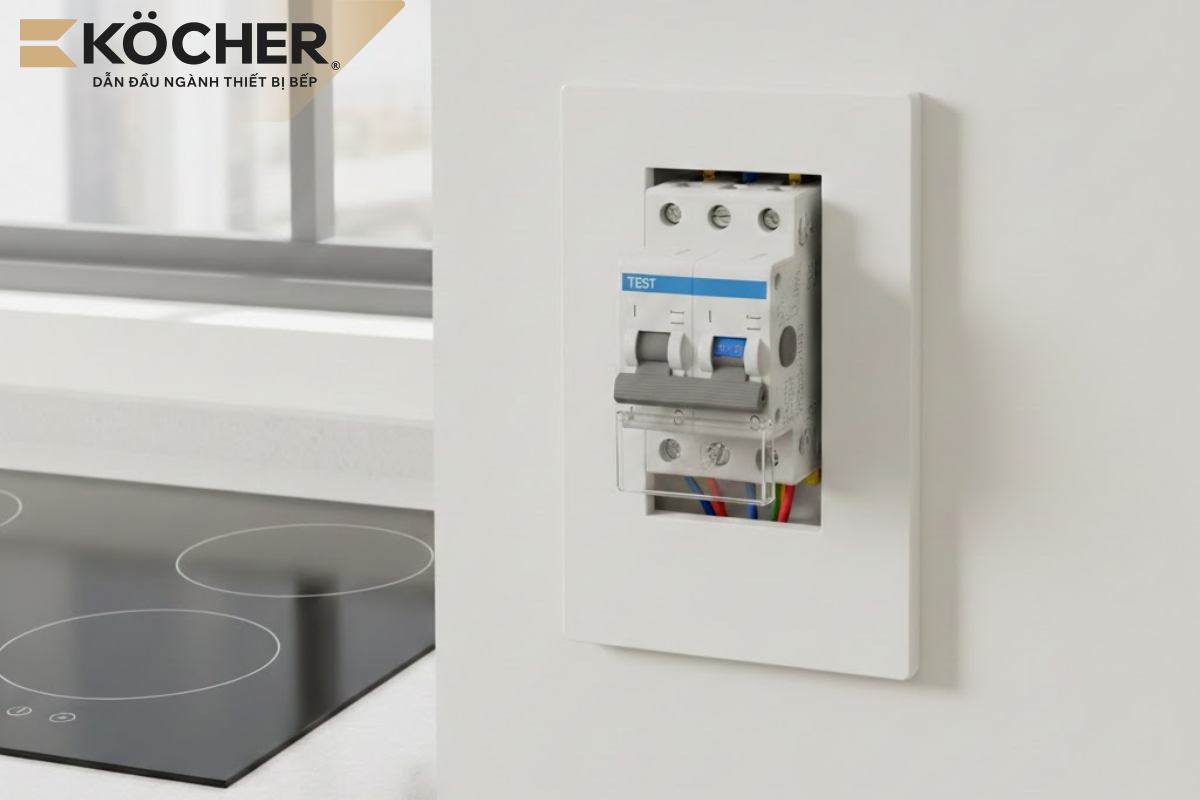
- Stabilize the power supply: Use a separate circuit breaker for the hob to avoid electrical overload. If the local grid is unstable, investing in a voltage stabilizer is the optimal solution to protect the hob.
Frequently Asked Questions
What is E2 error on induction hobs?
Error E2 is a warning code when the input voltage is too high (exceeding 250V) or due to the cooking pot’s temperature rising abnormally because there is no food or water in the pot. This is a protective signal to prevent damage to components and fire hazards.
Why does an empty pot cause the hob to display error E2?
Because the induction hob transfers heat directly to the bottom of the pot, if the pot is empty, the temperature will rise extremely quickly in a very short time. At this point, the temperature sensor under the glass surface will detect the abnormal temperature rise and command the circuit to cut off to ensure safety.
What is the quickest way to handle E2 error on the induction hob?
You should turn off the hob immediately but do not unplug it to allow the cooling fan to continue cooling. Then, remove the pot, add food, and wait 15 – 20 minutes for the hob to cool down before restarting.
How to minimize E2 errors due to unstable power supply?
If the area you live in frequently experiences high voltage (above 250V), you should install a voltage stabilizer specifically for the induction hob. Additionally, using a separate circuit breaker also helps protect the device’s microchip system better. Furthermore, if the temperature sensor components on the hob’s glass surface are overloaded due to prolonged incorrect cooking processes, the device may display error e5 induction hob to request the user to pause operation for emergency circuit maintenance.
We hope this article has helped you understand the causes and effective solutions for error E2 on induction hobs. Using the hob correctly and addressing errors promptly not only ensures safety for your family but also helps protect the component system, maintaining optimal cooking performance for the device. Köcher is proud to be a pioneer in Vietnam bringing German technology into induction hob products.