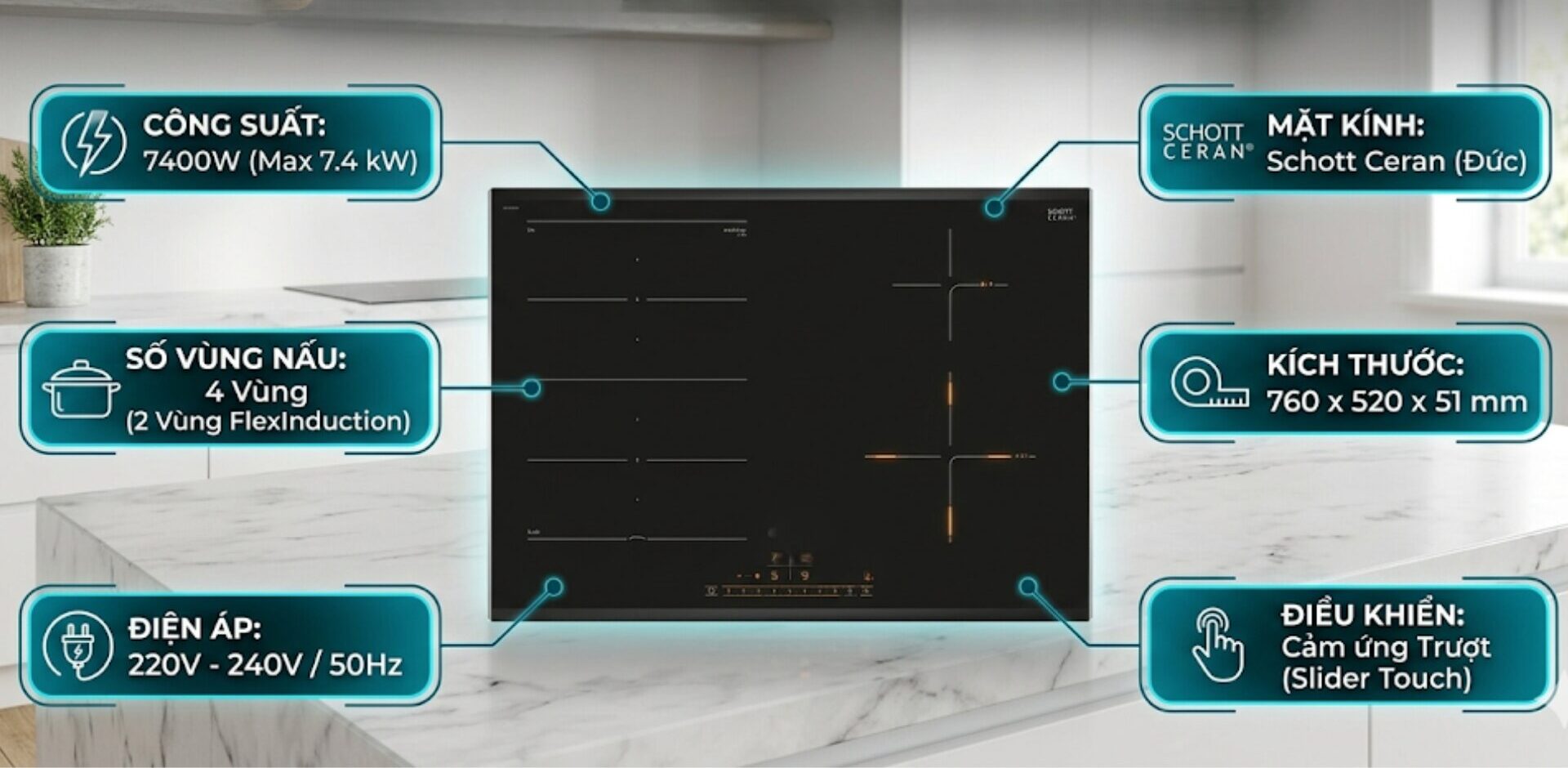
Error E4 induction hob appears on the screen causing cooking to be interrupted, many people worry that the induction hob is malfunctioning. In fact, error E4 on induction hobs usually occurs when the pot temperature is too high or the hob’s cooling system is not functioning well. The article below will help you understand the causes and how to fix this error.
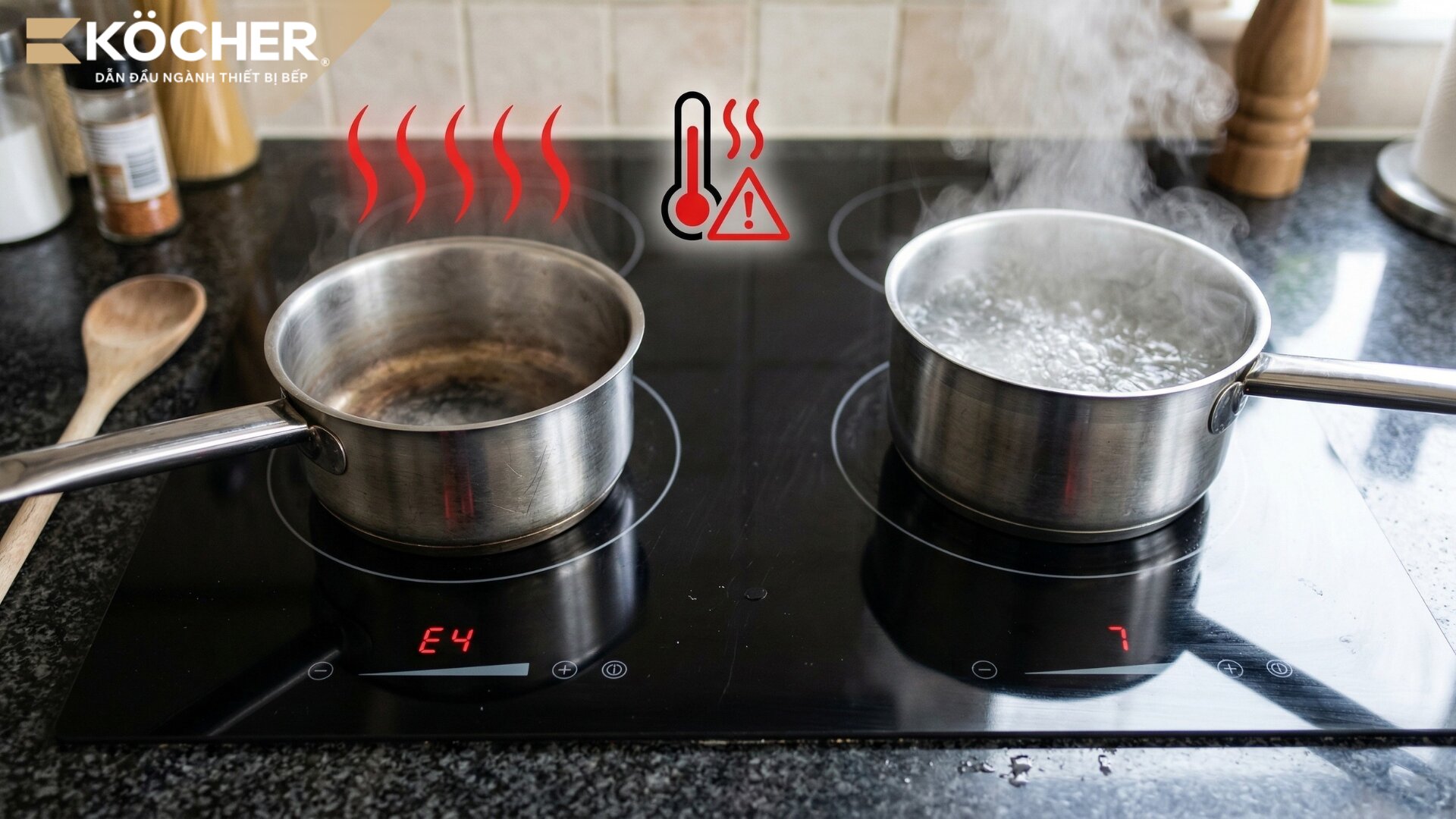
What is error E4 on induction hobs?
Error E4 on induction hobs is a warning code indicating that the temperature at the bottom of the pot or cooking zone has exceeded the safe threshold, usually above 280°C. This error occurs when the pot is boiled dry, or cooked at high power for too long, causing heat to accumulate on the glass surface. When the temperature sensor under the cooking zone detects an abnormal temperature, a signal will be sent to the microprocessor to automatically cut off power to the induction coil, preventing the risk of fire and helping the glass surface from deforming due to excess heat.
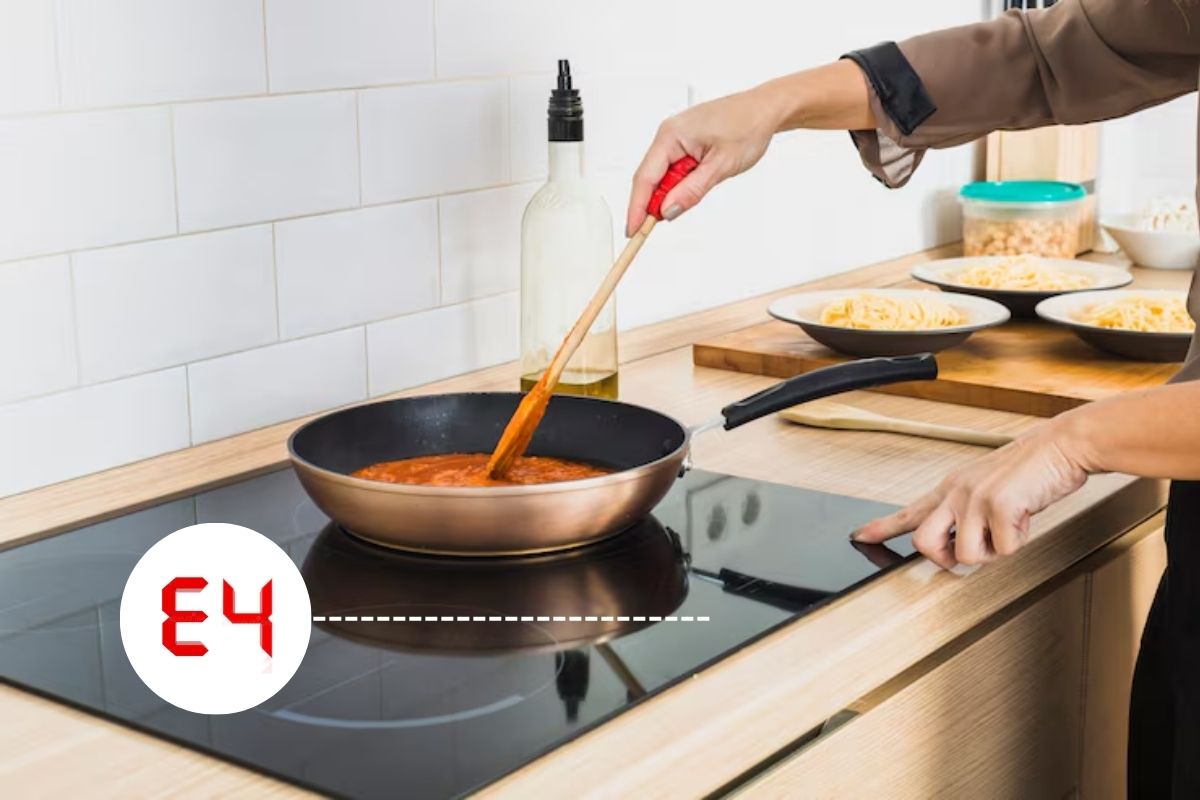 Error E4 appears when the cooking zone temperature exceeds the safe threshold[/caption>
4 common causes of E4 error on induction hobs
E4 error on induction hobs often occurs when the cooking zone temperature rises too high, which can be due to usage processes such as cooking at high power for long periods, the pot being too hot, or the cooling system and some internal components of the hob not functioning effectively.
Pot bottom too hot or unsuitable
This error occurs when the temperature at the contact area between the pot bottom and the glass surface exceeds the safe heat resistance threshold of the sensor system.
- Signs: The hob is cooking normally but suddenly stops working, the screen displays error code E4 along with intermittent beeping; the bottom of the pot shows signs of scorching or is too hot compared to the food inside.
- Causes: When the pot is empty or the pot bottom is too thin, the heat from the induction coil is not absorbed by the food in time, causing the pot bottom temperature to spike (usually above 280 degrees C). The temperature sensor (NTC) placed under the glass surface detects this sudden change and sends a signal to the microprocessor to cut off power, preventing the glass surface from cracking or the pot from burning.
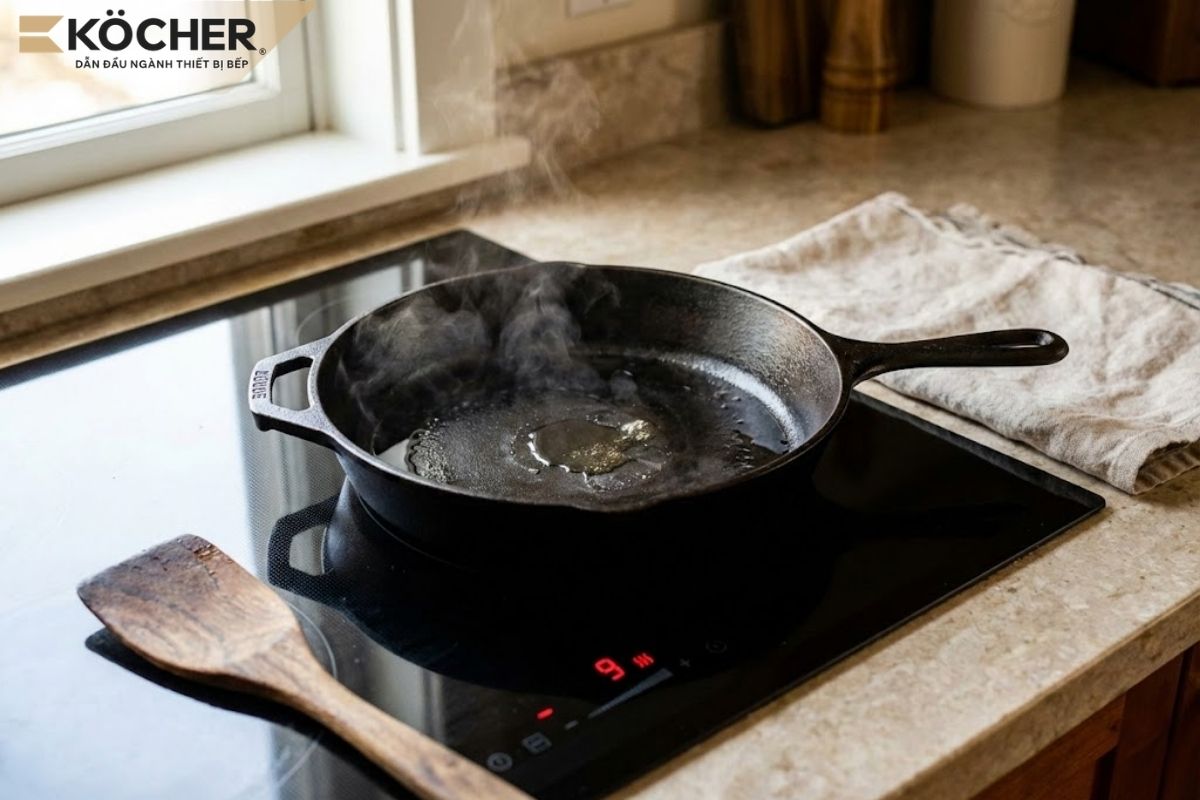 Using a pot with a thin bottom causes the temperature in the cooking zone to spike, causing error E4[/caption>
Cooking at high power for too long
This error occurs when maintaining maximum heat continuously causes the glass surface and cooking zone to become overloaded with heat.
- Signs: Error E4 usually appears after about 30 – 60 minutes of continuous cooking on dishes such as stews or frying at the highest power level (Boost/Max).
- Causes: Cooking at high power continuously causes a large amount of heat from the pot bottom to radiate back to the glass surface, exceeding the natural heat dissipation capability of the hob surface. At that time, the temperature sensor (NTC) located just below the glass surface will record the temperature exceeding the safe threshold and send a signal to the microprocessor. To protect the glass surface from cracking due to thermal shock and to prevent the risk of fire, the system will automatically cut off power to the induction coil and display error code E4.
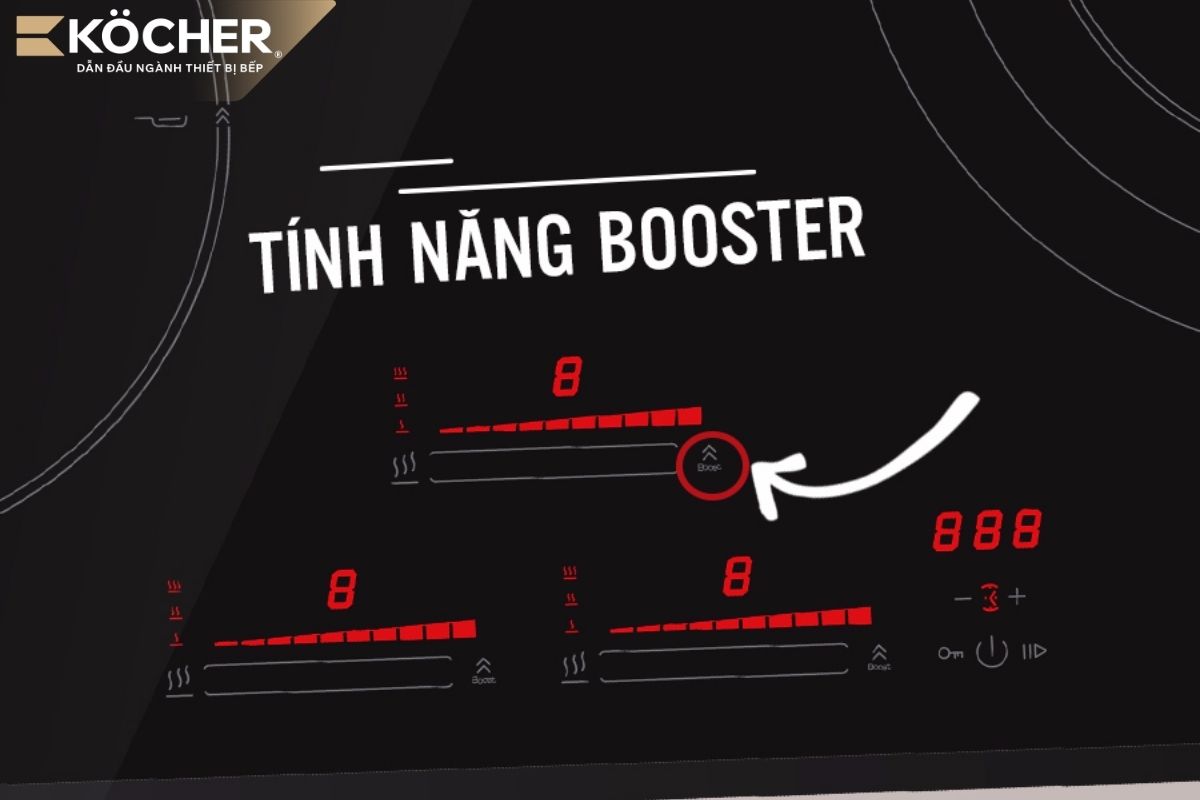 Cooking in Booster mode for a long time causes the pot bottom to overheat, causing error E4
Ineffective or faulty cooling system
Poor heat dissipation causes heat to accumulate inside the hob casing exceeding the safe threshold.
- Signs: The hob reports error E4 just a few minutes after starting even though the pot is not too hot; the cooling fan under the hob does not spin, spins weakly, or makes unusual buzzing sounds.
- Causes: When the fan is broken or the air vent is blocked, the cool air cannot enter to cool the induction coil and the aluminum heat sink of the IGBT. Excess heat quickly accumulates inside the hob compartment, causing the sensor to activate an emergency stop state to avoid the risk of component melting or circuit board short-circuiting.
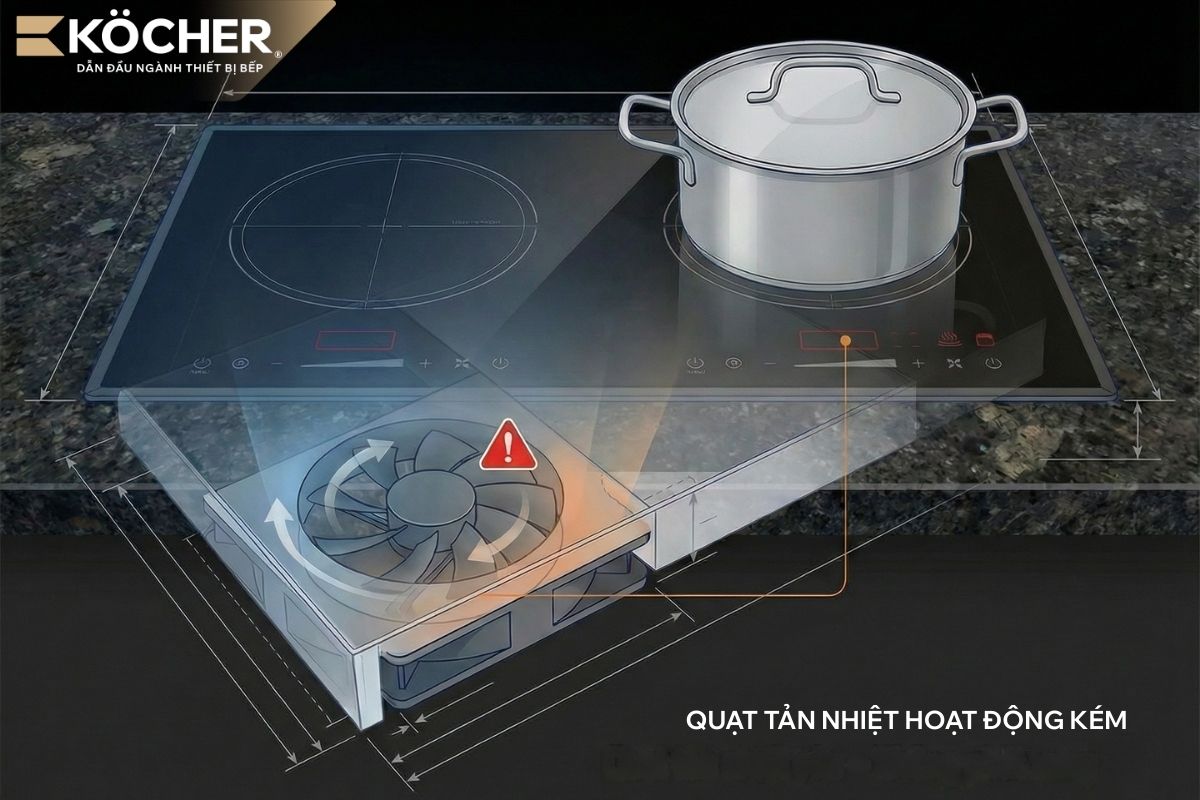 Ineffective cooling fan causes the cooking zone temperature to rise, causing error E4
Due to internal components (Temperature sensor or circuit board)
This error occurs when the components monitoring temperature or the central control board encounter technical issues, causing the hob to be unable to measure temperature accurately.
- Signs: Error code E4 displays immediately on the screen when the power button is pressed or as soon as the pot is placed on the cooking zone, even though the hob surface and pot bottom are still completely cool.
- Causes: Due to the temperature sensor having a broken connection or the main circuit board being damp, causing a short circuit that results in the voltage signal sent back to the microprocessor being completely distorted. The microprocessor identifies this as a false overheating condition (the reported temperature exceeds the safe threshold) and immediately activates an emergency cut-off command and displays error E4 to protect the component system. When the central control circuit experiences prolonged data disruption, the device may also switch the warning to error e5 induction hob to signal that the thermal relay on the cooking coil is experiencing serious connection issues.
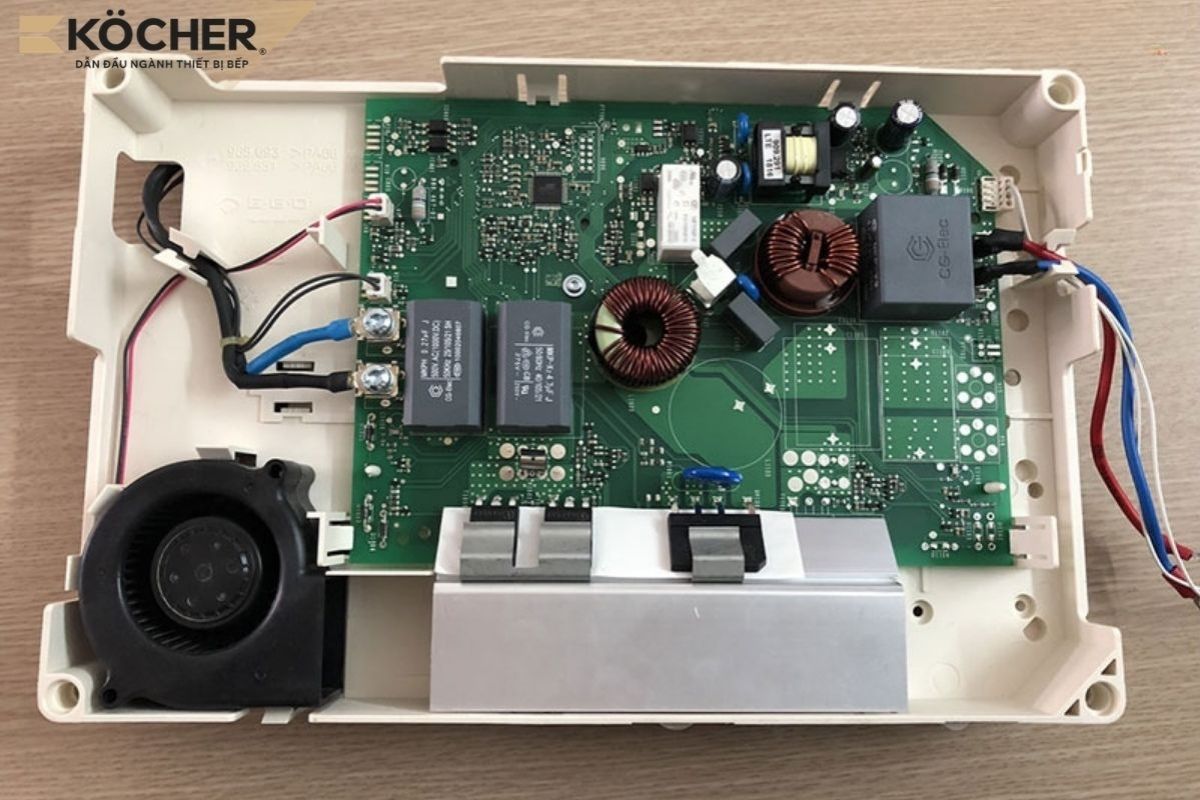 Sensor or circuit board malfunction can cause error E4
How to fix E4 error on induction hobs
To effectively fix error E4, you need to follow these technical steps:
- Step 1 – Stop cooking and cool the hob: Turn off the hob using the power button but do not unplug it immediately to allow the cooling fan to continue operating. Remove the pot from the cooking zone and wait about 15 – 20 minutes for the glass surface and temperature sensor to cool down to a safe level.
- Step 2 – Check cooking utensils: Check if the pot bottom is too thin or warped, leading to excessive heat concentration at one point. Ensure that the pot being used has a thick, flat bottom and is suitable for the hob’s induction standards to avoid localized overheating.
- Step 3 – Check the ventilation slots and cooling fan: Observe under the hob to see if the cooling fan is spinning normally or if it is obstructed (by a cloth, plastic bag) blocking it. Use a soft brush or vacuum cleaner to clean the ventilation slots, helping the cool air flow better to protect the circuit board.
 Sensor or circuit board malfunction can cause error E4
If you have followed the above steps and error E4 still appears immediately after turning on the hob (even when the hob is cool), the temperature sensor may be faulty or the main circuit board may have technical issues. At this point, you need to contact a professional technician to check and replace genuine components.
Frequently asked questions when induction hobs report error E4
Below are answers to some issues related to E4 error on induction hobs that many users are concerned about.
What does it mean when the hob reports E4 along with a “tack tack” sound inside?
When the hob reports E4 along with a “tack tack” sound, it is a sign that the input power is unstable, the cooling fan has issues, or there is a capacitor fault… To resolve this, you need to cut off the power immediately to avoid burning components, then contact a technician to check and replace the faulty internal part.
What is the cost of repairing E4 error due to circuit failure?
The cost of repairing E4 error due to circuit failure usually ranges from 200,000 VND to 1,300,000 VND, depending on the specific component. If the hob only has a faulty temperature sensor, the repair cost is about 200,000 VND to 400,000 VND. In more severe cases due to burning the power transistor (IGBT) or faults in the “chips” on the main circuit board, the cost will be from 600,000 VND to 1,300,000 VND.
Can E4 error on induction hobs be handled at home?
Yes, E4 error on induction hobs can often be handled at home if the cause is only related to the usage process. You can turn off the hob, remove the pot, and wait for the hob to cool completely before restarting. At the same time, check if the pot is running out of water, the pot bottom is too hot, or if it has been cooked at high power for too long.
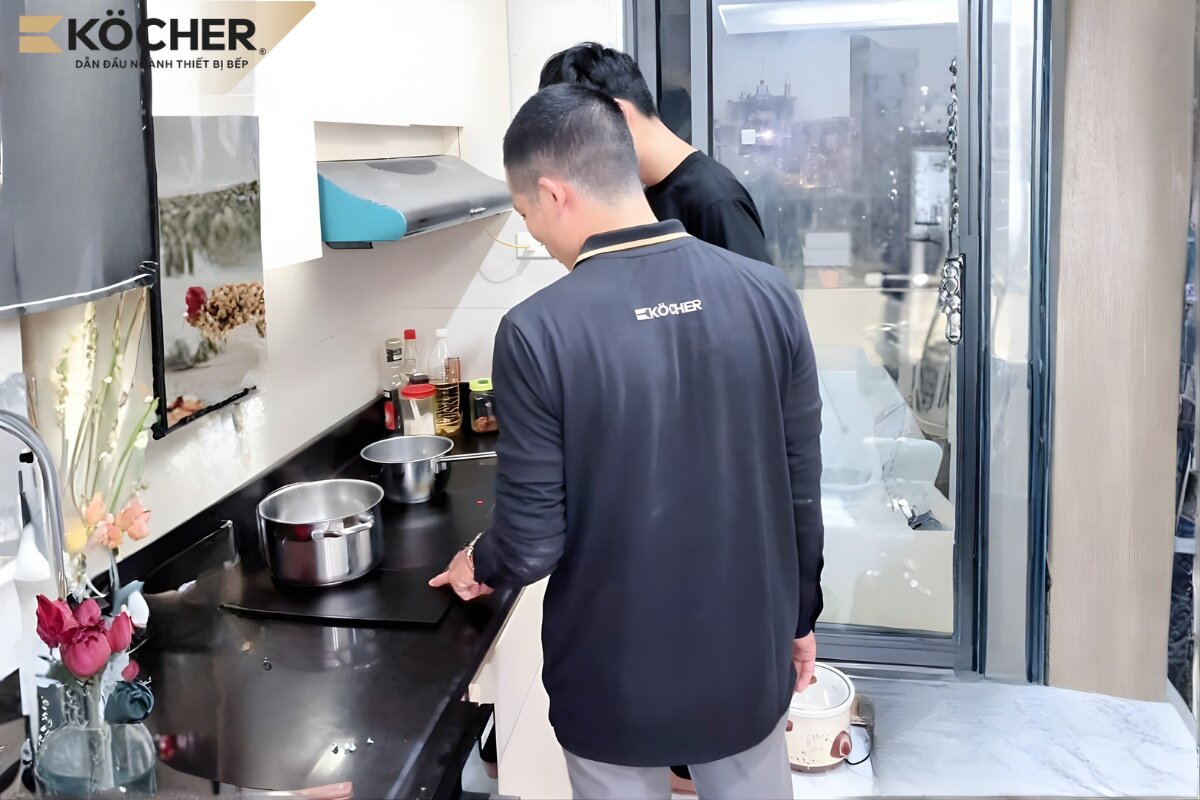 If the cause of error E4 is due to the cooling system or internal circuit board, you should ask a professional technician to repair it
However, if the hob continues to report error E4 after cooling down and retrying, you should contact a technician to check and repair to avoid damaging the hob’s components.
Besides E4, what other errors can induction hobs have?
In addition to error E4, induction hobs can also display some other error codes during use. Each error code is usually related to specific causes and has different handling methods.
- Error E0: The hob does not recognize the pot or the pot is not suitable for the induction hob. The common cause is that the pot bottom does not have magnetic properties or the pot is placed incorrectly. The solution includes using pots specifically designed for induction hobs and placing them correctly in the cooking zone.
- Error E1: The hob is overheating due to continuous operation at high power or ineffective cooling system. When encountering this error, you should turn off the hob, let it cool for a few minutes, and then restart.
- Error E2: The voltage supplied to the hob is too high compared to the allowed level. Users should check the power supply in the house or use a voltage stabilizer to ensure stable operation of the hob.
- Error E3: The voltage is too low, preventing the hob from operating normally. In this case, check the power supply or limit the use of multiple electrical devices at the same time.
- Error E5: The hob reports overheating or the temperature sensor, power components are malfunctioning. You should turn off the hob to let it cool, if the error persists, check and repair the internal components.
- Error E6: The temperature sensor of the hob is operating abnormally or is damaged, leading to overheating of the signal filter. When there is a problem with the glass surface sensor, the control system will display error e6 induction hob to prompt the user to proactively stop cooking for timely maintenance.
- Error E7: The pulse state is completely interrupted due to the internal sensor of the power transistor (IGBT) detecting the temperature in the machine compartment exceeding 100°C. This error e7 induction hob requires the device to rest to avoid serious damage to the main power circuit board.
Frequently Asked Questions
What is E4 error on induction hobs?
Error E4 is a warning of overheating in the cooking zone (usually above 280°C). The hob automatically cuts off power to protect the glass surface from cracking and to prevent the risk of fire.
Why does the hob report error E4 while cooking?
Due to the pot running out of water, the pot bottom being too thin, or cooking at high power (Booster) for too long. Additionally, a faulty cooling fan or blocked air vents can also cause heat accumulation.
How to quickly handle error E4?
Turn off the hob (do not unplug), remove the pot, and let the fan run. Wait 15 – 20 minutes for the hob to cool down completely, check and clean the ventilation slots before cooking again.
Why does the hob remain cool but still show error E4?
This is a component error, often due to the temperature sensor having a broken wire or the main circuit board being damp, causing a “false overheating” signal. In this case, a professional technician needs to repair it.
Above is detailed information about the causes and how to fix E4 error on induction hobs. We hope the shares in this article will help you better understand E4 error on induction hobs and know how to handle it appropriately when this error code appears during use.
If the hob frequently encounters E4 error due to overheating, you may consider choosing induction hobs with better components and cooling systems. You can refer to the models of Köcher using EuroKera (France) glass, E.G.O (Germany) induction coils, and energy-saving Inverter technology, helping the hob operate stably and reduce the risk of overheating while cooking.
Köcher induction hobs pioneer German technology – For detailed product information, please contact:
|