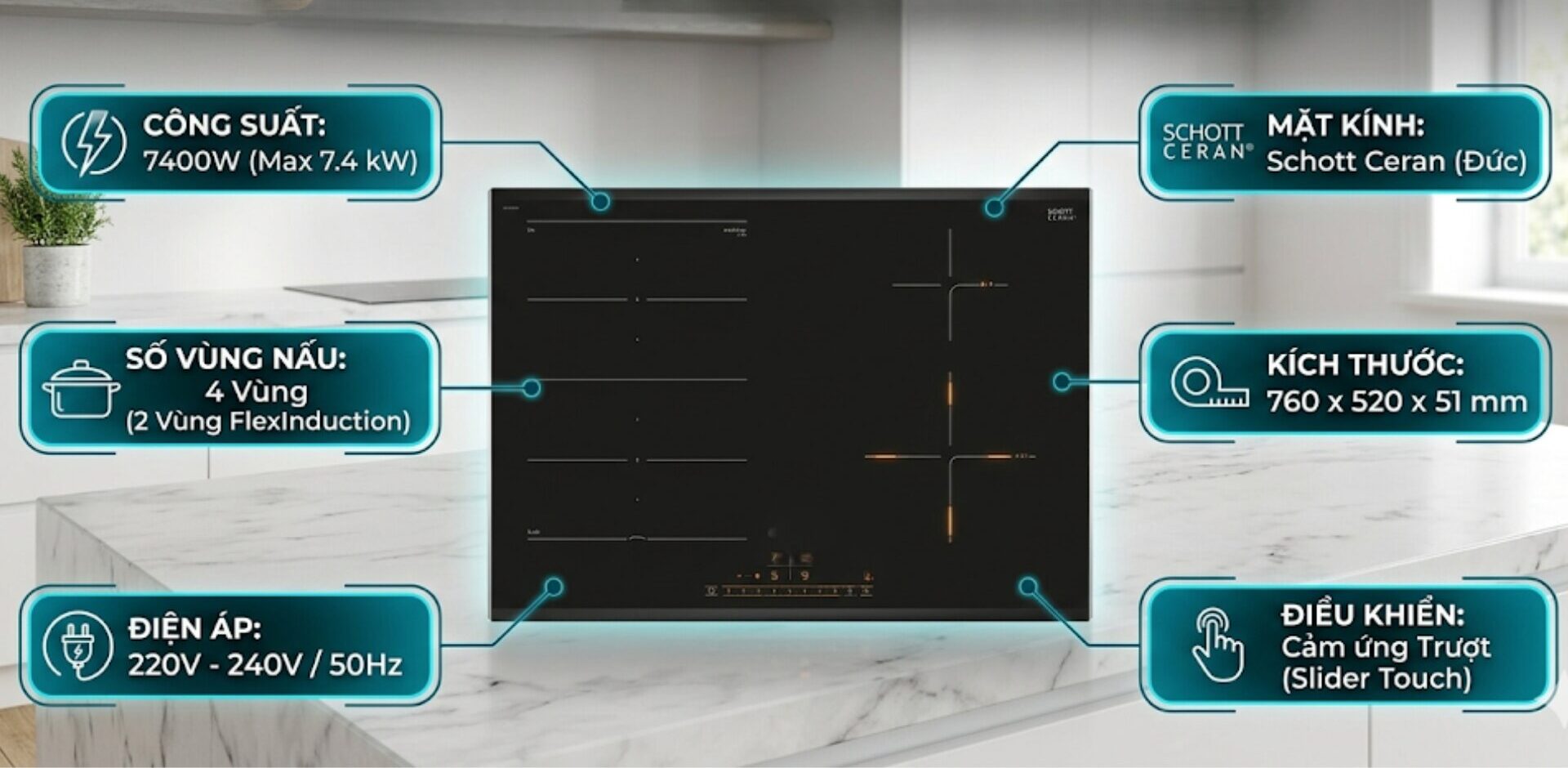
Error E5 induction hob appears on the screen causing the hob to stop working, interrupting the cooking process. This is a warning code indicating that the induction hob may be experiencing overheating or internal component issues. Understanding the meaning of error E5, common causes, and how to address it will help you proactively check and resolve the issue in a timely manner.
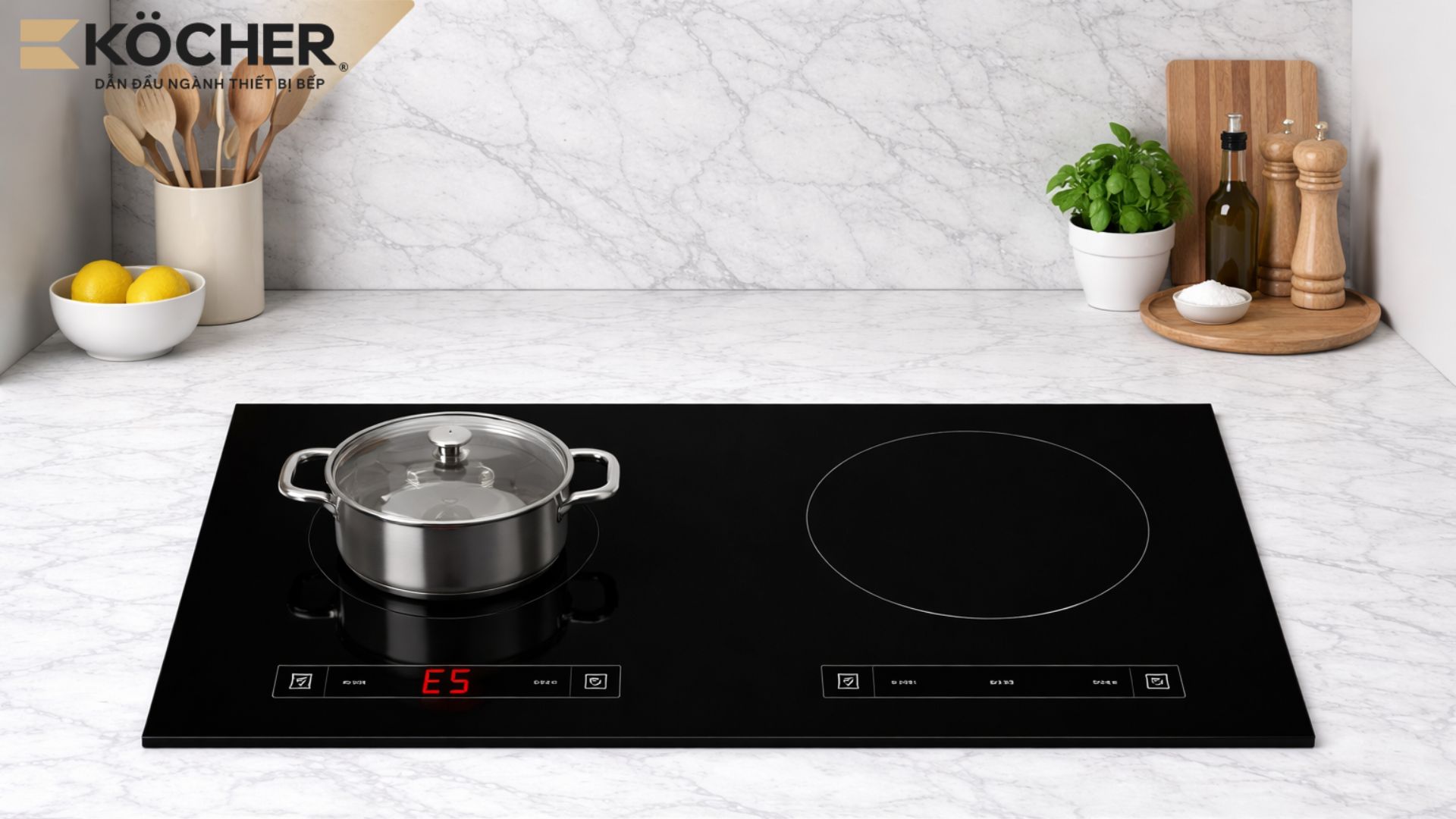
What is error E5 on the induction hob?
Error E5 on the induction hob is a warning code indicating that the hob is experiencing overheating issues during operation. This error often occurs when the hob surface is excessively hot, the power module (IGBT) is damaged, or the temperature sensor is not functioning accurately. When an anomaly is detected, the hob’s protection system will immediately activate and automatically cut off the power to prevent short circuits and protect the internal components.

2 common causes of error E5 on induction hobs
Error E5 often appears to warn of overheating of the power components or voltage input discrepancies.
Overheating hob
This error occurs when the temperature of the semiconductor components (such as the IGBT power module) inside the hob exceeds the permissible level (usually above 175 degrees Celsius).
- Signs: The hob is cooking normally but suddenly stops, the screen displays E5 along with a prolonged beep, and touching the ventilation area feels strong heat radiating.
- Causes: When cooking at high power continuously, heat accumulates on the aluminum heat sink and does not dissipate in time. The temperature sensor directly attached to the power module sends a signal to the microcontroller to execute a control pulse cut-off command to protect the components from short circuits and damage.
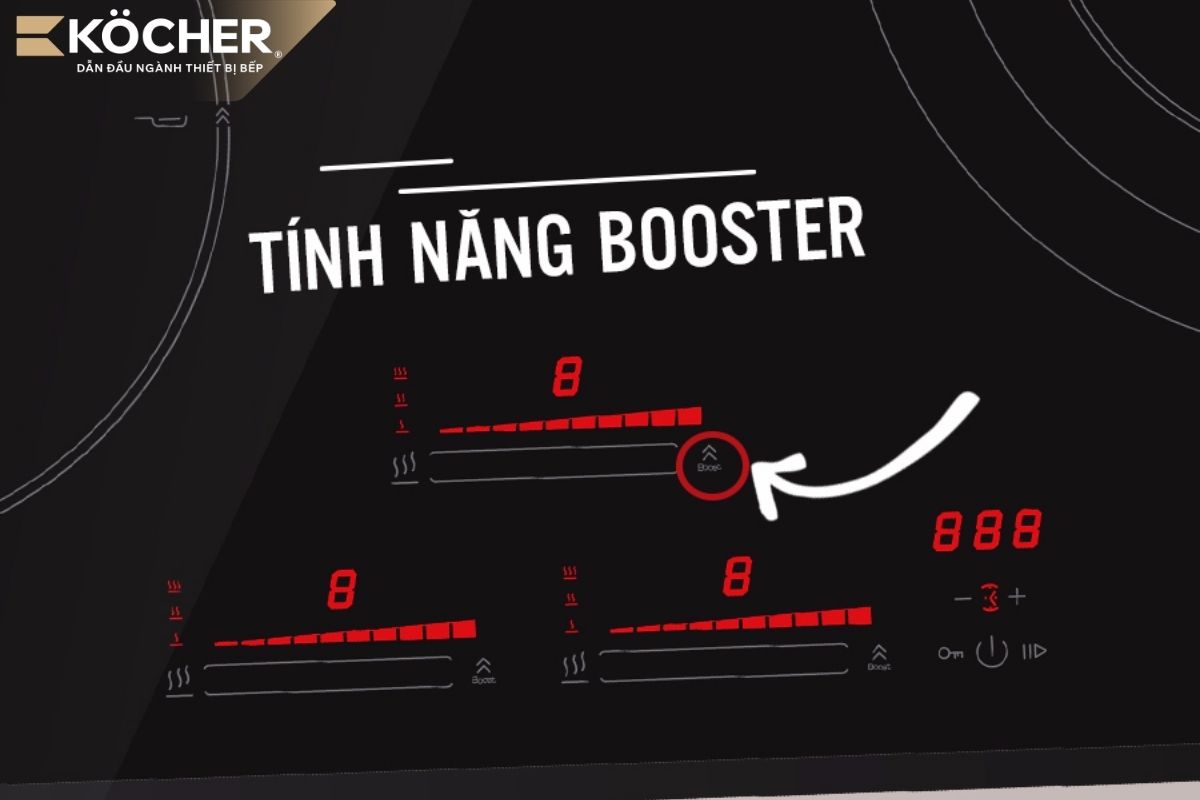
Faulty IGBT, temperature sensor
This error occurs when the temperature management or power control components are short-circuited, broken, or have incorrect technical values.
- Signs: Error code E5 appears immediately when the start button is pressed even though the hob has not heated up or no pot is placed on it.
- Causes: If the temperature sensor (NTC) is faulty or the IGBT is short-circuited, the feedback signal to the microcontroller will be lost or always at a high temperature. The microcontroller defaults this as a dangerous condition, thus locking all hob operations and displaying error E5 to ensure safety. When the control circuit continuously receives erroneous temperature information from the semiconductor system, the device may also switch the display structure to error e6 induction hob to signal that the overheating cycle of the cooking zone sensor has reached a critical limit.
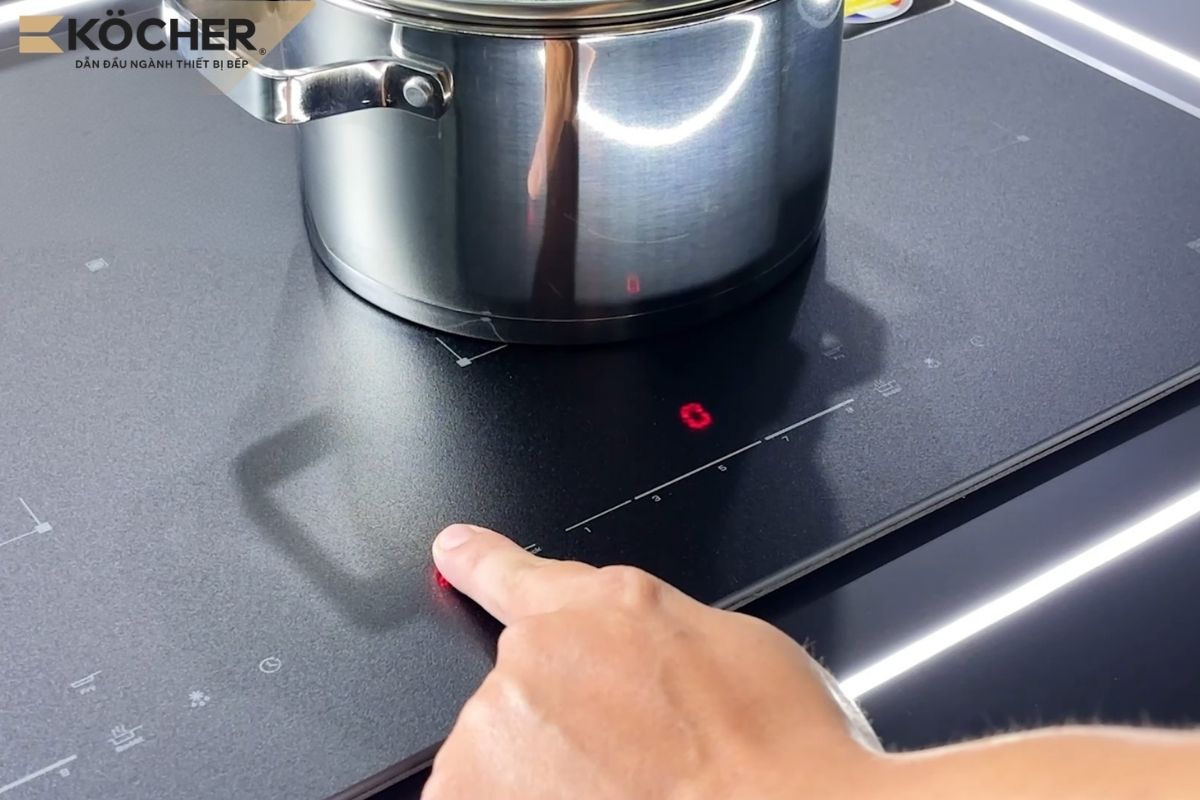 If the IGBT or temperature sensor is faulty, error E5 appears immediately after turning on the hob
How to fix error E5 on the induction hob at home
To effectively fix error E5, you need to follow these steps:
- Step 1 – Turn off the hob and cool down the system: Press the power button to turn off the hob but do not unplug/disconnect the circuit breaker immediately so the cooling fan can continue to blow cool air to the heating coil and power module (IGBT). Wait about 20 – 30 minutes for the temperature inside the hob to drop to a safe level before restarting.
- Step 2 – Check the pot and cooking zone: Determine whether the bottom of the pot is misaligned from the center of the induction ring or if the pot size is too small for the cooking zone. Ensure the pot has a flat bottom, good magnetic properties, is suitable for the cooking zone size, and is placed correctly at the center of the cooking zone for stable magnetic field concentration.
- Step 3 – Check household voltage: Use a multimeter or observe other devices to see if the voltage is too high (above 240V). If your area frequently experiences fluctuating voltage, install a voltage stabilizer to maintain a stable 220V current, avoiding damage to capacitors and the main circuit board.
- Step 4 – Clean the fan and ventilation slots: Check under the hob to see if the cooling fan is blocked by debris, dust, or any objects obstructing the ventilation slots. Use a soft brush or vacuum cleaner to clean thoroughly to ensure good airflow, helping to cool the semiconductor components quickly.
 Steps to fix error E5 on the induction hob
If you have followed the above steps and error E5 still appears immediately after turning on the hob, the temperature sensor or IGBT may be completely damaged. At this point, you should contact a professional technician to check and replace the components with the correct specifications.
Distinguishing error E5 from other errors on induction hobs
Below is a detailed comparison table to help you distinguish error E5 from other common error codes such as E1, E4, E6, E7 for accurate troubleshooting:
| Error Code | Location/Component with Issue | Direct Cause | Identifying Signs |
| E1 | Electronic Circuit | The hob overheats due to prolonged high power cooking or a faulty fan. | The hob cuts off while cooking, and the hob’s casing feels very hot. |
| E4 | Glass Surface Temperature Sensor | The temperature of the pot bottom exceeds the safety threshold. | The pot is burnt or left empty on the hob for too long. |
| E5 | Power Module (IGBT) | The internal components of the hob are too hot or the input voltage is too high. | The hob suddenly cuts off, possibly accompanied by a “clicking” sound due to voltage. |
| E6 | Temperature Sensor (NTC) | The temperature sensor is loose, short-circuited, or completely damaged. | The error appears immediately when the hob is turned on even if nothing is cooked. |
| E7 | Heating Coil (Copper Coil) | The temperature of the copper coil inside the hob is too high. | Usually occurs when the cooling fan is not functioning effectively. |
Note: Depending on the brand of the hob (Bosch, Sunhouse, Kangaroo…), these error codes may vary. However, most popular induction hob models today follow the overheating error classification rules as shown in the table above.
Some frequently asked questions when the induction hob displays error E5
Below are detailed answers to some questions related to fixing error E5 on induction hobs and other errors.
Can I fix error E5 at home?
You can fix error E5 at home if the cause is due to the hob overheating or high voltage by turning off the hob, waiting 15 – 20 minutes, and using a voltage stabilizer. However, if the temperature sensor or power module (IGBT) inside the circuit board is damaged, you should call a professional technician to replace it to ensure safety and avoid fire hazards.
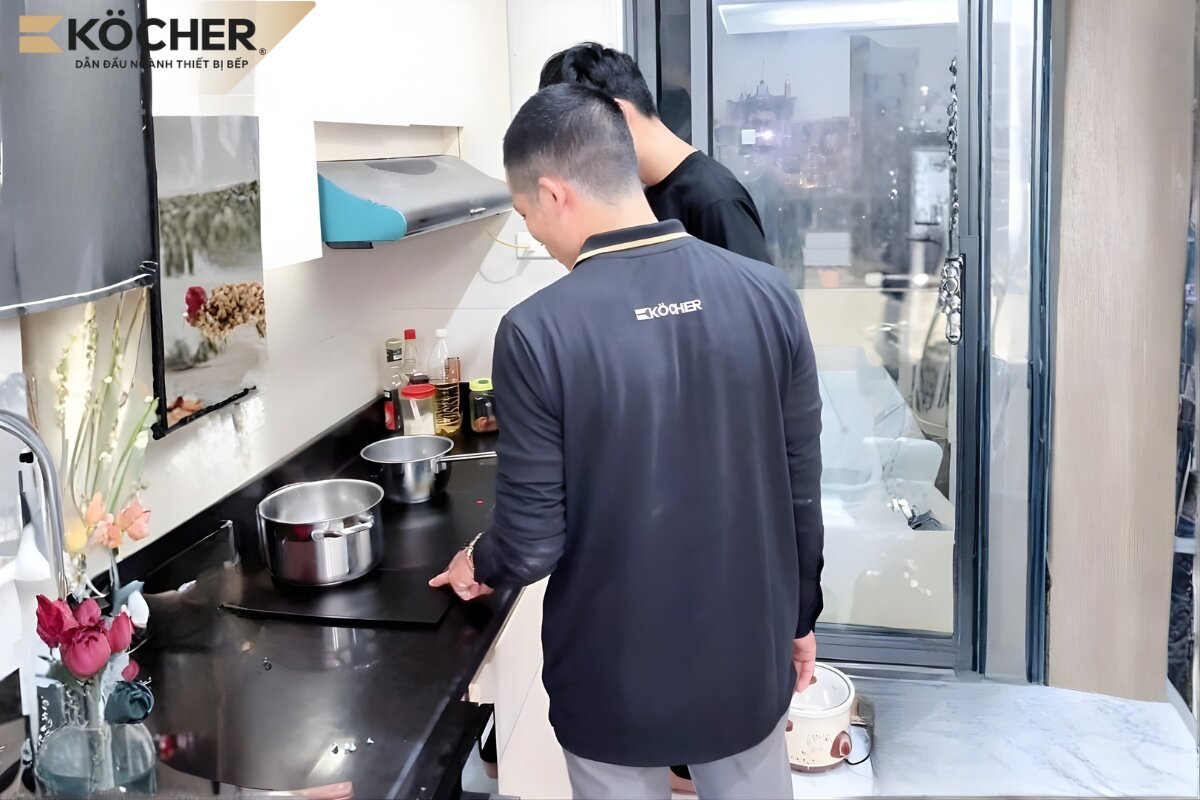 If error E5 is due to component failure, you should ask a professional technician to repair it
What is the cost of fixing error E5 due to circuit failure?
The cost of fixing error E5 due to circuit failure typically ranges from 250,000 – 1,300,000 VND, specifically as follows:
- Replacing individual components: If only the temperature sensor or power module (IGBT) is faulty, the cost is approximately 300,000 – 800,000 VND.
- Replacing the entire circuit board: If the main circuit board is severely burned and cannot be repaired, the replacement cost is from 500,000 – 1,300,000 VND.
Besides E5, what other errors can induction hobs have?
In addition to E5, induction hobs commonly encounter the following error codes related to the electrical and temperature systems:
- Error E0 – Pot not detected: This error occurs when the hob does not detect the pot or the pot does not have a magnetic bottom. To resolve it, simply switch to a pot with a magnetic base and place it correctly at the center of the induction ring.
- Error E1 – Hob overheating: This error appears when cooking at high power for too long, causing the main circuit board to overheat. You need to turn off the hob immediately, let the fan run for about 20 minutes to cool down, and check if anything is blocking the ventilation slots.
- Error E2 – Input voltage too high: This error occurs when the power supply spikes above 250V, posing a danger to the internal capacitors. You should turn off the hob and use a voltage stabilizer to bring the current back to a stable 220V.
- Error E3 – Input voltage too low: This error often occurs during peak hours when the grid voltage drops below 170V, causing the hob to lack sufficient energy to operate. The best way to handle this is to turn off unnecessary electrical devices or install a voltage stabilizer to maintain power.
- Error E6 – Faulty temperature sensor: This error occurs when the wiring of the temperature sensor in the middle of the induction ring is broken, loose, or this component has completely failed. Since it involves internal components, you need to call a technician to replace the sensor with the correct specifications.
- Error E7 – Overheating copper coil: The phenomenon of the copper coil operating beyond its load capacity generating maximum heat will activate error e7 induction hob to temporarily stop providing the magnetic field.
- Error E8 – Connection error or faulty power supply IC: When the data transmission between the touch control board and the main power board is interrupted, the device will issue a warning error e8 induction hob to prevent incorrect control of the current parameters.
- Frequently asked questions
What is induction hob error E5?
Error E5 is a warning code for overheating of the power components (IGBT) or excessively high input voltage. The hob automatically cuts off power to protect the internal semiconductor parts from damage or fire.
Why does error E5 appear immediately after turning on the hob?
This indicates that components (IGBT or temperature sensor NTC) have been damaged, short-circuited, or have incorrect technical values. In this case, you need to replace the components; it cannot be resolved by simply waiting for cooling.
How to fix error E5 due to overheating at home?
Turn off the hob (do not unplug), remove the pot, and let the fan run for 20 – 30 minutes to cool the system completely. Clean the ventilation slots under the hob to ensure the cooling fan operates effectively.
Above is detailed information about the causes and solutions for error E5 on induction hobs along with answers to some related issues. We hope these insights will help you accurately identify the cause and address error E5 on the induction hob in a timely manner, avoiding impacts on usage and the hob’s durability.
You can refer to the induction hob lines from Köcher with E.G.O (Germany) components, IGBT power modules, and high-temperature resistant EuroKera glass, helping the hob operate more durably and safely.
|
Köcher induction hob pioneers German technology – For detailed product information, please contact:
|