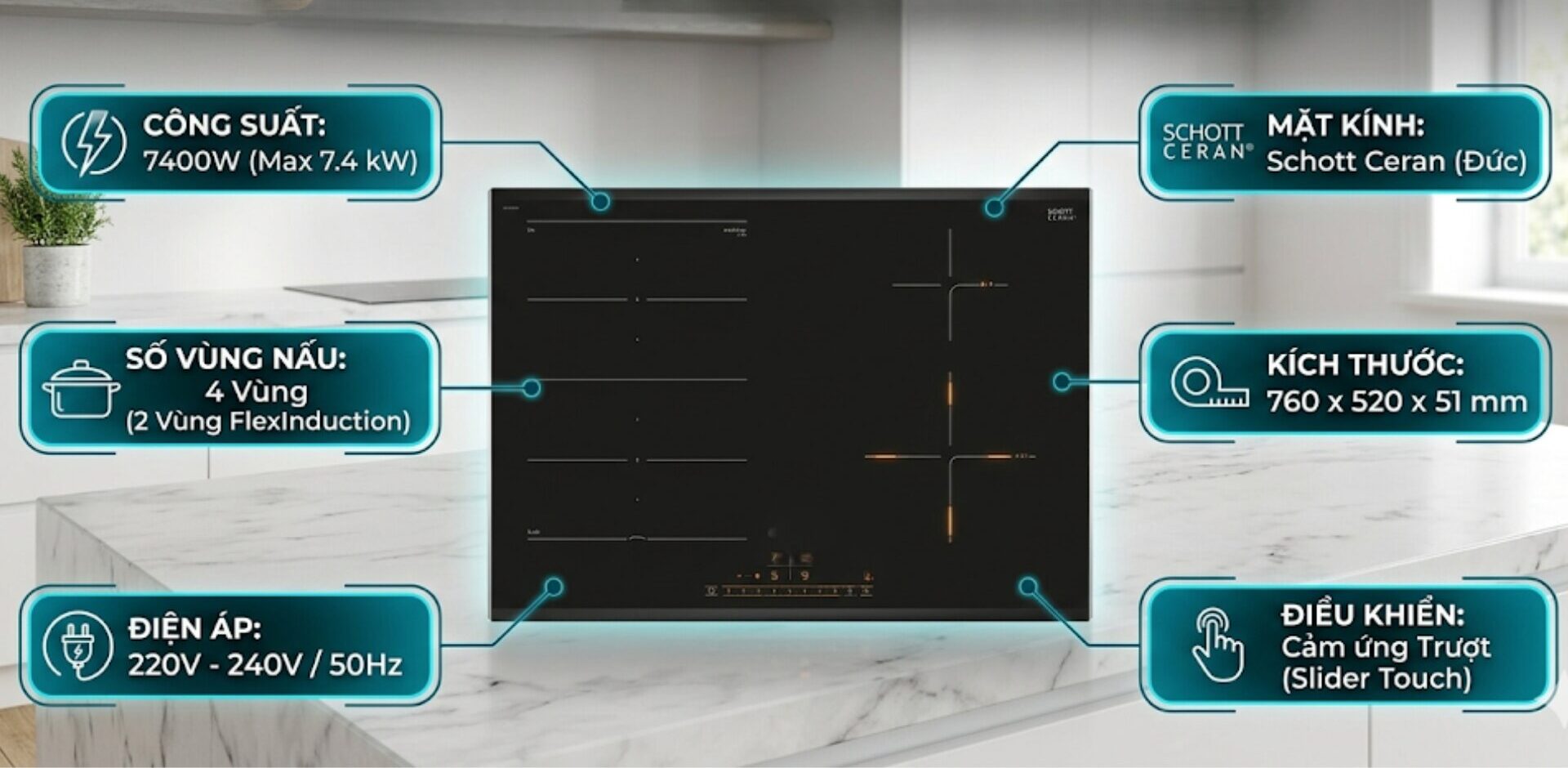
Error E6 on the induction cooktop indicates overheating due to a faulty temperature sensor or the cooking utensil’s temperature exceeding the permissible limit. The following article will analyze in detail the causes and safe troubleshooting procedures according to standards right at home.
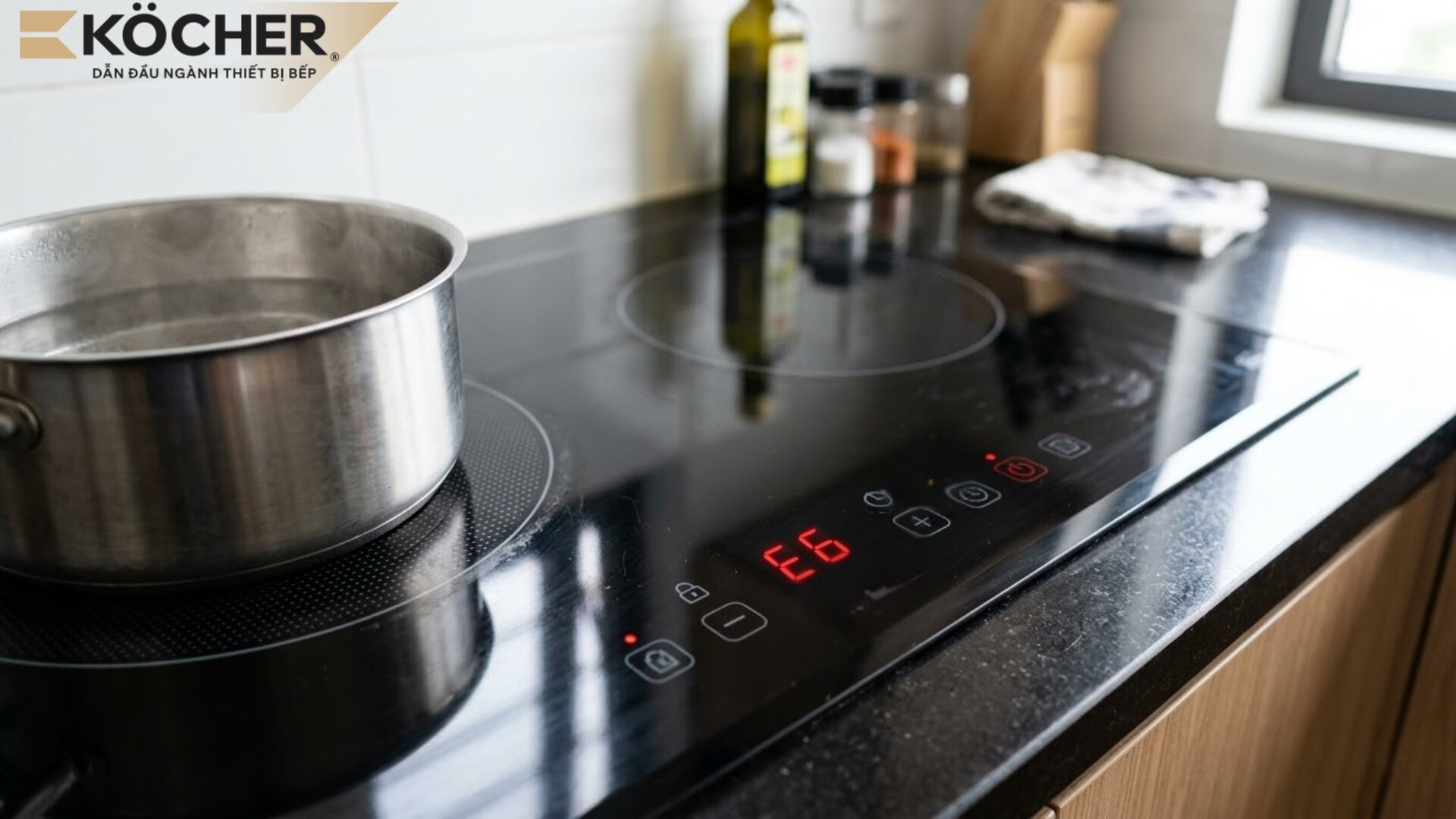
4 most common causes of E6 error on induction cooktops
The causes include objective faults such as component failures, technical environment, or subjective impacts like the habit of using the cooktop at high temperatures continuously, specifically as follows:
- Bottom of the pot is too hot or incompatible: Cooking at maximum power for too long or allowing the pot to run dry leads to a sudden increase in the bottom pot temperature beyond its tolerance. Additionally, using pots with too thin a bottom also causes localized heat concentration, making the temperature sensor react immediately.
- Cooktop overheats due to continuous high power cooking: Using the Booster mode or cooking at maximum power continuously for a long time (usually over 30 – 45 minutes).
- Cooling system operates ineffectively or is damaged: The cooling fan is too dusty, the fan is stuck, or the air vents under the cooktop are obstructed by obstacles.
- Temperature sensor malfunctions or is turned off: The temperature sensor is loose, the connecting wire is broken, or the contact surface is oxidized due to a humid cooking environment and grease. In many cases, this component is completely damaged (thermal failure) or has incorrect resistance values after prolonged exposure to direct heat from the bottom of the pot. When the glass surface sensor stops transmitting stable voltage signals, the central circuit may misinterpret the load current and trigger a E7 error on the induction cooktop warning to prevent the induction coil from overheating, which could cause dangerous short circuits.
Instructions for safely troubleshooting E6 error on induction cooktops at home
When encountering the E6 error on the induction cooktop, you need to calmly follow the technical steps below to ensure safety for both users and the device:
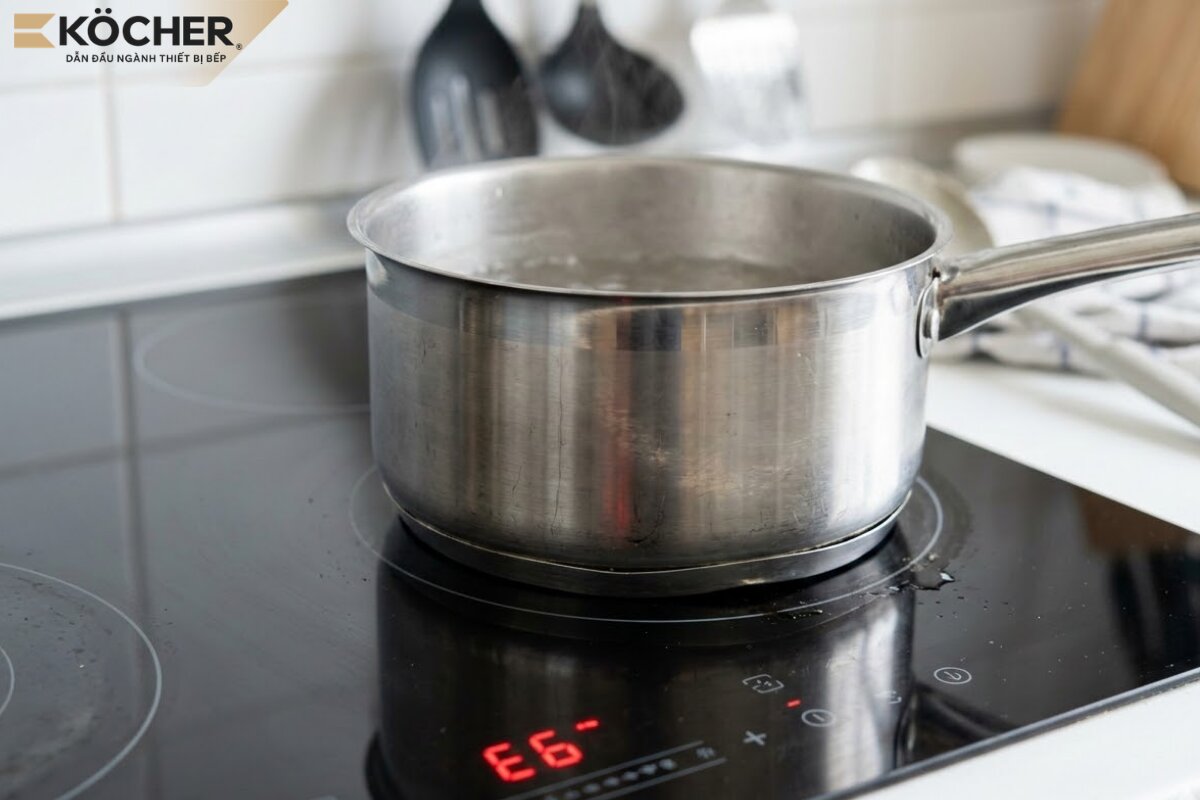
- Step 1: Turn off the cooktop using the power button on the glass surface and do not unplug the power cord or turn off the circuit breaker immediately. This allows the cooling fan to continue operating to cool the internal power components.
- Step 2: Remove the pot from the cooking zone so that heat from the bottom of the pot does not continue to transfer to the glass surface, helping the glass surface cool down quickly to a safe level.
- Step 3: Check the cooktop’s cooling system, see if the fan is running, and whether the air vents under the cooktop are obstructed by plastic bags or any objects. If you see thick dust accumulation, use a mini vacuum or soft brush to clean.
- Step 4: Please let the cooktop rest for at least 15 – 20 minutes. After the glass surface and components have completely cooled down, you can turn on the cooktop and continue cooking at a medium power level.
If after performing the above steps the cooktop still displays the E6 error when in use, this may be due to a circuit board or sensor technical failure, please contact the authorized service center for support in repairing or replacing the new components.

See more: How to fix an induction cooktop that runs but does not heat for all causes
4 usage tips to minimize E6 error on induction cooktops
To ensure the induction cooktop operates stably and avoid errors, you can apply the following tips when using the device:
- Choose a suitable induction pot set: Prioritize pot lines with 3-layer or 5-layer bottoms (304 stainless steel – aluminum – 430 stainless steel), thick pot bottoms help distribute heat evenly, avoiding localized overheating that causes sensor errors.
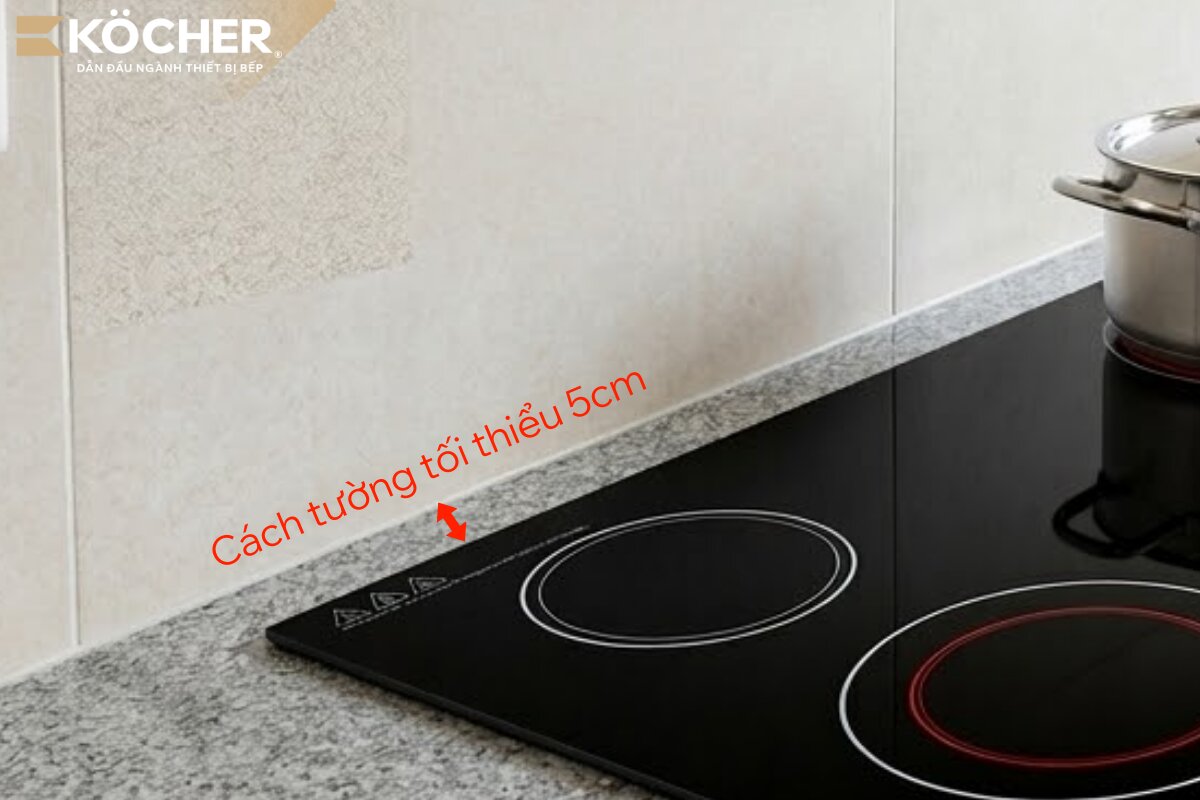
- Install the cooktop according to technical standards: Ensure the kitchen cabinet has sufficiently wide air vents (at least 5cm below and has an air outlet to the outside).
- Avoid overusing the Booster mode: Only use Booster for a maximum of 10 minutes to quickly boil water, then reduce to a lower power level to maintain stable temperature.
- Regularly clean the cooktop’s belly: Clean every 3 – 6 months, check and clean dust in the fan area to ensure the cooling system operates most effectively.
Frequently Asked Questions
Question 1: What does the E6 error on the induction cooktop mean?
Error E6 is a warning code indicating the overheating condition of the induction cooktop, occurring when the temperature at the cooking zone or internal components exceeds the safe limit. This is the device’s self-protection mechanism to prevent the risk of cracking the glass surface or burning the circuit board when the temperature rises suddenly. If the signal transmission line between the circuit board layers is interrupted along with the sensor error, the cooktop will display the code E8 error on the induction cooktop to request a technician to check the central communication control board.
Question 2: What are the main causes of the E6 error on the induction cooktop?
The main causes are due to the habit of cooking at maximum power for too long, using pots with thin/warped bottoms causing localized heat concentration, or a faulty cooling system (broken fan, obstructed air vents). Additionally, a malfunctioning temperature sensor or incorrect values after prolonged use is also a common technical factor causing this error code. For imported European cooktops, when the touch communication system conflicts with the internal software configuration, E9 error on the induction cooktop will appear instead of the thermal error to indicate that the panel processing circuit is damp or out of sync.
Question 3: What should be noted when using the induction cooktop to avoid E6 error?
To prevent E6 error, you should use a pot set with a thick bottom (3-5 layers) suitable for induction, install the cooktop in a well-ventilated position with at least 5cm air vents, and regularly clean dust from the cooling fan. In particular, limit the overuse of the Booster mode and allow the cooktop to rest between long cooking sessions to maintain the durability of the components.
Hopefully, this article has provided you with technical knowledge and how to handle the E6 error on the induction cooktop right at home. Proactively controlling the temperature and adhering to installation standards not only helps the cooktop operate stably but also protects the induction system and circuit board over time.
As a leading brand in kitchen equipment, Köcher is proud to be a pioneer in Vietnam bringing German technology into induction cooktops, providing durable and high-class cooking solutions for your family, with superior scratch-resistant X-Nano glass technology and E.G.O components made in Germany.