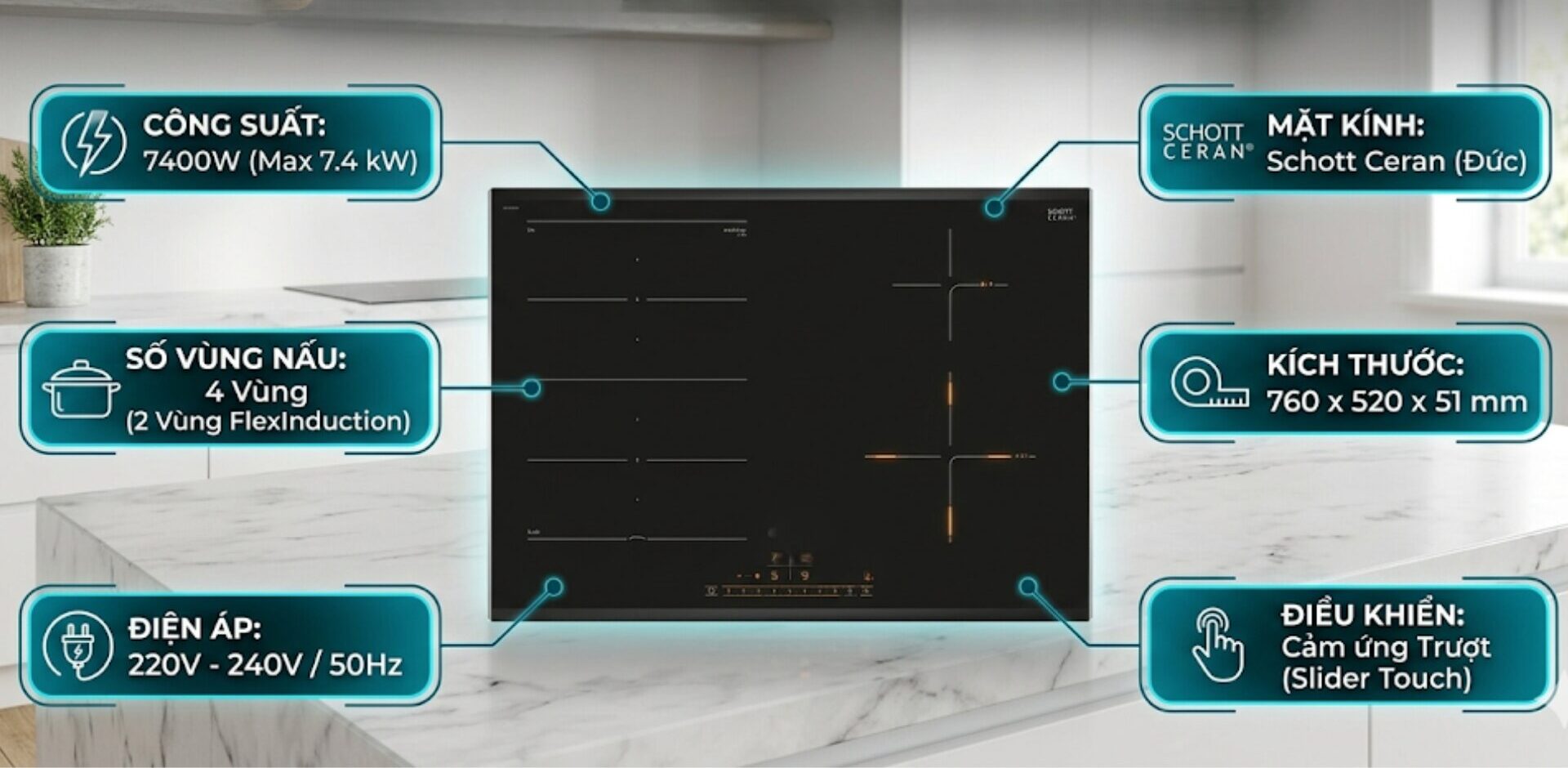
E7 error on induction cookers is a rare warning code encountered during use (especially with high-end induction cookers), helping users quickly identify issues and prevent more serious damage. The following article will analyze the causes and guide you on how to safely and effectively fix the E7 error according to technical standards.
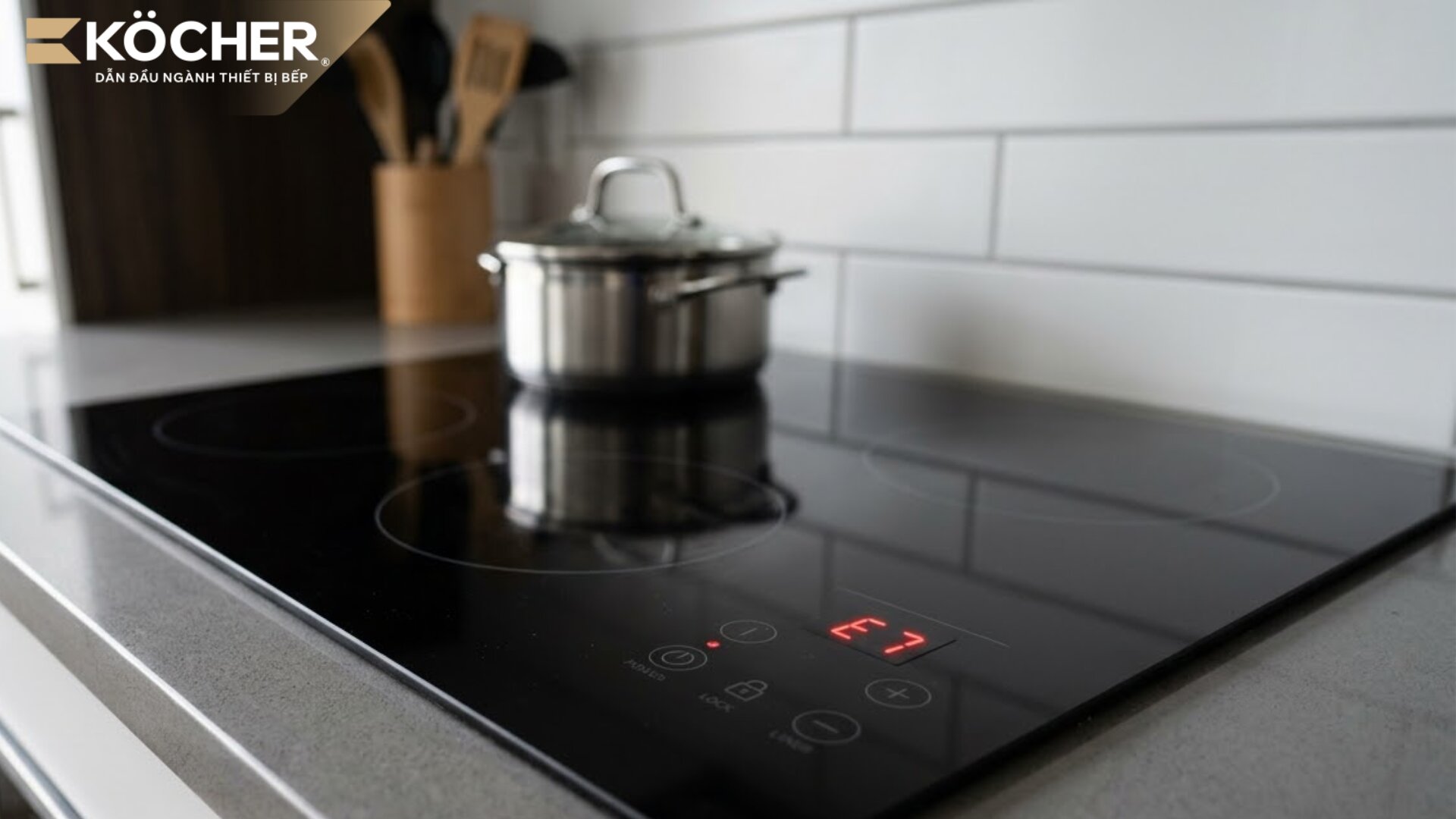
What is E7 error on induction cookers? Signs to recognize on the control panel
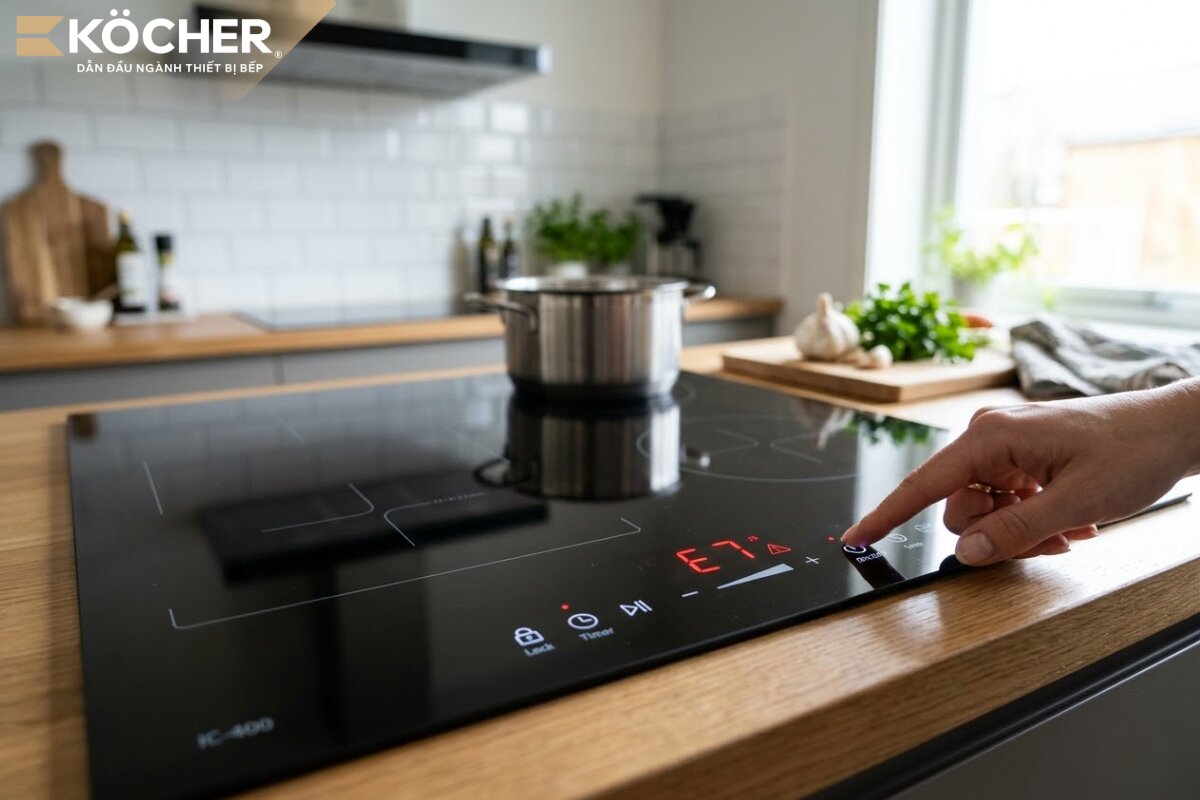
E7 error on induction cookers is usually a warning to users when the induction cooker has issues with the cooling fan or the temperature sensor components are faulty. When this error occurs, the cooker will stop operating to protect the internal components from damage due to overheating, the display screen will show the E7 error and there will be a continuous beeping sound as a warning.
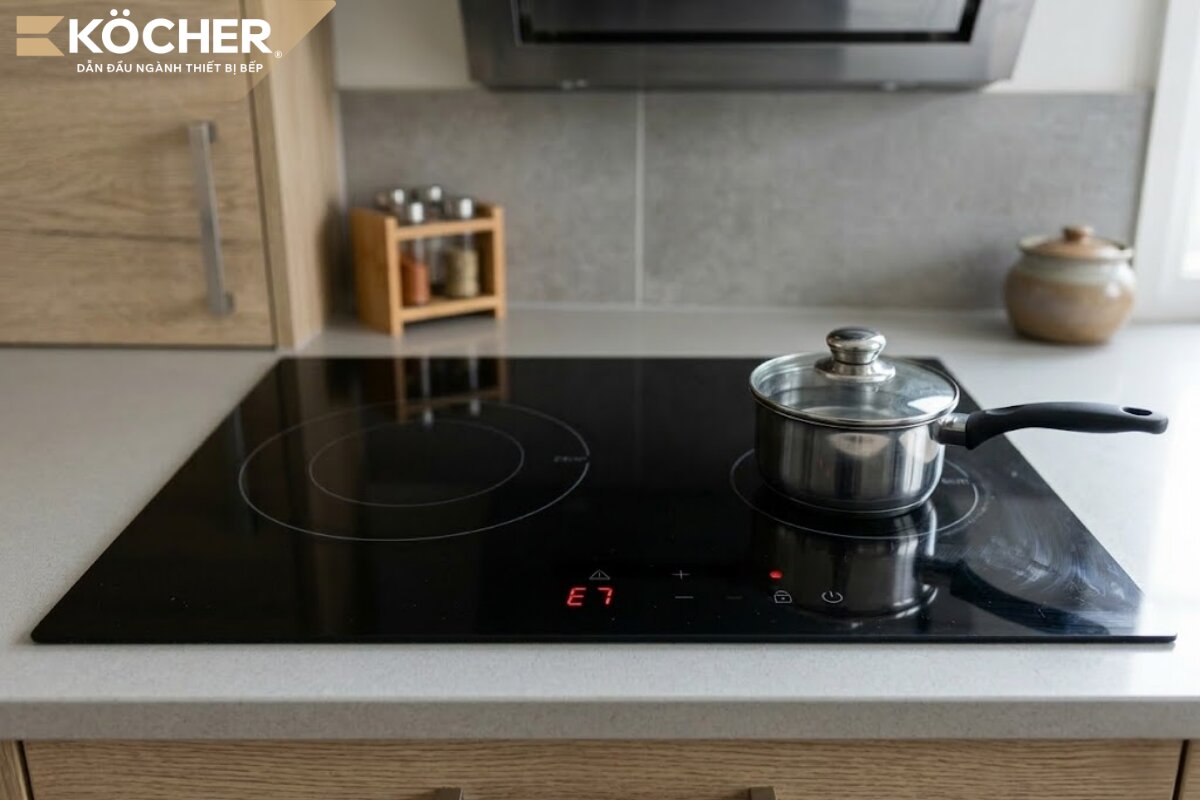
5 technical causes that make induction cookers report E7 error
Identifying the correct cause will help you have an accurate handling direction, avoiding incorrect handling that may damage internal components. Below are 5 common reasons leading to the E7 error on induction cookers:
Faulty temperature sensor or open circuit
- Signs: The cooker suddenly cuts off power right after starting or after a few minutes of cooking, E7 code displays in red on the control panel.
- Causes: The sensor wire is broken (due to rodent bites or oxidation), the sensor connector with the circuit board is loose, or the temperature sensor component under the cooking zone has failed, no longer sending accurate signals to the microprocessor.
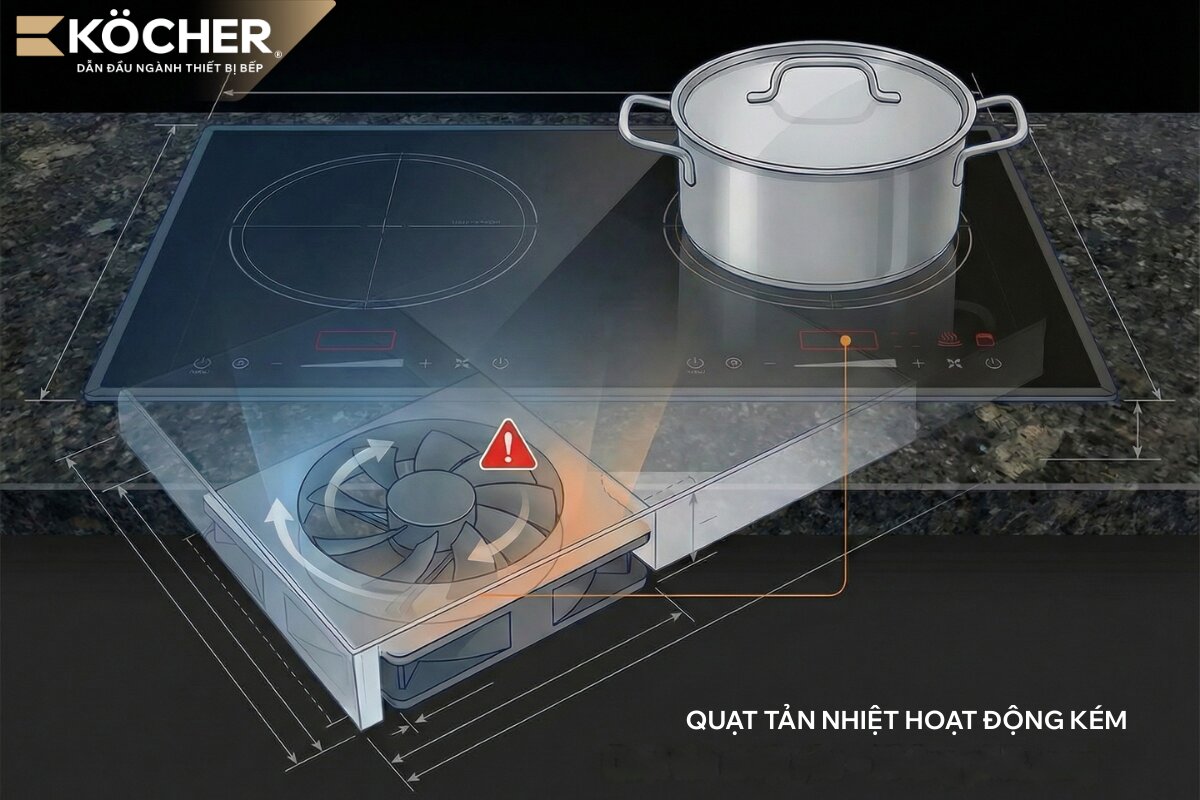
Ineffective cooling fan system
- Signs: The fan makes unusual loud noises, there is a buzzing sound or the fan does not spin when the cooker is operating, the cooker body is very hot and may emit a slight burnt smell.
- Causes: The fan is clogged with too much dust and grease causing the shaft to jam, or the fan motor is burnt out, causing hot air to accumulate inside and the system to shut down to protect itself.
Using low-quality components
- Signs: The cooker operates intermittently, often occurring in low-cost cooker models or cookers that have been repaired with non-genuine parts.
- Causes: Low-quality electronic components (capacitors, resistors, ICs) have low thermal durability, easily deviating in value or deforming when operating in high-temperature environments continuously, leading to system misidentification and error reporting.
IGBT/fan temperature too high
- Signs: The cooker is cooking at high power and suddenly stops and displays an error code, the cooker body radiates a lot of heat.
- Causes: Due to continuous cooking for too long at high temperatures, causing the power semiconductor (IGBT) to be thermally overloaded. Additionally, installing the cooker in a too confined space without ventilation gaps is also a direct cause of this situation.
Control circuit error on old cookers
- Signs: The display screen shows erratic numbers or shows E7 even when the cooker has just been plugged in and has not cooked anything.
- Causes: After many years of use, the control circuit board ages, the printed circuit paths become damp causing electrical leakage or the power filter capacitor becomes dry and swollen, leading to signal processing errors by the control IC.
-
The loss of synchronization between the control component layers if prolonged will easily lead to E8 error on induction cookers to warn that the internal data communication system is completely interrupted.
Instructions on how to safely fix E7 error on induction cookers at home
When encountering E7 error, please remain calm and follow the steps below to quickly resolve the error
- Step 1 – Turn off the cooker: Unplug or turn off the circuit breaker to cut off the power supply to the cooker when it encounters a problem
- Step 2 – Check the ventilation system: Check if the ventilation gaps are obstructed (by towels, plastic bags). If there is thick dust on the ventilation gaps or cooling fan, use a mini vacuum cleaner or soft brush to clean thoroughly.
- Step 3 – Wait 15 – 20 minutes: Be patient to let the cooker cool down completely, then restart to check if the error has been resolved.
- Step 4 – Check internal components: If you have cleaned the cooling system and the cooker still reports E7 error, it may be due to a faulty IGBT component, please contact the warranty center for replacement with genuine parts. If you have technical expertise about induction cookers, you can check when the induction cooker is malfunctioning and replace the IGBT power component to optimize costs.

5 tips for using induction cookers durably, avoiding E7 error
To ensure the cooker operates stably and prolong its lifespan, avoiding issues related to sensors and circuit boards, you can apply the following usage tips:
- Choose pots with suitable bottoms: Use pots and pans with thick, flat bottoms and high magnetic attraction, helping heat transfer achieve optimal efficiency, minimizing heat loss to the environment and helping the temperature sensor operate more accurately.
- Use reasonable power: Only use high power or Booster mode for a maximum of 10 minutes at the beginning, then maintain at medium power to avoid overloading the power component (IGBT) leading to E7 error.
- Regular maintenance and cleaning of the cooling fan: It is advisable to check and clean the cooling fan system every 3 – 6 months, removing dust and grease on the fan blades to improve hot air circulation, protecting the circuit board from overheating.
- Absolutely do not cut off the power immediately after cooking: After turning off the cooker with the power button, the cooling fan still needs to operate to cool down the internal components. If you unplug immediately, the accumulated heat will reduce the lifespan of the sensor and quickly damage the circuit board.
- Ensure a ventilated installation space: When installing the cooker (especially built-in cookers), you need to ensure that the cabinet space below has enough airflow. Avoid placing too many items in the kitchen cabinet that block the ventilation gaps of the cooling fan at the bottom of the cooker.
Frequently asked questions about E7 error on induction cookers
Is E7 error on induction cookers dangerous?
E7 error is essentially a safety protection mechanism to prevent danger rather than directly causing fire or explosion. However, if you attempt to restart multiple times when the cooker is faulty, or arbitrarily connect protective components for temporary use, this may completely damage the safety system, leading to the risk of electrical short circuits in the household. In some high-end cooker models, when the touch slider or control panel circuit board short circuits due to water overflow or severe dampness, the induction cooker reports E9 error will be activated immediately instead of reporting a temperature error to ensure absolute touch safety.
Why can a newly purchased cooker still report E7 error?
A newly purchased cooker reporting E7 error may be due to a manufacturing defect, or the installation position of the cooker being too confined causing the cooling fan to operate ineffectively from the first use. If the installation position of the cooker is correct, please take the cooker to the warranty center for inspection and replacement of genuine parts.
How much does it cost to replace the temperature sensor of an induction cooker?
Replacing the temperature sensor of an induction cooker usually costs between 250,000 VND – 700,000 VND, depending on the brand of the cooker and the repair unit. You should contact reputable repair centers for the most accurate cost.
Is the induction cooker reporting E7 error covered by warranty?
Induction cookers reporting E7 error continuously can be covered by warranty if the error originates from internal component failure (such as temperature sensors, circuit boards) and the cooker is still under warranty. If the error is due to overheating (cooking for too long, high power), simply turn off the cooker and let it cool down.
Besides E7, what other errors do induction cookers commonly encounter?
In addition to the overheating error E7, induction cookers also have other common error codes such as E1, E2, E3, E4, E5, E6, below are the causes and quick handling methods for these errors:
| Error code | Main error group | Causes | Quick handling methods |
| E1 | Cooker/fan too hot | Cooking for too long, ventilation gaps/fan blocked, cooker overheating. | Turn off the cooker, let it cool down, ensure ventilation gaps are clear. |
| E2 | Pot/high voltage | Leaving the pot empty for too long, pot bottom too small, or incoming voltage too high. | Put food in, change pots, use a voltage stabilizer if the voltage is high. |
| E3 | Low voltage | Power supply lower than about 170 V, usually due to overload during peak hours. | Turn off the cooker, check the fuse/circuit breaker, it is advisable to use a voltage stabilizer. |
| E4 | Pot bottom too hot | Pot bottom exceeds ~280 – 300 °C, cooking on high flame for too long or too high current. | Turn off the cooker, lift the pot, let it cool; if it repeats frequently, need to check technically. |
| E5 | IGBT overheating | IGBT sensor resistor (power component) overheating, usually due to running high loads for too long. | Turn off the cooker, let it cool; if it still reports, call a technician as it relates to components on the circuit board. |
| E6 | Temperature sensor, pot bottom too hot | Faulty temperature sensor or pot bottom temperature exceeds the allowable threshold. | Turn off the cooker, lift the pot; if it still reports an error after cooling, need to repair the sensor. |
Frequently Asked Questions
What is E7 error on induction cookers?
E7 error is a warning code indicating a faulty temperature sensor or cooling fan issue. The cooker will automatically shut down to protect internal components from burning out due to excessively high temperatures.
Why does the cooker report E7 error right after turning on?
Usually due to the temperature sensor having an open circuit or broken wire (due to rodent bites or oxidation). In older cooker models, this error may also stem from the control circuit board being damp or components having aged.
How to fix E7 error at home?
Cut off the power supply, clean the dust from the fan and the ventilation gaps under the cooker. Let the cooker rest for 15 – 20 minutes to cool down completely before restarting. If the error persists, contact a technician to replace the components.
E7 error on induction cookers is actually a smart safety protection mechanism, helping the device to automatically shut down to prevent serious damage to the circuit board and IGBT components when detecting thermal issues. To ensure stable operation and minimize E7 errors, you need to keep the ventilation gaps unobstructed and perform regular cleaning of the cooling fan for effective cooling system operation.
As a leading brand in the kitchen appliance industry with E.G.O standard components from Germany, Köcher induction cookers operate stably over long periods, minimizing E7 errors on the device.
|
Köcher induction cookers pioneer German technology – For detailed product information, please contact:
|