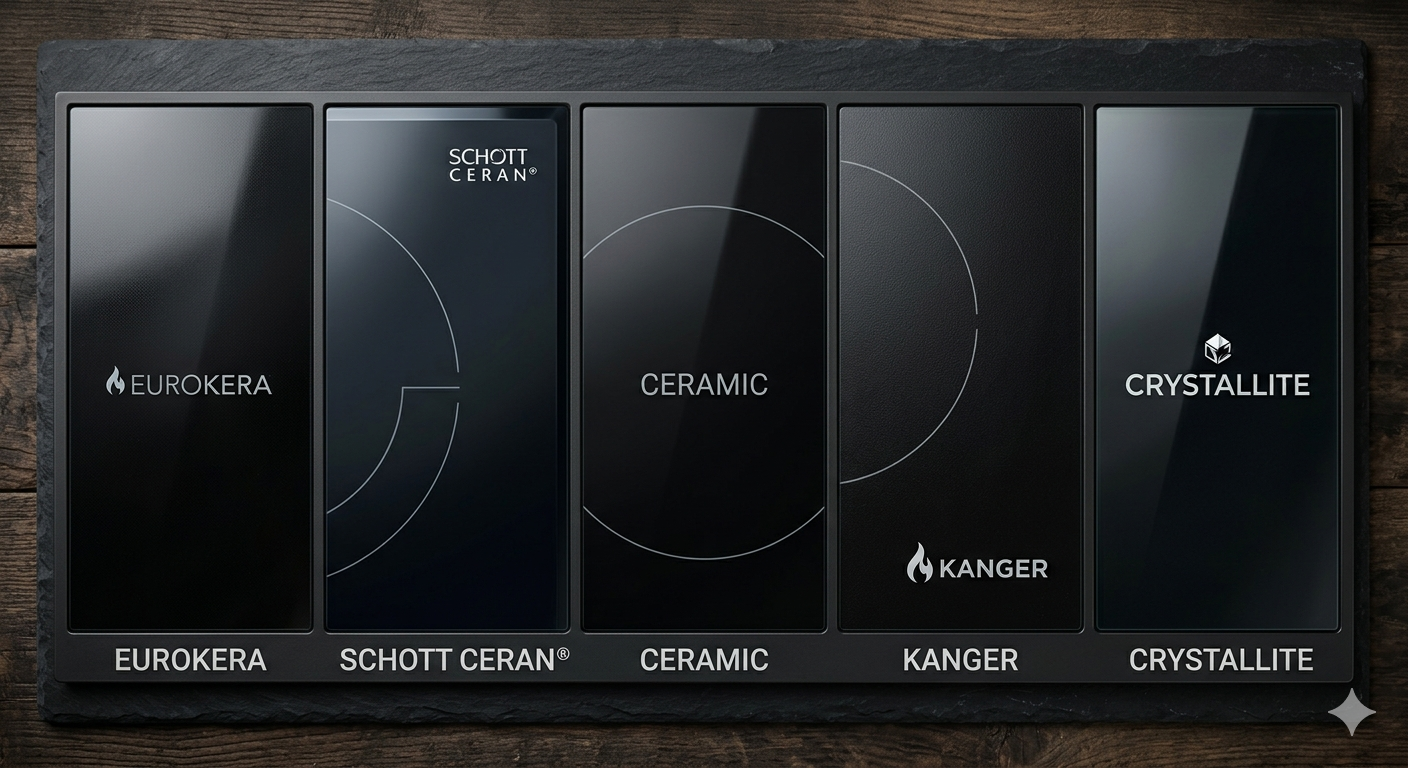
The glass surface of induction cooktops is not too thick, usually only about 4 – 8 mm, but it is extremely hard, has good impact resistance, and high heat resistance, effectively preventing thermal shock. Currently, the induction cooktop market is popular with 5 main types of glass: Eurokera, Schott Ceran, Ceramic, Kanger, and Crystallite. Each type of glass has different characteristics regarding thickness, heat resistance, impact resistance, durability, and price, suitable for needs ranging from budget to high-end.
| Type of Glass | Origin | Thickness | Heat Resistance | Durability |
|---|---|---|---|---|
| Eurokera | France | 4 – 8 mm | ~700 – 800°C | Very high |
| Schott Ceran | Germany | ~4 – 5 mm | ~700°C | Very high |
| Ceramic | Various countries | ~4 – 6 mm | 600 – 1000°C | Moderate – high |
| Kanger | China | ~4 – 6 mm | ~600 – 800°C | Average |
| Crystallite | China | ~4 – 6 mm | ~600 – 800°C | Average |
Eurokera Induction Cooktop Glass
Eurokera is a high-end ceramic glass from France, often found on high-end European induction cooktops. This type of glass stands out for its high durability and excellent thermal shock resistance.
- Common thickness: 4 – 8 mm
- Heat resistance: ~700 – 800°C
- Impact resistance: Good, strong impact resistance
- Design: Glossy black, luxurious, high scratch resistance
- Commonly used in brands: Teka, Fagor, Cata,…
- Replacement price: ~2 – 5 million
- Advantages: High durability, low breakage, long-term stability
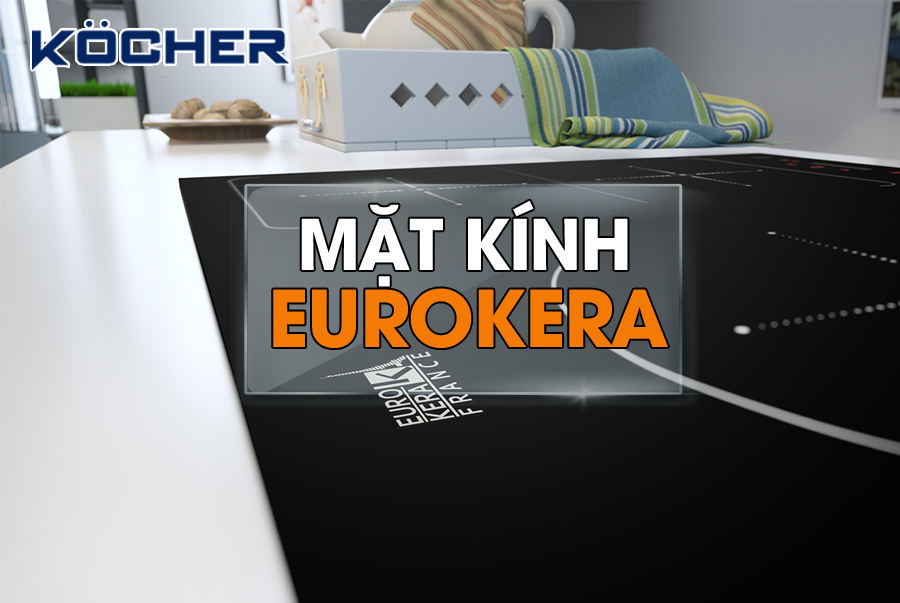
The thickness of Eurokera glass is 4 – 8 mm, which is high-end
In addition to the physical thickness specifications, the edge processing technique also greatly affects the lifespan of the device. Many users when purchasing this type of glass often wonder if the induction cooktop with beveled edge glass is durable when subjected to impact at the edge. In fact, the delicate beveled edges help eliminate sharp right angles – which are physical weak points that easily concentrate pressure. This design not only enhances luxurious aesthetics but also optimizes the impact resistance around the glass edge.
Schott Ceran Induction Cooktop Glass
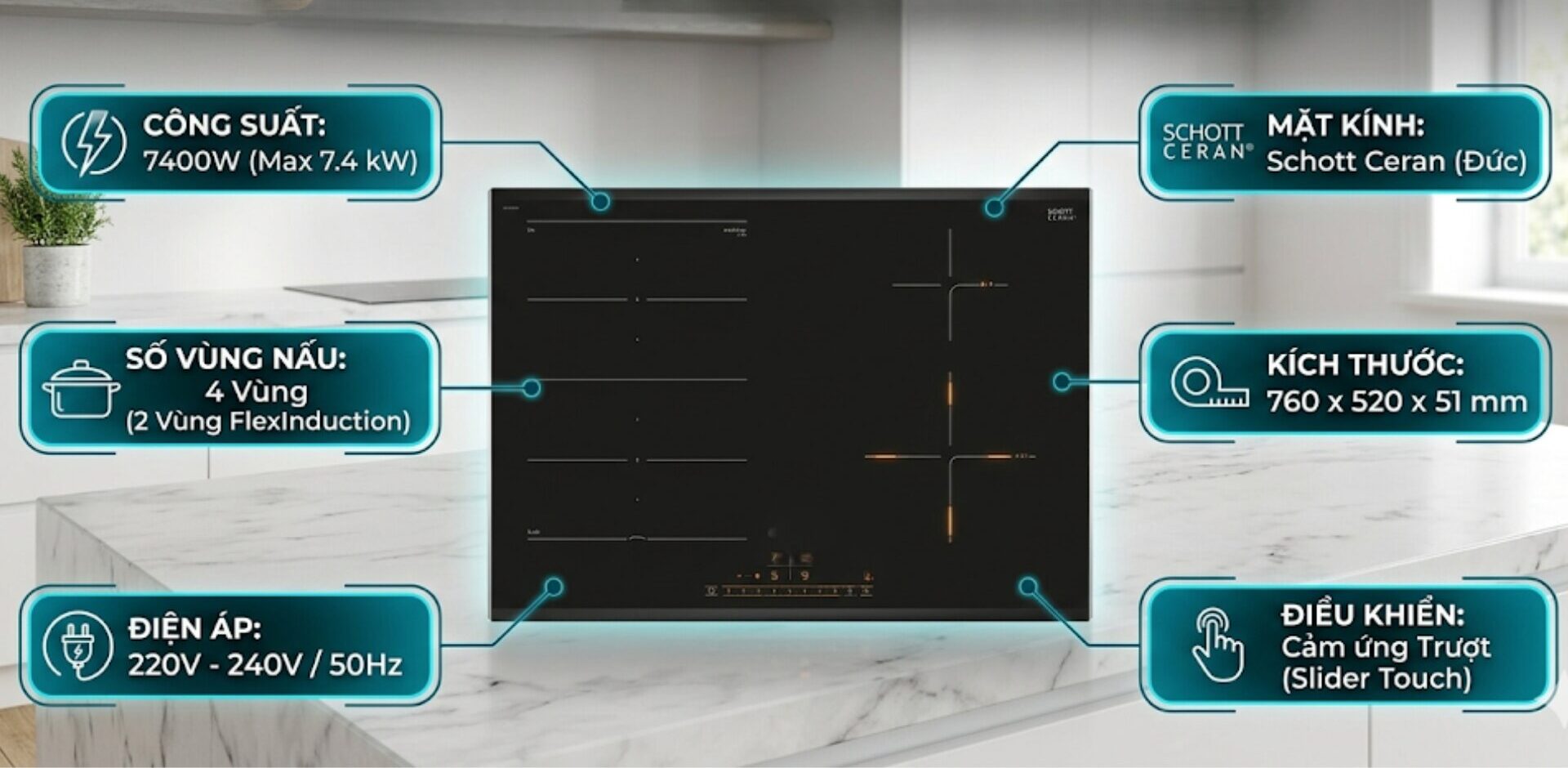
Schott Ceran is a famous glass brand from Germany, considered a high-end standard in the induction cooktop industry. This type of glass has top stability and durability today.
- Common thickness: ~4 – 5 mm
- Heat resistance: ~700°C
- Impact resistance: Very high, can withstand heavy loads
- Design: Elegant, high-end, with various patterns
- Commonly used in brands: Bosch, Hafele, Chefs, Kocher, …
- Replacement price: ~3 – 7 million
- Advantages: Super durable, good impact resistance, reputable brand
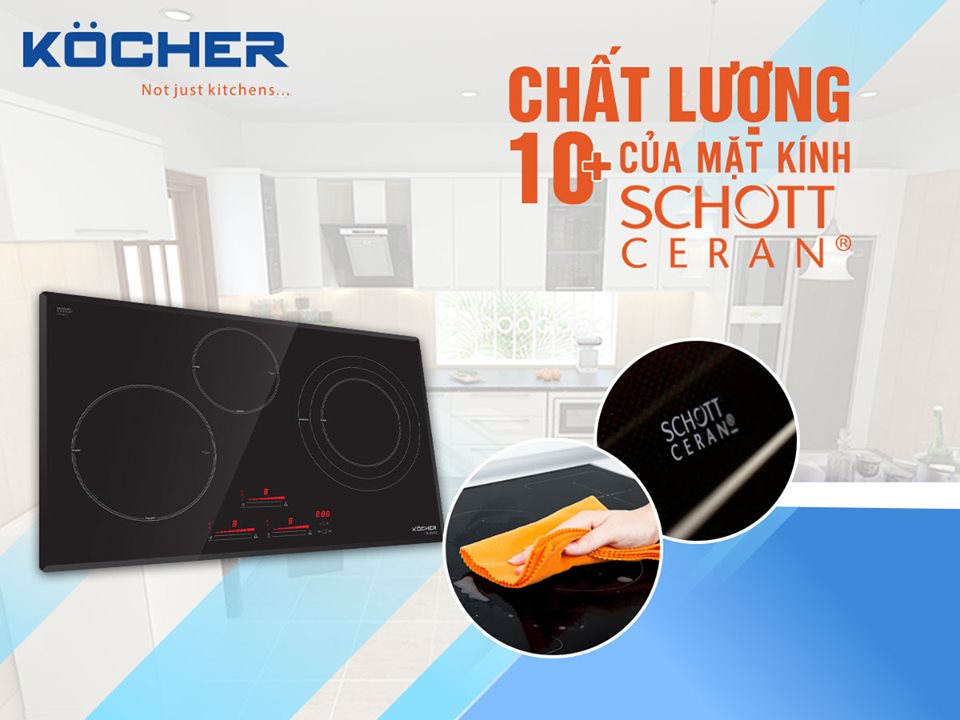
Schott Ceran glass has a thickness of about 4 – 5mm
Ceramic Induction Cooktop Glass
Ceramic is the most common type of glass, widely used on both induction and infrared cooktops. This is a glass ceramic material, with high hardness and fairly good heat resistance.
- Common thickness: ~4 – 6 mm
- Heat resistance: 600 – 1000°C
- Impact resistance: 30 – 60 kg
- Design: Diverse from common to high-end
- Commonly used in brands: Many brands from budget to mid-range such as Sunhouse, Electrolux, Panasonic
- Replacement price: ~1 – 3 million
- Advantages: Reasonable price, easy to replace, meets basic needs
Although it has a wide heat resistance range, regular ceramic glass is quite brittle against strong external impacts or localized thermal shock. In the unfortunate event of the induction cooktop glass breaking, users need to immediately cut off the power and stop cooking. Persisting in using it when the glass has large cracks will cause water to spill onto the components, leading to circuit short-circuits and posing extremely dangerous electric shock risks.
Kanger Induction Cooktop Glass
Kanger is a type of glass from China, often used on low-cost or mid-range induction cooktops. The quality is stable, suitable for average users.
- Common thickness: ~4 – 6 mm
- Heat resistance: ~600 – 800°C
- Impact resistance: Average – good
- Design: Simple, few patterns
- Commonly used in brands: Sunhouse, Kangaroo…
- Replacement price: ~800k – 2 million
- Advantages: Low price, easily accessible, sufficient for use
Crystallite Induction Cooktop Glass
Crystallite is a common type of glass, often used on low-cost induction cooktops. Compared to high-end glasses, its durability and scratch resistance are lower but often impress with its shine.
- Common thickness: ~4 – 6 mm
- Heat resistance: ~600 – 800°C
- Impact resistance: Average
- Design: Glossy, but easy to scratch
- Commonly used in brands: OEM induction cooktops, low-cost
- Replacement price: ~700k – 1.8 million
- Advantages: Low cost, suitable for basic needs
Regarding the question is the induction cooktop glass thick, the answer is that the common thickness ranges from 4 – 8 mm, not too thick but still sufficient to ensure durability, impact resistance, and high heat resistance. Popular types of glass such as Eurokera, Schott Ceran, Ceramic, Kanger, and Crystallite each have their own advantages and disadvantages suitable for different usage needs. Köcher is proud to be the pioneer in Vietnam bringing German technology into induction cooktop products. When choosing to buy an induction cooktop, you should carefully consider factors such as heat resistance, impact resistance, ease of cleaning, and price to select the most suitable type of glass, ensuring both safety and durability.