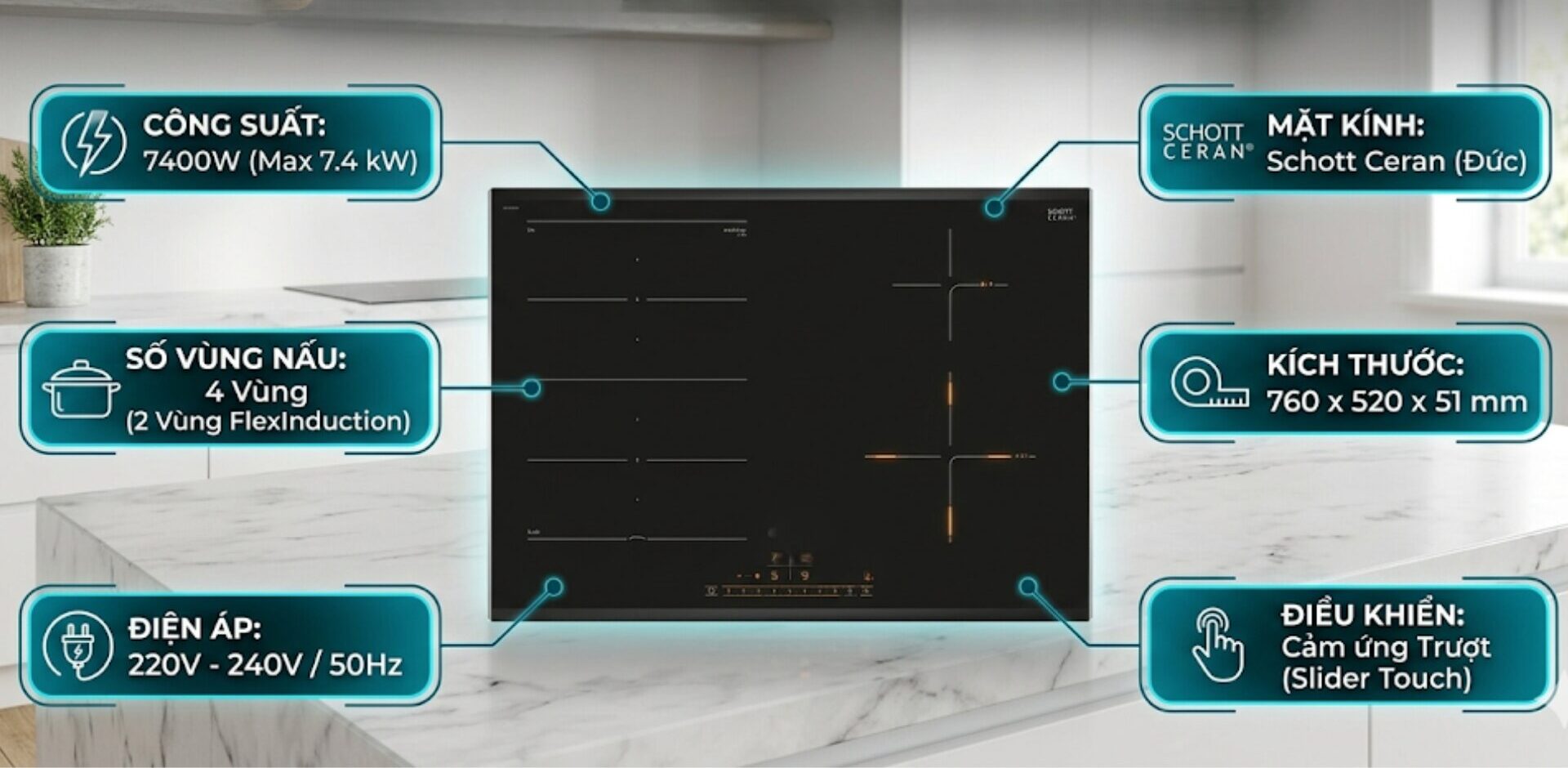
A high-quality imported German induction cooktop will help you cook deliciously, safely, and save energy. But do you know which German induction cooktops are good, and whether the cooktop you bought is a fully imported German one? Check out the experience of buying imported induction cooktops from Germany below to gain more tips and insights into choosing a genuine German induction cooktop!
To choose a “quality” pot set, don’t rush to make a decision just by observing their appearance. Be a smart consumer by understanding the internal characteristics of the pots.
Among the common issues regarding pot sets, many customers wonder and find it difficult to distinguish between composite-bottom pots and solid-bottom pots. Which type of pot is of better quality and most suitable for the family? The answer will be revealed if you take a few minutes to read the following article.
Distinguishing Composite-Bottom Pots and Solid-Bottom Pots
1. Composite-Bottom Pots
Composite-bottom pots are those whose bottoms are made from multiple layers of different metals. These layers are pressed into a single block and assembled together to create a complete pot bottom. Composite-bottom pots require high technical precision and sturdy pressing techniques to ensure that the layers are bonded together to withstand force and heat well.
Currently, there are 2 popular types of composite-bottom pots: 3-layer composite and 5-layer composite.
The 3-layer composite pot consists of 3 layers of metal bonded together, including an outer layer of 403, an aluminum or copper layer in the middle, and an inner layer of high-quality 304 stainless steel.
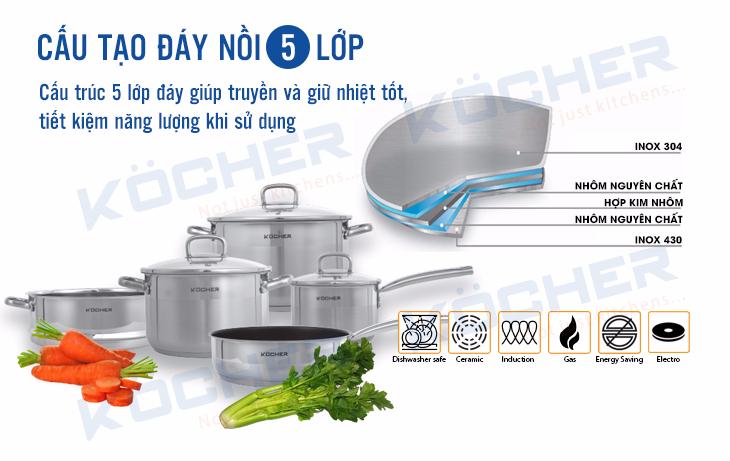
The 5-layer pot consists of 5 layers of metal pressed into a single block tightly together. These 5 layers include: 1 layer of steel, 1 special aluminum, 2 layers of pure aluminum, and 1 layer of steel. The inner pot that comes into direct contact with food is made of high-quality 304 stainless steel, also known as non-corrosive steel. The quality 304 stainless steel is safe for food, ensuring the health of users.
Depending on the user’s needs, you can choose either a 3-layer composite pot or a 5-layer composite pot. If you need basic cooking, the 3-layer composite pot will be a suitable choice. However, if you are looking for quality and long-lasting use, the 5-layer composite pot is a more perfect choice for every family.
Advantages of Composite-Bottom Pots
+ The removable bottom is thick, providing good heat conduction and retention, with the aluminum material inside capable of evenly distributing heat.
+ Reasonable price, suitable for Vietnamese consumers.
+ Usable for most types of cooktops, with moderate weight.
+ Beautiful, modern, and luxurious design.
+ Widely popular, it is the most loved and trusted type of pot.
Disadvantages
+ The composite pot has multiple layers at the bottom, but the pot walls only have one layer. Therefore, the pot walls usually retain less heat.
2. Solid-Bottom Pots
Solid-bottom stainless steel pots are those with steel layers cast together using modern technology to create a unified block.
Like composite-bottom pots, the market currently mainly features 3-layer solid-bottom pots. The 3-layer solid-bottom stainless steel pot is made of 3 layers of metal cast together into a single unified entity. The innermost layer that comes into contact with food is usually made of high-quality 304 stainless steel. Next is the pure aluminum layer that helps with good heat conduction and retention. The outer layer is made of magnetic steel that serves to attract and retain heat.
Advantages:
+ The solid bottom ensures optimal heat conduction across the entire inner surface and durability on the outside. They have the ability to retain heat for a long time, helping food cook evenly and faster.
+ Easy to clean, no fear of bottom peeling.
Disadvantages:
+ The price is slightly higher compared to composite-bottom pots.
+ Only the 3-layer solid-bottom type is popular.
Should You Choose Composite-Bottom Pots or Solid-Bottom Pots?
Through the analysis above, users will surely have their own assessments and choices. From an objective perspective, we can easily see that composite-bottom stainless steel pots have more outstanding advantages compared to solid-bottom stainless steel pots. Choosing composite-bottom stainless steel pots is the perfect choice for the family kitchen. Composite-bottom pots have high durability, so users only need to buy once and can use them for many years, instead of having to pay multiple times for repairs of a low-quality pot set.
Customers can choose either a 3-layer or a 5-layer composite pot. However, the 5-layer composite pot is currently the most favored. The 5-layer pot offers better heat and pressure resistance, and is less prone to warping compared to the usual 3-layer composite pot. Their heat retention and conduction capabilities are also very good, helping dishes cook evenly, deliciously, and more nutritiously.
The Most Reputable Brand of 5-Layer Composite Pots Today
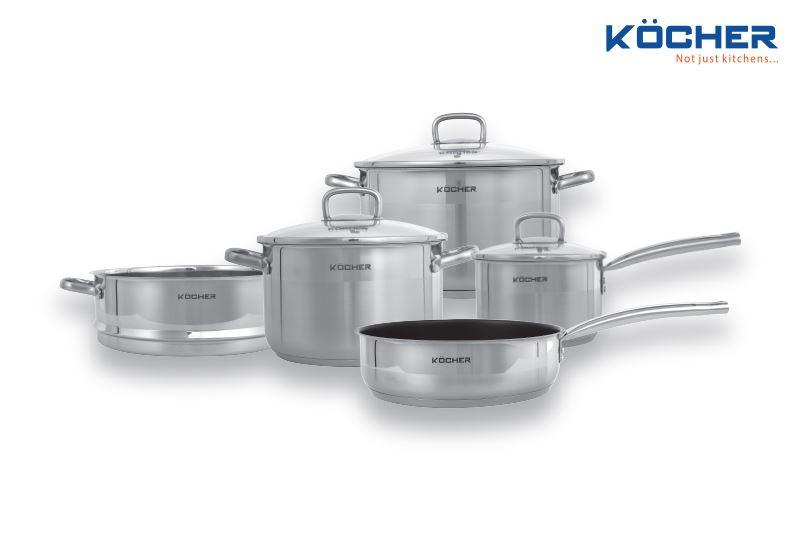
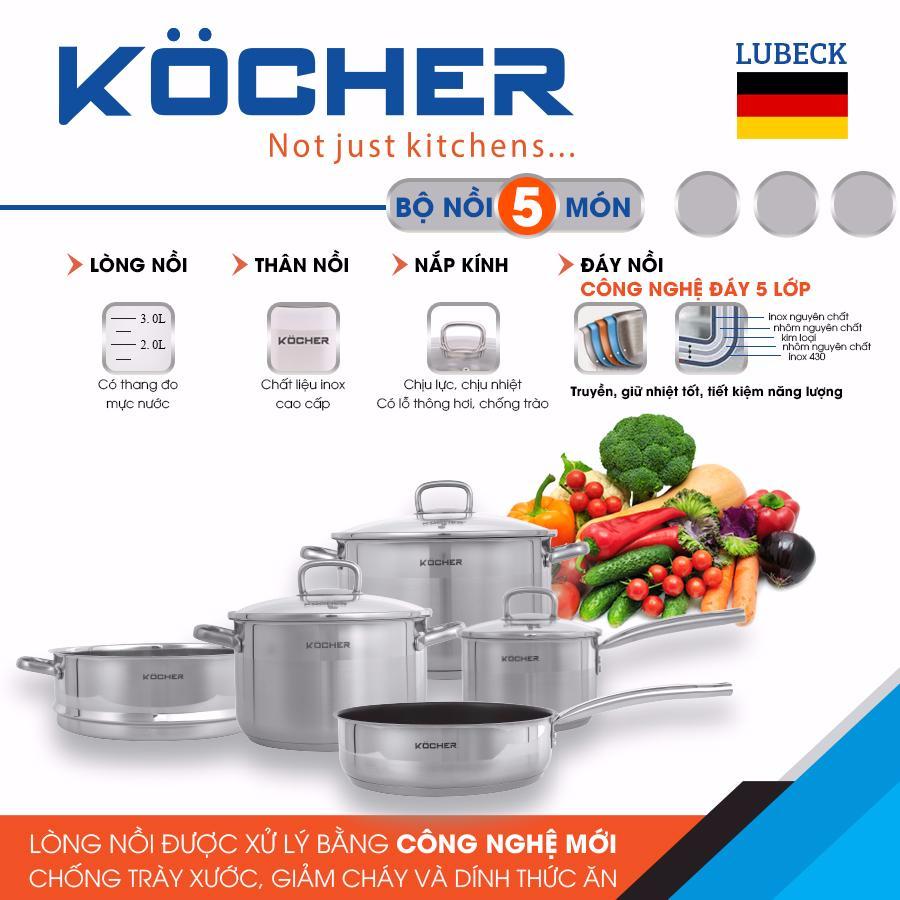
The Kocher Lubeck 5-layer pot quickly received very positive feedback from users right after its market launch, thanks to its full range of superior features of composite stainless steel pots, providing absolute peace of mind for all customers.
The Kocher Lubeck 5-layer pot comes in a set, which includes 5 different small products with various sizes and capacities, making it easy for users to use for different purposes.
The Kocher Lubeck 5-layer pot set is designed with high-quality stainless steel material, consisting of 5 layers of metal pressed into a sturdy technical block, with excellent warping resistance, suitable for all types of cooktops. The pot design is luxurious and modern, suitable for every family kitchen.
To own the Kocher 5-layer composite pot at a preferential price, please contact hotline: 0969.622.066 or visit the website: kocher.vn.
A high-quality imported German induction cooktop will help you cook deliciously, safely, and save energy. But do you know which German induction cooktops are good, and whether the cooktop you bought is a fully imported German one? Check out the experience of buying imported induction cooktops from Germany below to gain more tips and insights into choosing a genuine German induction cooktop! See information about Imported German Induction Cooktops.
🛠️ KOCHER TECHNICAL ADVISOR
Tech. Nguyen Van Bien
Kitchen Equipment Installation & Maintenance Expert (7 years of experience)
✔ In charge of: Troubleshooting, installation & in-depth maintenance of induction cookers, dishwashers, range hoods, ovens, etc.
✔ Commitment: Article content is directly reviewed for technical expertise, ensuring safety & accuracy.