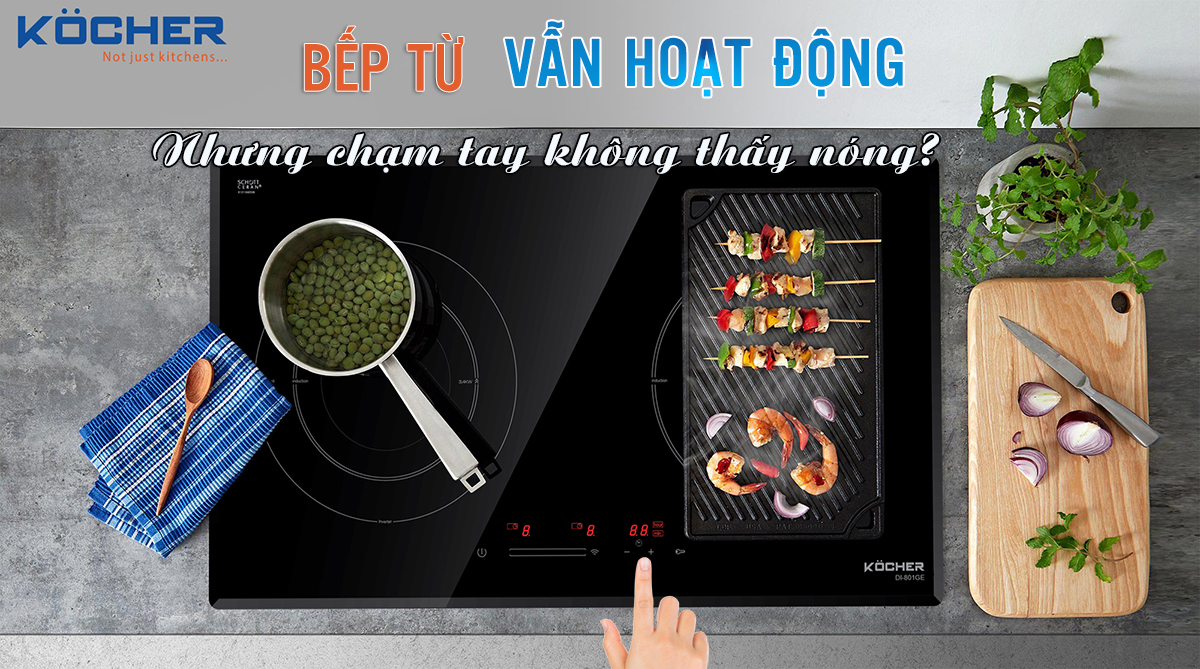
The induction hob is running but not heating or the induction hob is powered but not heating is usually due to: using the wrong type of pot, low voltage, or a faulty sensor/circuit board,… Let’s explore with Kocher the deeper causes and quick fixes at home for all types of electric hobs such as induction hobs, infrared hobs, and electric hobs.
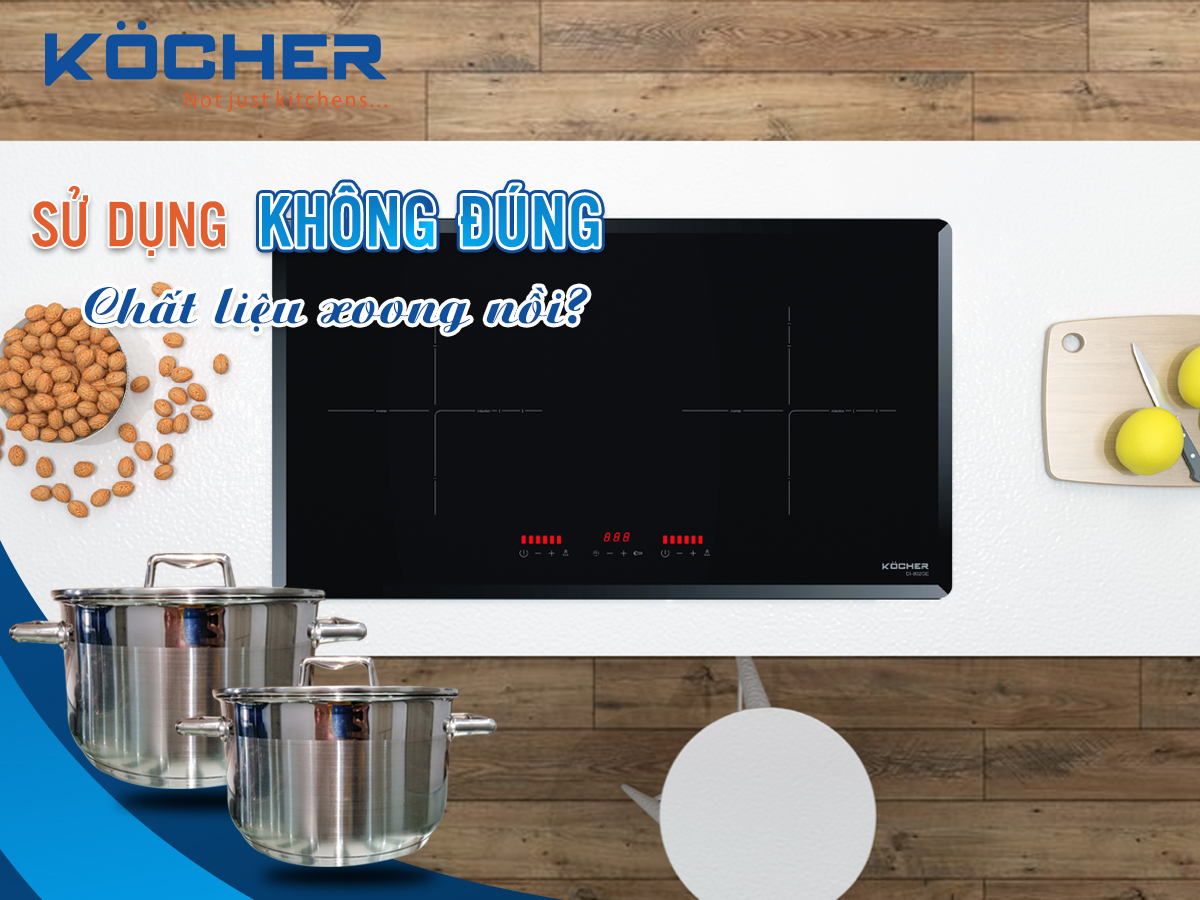
Using the wrong type of pot or pan (most common)
Induction hobs are quite picky about cooking pots; they will not cooperate with pots that have non-magnetic bottoms. Therefore, if you encounter the situation where the induction hob is running but not heating, it is very likely that you are using the wrong material for your pots.
How to fix: Use the type of pot suitable for induction hobs. To quickly check which pots can be used with induction hobs, you can do the following:
- Use a magnet to test; if the magnet sticks to the bottom of the pot, it can be used.
- Check for symbols on the bottom of the pot such as: spring symbol, the word Induction,…
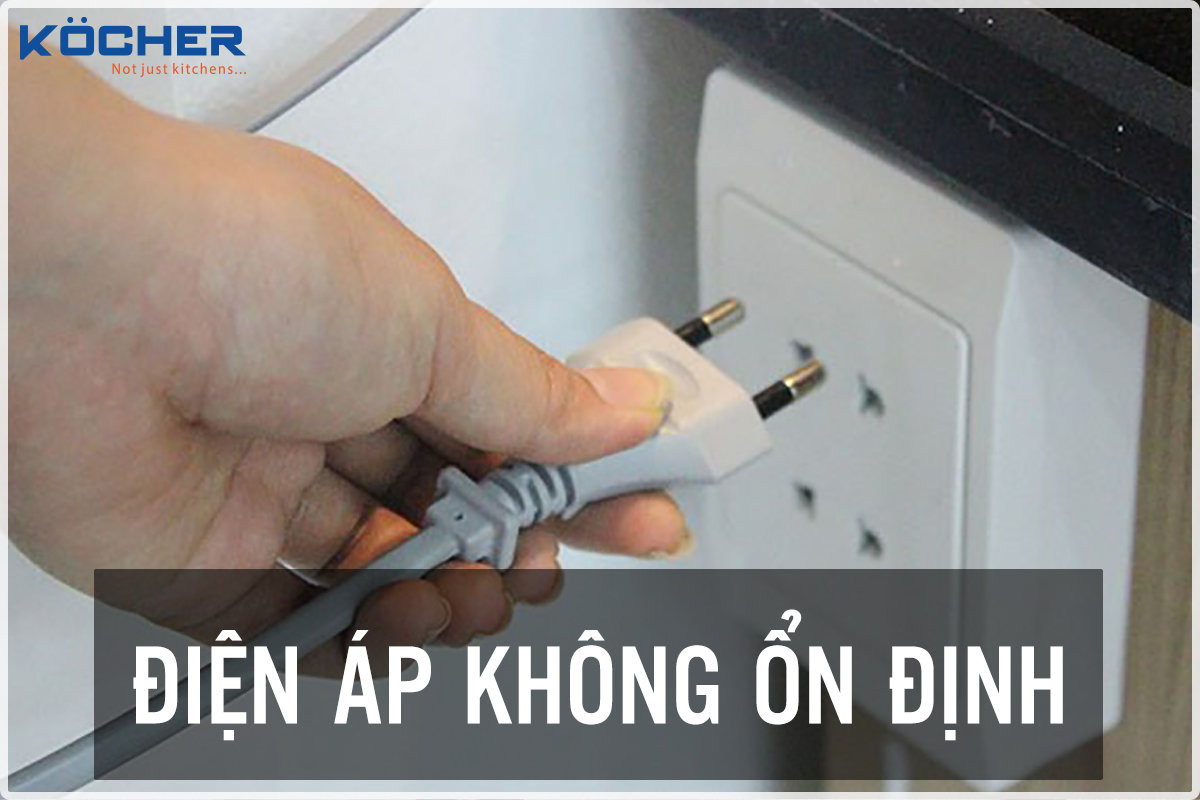
Unstable or too low voltage
Induction hobs usually require a power supply of 220V – 240V. If the voltage connected to your household induction hob is unstable or insufficient to power the induction hob.
If the voltage is low, the energy supplied to the induction hob is insufficient; the hob will still be connected to the power source, the light will turn on, the fan will run, but the hob cannot generate heat to warm the cooking utensils.
How to fix: Check the power supply efficiency of your household to see if it is suitable for the induction hob. Many imported or portable induction hobs may have a power supply that is too high, not compatible with the voltage standards in Vietnam. A sufficiently large power supply that meets the allowable power efficiency of the induction hob is required.
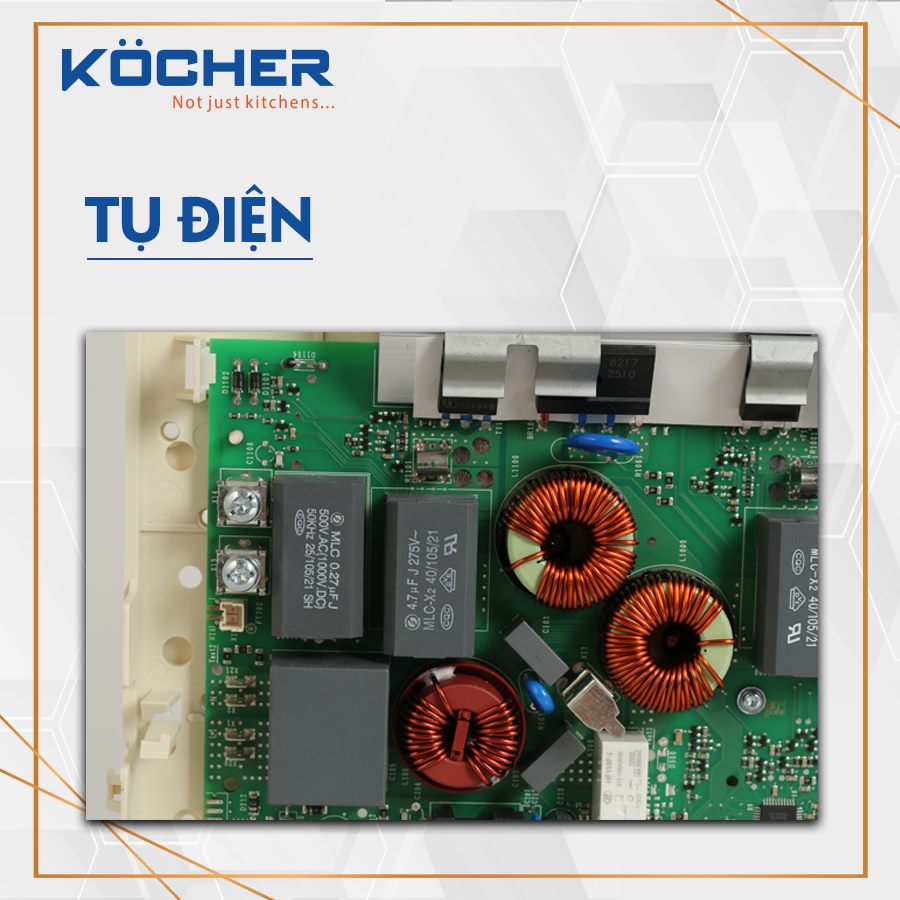
5uF filter capacitor “expired”
Like any other electrical device, after a period of use, some components need maintenance or replacement. The same goes for induction hobs; a weak 5uF filter capacitor leads to the induction hob running but not heating due to the capacitor’s capacitance decreasing, resulting in low electrical energy that is insufficient for the induction hob. This leads to extremely low or no heat being generated.
The initial sign of this condition is the phenomenon of the induction hob boiling slowly, even when set to the highest power level, the water in the pot only bubbles slightly. If not replaced in time, the capacitance value of the capacitor will continue to decrease until the hob completely loses its heating capability.
How to fix: To remedy this situation, you need to regularly maintain and replace the 5uF filter capacitor when you notice signs of a weak capacitor.
IGBT power module/ heating plate failure
Another reason why the induction hob is running but not heating is due to the failure of the IGBT power module. When this component fails, it will blow a fuse or trip the circuit breaker when connecting the induction hob to the power supply.
In mild cases where the IGBT fails in a circuit break (CE break), the driver circuit will completely cut off the trigger signal. The direct consequence is that the oscillating component of the induction hob does not pulse high frequency to the heating plate. At this point, the induction hob will still light up, the cooling fan will still operate but will not heat the cooking utensils. This is a very important component in the induction hob, so you need to replace it when the CE is broken.
The induction hob is in child lock mode
Currently, electric hobs such as induction hobs or infrared hobs are equipped with a safety feature known as child lock. When the lock is activated, the control panel lock will engage, the hob operates but cannot increase or decrease the temperature. Therefore, the induction hob will not heat up.
Additionally, on some digital models, when the power level is reduced to the minimum threshold or the sensor system detects that the input voltage is too low, the LED screen will display a warning code for low voltage. When you see the induction hob displaying “lo” (Low Voltage), the device will automatically lock the current range to protect the circuit, causing the hob to remain in standby mode without generating heat.
How to fix: Turn off the child lock by pressing and holding the lock button for 3 – 5 seconds.
The cooling fan is broken or blocked
The cooling fan helps cool the electronic components, circuit board, and induction coil inside, reducing the machine’s temperature during operation and preventing overheating. However, if the fan is not working, it means that the temperature sensor detects excessive heat, and the hob will automatically cut off power to protect itself. Therefore, the induction hob will still run but will not heat up.
So, now you know why the induction hob is running but not heating? Above are the causes and the best ways to fix the issue of the induction hob not heating that Kocher has shared. We hope that through this sharing, home cooks will gain more experience and useful tips for using induction hobs safely, economically, and wisely.
For family gatherings, choosing a durable cooking device that runs smoothly and does not encounter minor temperature issues is extremely important. To completely resolve this concern, consumers should carefully research which induction hob is good for hot pot has integrated thermal shock protection circuit and stable current separation induction coil, ensuring that the hot pot always boils evenly and safely throughout the meal.
Köcher – the pioneering induction hob of German technology.