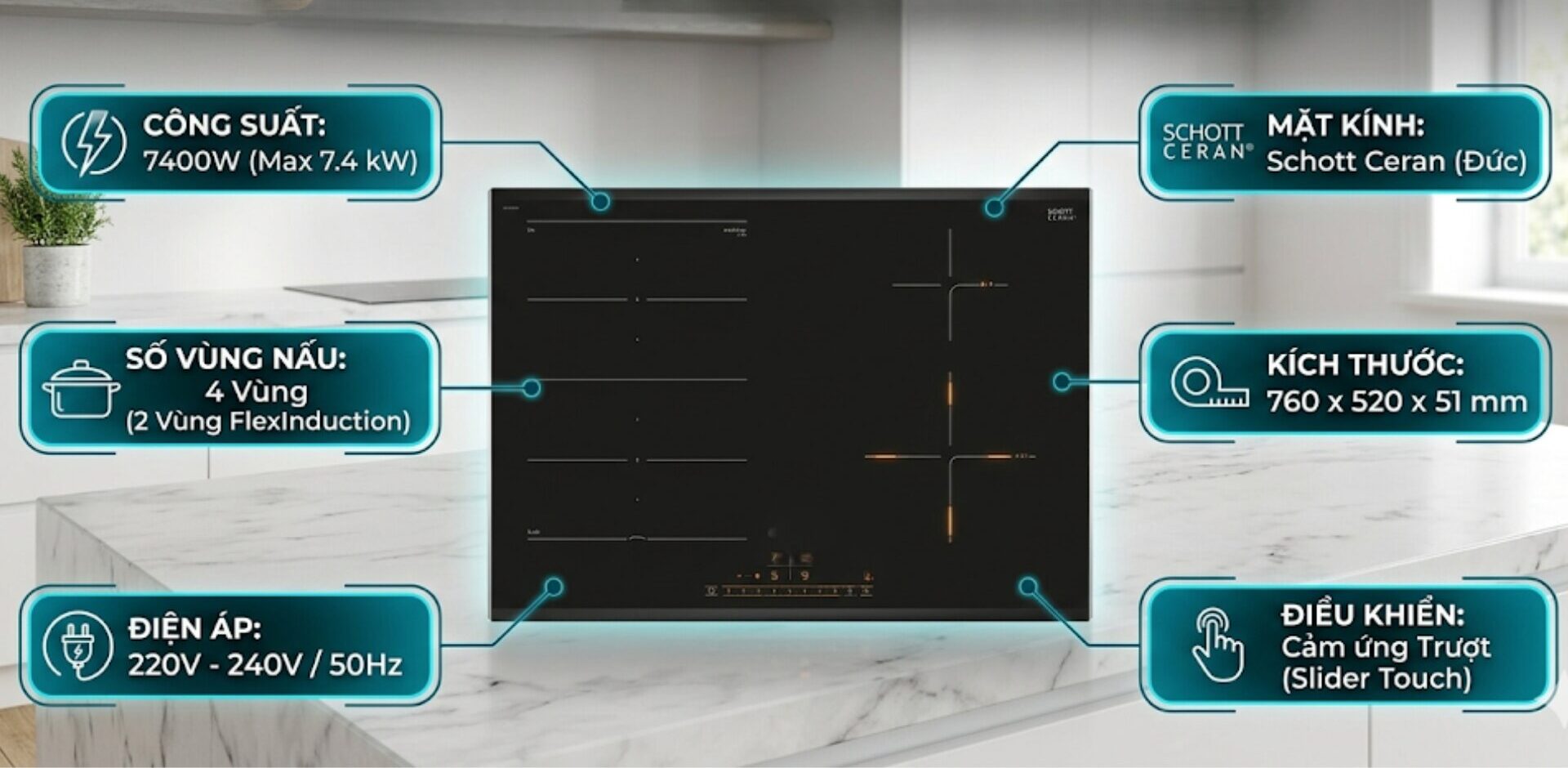
When deciding to switch from traditional gas stoves to modern electric stoves to optimize safety and cleanliness, many families often wonder if aluminum pots can be used on induction cooktops. The following article will help you answer this question, understand the principle, avoid purchasing the wrong equipment, optimize your monthly electricity bill, and better protect the heat-resistant ceramic glass surface of the stove.
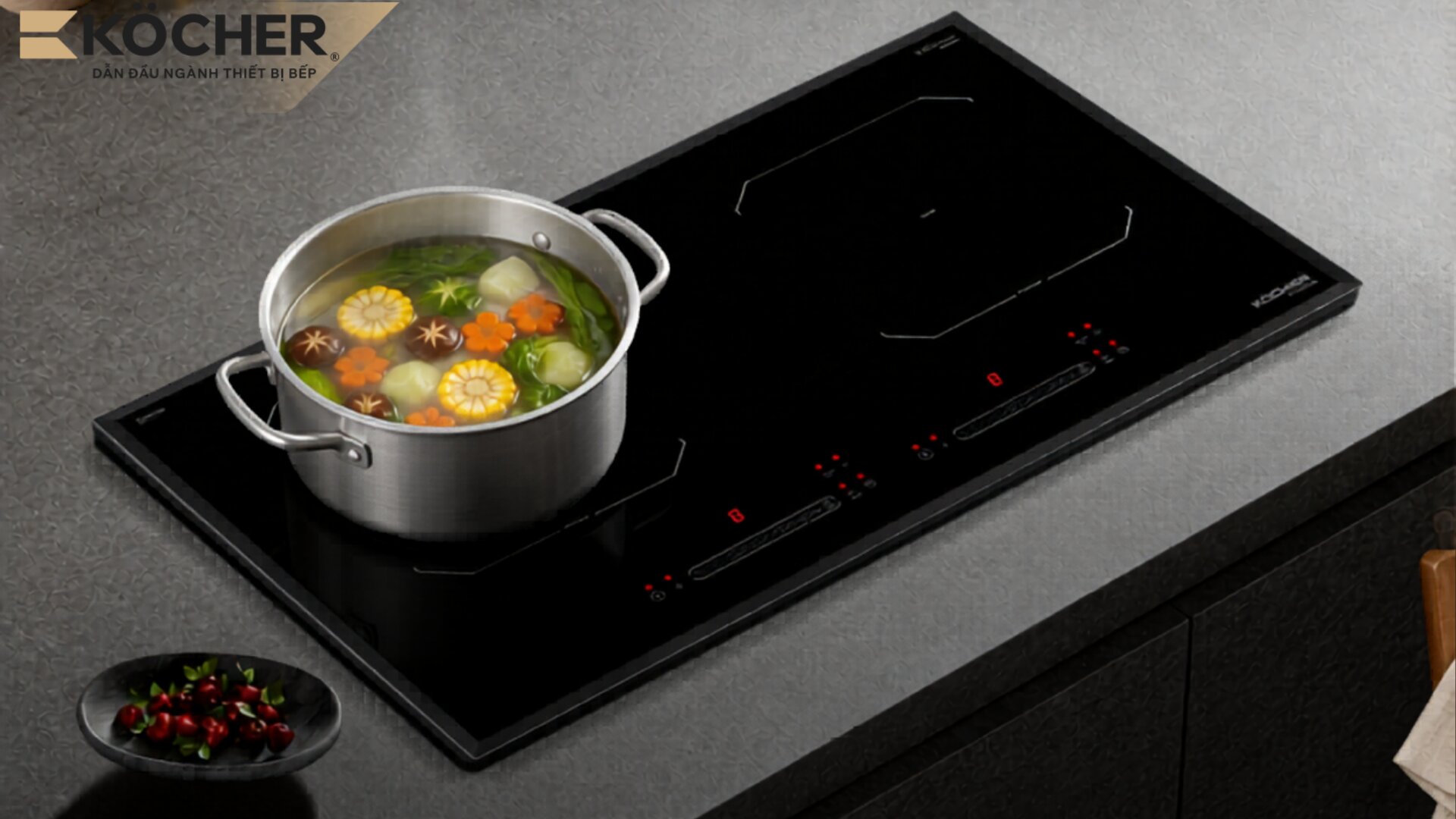
Can aluminum pots be used on induction cooktops?
Typically, aluminum pots cannot be used on induction cooktops because aluminum does not have magnetic properties to receive electric current from the cooking zone. The induction cooktop operates based on the principle of Foucault currents running through a copper coil beneath the glass surface, creating a fluctuating magnetic field that directly affects the magnetic base of the pot to generate heat. Aluminum is a non-magnetic material, so it cannot generate heat when placed on the cooking zone of the induction cooktop, causing the error code E0 and shutting off the heating system.
3 effective ways to use aluminum pots on induction cooktops
Families still wanting to utilize their aluminum pot sets can apply the 3 simple methods below. However, the best option to optimize cooking performance on induction cooktops is still to prepare a dedicated pot set for the stove.
Use induction cooktop combined with infrared
This is the most sustainable and convenient method to completely resolve the concern of whether aluminum pots can be used on induction cooktops. The hybrid stove features an infrared cooking zone that operates based on thermal radiation from a resistive coil transmitted through the glass to directly heat the bottom of the pot. Therefore, the infrared zone does not require specific pots, allowing you to comfortably use your traditional cast aluminum pot set.
Below is a summary table of the hybrid stove models (induction combined with infrared) that are currently affordable and cost-effective from Köcher:
| Product Code | Stove Specifications | Listed Price (VND) |
| Köcher EI-633 |
|
9,990,000 |
| Köcher EI-221 |
|
10,600,000 |
| Köcher EI-330E |
|
15,100,000 |
Use a heat transfer plate (induction plate) as an intermediary
This is a thin metal plate with very good magnetic properties (usually made of stainless steel 430 or magnetic steel). You just need to place this heat transfer plate on the induction cooktop, then place the aluminum pot on top of the plate and turn on the power. The heat generated from the induction plate under the influence of the magnetic field will be directly transferred to the bottom of the aluminum pot to cook the food inside.
Use aluminum pots with specialized magnetic bases
Currently, many major appliance manufacturers have produced aluminum pots that have an additional layer of magnetic steel or stainless steel attached to the bottom. This special construction allows the pot to retain the fast heat transfer advantages of aluminum while also having magnetic properties and cooking directly on the induction cooktop stably without needing an intermediary plate.
How to check if a pot can be used on an induction cooktop
To proactively determine if an aluminum pot can be used on an induction cooktop before placing it for cooking, you can apply the 4 quick sensory testing methods below:
- Use a magnet: Bring a magnet close to the bottom of the pot; if the magnet sticks firmly, then the pot can be used directly, allowing you to know whether the aluminum pot can be used on the induction cooktop in just a few seconds.
- Check the symbol on the bottom of the pot: Flip the pot over to see if the aluminum pot can be used on the induction cooktop through the spiral coil symbol (Induction symbol) attached to the bottom.
- Check the product label: Read the specifications on the label to see if it contains information about whether the aluminum pot can be used on the induction cooktop with the word “Induction”.
- Try it directly: Place the pot on the cooking zone and turn on the power to check if the aluminum pot can be used on the induction cooktop; if the stove recognizes and generates heat normally, then the pot is compatible.
7 important notes when using aluminum pots on induction cooktops
Once you have clearly understood whether aluminum pots can be used on induction cooktops through supporting measures, during daily cooking, you need to remember the following notes to maintain the longevity of both the pot and the stove:
- Clean the bottom of the pot before cooking: Dirt, grease, or sand stuck to the bottom of the aluminum pot can easily burn when exposed to the high heat of the heat transfer plate, causing the bottom of the pot to blacken and scratch the glass surface of the induction cooktop, even if you know whether the aluminum pot can be used on the induction cooktop through the induction plate.
- Control the initial temperature: Do not turn on the highest power level (Booster) right from the start because aluminum conducts heat extremely quickly, which can easily cause food to burn or deform the structure of the pot due to sudden thermal shock.
- Avoid dragging the pot on the stove surface: Since aluminum is a soft metal, dragging the pot on the stove surface can easily leave gray metal scratches or hard-to-clean black marks on the tempered glass surface.
- Limit cooking salty or acidic dishes for too long: Salt and acids in food can corrode the aluminum layer faster under high temperatures, directly affecting the health of users.
- Select pot size that matches the cooking zone: Using an aluminum pot that is too small compared to the heat transfer plate or infrared coil will result in a significant loss of thermal energy to the environment, causing the stove to heat up and wasting electricity consumption.
- Do not leave an empty pot on a hot stove: Due to the ability to absorb and transmit heat instantly, leaving an empty aluminum pot on a hot stove will cause the temperature of the pot’s bottom to rise very quickly, easily damaging the aluminum layer or causing cracks in the ceramic glass structure of the stove.
- Let the pot cool naturally after cooking: Do not wash it immediately with cold water after cooking; sudden thermal contraction will cause the pot to warp or peel off the magnetic alloy layers attached underneath.
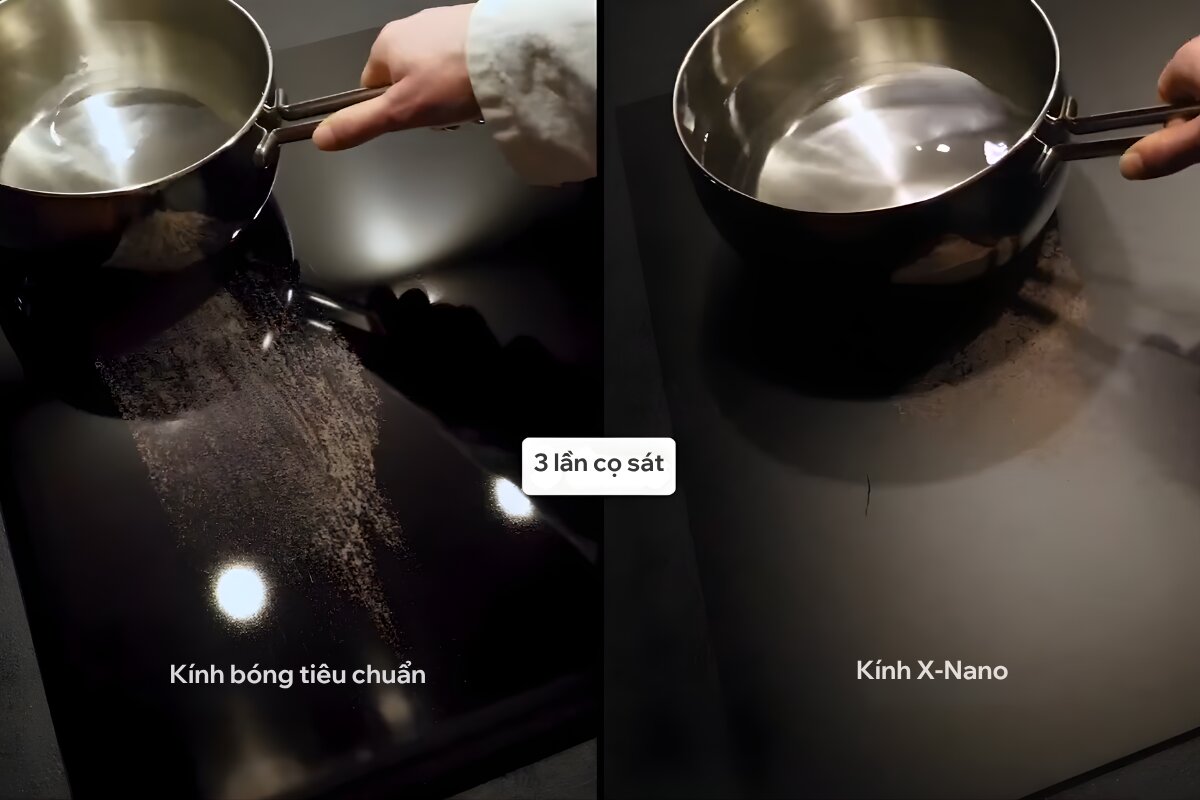 Avoid dragging the pot on the stove surface, or proactively use products with X-Nano scratch-resistant glass 5 times
In summary, the article has clearly answered the question of whether aluminum pots can be used on induction cooktops. Although traditional aluminum pots do not magnetize directly, you can still easily use them by equipping a heat transfer plate or investing in a modern hybrid induction cooktop (induction combined with infrared).
Do you need detailed advice on Köcher’s premium hybrid induction cooktops? Contact our team of experts for free consultation and installation at home.
|
Köcher induction cooktops pioneer German technology – For detailed product information, please contact:
|